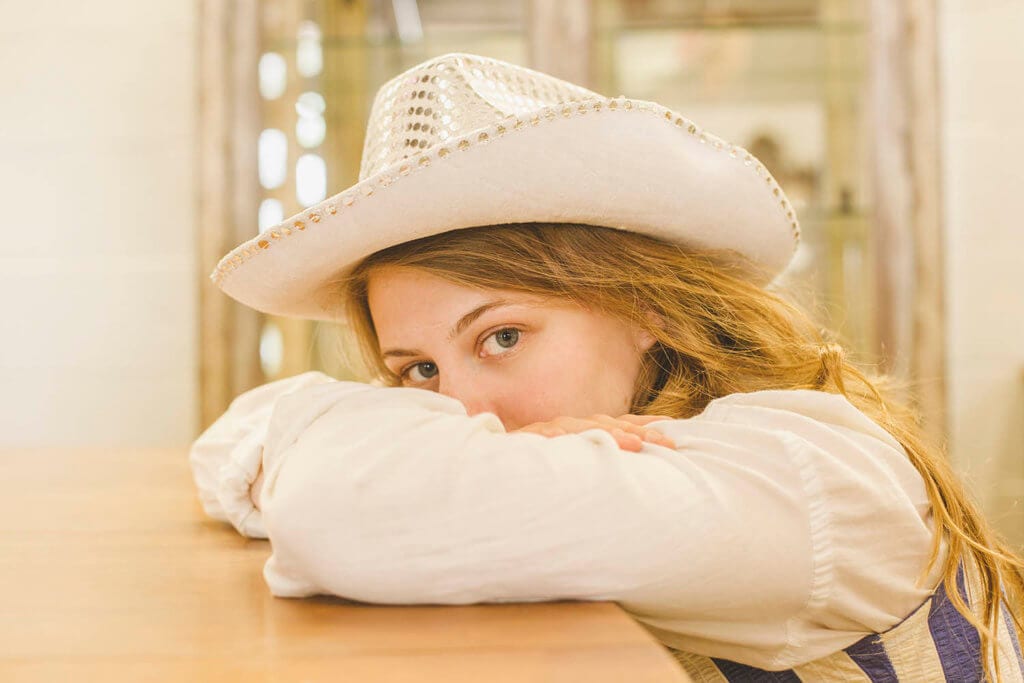
Kate Rhudy loves the service industry: “Even if I’m a musician full time, I hope that I can always pick up shifts at a restaurant someday. I still kind of hope that I’m able to be at home.” Back in her hometown of Raleigh, North Carolina, Rhudy wears a worn-in sweatshirt and pours fresh coffee at her kitchen table. Her home is like a sanctuary; shared with three friends, it’s lived in and warmed by sunlight.
In 2017, Rhudy self-released her debut album, Rock N’ Roll Ain’t for Me, two days before her 22nd birthday. Tracing her Appalachian folk influences to the years she spent performing in fiddler’s conventions with her big sister, Rhudy commemorates her classical violin training, learning by ear, and a childhood in Raleigh immersed in acoustic music. In the hours before her daily shift at the restaurant where she works, Rhudy talks to She Shreds about feminism in the South, DIY in country music, and building your community.
Your songs hold a lot of sarcasm, but are still optimistic. What is the role of using humor in your songwriting process?
Humor is the way my brain works. It’s how I’m able to process things. It’s a way of not letting something stay a demon forever in your mind. And that’s what songs are for me—taking a bad experience, wrapping it up, putting a bow on it, and letting it be. Not being too precious about it, but being able to bundle it up and then put it aside.
A friend played me your absolute banger, “I Don’t Like You or Your Band.” I’d love to hear about your experiences with dating other musicians and navigating music egos.
I haven’t dated a boy in a band since college. And he was fine. I started really noticing the way people “in the scene” would act, and it was super frustrating. [That song] is so specific, and I wrote it to get it out of my system. But everybody knows that person. You can be that person.
I try to be as honest as I can in my songwriting. The first line, “I was in love with a good, good man”—I mean that part. It sounds sort of sarcastic when I go on to say “…And a cheater and a liar, don’t forget drunk driver,” but I try to sincerely acknowledge that I was in love with a good person, and the duality of humans. Good people do stupid things.
What is the role of your community in your music?
In the past three years, I’ve formed relationships with people who are in my band and other bands in The Triangle [Durham, Raleigh, Chapel Hill] and it’s really sweet. The best thing about my music community is it’s not my life all the time; my community is my restaurant and my roommates, and that’s really nice. That is really nourishing, that music isn’t in my face all the time. I feel lucky to have both: a good music family and immediate community.
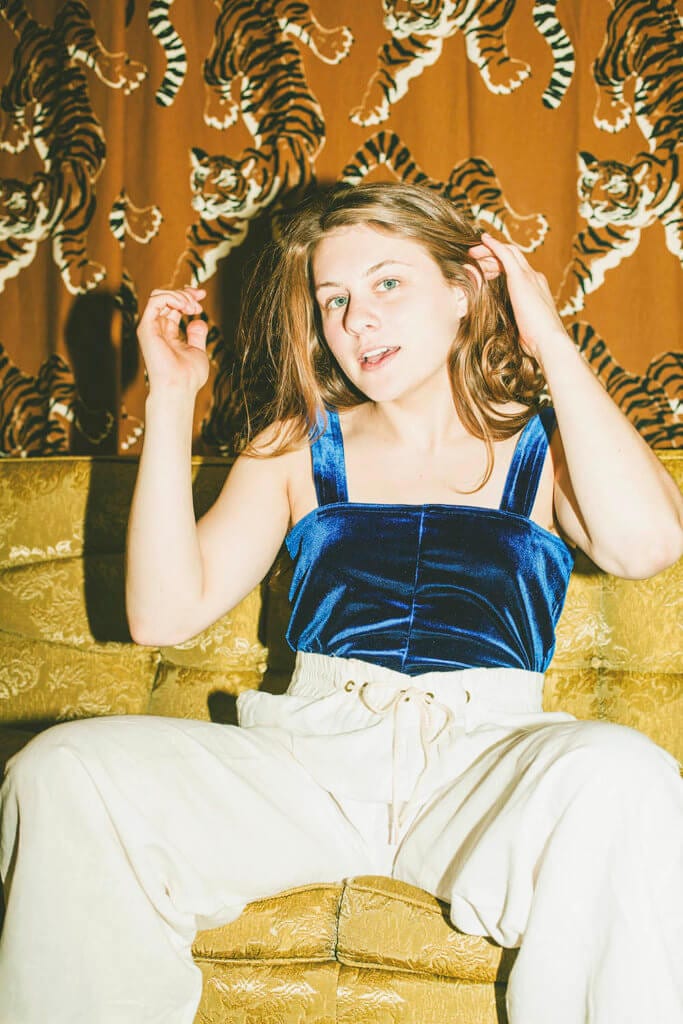
I often associate DIY with punk or lo-fi bedroom pop music, and so I’m fascinated with what DIY country and folk looks like.
DIY is fun. You can do anything. Catching up with my best friend is like, “I want to make match books.” And she’s like, “Let’s look at all the designs, let’s do it!” Me and her are just like kids. During her day job she’ll send me edits of a music video we made; it’s just iPhone footage that we’re going to put to one of my songs. That kind of stuff keeps you engaged.
Did you want a band? What was the process in going by your name?
I figured that the only person who cared about what I was doing was me. It would be so frustrating to get people to care as much as I do. I do have a band—my friends Alex Bingham [bass] and Ryan Johnson [electric guitar]—and they’re awesome. I figured that if I focus on being a solo artist for a while, one day, when I can afford it, I’ll take them on tour.
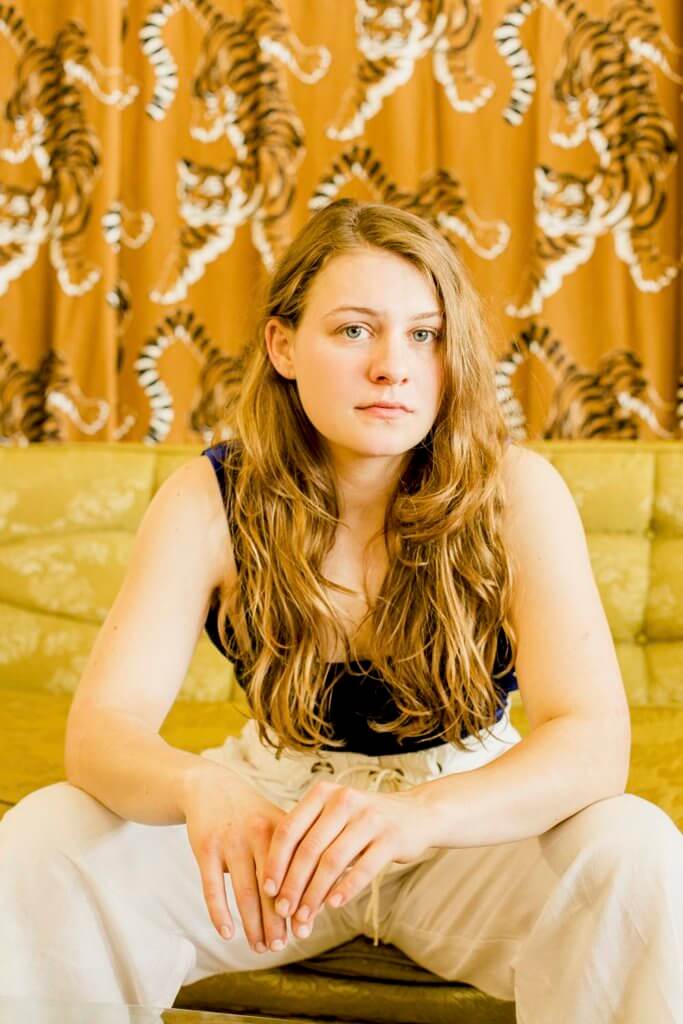
How does Raleigh allow you to make the music that you want to make and live the life that you want?
In this new year, I’ve been trying to make sure I’ve got all the simple things down before thinking about music. It’s life first, music second. Music is a part of my day-to-day, but outside of music, my life is super simple. I work in a restaurant six days a week, I live paycheck to paycheck. It’s nice to be surrounded by people who are working hard and have dreams no matter what industry it is. And it’s really nice to be surrounded by different inspirations.
It’s a quieter, slower-moving life here. I live in a neighborhood. I can walk to work. I know the bartenders at the bar down the street, they’ll open the pool table so you can play for free.
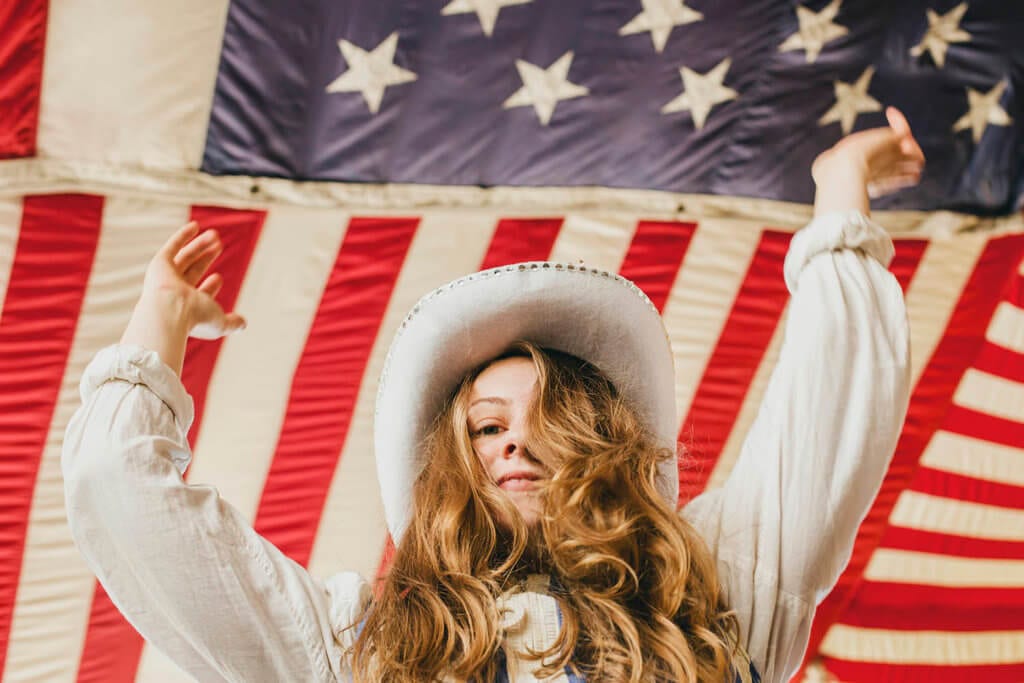
When you’re touring, especially in New York or LA, how do you handle misconceptions people may have about the South?
I’m so in my own bubble that sometimes I don’t even realize that people are making comments about the South. But it’s either they’re making fun of it or they’re glamorizing it.
I consider myself lucky to have grown up in the spaces that I did. I grew up in a liberal Baptist church that got kicked out of the Southern Baptist Convention, and our pastor—a queer woman—leads marches and sit-ins. I grew up in a city, in a blue bubble. I’m not surrounded by things that people make fun of the South for, so it’s hard for me to even understand those criticisms—that’s not the South that I know. But also, I’m a cisgendered white woman, and I don’t encounter the everyday discomfort [that others do].
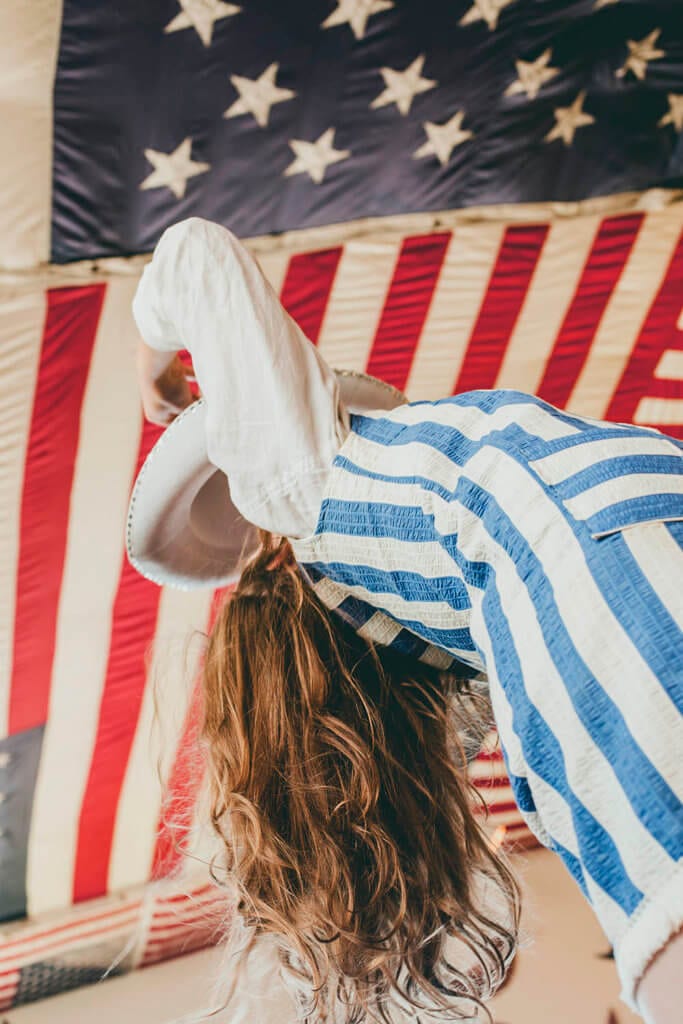
And how do you navigate being a feminist artist in the South? How does that play into your creative process?
The lens I see the world through is naturally very feminist, and I hope the music I make reflects that. That’s not to say my process couldn’t be more intentional; it’s easy to see the world through a feminist lens, to envision the world you want, but a lot of work goes into making it happen. I want to play music with more women, and that has to be something I intentionally seek out.
I frequently find myself in male-dominated spaces. But that being said, from my opinion, it seems easier for me and my women and queer friends to do our thing. The industry feels more accessible. We also have the internet, we have ways of connecting. More than ever people are lifting each other up, but for some reason, I still find myself in a room full of men all the time.
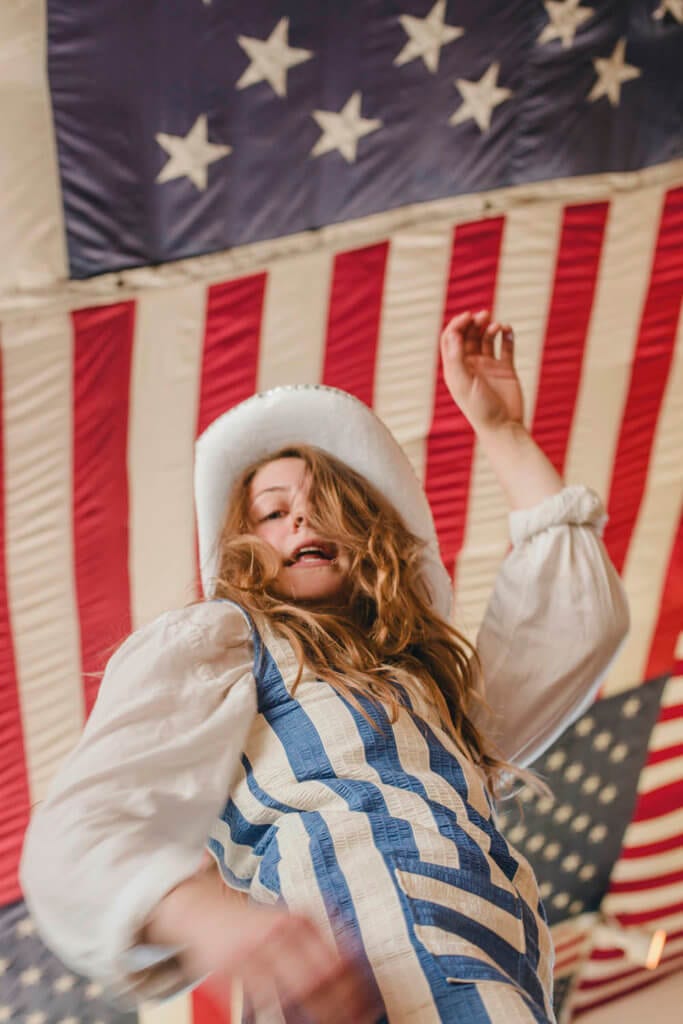
And what’s coming up for you?
I’m working on a new record now, recording with my friends, trying to figure out how to not just be adding voice to the void. That’s what I’ve been trying to figure out recently. “What am I saying?!” Once I figure out the structure of everything, I’ll have my plan in place.
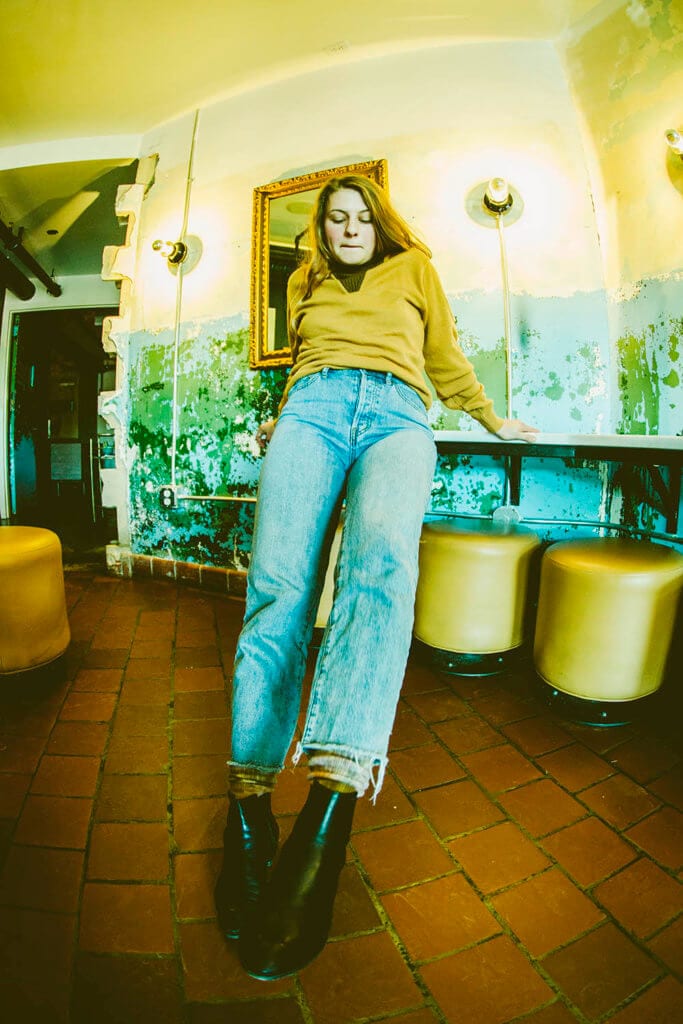
While the Americana tradition is grounded in the experience of the country’s most marginalized, the contributions of people of color, past and present, is often ignored. Now, four of the genre’s leading black women artists have come together for “Songs of Our Native Daughters,” a banjo-led album exploring slavery’s legacy and the power of familial and musical roots.
The project, which was released on February 22, 2019 on Smithsonian Folkways, was organized by Rhiannon Giddens of the Grammy-winning Carolina Chocolate Drops. Giddens invited multi-instrumentalists Allison Russell, Amythyst Kiah, and Leyla McCalla to write and record at the Louisiana studio of co-producer and veteran Appalachian musician Dirk Powell. Many of the songs are tributes to resilient black women, fictional and real, and the title pays homage to James Baldwin’s essay collection “Notes of a Native Son.”

As Giddens wrote in the album’s liner notes, “Interpreting, changing, or creating new works from old ones, this album confronts the ways we are culturally conditioned to avoid talking about America’s history of slavery, racism, and misogyny, knowing that what’s past is prologue—but only if we let it be.”
She wrote, “Black women have historically had the most to lose, and have therefore been the fiercest fighters for justice — in large, public ways that are only beginning to be highlighted, and in countless domestic ways that will most likely never be acknowledged.”
Smithsonian Folkways Director and Curator Huib Schippers said, “I wanted to give her [Giddens] carte blanche in reflecting critically about the position of African-American women in this country historically with reflections on where it is now. For us, it fits within a very long tradition of giving voice to people that are underrepresented or even unheard.”
The album spans the African diaspora’s diverse musical traditions, from gospel harmonies to upbeat Cajun melodies to spoken word. The range of banjo models, including the five-string, tenor, and minstrel, connects the 13 tracks. Banjos originated in West Africa and were central in the development of North American black culture. Despite these roots, white players, most infamously blackface minstrel performers, have defined the instrument’s image.
Allison Russell, who founded folk group Birds of Chicago with husband JT Nero, said black traditional musicians are tokenized to this day. Russell recalled when she was mistaken for other musicians and when she was turned down by a label because they already had “a black girl who plays banjo.”

“Can you imagine if that same metric was applied to white guys who play guitar? That would be crazy,” she said, adding “We’re all very different in our voices, our histories, and everything. But we have the common experience of often being othered. It was quite healing and powerful to all be together creating.”
Russell decided to be part of the project, which she described as an “inspiring, uplifting, creative explosion,” because Giddens is “making relevant and modern so much lost history, specifically of black music.” She said “Songs of Our Native Daughters” was an opportunity to reckon with slavery in an era of resurgent white nationalism and xenophobia.
“I don’t think there would be incarcerating children at the border if we remembered our history…” she said. “I think the arts help us to see ourselves and each other with more humanity. I think music does that in a visceral, emotional way.”
Russell is from Vancouver B.C. and recently connected with her biological family from Grenada, a West Indies island nation. She had an abusive adopted father and said it was important to hear stories of her biological father’s ancestors. She learned about Quasheba, a family matriarch sold into slavery. On “Quasheba, Quasheba,” Russell sings, “Blood of your blood. Bone of your bone. By the grace of your strength we have life.”

Russell said she hopes Quasheba’s strength is passed down to her daughter. The album’s final track “You’re Not Alone” is a lullaby of sorts and Russell said, “motherhood was bound up in the stories we were telling and writing.”
She said, “That camaraderie and sisterhood is not going to just disappear because we finish that record. I think we’ll be doing more. It opened me up to letting history live in a personal way in my work.”

Russell collaborated with self-described “southern Gothic songster” and Tennessee native Amythyst Kiah on “Polly Ann’s Hammer,” another song about a powerful woman. While the popular John Henry ballad focuses on a “steel-driving man,” the hero is his wife Polly Ann, who takes over the hard labor. Kiah had been messing around with a melody for a while and co-wrote the lyrics in a rapid morning session.
“Here was an opportunity to not only celebrate somebody that was able to raise the family while John Henry was at work, but when he was sick, she worked his job and did just as good if not better than the other people there,” Kiah said. “Of course we know lots of working class women who went to work and also went home to take care of the kids.”
Kiah also wrote the tone-setting opener “Black Myself,” an anthem celebrating black resiliency. She sings, “I pick the banjo up, and they sneer at me ‘cause I’m black myself. You better lock your doors when I walk by ‘cause I’m black myself.”
As the group’s relative newcomer, Kiah picked up banjo because of Giddens’ music. She enjoys the rhythmic nature of clawhammer banjo, a down-picking style. While she has traditionally been more guarded about her songwriting process, she said it was eye-opening to create collectively.

“I understood the practicality of co-writing and what it could do but it didn’t really hit me until this project…” she said. “Recognizing when you have that kind of connection with another songwriter and they write words, you’re like, ‘Oh my god this is amazing.’ It’s a spiritual experience.”
Cellist Leyla McCalla is a long-time collaborator with Giddens and said playing banjo was liberating because it’s “the optimal instrument to have these hard conversations about American history.”
McCalla, who recently released her third album “Capitalist Blues,” is influenced by her Haitian background and adopted home of Louisiana. “Songs of Our Native Daughters” was an opportunity for her to sing in Creole, particularly on the upbeat “Lavi Difisil,” a song inspired by Haitian troubadour Althiery Dorival.
She has also long been fascinated by blues guitarist Etta Baker. A pioneer of the Piedmont picking style, Baker turned away from music to raise her nine children, only performing again late in life. After completing the guitar-heavy “I Knew I Could Fly,” McCalla realized the lyrics applied to Baker and the long history of women’s potential being squandered. It’s a narrative McCalla knows well: She has managed to have a family while continuing her creative work.

“I knew I could defy the odds,” she said. “Not that this story is all written, but it’s a privilege to be able to reflect on it and still be in the struggle of it at the same time.”
While no tour dates have been announced, it’s likely “Songs of Our Daughters” will hit the road in some capacity. All four artists said this project is just the beginning of their collaboration, only scratching the surface of their creative potential.
“I’m feeling the truth of these songs in my body,” McCalla said. “I think that that’s what changes the world, to use a very trite phrase. I think that’s what changes people and creates social and political change, when people feel in their bones that something needs to be made right.”
When Eliza Shaddad isn’t writing or playing at music gigs, she’s camping, going for walks in the mountains, or for swims in rivers and lakes around London. Swimming she says, has become a defining characteristic of her personality. It’s fitting, as her melancholic, pop-inflected folk music is of a fluid, organic nature. The Sudanese-Scottish folk singer is a woman on the go; she spent most of her childhood moving from city to city, and was inspired to start her music career by folk festival-hopping with her friends from university. Someday she hopes to live in the middle of nowhere, somewhere by the sea.
Initially a philosophy student, she decided to switch gears and study jazz in London where she got her break featuring on a 2014 Clean Bandit song, “Birch,”. She then released a couple of EPs — Waters, and Run — between 2014 and 2016. On October 26th, she finally released her debut full-length, Future, ten fiery and emotional songs about moving on, with Beatnik Creative. She Shreds caught up with Shaddad about the hard work that went into Future, being inspired by old Scottish folk ballads, and her feminist arts collective Girls Girls Girls.
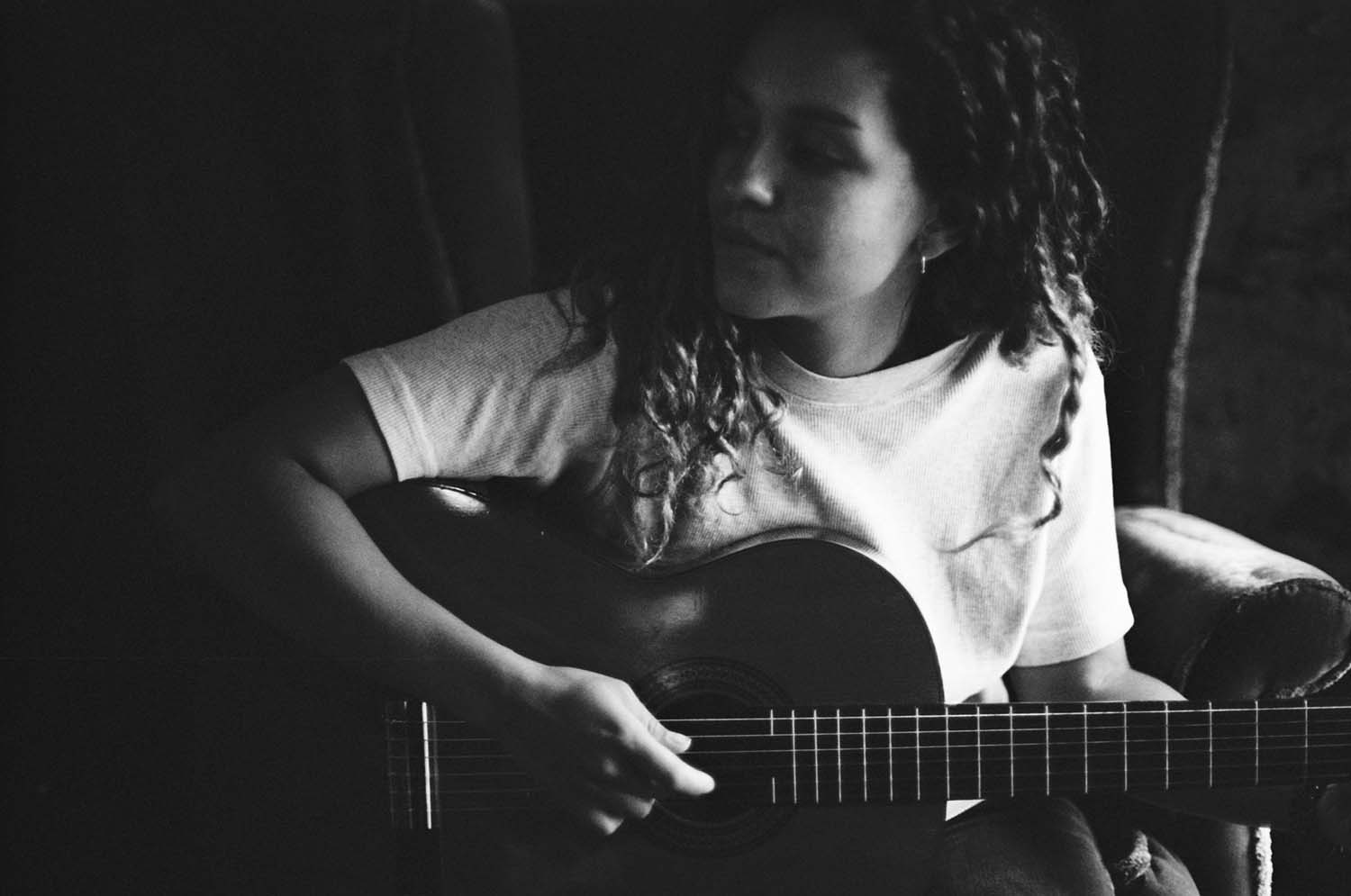
SHE SHREDS: Let’s start at the beginning. How did you start making music?
ELIZA SHADDAD: I wrote my first song when I was eight, on the school bus. An a cappella ballad about unrequited love. I learned piano when I was a school kid. But I was keen on learning guitar, so I got my first guitar for my sixteenth birthday. I was living in Russia at the time, and my mum got me a Russian classical guitar, with crazy high action, really wide neck — the strings are about a centimeter apart. I learned about five riffs and gave up, until I was at the university. I was studying philosophy, avoiding my masters and going to loads of folk festivals. I was quite active in student politics, and I shaved my head and wrote my first song on guitar about why everybody should shave their heads.
Tell me about Future. How did you record it?
I always demo stuff at home. Then I take it into studio with Chris Bond, a producer that I’ve worked with on my last two EPs. He works in Devon, in a studio called Deep Litter, which is on a farm at the end of a peninsula, surrounded by water. The last farm before the lighthouse. It’s like you travel to the end of the world. It takes four or five hours to drive down there, and you’re just bobbing along through green lanes. And when you get there there’s no phone signal.
What guitar do you play?
I play a Gordon Smith guitar. They’re hand built in the UK, and such beauties. I love their character. Live, I use a Fender Blues Junior at the moment, but actually used a JC-120 chorus amp in the studio for a lot of this record and fell so in love. I’ve been getting progressively more into pedals over the last couple of years and my go-tos are the Line 6 DL4, the Small Clone, and DS-1 Distortion, but as I get more into soloing and writing new stuff I’m well looking forward to that widening.
What’s your writing process like? How do songs come to you?
I always write on guitar — so far, anyway. And then I build a song around it in Logic. Very occasionally, they come out all in one go. Once I woke up from a dream and was like, this, and just had the lyrics coming out of me. A really old one called “Waters.” But normally I work on both separately. I have guitar riffs I’ve been messing around with, and then themes, emotions, or stories I’ve been mulling over. I work and work at it. I’ll probably feel like it’s finished about 20 times before it actually is, ‘cause I’m always making changes to little bits.
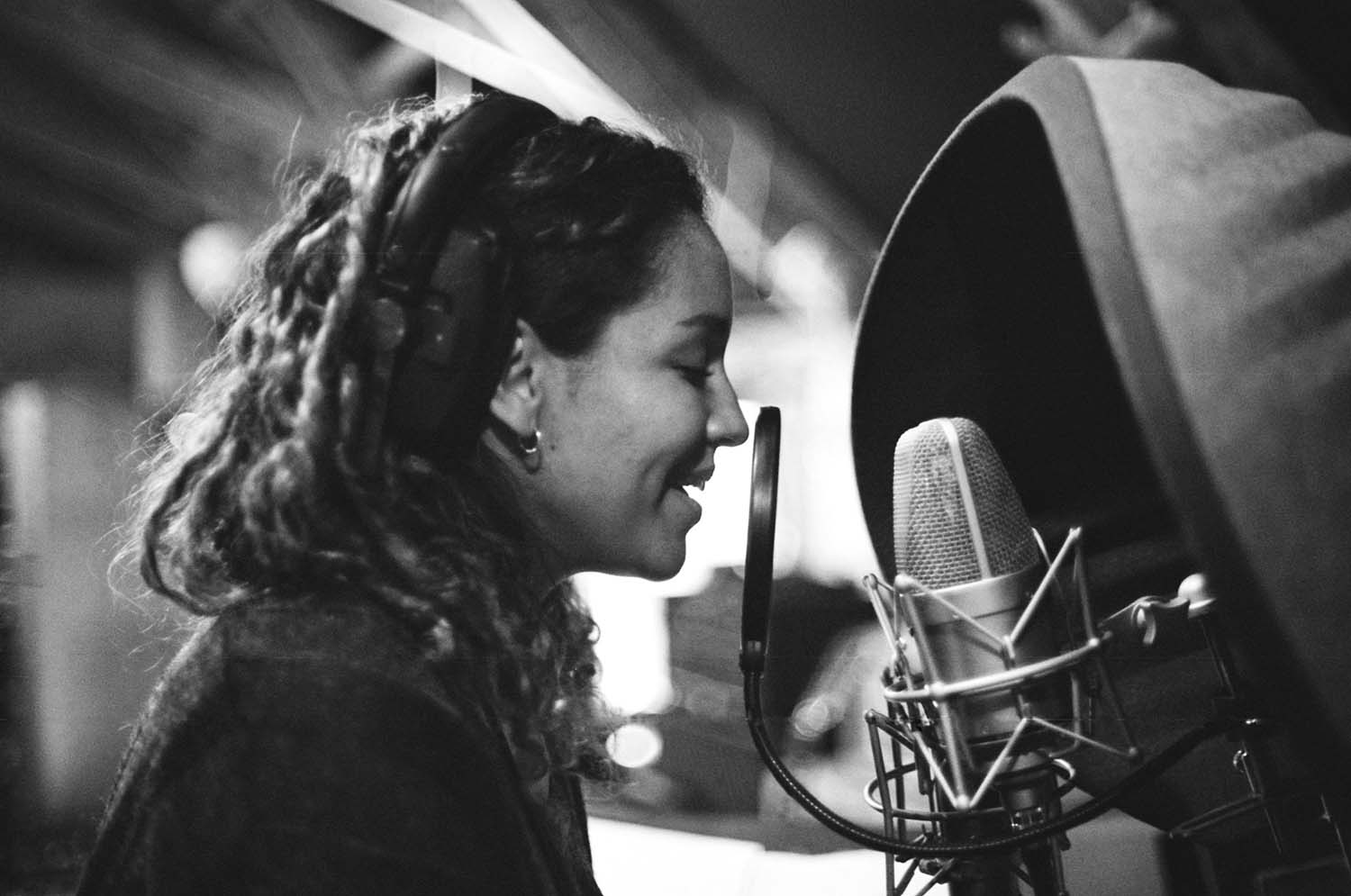
Is there a uniting force to all the Future songs?
It was only looking back that I realized it was very clearly about one thing: trying to move on. Stopping something, dealing with the fallout, and looking to the future. A lot of it was about self-realization. Hoping to not do the same again, and therefore change as a person.
Tell me about the inspiration for your sound. I hear you’re into Scottish folk murder ballads!
When I was in the university I was living in a caravan with three friends, driving from festival to festival every weekend. I tuned into this rural network of folk musicians that have existed for many, many years, and will exist for many to come. I thought that was so beautiful. In my local library I found field recordings of traditional folk singers. They had these amazing old voices, people who’d been singing these songs their whole lives. There’s an academic researcher in me that delighted in finding something so out of the way that I loved and could make my own — that’s what the tradition is. Kind of like jazz, you have a standard repertoire that you borrow from.
Tell me about Girls Girls Girls, and what you’re doing with it now.
Me and my friend Sam Lindo set it up maybe seven years ago now. We’d just moved to London and were playing all sorts of gigs — shit gigs, basically. We wanted to play good ones, so we decided we’d organize them ourselves, and invite loads of women we admired, to create a space for them to showcase and experiment. A friend of ours had just started this charity Orchid Project, and we decided we’d do it all in conjunction. It’s an event that showcases music, and poetry, and often a pop-up art exhibition. The next one I’m planning will be in January. I thought it’d be cool to find a way to go in a tech and entrepreneur direction, link up all the different sides of what women can do. Not restrict femininity to arts.
With a closer scan, you might notice it took three entire decades before Barbara Mandrell became the only woman steel guitar player to claim her stake in the Steel Guitar Hall of Fame when she was inducted in 2009. The steel guitar has become associated with country music as its signature howl, and Mandrell is one of the genre’s many influential pioneers. The instrument is most often laid horizontally on the guitarist’s lap and played by plucking the strings with one hand while pressing a smooth, hollowed metal bar down on the strings with the other hand to change the pitch. Because of its method of play, it’s known colloquially as the lap steel guitar (meanwhile, the pedal steel guitar is also played horizontally but its large frame is most often held up by legs and the tone is changed with pedals and levers).
The steel guitar was developed on the islands of Hawaii before its twangy resonance of the became associated with the sounds of American roots. In the mid-1880s, according to folklore, an 11-year-old Hawaiian schoolboy named Joseph Kekuku was strolling along a set of railroad tracks, Spanish acoustic guitar in hand, when he found a loose bolt in the street. He discovered that when applying just the right amount of pressure to his guitar, a ghostly, heart-wrenching wail reverberated. By the 1920s, this style had taken over Hawaii, and musicians from across the mainland flocked to adopt the tricky technique, resulting in the recording of the first country music songs featuring the Hawaiian guitar.
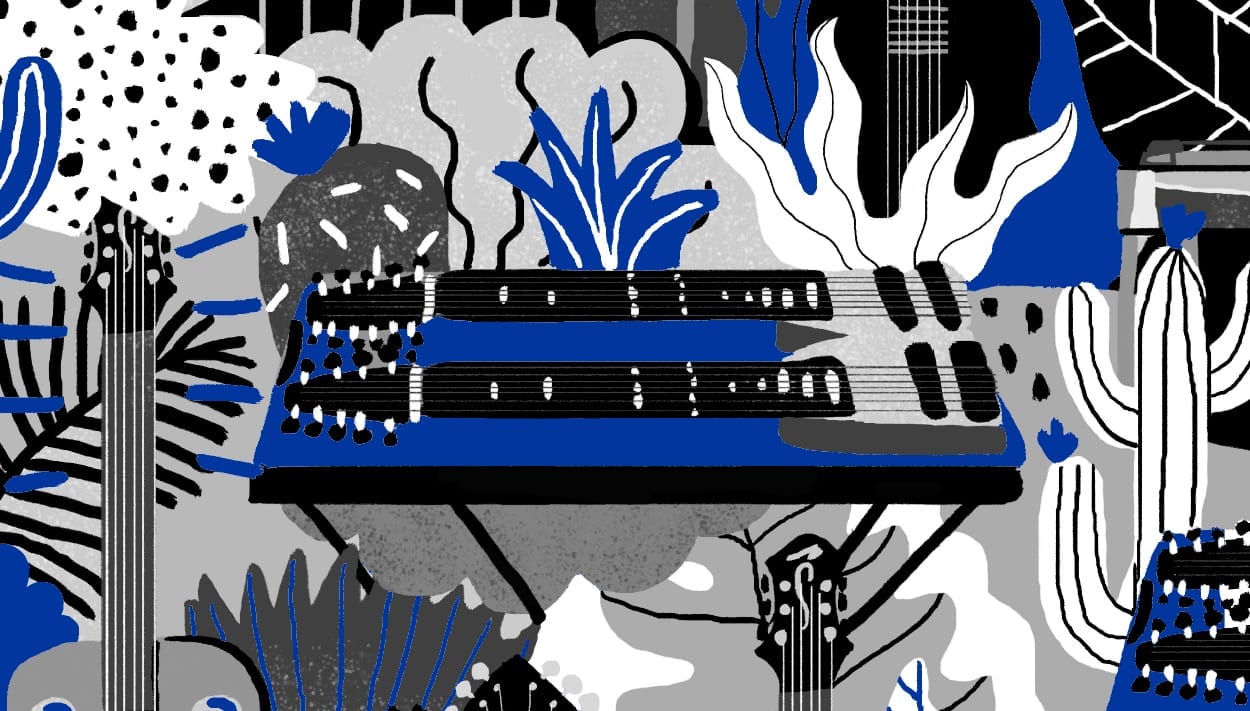
With amplification thrown into the mix in the 1930s, the steel guitar eventually became the first manufactured electrified string instrument. Over time, it would serve as the foundation for a multitude of creative evolutions, as made evident by the addition of multiple necks or the invention of a frame with pedals for playing while standing.
Despite the widespread, historical reach of the steel guitar craze across the nation, women steel guitarists often lack recognition for their contributions. This disparity becomes even more obvious when narrowing it down to women of color, despite the instrument’s island origins.
In April, we published an article on our website that detailed the contributions of Annie Kerr, the first professional Hawaiian woman steel guitarist and frontwoman of an all-woman band. Below is a list of ten additional women steel guitarists in the U.S. who pioneered and mastered the instrument. While a few of these guitarists are well-known household names, there are far more who deserve acclaim. The absence of adequate archiving and preservation has made it so that the legacies of most of these women are currently preserved in the depths of the internet by fervent steel guitarheads and their internet fan forums.
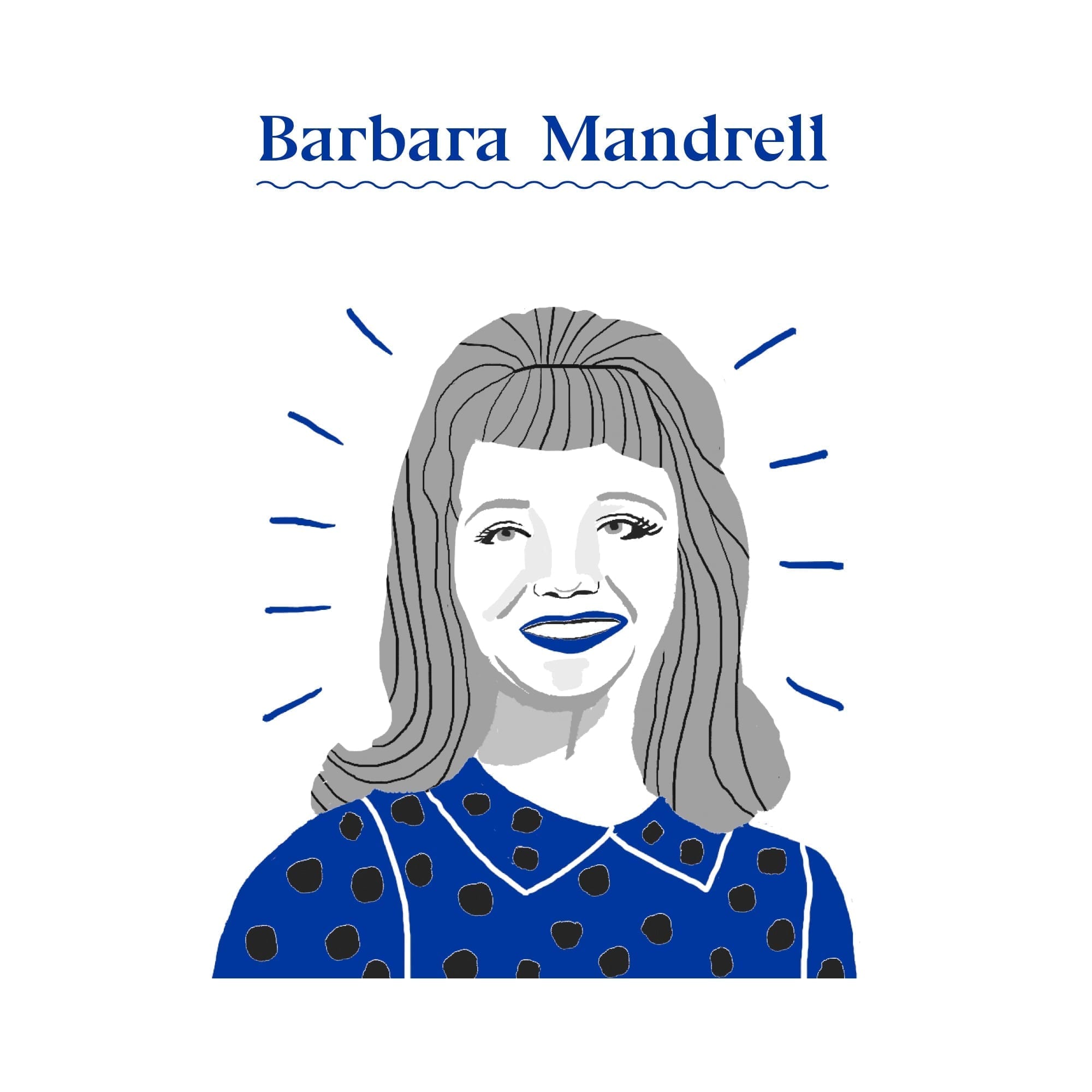
Barbara Mandrell
A professional musician since the age of 11, Barbara Mandrell is one of the most successful vocalists in country music and is known as the “Sweetheart of Steel.” The Texas-born musician has received numerous accolades during her career, including seven American Music Awards, nine Country Music Awards, spots in the Country Music, Steel Guitar, and Musicians Halls of Fame, and two CMA Entertainer of the Year awards—making her the only woman country musician to do so. In addition to plucking on the steel guitar, Mandrell is also proficient at playing the accordion, saxophone, Dobro, and banjo. She retired in 1997.
Cindy Cashdollar
Raised in the small town of Woodstock, New York, Cindy Cashdollar’s resume is lengthy and well-decorated. Making history as the first female inductee in the Texas Steel Guitar Hall of Fame in 2011, Cashdollar paid homage in her acceptance speech to her mentor, steel pioneer Marian Hall, who is credited with bringing the sounds of country swing to the West Coast in the 1950s and played on a variety of country TV shows like Town Hall before she passed in 2008. While playing with the country band Asleep at the Wheel for nearly a decade, Cashdollar earned five Grammys as well as a place in the Texas Music Hall of Fame in 2012. She’s made a lifetime of plucking professionally from lap steel guitar to the Dobro and has shared her extensive knowledge by way of a four-series instructional DVD set she issued in the early 2000s. She continues to tour extensively today, and has played in the bands of Bob Dylan, Van Morrison, and Ryan Adams.
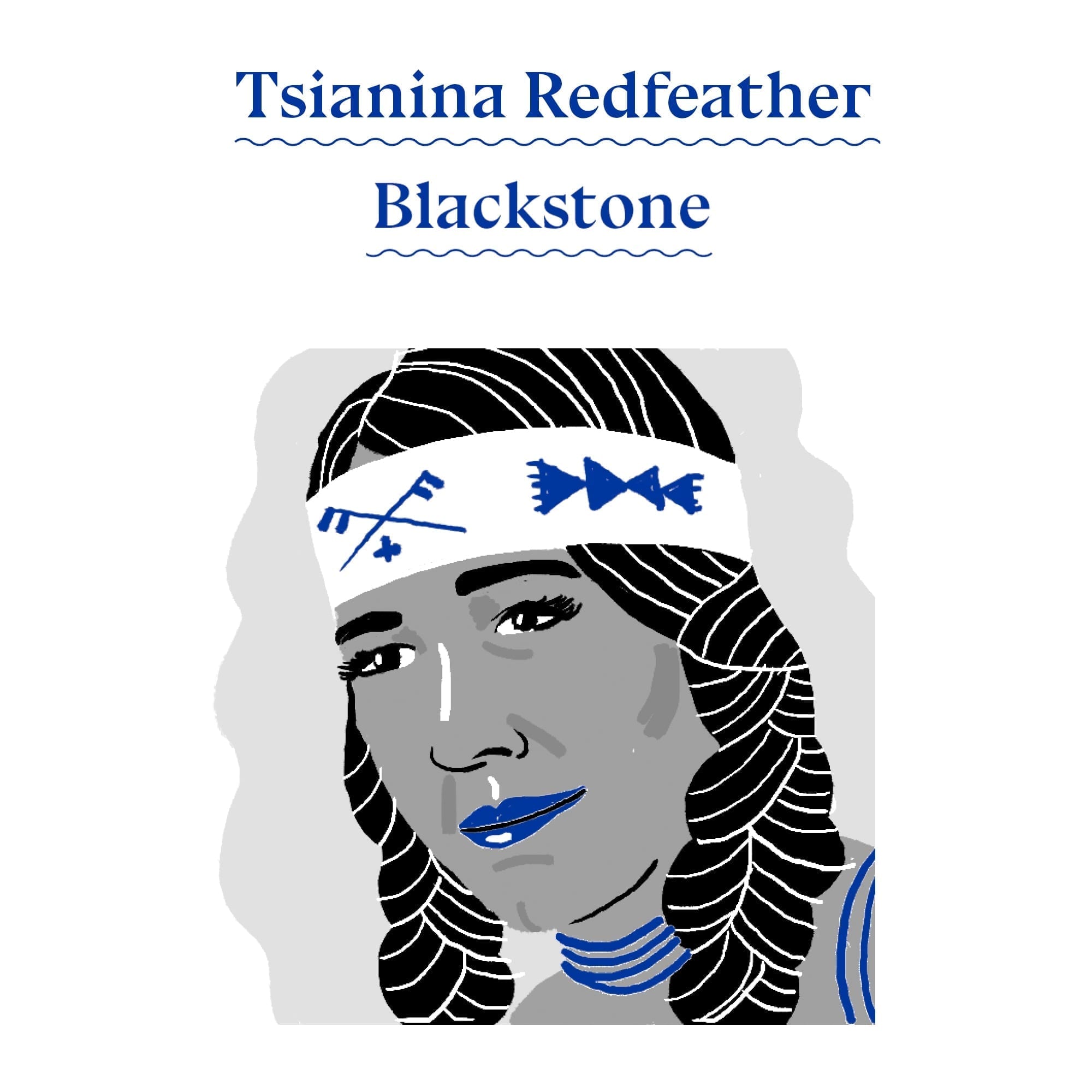
Tsianina Redfeather Blackstone
Before country music co-opted the steel guitar, a youthful Tsianina Redfeather Blackstone of the Creek and Cherokee tribal nations was captured on film playing the Hawaiian-style steel guitar to an intimate audience of soldiers in 1918. It’s speculated that this footage is the oldest known recording of this style of steel guitar, and a clip of it can be found on YouTube. Gaining notoriety for her velvety mezzo-soprano voice, Blackstone continued touring as a professional singer and musician for decades, before retiring in 1935. She later died in 1985 at the age of 102.
Kaki King
In the 14 years since Kaki King released her first album, the guitarist and composer has garnered a cult following for her bold, innovative sound and continued authenticity. Implementing tricky techniques, like high-speed guitar fanning and a multitude of open tunings, King has become synonymous with experimentation. The lap steel guitar made its debut on her sophomore release, “Legs To Make Us Longer.” It was her third album, …Until We Felt Red, where King found her signature, loop-heavy sound. In addition to her musical releases, the Atlanta-born artist has produced scores for numerous popular films and television shows, such as Twilight and Into the Wild.
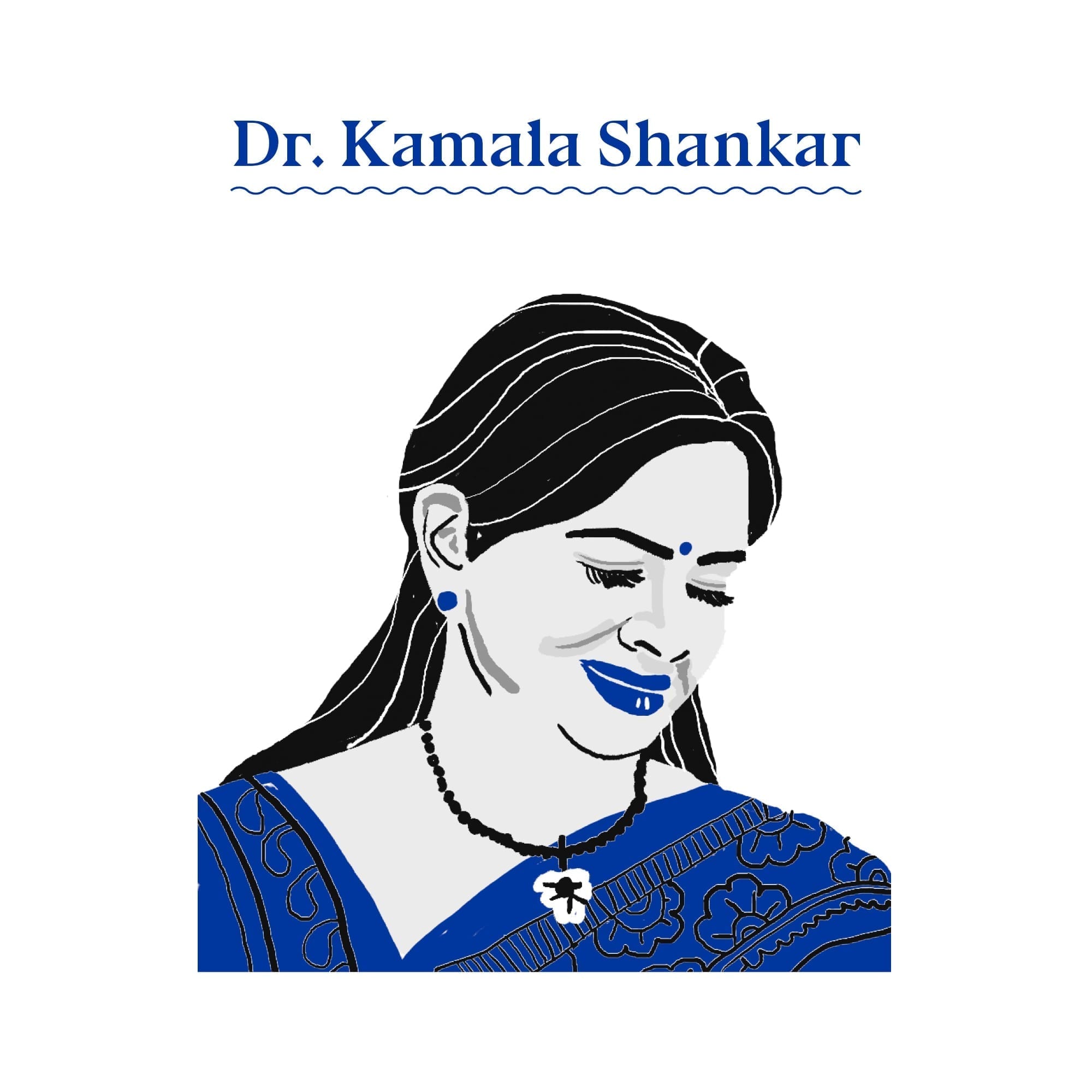
Dr. Kamala Shankar
Born in Tamil Nadu, India, Dr. Shankar was introduced to music at four years old, when she began taking classical Hindu vocal classes. At 12, she earned a Sangeet Prabhakar, also known as the equivalent to a Bachelor of Music. By 1998, Dr. Shankar earned a doctorate degree in Hawaiian guitar—the first of its kind—and her immense love for the Hawaiian steel guitar inspired her to design a guitar, which was made three years later. Dubbed the Shankar Guitar, the instrument is a unique hybrid between the Indian sitar and the Hawaiian lap steel. She continues to tour and teach in India and abroad, and in 2013 she became the first slide guitarist to receive the prestigious Rashtiya Kumar Gandharva Samman National Music Award.
Donna Hammitt
Well known in tight-knit country steel guitar fan communities, Donna Hammitt began playing professionally as a teenager in the Knoxville area. At 14, Hammitt performed on the country music programming broadcast Tennessee Barn Dance, and played so well that she was invited back regularly for a full year. In college, she studied commercial music at Belmont University in Nashville—she became the second-ever steel guitarist to do so in the discipline and graduated cum laude in 1994. During her career, she shared bills with the likes of Rhonda Vincent and Jimmy Day.
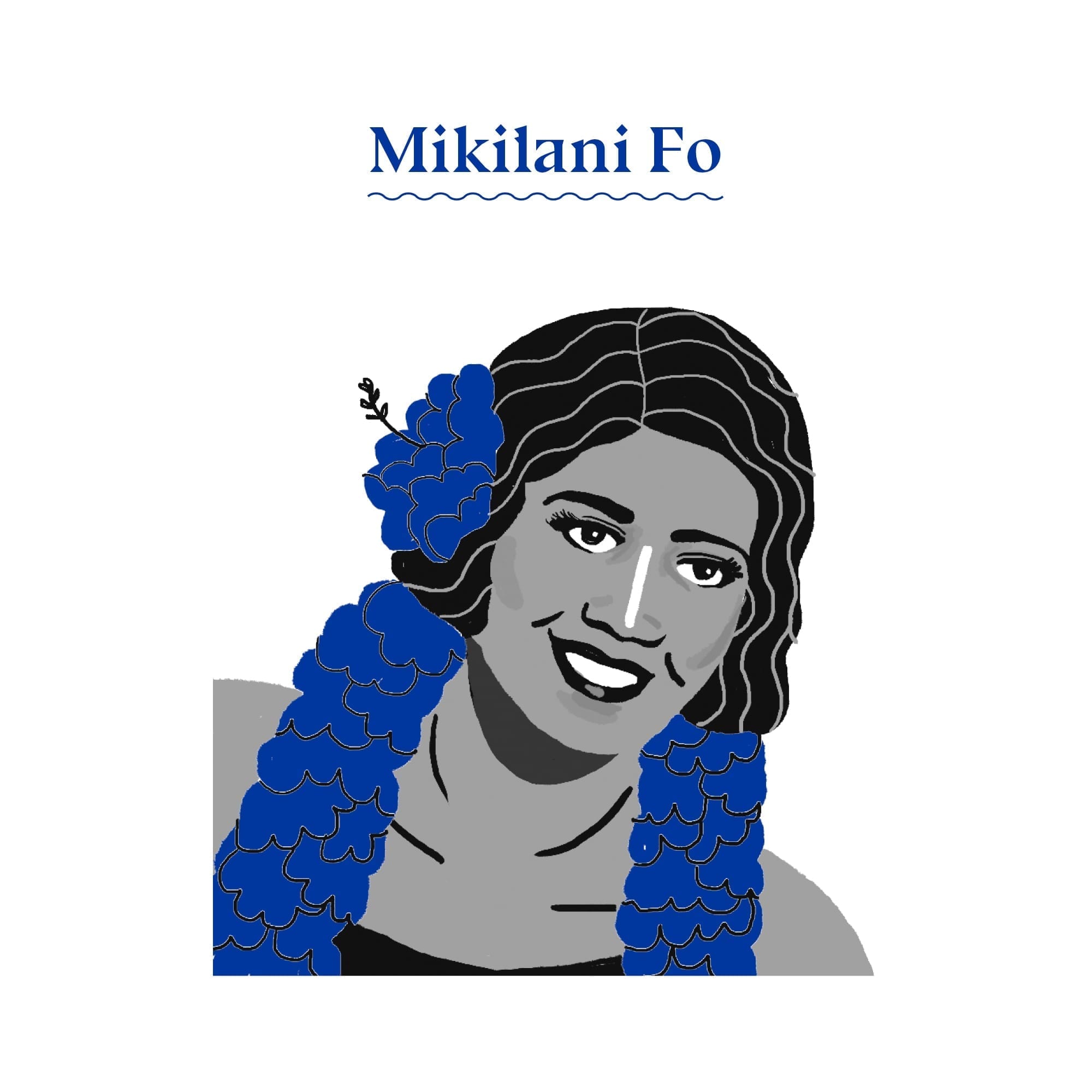
Mikilani Fo
Although Mikilani Fo was a pioneer of steel guitar and one of the very first professional women players, further biographical details of her life are scarce. Luckily, Lorene Ruymar, a steel guitar player and enthusiast who founded the Hawaiian Steel Guitar Association in 1985, authored the comprehensive anthology, “The Hawaiian Steel Guitar and Its Great Hawaiian Musicians,” which provides a snippet on Fo’s life. Taught to play steel guitar by her father, Fo had an affinity for string instruments and excelled in ukulele, bass, and guitar, among others. At 35, the Hawaii native tragically died on stage during a performance in Reno, Nevada. You can find fan uploads of Fo’s tracks on YouTube.
Owana Salazar
A descendant of Hawaiian royalty, Owana Salazar was raised surrounded by music and history. At age 37, she began studying steel guitar, taking formal lessons from Jerry Byrd, a musical mastermind with a plaque in the Steel Guitar Hall of Fame. She became the first woman student graduated by Byrd in 1992, and in the years since, her signature blend of traditional Hawaiian music with contemporary jazz has earned her several honors, including a handful of Hawaiian Na Hoku Hanohano Awards. When not making music, Salazar dedicates her time to advocating for Hawaiian independence and sovereignty.
Sarah Jory
Born in Berkshire, England, Sarah Jory has been plucking steel since childhood. At the young age of five, she received her first steel guitar and quickly mastered it—so much so that by age 11 she released her first full-length album, Sarah’s Steel Line, in 1980. Two years later, Jory began performing extensively at steel guitar events, including Scotty’s renowned (and now defunct) International Steel Guitar Convention in St. Louis. Over the span of her active career, she has maintained steady album releases and accolades, including Female Vocalist of the Year by the British Country Music Association for nine consecutive years.
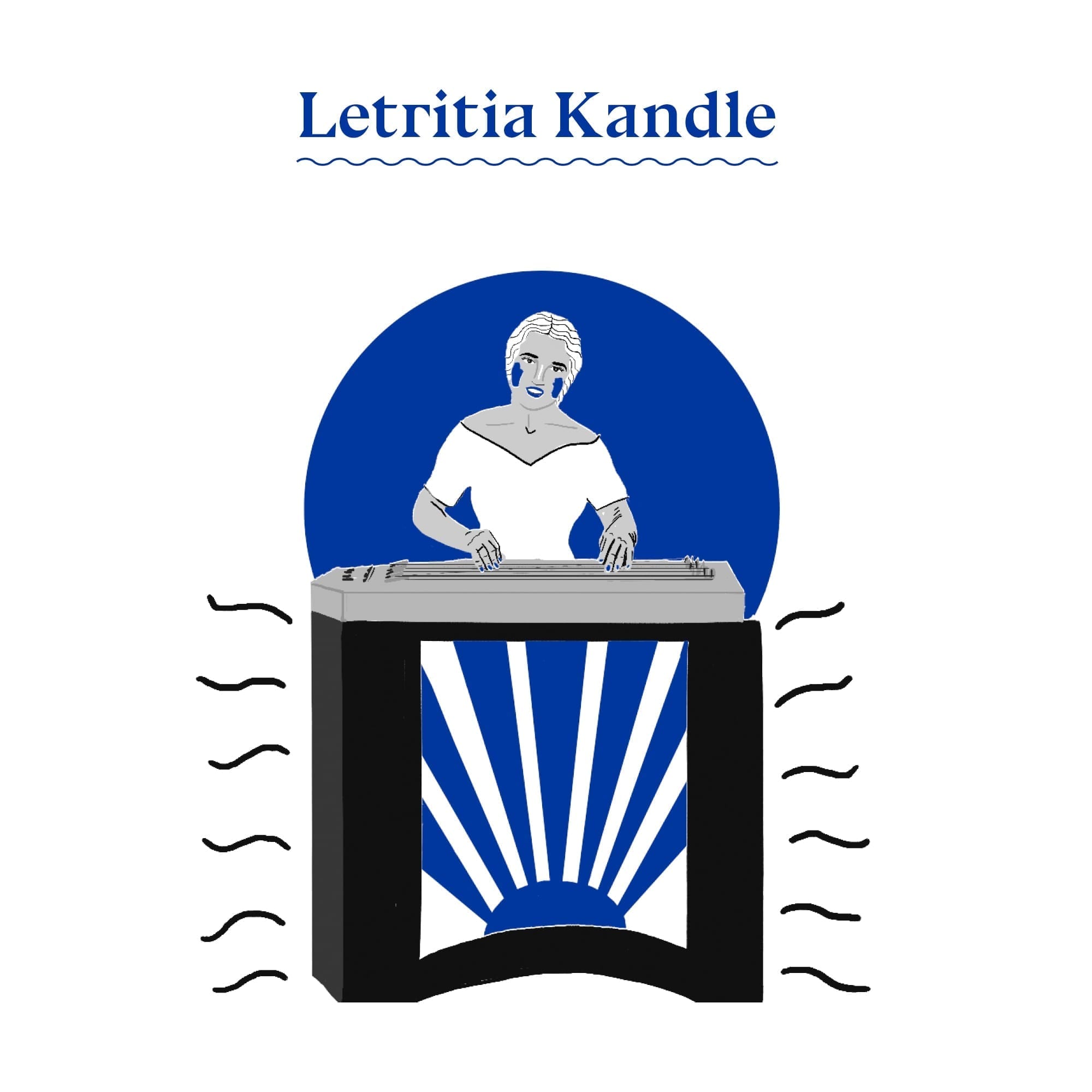
Letritia Kandle
When researching pioneers of electric string instruments, one will be hard pressed to find a name that doesn’t belong to a cis man, but by 1937, Chicago-based guitarist Letritia Kandle was already making history when she debuted the design of her elaborate console steel guitar. Known as the Grand Letar, the multi-neck, 26-string steel guitar was a literal dream come true; After she envisioned it during a deep sleep one night, Kandle’s father helped construct her vision. Even more impressive than its necks and two embedded speakers was a 120-bulb, four-color built-in light show that danced joyfully during sets. After contemporary steel guitar collector Paul Warnik discovered the creation, he contacted Kandle and restored the instrument to display in 2008 for its first public showcase in over 55 years. Kandle died two years later at 94 years old.
Born Ruby Blevins in 1909 near Hot Springs, Arkansas, the future Patsy Montana studied violin at UCLA before catching her big break. In 1931—when live radio was arguably more important to launching music careers than concerts or hit records—she won a talent contest in which the first prize was a coveted spot on the Hollywood Breakfast Club radio program. A few years later, influential Chicago radio show the National Barn Dance paired Patsy Montana with Kentucky string band, the Prairie Ramblers. The artists became National Barn Dance regulars , and the Ramblers went on to back Montana on her best-known recordings.
In 1935, Patsy Montana and the Prairie Ramblers recorded the groundbreaking hit “I Want to Be a Cowboy’s Sweetheart” for the Vocalion imprint, though as a self-penned hit in a genre that even now is often dominated by interpreters of others’ compositions, its musical and cultural importance extends beyond any sales figures. Furthermore, the song’s title is misleading; Patsy Montana wasn’t pining to be a damsel in distress, untied from the railroad tracks by a strong male lead. Instead, she longed for the same adventures as the storied cowboy.
For the rear cover of the 1984 Columbia Historic Edition LP of Patsy Montana’s best-known recordings with the Prairie Ramblers, the Tennessean’s Robert K. Dermann examined the singing cowgirl persona through a socio-political lens. “The singing cowgirl came along at a time when a huge number of women had to enter the workforce alongside their husbands,” he wrote. “Patsy’s western fantasies of male-female equality coincided with women’s emergence from the kitchen.”
Patsy Montana parted ways with the Prairie Ramblers around the dawn of World War II. That didn’t slow down her career, which lasted until her death in 1996. Along the way, she rode side-by-side with cowboys and outlaws, just like the characters in her songs. Career highlights include an appearance in Gene Autry’s 1939 film Colorado Sunset and underrated 1964 album At the Matador Room, featuring a then-unknown Waylon Jennings on lead guitar.
Like the western heroes she emulated, Patsy Montana was a true pioneer. She paved the way for generations of women in country music, from Kitty Wells to Kacey Musgraves, to achieve stardom while boldly challenging the status quo.
Early career success didn’t translate into a Music City fairytale about a literal coal miner’s daughter from Kentucky hobnobbing her way to radio airplay. Happily ever after doesn’t come that easy for an independent-minded artist like Presley, and as she’s quick to point out, there aren’t many women on commercial country radio in 2017.
Although the other two Pistol Annies are among Presley’s collaborators on sophomore solo album Wrangled (issued April 21 by Thirty Tigers)—co-writing and performing on opening track “Dreams Don’t Come True”—her current roots-based musical direction is a whole different rodeo from her pop-friendly past. It’s a semi-biographical set of songs about an artist letting go of grandiose dreams of superstardom, focusing instead on growing a grassroots fanbase.
Presley recently chatted with She Shreds about her recent album and the lack of women at the top of the country music charts before giving some business and performance advice for aspiring country musicians. Wrangled is out now.
She Shreds: “Dreams Don’t Come True” is kind of a bummer on first listen. But really, it’s just realistic. If you’re a creative person, you don’t know what your career path is going to be. Is that what you were trying to say with that song?
Angaleena Presley: I think it’s not so much about dreams don’t come true. It’s about expectations [that] don’t come true. It’s more about having this grandiose idea in your head and walking around with that hanging over you. You end up not feeling good enough because you didn’t reach this fairy tale place that really never existed anyway. So it’s not really a sad song. It’s not realistic to think some dude is going to give you a Cadillac five minutes after you move to town, even though that’s what we see in the movies.
I like the song “Country.” When [guest artist] Yellawolf does his rap, what he’s saying is more country than any of the songs that list the things you list off. I don’t know if y’all were going for that irony or not, but it’s there.
It’s really a parody of everything that’s still going on with country radio. It makes fun of the trends and the things country people are supposed to like. In the past 10 years or maybe even more than that, there practically haven’t been any women in the Top 10 on country radio, or even in the Top 30. I think a lot of female writers who write songs for females to sing have gotten the backlash from that.
There was a moment in my career where I had a meeting with my publisher, and I was told that there’s just not a lot of girls cutting songs right now. I realized it’s not that there’s not a lot of girls cutting songs. They aren’t getting played on the radio, and the label heads are not signing them. You had label heads saying, “Well, we have two girls already right now,” and they are still saying that. I’m 40, and I’ve got nothing to lose. I don’t think country radio is ever going to play me because I don’t play their game. If there’s anybody that can blow the whistle, I’ll blow it. I don’t care. But really what I was saying with the song is “there’s more substance out there than this.” But if this is what you want, I’ll give it to you in my own silly way and make my own list of things that might make you a little bit uncomfortable!
What happened with Yellawolf is I had written a rap part for this song. I’m not a rapper, so I’m not going to be that hypocritical—I’m not going to make fun of country rap guys and then try to do it myself. I knew I wanted somebody on there who could really do it. A friend of mine met Yellawolf and introduced me to his music. I thought, “man, he’s the real deal.” He invented country rap. It’s like if Eminem grew up in Alabama. So through a friend of a friend, I invited him to come over to the studio. He liked the song and said, “Yeah, I’ll write you a rhyme.” It’s all his words. He said the f-word twice, and I was so glad because now I don’t have to say it. For me, I like to be subtle about the digs that I take. I try to be clever and hide them away. That’s what I did in “Country,” but here comes Yellawolf with balls of steel, just laying it all on the table.
Sadly, you don’t have to worry about it being played on the radio just because he cusses…
Exactly. It was all in good fun. I’m not against anything. I’m for equality and everybody getting a fair shake. That’s not what’s happening right now. I don’t want to take anything away from anybody. Heck, I love Blake Shelton. I sang on a bro-country song, “Boys ‘Round Here.” It’s just that we need some more girls around here.
“Outlaw” is about how you don’t suit this anti-establishment image that’s cast on you simply because your music goes against the grain.
Nobody wakes up and says, “I’m going to be the underdog! I’m going to get pushed down and get my heart broken so many times that eventually I’m going to be so callous and so brave.” Everybody wants to be a member of the good ole boys’ club. It’s just that they won’t let us in. I don’t set out to be an outlaw. I can admit that I want to be at the award shows and be recognized for the work that I’ve done. It’s just that the work I do seems to scare those types of people.
The term “outlaw,” going back to the ‘70s, was more about artists wanting to write their own songs or have control over what songs they recorded. They wanted to do things on their own terms beyond what the business was allowing at the time. It was sort of a punk and indie rock kind of attitude before people knew what that was.
You’re right, it’s about artistic integrity and not conforming to get rich and famous. You have to choose if you want to get rich and famous or be an artist, and to call yourself an artist you kind of have to follow a certain path. It seems like the words artist and outlaw are intertwined, because true artists by accident are outlaws. We are the working-class heroes of the music business. We don’t get the big money or the big venues or the big awards, but I think we write songs and make music that is timeless. So maybe we get the big payoff in the end, when we are broke and dead. Townes Van Zandt is a perfect example of that. I don’t know of any songwriter alive that doesn’t just revere him, and he never really in his lifetime got the accolades he deserved. And of course he was an outlaw in every sense of the word. He was a bit reckless.
You could say similar things, except for being reckless, about the late Guy Clark (a legendary songwriter from Texas). You wrote a song with him (“Cheer Up Little Darling”) for the album. What was it like working with him?
He was such a great guy. He was so wise and so confident. He knew that he was great and knew that he was smart. He took his time. I was already kind of a slow writer anyway, and I don’t know if it’s a bad thing but he taught me to be even slower. He said to me so many times that if you force it, they’ll know it… It’s something you can’t force if it’s going to be authentic. It comes from some other, bigger place, and sometimes we just have to wait. If anything, I learned that for him. And I learned also to not close the door on new artists. You can get to this real comfortable spot in this town where you’ve found your people and you know who you want to co-write or hang out with. Guy never closed the door. He was always looking for new inspiration and younger artists to come in and teach him things. Him being who he was, I think it’s a really amazing quality that he was so eager to learn.
In terms of that, do you see someone like [rising country artist] Maren Morris and think about what sort of song you could write for her?
I do. On the record I wrote “High School” with this group called Walker County. It’s two sisters. I think Sophie was 17 or 18 when we wrote the song, and Ivy was about to turn 21. I met them, and writing with them has been one of the greatest experiences of my career. It’s so refreshing, and they have great ideas and are great vocalists. Sister harmonies: you can’t get much better than that. So you bet your sweet A-S-S that I think about what song I could write with Maren! I know Maren, and she’s an awesome girl.
A lot of the advance attention for the album was about “Mama, I Tried,” framing it as a tribute to Mama Tried.” Was it a nod to the late Merle Haggard?
Believe it or not, Oran (Thronton), who produced the record with me, and I wrote it a week before Merle Haggard died. It creeped both of us out in a way. “Mama Tried” is the first song I learned to sing and play on guitar. My dad taught it to me. I knew that I wanted a song on this record that is sort of the flipside of that. It’s about talking to a mom who had such high expectations for you, and you’re just not living up to them. She wanted me to be all these great things, and I tried but didn’t get there.
It’s sort of like the reverse of Bobbie Gentry’s “Fancy,” where a young woman becomes everything her mom wanted her to be.
It’s two-sided because the girl in the song isn’t mad at her mom or anything. She’s saying, “I tried to do this, and I’m glad that I tried because I’ve made all these friends and been around the world singing these songs. But I might not get to where you thought I would get.” It’s not just a way to say that to my mom, but for me to say it to myself. It’s letting go of this grandiose ideal that you’re going to be rich and famous and win fifteen Grammys and have your own TV show. I just had to have a mental reckoning with that. “Mama Tried” is the first song I learned on guitar, so how about “Mama, I Tried” at this point in my life and career to just be okay with who I am and where I’m at.
What was it like working with Wanda Jackson on “Good Girl Down?”
It was so great. She is a hoot. I just want to absorb her wisdom. She’s been in the music business for so long and she’s always been an outlaw. She was the first man or woman in country to dance. You weren’t allowed to dance. Elvis danced, and here’s Wanda Jackson dancing. The clothes she wore were just provocative, and she just kept right on going and doing her thing and became an icon in this business. Yet she’s still just a sweet girl from Oklahoma. She is down to earth. She’ll tell you that she loves her husband more than anything in the world and he’s the only man for her, but she did date Elvis.
Awesome. Did you work on just the one song with her, or did you write something for her next album? I know she’s doing an album with Joan Jett as producer and has worked with Nashville songwriters.
I think she’s cutting the song, too, for her album. When I went to do the record, I had to call and ask her permission. “Miss Wanda, I really love this song. Can I cut it for my record?” “Well I guess so, honey. Go ahead and do it.” I played her the track, and man she was just tapping her toes. I was so relieved because I was scared she wouldn’t like it.
“Groundswell” and “Hotel Bible” come across as nods to a time-tested country music trope—stories about a musician’s life on the road.
“Groundswell” is like, I’ve come through these personal ups and downs in this business, and I realize that the answer is going back to the fans and getting out of this business side and getting on the road, meeting people, singing, paying those dues, and building a fanbase. That’s what I’ve been doing the past year and a half. I’ve been laying the groundwork. I thought, “Wow, Pistol Annies have a Platinum single out,” but that doesn’t mean you have a platinum number of fans once you break off as a solo artist. To Pistol Annies fans, I’m that brown-haired girl in the middle. They don’t know my name. So it was a big wake-up call to realize that I had to go back out there and pay those road dues.
“Groundswell” is sort of the downside. “Motel Bible” is about how once you’re out there, it’s so fun. I’ve had moments I wouldn’t trade for anything. The fans are so great. You’ll have a show and then go back to that city, and see two or three of the same people wearing your t-shirt. It’s exciting, like I’m starting to be a real country and western singer. I wanted to end the album on an upbeat because I do feel like I’m in a great place right now. I feel like I’m at the beginning of something instead of the end of something. I have new goggles that aren’t jaded anymore. I’m on the Jason Isbell train to freedom, and I’m going to ride it until it bucks me off.
To wrap this up, what’s some advice you’d want to give younger artists who are interested in entering your field? What’s something you wish you had known 15 or 20 years ago?
For me, I wish I would have started a band in my garage and started playing gigs. As far as music business advice, I came to Nashville thinking I’d get some bigwig to put me on a bus. The best way to do it is to just start playing music, grow your performance chops, grow some fans, and grow a love for life on the road. On the road, it’s not glamorous. You might think it is, but eating chili dogs at truck stops at 3 a.m. can start to weigh on you after a while. Also, stick to your guns and follow your gut, even when it breaks your heart. That broken heart might be the road to a new heart you never even knew you could have.
Singer/guitarist Sarah Shook has some idea. Raised in a strict, conservative family in upstate New York where only classical and religious music was allowed, she wasn’t exposed to secular music until her late teens when a friend introduced her to indie rock. Life forever altered, she began learning guitar and, after relocating with her family to North Carolina, solidified a deep passion for country music.
Shook married young, but it didn’t last. At age 22 she found herself a divorced, single mother, and over the next several years worked multiple jobs to support herself and her son while playing area gigs on the side with her band, Sarah Shook and the Devil. The Devil broke up in 2013, and eventually Sarah Shook and the Disarmers arose in its ashes. With the new band came a new focus, and a debut album, Sidelong. The album’s stripped-down country/rock sounds, along with Shook’s outsider demeanor, and candid lyrical style proved infectious, and quickly commanded attention in their hometown and beyond, including a record contract with the esteemed Bloodshot Records, who will release Sidelong on nationally on April 28 (a new full album is already slated for 2018).
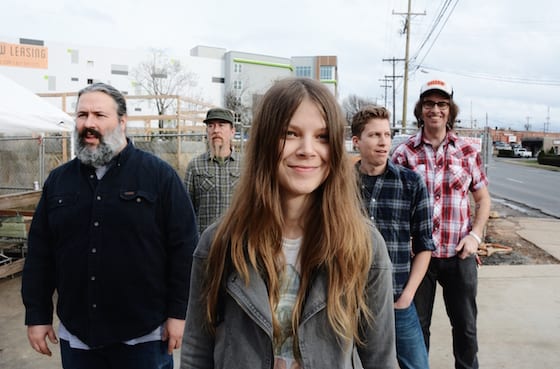 Image by poprockphotography
While her music and attitude are reminiscent of various outlaw country legends, Shook is no revivalist. Her songs may draw on classic country themes such as boozing, romance (in all its ups and downs), and hard living, but her perspective is unmistakably grounded in the present.
In an interview with Rolling Stone (who named her “One of 10 Country Artists You Need to Know”) she said, “This genre of music attracts a certain kind of person sometimes who is very close-minded and I want to tell those people, ‘Look, you’re welcome to be a fan. But full disclosure, I’m a fucking civil rights activist, and I’m a bisexual, and I’m an atheist, and I’m a vegan,’ you know what I mean? That’s a whole lot of non-redneck shit right there.” It could easily be argued that she carries the torch of the artists that came before her by speaking up for the underdog and rallying against the status quo, even receiving the 2016 Indy Arts Award with collaborator Erika Libero for their work in promoting inclusion for women and LBGTQ in the Chapel Hill area with a Safe Space initiative and a 2-day festival, Manifest.
Today, She Shreds premieres Sarah Shook and the Disarmer’s latest track, “The Nail,” a deceptively cheery-sounding drinking song touching on the all too relatable experience of toxic, but exciting, relationships, and wondering who will be the first to pull the plug. Check it out now, along with a Q&A with Shook about her musical path, balancing her career and family life, and combining her passions for activism and music. Sidelong is available for preorder now.
She Shreds: As someone who grew up in a household where secular music was forbidden, what was your first impressions once you were able to immerse yourself in it?
Sarah Shook: My first exposure to secular music blew me away. The classical and “worship” music I grew up on was very structured and rigid, it was less art and more technical proficiency. Then suddenly music wasn’t just the methodic pairing of notes and chords in a predictably pleasing order, it was brash and loud and weird, and most strikingly the expression of the self was tangible, like the art was shining through the prism of the artist. I was floored. I was obsessed.
How did you find your passion for country music? It seems like it could be either ironic or natural (or a combination!) to gravitate to a genre often associated with religious imagery and roots after leaving the church in your personal life.
A former partner introduced me to traditional country music around 2009 and it felt like coming home without realizing I’d been gone in the first place. I loved the self-deprecating, self-denigrating lyrics and the sort of “nobody is tougher on me than I am” approach. Growing up poor sure didn’t hurt my affinity for country music either. A classic country decision like “I can buy myself a meal or I can have another couple shots at the bar,” I was living that life in real time, well before my introduction to country music.
As far as the religious aspect is concerned, I can’t deny that I got a kick outta naming my first band “Sarah Shook & the Devil.” I felt like our name was fair enough warning that we weren’t about to bust out any hymns.
At what point in your journey did you pick up guitar? Which model do you play now?
I taught myself basic piano when I was 8 or 9 so I could put music to the lyrics I was writing, but by the time I was 16 I was ready for a more portable instrument. A friend of mine let me borrow her Oscar Schmidt guitar and I bought one of those giant posters with chord shapes and finger positions. I plastered that thing up on my bedroom wall and practiced chords and played around with strum patterns until I could finally write a complete song, lyrics, chords, melody, on guitar, and I haven’t written anything on a piano since. I still have that old Oscar Schmidt, my friend was kind enough to let me keep it.
Currently I play a hollow body archtop Gretsch Synchromatic; it’s a 2011 reissue of a model that Gretsch debuted in 1939. I’ve been spending some time at home with my Harmony Rebel hollow body electric and am pretty stoked to find ways to add it into the mix, both in live settings and in the studio.
You tend to keep the two sides of your life—family vs. music—separate. How do you find this balance? Where do they overlap? Do you feel that it comes out in your music on Sidelong? If so, how?
Finding myself a divorced, single mother at 22 was not a card I anticipated pulling from the deck. I worked two to three jobs at a time, four days a week so that the three days I had with my son, Jonah, I could spend with him with no distractions or obligations. Although I was still writing songs and playing shows here and there, my priority was providing for my child and raising him in a solid, supportive, loving environment.
When Bloodshot Records approached the Disarmers about a record deal that involved a lot of heavy touring, Jonah (who is now ten years old) was the first person I consulted. Up until that point my music had rarely interfered with my time with him and this was a potential game changer. I gave him the gist of the deal and his reply was, in so many words, “Go for it. The bigger you get the bigger the platform you have to effect change.”
While it certainly helps to have such a level-headed kid, it’s still really hard to be away from him for long stretches of time. Other than that, I don’t think there’s a lot of crossover between my music and family life but every once in awhile something slips through. There’s a line in our song “Nothin’ Feels Right But Doin’ Wrong” that says, “one more day without sun,” and it took me a long time to catch on to my subconscious pulling a fast one on me with the double meaning: “one more day without son”.
Tell me a little more about “The Nail.” Did anyone in particular inspire it? Is it a more of a break up song, or a celebration of dating someone you have fun with but know is a bad match for you in the long run?
A former boyfriend, yes. It was inspired by a kind of a culmination of things surrounding that relationship, there was finger pointing, drunken arguments, righteous indignation, frustration with my inability to end something that was trapping us both in the same vicious cycles over and over again. I think there was a lot of underlying anguish and feelings of powerlessness to get us back on track as well. We both knew things had gone too far. But neither of us wanted to admit it. I think a lot of folks can relate to those sentiments, unfortunately.
You are involved in creating safe space for LGBTQ people in your community in Chapel Hill. Can you tell me more about your work, and the cultural climate regarding these issues in your city?
Yes! My activism partner, Erika Libero, and I have been working together on various projects for awhile now. When we first started meeting and brainstorming ideas to meet needs in the community we started a brief punch list of things we wanted to do. One of those ideas was to design, print, and distribute “Safe Space” stickers to businesses in the Triangle and to talk to business owners about what it means to provide a safe space for members of the LGBTQ community. A month or two after that meeting, North Carolina’s infamous House Bill 2 passed and we were like, “Oh shit! We need to make this happen right now!” We started a crowdfunding campaign, met our goal, and within a week or so we were hitting the streets, stickers in hand.
Another of our projects was Manifest, a two night music festival spread between three venues in Chapel Hill, NC. We wanted to throw a fest that gave women, trans folk, and other members of the LGBTQ community the kind of visibility and representation that cis white male musicians and artists have here on a regular, pretty much nightly basis. It was a huge, positive push towards equality and it was welcomed with open arms by the community. It’s been exciting to see local venues take on a more actively inclusive approach to booking since then. I feel like we’ve made some positive waves and I’m looking forward to our next project together, whatever that may be. You can follow on Facebook at “Project Safe Space NC”and shoot us a message if you’d like us to send you some free stickers.
As a Southern singer-songwriter who walked the line between rock and country before Americana formally existed, she was long evaded by major labels. Despite years of being overlooked, she’s released 13 studio albums; won three Grammy’s in country, folk, and rock; received a Lifetime Achievement Award in 2011; and won Album of the Year for last year’s Down Where the Spirit Meets the Bone.
Throughout Williams’ career, her father—acclaimed poet Miller Williams, who may be best known for reading at Bill Clinton’s inauguration in ‘97—stood by her side as a huge source of support. His death from Alzheimer’s last year, 10 years after Williams lost her mother, is a keynote on her latest release The Ghosts of Highway 20. The apparitions of Williams’ past are presented through nostalgic lyrics, mournful guitars, and resilience. I spoke on the phone with Williams from her home in LA about her identity as a Southern singer-songwriter, the loss that permeates her sound, and starting her own record label after years of industry hardships.
She Shreds: When did you realize you wanted music to be your life?
Lucinda Williams: It really all come to fruition when I moved to Austin in 1974. That’s where I really started honing my craft and developing a little following—it was completely all on my own. I moved out to LA in late ‘84 and that’s when I got introduced to the whole business aspect of things, when I started attracting attention from some of the record labels. I got what they used to call a development deal with Sony Records. They gave you enough money for six months to pay your rent and live on—the idea being that you write songs and, if they like what you’ve done, then they sign you to a deal. That’s when I came up with the majority of the songs that would later end up on the Rough Trade album [Lucinda Williams]. Sony Nashville said it was too rock for country and Sony LA said it was too country for rock. So, that demo tape floated around for a couple of years, and eventually found its way into the hands of Rough Trade Records. It sounds sort of Cinderella-ish [laughs]. At that point I had been turned down by every label out there—all the majors, all the minors. It took a punk label from England to recognize what I was doing.
Why do you think it took so long for the majors to acknowledge your music?
The main thing was, this was all happening before the big Americana movement came about, and that market was created for the kind of music I was doing. Up until then, they just didn’t know what to do with me. It was a timing thing. There had been women singer-songwriters in the ‘70s who were successful, like Joni Mitchell and Carole King. I got caught in between that period, and at some point in the late ‘80s/early ‘90s there was that wave of female singer-songwriters, like Mary Chapin Carpenter and Tracy Chapman. I was able to catch that wave. I kept saying, “Look, we’ve all been around for all this time. There’s more where I came from.” [Laughs.] There are more of us out there.
Absolutely. That feeling of being recognized in such a grandiose way, just because you’re a woman—as if we haven’t been out there, playing and just as capable as men, this entire time.
I know—they treat it like it’s a big phenomena. It would be like, “all-girl band” or “girl drummer” and I’d be like, “Why can’t you just say drummer?” Female this, female that. It’s an oddity. [Laughs.] Well, I don’t think oddity is the right word. It’s not like we’re circus freaks or something—”Hey everybody, come look at the oddity over here! Look, it’s a woman who can actually write really good songs and sing and play guitar!”
Speaking of identity, I’m curious how your roots in the South have influenced your songwriting.
I grew up being aware that I was Southern, and that being a very important thing for me. And being drawn to short story writers, like Flannery O’Connor and Eudora Welty—the surroundings in their stories were so familiar to me, the whole Southern Gothic thing. That world only existed in that part of the country. It’s going to inform the personality of the songs. In a lot of my songwriting, I mention towns and places. It’s a culturally traditional thing in the South to tell stories. My dad was very much aware of that fact that he was Southern, and made that distinction a lot when I was growing up. Because, at the time, when he was trying to be successful as a poet, he was considered a Southern poet, much like how I was later considered a female singer-songwriter.
You lived all over the South in your youth, and you tell the stories of those places so vividly. Do you feel that the song “Ghosts of Highway 20” was a modern follow-up to the younger perspective of “Car Wheels on a Gravel Road”?
It wasn’t a conscious effort. I was talking about a lot of the same things, only now I’m older. With “Car Wheel” I was a child in the back seat—and in “Ghosts of Highway 20” I’m driving the car, looking out the window, and looking back. It’s a similar song, but coming from the perspective of the woman grown and looking at the loss. Highway 20 runs through some of the towns I grew up in, and it runs through the town of Monroe, Louisiana, where my mother was from and where she is now buried in her family plot—where she didn’t want to be buried, but that’s a whole other story. Talk about Southern Gothic. [Laughs].
Grief has always been a huge theme in your songs, but it seems particularly heavy on Ghosts of Highway 20. I know you lost your father last year—how do you feel this grief has affected your songwriting?
My mother passed away in 2004, and then my dad 10 years later. That period in between, I wrote songs like “Death Came”, and then after my father passed away I wrote, “If There’s A Heaven” and “If My Love Could Kill”, which I wrote about the Alzheimer’s disease that killed my father. There’s a lot of dealing with loss, and heavy stuff, and life. It’s a lot different of an album than some of my earlier one’s, like Essence, when I was still struggling with unrequited love as a younger girl. Now I’m a woman of 63-years-of-age and I’m having to deal with…well, I’ve always dealt with dark stuff. I mean, we deal with it from the time we’re born. We start suffering as soon as we pop out into the world. We start out crying, you know? [Laughs.] And it goes from there. I choose to write about it because it helps me deal with it. It’s very cathartic.
I’m curious to know what your process is when writing songs.
I always have a notebook and pen with me—there’s never a lack of inspiration, that’s for sure. My thing is more, when the muse strikes. And I use a Zoom, that little thing you can record into. In fact, I had this dream, and I wrote this new song in the dream, and I usually don’t remember them. And so I woke up and I said to Tom [husband and manager], “I have to put something down right now. Find the Zoom, make sure it has batteries in it.” [Laughs.] I didn’t want to forget. It’s strange how the subconscious works.
When Lost Highway folded, the label you released under for 10 years, you started Highway 20. What was the motivation to run your own label?
When Lost Highway ended, we started shopping around for a new label, and there were just some prerequisites that we wanted understood by whoever we were going to work with. We’ve cut out the middleman, so to speak. Financially, for me, it’s much more rewarding. If you own your own label, you’re not turning the profits over to a major label corporation. You know, I started on an indie label, Rough Trade, and I signed to a major label right after that, and it fell apart. So now I’m on my own label, and there are no rules. If we want to make a double album, we can. If we want to write a song that’s 19-minutes long, we can. It’s the liberty and freedom.
In hopes that performers with fans on both sides of the political spectrum follow suit, here’s some additional perspective on modern country and traditional folk music’s frustratingly limited, yet immensely important role in challenging the racism, sexism, ableism, homophobia, and disregard for the environment that propelled Donald Trump to the presidency, and some insight on a number of artists who are already doing just that.
Young Stars Take to Social Media
While women and allies around the world marched in protest on January 21, country upstarts upholding both timeless sounds and progressive values proved they have one thing in common with Trump: they don’t hesitate to speak their minds on Twitter, Instagram, and other social media platforms. As Hudak mentioned, LGBT and weed-friendly artist Kacey Musgraves is among the handful of young Nashville stars using her platform to stand up against social injustice. For instance, she was more than happy to tweet a photo of a Nashville Women’s March sign bearing lyrics from her personal freedom anthem, “Biscuits.”
I see you, Nashville Women’s March..representin’ pic.twitter.com/6nqnpMjmpb
— KACEY MUSGRAVES (@KaceyMusgraves) January 21, 2017
While Musgraves, Margo Price, and others listed by Hudak should be commended for championing women’s issues and general human decency on a platform that’ll be read by their growing audiences, naysayers may dismiss these women as alt-county outsiders, meaning they don’t have industry support or a massive conservative fan base to lose. Otherwise, these young artists might sidestep discussing politics, like established name Wynonna Judd artfully dodged sharing her opinion of half-sister Ashley’s spirited “nasty woman” speech, featuring a poem written by Nina Donavan. That’s not a given at all, considering Maren Morris, a mainstream upstart with crossover appeal and four Grammy nominations for 2016 major label debut Hero, doesn’t shy away from sharing her opinion. And she’s certainly not going to just “shut up and sing” at the behest of internet trolls.
Chely Wright Stands Up
Hudek dismisses country artists’ presumed concerns that they’ll be blackballed from Music Row if they alienate conservative listeners. He’s right again, as there’s no guarantee that the massive radio boycott the Dixie Chicks faced in 2003 after openly opposing then-president and fellow Texan George W. Bush would halt a mainstream career now, considering the massive success Sturgill Simpson and other left-leaning artists have found despite limited commercial airplay.
Then there’s the case of nineties singer, songwriter, and guitarist Chely Wright, who faced fan and industry backlash after coming out of the closet in 2010. Beforehand, the “shut up and sing” crowd surely saw Wright as one of their own, with 2004 pro-military single “Bumper of My S.U.V.” casting her as the anti-Dixie Chick. A singer in a genre lauded for its honesty, Wright did lose fans for being honest, but those disgusted former fans were eventually replaced by empowered new ones as she used her celebrity status to promote anti-bullying efforts. Wright’s stance against bullies extends to the White House, as she’s been railing against Trump since his Presidential campaign first picked up steam.
Watching our president attempt to honor #BlackHistoryMonth is painful. He goes off script and mentions every African American that he knows
— Chely Wright (@chelywright) February 1, 2017
Wright’s new audience, paired with a changing socio-political and musical climate, found 2016 album I Am the Rain netting her second-highest debut ranking on Billboard’s top country albums chart. In short, Wright’s story should give country artists reason to believe that offended fans and country DJs aren’t guaranteed career killers.
Rhiannon Giddens’ Songs of Freedom
Carolina Chocolate Drops member Rhiannon Giddens’ Freedom Highway, out Feb. 24 on Nonesuch Records, contextualizes the issues facing the Black Lives Matter movement by viewing them through an historic lens. Album cut “Better Get It Right the First Time” tells of a young man who was gunned down after a lone misstep. It’s not apparent at first listen if this senseless death happened on an Antebellum plantation or in a modern-day subdivision. It’s telling commentary that justifies fears of history’s ugliest sins repeating themselves and adds to the socio-political discourse within roots-based music.
Dolly Parton’s Allyship
It can be easy to demonize Christianity and traditional conservative values sometimes, especially when the politicization of personal faith breeds short-sighted contempt for women and LGBTQ rights and others’ religious freedoms. Fortunately, there are believers like Dolly Parton who follow the “Golden Rule”—do unto others as you would have them do unto you—without pushing their personal morals or excluding others. The singer, musician, theme park mogul, and philanthropist isn’t a Christian artist per se, but she broke into country music when most established stars had gospel songs in their repertoire and kept her down-home values intact, and released gospel music of her own while achieving country, crossover pop, and Hollywood stardom.
Parton’s recent support of East Tennessee wildfire victims followed years of promoting literacy and providing college scholarships for children and teens in and near her Sevierville, Tennessee home. Furthermore, she proudly embraces the LGBTQ fans who uphold her as a style icon. Unlike liberal country singers with presumably large conservative fan bases, Parton shares her message of brotherly and sisterly love with a more diverse audience that transcends genre and party lines. That’s why feminist band and former Bernie Sanders opening act Tacocat could cut its own boot-scooting take on Parton’s “Why’d You Come In Here Looking Like That?” without a hint of irony.
There’s More Work to Be Done
While it’s encouraging to identify numerous advocates of social justice within a supposedly conservative genre, there are ways country and roots artists can further rail against present-day injustice. For example, the annual environmental fundraiser Farm Aid is synonymous with co-founder Willie Nelson, and hopefully several women from the worlds of country and folk music follow in the footsteps of 2016 participants Margo Price and Alison Krauss when the September, 2017 festival’s lineup is announced. Playing such events will raise funds for worthy causes while spiting Trump’s climate change denying cronies.
Artists can also participate in protests, following the example Bonnie Raitt set when she performed free for the protestors at Standing Rock. If studio time and touring limits an artist’s hands-on involvement, they can contribute a song of protest about conservation, or women’s rights (sharing the spirit of Loretta Lynn’s “The Pill”) or any other issue they feel passionate about.
Historically, country artists have appealed to everyday people by telling stories that set relatable triumphs and turmoil to song. There’s plenty of turmoil in the world now, so there’s ample reason to think that well-informed, progressive-minded songs, stage banter, and Tweets will meet more applause than dissent, even among “red”-leaning listeners.
Now in her mid-twenties, Loveless has solo four albums under her belt, starting with 2010’s The Only Man. On each one, she has drawn from influences across a spectrum of country, punk, classic pop/rock songwriters such as Stevie Nicks and Paul Westerberg, and has woven them together with her silky voice and naturally defiant attitude. “Vocals are always the most important aspect of [country and Americana music], and I consider my voice my main instrument. Of course, we have pedal steel but we tend to use that sparingly as more of a keyboard. I use my own guitarwork more minimally these days, creating atmosphere instead of a wall of power chords,” she says.
On her latest release, Real, (the making of which was highlighted in the Gorman Bechard documentary, Who is Lydia Loveless?), Loveless has taken her craft to the next level, baring her soul with straightforward, introspective lyrics while trading off between upbeat ballads (“Real”) barroom country/rock (“Midwestern Guys”) and lush, ambient-leaning pop (“Out on Love”). Since it came out on Bloodshot Records in August, it has received near-universal praise and has recently been ranked as a top album of the year by Rolling Stone, American Songwriter, and Stereogum.
When it comes to her gear, Loveless says her tastes and interests have evolved alongside her musical and and songwriting chops. “When I started out, I was 16 years old with an acoustic guitar, and that was all I had,” she says. “I didn’t even own a tuner, so a lot of my requirements have changed since then. It’s taken me a long time to get to experimenting. You can do a lot of cool stuff with a good pedal…I think experimenting is really the lifeblood of being a songwriter. Once you stop doing that, you’re just going to stagnate. It’s definitely important to play around and have fun with it.”
Loveless recently spoke to She Shreds about some of the gear that currently powers her songwriting, studio sessions, and performances. Real is available for purchase now.
Fe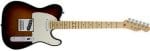 nder Telecaster: My Fender Telecaster is my BFF. When I was
younger, I started out playing bass. I was not super into guitars, but I started playing a Telecaster that wasn’t a real official one. I really liked the way that sounded, but I always had problems with it because it was one that someone built in their house. I bought my American Fender Telecaster four years ago and it’s kind of been my “old faithful.” It’s just really playable. That sounds kind of stupid, but it crunches up enough to the level that I need but you can get that twang sound out of it. I don’t really like a dull sounding guitar… I like brightness, and being able to bend or chunk along. It does whatever I need to. I kind of have a throwing and dropping things problem too, and Telecasters are really good for that. They’re really sturdy.

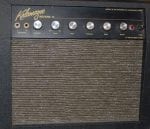 Kalamazoo Amplifier: [Mine has] got to be a 70s-era model. I’ve had to have it rebuilt multiple times, because it’s just not a touring amp. Tubes fall out of it, it’s rickety and it is tiny enough that someone could walk off with it pretty easily. It’s only got three knobs: tone, loudness (instead of volume it says loudness), and tremolo. For me, it breaks up really well, but it’s tiny so it breaks up quickly. It’s not like you have to turn it up to 11 to get a good tone out of it. That’s why it’s good in the studio—you can play around with that. You don’t need it to be as loud and blast everyone. The old rickety tremolo knob is also really fun to play with when I have PMS or whenever I get depressed and need to play sad songs. On tour I use a Fender Blues Junior, which is still a pretty small combo amp compared to what a lot of people use, with an MXR overdrive pedal for if I’m playing a solo, or something, and I need a little bit of a volume boost … That’s how I get on certain newer songs where it’s a little grungier, that’s kind of how I get that sound on stage.
 Voodoo Lab: I don’t use a lot of tremolo live, but this is something that I use in the studio. It’s also just something that I use to write, because basically when I write, I’m alone, and I have to go through all these different moods and find what sticks. The thing about tremolo is it’s really a mood maker for me. I’m kind of a sad person, so it just really fits that depressing crying in the desert mood that I sometimes get into. A lot of tremolo pedals will change the tone of your guitar, and the Voodoo Lab doesn’t do that in my experience. That’s why I really like it. The tone’s the same, but it adds the tremolo.
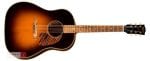 Gibson J-45: I‘ve always liked to write on acoustic, but it took me a long time to get a really reliable one that I felt like I could take it on tour and it would stay in tune and the tone would be good. I finally saved up enough to get a Gibson, because that, to me, has always been the best sounding acoustic. It’s really warm, and it’s easy to play, and it’s fun. I got that at Corner Music in Nashville when I was actually doing my photos for the real album cover. It was kind of a special adult moment in my life where I could buy myself a nice acoustic. I feel like that’s something you really need to invest in. With electrics, you can kind of use really cheap rickety stuff and just get a cool sound. I feel like with acoustics it has to be really reliable and this has been for me.
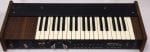 Mini Korg: You could buy a $500 Mini Korg that sounds great and you could also buy a $3,000 one that doesn’t play as well. That’s why it’s important to go into the store and just play for an entire day, and be that annoying person. This one is actually my guitar player’s keyboard, but he brought it into the studio when we were making Real, and someone was always playing around with it. I’m really into melody and I think that’s the best thing a keyboard is for—to play little melody lines under things. You can kind of bury that and people might not even know it’s a keyboard. And there’s a lot of atmospheric stuff on this record where it came in handy, too.
Tentatively titled Simple Case of the Blues, after one of the album’s tracks, it will be her twelfth album and first release since her 2012’s Working Girl’s Guitar. This time she is revisiting the music she discovered as an adolescent through her love for the Rolling Stones, the music she played with her first band, Penelope’s Children, the music that’s subtly been a part of every album she’s made.
Flores has been a groundbreaker from the beginning. Penelope’s Children was the first of several all-woman bands she launched, during a time when just seeing a woman playing an instrument—much less a group of women—was considered an anomaly. By the time she became part of the roots movement of the 1980s with another all-female band, the cow-punk group Screamin’ Sirens, Flores was already recognized as a pioneer, primarily for her guitar playing, but also as a singer and songwriter. Over the years, she has been recognized by fans, critics, colleagues, and the music industry. In 1987, she was an Academy of Country Music nominee for Top New Female Vocalist. She won a Peabody Award in 2007 for her narration of the rockabilly documentary series Whole Lotta Shakin’.
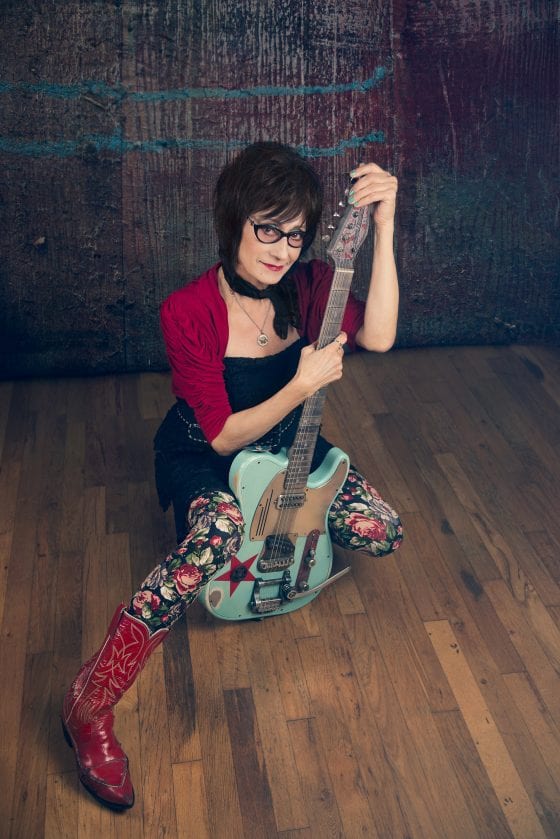
Flores grew up in the Clairemont area of San Diego, California, and began playing guitar at an early age under the tutelage of her older brother. Music was paramount in her life, and like most musicians, she was inspired by certain artists and songs. One that most affected her, however, was far removed from the usual fare: Irving Berlin’s “Anything You Can Do,” from the Broadway musical Annie Get Your Gun. The duet features a male and female singer challenging one another, each claiming they can outdo the other. For Flores, it was not only fun to sing this with her brother; it was the foundation for her positive attitude as a musician.
“That song was a big hit on the radio when I was a kid, and maybe it gave me some kind of confidence,” she says. “My brother was two years older, he knew how to do a bunch of cool stuff, and I looked up to him. He taught me my first guitar chords. We used to sing that song together a lot. It wasn’t so much ‘I can do it better’ as it was ‘Let me do that. Let me share.’ We were friends.”
She started Penelope’s Children in 1966. “At that time I’d never heard of another woman lead guitar player,” she says. “We didn’t know about Elizabeth Cotton or Mary Osborne when we were growing up. All we knew were the bands we saw on television, and none of the women played guitar. I felt unique, and that gave me more drive. It made me want to get better. I wanted to be as good as any guy. It lit a fire and made me passionate about practicing. When I turned 18 or 19, I found out about Birtha and Fanny. I followed them. I became their fan. I felt a sort of camaraderie, knowing that there were other women guitar players. When I look around now, it makes me feel good to see that women are getting their up and commence more than they were, say, ten years ago. As one of the first to sing rockabilly and play guitar, I’m told that I influenced a lot of women, and I’m happy to know that.”
In the early 1980s, living in Los Angeles after several months playing music in Alaska, Flores was working as a cook in a vegetarian restaurant called I Love Juicy when she heard about an audition with the Screamin’ Sirens. She tried out as a bass player, was hired, and soon transitioned to lead guitar, a position she held from 1982 until 1986, during the rise of an underground music scene that became known as New Traditionalist, combining rock, country, punk, and rockabilly, and opening doors for numerous artists, including Los Lobos and Dwight Yoakam. “I loved it because it broadened my horizons,” she says. “I got to be around all these cool bands like X, Dead Kennedys, and The Blasters. I discovered new bands and they were discovering me.” The Screamin’ Sirens released a series of singles and one full-length album, with Flores quickly capturing the attention of her peers and the music industry.
Signed to Warner Brothers Records’ country division in 1987, she released one album for the label, her self-titled debut. A single, “Crying Over You,” made her the first female Latina country artist to place on the Billboard country charts. “All of a sudden the pressure was on,” she says. “I had my rock and roll, bluesy, country picking kind of sound, but I felt all this pressure, because if you listened to country radio at that time, everyone was slick. I didn’t think of myself as slick, and I still don’t. I’m kind of edgy. It intimidated me, and I went through several years of hiring hotshot guitar players to play on my records. I played on them too, they would save solo stuff for me, but for the main part of the records I had these great players, and it did a number on my head. It made me feel like I wasn’t as good. I knew I could hold my own; I’d done it before. I had to pat myself on the back and say, ‘Come on, you can do this.’ I studied, took lessons, and played every morning and every night.”
Her partnership with Warner Brothers was short-lived, but the experience cemented valuable musician relationships within the Music Row community and earned her a nomination as Horizon Artist by the Academy Of Country Music. With her frilly skirts, cowboy boots, coiffed hair, and searing guitar riffs, Flores was a bit much for mainstream country music, but audiences outside of Nashville couldn’t get enough.
“After I was dropped from Warner Brothers, I recorded After The Farm [1992], which came out on Hightone,” she says. “I went in the studio with my band and said, ‘Let’s rock.’ I called the album After The Farm because ‘Now I’m back in the city, I’m going to rock out, turn my guitar up, and play guitar solos.’ That record has a real rock edge and my country fans did not like it, but people who dug rock and roll did. Even Lucinda Williams told me that it’s her favorite record I’ve ever done.”
She recorded two more albums for Hightone: 1993’s Once More with Feeling and 1995’s Rockabilly Filly. The latter featured her in duets with rockabilly icons Wanda Jackson and Janis Martin, marking their comebacks, fully igniting Flores’ career, and putting the spotlight on her guitar playing. “My big jump out was playing guitar for Wanda Jackson and getting her out of retirement,” she says. “I played some of the guitar solos on Rockabilly Filly, but I still had other guitarists playing the ‘meat’ of the songs. When I went out to tour the record with Wanda, nobody could go with me because they were all busy, so I had to do it myself. Every night I stayed up until 3:00 in the morning, fingers to the bone, getting all the licks down, learning licks off of her records and my record. It took me about two months and I was ready to go. I found my footing, and after that I never felt I needed somebody else to do a great show. I could pull it off.”
In 2009, she released Girl of the Century, her first album for Chicago-based independent label Bloodshot Records. By the time she followed up with Working Girl’s Guitar, she was more than ready to step out as sole guitarist. “I always had the best players I could find,” she says, “but at some point it was hurting more than helping me, because people couldn’t recognize where I was playing, or they thought I didn’t play. They’d come to my shows and say, ‘I didn’t know you played guitar, and I’ve been listening to your records for years.’”
“It’s fun working with another guitar player, but I needed to find my sound. You don’t know what that is until you get in there and hear it. It’s like a painting — if someone takes a paintbrush and adds colors to your art, it isn’t just yours. It’s a wonderful collaboration, but you’re not finding your own voice. It’s liberating to have control over the expression and creativity, and when I got to do that in the studio, it was really exciting. That’s what that album was for me. It was a chance to have my own voice on the guitar, self-produce, and make all the choices.”
Those choices, and that sound, are made with several guitars that she plays using medium Dunlop picks and her acrylic nails. Her primary guitar is a seafoam green 2011 James Trussart Steel Top Tele with TV Jones and Arcane pickups and Bigsby. “It’s made from light wood, so the weight is perfect because it’s been chambered,” she says. It’s my go-to guitar. It feels like an extension of me. It’s natural; nothing feels off. The tone and the way it plays — it’s hard to pick up another guitar.”
She also has a Martin DC-16GTE with Fishman Prefix Pro pickup, 2012 Gretsch Jim Dandy parlor acoustic, 2006 Gretsch Corvette Electromatic, 2008 Gretsch Tennessee Rose, 2006 SVK Stratocaster, 2010 Les Paul 1960s reissue, and a 2004 Epiphone Wildkat. She keeps it simple when it comes to amps and effects: a 2010 Fender Blues Junior, a 2008 Deluxe Reverb, Durham Sex Drive Boost, vintage 1980s Boss Delay DM-2, and a Boss Chromatic Tuner.
Her new album may seem like a departure to those who think of Flores as a country artist, but in fact it’s a return to her roots and a continuation of a sound that’s been a part of her musical trajectory. “It’s not like all of a sudden I’m going to be a blues person,” she says. “It’s been in my blood since I started playing guitar. B.B. King, Howlin’ Wolf, Freddie King, Albert King — we collected those records. My love for country music came from Gram Parsons, Emmylou Harris, The Byrds, and steel guitar. I loved the Everly Brothers, and when the country-folk movement came into rock music, I fell in love with the harmonies. Being a singer and a player, I love all kinds of music. On this record I want to show my blues playing, but I also want to show my singing. I’m also trying to move to another genre. If you look online, I’m listed as alt-country, and I want to change that around a little.”
She recorded the tracks, guitar solos, and vocals for her new album in Nashville, with guitarist Kenny Vaughan, bassist Dave Roe, and drummer Jimmy Lester, all of whom have studio and touring resumes boasting years of work with A-list artists. Vaughan, Roe, and Flores produced. “They really got me going on this project,” she says. “Kenny had played with me on several different shows over the years. I used to live in Nashville, and many times I’d hire him when I did an important show, because I wanted to look really hotshot! We’ve been friends a long time, and I’m such an admirer of his. He, Dave, and Jimmy have a blues band, and I’d been sitting in with them a lot. They said, ‘Let’s make a record sometime.’ We started it last November.”
Overdubs, background vocals, additional instruments, and mixing took place at Arlyn Studios in Austin, with Charlie Sexton producing, adding percussion, and playing some rhythm guitar parts. “Arlyn Studios is great,” she says. “It’s where Bonnie Raitt recorded Nick of Time, so it has some good ‘girl guitar’ mojo in there!”
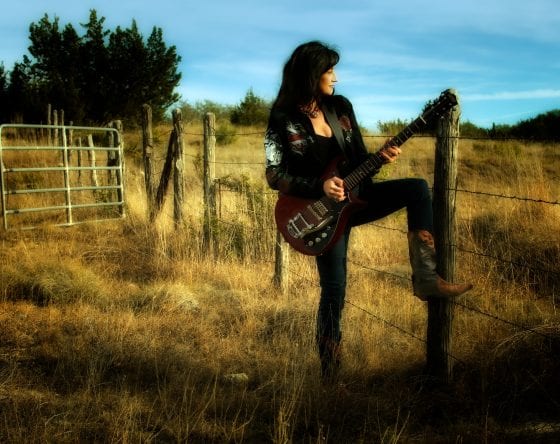
Rosie Flores has come a long way and traveled a lot of roads since her days with Warner Brothers. Over the course of almost a dozen albums, she has seamlessly blended traditional country, swing, rockabilly, punk, alt-country, blues, and rock. Four years ago she assembled the Blue Moon Jazz Quartet “to throw people off even more!” she laughs. The ensemble has a Wednesday night residency at The Gallery in Austin. “I put the guitar down so I could totally immerse myself in the vocals of those standards,” she says. “Improvisation is the number one factor when you sing jazz, just like when you play guitar. It’s like jamming with your voice instead of your instrument. I’m studying jazz guitar now, growing my vocabulary, and I’m going to start working on a jazz record. At my age, 66, I’m still learning and growing.”
While all those blurred musical lines can present a challenge when seeking airplay, bookings, and even press coverage, at the same time they have allowed her to cast a wide net, as she’s not locked into one genre with specific audience expectations. “I never really got famous as one thing, so it’s given me the freedom to explore different things,” she says. “It’s allowed me to be van Gogh and play with different palettes of color. The fact that I didn’t become established one way means I can still have the e-ticket to go wherever I want to go. I want to keep reinventing myself and have it be OK, as long as I’m having fun.”
The genre’s well-worn terrain has shifted immensely over the years, and with each change, a new wave of talented women has found commercial and critical acclaim.
Whether they are continuing a family legacy, transitioning from songwriter-for-hire status to solo stardom, or chasing pop-oriented sounds, these eight guitarists and songwriters have what it takes to navigate Nashville in 2016. Read on, press play, and discover some new favorites in country.
Ashley Campbell: Carrying on Her Father’s Pop-Country Legacy
One of the bright spots in I’ll Be Me, the heartbreaking 2014 documentary that chronicles legendary hit-maker Glen Campbell’s ongoing struggle with Alzheimer’s, is the vocal and banjo-picking talents of Campbell’s youngest child, Ashley. The 29-year-old’s solo career has been off to a steady start since the film debuted her heart-wrenching tribute to her ailing father, “Remembering.” Since then, Ashley has focused on sharpening her live show, including at June appearance at the CMA Music Festival in Nashville. Live shows are a family affair for the Campbell’s—Ashley’s first tastes of life on the road came playing in her dad’s band for his final tours. Ashley’s current backing band includes her brother, Shannon. Together, the second generation of Campbell’s is chasing the successes of their father, who was one of the original pop-country crossover stars.
Mickey Guyton: Pop with a Regional Twang
For those seeking an artist who straddles the line between country and pop without sacrificing regional twang for danceable grooves, look no further than Mickey Guyton. She first showed a penchant for both melancholy ballads and upbeat pop on two digital E.P.s issued by Capitol—2014’s Unbreakable and 2015’s Mickey Guyton. Her recent single “Heartbreak Song” has a danceable vibe that suits the current country, pop, and alternative airwaves, and its lyric video’s colorful, meme-ready imagery looks like something you’d expect more from party punks Tacocat than a country crooner. Both song and video add a sense of fun to modern country that’s sometimes overshadowed by sad songs and bro-country clichés.
Becca Mancari: Nashville’s Hidden Treasure
Becca Mancari is a traveler who accidentally wound up in Nashville, TN—a city that perfectly compliments Mancari’s guitar style and storytelling techniques. Songs like “Summertime Mama” incorporate classic country twang accented by slide guitars and vocal breaks met with an array of guitars that create a type of call and response reminiscent of both Jenny Lewis and Johnny Cash. As a solo performer, Mancari keeps a tight grip on the listener with heart wrenching lyrics of travel and love, stories that feel personal yet relatable—the juxtaposition of longing and love is effervescent in Mancari’s country tunes.
Lilly Hiatt: The Bleak Side of Country Storytelling
Lilly Hiatt, the daughter of accomplished songwriter John Hiatt dialed in to the more depressing end of the country music spectrum on 2015 country-rock breakthrough Royal Blue. Hiatt’s musical approach is more rock ‘n’ roll than country. She cites Pearl Jam as her all-time favorite musical act and many of her melodic soundscapes are reminiscent of indie-folk singer-songwriters like Neko Case. Lyrically, Hiatt’s fearless deconstructions of life’s downswings capture the unrelenting sadness of Emmylou Harris’ “Boulder to Birmingham.”
Lori McKenna: Another Songwriter Flies Solo
In recent years, veteran songwriters such as Chris and Morgane Stapleton, and Brandy Clark have found widespread success performing their own material instead of writing songs for established country singers and vocal groups. Massachusetts-based Lori McKenna may be the next in line when her ninth solo album, The Bird and the Rifle (CN Records), arrives on July 29. Since 2005, McKenna has been a go-to songwriter for other artists, including Faith Hill, Sara Evans, and Alison Krauss. With the chart-topping success of Little Big Town’s 2014 hit “Girl Crush,” which was co-written by McKenna, fresh on listeners’ minds and a renewed mainstream interest in roots-based artists, this may be the year McKenna’s solo material finally gets its due.
Margo Price: Modern Day Outlaw
Third Man recording artist Margo Price is a modern day Music City outlaw. Midwest Farmer’s Daughter, issued March 25, captures the spirit of the strong-willed women who over the years have prospered on their own terms in a male-dominated field. The songs and attitudes of Wanda Jackson, Jeannie C. Riley, Tanya Tucker, and countless others laid the groundwork. Now it’s Price’s turn to sing about an independent way of living that shatters outdated misconceptions about a “woman’s place” in country music.
Aubrie Sellers: Garage-Country Songwriter Sings the Blues
Aubrie Sellers is another famous daughter looking to make her own impact on Nashville. Her mom is pop-country superstar Lee Ann Womack, and her dad is singer, songwriter, and session musician Jason Sellers. Instead of recreating “I Hope You Dance” in her own voice, Sellers has charted her own creative path. The January release of Sellers’ debut album, New City Blues, unveiled a sound that incorporates elements of garage rock and the blues into the classic country revival. One of the more rocking tracks is “Magazines,” a critique on mass media that oozes punk attitude.
Tara Thompson: Loretta’s Cousin is a Potential Pop Star
Like Campbell, Hiatt, and Sellers, Tennessee native Tara Thompson is related to country royalty—she’s third cousins with famous sisters Loretta Lynn and Crystal Gayle. Thompson’s debut EP, Someone to Take Your Place, arrived June 10. It takes cues from both famous relatives. Lynn’s innate ability to craft believable and relatable stories about life as a young Southern woman can be heard on the title track. There’s also a pop sensibility to Thompson’s signature tune. It’s a riskier and more rewarding take on Gayle’s adult contemporary hits, following the same irreverent approach to pop-accessible country that has made Miranda Lambert a superstar.
Alice Wallace: Furthering California Country
California’s country music legacy tops that of most Southern states. Buck Owens, Merle Haggard, Dwight Yoakam, and numerous others achieved mainstream success from the Golden State instead of Tennessee or Texas. Alice Wallace is a contemporary product of California with a throwback sound reminiscent of Owens’ seminal Capitol Records output from the ‘50s and ‘60s—a time when the future Hee-Haw star’s talent as an energetic vocalist and breakneck guitarist reenergized country music for a growing rock ‘n’ roll audience. Last October’s Memories, Music, and Pride LP casts Wallace as a rock guitarist with the powerful voice of Wynona Judd and a growing arsenal of songs that wouldn’t have sounded out of place on the Grand Ole Opry stage at any point over the past 50 years.
Alynda Segarra: Hurray for the Riff Raff
Alynda Segarra bridges the gap between Indie and Country music—using traditional country instruments such as violins, an upright bass, and acoustic guitars, among others, Segarra is well loved by an array of musicians and music lovers across many genres for her blend of Country/Folk/Americana/Riot Grrrl/Doo Wop and Motown. Originally from the Bronx, Segarra currently resides in New Orleans and releases records under ATO records.