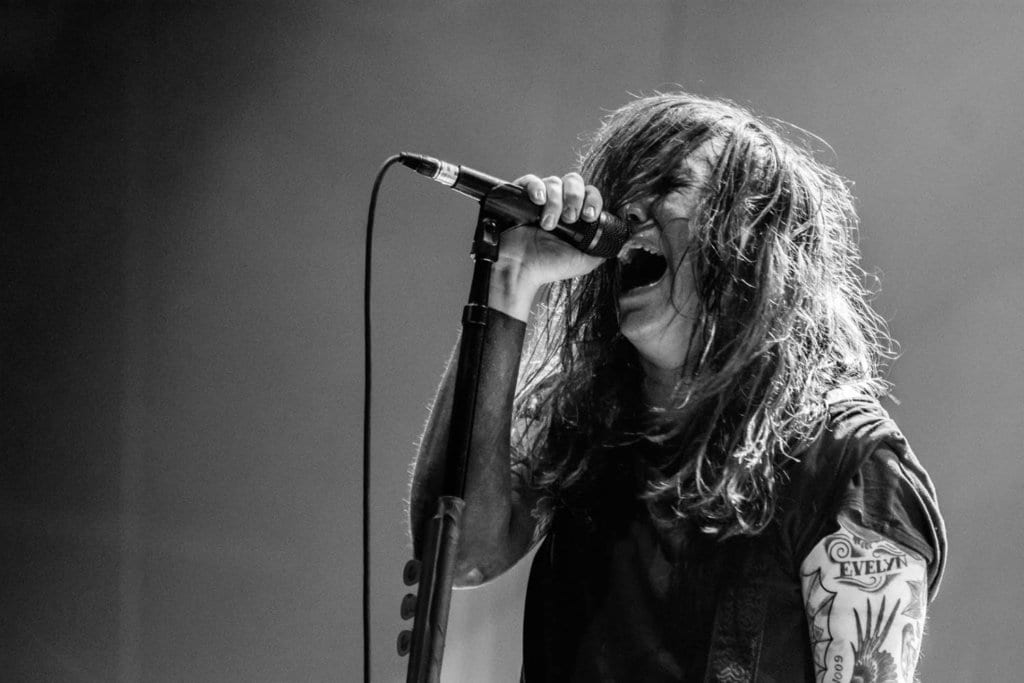
The first thing Laura Jane Grace, founder and frontwoman of Against Me! and solo project Laura Jane Grace & The Devouring Mothers, asks me is—is this article is exclusively about moms? “I’m still very much my daughter’s dad, but I’m female identifying transgender,” she says. “We’re not traditional at all.” And traditionality is not to be found in any of the stories featured in this piece; but rather, the realities of parenthood as a touring musician.
Grace has been touring since the late ‘90s, so with the birth of her daughter, Evelyn, in 2009, it was a matter of working parenthood into her schedule rather than giving up music. (By the way, the birth was perfectly scheduled around making Against Me!’s fifth studio album, White Crosses.) Grace’s life has always revolved around a musician’s cycle of work: write an album, record it, go on tour. But those early years when Evelyn was still a baby weren’t easy. “It was excruciating, such a sacrifice,” she says. “You’re gone and missing such formative years. But at the same time, with it being the reality of how you support your family and pay the bills, that’s the toss up.”
Before Evelyn attended school, Grace would bring her on tour as much as possible, hiring friends to come along as nannies. Grace and Evelyn had plenty of time alone, but as every touring musician knows, figuring out what to do with your free time can often be a challenge. “Most of the time you’re at a venue that’s not in a convenient part of town, so you’re limited to what’s in walking distance,” Grace says. “You make games up in the venue, and explore around that.”
Today, tour is the everyday reality of both of their lives—Evelyn’s mother, artist Heather Gabel, tours as well. But when Grace isn’t touring, she is unconditionally at home: “I wake up at 5 a.m. so I have an hour to myself before I wake my daughter up, make her breakfast, and drive her to school. I have a little studio space around the corner from her school that I work at all day. And then I pick her up from school, drive her home, make her dinner, and we do it all over again. And then I go on tour.”
While on the road, Grace is sure to stay organized and in touch with her daughter. She’s found that making short calls often works best for them, instead of having really long conversations. The two also write letters, send packages for fun, and FaceTime. And opposed to touring 10 years ago, new technology makes it much easier for Grace to be connected to her daughter’s daily loop. She places an order for Evelyn’s pizza lunch on Wednesdays, and knows what lessons she has and when. “Kids are really routine-based,” says Grace. “So having it where the tour is also part of that routine and they are accustomed to it, then it’s nothing out of the ordinary.”
Similarly, Canadian musician of Afro-Colombian and Indigenous descent Lido Pimienta needs balance. She finds that staying organized and finding a supportive community has made touring with children much easier. As a mother of three, she’s had to get creative with childcare: her close friends have moved into her house to watch her children, she has a budget for caretakers, and she creates a shared Google calendar so everyone knows her children’s schedules.
Pimienta gave birth to her 11-year old son Lucian when she was 21, followed by taking in her 8-year-old nephew Orlando, and then she gave birth to her 8-month-old daughter Martina last year. With her first child, she knew she wanted a baby but without fully understanding what that would entail. “You can’t do this by yourself,” she says. “You need a tight community that you can trust, who are able to either stay home with your kids or go to the shows with you and stay side stage or in the greenroom. You need to have really good friends, and you need to be a good friend yourself, because these aren’t just favors people are going to give you.”
Following her 2010 debut, Color, and her 2016 album, La Papessa, that won the Polaris Music Prize in 2017, Pimienta will be releasing her third album, Miss Colombia, later this year, and plans to bring someone trustworthy on tour to watch Martina. “When you make this decision to bring life into the world, you need to be someone who understands healthy choices,” she says. “Not just smoking or drinking, but surrounding yourself with people who only have good intentions and the best interest for you. And you for them.”
While venues consider lighting, sound, drinks, and environment, Pimienta points out that they don’t often consider their booked artists bringing children along, and that musicians are often unaware of the power they have in asking for what they need. “We are afraid of burning bridges, and asking for too much,” she says.
“Especially if you’re a woman.”
Pimienta lets venues know ahead of time that she’ll be coming with her family. While she assumes all of her needs can’t always be met, she does expect that the venue takes care of some of the accommodations that she requires. And in return, she can provide her uppermost performance.
“In an ideal world, all venues would cater to regular people,” Pimienta says. “A lot of us have families, and it would be great if there was a safe space for them to hang out while we’re performing. And we shouldn’t have to get to this upper echelon of fame to have all of these accommodations. But we should expect it, demand it, and at least normalize it.”
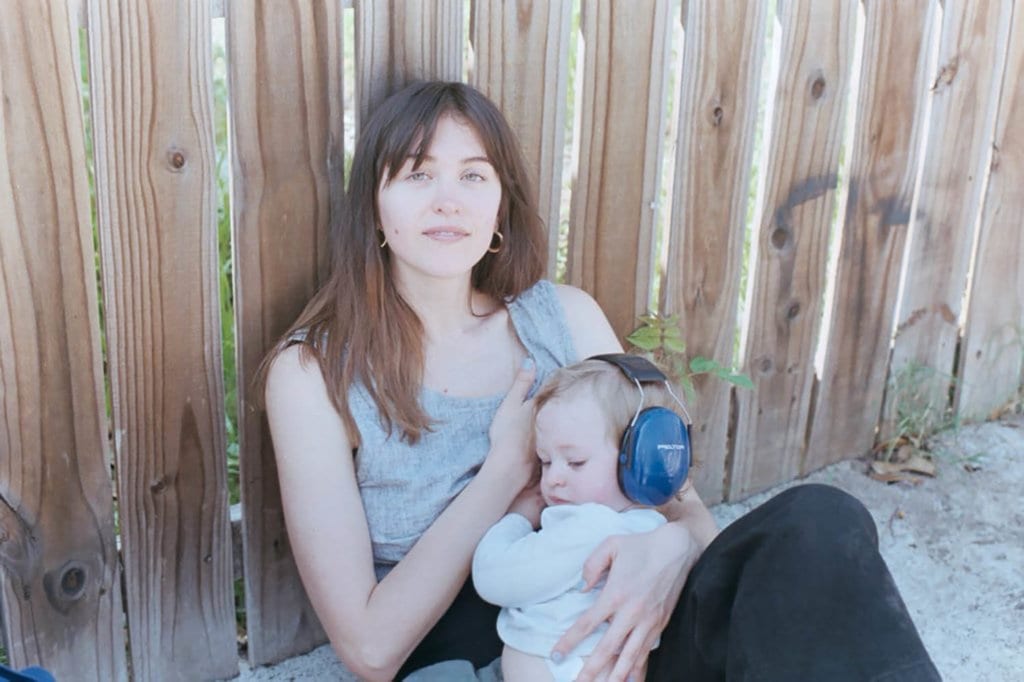
Jacki Warren, singer and bassist in the Grand Rapid’s band Major Murphy, stresses the importance of all-ages venues, especially for touring parents—she once had an experience where her son Benji was not allowed in the very venue Major Murphy was playing that night.
In her career thus far, Warren has had a much different experience than Grace or Pimienta. In 2015, neither Warren nor her partner (and father of Benji), Jacob Bullard, had jobs when they first met. Phasing out of her previous band, The Soil and the Sun, Warren started Major Murphy with Bullard that same year, followed by Benji’s birth a year after their first show. With the parallel birth and growth of her band and child, Warren hasn’t had a particularly easy time: “I’ve struggled with my identity as a parent. It hasn’t been an easy transition. I struggle to know where I fit in the music community, but also in the mom community.”
Touring with Benji was easier for Warren when he was younger. Following the release of their 2018 debut album, No. 1, Benji slept a lot of the time while on tour, and friends would watch him in his stroller (wearing sound-protecting headphones) while Major Murphy played. But now that Benji is almost three years old, Warren has to navigate his changing needs. “As soon as we figure something out, like what kind of rhythm he needs, Benji changes,” she says. “It’s constant adapting.” And related to Warren’s experience, Pimienta learned the importance in acknowledging your child’s needs as they grow: “The baby’s not a baby forever, you’re going to cross this threshold. It’s up to you how to integrate this childhood in your work. You need to have this openness in your heart; you cannot be selfish. And that’s very hard, because artists are narcissistic.”
Warren is still breastfeeding her son, but realizes that in order to do longer tours she will have to start weaning him. “If there was a Buzzfeed quiz, ‘What Parenting Style Are You?’ we’d be classified as attachment parenting,” laughs Warren. While breastfeeding has enabled her to provide her son with a constant in an ever-changing environment, saying that it’s a safe space she can create for him in a green room or dive bar, Major Murphy recently had to turn down a European tour. “I’ve never stayed a night away from Benji,” she says. “One day at a time.”
This one-day-at-a-time mentality is also being followed by soon-to-be and new mothers, respectively, Shana Cleveland and Mirah. Cleveland was on tour with her band La Luz shortly after finding out she was pregnant and is due this June; Mirah gave birth to her son at the end of last year, after the release of and tours surrounding her 2018 album, Understanding. Currently, Cleveland is on tour supporting her solo debut, Night of the Worm Moon, released in April, and is highly focused on finding healthy food options while on the road, while Mirah is using her first two shows since giving birth as a trial for the future. “It’s the test run of, ‘What is this going to look like? How do you do bedtime?” Mirah laughs. “How does that fit in?”
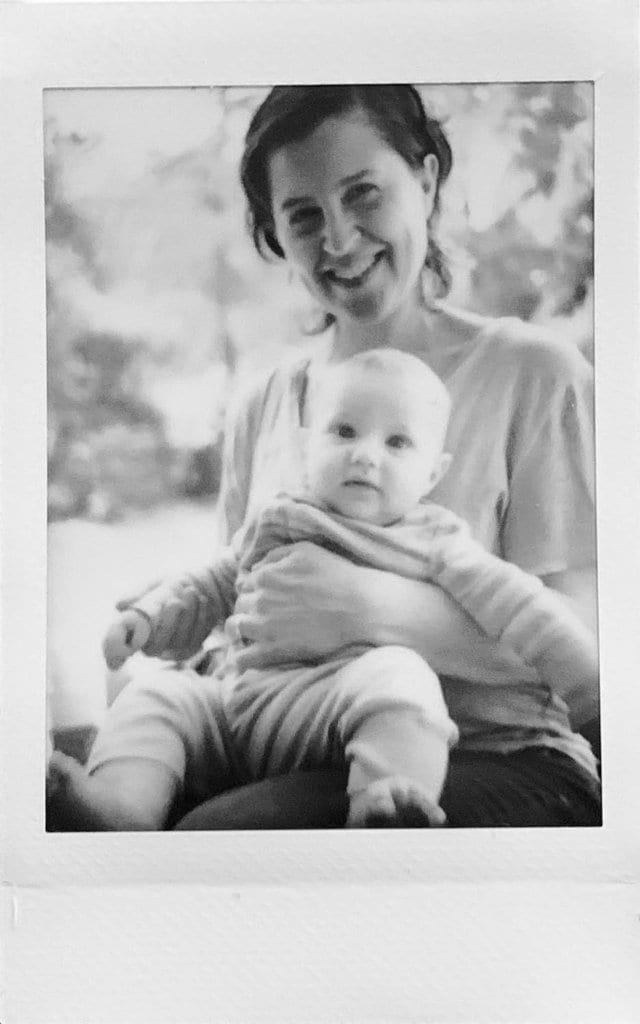
Mirah feels lucky that she can ease back into touring with a baby, since she’s not in the middle of an album cycle. She plans on asking advice from friends like Kimya Dawson and Laura Veirs about their own experiences, and she also plans to remain realistic about her resources. “For those of us who are still renting minivans and just trying to piece things together so that the shows can happen, it takes maybe just a little more creativity to figure out how it’s going to work.”
While there are many factors that go into being a touring parent—including so many more than we could fit here—finding a supportive community seems to be one of the key elements that weaves together the experiences of Grace, Pimienta, and Warren, and is something being seriously considered by Cleveland and Mirah. However, Warren would love to see more spaces where she could connect with other touring parents for advice and resources: “I’m craving conversations with other people who are in this new wave of, ‘We can still have families, we can still be musicians in our 30s, we can do whatever the fuck we want.’ But how do we connect with each other?”
Our hope at She Shreds is that this article, and these experiences, will spark more dialogue and opportunities surrounding the personal stories of parents, the support they need, and necessary changes the music industry needs to make in order to show up for those who are bringing future shredders into this world.
I’m gonna be very candid, at the risk of sounding like an ungrateful douche. When I got the call telling me that I was to join the cast of Hamilton in Chicago in September 2017, the feelings were bittersweet. I looked around my tiny New York apartment, and thought to myself, “WTF am I gonna do with all my gear!?” You see, I was in the middle of mastering my album Stay Gold…which had been my singular obsession for the past two years, at the time. I wasn’t about to let it all fall apart now! What made matters even more stressful was that I had about 5 days to pack my belongings and haul ass to Chicagoland.

In a panic, I opted to ship my clothes/miscellaneous crap just so I could valiantly escort my gear onto the plane – checking one bag containing my Adam monitors, M box, midi keyboard, and microphone cases – actually the mics, of course, where on my person. Also with me on the plane, was my trusty G and L Strat. She was the first guitar I ever bought for myself and the only guitar I owned. Many battles had been fought with her by side.. so it made complete sense that first thing I did in my lonely Chicago Airbnb was play. In fact, that was all I did for the first few days because the rest of my belongings arrived days late.
For a person like me, who has dedicated their adult lives to dodging strict schedules in order to be ever-readily available for that glimpse of inspiration that smiles upon you, Hamilton would require a bit of a learning curve. Rehearsals had begun and I had no choice but to dive in. I would rehearse day and night. When I could, I wrote half songs and made half beats, unaware that I was in a kind of mourning over Stay Gold. A strange thing happens when you finish a project – especially one you’ve been working on for years. Half of you feels so ready to move on to start creating new things and half you is fucked up from child birth, the child being…you know..the album. Anyway, it didn’t take me long to realize that I needed a break from writing.
Instead, I choose to ummm…connect to my new reality. Did I miss my hometown? Yea, but I was in a hit musical and now living in the same city that bred Chance the Rapper, Noname and EARTH WIND and friggin’ FIRE! It was the end of October, which made it a month of me living in Chicago. It was time to play a live show. The problem was, I didn’t have a band in Chicago nor did I know any local artists to play with. Thus began my journey into the Chicago music scene, a very rich scene – like triple layer chocolate cake.

Austin, a conductor at Hamilton Chicago, took me to one of my first live shows in Chicago, introducing me to a circle of Columbia kids that all played in each others bands. From this circle, my band would be formed. We’d rehearse on Mondays, our day off. I cannot explain how GOOD it felt to get back to Stay Gold, and not to mention to hear it played by new people. After all, I felt I owed something to the album, especially because I hadn’t released it yet. I had been so focused at work that I’d forgotten how vital the act of playing music was to me. To experience these songs that I had come to know almost too well, reinterpreted, improved mash, and mangled was reinvigorating!
It was April 2018 and I already had a few Chicago shows under my belt, made some great friends, and had finally reached a groove at Hamilton. I still didn’t have much time to devote to creating anything new but had managed to put whatever time I did have into some beautiful collaborations. Meanwhile, my personal life was coming undone, or rather, changing. As I was preparing to release my album at the end of the month, my fiancé and I split. Suddenly, the music and lyrics became all too real. I was back in New York for the release concert, back with my band all the while being utterly heartbroken. I’d fought for balance between career and music a long time, and in this instance, my music and my love were mirror images.

By the time September 2018 rolled along, Stay Gold had been out for a few months. I was still gigging around Chicago while acting in Hamilton. I decided a few months back that I would book my FIRST West Coast tour. That was how I spent my vacation time. It was a solo tour using a loop pedal with programmed beats and my trusty G and L. I was also packing my new Martin travel guitar, which has this really delicate FernGully type sound. This was particularly challenging because A, I was so used to a full band, and B, I had to come up with all new arrangements of this sonically thick music. Luckily, the guitar is capable of making a variety of percussive sounds and can have many sound qualities. One time on the road, I erased all my samples and ended up having to build full beats LIVE from here on out. Regardless, it was an exciting to finally have time dedicated to playing again.

These days, I’ve been out of Hamilton for a few months, and boy things have changed. I’m learning to follow my journey to get back to writing and for myself everyday. My relationship ended. I fell in love with my best friend and I’m starting to create music with her. Oh, and you can’t forget Stay Gold being released, my obsession and passion that pushed me to plan a tour.
While the Americana tradition is grounded in the experience of the country’s most marginalized, the contributions of people of color, past and present, is often ignored. Now, four of the genre’s leading black women artists have come together for “Songs of Our Native Daughters,” a banjo-led album exploring slavery’s legacy and the power of familial and musical roots.
The project, which was released on February 22, 2019 on Smithsonian Folkways, was organized by Rhiannon Giddens of the Grammy-winning Carolina Chocolate Drops. Giddens invited multi-instrumentalists Allison Russell, Amythyst Kiah, and Leyla McCalla to write and record at the Louisiana studio of co-producer and veteran Appalachian musician Dirk Powell. Many of the songs are tributes to resilient black women, fictional and real, and the title pays homage to James Baldwin’s essay collection “Notes of a Native Son.”

As Giddens wrote in the album’s liner notes, “Interpreting, changing, or creating new works from old ones, this album confronts the ways we are culturally conditioned to avoid talking about America’s history of slavery, racism, and misogyny, knowing that what’s past is prologue—but only if we let it be.”
She wrote, “Black women have historically had the most to lose, and have therefore been the fiercest fighters for justice — in large, public ways that are only beginning to be highlighted, and in countless domestic ways that will most likely never be acknowledged.”
Smithsonian Folkways Director and Curator Huib Schippers said, “I wanted to give her [Giddens] carte blanche in reflecting critically about the position of African-American women in this country historically with reflections on where it is now. For us, it fits within a very long tradition of giving voice to people that are underrepresented or even unheard.”
The album spans the African diaspora’s diverse musical traditions, from gospel harmonies to upbeat Cajun melodies to spoken word. The range of banjo models, including the five-string, tenor, and minstrel, connects the 13 tracks. Banjos originated in West Africa and were central in the development of North American black culture. Despite these roots, white players, most infamously blackface minstrel performers, have defined the instrument’s image.
Allison Russell, who founded folk group Birds of Chicago with husband JT Nero, said black traditional musicians are tokenized to this day. Russell recalled when she was mistaken for other musicians and when she was turned down by a label because they already had “a black girl who plays banjo.”

“Can you imagine if that same metric was applied to white guys who play guitar? That would be crazy,” she said, adding “We’re all very different in our voices, our histories, and everything. But we have the common experience of often being othered. It was quite healing and powerful to all be together creating.”
Russell decided to be part of the project, which she described as an “inspiring, uplifting, creative explosion,” because Giddens is “making relevant and modern so much lost history, specifically of black music.” She said “Songs of Our Native Daughters” was an opportunity to reckon with slavery in an era of resurgent white nationalism and xenophobia.
“I don’t think there would be incarcerating children at the border if we remembered our history…” she said. “I think the arts help us to see ourselves and each other with more humanity. I think music does that in a visceral, emotional way.”
Russell is from Vancouver B.C. and recently connected with her biological family from Grenada, a West Indies island nation. She had an abusive adopted father and said it was important to hear stories of her biological father’s ancestors. She learned about Quasheba, a family matriarch sold into slavery. On “Quasheba, Quasheba,” Russell sings, “Blood of your blood. Bone of your bone. By the grace of your strength we have life.”

Russell said she hopes Quasheba’s strength is passed down to her daughter. The album’s final track “You’re Not Alone” is a lullaby of sorts and Russell said, “motherhood was bound up in the stories we were telling and writing.”
She said, “That camaraderie and sisterhood is not going to just disappear because we finish that record. I think we’ll be doing more. It opened me up to letting history live in a personal way in my work.”

Russell collaborated with self-described “southern Gothic songster” and Tennessee native Amythyst Kiah on “Polly Ann’s Hammer,” another song about a powerful woman. While the popular John Henry ballad focuses on a “steel-driving man,” the hero is his wife Polly Ann, who takes over the hard labor. Kiah had been messing around with a melody for a while and co-wrote the lyrics in a rapid morning session.
“Here was an opportunity to not only celebrate somebody that was able to raise the family while John Henry was at work, but when he was sick, she worked his job and did just as good if not better than the other people there,” Kiah said. “Of course we know lots of working class women who went to work and also went home to take care of the kids.”
Kiah also wrote the tone-setting opener “Black Myself,” an anthem celebrating black resiliency. She sings, “I pick the banjo up, and they sneer at me ‘cause I’m black myself. You better lock your doors when I walk by ‘cause I’m black myself.”
As the group’s relative newcomer, Kiah picked up banjo because of Giddens’ music. She enjoys the rhythmic nature of clawhammer banjo, a down-picking style. While she has traditionally been more guarded about her songwriting process, she said it was eye-opening to create collectively.

“I understood the practicality of co-writing and what it could do but it didn’t really hit me until this project…” she said. “Recognizing when you have that kind of connection with another songwriter and they write words, you’re like, ‘Oh my god this is amazing.’ It’s a spiritual experience.”
Cellist Leyla McCalla is a long-time collaborator with Giddens and said playing banjo was liberating because it’s “the optimal instrument to have these hard conversations about American history.”
McCalla, who recently released her third album “Capitalist Blues,” is influenced by her Haitian background and adopted home of Louisiana. “Songs of Our Native Daughters” was an opportunity for her to sing in Creole, particularly on the upbeat “Lavi Difisil,” a song inspired by Haitian troubadour Althiery Dorival.
She has also long been fascinated by blues guitarist Etta Baker. A pioneer of the Piedmont picking style, Baker turned away from music to raise her nine children, only performing again late in life. After completing the guitar-heavy “I Knew I Could Fly,” McCalla realized the lyrics applied to Baker and the long history of women’s potential being squandered. It’s a narrative McCalla knows well: She has managed to have a family while continuing her creative work.

“I knew I could defy the odds,” she said. “Not that this story is all written, but it’s a privilege to be able to reflect on it and still be in the struggle of it at the same time.”
While no tour dates have been announced, it’s likely “Songs of Our Daughters” will hit the road in some capacity. All four artists said this project is just the beginning of their collaboration, only scratching the surface of their creative potential.
“I’m feeling the truth of these songs in my body,” McCalla said. “I think that that’s what changes the world, to use a very trite phrase. I think that’s what changes people and creates social and political change, when people feel in their bones that something needs to be made right.”
Hailing from rural Australia, Stonefield is composed of four sisters wading deep into the waves of misty psych-rock. Their third album, “Far From Earth,” was released through Flightless Records in April of 2018 and features the group tapping into murkier, metal-inspired tunes. Stonefield has supported everyone from Fleetwood Mac to King Gizzard and the Lizard Wizard, but their brand of neo-70s flair stands strongly on its own. They’ll be playing three sets over the course of the festival, which will surely find them them making their way through every standout track their transcendental discography.
Since their beginnings in 2007, Peggy Sue has seen members Rosa Slade and Katy Young crafting a continuous blend of folk rock and art pop, all tied together by their delicate range of harmonizing vocals. The British duo has toured with the likes of Kate Nash, Jack White, and Mumford and Sons over the years while releasing their three full-length albums. Most recently, they joined La Luz on a span of shows across Europe in the fall of 2018. Catch them back in their Brighton home base for The Great Escape on Saturday at Green Door Store.
Dana Margolin started making music when she was 17 years old — but before long, her solo bedroom outfit, Porridge Radio, had grown into a full-fledged, five-person band receiving nods of recognition from The Guardian. Based in Brighton, the self-described “Emo Radio 1” group oozes through an array of blunt, deeply introspective lyrics set to upbeat instrumentals that might come to a screeching halt at any given moment. They’ll be treating crowds to all the jams from their debut LP, “Rice, Pasta, and Other Fillers,” on Saturday night at Green Door Store.
Guitarist Stephanie Phillips, drummer Chardine Taylor-Stone, and bassist Estelle Adeyeri bring together their titillating vocals for the Black feminist punk power that is Big Joanie. Describing themselves as “The Ronettes filtered through ’80s DIY and ’90s riot grrrl, with a sprinkling of dashikis,” the trio shine in their debut full-length LP, “Sistahs.” Released last November, the record lives and breathes beyond the punkers’ almost six-year career across London onto a new level of fuzzed-out feelings. Between their work to decolonize the DIY scene, mentor young female musicians through Girls Rock London, and stop racism on LGBT stages, they’ll be killing a 9:15 p.m. set at Green Door Store on Saturday, May 11th.
Dance music, but make it emo. Sink Ya Teeth’s dark synth-pop set to spoken word declarations like, “I feel a little depressed/a little melancholy at best/But there’s nothing I can’t handle/With a little bit of rest” will get even the stiffest of bodies grooving to their cathartic, bass-heavy jams. The electro-punk duo comprised of Maria Uzor and Gemma Cullingford pay homage to the retro club scene in their debut album while still launching their own futuristic sounds into the stratosphere of trance. Find them preparing for takeoff at Green Door Store at 8:15 p.m. on Saturday.
Los Bitchos finds three London ladies carrying strong Latin American influences into the world of indie psych-rock — and breaking all the rules while they’re at it. Whether it’s a cumbia’d out cover of King Gizzard and the Lizard Wizard’s “Trapdoor” or their original musings on “Bugs Bunny,” listening to the instrumental trio is more-or-less akin to dosing on a half a tab of LSD and boarding a bus in an Andean mountainside. Find them rocking out Friday at Jubilee Square and then again Saturday at Green Door Store.
A graduate of the prestigious BRIT School — noting other alumni like Adele, Leona Lewis, and Amy Winehouse — and a favorite collaborator of Mark Ronson, Tawiah’s gospel-infused, alternative neo-soul carves out a space for both tenderness and exhilaration within a three-minute song span. The songwriter perfectly hits her stride as she invites you to move with her or stop holding your breath on her most recent, critically-acclaimed EP “Recreate.” Don’t miss her bringing it all to life on Thursday at 7:30 p.m. at Komedia.
Originally from Queens, New York, the ethereal duendita expertly blends the spiritual and the political in an emotionally-punched EP titled “direct line to My Creator.” Whether she’s riffing on police brutality, Black and brown divinity, or feminine worship, her voice carries listeners through both heaven and hell in only half an hour. She acknowledges the pain and marginalization of communities of color, but her empathic power carves out a space for growth, revivance, and euphoria. Let her take you there on Thursday during an 11:15 p.m. set at Latest Music Bar.
Australian garage rockers Body Type sing about heartbreak, suburbia, and going to the dentist — and they’ve caught all the rage in Sydney’s music scene. Made up of guitarists Sophie McComish and Annabel Blackman, bassist Georgia Wilkinson-Derums, and drummer Cecil Coleman, the four-piece outfit delivers recklessly fun jams reminiscent of Debbie Harry and Karen O. Their debut self-titled EP received rave reviews and will surely get some playtime during their Friday and Saturday sets, alongside some new material due out May 3.
At 20 years old, KAIIT’s effortless riffs and irresistibly smooth beats already have Vogue UK and Red Bull Music obsessed with her sound. The Melbourne-based singer and songwriter eases her way through soulful melodies about stalking an ex on social media, giving a friend advice, and weed lullabies, all off the aptly-titled EP “Live From Her Room.” Having racked up more than 1.2 million streams on Spotify for her first two singles, KAIIT is here for the long haul. Don’t miss her set at The Great Escape.
Cepronia, Kuala Lumpur: Faris Saad and Shika Corona are giving me a tour of their home. Some bunk beds, a gaggle of amps and instruments, a kitchen mural where an octopus smoking out of a bong. They would walk me up the staircase and show the view of the Malaysian capital city, but a thunderstorm rages outside. Occasional claps of lightning punctuate the conversation.

“LGBT people—we control the weather, man!” jokes Saad, a Cepronian citizen and vocalist-guitarist in Shh… Diam! He’s referencing a recent viral tweet, when a young Malaysian woman blamed bad weather on Kuala Lumpur’s LGBTQIA+-friendly Woman’s March. Corona—leader of the band Tingtongketz, a fellow citizen of Cepronia—giggles in response. She’s half-laughing at the ridiculousness of the statement, half-laughing as if shrugging off such retrograde thinking.
A studio and living area, Cepronia also is a safe space for Saad and Corona—both transgender in a country where it remains dangerous to be out and queer. It is celebrated in a Shh… Diam! song of the same name, with a manifesto sang over flower-power guitars:
When you’re feeling lost and you’ve got nowhere to go
There’s a comfort that you’re longing for
A place to call your own.
Come into these loving arms, come smoke a joint or two
And know that you are welcome here
We share our love with you.
Located in what Corona calls “a slightly dodgy area” outside of Kuala Lumpur’s centre, Cepronia is an “autonomous region” for KL’s queer punks. Currently, Shh… Diam! are the forebearers of the scene, recipients of international praise and glowing magazine profiles; Tingtongketz was founded after Corona was inspired by seeing Saad’s band live. Both bands have a variety of inspirations—Shika, for instance, is an ex-metalhead that simultaneously wanted to be “the trans Courtney Love” and NOFX ringleader Fat Mike. In aesthetic terms, however, there are similarities.
Liner notes for the recent Shh… Diam! album, Eat Your Local Fruits, describe the band’s sound as “non-binary and non-conforming”. Across seven tracks, boogie-woogie riffs and call-and-response hooks act as a throughline, creating stylistic consistency. Tingtongketz’ Malay-language debut Enjoy the monsoon is scrappier, at times reminiscent of the messier side of the American indie-rock canon (The Replacements’ endearing scruffiness immediately comes to mind). Enjoy the monsoon and Eat Your Local Fruits’ off-the-cuff performances feel indebted to the immediacy of garage rock.

However, this has less to do with the genre’s lineage in underground Malaysian music and everything to do with finances. “Everything’s recorded here, in our studio,” Saad says, motioning to the amps and drum kit set up in Cepronia. “We have minimal resources, so that’s the sound.” Corona jokes that one day she hopes to play jazz-style guitar, but is sticking to the rough-and-ready power chords thrashed out on Enjoy the monsoon. ”It’s very raw. With our surf rock sound, it’s easy to get, I don’t have to try hard,” she deadpans. One would disagree: on tracks like ‘Melukis itu terapeutik’, she boogies so hard that the guitar ends up in a different tuning by the song’s climax. While Tingtongketz’ songs lack studio finesse, they pack an intense, infectious energy.

Corona—who foregoes pedals when she plays for a more streamlined approach—shares a battered-around instrument with her flatmate. Faris owns the “super cheap, three-quarter size kid’s guitar” that costs around 400 ringgit (approximately $98), which he thrashes around across Eat Your Local Fruits. On album-closing freak-out ‘Brown’, he and co-guitarist Yon bounce off each other’s energy, trading fuzzed-out solos that bely the earthbound concerns of their music, shooting up skywards. This growing propensity for guitar hero licks is becoming more obvious in new music by Shh… Diam!, notably in a recent videowhere he slides into a sunny, pop-punk-style lead.
That video captures an encore for a play the band soundtracked, called To Which My Brother Laughed. “The theatre thing allowed us to expand past our normal sound,” Faris says, but their involvement is also a reminder of the activist role inherent in both the Shh… Diam! and Tingtongketz projects. The play responds to the 2018 case of two women in the state of Terengganu, where a Syariah (Sharia) high court caned both women for consensually trying to have sex.
The incident put an international spotlight on issues affecting Malaysia’s LGBTQIA+ community. This year alone, high-ranking government ministers described out lifestyles as “deviant”. Another minister claimed while abroad that gay people did not exist in the country. Following a crackdown last year on queer-friendly spaces and the aforementioned Women’s March, the government plans to stop citizens from staging public gatherings without police approval. According to trans rights group Justice For Sisters, violent crimes towards trans women are on the rise.

Saad says the country’s current climate “discourages LGBT musicians for coming out to their communities”. Our interview’s intention was to dive further into Malaysia’s queercore scene beyond these two acts but, at this current moment, they are the scene, making Cepronia even more important—not only as a working environment for Shh… Diam! and Tingtongketz, but eventually as a safe space for KL’s queer musicians. As for the world outside of their studio, Saad and Corona remain cautiously optimistic.
“Since I was a kid, I knew I was going to be in a band,” Saad explains. “Shh… Diam! songs are satirical in nature, because of all the shit that’s going on right now.” I am reminded of their arch power ballad ‘Lonely Lesbian’, poking fun at an infamous newspaper article that stated gay people were identifiable by a solitary nature. I’m reminded of Tingtongketz, covering a song by Malay movie icon P. Ramlee and reclaiming the legacy from his family’s open homophobia. (The singer’s granddaughter, reality star Najua Nasir, toured schools in 2013 as the lead of an anti-LGBT morality play)
The way they laugh off bigotry while they thrash back at it is energizing. Saad vents, “People have asked us why jokes, when we’re living in this climate or oppression? What do you expect us to do – cry every day?”
Nichole Procopenko’s archival skills aren’t typical. Neither is her path towards the profession. Trusted by both the U.S. Government and punk legends, Procopenko has handled and classified material from the Dischord Records archives, Henry Rollins’ personal collection, and the Smithsonian Institution’s collections
How did this all happen? Insomnia and Google.
Tired of working in a bar and feeling a bit worn out from life, Procopenko typed in something that made her happy: Woody Guthrie. After leafing through the results, Procopenko spied the Smithsonian Folkways’ web page. This caught her her attention. Smithsonian Folkways Recordings consists of the Folkways record label, as well as Monitor, Cook Labs, which were prominent subversive record labels. After skimming the site, she noticed the record label was looking for interns, At 4:30 AM she applied. The rest is, well, living history.
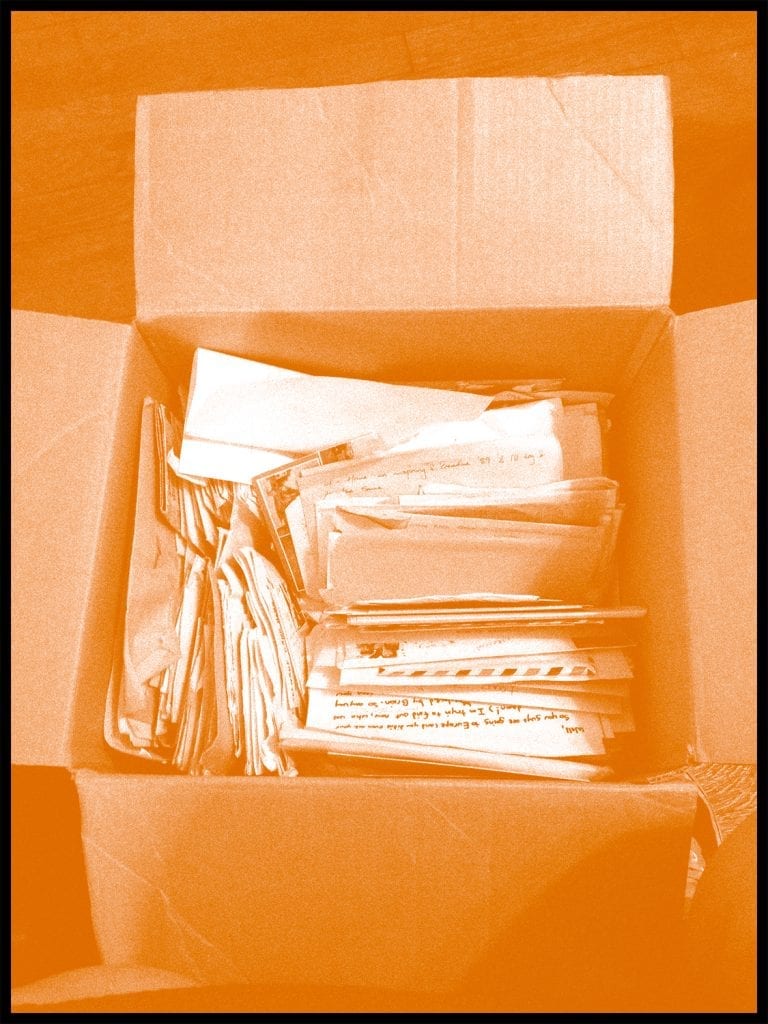
Through on-the-job training and persistence, Procopenko learned how to handle archival materials, such as the letters, audio, and other ephemera within the Folkways Archive. For music fans like Procopenko, this was a dream come true, noting that the archive, “Has everything from Master tapes to the correspondence that came to the record label’s founders. Moses Asch, who started folkways knew absolutely everybody—Josh White, Woody Guthrie, Pete Seeger. There’s stuff from a bunch of other people. Basically, anybody who was making music from the 1950s on.”
Through her work with the Smithsonian, Procopenko ended up meeting Ian MacKaye, founder of Dischord Records and the former frontman of Fugazi. One afternoon, MacKaye came in one day and was looking for advice on how to work with material from the Dischord Archive. Upon noticing her work on letters, he asked Procopenko what she was doing. Satisfied with her answers, he asked if she would be interested in coming out to look at his material. Nichole agreed. “I told him I would love to help him and started working one day a week. Between contracts, I would work at Dischord full-time but then go back. Through Ian, I met Henry Rollins and started working with him on his collection. I’ve been super lucky,” she noted. Quite busy these days, Procopenko now works as an archivist and curator at the Smithsonian, and was gracious enough to take time to give readers of She Shreds a look into her work.
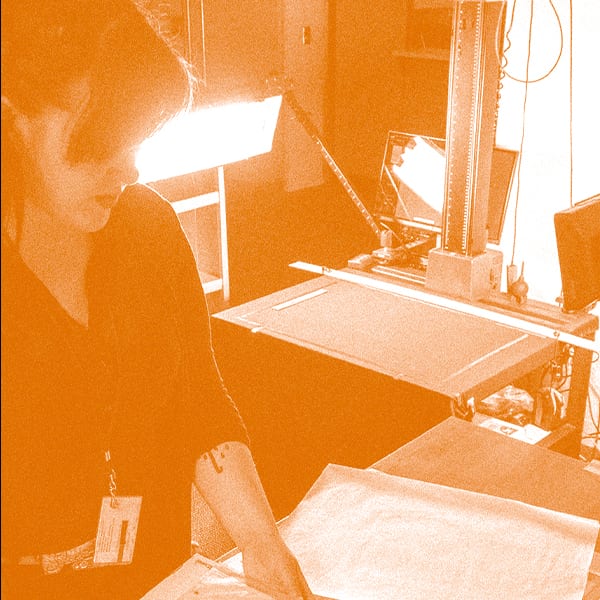
How do you plan for the future when you deal with an archive?
There are two sets of rules. With anything donated to the Smithsonian, the expectation is that it’s available to researchers because it’s a public archive. In contrast, not every item in the Dischord Archive is for public consumption. For example, Ian was contacted by a researcher who wanted to publish letters between Ian and a person in the East Berlin punk scene. However, Ian felt that the researcher needed to obtain the permission from the person he corresponded with. It’s really a judgment call.
At Folkways, there have been times we’ve decided to not put letters online because they’re too personal. Usually, this is the case if someone is still alive or it could impact their children. or example, I encountered some letters that were extremely personal from a rather famous and still-living person that discussed their divorce. We didn’t put those online because that’s too personal.
What’s it like managing the Smithsonian Collection vs. Dischord?
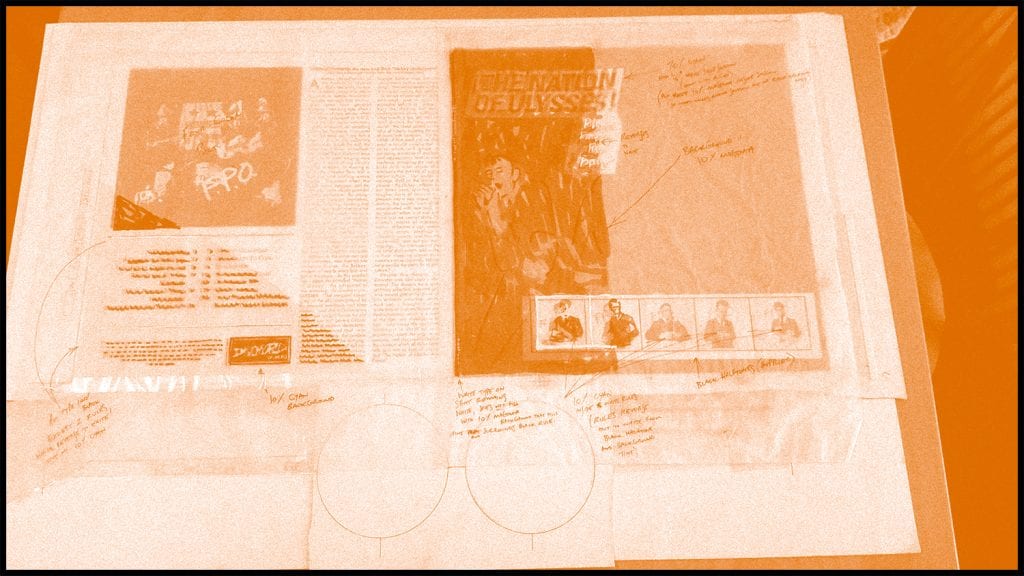
At the Smithsonian, a lot of the collections I’ve worked with have involved dead people. So, you can’t ask questions! There’s a lot of guesswork. It’s different from Ian’s collection. I could talk to him. We organized it by categories. Minor Threat, Dischord, Fugazi, and his personal stuff. There are also subcategories within that. So in his personal series, there are letters from friends, fans, people that really didn’t like him, and even the NY-DC feud. What we’re trying to do is provide context for everything. Archives are supposed to be the replication of human memory so that in 100 to 200 years, someone can infer the context and see that the material has more nuance. Rather than just see something in a chronological or subject-matter context, they can see something is from a friend or label.

What philosophical questions do you think about often?
Literacy being common is new historically. It’s only within the last 100 years. It’s something we take for granted. I think of all the voices that existed before literacy was considered universal that are omitted. There’s no oral testimony. There’s no documentation. It’s something I philosophically struggle with because it becomes a question about whose voices are worth saving? Who gets to be reflected in the material?
I think censorship is valuable while people are alive. Ian and I talk a lot about the ethics of archiving. It’s an extremely expensive practice because of the cost of labor and specialized knowledge. It’s my profession and I love it, but I wonder what else could the money be used for. The historical record is important, but could more people eat?
What type of preservation issues do you encounter in your job?
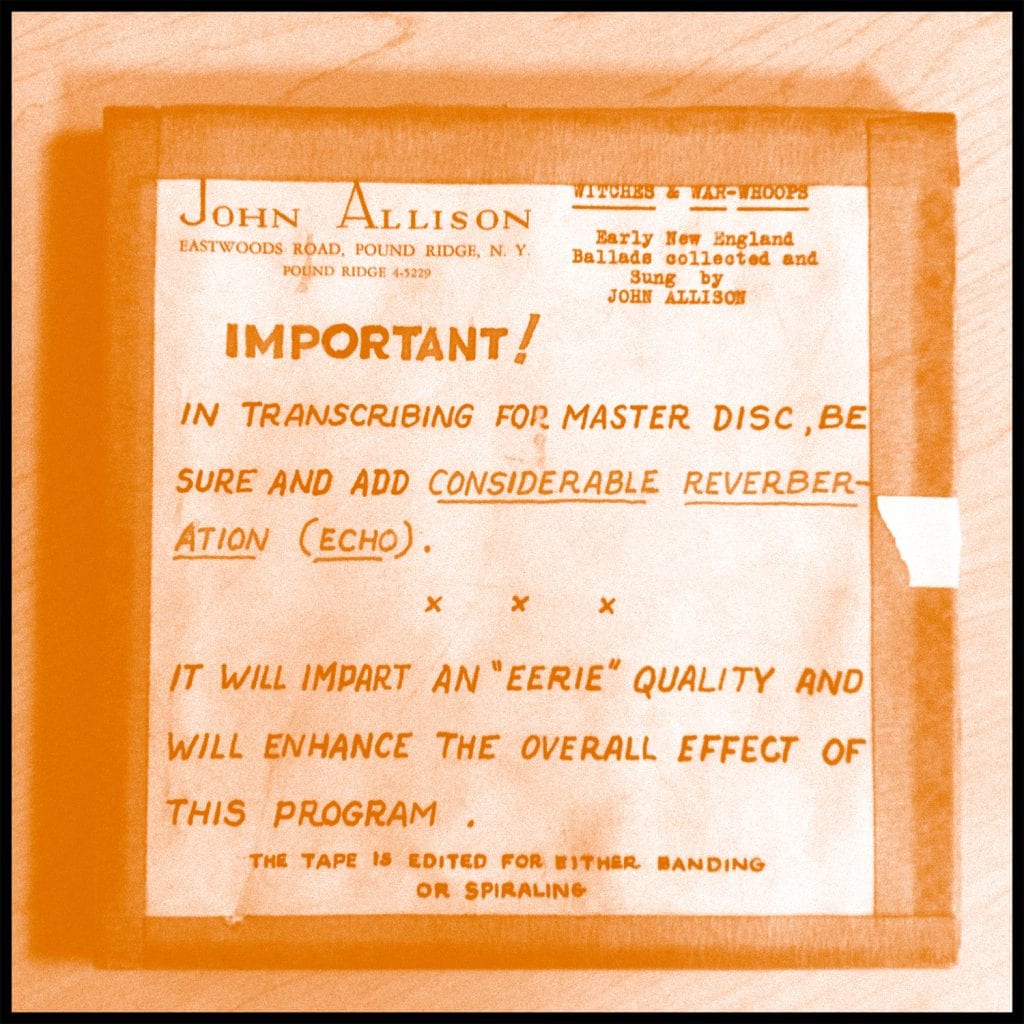
In terms of preservation, all paper and audio, particularly audio from the 80s, is made pretty terribly. Audio is susceptible to sticky shed syndrome. Sticky shed syndrome is a phenomenon where when you play a tape, the sound can flake off. It can be remediated by baking it at room temperature in an oven, but it’s very costly. Essentially, everything is in a constant state of decay. Magnetic sound, such as reels, is super unstable. An archivist’s job is to slow this process down so all of this material can be digitized. The idea is we want to move and stored into safer environments. The idea with audio is that the next time we play it is the last time it’s played. It is only going to be played so it can be digitized.
What advice would you give women interested in breaking into the field?
Oh goodness. Just show up. I didn’t have the proper education. I just really wanted to get the experience. I kept going to work.
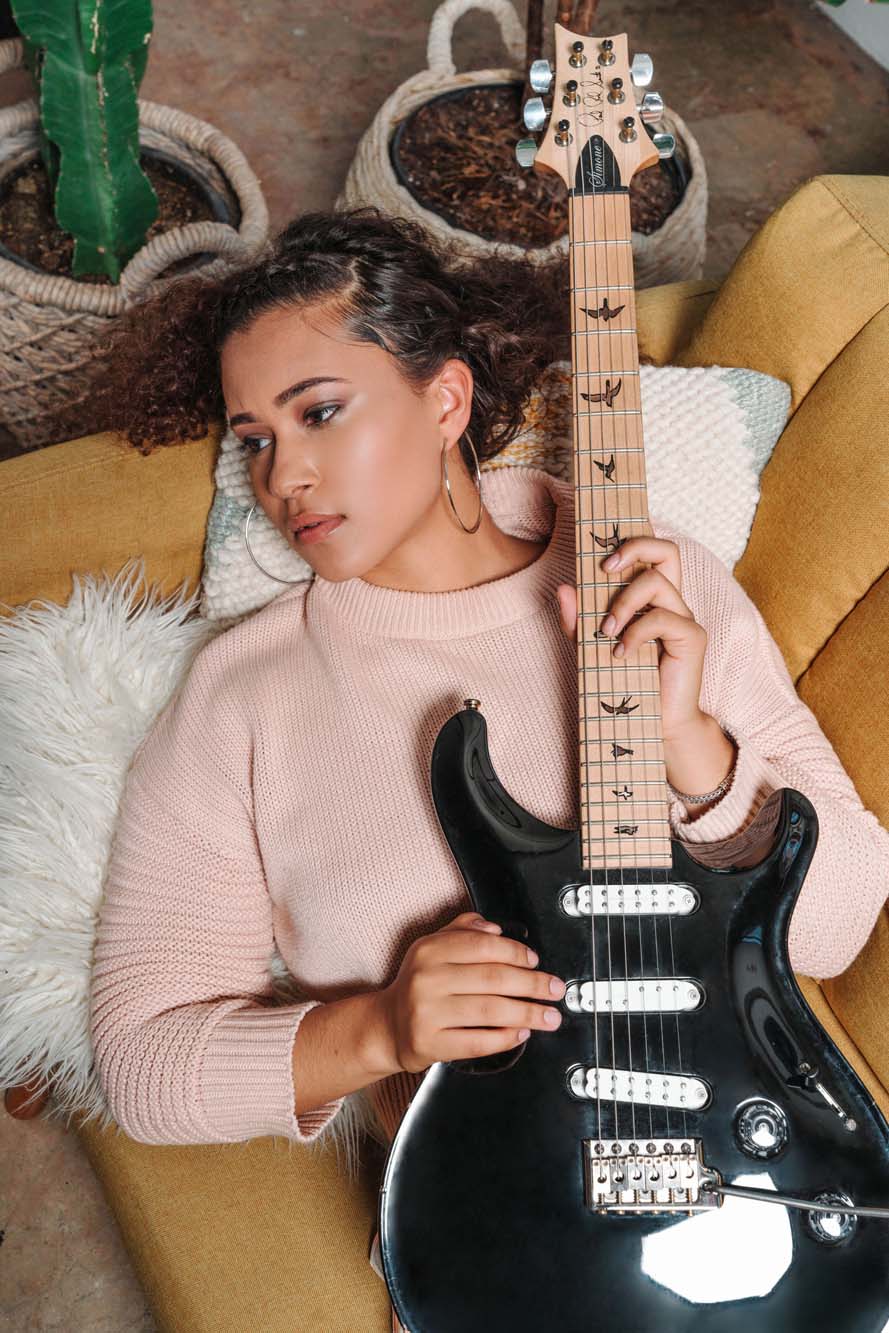
At just 22 years old, Francesca Simone (Simone being her middle name, which she goes by casually) is already proving herself to be a trailblazer. With her soulful shredding and laid back Los Angeles vibe, Simone has a style of sound all her own. When one of her viral performance videos caught the eye of Beyoncé’s music director for Coachella, Simone’s world exploded. She soon found herself playing guitar solos alongside Beyoncé at one of the biggest festivals in the world, earning a regular gig on The Formation World Tour. She recently joined R&B artist Kehlani’s latest tour as lead guitarist, and just released her first single, a dreamy instrumental track called “Still.”
We talked to Simone from her apartment in L.A.—where she’s currently working on new material—about discovering her influences, channeling emotion through her music, and the value of taking creative risks.
She Shreds: Let’s start with influences. You’ve mentioned Carlos Santana in previous interviews, but are there others who have shaped you as an artist?
Francesca Simone: Definitely Santana. He’s why I started playing guitar. In high school, I started studying jazz more seriously—musicians like George Benson, Pat Martino, Pat Metheny. Right now I’m really into this musician named Plini; he’s super dope, he mixes metal with melodic guitar. There are also some cool guys on YouTube that I listen to and transcribe.
You seem to be into a lot of different genres, from jazz to rock to metal. How do you feel your influences filter into your own music?
I think I’ve developed a certain sound. When I learn a new riff or lick, I can play it and it will always feel like Simone played it. I think at this point, listeners can hear my sound and know that I’m playing. Any time I learn something, I’m always expanding my vocabulary, but it will also always sound like me, like the way I play.
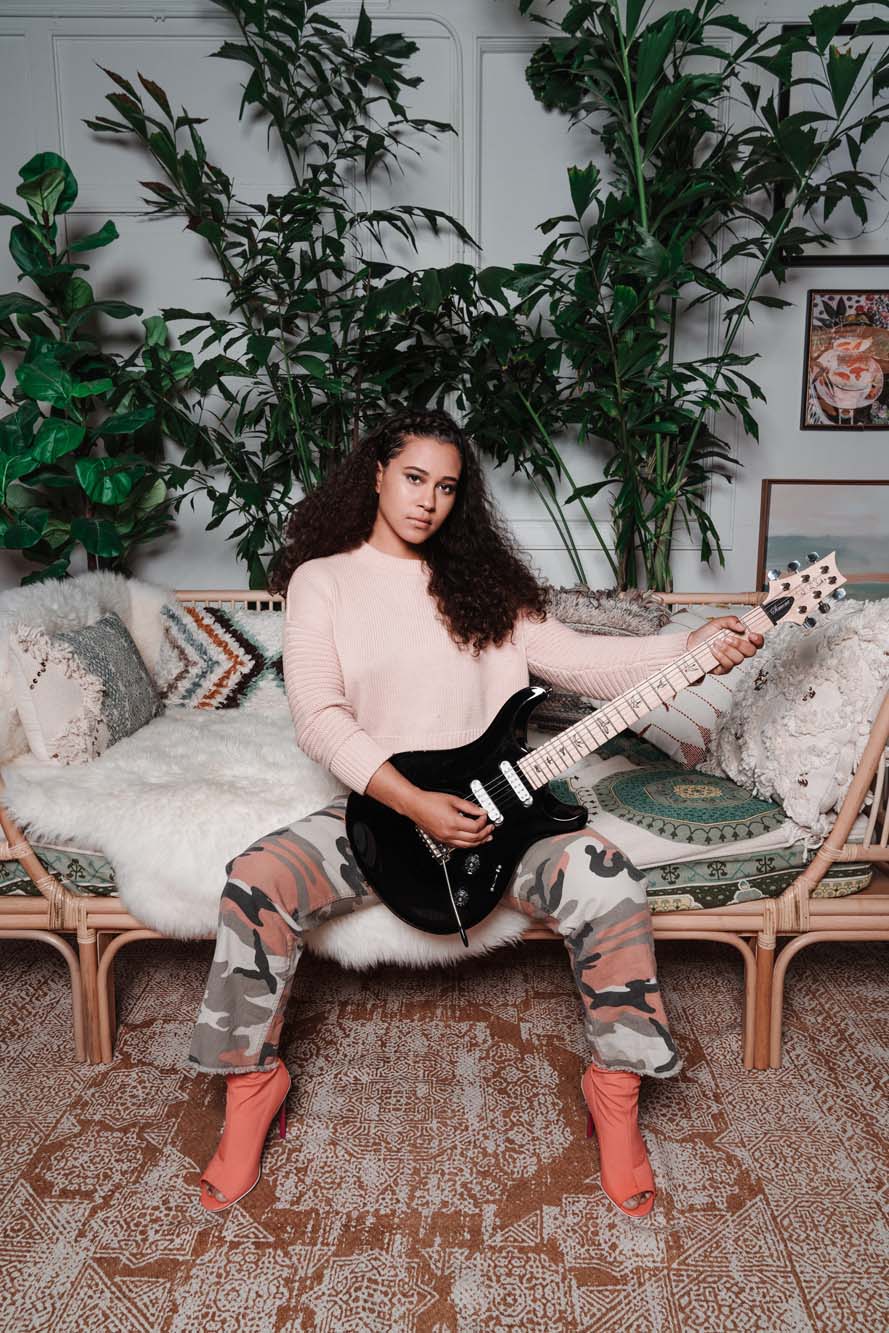
Yeah, I think a lot of your music has “feel,” that place where you can be in the moment and not overthink. How do you find the feel in your music?
I think it happens with every art form—you get the technical aspect of it down and you stop thinking. The music just takes over me and it’s like I’m not even playing the guitar. I’m so in the moment and able to let go of all my fears, not worrying about, “Did I play this right? Do I look right?” I think that’s when people really feel something.
Because a lot of my music is instrumental, it’s really important to have a story in [my] head and [to] try to channel emotion. When I had a solo on the Formation tour with Beyoncé, it was during one of her costume changes, so it was just me on stage. I played a medley of three different songs: one of the Weeknd’s songs, “New Slaves” by Kanye West, and Beyoncé’s “Don’t Hurt Yourself.” There was fire on stage behind me. It was super epic, but also really dark. Before I went on stage, I would think of something that made me feel sad or angry and just go out with tears in my eyes, ready to channel my emotions. People really need to feel that anger, or any emotion, even if it’s just through the guitar.
That was something I learned from being a part of that tour. Everything that you do in art, you have to channel that emotion. As humans, we’re emotional, so that’s the only way you can really connect with anybody.
How did you feel about getting the opportunity to perform with Beyoncé on the Formation tour and at Coachella?
If you’re a musician, the highest place you can be is on stage with Beyoncé. I got the call [for Coachella] when I was 19, so it was a complete shock to me. I went from playing for 100 people to playing for 100,000 people. I had to grow up fast and learn a lot really quickly. It was stressful, but I learned so much and it really was the best experience of my life. It’s made me a better performer. I used to have stage fright. I would be like a statue on stage. But I worked really hard in front of mirrors and my stage presence got better, especially doing that solo.
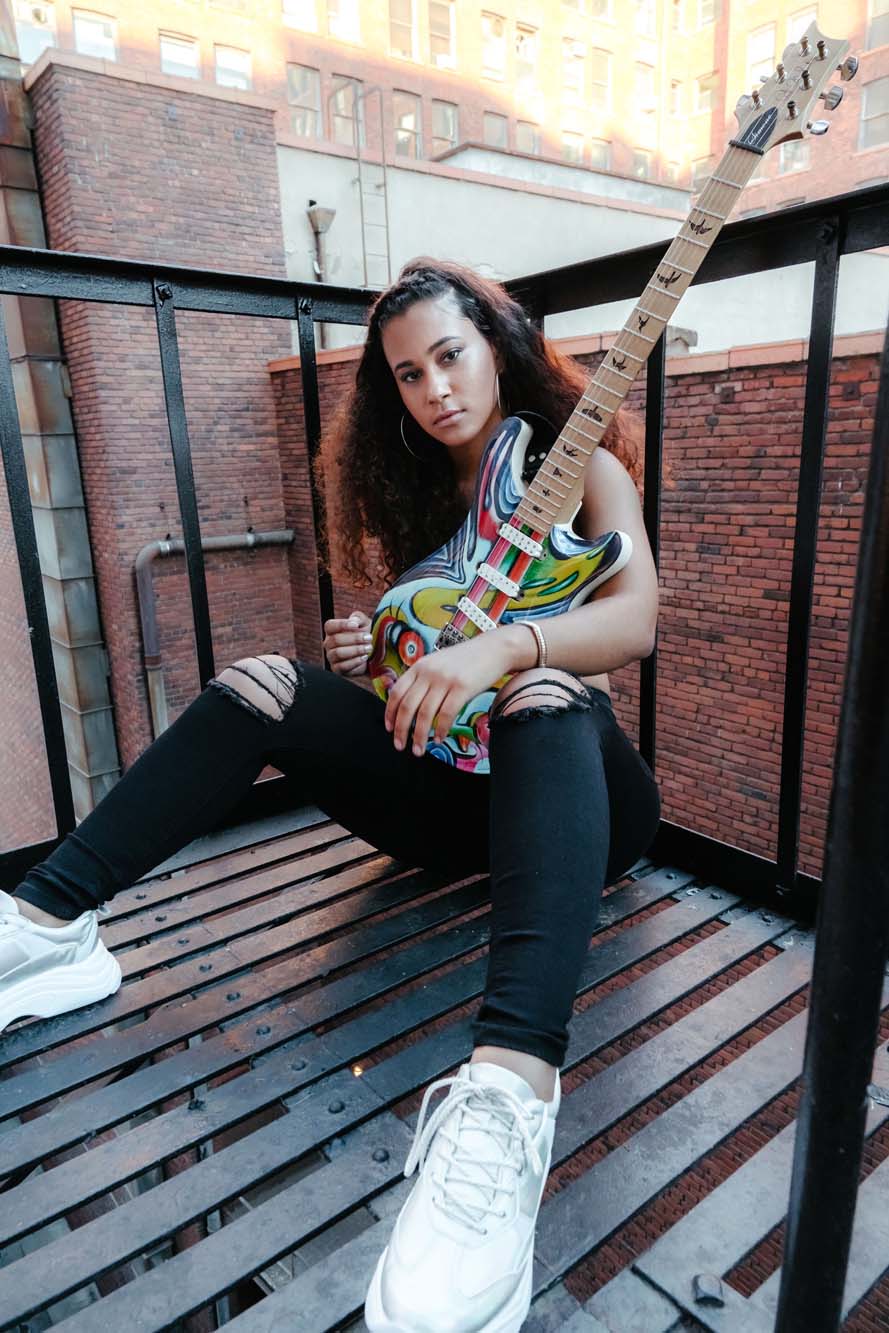
You have a lot of amazing collaborations with other artists on your Instagram, including guitarists like Melanie Faye and R&B singers like Kalin White. Do you tend to seek out collaborations with artists working in other genres? What draws you to collaborate?
Artists are like paints. When you mix two artists together, you get this really unique shade. There could be an artist that is super hip hop, and I come from a more melodic guitar vibe—what would it be like to mix the two together? Genre blending is so important these days. All the genres are blending together and it’s hard to classify artists anymore. Everyone is just doing music. So when I’m collaborating with artists, I’m always trying to bring my most authentic self to the table and be aware of where I am today. I want to express myself through my guitar in the most genuine way.
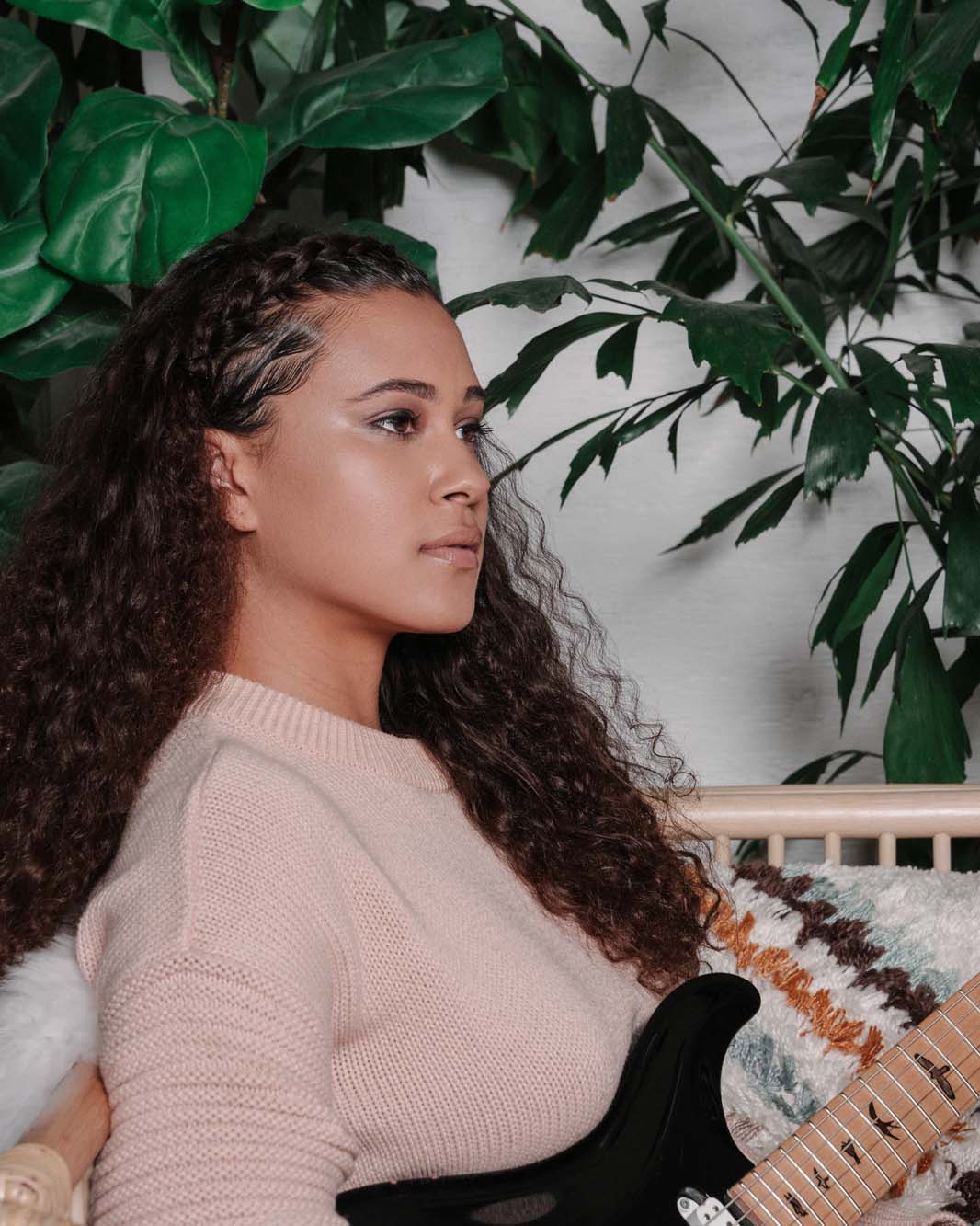
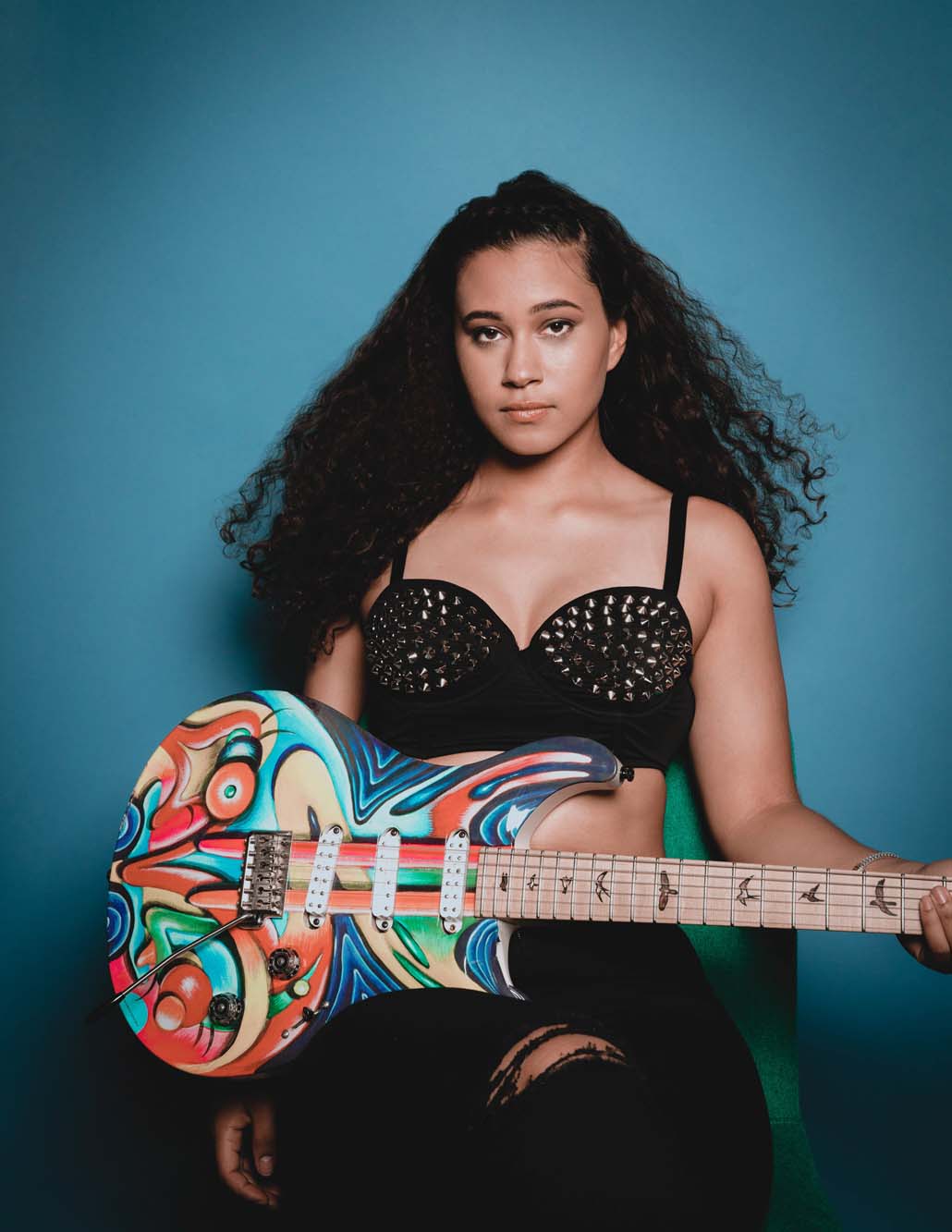
I’ve spotted your amazing kaleidoscopic guitar in your videos and live performances. What’s its backstory?
After I wrapped up a tour, I got my first place in L.A. in an apartment complex. My neighbors were husband and wife; the husband plays jazz saxophone, and the wife is a painter named Nevena Binney. We became really good friends and one day I had this idea [for Binney]: what if she painted my guitar? She was up for it, so I gave her an outline of my guitar drawn on a piece of paper. She painted a piece on cardboard and we took a picture of it. Then we had a vinyl wrap company make a printed sticker. We took off the strap, knobs, and strings of my guitar to put on the sticker, and then when it was all done I named the guitar Jupiter. I love bright colors so I definitely feel like it represents me.
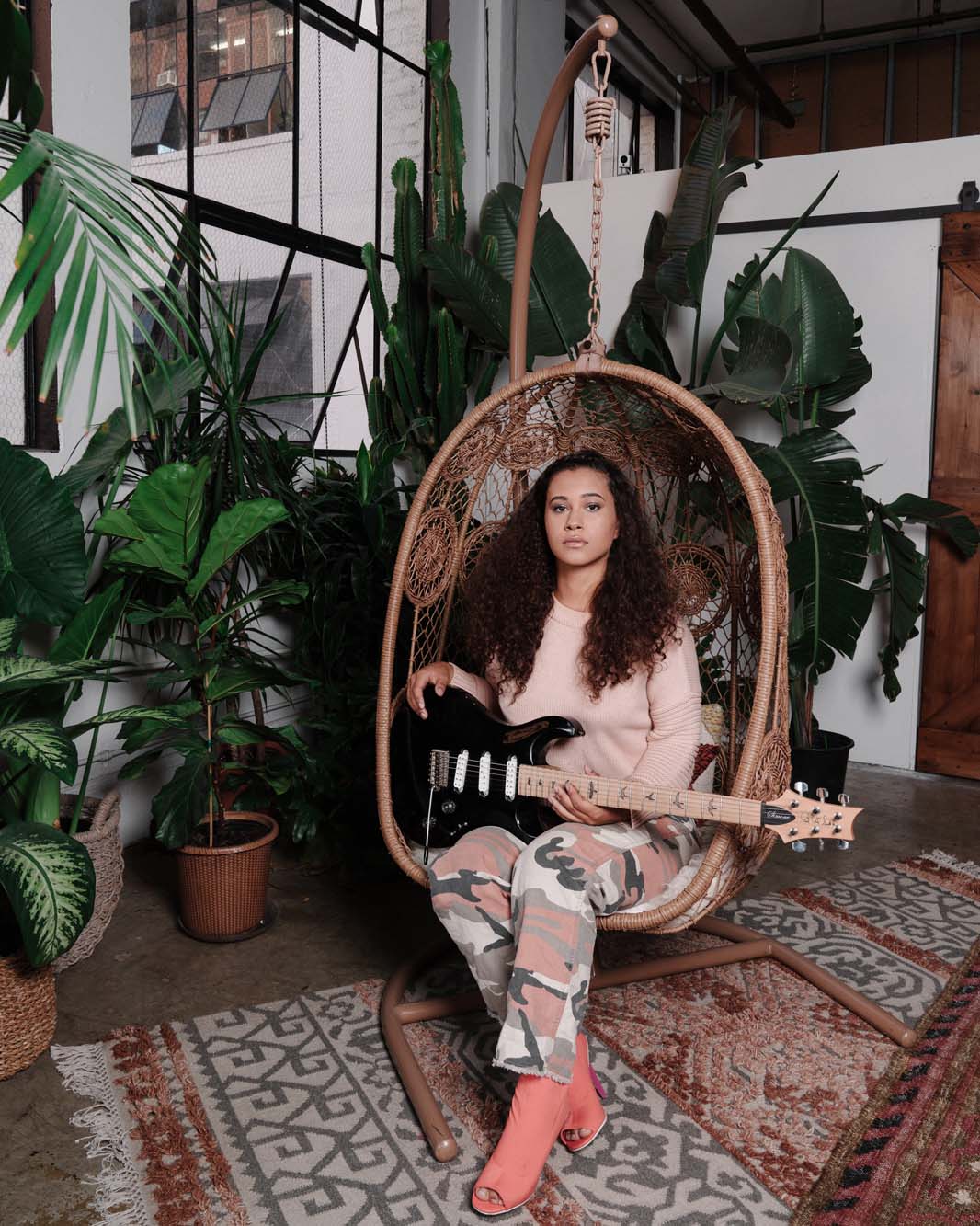
Speaking of Jupiter and gear, you recently became an ambassador for Orange Amps. What draws you to their gear? What’s your current gear set up?
Right now I play the Rockerverb 50 Combo. The first time I played it was at NAMM (National Association of Music Merchants), just after Coachella. During Coachella, I was using Axe-Fx, and it’s like night and day when you play through a tube amp. When I played through the Orange amp, I literally got chills and became obsessed with it. Their distortion tone is really dope too, even without pedals.
I also use EarthQuaker pedals. They have cool tones that have inspired me to write and produce. And Seymour Duncan pickups for my PRS 305. I’m not a gear freak necessarily, but I love my set up right now. I feel like I’ve found gear I really like to play.
You’ve mentioned that you’re getting more into production. What’s that process like for you? Do you prefer to produce your own music?
I feel like I’ve always been a producer. I’ve been playing piano since I was three and guitar since I was 11. I’m always hearing chords and melodies, so I’ll put them down and sing into my mic. I’ve been in the studio with different producers, and sometimes I feel like we could have written a catchy song or cool hook, but it doesn’t feel like me. After working with different producers, I realized I could learn to produce myself. I decided to stop working with other producers and figure out who I am and what my sound is.
You have a large online following and an active social media presence. Do you feel your online fan base has helped you grow as an artist?
Definitely, though I do have a love-hate relationship with social media. I feel like a lot of people can get wrapped up in it and think it’s the real world. You start to feel like you’re not good enough. Sometimes that can make you better, but sometimes it can also make you feel down on yourself. At the same time, Beyoncé’s team found me on Facebook. A video of me playing “Treasure” by Bruno Mars went viral and I got a lot of DMs, including one from Beyoncé’s music director. So I think it’s super important, if you are a musician or an artist, to post your art because it will expose you to people that may have never seen you before.
Thinking about online community and exposure, do you feel there are more women, especially women of color, being recognized for their talents in the guitar world?
For sure. It’s a super exciting time for women musicians. I think it also has to do with the rise of social media. I can go on Facebook or Instagram and see someone across the world who’s killing it at guitar, and I can say, “Keep going.” It develops a community among women and women of color. Before, it was such a male-dominated industry, and it still is. But I think the idea of a woman guitarist isn’t as shocking today.
It really does bother me when guys say, “ You’re my favorite female guitarist,” or “You play just as good as the guys.” What is that supposed to mean? No matter if you’re a man or a woman, it [should be] about, “You play really well and I respect how you play.”
What’s next for Simone? Are you releasing more music and visuals similar to “Still”?
I’m really excited to release more music that is vocal heavy and features my lyrics. I’m working on an EP right now where I sing, produce, and play guitar. For a long time, I think I’ve been afraid [of singing]. People have only seen me as a guitarist and I’m respected in that world. When I think about singing and songwriting, I feel pressure to have everything be on the same level. I would never put anything out that didn’t feel authentic, but I sometimes wonder, “Is this good enough?” But I think as artists, we’re always asking ourselves that question.
Ultimately, I just have to be super unapologetic and [say], “This is who I am.”
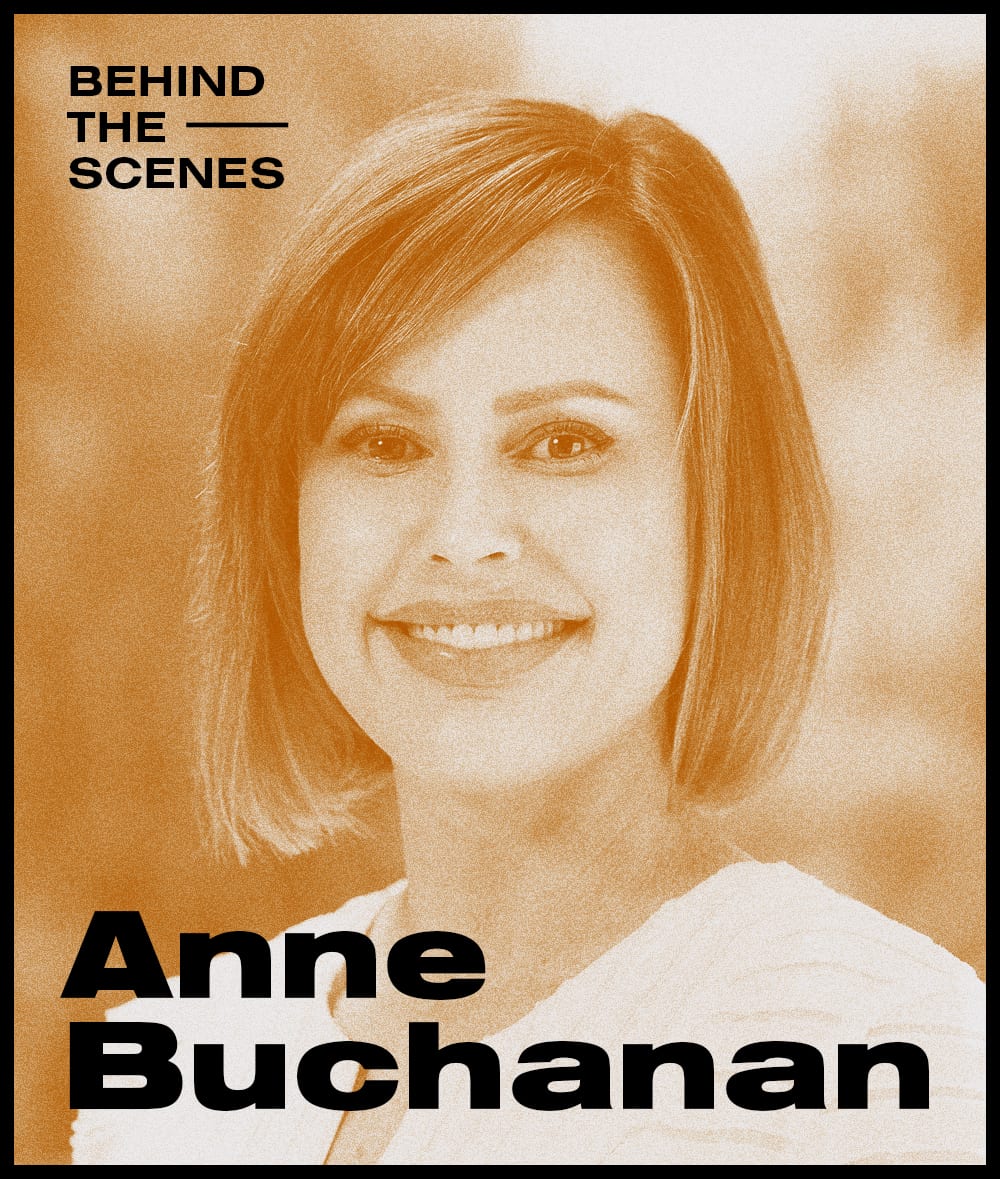
She was a single mother working as an assistant in a human resources department. Her talent and intellect was obvious. Initially tasked with setting up conference rooms and ordering lunches, her bosses gave her more and more responsibilities.
Would she interview candidates? Yes.
Would she write job advertisements? Yes.
Would she tactfully handle difficult workplace conflicts with the utmost diplomacy? Yes.
Would she transform an organization to ensure thousands of employees could deliver their best performance while loving what they do? Duh.
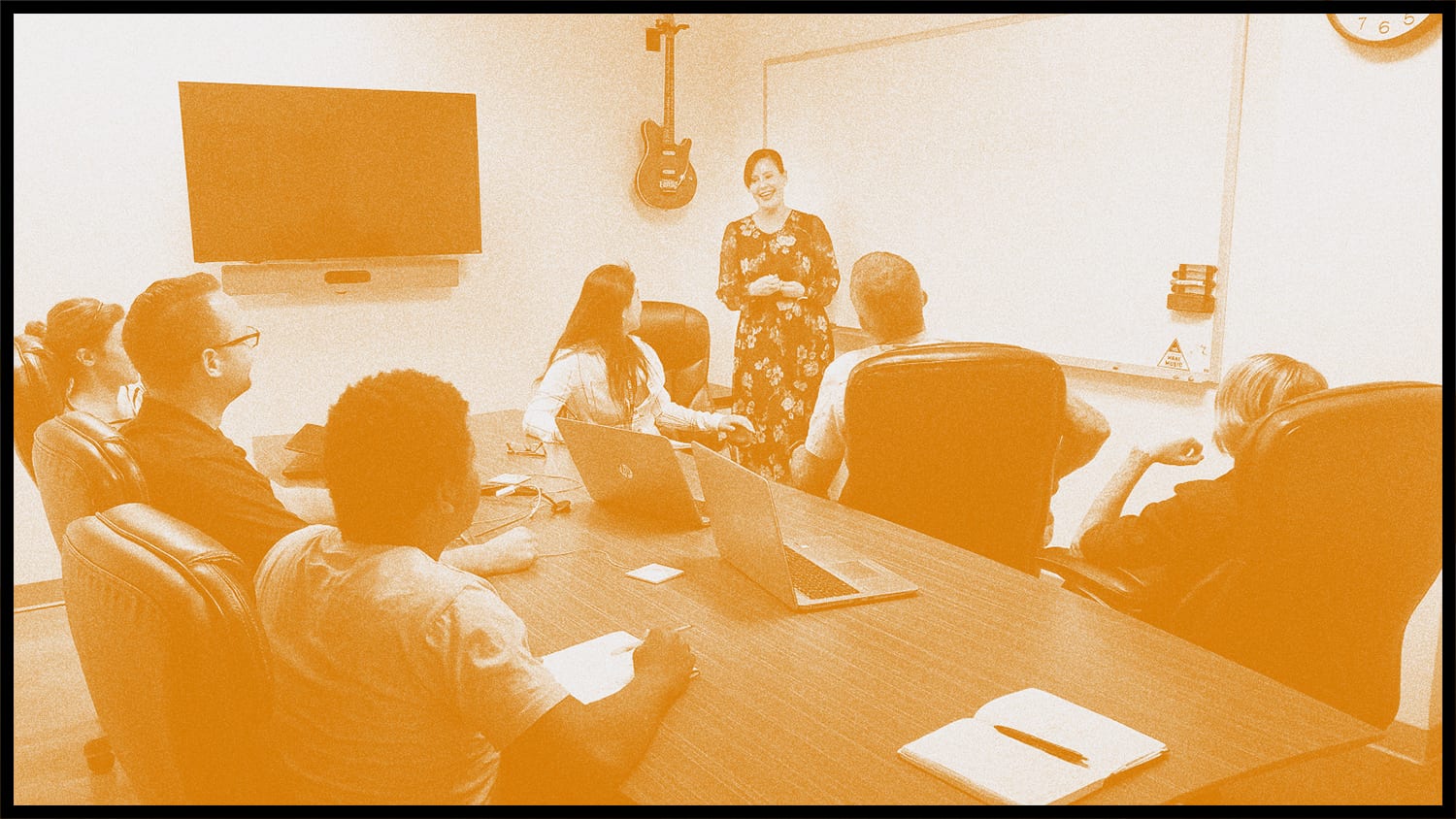
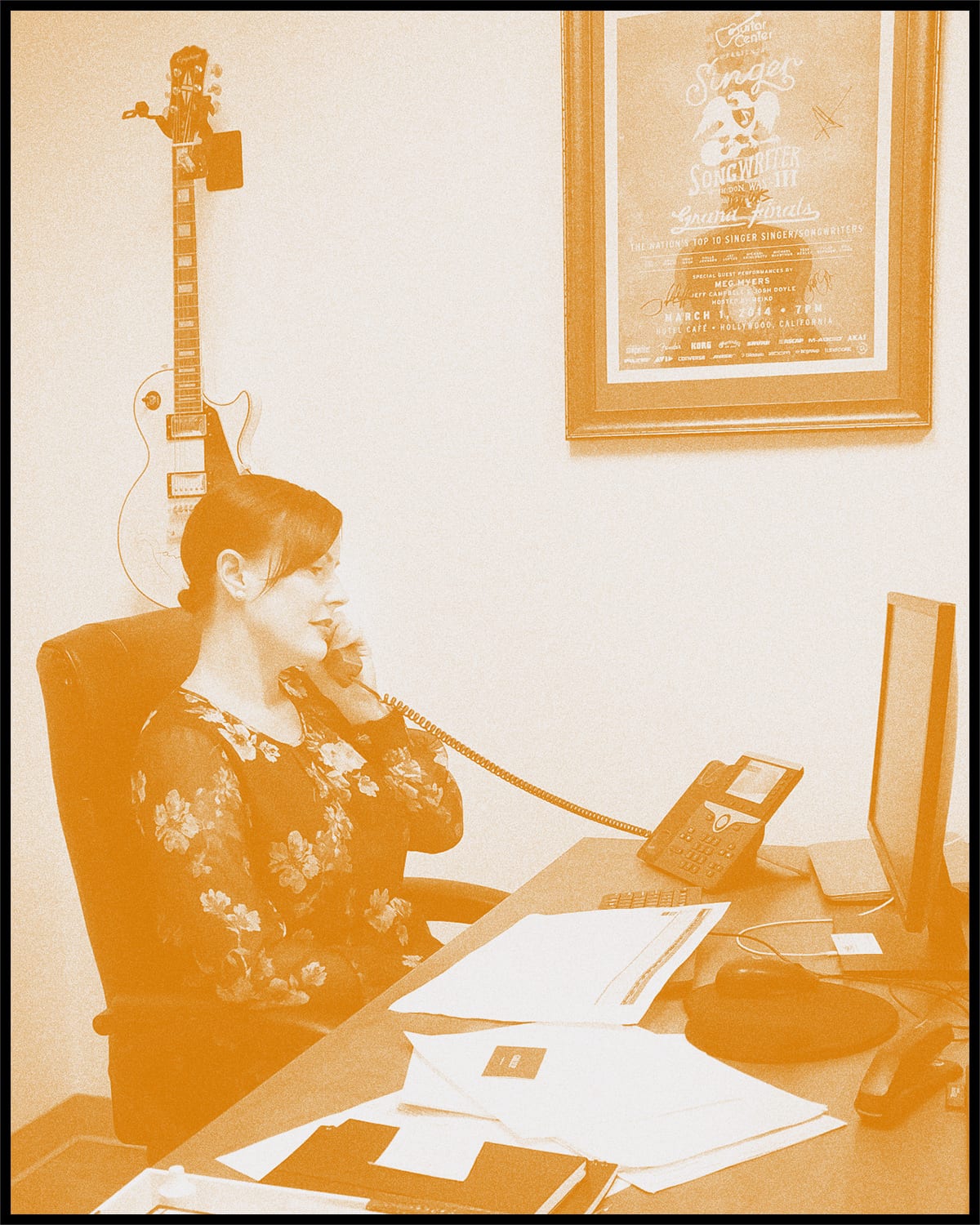
Which is why today Anne Buchanan is the Senior Vice President of Human Resources and Chief Human Resources Officer at Guitar Center. Responsible for formulating the company’s human resources strategy— no small feat, given the company’s almost 300 retail locations, $2.2 billion in annual revenue, and significant online presence — Buchanan took time out of her busy schedule to offer She Shreds readers insight into an array of topics.
Frank, funny, and thoughtful, read Buchanan’s take on how to tell a good manager from a bad one, what advice she wishes she could tell her past-self, what she loves most about working at Guitar Center, and what openings Guitar Center would love to hire for!
What are the values and principles that have guided you throughout your career?
Oh wow! I don’t know how many HR people you’ve interacted with in your career, but I’ve interacted with tons of them. You hear a lot about how HR people keep it close to the vest, and you don’t know what they’re thinking. I have seen that myself, but one of my guiding principles is to be honest. Not hurtful, but honest.
When people ask me how they’re doing, whether they’re my employee or someone else’s, I will tell them. I don’t like to catch people off guard. Being honest helps people reconcile what their next step will be and how they can move forward. As head of HR, there, of course, have been times where I’ve known about information that I can’t really talk about for one reason or another, and I’ll always protect that. But I want to build trust in the workforce and have people come to me.
I read a study recently about relationships in the workplace. The researcher found that unpredictable relationships were more detrimental to employee productivity than purely negative ones.
It’s so true. I’ve seen it. Having been on the periphery and middle of a lot of situations, I’ve seen that managers who are on a rollercoaster all the time are so much more damaging than just a bad manager. At least with bad managers, you know what to expect!
If you could give your past-self advice at the beginning of your career, what would you tell them?
I wouldn’t tell my past-self anything. Everything I’ve learned in every situation that I’ve been involved in, whether it was the right way or the wrong way has made me the HR person I am today. All of the learning has been super meaningful to me. I had to go through it and learn it.
That being said, if I had to tell myself anything, I would tell myself not to get so stressed out. I’ve learned to do that in my older years, but that would have been a good piece of advice for me back then.
How do you approach creating a comprehensive strategy for a company with over 300 stores and a ton of stakeholders? What is that process like?
It really is about keeping things simple. People like to naturally complicate things. At Guitar Center, when I started, my team kept asking me what our strategy is. Our strategy is the company’s strategy. For HR, it’s more planning around Guitar Center’s strategy versus creating our own strategy. We need to create plans that connect to the company’s strategy and drive that strategy. So if we’re growing our lessons business, HR needs to be mindful of our planning to make sure we have lessons instructors built into candidate pipeline funnels. We ask how are we training those instructors. How are we onboarding them? How are we making sure they have a tight connection to the business? It’s less about creating a huge strategy and more about creating projects and plans that support the company’s strategy.
What are you most excited to work on?
I’m excited about everything! The other day someone asked me why I was always so happy, and they may think I’m kind of a dork, but look at all there is to do! It’s fun. I’m really excited about learning and development right now. I see so much opportunity there.
We’re working on our first female leadership institute and I’m super excited about that. We haven’t fully developed the content or candidate selection process yet, but we plan to introduce it next year. It should involve about 15 women in leadership positions, such as a manager, vice president, director, or person with a position of influence. It will be a 12-week course that will talk about leadership, performance management, business strategy, and communication, and how to build those skills so you can apply them in your role in the workforce and beyond.
It’s fun to have a lot of people on my team that thinks and breathes professional development all day long. We ask, “how do we create something meaningful and impactful for our associates?” I don’t really think of it as only for Guitar Center, I think about it for their life. I don’t expect people to be at Guitar Center forever. I make it my mission that should they move on from their careers, we’ve taught them something so meaningful that they’re going to take with them for the rest of their life.
Yeah, when you teach someone certain skills you really can change their life for the better.
Yeah, and when you teach someone something, you can never take that away. It’s really meaningful for me and I get really excited about that!
What job opportunities exist at Guitar Center currently?
I’d love for you to tell your readers about this! Before I go into that, though, I want to touch on the fact that there are so much passion and love for music in Guitar Center. Even if you aren’t a musician and don’t play an instrument—I don’t play one, but I’m not going to lie, playing one does add a different passion to what you’re doing every day. So we love to have musicians come through the system because they have a different emotional attachment to the business than the average person.
In terms of opportunities, we’re hiring for support center positions, store positions, really everything. We’ve been growing and opening new stores. If you go to our careers page, there are a ton of opportunities that we would love for readers of She Shreds to know about and apply for.
We really want to bring in people who are passionate about what they do, are resourceful and have a love for music. I can’t think of a department that’s not hiring.
Are there any books, training, or mentors that have been helpful to you throughout your career that you think back on and refer to today?
Wow, I’ve been fortunate to have great bosses in my career. I had bosses that were tough on me. They were not afraid to say, “this is what you did and this is how you can do it better.” I’ve had them rewrite everything I’ve written.
While it’s easier to do something yourself sometimes, you don’t teach anyone that way. You don’t develop anyone that way. You don’t learn that way. To have bosses that took the time to sit down with me to say, “here’s what you wrote, here’s how you should have written it and here’s why” was so helpful.
I also had leaders that told me I was good and would go far in my career if I did this, that, and another thing. That helped me believe in myself and build confidence and propelled myself. That’s something I take with me everywhere I go, not just at work, even at home and in my personal life. I make sure that I give feedback all the time to my employees. Even if it’s time-consuming and could be easier to do it myself, I remember to give them feedback, because that’s how they grow and develop. The more I can create opportunities for employees the more I can do to lift myself up.
Before I hop off with you, are there any departing words you’d like to leave with our readers?
Gosh, departing words. You know, I really hope readers check out our career opportunities because I’d love to meet them. And gosh, you know, I’d also say be aggressive! Go achieve your dreams. Don’t let anyone stand in your way.
A pair of photos posted by Sleater-Kinney and St. Vincent this morning have been enough to get us (and the rest of the internet) buzzing about good things to come this year. St. Vincent is apparently producing the next Sleater-Kinney album to be released in 2019!
2019. @sleater_kinney produced by St. Vincent. https://t.co/dYEUDRvwHc pic.twitter.com/MOH6rpk5tj
— St. Vincent (@st_vincent) January 8, 2019
Looking back, the signs have been there all long. The legendary punk trio Sleater-Kinney, featuring our very first cover artist Corin Tucker, Portlandia’s Carrie Brownstein, and Quasi’s Janet Weiss, announced in January that they were working “very slowly” on a new record. Their last record in 2015, No Cities To Love, and its following sold out tour, was a triumphant return from a 10 year break in activity.
St. Vincent has shown love for Sleater-Kinney in multiple moments, sharing her own acoustic version of their song “Modern Girl”. St. Vincent has also appeared in multiple Portlandia sketches with Carrie Brownstein, and released these conceptual, comedic interviews scripted by Brownstein to promote her 2017 album MASSEDUCTION.
In the meantime we are blasting the Wild Flag album from 2011, perhaps the last comparable collaboration of guitar idols, featuring Mary Timony, Carrie Brownstein, Janet Weiss, and Rebecca Cole. Stay tuned for more details!
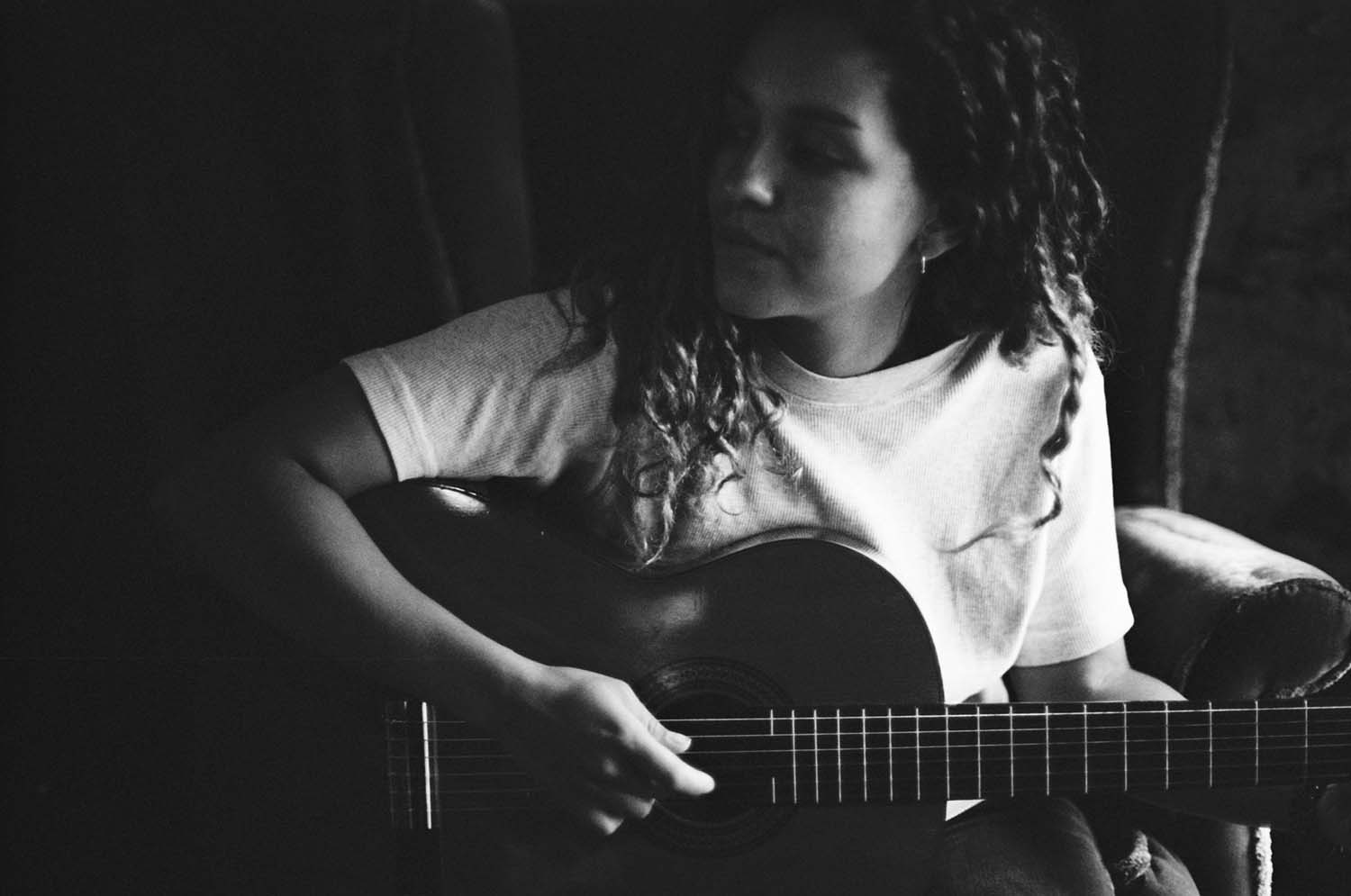
When Eliza Shaddad isn’t writing or playing at music gigs, she’s camping, going for walks in the mountains, or for swims in rivers and lakes around London. Swimming she says, has become a defining characteristic of her personality. It’s fitting, as her melancholic, pop-inflected folk music is of a fluid, organic nature. The Sudanese-Scottish folk singer is a woman on the go; she spent most of her childhood moving from city to city, and was inspired to start her music career by folk festival-hopping with her friends from university. Someday she hopes to live in the middle of nowhere, somewhere by the sea.
Initially a philosophy student, she decided to switch gears and study jazz in London where she got her break featuring on a 2014 Clean Bandit song, “Birch,”. She then released a couple of EPs — Waters, and Run — between 2014 and 2016. On October 26th, she finally released her debut full-length, Future, ten fiery and emotional songs about moving on, with Beatnik Creative. She Shreds caught up with Shaddad about the hard work that went into Future, being inspired by old Scottish folk ballads, and her feminist arts collective Girls Girls Girls.
SHE SHREDS: Let’s start at the beginning. How did you start making music?
ELIZA SHADDAD: I wrote my first song when I was eight, on the school bus. An a cappella ballad about unrequited love. I learned piano when I was a school kid. But I was keen on learning guitar, so I got my first guitar for my sixteenth birthday. I was living in Russia at the time, and my mum got me a Russian classical guitar, with crazy high action, really wide neck — the strings are about a centimeter apart. I learned about five riffs and gave up, until I was at the university. I was studying philosophy, avoiding my masters and going to loads of folk festivals. I was quite active in student politics, and I shaved my head and wrote my first song on guitar about why everybody should shave their heads.
Tell me about Future. How did you record it?
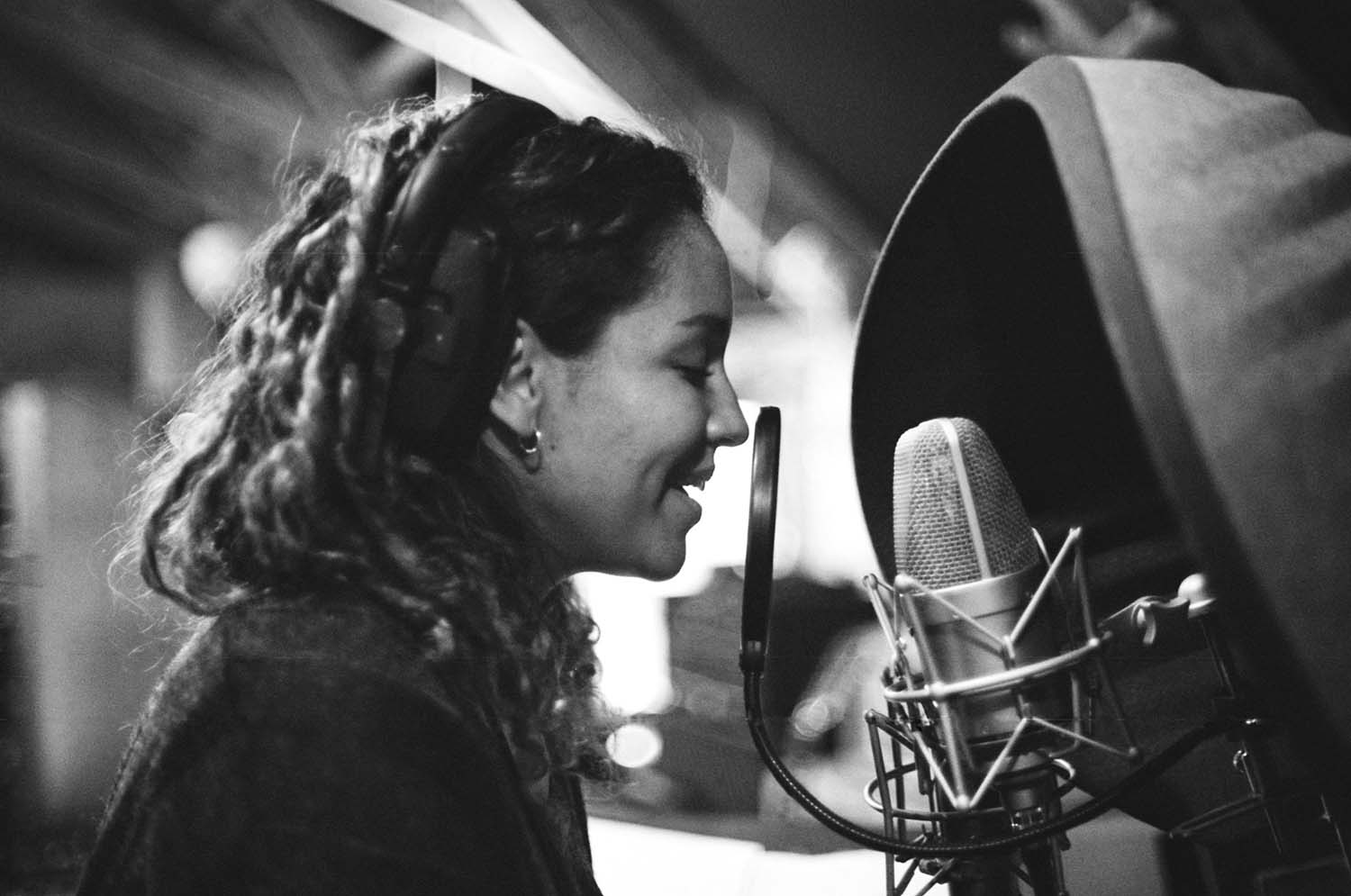
I always demo stuff at home. Then I take it into studio with Chris Bond, a producer that I’ve worked with on my last two EPs. He works in Devon, in a studio called Deep Litter, which is on a farm at the end of a peninsula, surrounded by water. The last farm before the lighthouse. It’s like you travel to the end of the world. It takes four or five hours to drive down there, and you’re just bobbing along through green lanes. And when you get there there’s no phone signal.
What guitar do you play?
I play a Gordon Smith guitar. They’re hand built in the UK, and such beauties. I love their character. Live, I use a Fender Blues Junior at the moment, but actually used a JC-120 chorus amp in the studio for a lot of this record and fell so in love. I’ve been getting progressively more into pedals over the last couple of years and my go-tos are the Line 6 DL4, the Small Clone, and DS-1 Distortion, but as I get more into soloing and writing new stuff I’m well looking forward to that widening.
What’s your writing process like? How do songs come to you?
I always write on guitar — so far, anyway. And then I build a song around it in Logic. Very occasionally, they come out all in one go. Once I woke up from a dream and was like, this, and just had the lyrics coming out of me. A really old one called “Waters.” But normally I work on both separately. I have guitar riffs I’ve been messing around with, and then themes, emotions, or stories I’ve been mulling over. I work and work at it. I’ll probably feel like it’s finished about 20 times before it actually is, ‘cause I’m always making changes to little bits.
Is there a uniting force to all the Future songs?
It was only looking back that I realized it was very clearly about one thing: trying to move on. Stopping something, dealing with the fallout, and looking to the future. A lot of it was about self-realization. Hoping to not do the same again, and therefore change as a person.
Tell me about the inspiration for your sound. I hear you’re into Scottish folk murder ballads!
When I was in the university I was living in a caravan with three friends, driving from festival to festival every weekend. I tuned into this rural network of folk musicians that have existed for many, many years, and will exist for many to come. I thought that was so beautiful. In my local library I found field recordings of traditional folk singers. They had these amazing old voices, people who’d been singing these songs their whole lives. There’s an academic researcher in me that delighted in finding something so out of the way that I loved and could make my own — that’s what the tradition is. Kind of like jazz, you have a standard repertoire that you borrow from.
Tell me about Girls Girls Girls, and what you’re doing with it now.
Me and my friend Sam Lindo set it up maybe seven years ago now. We’d just moved to London and were playing all sorts of gigs — shit gigs, basically. We wanted to play good ones, so we decided we’d organize them ourselves, and invite loads of women we admired, to create a space for them to showcase and experiment. A friend of ours had just started this charity Orchid Project, and we decided we’d do it all in conjunction. It’s an event that showcases music, and poetry, and often a pop-up art exhibition. The next one I’m planning will be in January. I thought it’d be cool to find a way to go in a tech and entrepreneur direction, link up all the different sides of what women can do. Not restrict femininity to arts.
Back to Back, aka B2B, is often associated with two DJs literally performing tracks back to back. Whether they choose each other or not, they both bring to the decks a variety of genres, time signatures, tempos and end up collaborating on the spot on a mix that makes sense.
Through the spontaneity of collaboration, communities can expand, musicians can grow, and genres can evolve. In this new series presented by She Shreds and powered by Red Bull Music to celebrate the Portland community at our 5 year anniversary, we pair guitarists with singers, rappers, and producers to encourage across genre collaboration and expand the visibility of guitars into R&B, Hip Hop, and beyond.
Grab you tickets for our 5 Year Anniversary at Revolution Hall, October 27th. Come watch these videos played on screen alongside an amazing line up including Nai Palm, Francesca Simone, Nai Palm, Sávila and Black Belt Eagle Scout.
Fabi Reyna is the guitarist and bassist in Portland based cumbia/world trio, Savila. Her style is influenced by sounds of birds, and the rhythms and melodies of Central and South American music. Karma Rivera brings trap/rap realness to the Portland music scene as a rapper and hyphy queen. On paper some might say the two make no sense as a musical duo, but the song will tell you otherwise. Surprisingly, this song was created in one hour the day before it was filmed.
Katherine Paul creates heavy, yet ethereal and intricate melodies with her guitar. She’s a multi instrumentalist and producer in her own right. Inspired by growing up in the Pacific Northwest, she performs under the moniker Black Belt Eagle Scout and sings breathtaking songs about the Indigenous experience. Amenta Abioto is a fire as f**k solo artist, singer, and producer. Her performances consist of arranging through live looping, beat making, oral effects, and self harmonizing before adding a mesmerizing vocal melody to top it off. As composers, both artists bring an energy to the Portland music scene that is hard to beat and their collaboration below is a testament to that. This song was improvised and there was no prior rehearsal.
Luz Elena Mendoza is best known as the singer, songwriter, and guitarist in Y La Bamba—a Portland favorite that can be best summed up as Spanish Indie for the soul. Her vibe is Bolero meets contemporary magic. Vaughn Kimmons, AKA Brown Alice, can be caught lost in the center of the vibe as one of two members of the soul-jazz-R&B outfit, Brown Calculus. Truth be told, although never having created together prior to this video, these two are definitely 100 percent past life collaborators. They’re creative power radiates off of them as individuals, which is why pairing the two for a one-off seemed essential. This song was improvised and there was no prior rehearsal.
Faye’s creative voice comes through in the emotionally expressive notes of her guitar; a voice that impacts new and old generations of guitarists, including those in genres not immediately associated with guitar such as hip hop and R&B.
In order to fully comprehend the talent of Melanie Faye, you need to see her masterful playing for yourself at @rainbow_fever_1998_ and indulge in who is sure to become your new guitar obsession. She Shreds video chatted with Faye about her favorite gear, refining your chops, and what the future looks like for the young guitarist.
She Shreds: How was your weekend? Where are you?
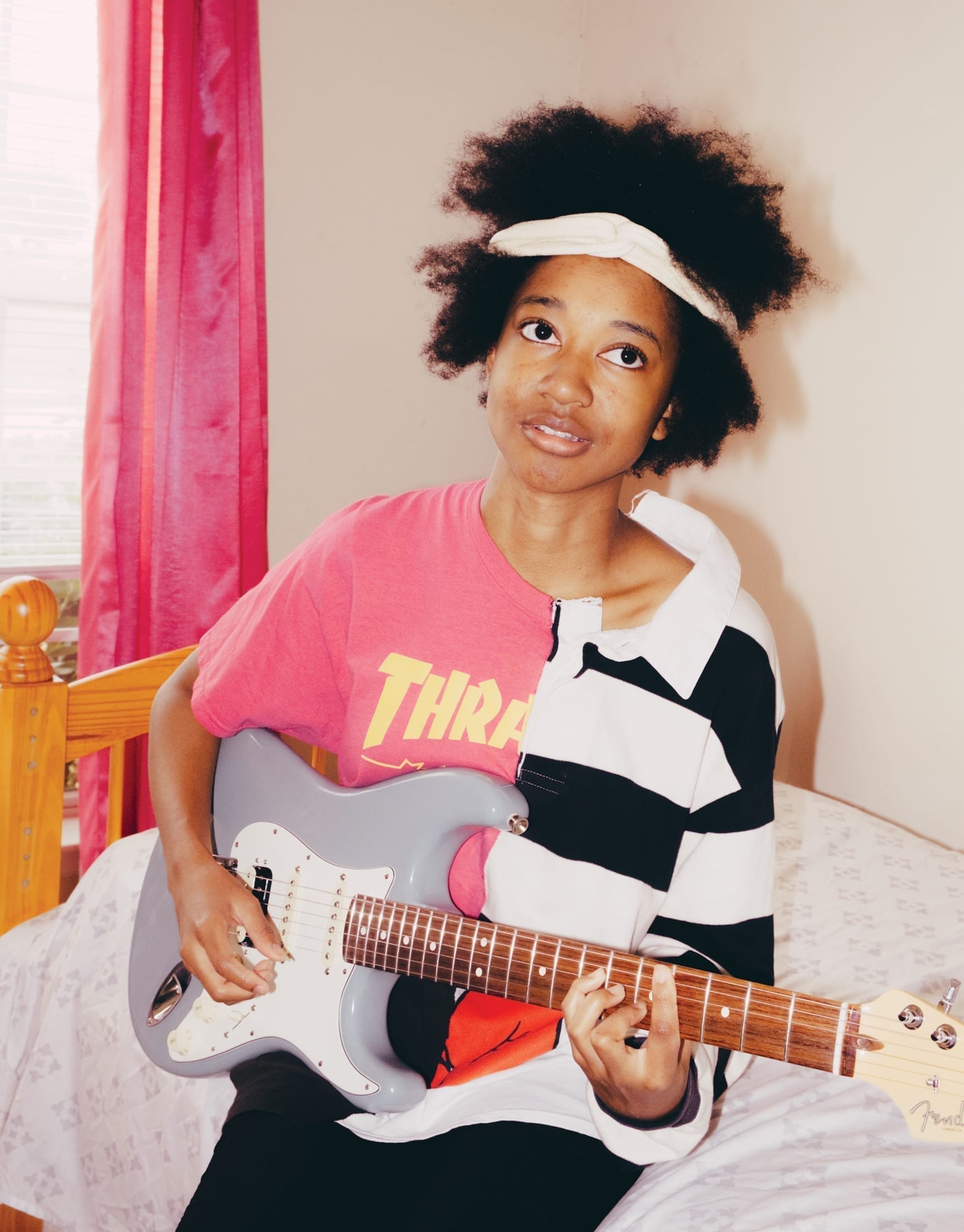
Melanie Faye: It’s been alright. I don’t really know what day it is anymore. I’m in Nashville, at my house. Did I tell you I just dropped out of [sophomore year of college]?
What was the decision for that?
I was half-heartedly doing school and then half-heartedly doing music. So I just had to make a decision—I chose music. It was the proper decision. Now I can focus on my career, which has already started.
Do you feel like the whole social media viral situation solidified that decision?
It solidified it, but it already started when I was doing shows locally. If you’re just doing local shows, that’s not really much of a reason to dropout of school. Just all the work that’s been piling up, all the people reaching out to me. I couldn’t balance it out.
A friend sent me a video of you playing, which I thought was amazing. And then three days later, you went from 7,000 followers to 50,000. And I was like, “What just happened?”
I actually started out at 1,200 and then it exploded. It kept going up and up. I was at Little Harpeth Brewing in Nashville [to play a show]. And then the very next day I got a text from one of my friends saying, “Hey, um, you’re going crazy right now, you’re going viral.” And then I looked and saw that somebody had taken my video on Instagram and posted it to their Twitter, and it just blew up. I didn’t know the person. I didn’t have anything to do with that. It just naturally blew up. And that’s an old video. That came out October of 2016. It didn’t go viral until August of 2017. I guess I just got lucky.
How has your life been impacted since then?
I have a lot more show dates, and this time around they’re in different states. A lot of free stuff: clothes, a whole bunch of guitars, guitar pedals. So, yeah, it was pretty cool. I have more direction too, I guess.
What does that direction look like?
Keep doing the shows, and then just keep posting. When I’m ready, drop the EP. In order to go on tour, you have to have a body of work out, which I don’t have yet. But once I get that out, then I can go on tour.
I read that you got into guitar by playing Guitar Hero on Xbox. What about that game made you want to pick up the guitar?
The song “Cliffs of Dover” [by Eric Johnson]. And the characters, how cool they looked, how cool the guitar sounded, the music on there, and how fun the game was. But “Cliffs of Dover” was my favorite song of the whole game.
How did you go about getting your hands on a guitar?
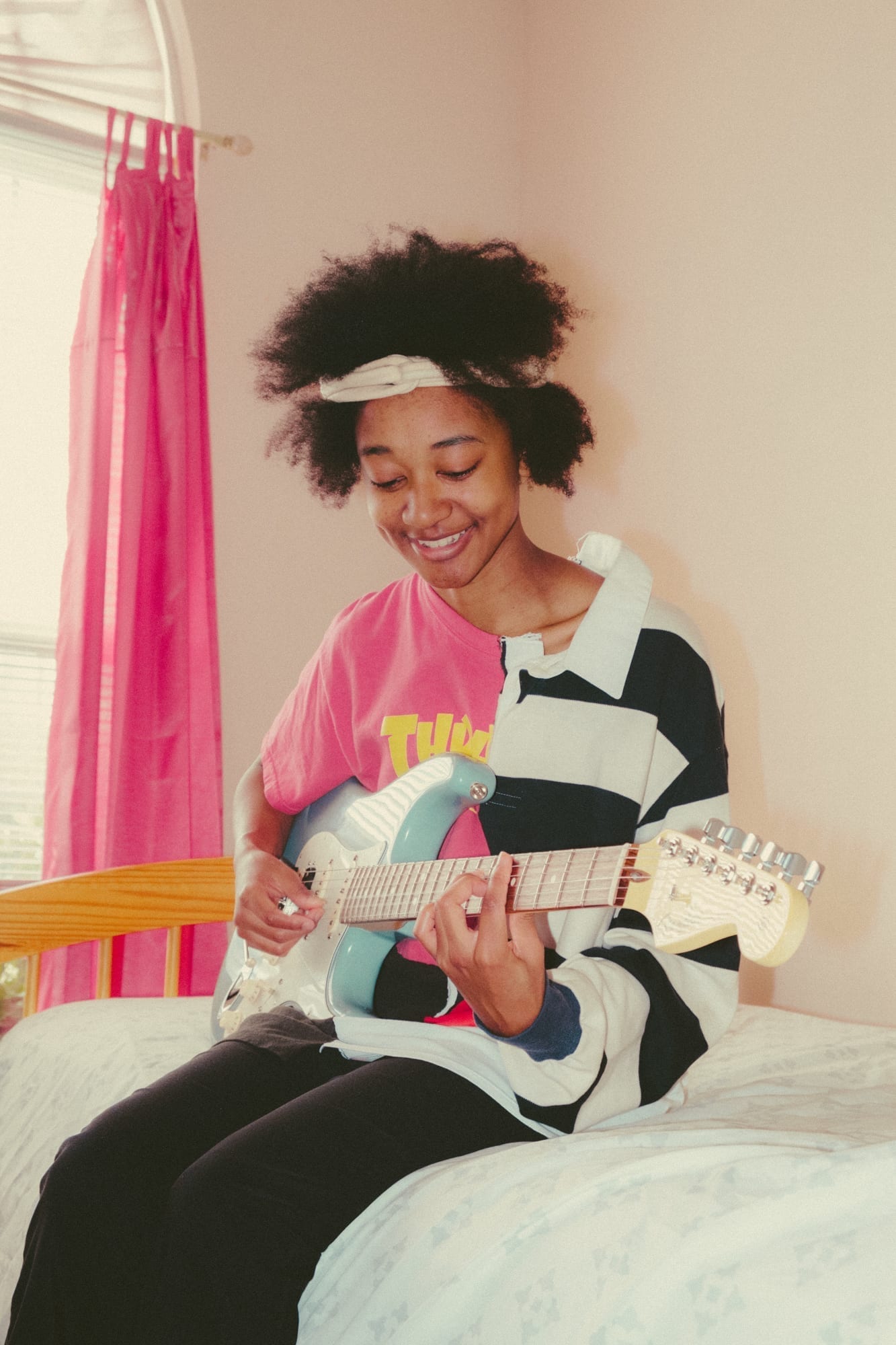
A year later, after getting Guitar Hero 3: Legends Of Rock, I got a real guitar. I didn’t get it for Christmas or the holidays because my family is Jehovah’s Witnesses, so I got some money for Black Friday. Like, we didn’t do Christmas, but we did Black Friday. I decided I was going to buy a guitar, so that’s what I did. I was 11.
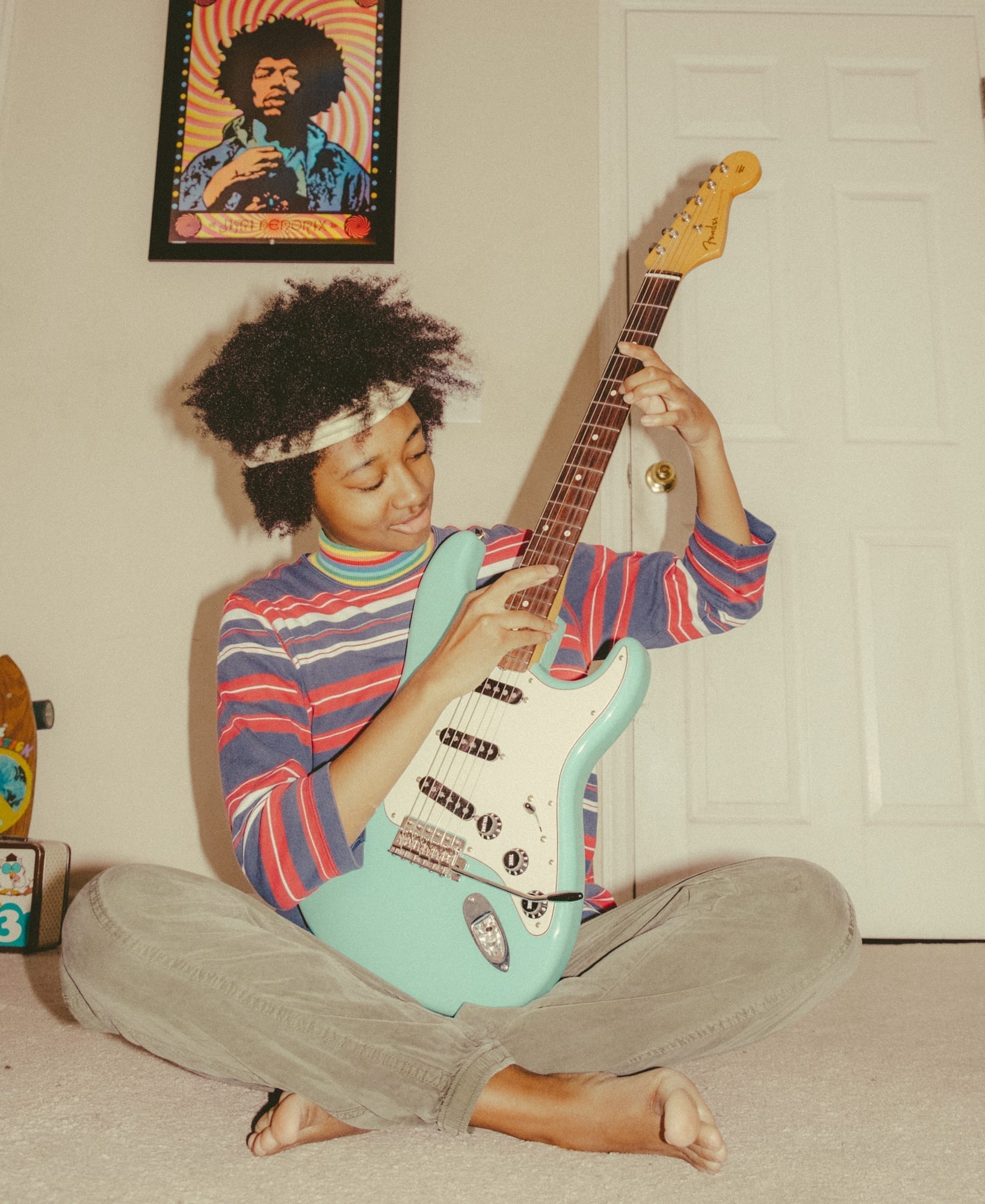
What about the baby blue Strat that’s often seen in your earlier videos?
I bought that senior year of high school. I worked at Subway part-time and made minimum wage and I was really excited to buy something. It was that Black Friday time again, so everything was on sale. I can’t really say that I’ve ever really been in love with the guitar. It takes a lot of extra work to get it to sound decent. You have to really work on your technique and your touch to get the most of that guitar.
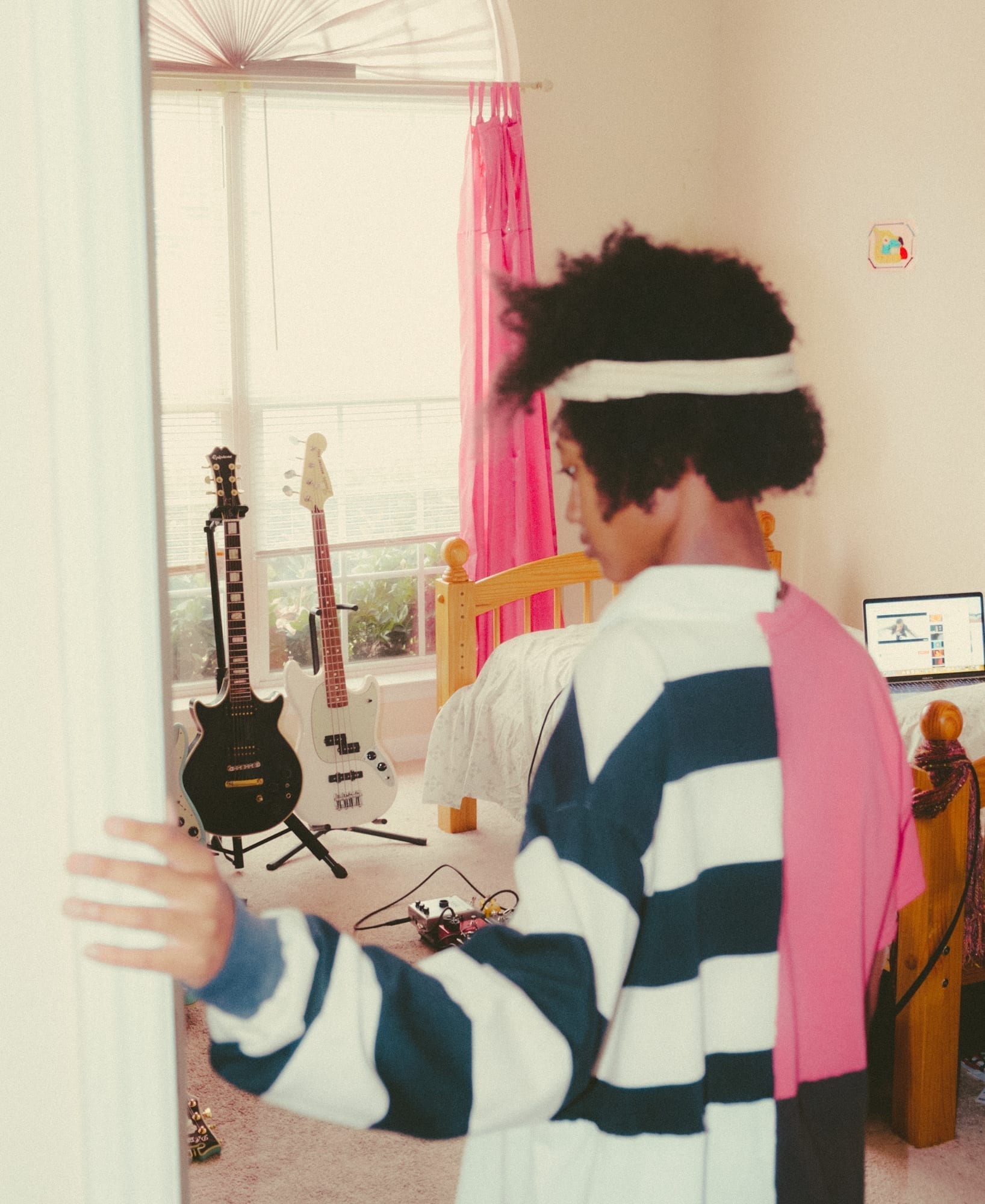
What do you look for in a guitar?
I like guitars that are really well set up, that feel really effortless, that have low action where you barely have to press down and it just feels like air. But none of my guitars feel like that at all. The blue [Fender Stratocaster] has the world’s highest action.
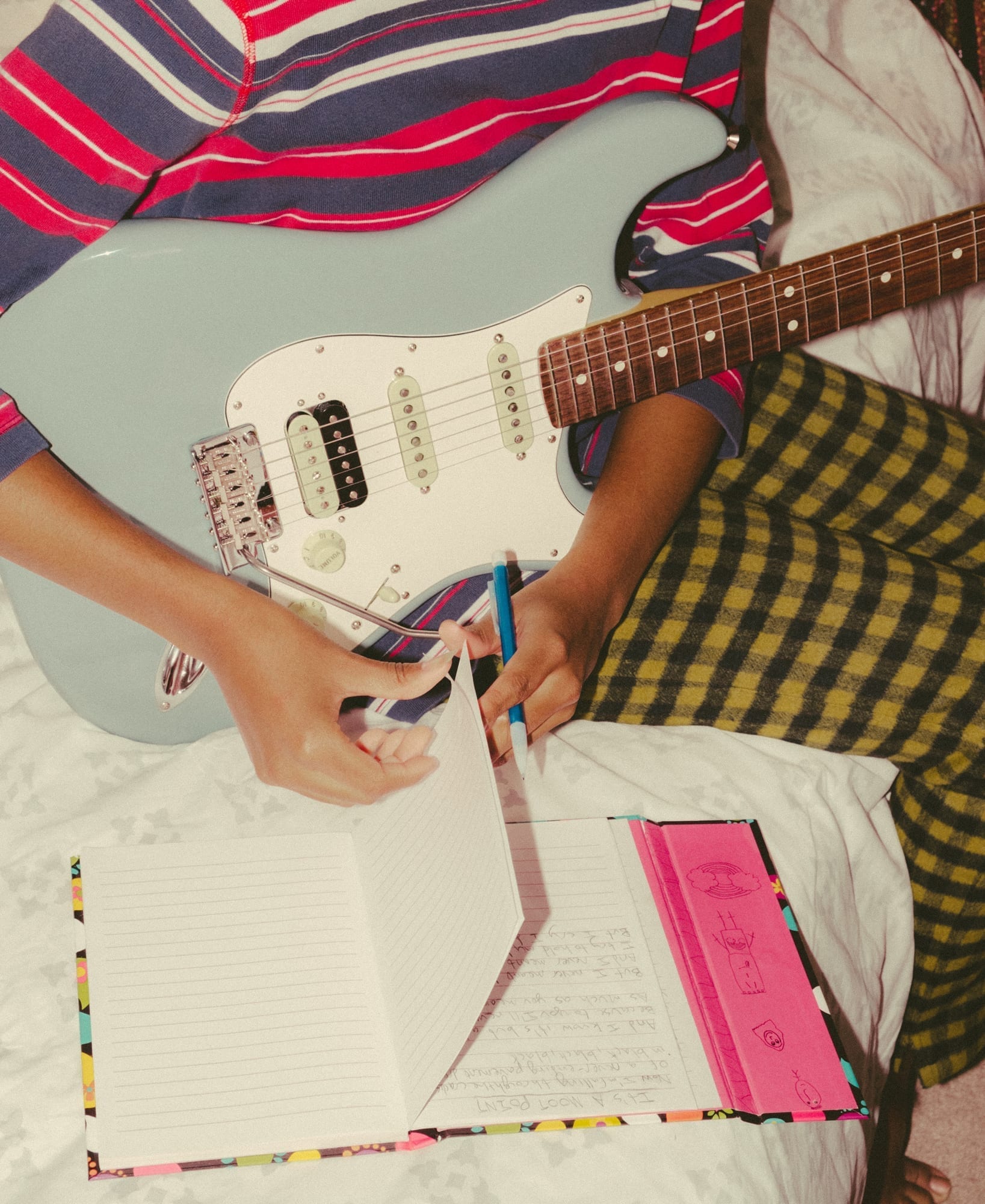
The black Epiphone Genesis, which is from 1980, also has pretty high action. And then the three new ones I just got—I’m in love with this bass. I’m obsessed with it. I’m so excited to start playing bass and learn stuff and even pick up some gigs as a bass player. It’s perfect. I chose that [Offset Fender Mustang PJ] bass because [as a] a guitar player, I’m not comfortable with the full-scale bass. I’m not comfortable with a full-length 34-inch bass. So I decided to get a short-scale bass because it’s reminiscent of a guitar and feels familiar. And then, the D’Angelico guitar is perfect. You have to see it in person, it’s gorgeous. When I first pulled it out of the case, it was clean: brand new, no specks of dust, no scratch marks. It was just amazing, and it sounds even better than it looks. And then, the American Professional Strat is amazing. It’s better than my original baby blue Strat.
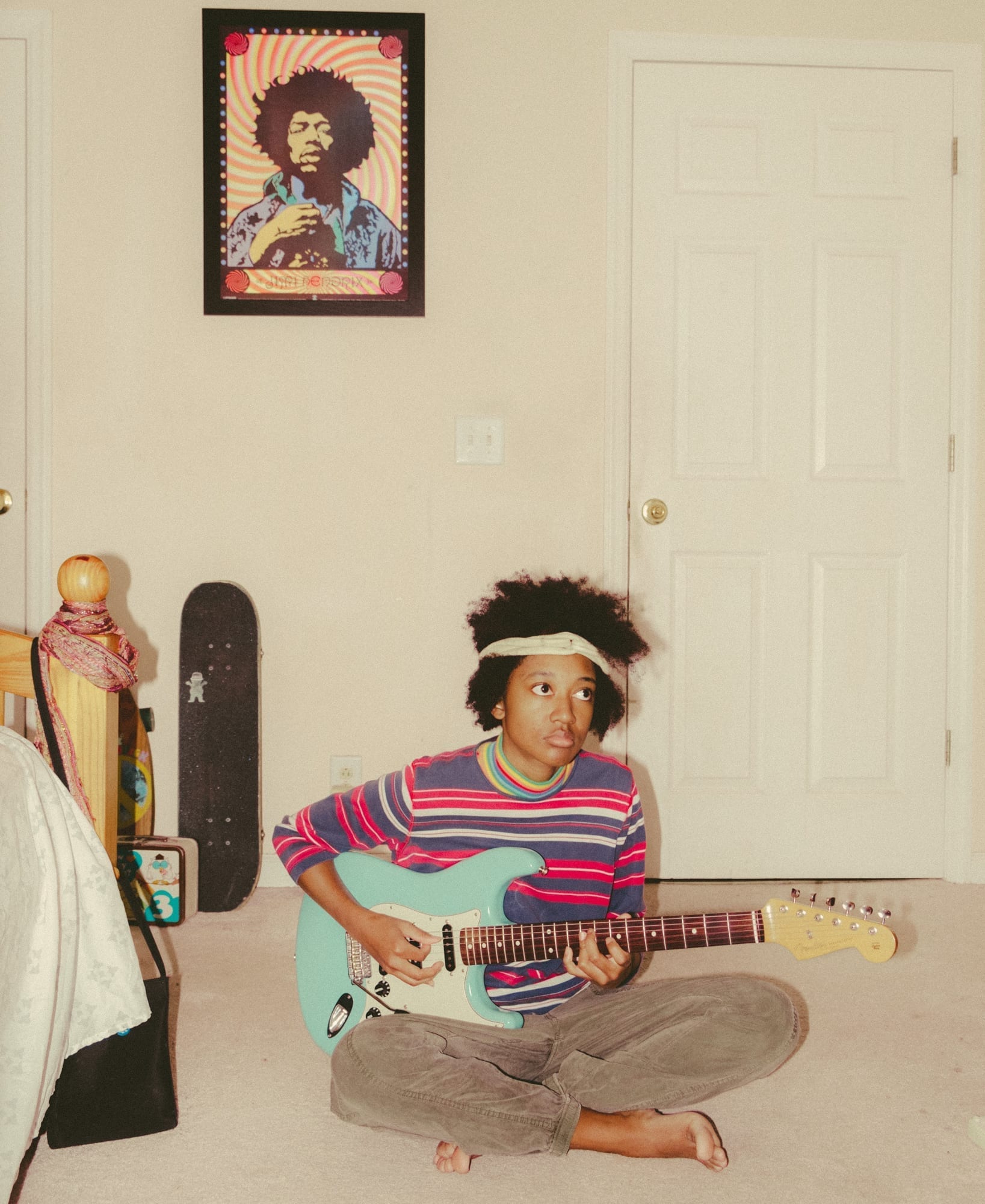
Did the Strat inspire that Jimi Hendrix portrait that’s always behind you in your Instagram videos?
It’s a 3D poster, so if you are in here and you move to the left, it turns green. But if you move to the right, it turns red. So you can see in my Instagram, sometimes the poster’s green and sometimes it’s red, depending on my position on the floor.
What do you think was the hardest thing to learn at first?
Chord changes. Going from one chord to another, and then picking the right string. If you’re holding down a note on a D string, you might accidentally hit the wrong string. That was really hard.
What were some of the main tools that were pivotal in developing your skills?
Being patient and having the drive and determination to learn something else. It’s easy to learn something and then just plateau and not really push yourself to get better, to just play the same thing over and over again for the next few months. But you just have to push past that wall. You have to be determined to move into the next obstacle.
I think for a lot of people, like you were saying, guitar is an obstacle rather than, “This is an expressive instrument.”
I’m sure a lot of people can play guitar, but very few people have the patience. Nobody really wants to put in the work, so they’ll get to be decent at it and that’s it.
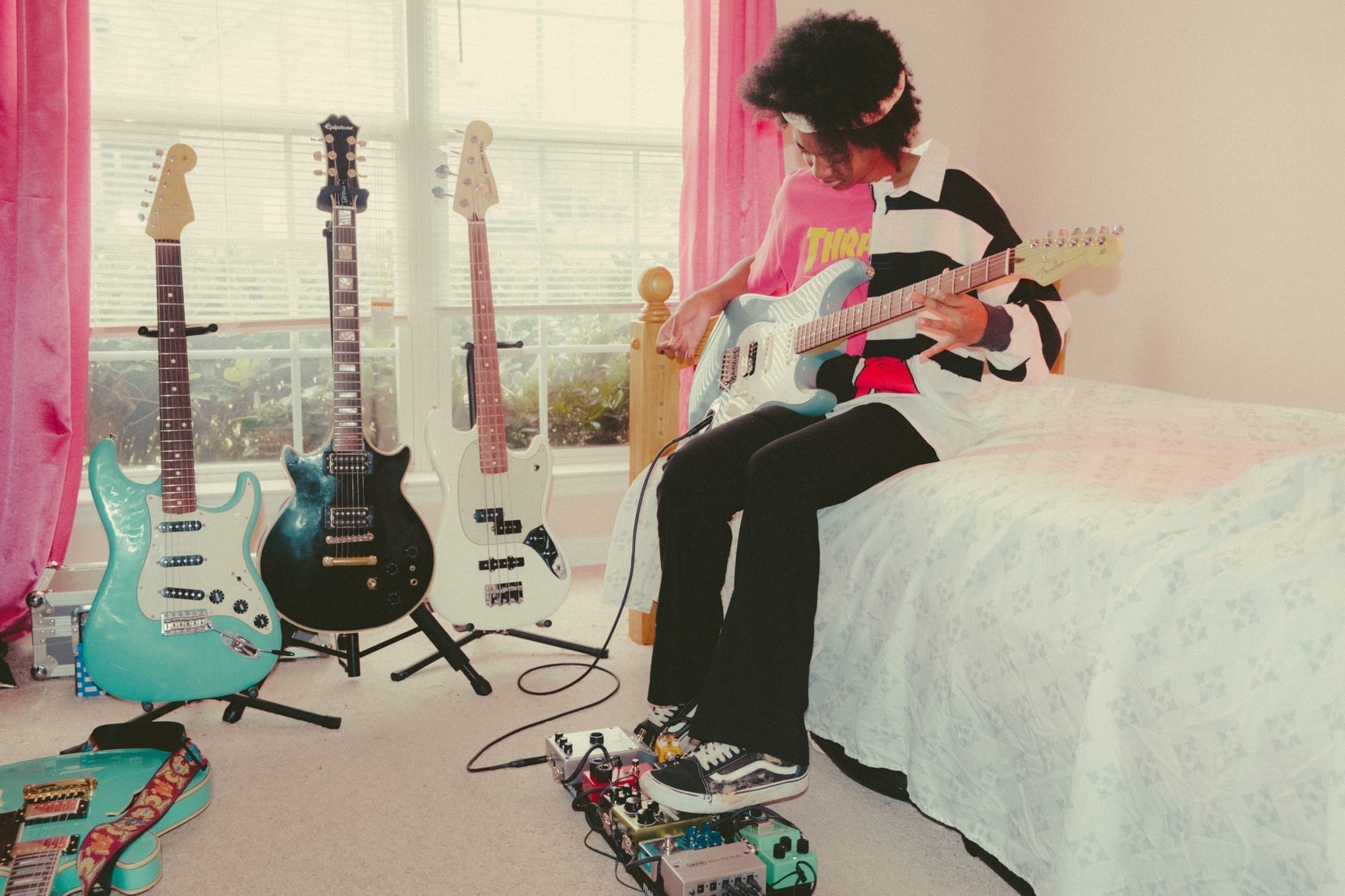
Speaking of… I noticed on your Instagram you’re experimenting more with pedals and bass. Do you consider yourself a bassist?
Yeah, it is secondary. I never relied on pedals, but pedals are super exciting. I’ve always wanted to get a good, solid overdrive sound. Like a “Cliffs of Dover” type of overdrive.
Do I consider myself a bass player? I do now. I’ve been playing for like, four days now, but I’m good at it.
What do you consider a good guitar player?
I guess that is subjective. But [I consider myself] someone who really has rhythm and does more than just the basics, who thinks outside the box instead of just being all simple with it.
What is the longest you’ve ever played guitar in one sitting, and what do you like to play for practice?
Maybe 12 hours. Not all the time, but that’s probably the longest. I don’t really sit down and play scales, but I play other people’s music, and then my own music too. In order to make your own music you have to learn and listen to other people’s music.
What are some of your favorite songs to play by other musicians?
[Songs by] Eric Gales. Nobody talks about him. I feel like he’s really unknown. Nobody plays guitar like him at all. I’ve never heard anyone sound like that. He’s extremely R&B, and very gospel, but he still does rock and blues too.
Who are some people you’d like to play with?
Chance the Rapper, Kehlani, Noname—who I actually recently met—and her guitar player, Brian Sanborn. Aminé and Danny Brown, Lianne La Havas, and SZA for sure. Anderson Paak, Shawn Mendes—I would want to work with him. Definitely Bibi McGill. I mean, she’s actually doing yoga right now, that’s what she’s really focused on, but if she makes her comeback to music, then I would want to work with her. Cage the Elephant, Portugal. The Man, Hayley Williams. I hope I’m not missing someone.
So, a lot of hip hop and R&B influence.
Everything I have made has R&B influence to it. It doesn’t always have to be like, hard rock. You can do other stuff. I’m really influenced by singers like Mariah Carey or Kelly Price. Sometimes when I’m playing I mimic the way a singer does runs and stuff.
Why does that interest you?
Instead of sounding like generic guitar noise, it sounds like music. It sounds like singing. I grew up listening to R&B music. I didn’t grow up listening to rock music. I didn’t discover rock music until I got Guitar Hero in middle school. Before that, me and my siblings were obsessed with Michael Jackson. I mean, he’s considered the King of Pop, but a lot of his music is R&B. We would sit in the living room and listen to his music, and dance like him. Other than him, I was really obsessed with Mariah Carey. Chris Brown, too. Those were my top three favorite people to listen to.