
Spalding is an improvisational sensation that became a household name in 2011, after winning the Grammy Award for Best New Artist over superstars such as Justin Bieber, Drake, and Florence and the Machine. She embodies the examination of self through an alter ego defined as Emily who came to the composer in a moment of clarity amidst tired routine. Emily can be seen as a guide into the exploration of possibilities—an evolving philosophy that navigates who we have been, who we are now, and who we can be.
Born and raised in Portland, OR, Spalding is a tenacious artist whose passion for music should not be underestimated; she picked up the violin and piano at just five years old and then discovered the bass after her single mother started taking jazz guitar lessons, which surrounded Spalding with composers, teachers, and peers who would introduce her to a career she’s been dedicated to ever since.
Although an acclaimed prodigy, virtuosic, and genius, these labels are secondary to Spalding who sees the true value in discovery through on-going study and enlightenment—a practice that has led her to finding and evolving what Emily’s D+Evolution means to herself and those who are listening.
How did you discover jazz?
Through the bass, I heard that music and that was what pushed me. I wanted to be able to do that shit, ‘cause it was like … amazing. It was like, aughhhhh [makes overwhelmed noise], it made me feel so good. I think I kind of got what was happening there, in terms of how they were using musical language and it was so soulful, but challenging. So when I heard that music I wanted to figure out whatever the fuck I had to do to be able to do that. And I had good friends and teachers that showed me ways to study. And then when you realize how far away it is … to be able to do that, you’re compelled to practice.
In what ways were you being pushed, by yourself and/or others?
Well, paying bills was always really helpful. The necessity factor should never be underestimated because when you’re supporting yourself you realize quickly, if I suck on this gig, I probably won’t be called back to play another gig; that’ll push you to do your part. Whatever it takes to get to that place may not have happened without the urgency of monetary necessity. Also, I wanted to impress people—because I’m an individualist and I like to be special and important and be seen as marvelous. I quickly realized that what I was doing was so weird and people were paying a lot of attention to me. I wanted the attention to be about being awesome, not just that it was a novelty. I just loved it so much—it feels like the most marvelous sensation when you’re in the midst of playing something beautiful. You’re compelled beyond reason, beyond any process of rational thinking. You just wanna do it. You just want to play make-believe in the trees with your friends in the park—it’s that same pure enthusiasm.
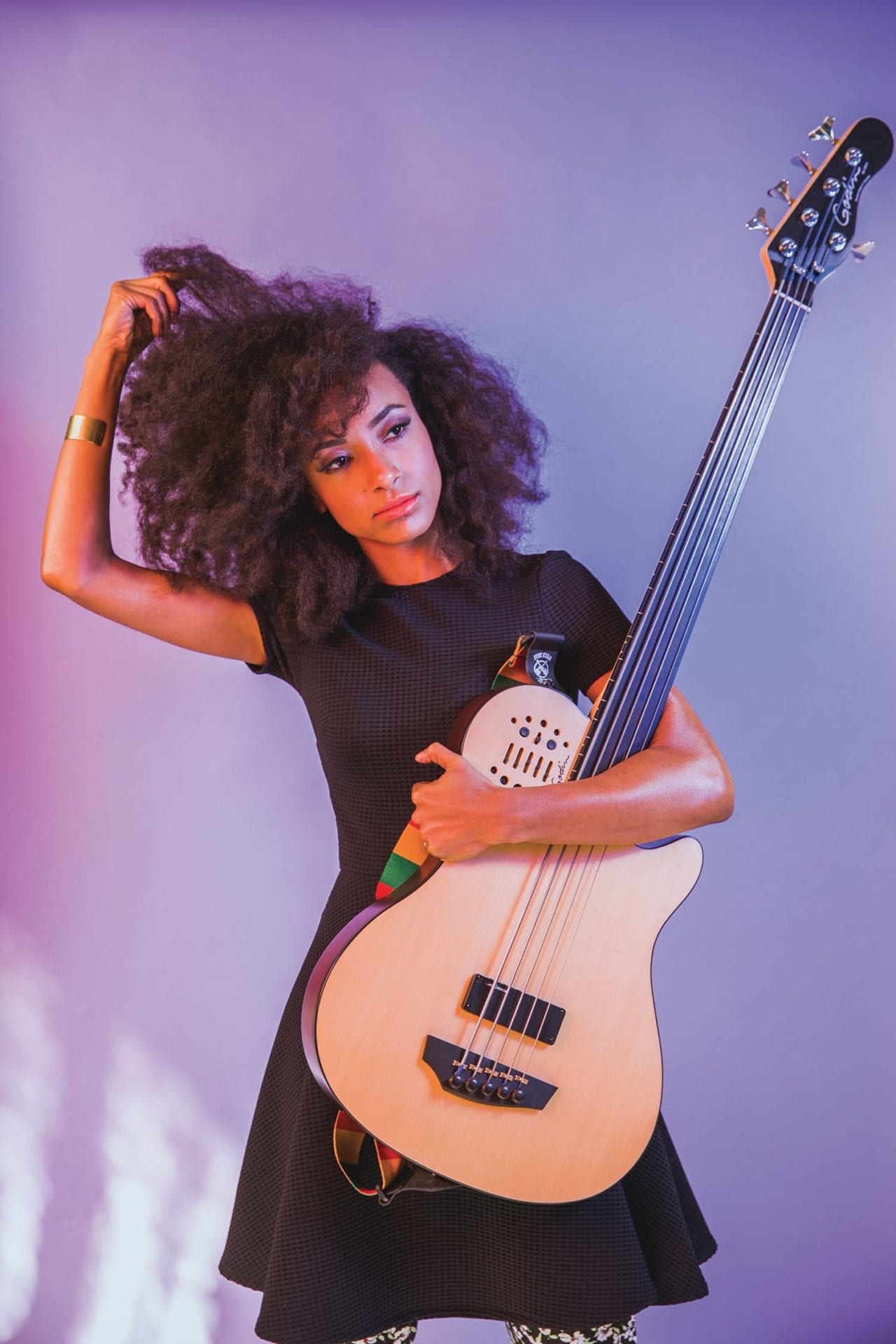
You were self-taught, but also you received lessons later on. What is that tug of war like?
Yeah, it’s an ongoing tug of war. When I was a kid I would do as much as I had the concentration for—attention span for [laughs]—and then mess around the rest of the time I was practicing. With teachers I felt intimidated by, I would probably practice more because I was afraid of being reprimanded and embarrassed in front of other students.
For the first few years it was self-study, and then I started studying with teachers. It’s always a combo of what teachers give you and you figuring out ways to get to what you personally want to find. The tug of war goes on and on and on in life until you seek out the tools that are going to help you get the result that you want in your music or art. But ultimately you have to have the self-reflection to see what is not helping you, and you can change course.
That’s something I struggle with all the time: I want to have my own voice and I don’t want to be taught that there are specific rules. But as a jazz player, or any classically trained musician, there seems to be set rules you need to follow.
If you just change the word “rules” to “tools,” it’s all groovy. That’s really all it is. Because even like my mom—she should be an editor, she’s such a motherfucker with the English language. It’s insane. And whenever I reach to her for help on something I have to write, her feedback is helpful because she knows the rules, but the way we’re applying it is as a tool to make my voice stronger. If you can actually gain a command of the tools, then it can make your personal shit that much more resonant and potent.
That’s how I’ve always seen study. It should never be something to hold you in, and maybe that is kind of the philosophy of improvised music—it’s all about having as much access to tools in order to do whatever the fuck you want. And it works. Or when it doesn’t work you’ve got enough under your toolbelt that you can quickly recover and turn it into something that works. The good news is that no matter how diligently or thoroughly or impersonally we follow “rules,” the self shines through no matter what. It’s impossible for it not to.
Let’s talk about Emily a little bit: how has she evolved musically, physically, and emotionally?
Oh my gosh … she’s evolved … she’s evolving and evolving. I understand now that Emily is the personification of an energy or modality. She personifies a way of interacting with the world, and I wasn’t able to get to that kind of distilled understanding of her until very recently. It’s nice to have that clarity so that moving forward, as the show changes, as the performance changes, I know what the essence of it is.
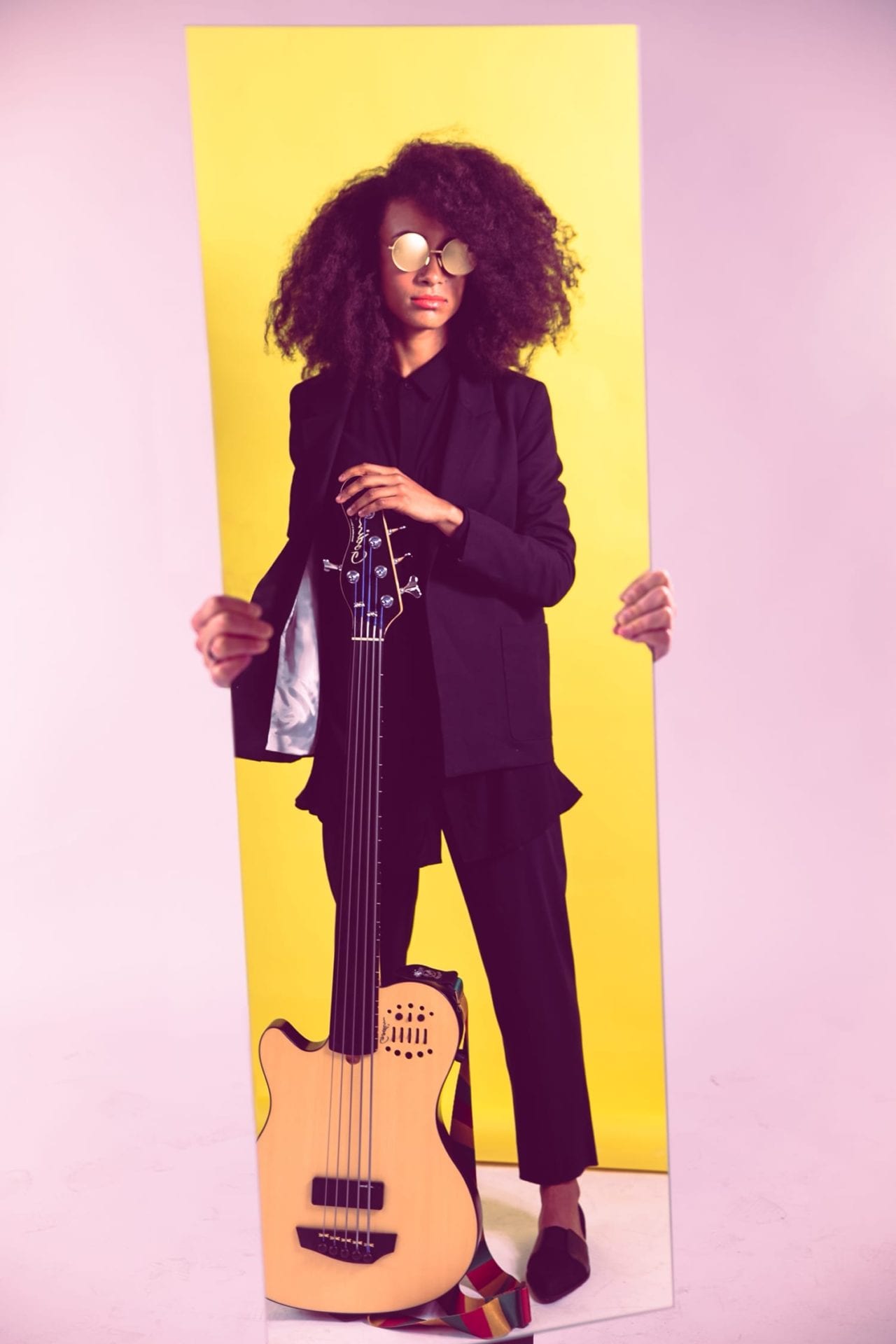
Do you feel like it’s an experimentation within all of your practices?
The goal of the project, of portraying this modality, is something independent of the technique that we use to bring it to fruition or to evolve it. Yes, all that I’ve learned as a jazz musician, as a student, as a human being, as a sister, as a daughter, as a partner, as a friend, as a band leader; all those things of course come into play because I want to apply techniques that I think will help me do my shit better. And Emily is a new idea. Emily is a new project and a new concept that we’re learning how to convey, and it is through a lot of experimentation. Experimenting for the sake of experimenting is really wonderful, and people pay money to come receive an experience, which is a performance. So, part of it is finding the right kind of context so that our experimentation is a part of the presentation and a part of the whole which is [laughs] very bad for [my] health.
Something that I’m personally challenged by is having all the tools and knowledge of what I’m classically trained to do, and then looking at my instrument with a fresh eye. Do you think that Emily came out of the need to do something new?
The way that this idea came to me was so unexpected. I was not looking for a project, I was tired [laughs]. I just wanted to show up and play and then be able to go home and just study. I didn’t know what was gonna happen next.
In the middle of that time off … I had visions—I wasn’t intoxicated or influenced by any substance, controlled or otherwise—and I saw these little vignettes and this character. And I knew that it was Emily, and my middle name is Emily. So, I started taking notes of the song titles and what I was imagining in that moment and what it looked like and what it felt like. There was this really clear image of a statue … this beautiful woman that was obviously a representation of me, and then all these people came up that appreciated her and they had water balloons in their hands. They started throwing, and the water balloons hit the statue and started washing away the gray, and underneath the gray was this vibrant freaky fun critter that walked away and began to crawl on the ground as a member of a larger community. Now I’m adding interpretation, that wasn’t my interpretation when I saw it. I think that theme of getting to the ground floor of your life is an important part of Emily.
I can see how that would emerge from my creative energy, wanting to express itself when I was in this non-conductive mode, and there are a lot of aspects of this project that I didn’t understand the meaning of until much later. I didn’t know why I needed to do it, or what she was about, or what D+Evolution really meant. I just knew that it was inspiration, and I trust that shit.
Specifically, as it relates to your question, I don’t feel very familiar with the electric bass at all. It’s not my primary instrument, and I knew immediately that there was gonna be electric bass on this project, so musically it’s not like I have to find something new in what I already know. Rather, it’s like I work for this person, I work for this character—Emily. But I never feel limited by mastery, ever. Every time I pick up my bass I’m like, “What the fuck? How do you do this?” Because it all feels new.

What are some tools that you’ve gained from this particular experience?
I did learn that brainstorming and clarifying the fruits of the brainstorm before you go into production is really helpful, like getting as clear as you can. You can change your mind as soon as you finish the fucking sentence, but taking the time to get really clear on your own story, even if it’s just a placeholder until you get to the real thing. However much you can get clear on ahead of time is really helpful, so the people who are working with you know how they can help.
On the bass playing tip, we get into this state, especially as hyperactive women, where we figure out how we can get so much done because we have to be responsible for so many things. We get this heightened ability to take care of a lot of stuff and make sure it’s happening and guide it there. And one of the great lessons of this project has been to take a step back and trust the momentum of the whole damn thing.
The trust is like, don’t rush … Literally, I tend to rush when I play bass, and I think it’s a reflection of that energy—you stir up so much force in the process. You’re responsible for a lot, but you’re not responsible for everything. So that’s a good thing to let happen, to let people lean into the space. In bass playing, I’ve been having a lot of epiphanies about sound and thickness of note, and tambor of note, and attack and function of bass in a musical context.
Why do you choose to play a five-string bass?
The only reason I started playing five-string was because the couple of times I’ve been given instruments, they were five-string. So, that’s what that’s about.
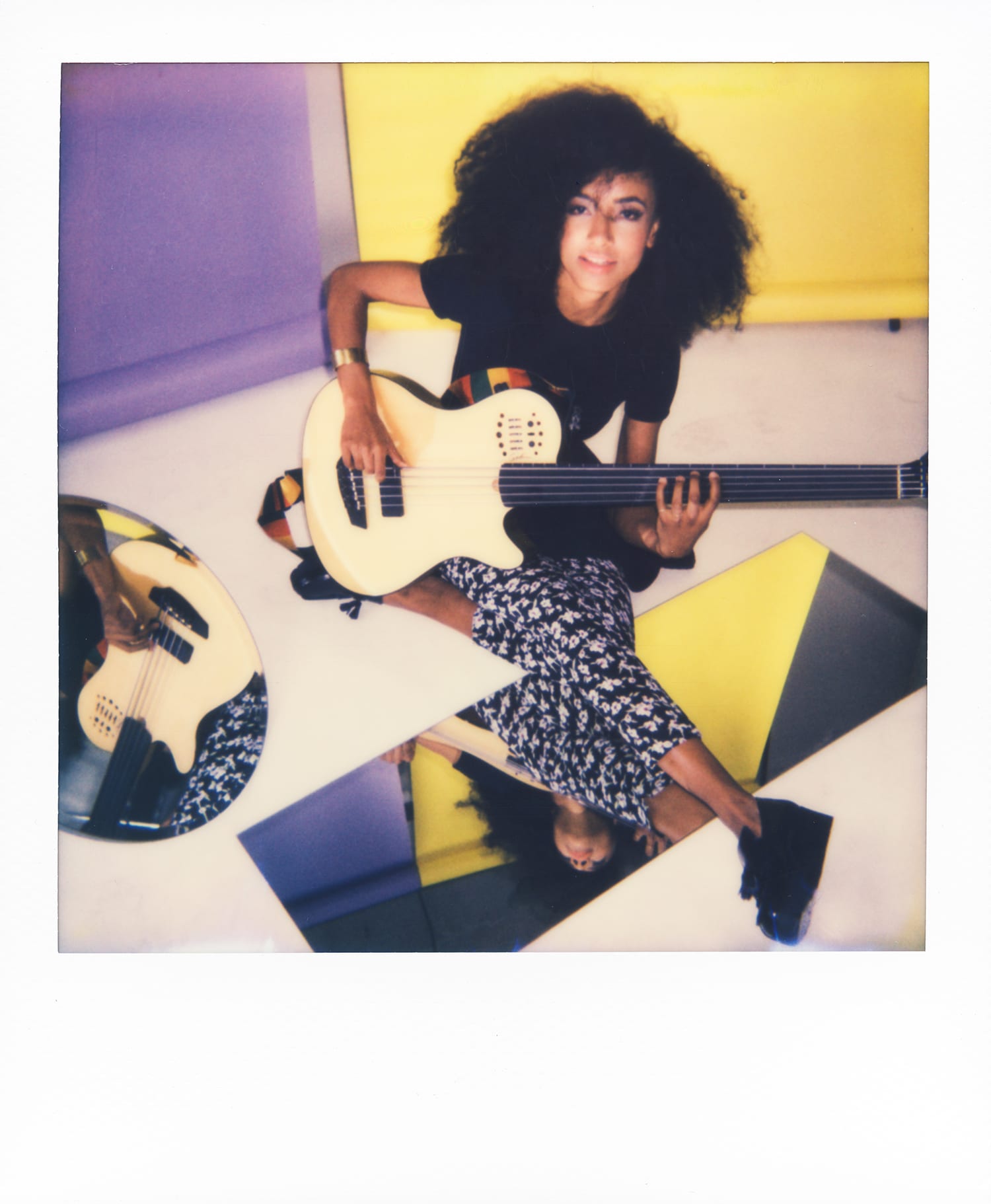
It doesn’t have to do with range or anything?
No. I didn’t seek it out. I’m still trying to figure out how to add into the equation always having that other string—it’s cool [laughs]. Something about those new insights about bass playing are so relevant to how I interact with other people in the world that are co-creating situations with me, like right now or on the train or whatever. We’re always co-creating a dynamic, and I have a tendency to be nervous if things don’t seem like they’re happening the way I think other people want them to be happening, or the way that I wish they would go. And as a bass player, I’m constantly reminded that it’s okay to be there. That’s a mode that’s totally fine, that’s beautiful and marvelous and it’s an important function of any situation, to be comfortable with just being there. It’s a different kind of compulsion, you offer a different kind of momentum when you’re present and stable and consistent. In my bass playing, in general, I’ve been getting more in touch with that concept, but in this situation where there’s less improvisation with the bass it heightens that awareness.
And it’s like, why do I need to play this note tonight, I already played it yesterday in the exact same way in the exact same place. As an improvising musician, I like to do it different every time and find new reasons to do it. So since we’re doing it the “same way,” I have to find new reasons. And so the consciousness around the bass playing is changing from night to night. With that awareness, it’s just a question of what is the tone gonna be, what’s the rhythmic energy, what’s the length gonna be? I don’t actually ask those questions, but I’m aware that those are options that, in the moment, I could play with what’s happening. So something about it not being improvised music is bringing attention to those kinds of questions and explorations from night to night, which is cool. I’ve never been in that situation before.
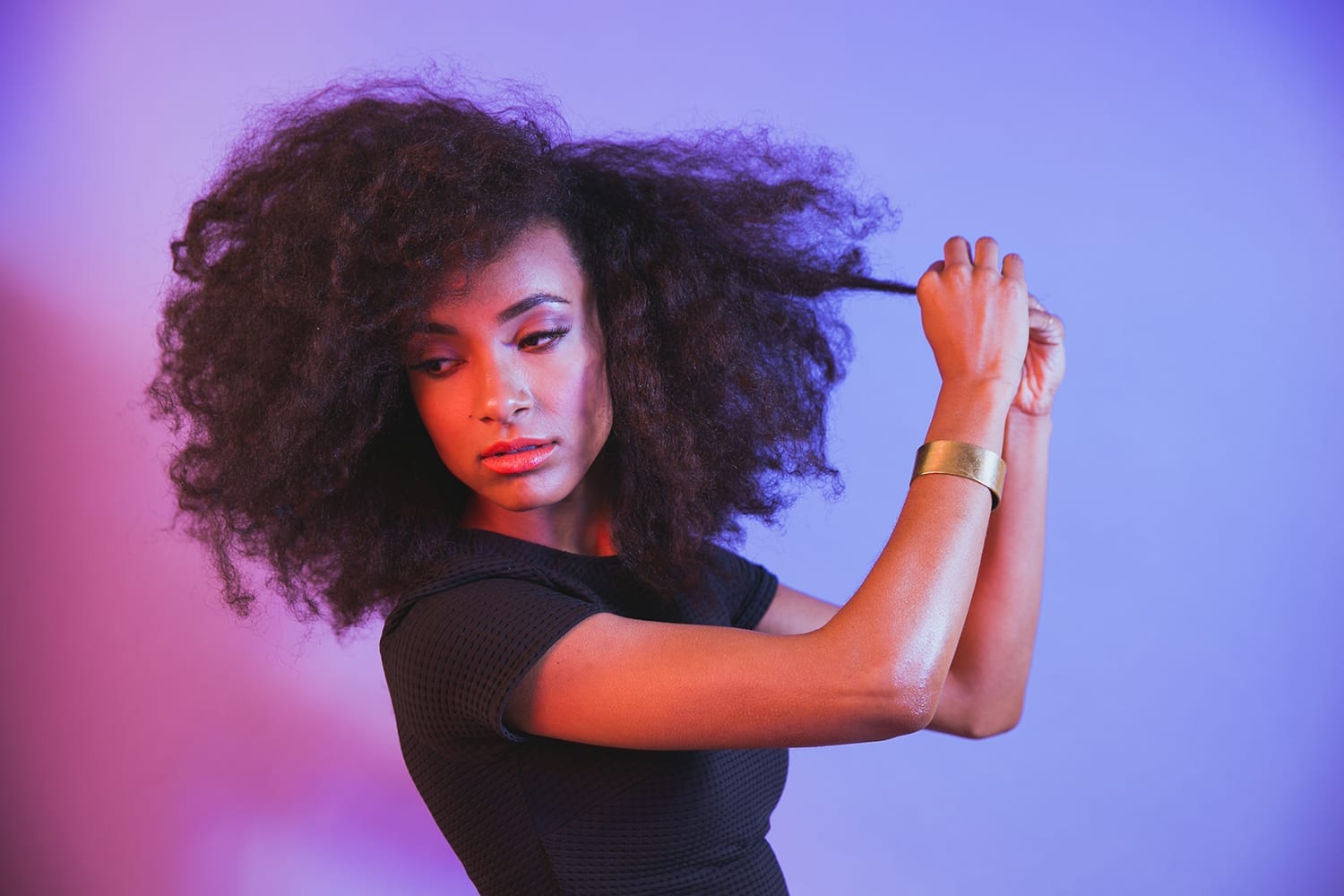
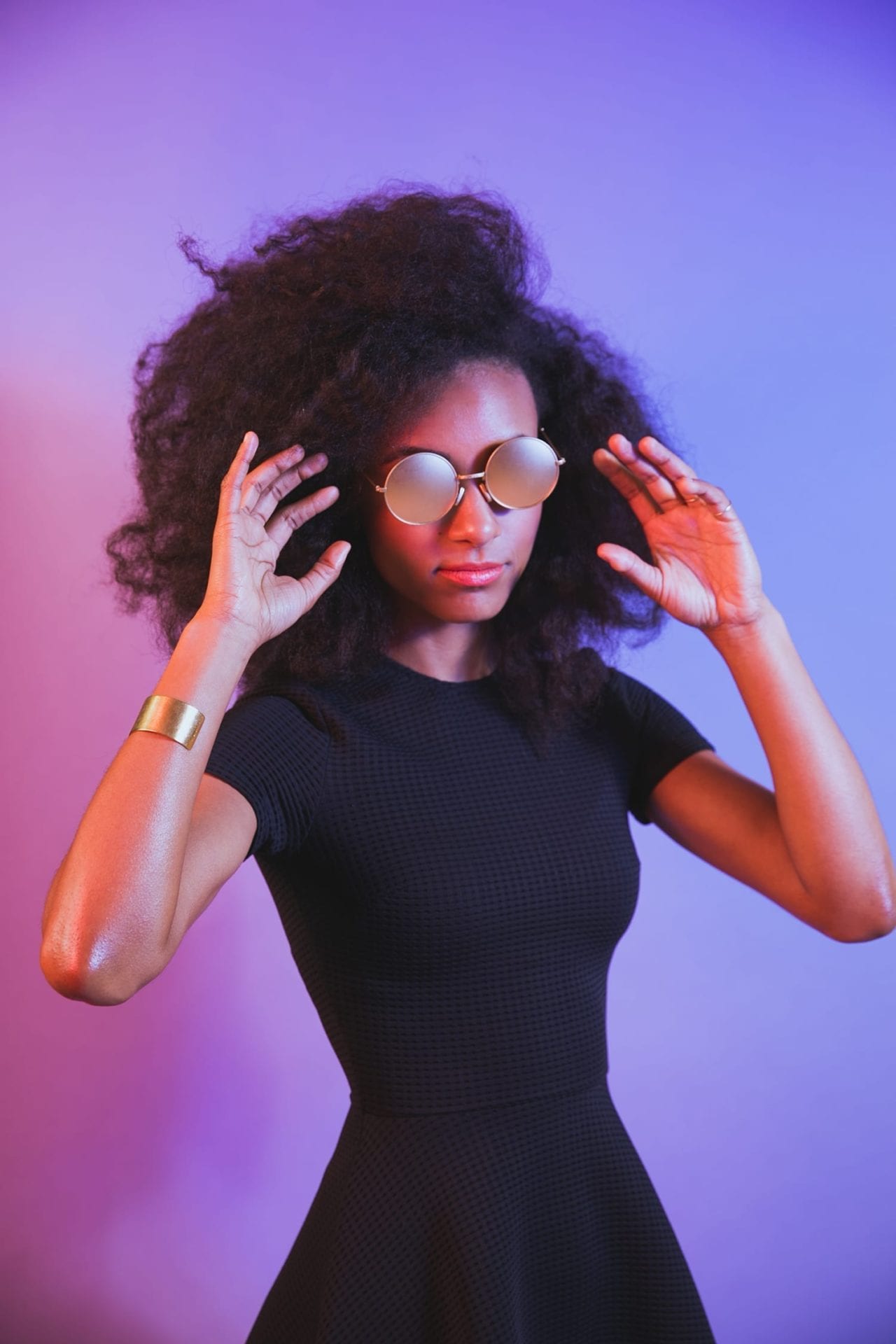
That’s exciting.
It’s really exciting. Because actually, life is much more like a jazz concert than people give it credit for—you never get to have the same conversation again.
Which goes back to social settings…
That’s what I’m talking about. You all are lovely people to interact with and I’m comfortable, but I’m a very shy person and I don’t do well in social settings. I usually don’t help contributing to the momentum of social settings, which is maybe why I’m so inspired by improvised music, because I am good at it there—it feels so good to be a part of communicating and co-creating with people.
Totally.
In this project it’s just like, not what I’m used to. But something about [practicing Emily] is teaching me how to just spontaneously engage in the rest of my life. That’s her philosophy—it’s spontaneous engagement, asking questions, being present, trying on other people’s ideologies, and welcoming that without any preconceived notions, because she’s new here. She doesn’t know who anybody is, she just knows what it feels like to assume everything goes together. Experimenting with her worldview in the show and getting more in touch with what D+Evolution means, and what that mode of engaging with the world means—I feel it affecting how I live and how I talk with people. So it’s funny that the context that would seem more conducive to helping me be more spontaneous in social settings isn’t really happening in this project, and the inverse or the opposite end of the spectrum is helping those settings. That’s a cool phenomenon to observe.
Esperanza Spalding is currently on tour. Catch her in a city near you!
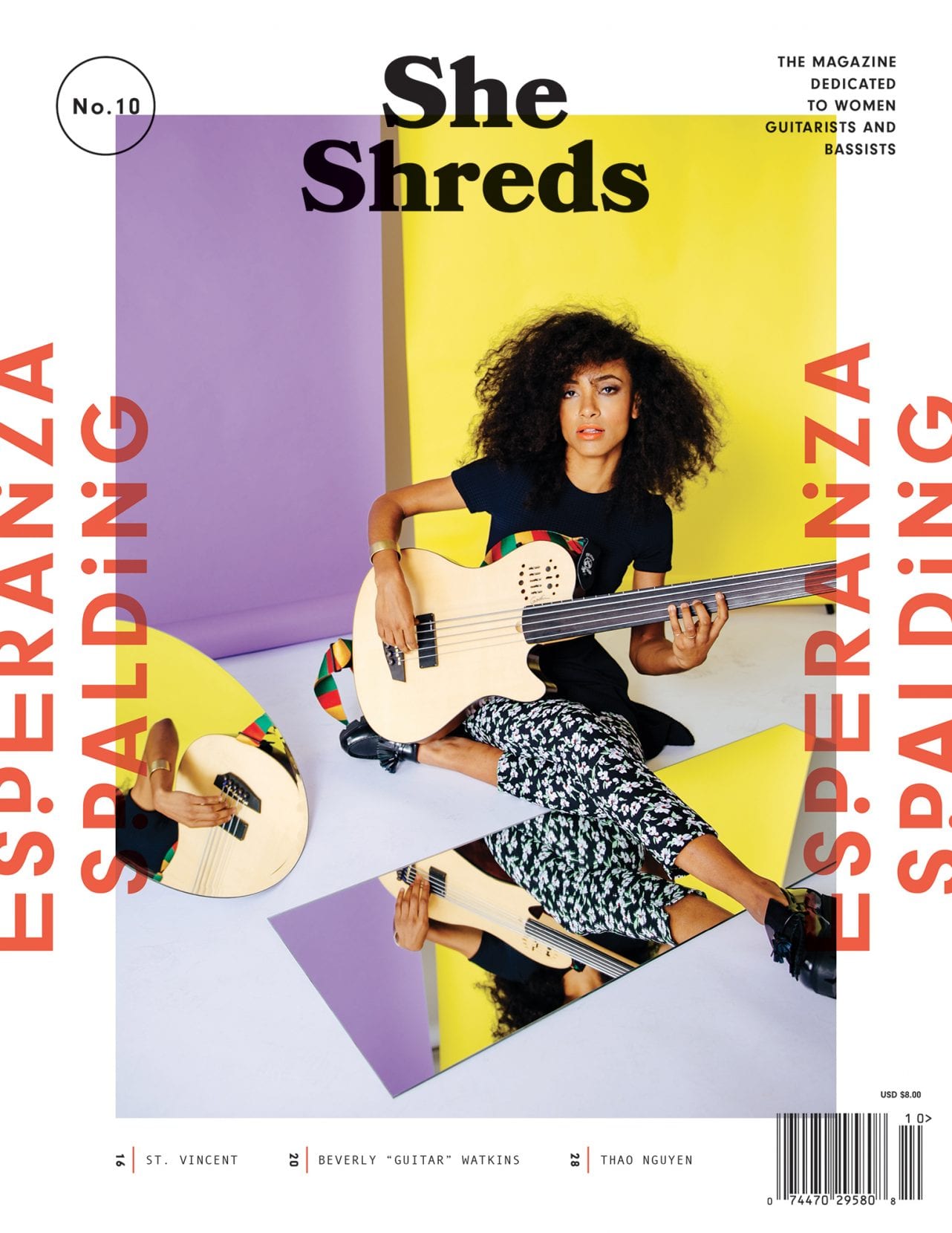
Order your copy of #10 now, or subscribe here to receive #10 along with future issues of She Shreds. The magazine will be on shelves, including at the select Barnes & Nobles, starting May 23.
Cover Story: “Esperanza Spalding: Emily’s D+Evolution”
She Shreds’ founder Fabi Reyna talks to the Grammy-winning jazz bassist about improvisation, finding inspiration and fresh ideas in classic styles of music, and the evolution of her genre-bending new album, Emily’s D+Evolution.
Beverly “Guitar” Watkins
The unstoppable, pioneering blues guitarist speaks to Sara Haile-Mariam about her incredible musical journey, the healing powers of music, and her plans for one more album.
Thao & the Get Down Stay Down: Thao Nguyen
Brooklyn based musician, Mal Blum speaks with the singer-songwriter about embracing vulnerability, bucking stereotypes and expectations of women, and the work that influenced her latest record, A Man Alive.
Plus:
The Patron Saint of Guitar: Annie Clark and her Tools
Scene Report: New Brunswick and Beyond
In Conversation: Katie Crutchfield (Waxahatchee) and Katie Harkin (Sleater-Kinney)
Dum Dum Girls: Malia James
Manzer Guitars: Linda Manzer
How-To: Restoring Your Guitar to its Former Glory
The Ins and Outs: Getting to Know Your Amp
Tabs: Esperanza Spalding “One”
Reviews: Staff picks of some of our favorite new music.


Finally, after many weeks of planning shows, bouncing e-mails back and forth with our Euro booker, applying for permits, renting gear and then trying to cram it into boxes under 50 lbs with our merch, we are in the airport and on our way. Coincidentally, Emily [Nokes] and I are seated next to a really nice drunk Canadian Prog band called Bend Sinister, and their bassist and I congratulate each other on having avoided checking our instruments.
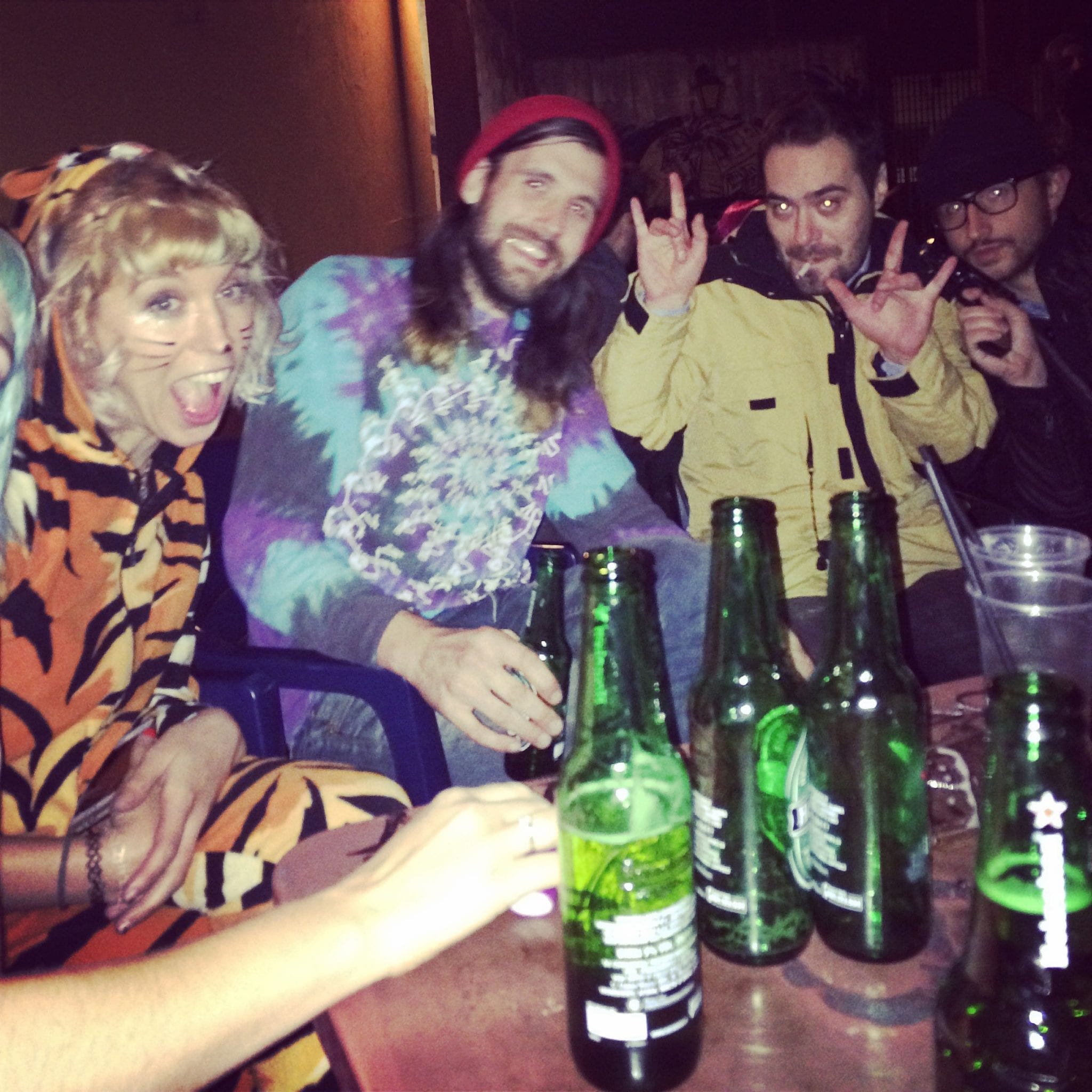
We decide to wander the cold sunny streets in the morning to try and get back on schedule, and realize that we are slightly unprepared for Austrian November in contrast to Seattle in November. Lelah brought her tiger onesie pajamas as a Halloween costume, but since they are the warmest clothes she has available, she ends up wearing them, much to the amusement of the Viennese children who gape in delight and disbelief at the grown woman dressed like a tiger.
We meet up with our rented van/gear and driver, Albrecht, a shy German vegan who we will spend every waking hour of the next three weeks with. We are super nervous to play the show due to our dilapidated, jet-lagged state, and wonder aloud about whether anyone will even show up. Luckily, the venue soon fills up and the opening band, Tirana, is super awesome (we had seen another incarnation of the band when they were in Seattle on tour with Grass Widow some years before.) Also, the two ladies DJing are playing hits directly from the inside of my heart—all songs by Cub, Chastity Belt, Slutever, Bratmobile…my soundtrack of choice.
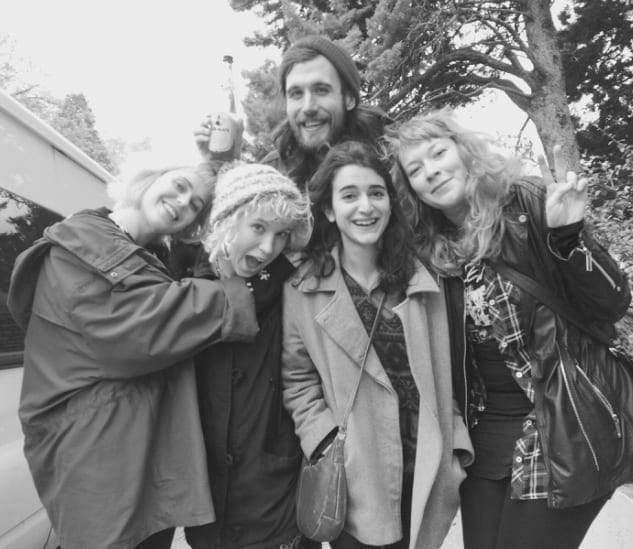
The hospitality in Europe is really knocking our socks off. Promoters make sure you have a place to stay, delicious meals to eat for breakfast and dinner and have a general appreciation for touring bands—it kinda puts the two measly PBR drink tickets system to shame. We are set up at a super nice hostel called the 5 Reasons-perhaps Nuremburg’s answer to the Four Seasons?
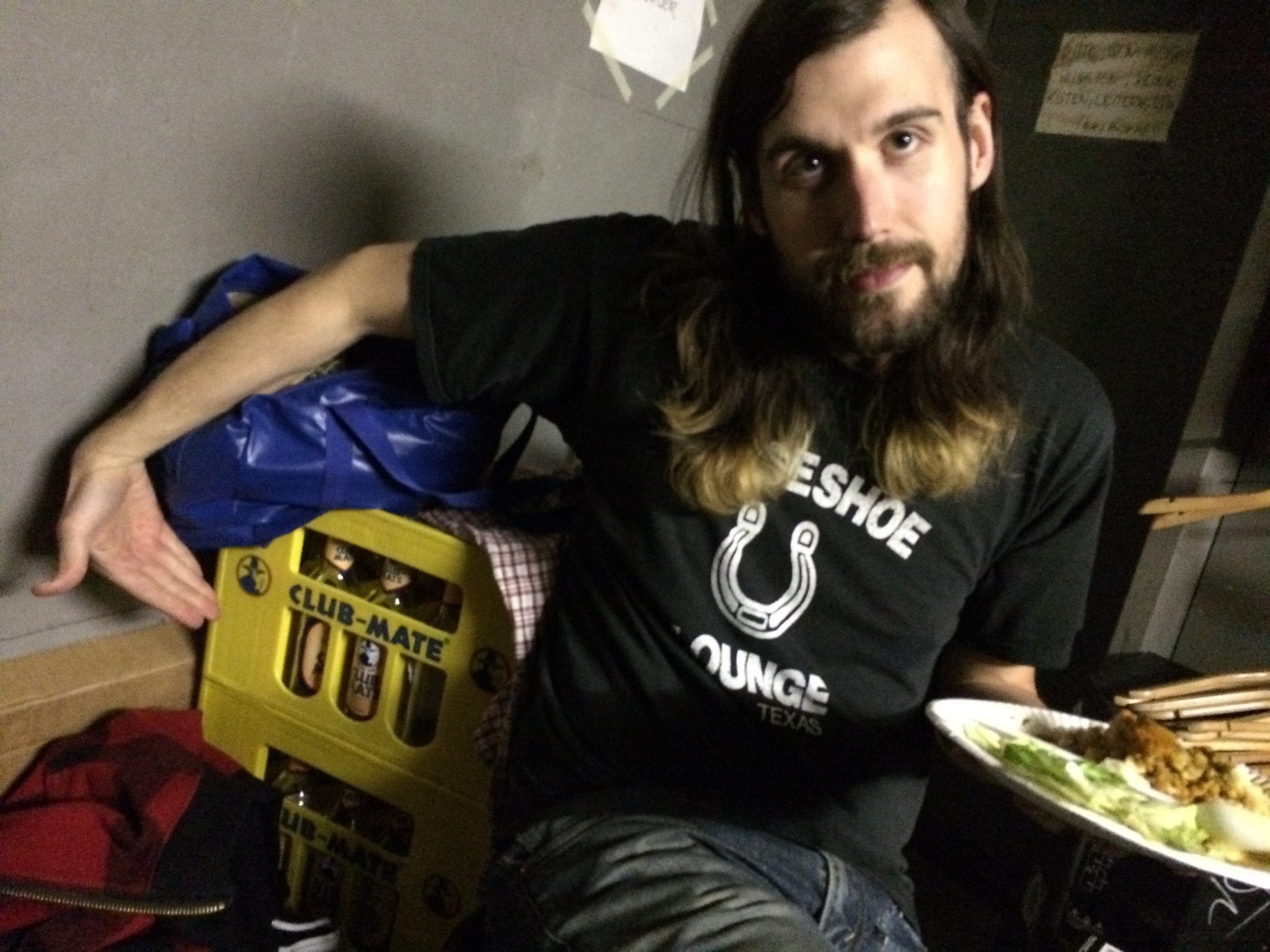
At the Green Room, we pig out on an extensive spread of vegan treats, Club Mattes (a German energy drink we soon become severely addicted to) and fruits that are laid out for us before someone knocks on the door to inform us that dinner is ready. And then we move on to an even more delicious meal. In the venue guest book we spot really old sign-ins from Seattle bands like Tiny Vipers and the Pharmacy.
The first band is the YooHoos, a local 3 piece who we immediately fall completely in love with. The bass player “Vanilla Yoo Hoo,”was extending her bass strap to a shockingly low point when we arrive. We highly recommend this band to any serious connoisseurs of authentically ’90s pop punk.
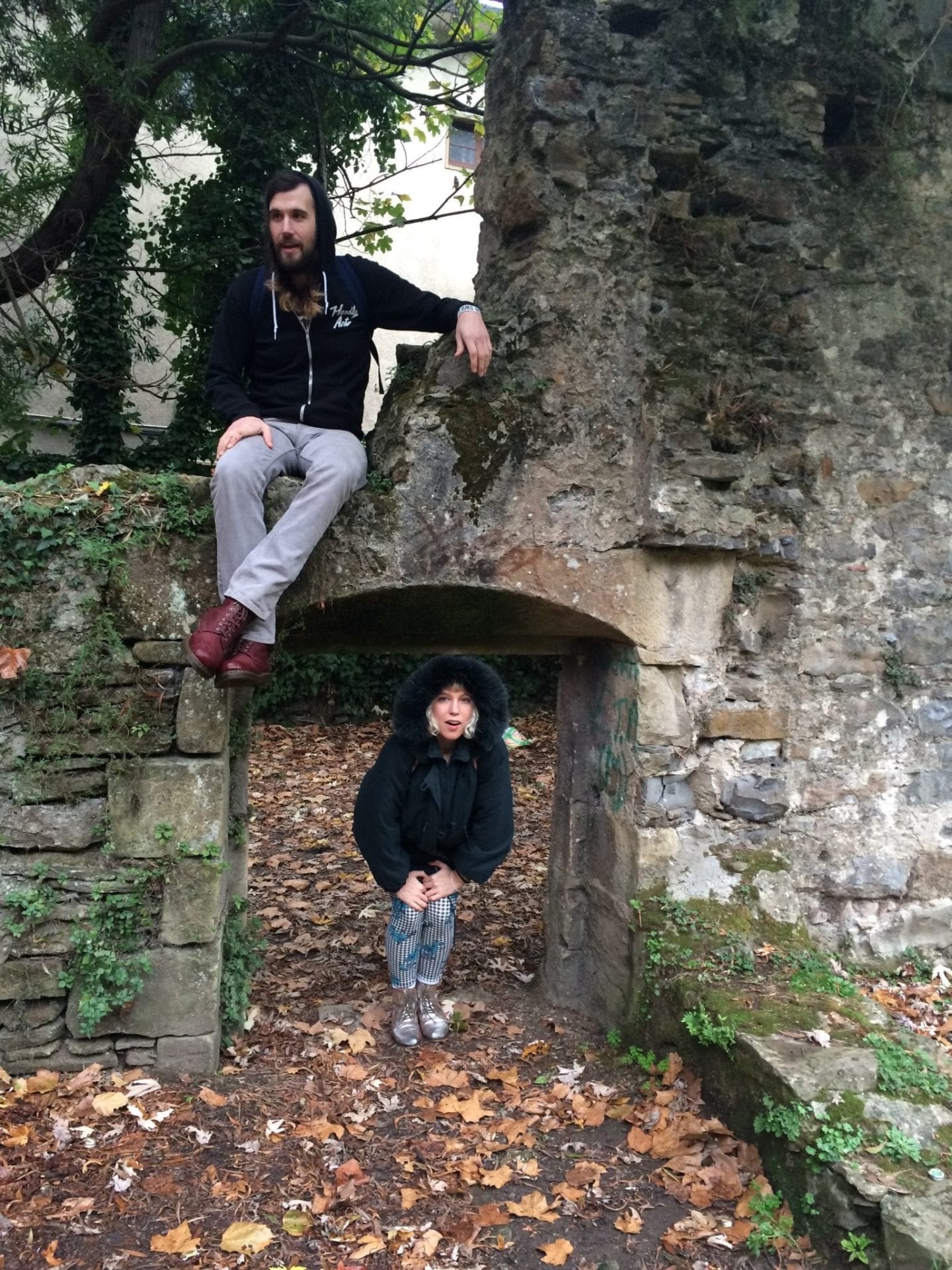
We early in Barcelona on our only day off! In honor of actually getting time to see the finer tourist points of the town, we take the train down to the Sagrada Familia. We all take in the beautiful weirdo cathedral that Gaudi designed, in our opinion, to look like the beautiful bedroom of a rainbow space princess (Eric [Randall] got discouraged by the long ticket line and goes to the McDonald’s to get what he deems a better Big Mac than the States can offer.)
Lupita is the coolest bar ever, located within the maze of Barcelona alleyways and tiny, charming streets away from the more rambunctious parts of the rowdy Ravel neighborhood.
The DJ is wearing a Beat Happening t-shirt and spins all the hits from 90’s Olympia mixed with local punk I hadn’t heard before. After the show, we meet amazing ladies who bring us flowers and CD’s of their own music, and Emily hides a secret note for our friends the Intelligence who will play the same spot a few weeks after us.
The three promoters for the show are all named Nacho, and we are met by the first two charming Nachos. We eat at an all vegan Chinese food buffet and they tell us that they had brought the Coathangers there the previous week. We get into a healthy food coma and head back to the show just in time to see His Majesty the King slay (a two piece that Nacho #1 plays drums in it.)
We say “hola” to Madrid and are totally blown away by the crowd in this city we had never been to-it’s pretty exciting to realize that a lot of people there actually knew the words to our songs! Some lovely ladies that had interviewed us earlier gave us a first issue of their zine, “Sisterhood,” with Reyenne Graff and Angela Chase on the cover. The show evolves into a nonstop dance party that goes on until about 5am.
At the dance party, our normally very shy german driver gets pushed into a dance circle. We freeze to see what his reaction will be and are blown away when he starts dancing like crazy in the center of the circle as people cheer him on. Eric starts skanking to the Special’s like I had never seen anyone skank before, and we all drink a shocking number of energy drinks. When we get home, I accidentally throw my phone against while telling Emily a story with too many arm gestures. Oops.
Show #14: San Sebastian, Basque Country
San Sebastian is one of the most beautiful cities I’ve ever been to. But since it’s our very last show it’s bittersweet, and our hotel is appropriately called Hotel Terminus. We play at a place called Dabadaba, which ends up conjuring up a slew of Scooby Doo jokes for a good 10 minutes.
The club owners of Dabadaba are wonderful and play fusball/kicker with us. Tthe crowd is lovely and embrace us even though we had gotten too drunk during kicker and messed up a bit. Even though we are so tired, experiencing all these beautiful cities with my best friends has been one of the most amazing experiences of my life so I’m so sad it has to end. According to our band vision board, we will be returning to Europe on tour in the bus the Spice Girls rode in the movie Spice World. If anyone has a lead on how to get a good deal on buying that vehicle used, please let us know.
But now for the worst inevitable part of touring-the final inventory assessment on everything that you have lost along the way.
Things I lost on Euro tour
Leopard Beret-Iceland airport
Left custom mold earplug-Vienna
Witch hat-Brescia, Italy
One hoop earring-Paris
Conditioner-San Sebastian
14 Picks-spread between 7 different countries
Euro adapter-bathroom in San Sebastián airport
One sock with pineapple graphics: whereabouts unknown
A few cool bands we played with!
Almanaque Zaragozano (Spain)
Violeta Vil (Spain)
Tirana (Vienna)
Exit Earth (Leeds)
Rose Mercie (Paris)
The YooHoos (Nuremburg)
Rainbow Resevoir (Oxford)
His Majesty the King (Madrid)
Brabrabra (Berlin)
I was often left feeling jealous and frustrated as I watched big dudes flying around, sweating on each other. I wanted to do that! I wanted to be able to express myself physically in public. But I was scared—until I saw Hysterics perform. They opened up a space where I felt invited to explore.
Hysterics’ last show was held at the Black Lodge in Seattle on the rainy night of October 11th, 2014. The 4-piece Olympia band had been together since early 2010, a good run including several US tours and a European tour. They were finishing up, not breaking up. People came from all over the country to witness the last show from a band that, to many like myself, was hugely influential. Although the address was undisclosed, the DIY and residential space had hit capacity after the first band played. Still, people were waiting in a line, a block long, to get inside. The venue managed to sneak in about 50 people, but there were still another 80 trying to get in. Upon entering, I was delighted to meet several people, all men, who had tattoos of the bands signature bloody tampons logo (see pictures below), which I also saw on shirts throughout the night.
When it came time for Hysterics to begin their set, the room was packed with more than 200 people. I was at the front. Possibly one of the most memorable moments of the night happened halfway thru their set, as Stephie (lead singer) introduced “Leave Me Alone”, a song about street harassment. “If you identify as a straight, white, cis-gendered male, if you would be so kind as to take a couple steps back for this song. I’m not policing your identity, you can decide for yourself. Everyone else come forward if you feel like it”. This idea made sense to everyone. I watched as the room calmly shuffled while everyone checked in with themselves about their awareness when communicating physically with other people.
The audience that Hysterics brought together always blew my mind. If you were looking from the outside it might look like an insane shit show of body parts flying, people screaming and pumping their fists, but it really was a beautiful un-orchestrated, naturally aware dance. I’m not even sure if the audience realized it, and I don’t really know if the band knows how they inspired such conscious freedom of behavior in their fans. Case in point: about mid way through the show I was thrashing about, enjoying the feeling of everyone moving in the same way. When I got shoved onto the monitor I held on their for a minute but felt a little wobbly and began sliding off, until a strangers arm came around my shoulders. I turned around to see a girl smiling at me who said “Sometimes you just need to be held in the pit, you know?” I sat there precariously balanced on a monitor with strangers holding me up while I pumped my fist in the air with the biggest grin on my face. I was ecstatic.
People often get sad when bands like this aren’t around anymore, but I feel the only right thing to do when great things like this are made, is to continue to explore and expand on the space created, and to share and protect it. Hysterics created an energy that was so inspiring to many around the world, and their music will continue to feed everyone touched by it.
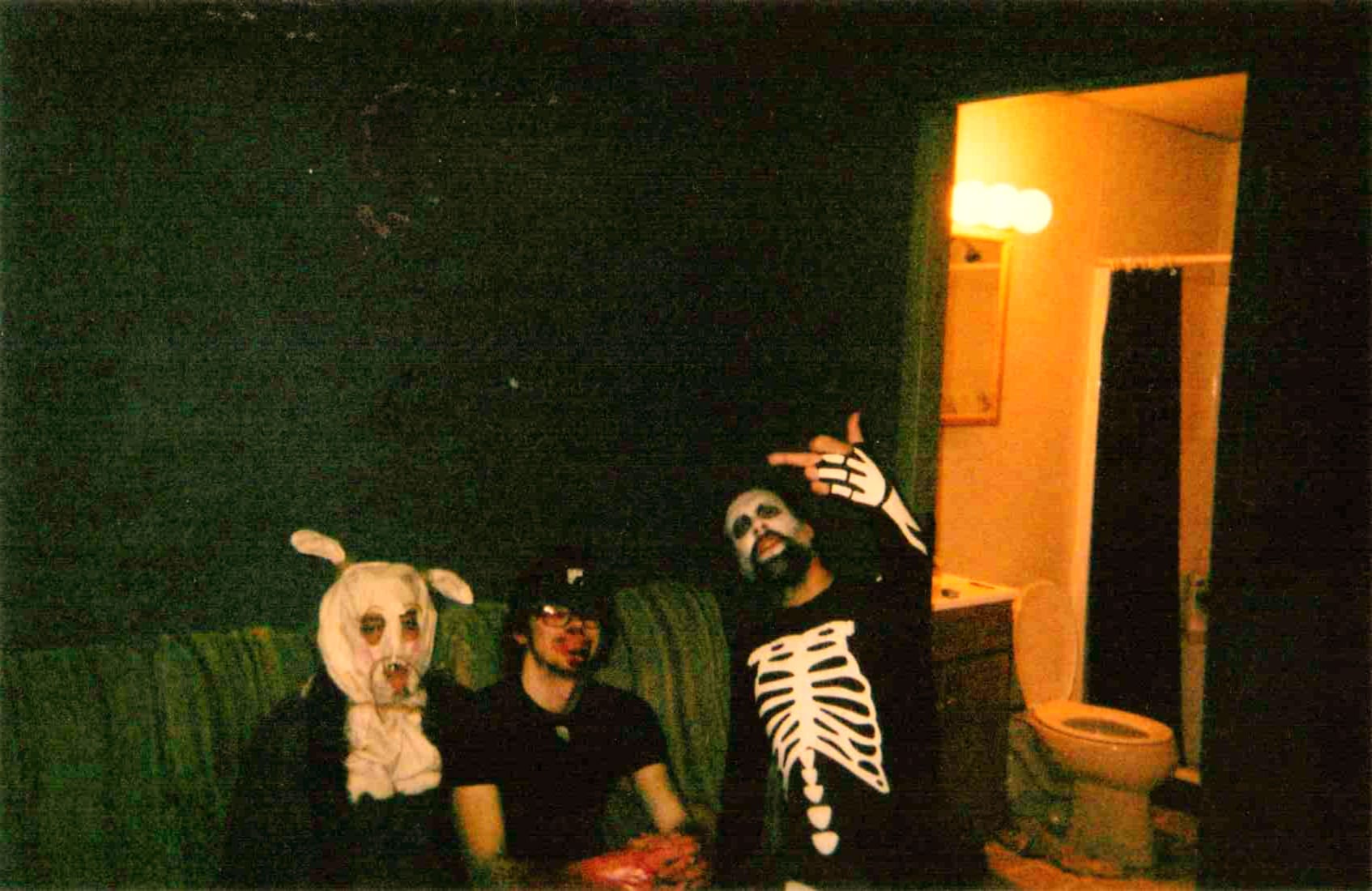
This was in the greenroom of our Halloween show in Richmond, VA. It was fun all throwing together last-minute costumes on the road. Doug was really concerned about his skeleton body suit showing off too much of his butt. This photo has inspired me to attempt a photo series titled “Musicians I like, flipping me off” But so far it’s just Doug and Justin from Wooden Indian Burial Ground. Left to right that is Jason Albertini, Steve Gere, Doug Martsch.
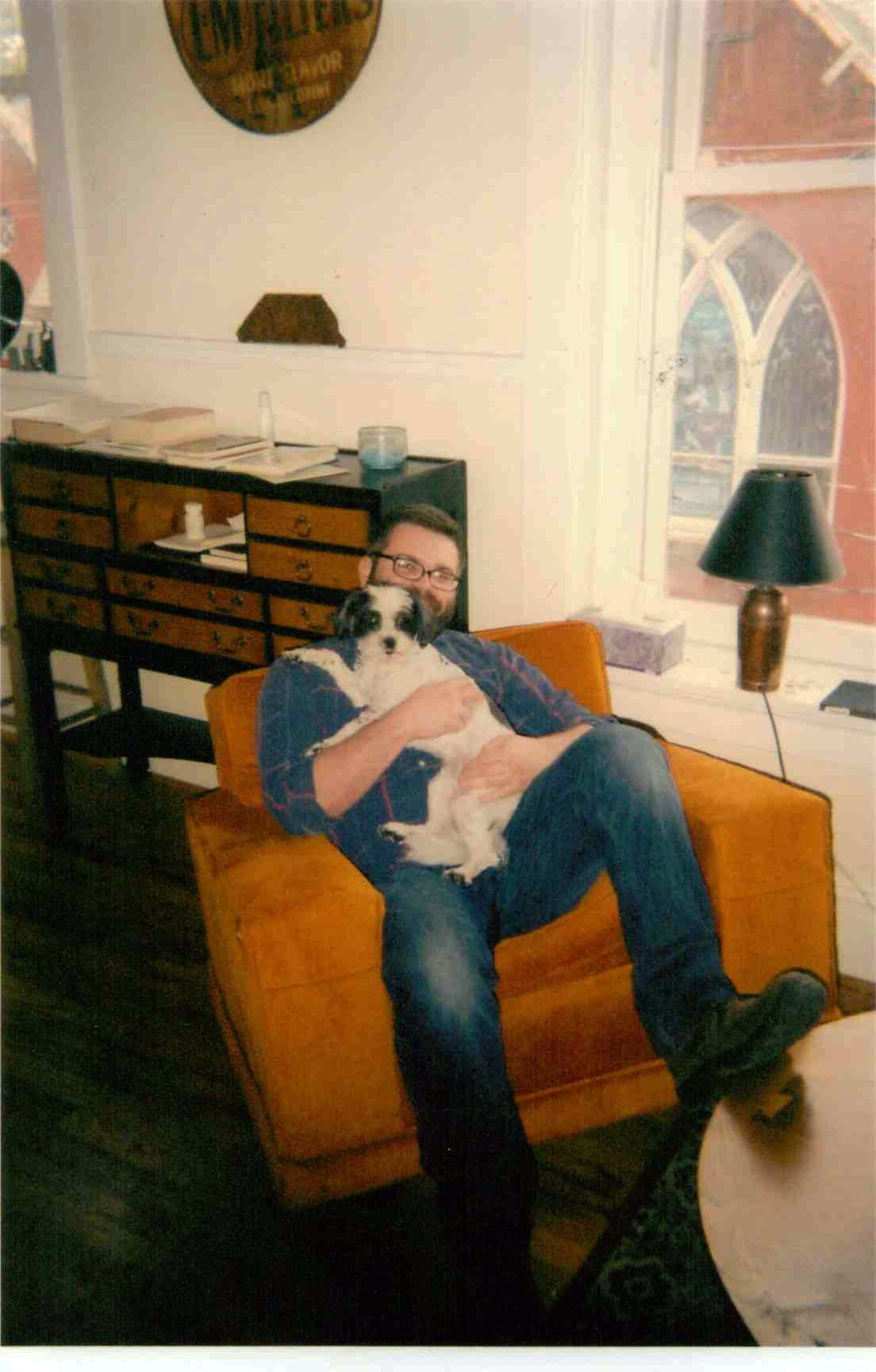
This is my friend Matt Phipps and his roommate’s dog, Leife in his apartment. One of the sweetest guys I know; I met him while working at a button factory in SE Portland a couple of years ago. He goes to school in Richmond, VA and came to our Halloween show (where Genders was electrocuted by the mics and could hardly play our set) and showed us the craziest 24 hour diner. One of my favorite memories of tour: Genders, Slam Dunk, and Built to Spill getting food at 4 am in the middle of a drunk-bro-filled diner. Afterward he let us crash at his apartment and shared his bed with me, the most comfortable bed I had slept in, in a LONG time.
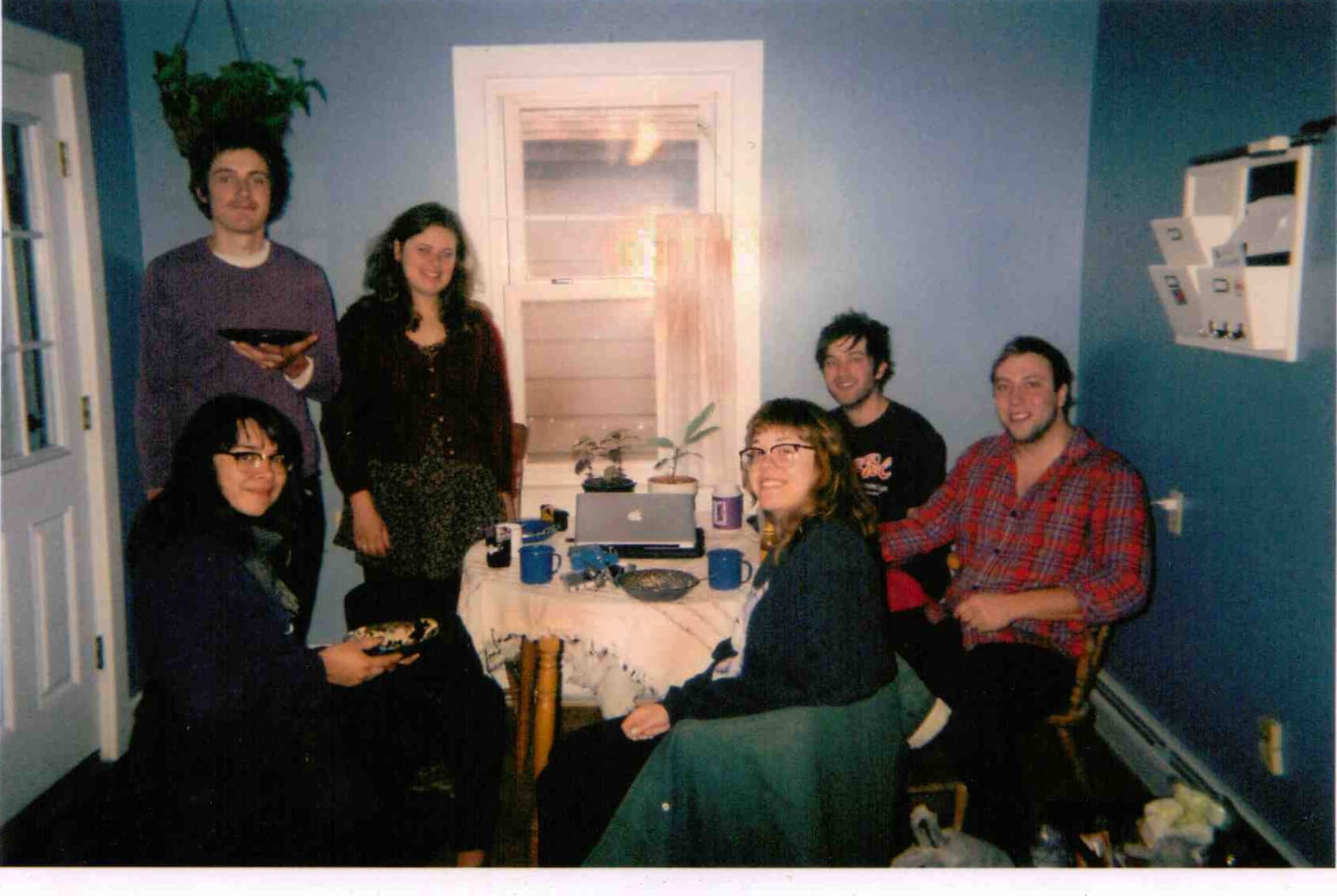
This was after breakfast at our friend Nora Zimmerly’s house. Nora had just moved to Burlington, VT from Portland and let us stay at her house after our show. There were maybe four people in the audience at our show and she danced the whole time. Nora is a great friend and amazing person, she made dinner and breakfast for us (they were delicious and healthy!), seeing her felt like home all the way on the other side of the country.
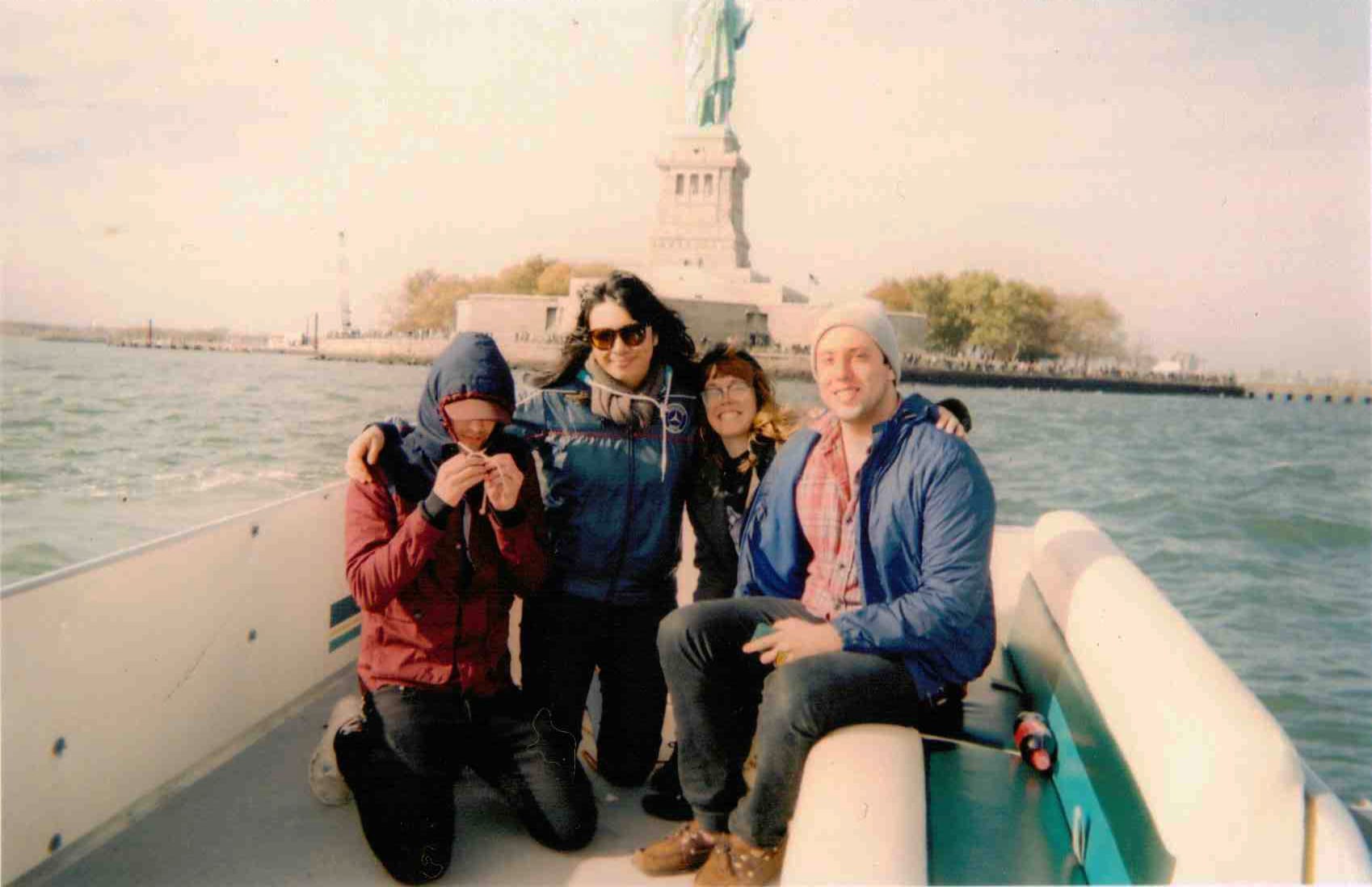
This was on a pontoon ride that our friend Pieter Hilton’s dad, Lars, took us on. We stayed on Lars’ houseboat for three nights during our stint in NYC and Brooklyn. The last day before leaving for Pennsylvania, he took us out on the bay for an exclusive view of the Statue of Liberty. This photo was right before we crashed into a giant wave and took on a bunch of water and got thoroughly soaked. I have great memories of Steve’s wringing out his hat, Matt dumping out water from his shoes, and Lars continuing to steer the pontoon shouting “It’ll drain out, don’t worry!!”
Me and one of my best friends, Megan Spear. I found out on the road that she decided to go live with her family in Surprise, AZ to get away from the soggy, gray Portland winter, so we made a stop on our way to Las Vegas to see her. She made lunch for us and we all sunbathed in her grandparents backyard. I love her so much and I won’t get to see her for another 4 months, probably, so the visit was a happy and sad one.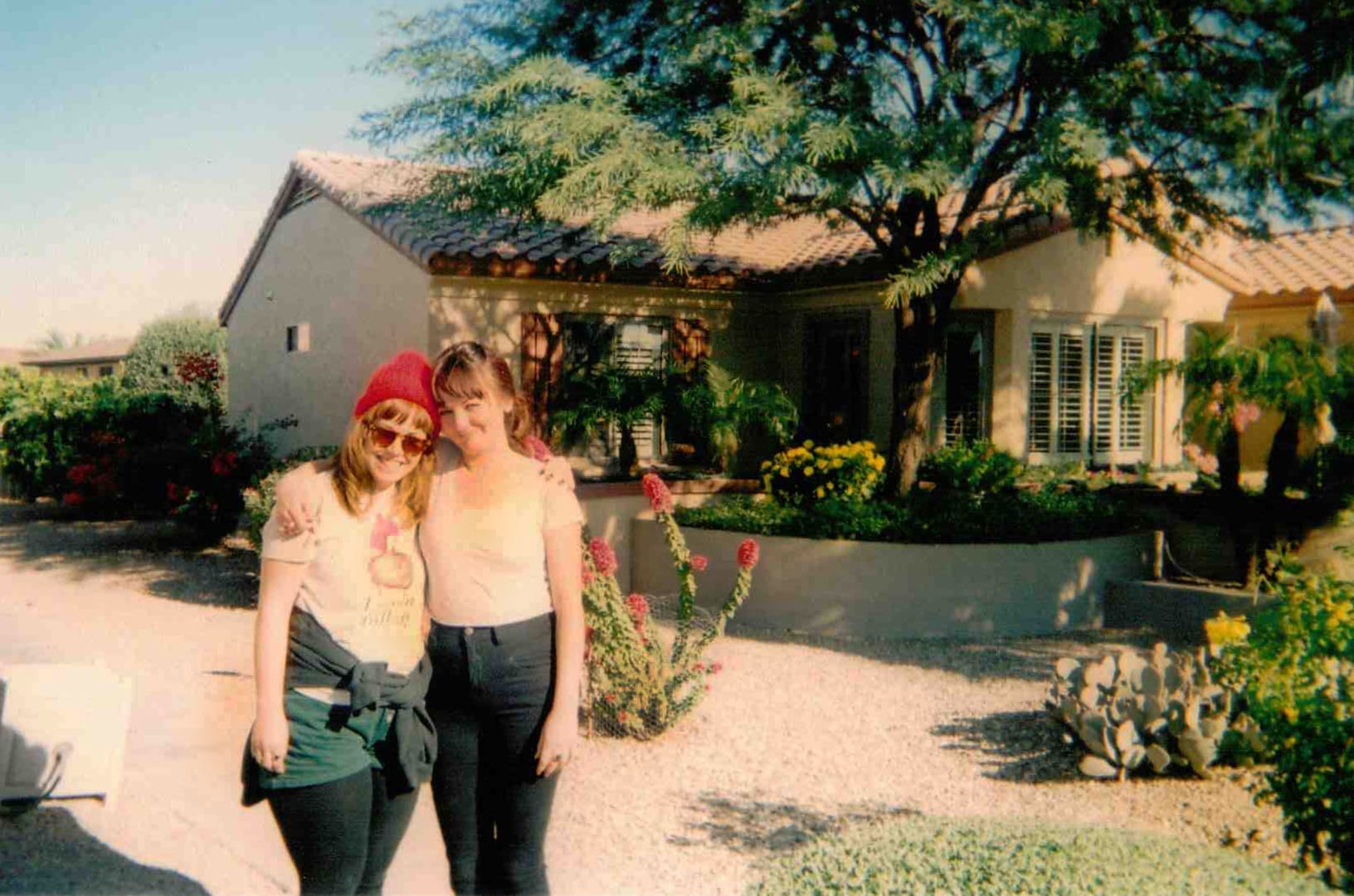
If you’re in Portland be sure to check them out Friday, January 17th at Mississippi Studios with Holiday Friends and the Comettes. Buy tickets here!