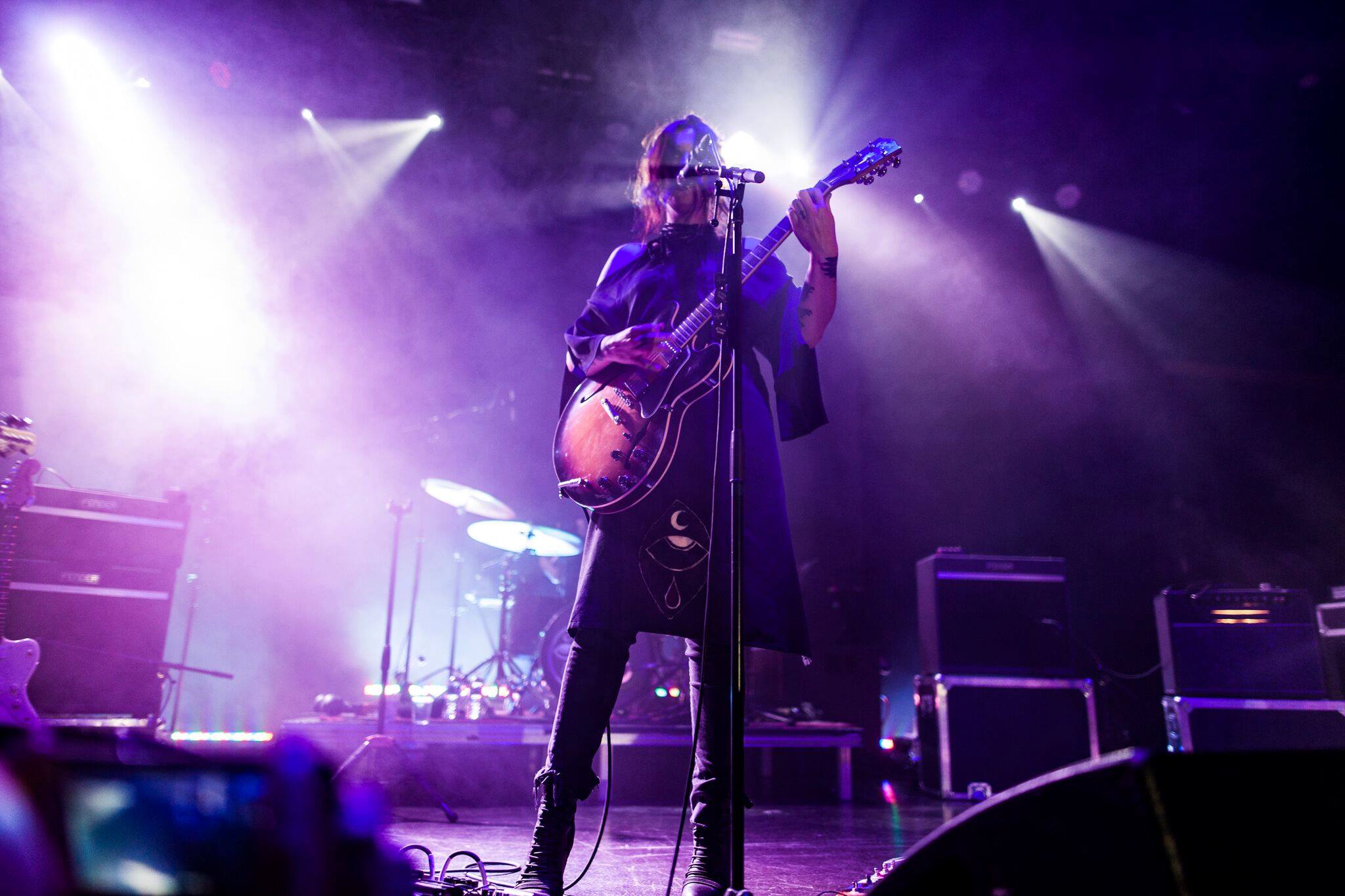
Jackson is a California punk rocker at heart, with a knack for applying the same three chords and similar truths to roots-influenced country and folk songs. As a lyricist and guitarist, she’s mastered evoking the struggles, losses, and triumphs of a small-town dreamer with big city ambitions. Her debut album Gilded (Anti- Records) was produced by Mike Ness of Social Distortion and has been lauded by such major media outlets as NPR and Rolling Stone.
This influx of critical acclaim doesn’t make Jackson an overnight success. Instead, it’s the culmination of over a decade of writing songs—she’d penned over 300 before her high school graduation—and performing live whenever and wherever, in the spirit of D.I.Y. punk. “I started playing when I was 13-years-old,” she says. “I didn’t just start playing and then a few years later start performing. I started performing quickly after I wrote my first song. I’d play everywhere. I played alleyways and in front of tour buses to get the main bands to hear me. To be on a tour like I am now, I’m overjoyed because I always played those random places with a bigger tour in mind. For me, this is the dream and I just want to keep going.”
Despite being on a larger indie label, Jackson still uses most of the same equipment she played at acoustic gigs long before forming her current band with Andrew Redel (guitar, piano, mandolin), Jake Vukovich (bass), and Tyler Miller (drums). In her case, songwriting talent and an insatiable drive for success has superseded any need for an elaborate setup. That’s not to say she doesn’t have bolder ambitions, as she’s already picked out a dream guitar, but her recent success is a reminder that any like-minded songwriter and guitarist playing acoustic open-mic nights chasing similar dreams needs the right songs, not the “right” gear.
Jackson, who is currently on the road with Social Distortion, shared a glimpse of her minimalist guitar setup. Gilded is available for purchase now.
Taylor 510: “I am a big fan of dreadnought guitars (larger-bodied guitars that make for bolder tones and are popular among folk and bluegrass performers). I have a Jumbo Taylor, a 501 Taylor that I’ve had since I started playing. It was my first guitar purchase.”
Gibson J-200: “Now I’m actually in the market looking for another guitar. My dream would be a Gibson J-200 dreadnought like what Emmylou Harris plays (dating back to her duets with West Coast country-rock legend Gram Parsons). I haven’t actually purchased it yet. I’m still in the market for a new acoustic electric.”
Strings: “I’ve always been a fan of Elixir’s Special-Coated Strings. I’ve used them since I first started playing.”
Acoustic-Electric Amp: “Since I play acoustic electric, I have an L.R. Baggs D.I. for customizing the tone of my guitar in my own monitors. Other than that, I’m not a big gearhead with amps.”
Over five albums (most recently Abyss in 2015), she’s become internationally celebrated for her far-reaching music, soulful voice, and charismatic performances and while her merging of darkness and ambiance have often been described as “haunting,” or “otherworldly,” she can pinpoint the origins of her love of genre-fusions to a familiar source that every musician has experience with: the playlist. “I’ve always created playlists (or in earlier days, mixtapes and mix CDs) and gotten them from friends, and I’m just able to hear the connections in different types of music,” she says. “Something will resonate for me in trip-hop that I’ll also find in an old folk/blues song, or I’ll find the same comfort in a 60s folk song as in a black metal song. I like music that has soul to it, soul that you can feel. Some music out there feels very sterile but fortunately there’s so much good, real music to block that out!”
With such far-ranging influences, some artists may find their personal vision gets a little lost in the shuffle, but Wolfe’s sound that unmistakably her own. “I think all the different stuff I’ve listened to over the years eventually melded into my own weird thing,” she says. “One of the main reasons I’ve kept this project under my own name, even though it’s full band most of the time, is that I didn’t want to have to compromise on the sound. I wanted to always be able to follow my instincts in writing and allow the music to morph into what it needed to be.” She sites her ongoing collaborations with Ben Chisholm as an essential component of the project, especially in regards to its electronic components, but as always some of her best songwriting starts with the basics. “I’ve always gone back to writing on acoustic guitar though.”
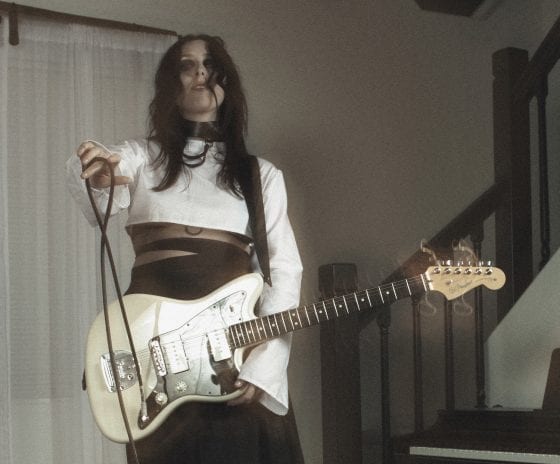
For Wolfe, one particular acoustic guitar—her mother’s classical model—had a special and long-lasting influence on her music. Although it was missing a tuning peg, she used it to write her first two records, and its unusual, “imperfect sound,” became a cornerstone of her aesthetic. “I still write on that guitar!” she says. “Sometimes an instrument has just got the songs in it. I also write on a 70s Guild acoustic that my dad passed down to me.”
“I have a few nice guitars and I prefer to tour with those for their tone and reliability but at home I tend to go for the older ones. The older instruments have a more mystical quality. Playing and writing on my mom’s classical in the early days was really key to my sound. That missing tuning peg and my lack of a guitar tuner caused me to tune the strings by ear to that string—turns out it was pretty much D standard. Over time I realized that tuning is much better suited for my voice so I still go low for the majority of my songs. “
This fall, Wolfe will release her sixth album, Hiss Spun. Recorded by Converge’s Kurt Ballou and featuring guest spots from Troy Van Leeuwen (Queens of the Stone Age) and Aaron Turner (SUMAC, Old Man Gloom), the album reportedly deals with the concept of scouring inner emotions to make sense of a chaotic world, and contains some of her rawest and heaviest compositions to date.
Check out “16 Psyche,” the first single to be released from the album below, along with a selection of Wolfe’s most essential gear. Hiss Spun is available for pre-order now.
Guitars:
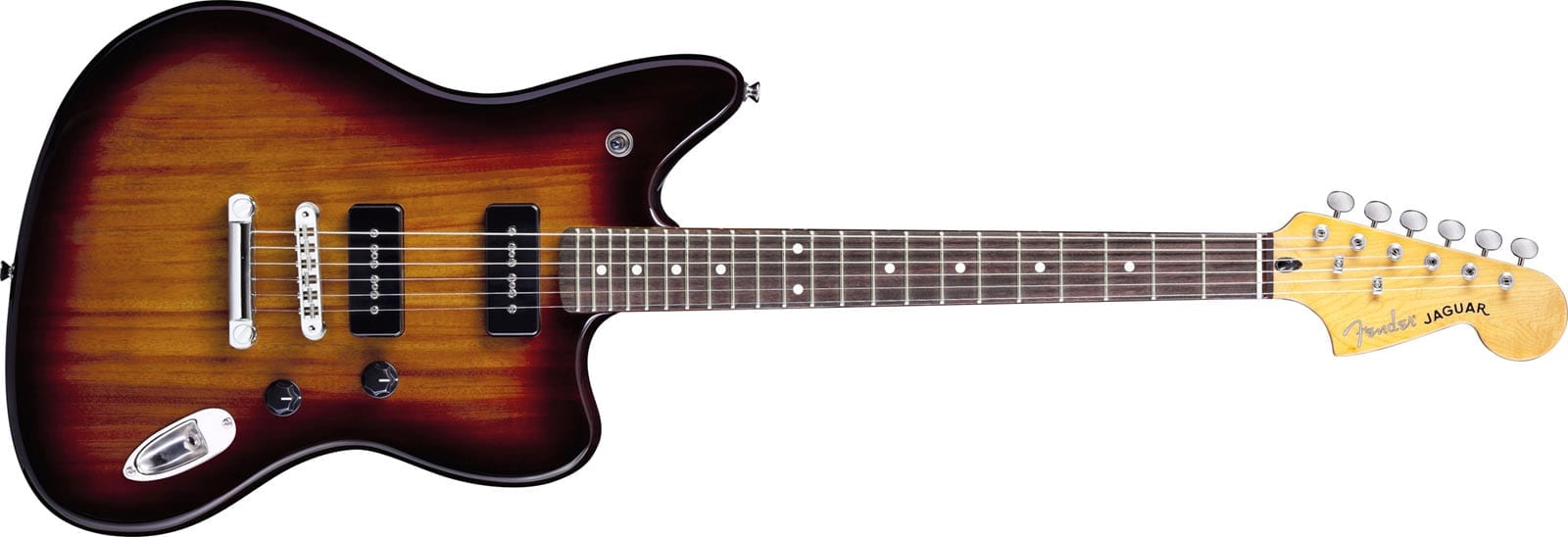
“I think finding some unique gear is important to a musician’s sound, but also it’s like, if you’ve always dreamed about playing a Fender Mustang then by all means save up for the Fender Mustang! If you can though, I think it’s really important to play the guitar in person first—go to some music stores or pawn shops and see what you’re intrinsically drawn to and what feels good in your hands. That’s how I found the first electric guitar I ever bought for myself, a simple satin brown Fender Jaguar.”
Effects:
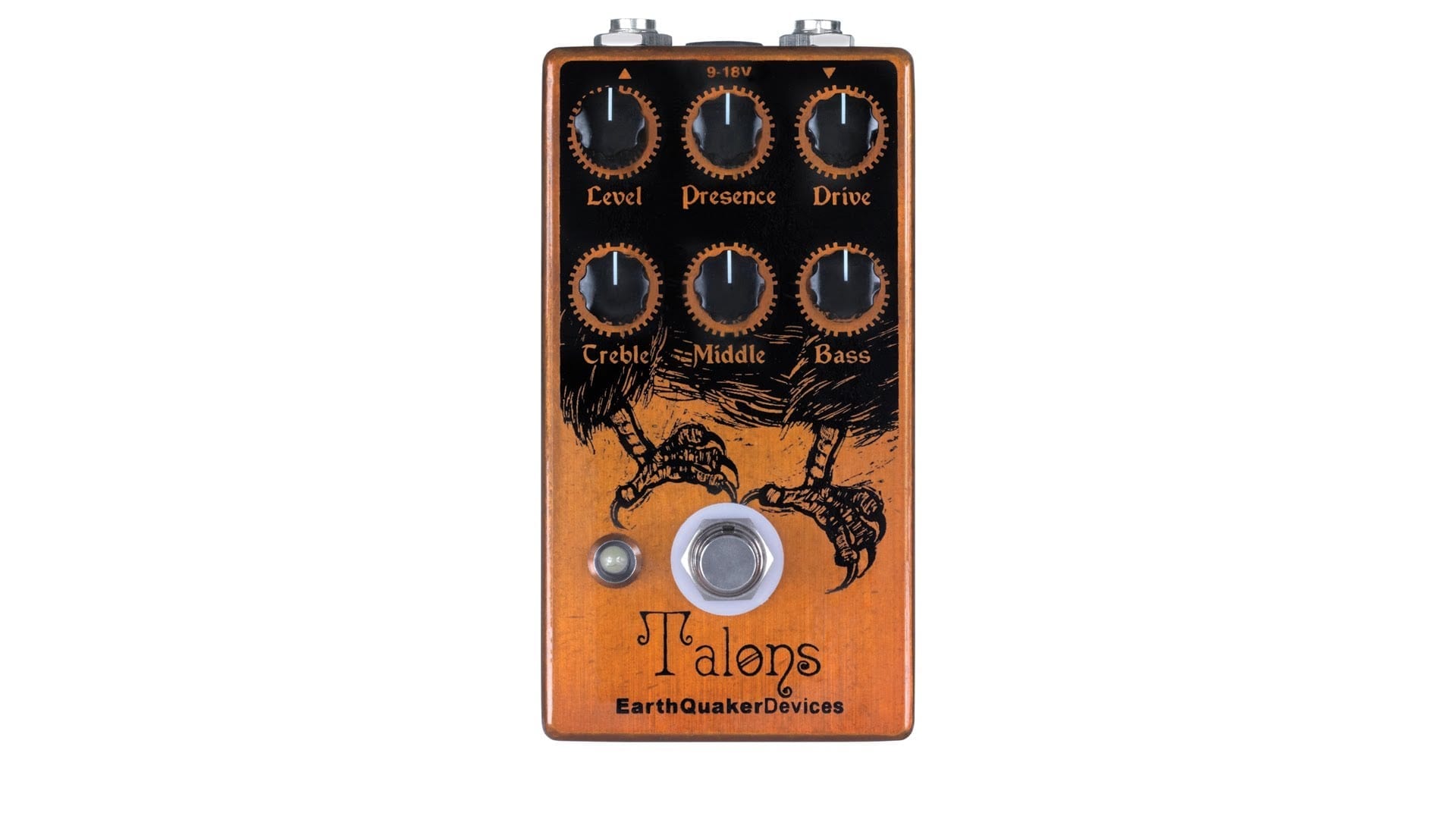
“I do have a lot of pedals at this point, but I always try to get pedals that I’ll actually use. I know I’m probably not going to use a tremolo or chorus pedal so I won’t get versions of those just to try. I go for the weird fuzz, distortions and delays most of the time. When I’m making a new album I’ll try out different pedals that are in the studio I’m working in and usually end up getting a couple of those after the record is done. For example, the Death By Audio Apocalypse pedal was my jam on Abyss and it still lives on my board.”
Jayne Henderson never intended on becoming a luthier. With an environmental law degree from Vermont Law and loans to pay, she asked her father, renowned luthier Wayne Henderson, to build her a guitar she could sell. But her father had a different idea—that she should build it herself. “I had no intention [of building],” Henderson tells She Shreds over the phone from her home in Asheville, North Carolina. “I would see bits and pieces of the process but was never interested. I think because everyone else wanted to, I didn’t want to stand in line for my Dad’s attention.”
Wayne Henderson has been building guitars for 50 years, with clients including Eric Clapton and Gillian Welch, and was awarded a National Heritage Fellowship in 1995 at a White House ceremony. Suffice to say, Jayne learned from the best. “I just thought I would go through the motions and do what he told me, but I didn’t,” she says. “It was the best thing. I got to spend time with him. And it turns out, I’m pretty good at it.”
Working with her father every day for a week in his Virginia workshop, Henderson built her first guitar. He would present the materials and tools and guide her as she went along—eventually, she was hooked. “I kept thinking up reasons to work on guitars,” Henderson says. “I loved it more than anything. And now, I can’t wait to go to sleep so I can get up and make something beautiful for somebody.”
Henderson has been building for five years, but she’s still learning. She mentions that in order to build a really stand-out guitar, even the smallest tasks must be done with precision, but some things can only come from experience. “I can hear when you remove enough wood [in the body] that it starts to really sing,” she says. “It will tell you when it’s done, when you don’t have to shave anymore.” She also jokes that the math you learned in high school that you never thought you’d use will come back to haunt to you.
It’s obvious in Henderson’s guitars that she ties together her creative and environmental backgrounds. She mentions that she comes at her work as an artist rather than a player, preferring inlay over the tedious task of making a neck fit into the body—and yet, Henderson is intentional about each step of the process. “George Gruhn told me, ‘Your guitars have a soul in them. It’s not just a bunch of wood stuck together.’ I take the time to pick a piece of wood for a specific person.” And it’s no surprise that she uses only sustainable wood: “I’m a female builder in a world of guys, and most of them don’t consider me a contender. And that’s fine, because one day, when all of their Brazilian rosewood is gone, they’ll be like, ‘Oh, this girl’s been using oak for 10 years now. Dang, we should have gotten in on that because oak sounds just as good!’”
Henderson’s advice for beginners:
BUY A GUITAR KIT: “That way you can get a feel for it. A kit makes it so much easier to see if you’re ready, willing, and able to do it, versus starting totally from scratch. There’s so much you might not have thought of that goes into it. Also, you can see all the parts of the guitar as you put it together.” (See resource list for information on where to purchase.)
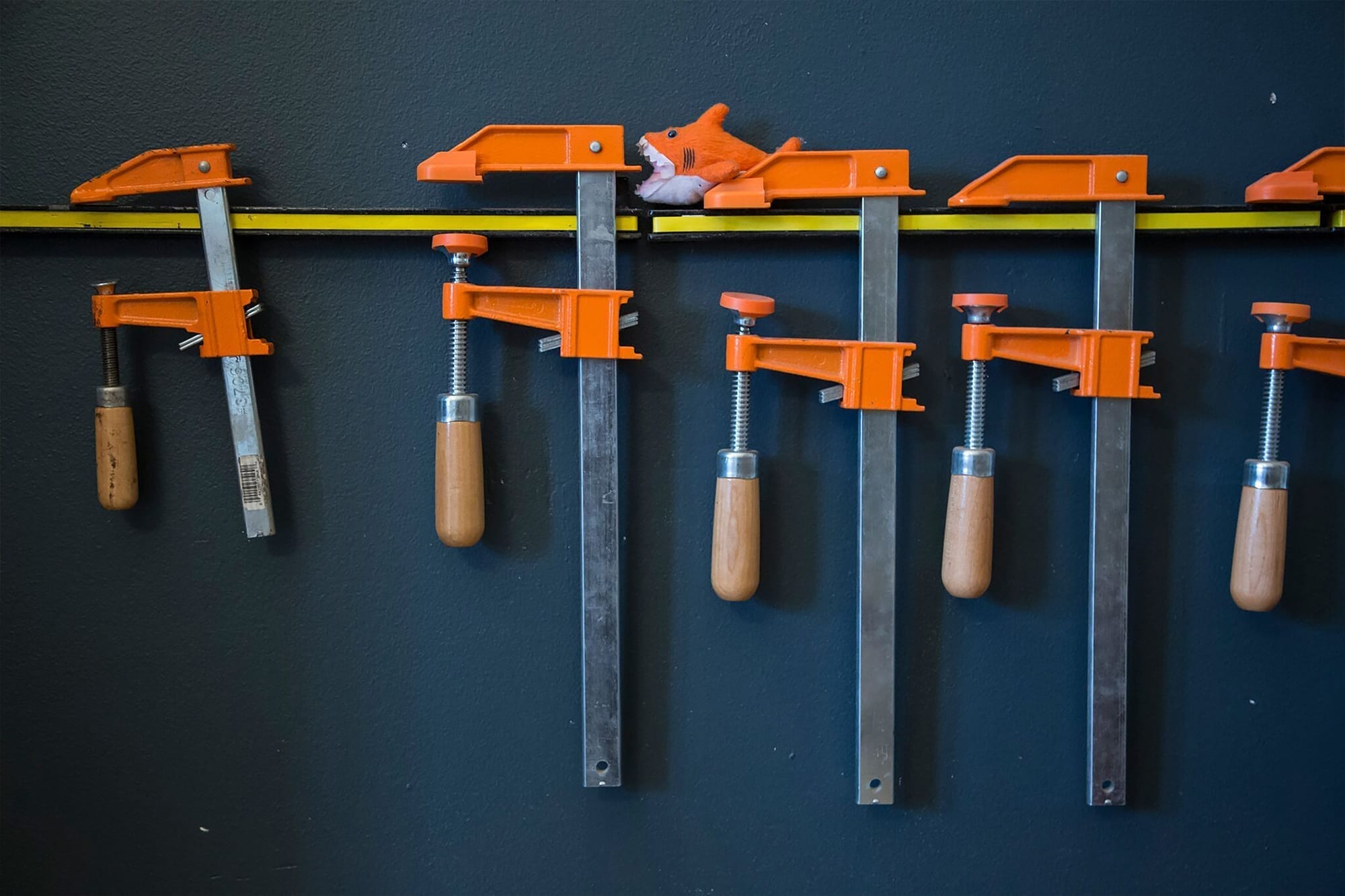
BASIC TOOLS: “Start with a hand saw, a sander, and a table saw. C-clamps and hinge clamps—my favorite are the wood cam clamps.”
DO WHAT YOU LOVE: “Do it because you love it, not because it makes you money—you won’t make a very good guitar. I had already spent a lot on a degree, and thought, ‘I probably shouldn’t be [building].’ That doesn’t matter. If this is what you want to do and it doesn’t feel like a job and you can’t wait to get up to do it, then you should do it.”
///////////////////////////////////
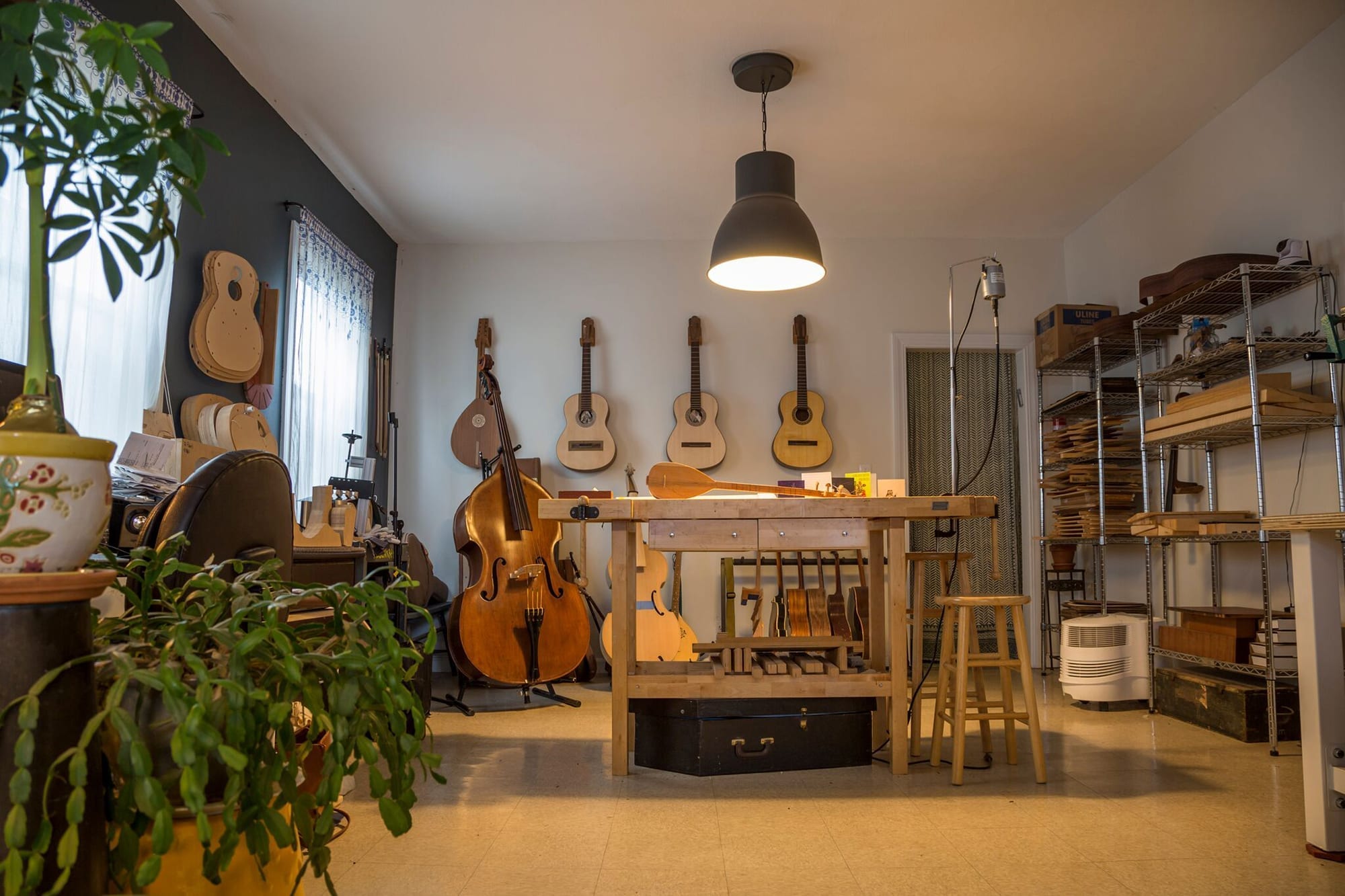
While studying design at ESAG Penninghen in Paris, where she was born and raised, Rachel Rosenkrantz walked past the lutherie shop of Maurice Dupont every day to catch the bus to and from school. Best known for his original Gypsy guitar, Dupont’s shop reminded Rosenkrantz of her affection for guitars, but the demand from school didn’t allow her time to play music. She moved to Providence, Rhode Island, to continue her studies as an exchange student at RISD. When she eventually graduated from ESAG Penninghen and started playing music again, she found that she couldn’t stop thinking about lutherie. “Ten years later, if you still want to do it, you should do it,” laughs Rosenkrantz while talking to She Shreds from her studio in Providence. “At the time, believe it or not, I was considered too old to start. I was only 21.”
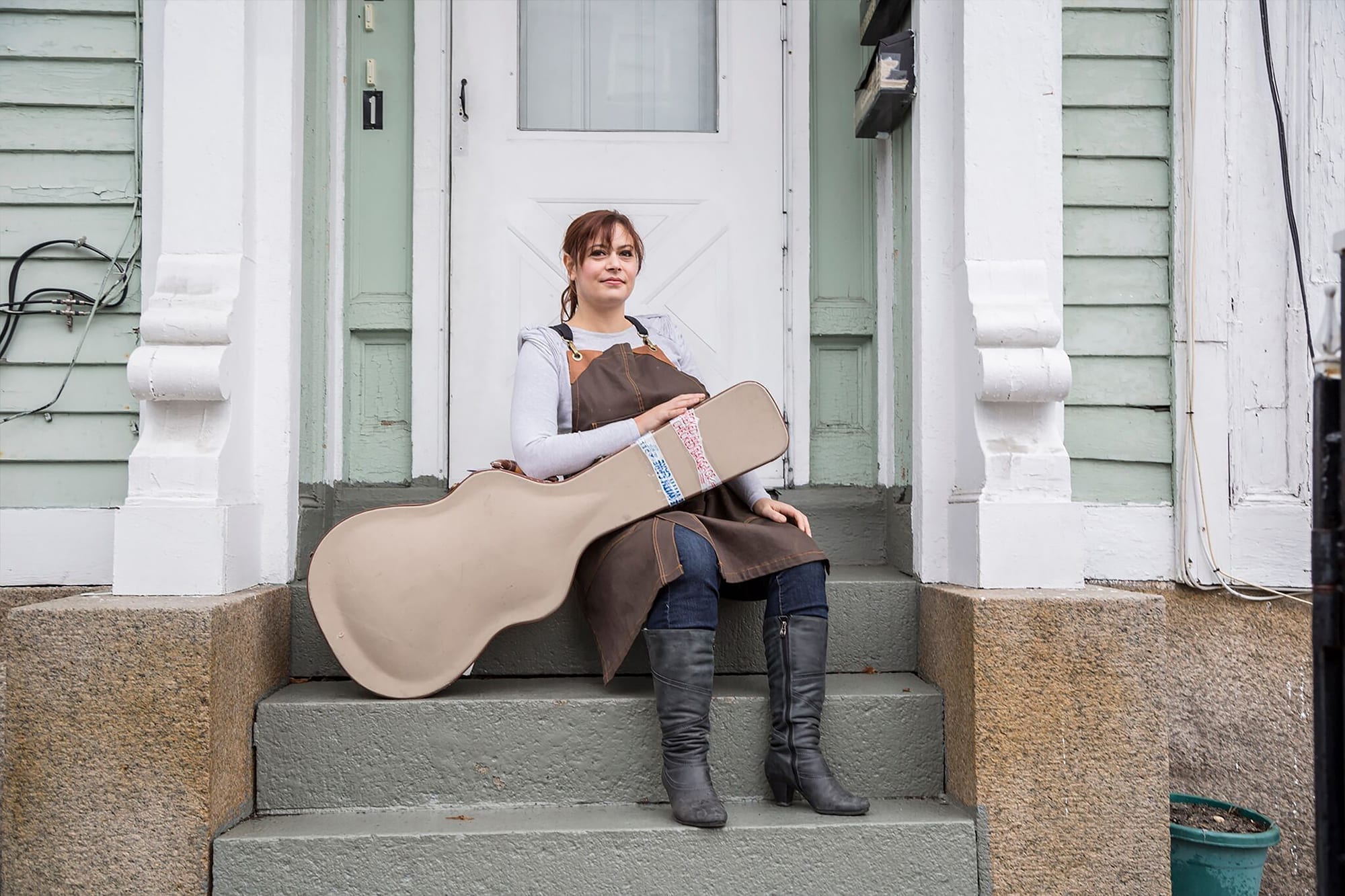
As both a musician and a designer, becoming a luthier was a way for Rosenkrantz to combine the two. In 2011, returning to Providence, she began studying with Daniel Collins of Shady Lea Guitars, one of the few teachers at the time who taught how to build classical guitars. “I believe that with an apprenticeship you can really learn at your own pace,” she says. After quitting her corporate job, Rosenkrantz diligently attended Collins’s class every other day, working through nights and weekends. She went on to share studios with luthiers Otto D’Ambrosio and Zachary Martin, who opened their spaces to her when she was in a pinch for a place to work.
Between 2012 and 2014, using every dollar in her savings account, Rosenkrantz began piecing together her own studio in Providence. One of her main pieces of advice to beginning luthiers is to get your own space and all of your own equipment as soon as possible: “It was great to share space with others and have access to equipment, but to be productive, and efficient, and find a good work groove, you really have to work alone.”
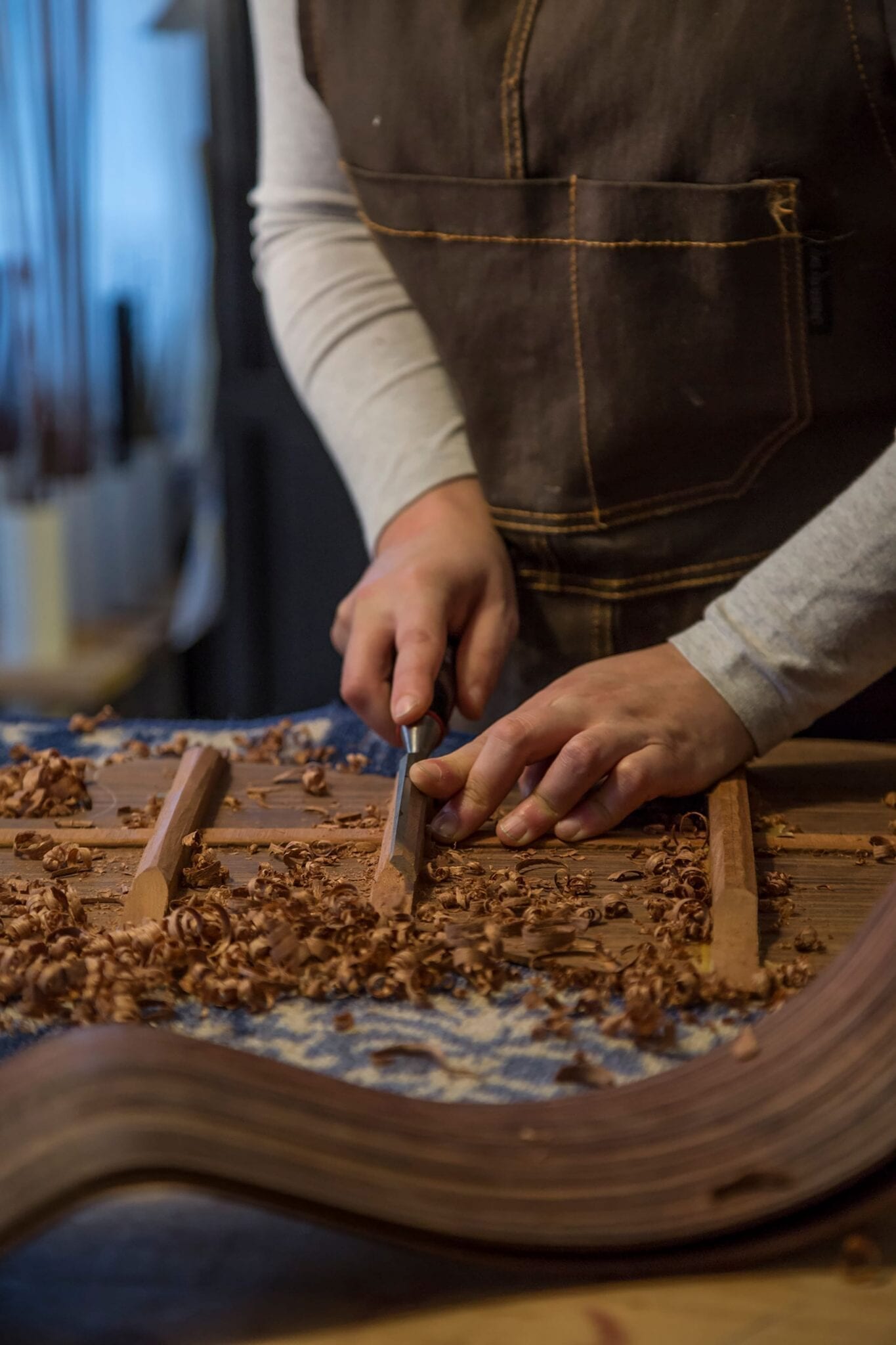
In conjunction, Rosenkrantz also suggests that if you want to build for a living, you need to dive right in. “It’s hard to be prolific and productive if you don’t give it the time,” she says. “It’s a very slow process to build a guitar, and if you’re only doing it every other day, you’re not going to get things done. It’s time consuming. Make sure you have enough savings, enough of a buffer when you start.”
Rosenkrantz has been building for over five years now. Her past work in art and design has been shown in exhibits at the Carrousel du Louvre, the Musée d’Art Contemporain du Palais de Tokyo, and at the Hangaram Museum of Modern Art in Seoul. Her luthier work was featured on the television show Raw Craft with Anthony Bourdain, and she has recently worked with Kaki King to design an affordable, moveable bridge that turns a guitar in a koto (a traditional Japanese stringed instrument). She currently teaches Spatial Dynamics in the Division of Experimental and Foundation Studies at RISD.
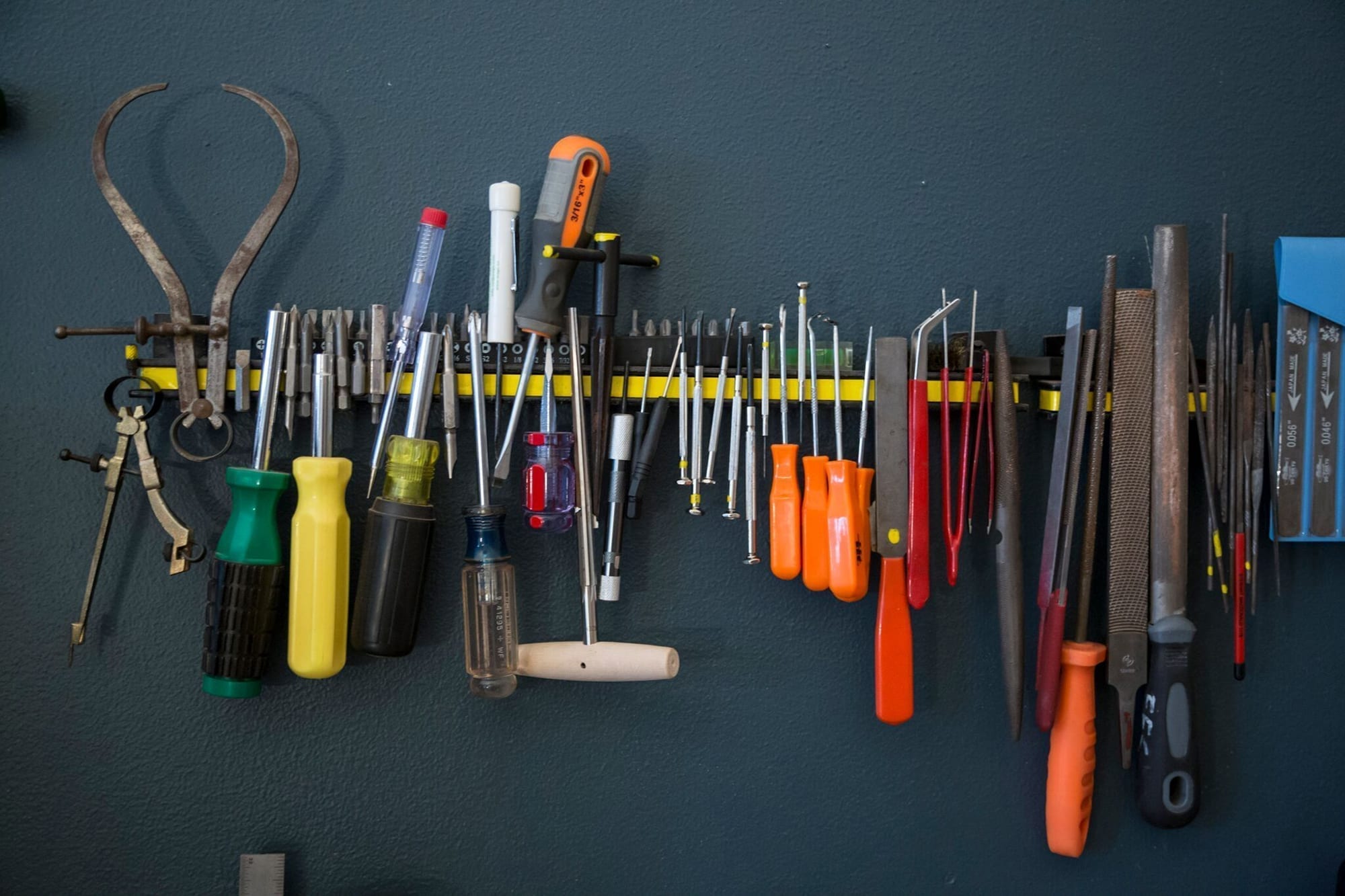
“There’s a lot of us,” Rosenkrantz says of luthiers. “People don’t think there are, but we are a bunch. There’s enough room for everybody. Going to a luthier showcase, you see everybody’s work is different. Don’t doubt, don’t get discouraged. I believe if you don’t do it first, you have to do it better.”
Rosenkrantz’s advice for beginners:
Think with your hands: “Even if you follow a blueprint or process, once you have the wood, you know naturally what it needs to become. Not just thinking with your head, but with your gut. When you have that intuitive knowledge, it’s more than just learning—it’s naturally understanding what the material needs to be.”
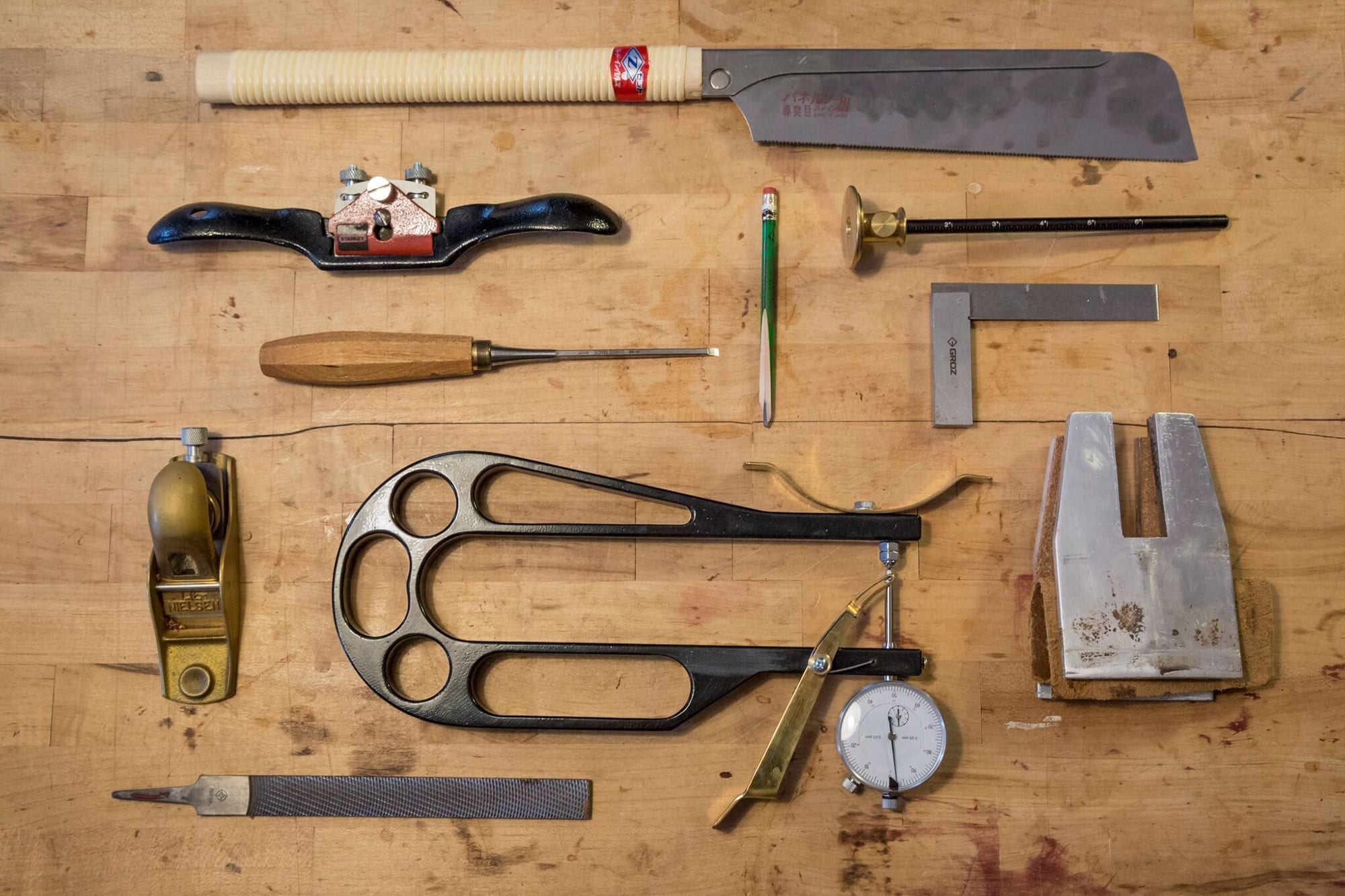
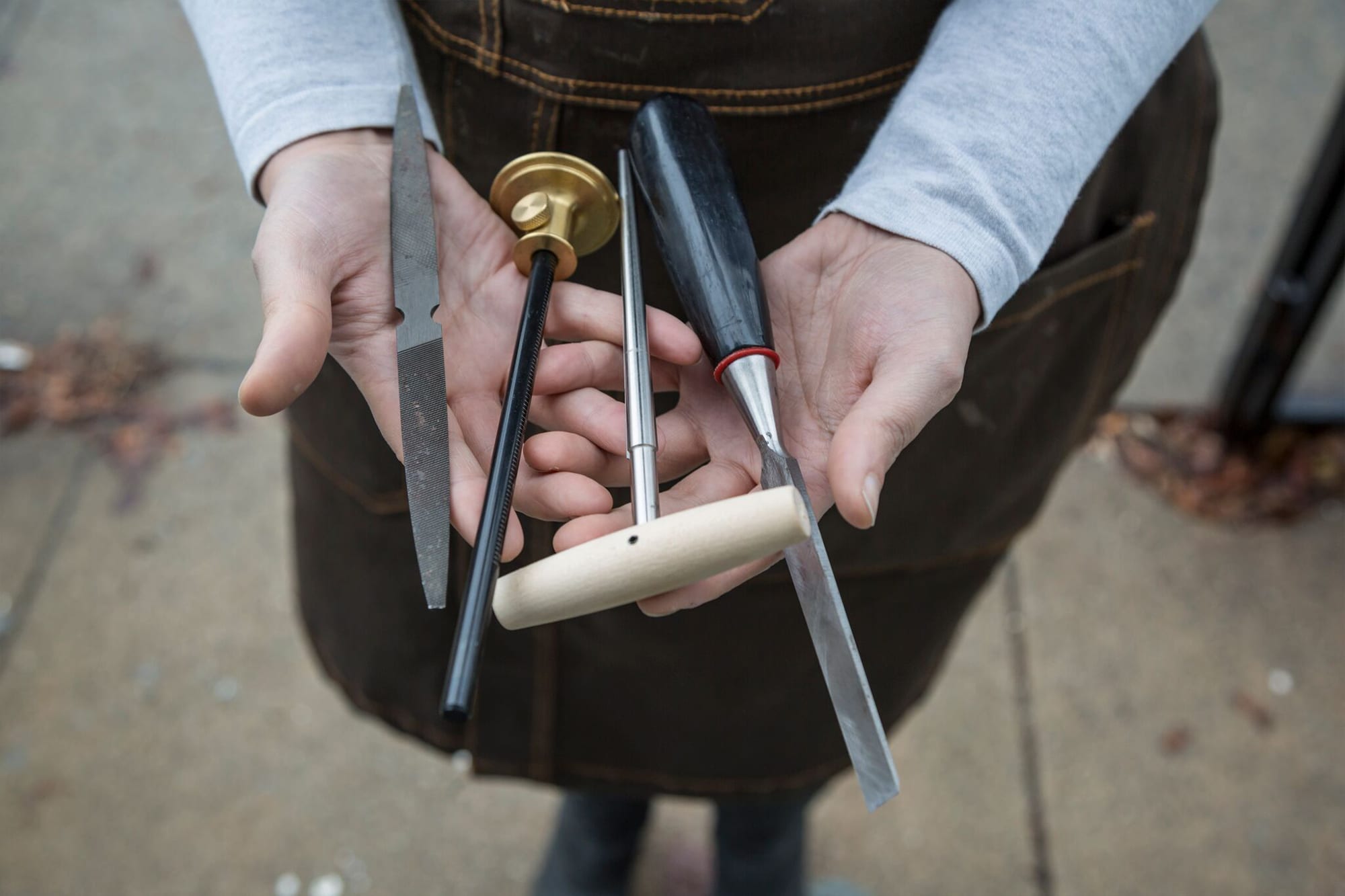
Don’t be cheap: “Chisels and handsaws are crucial. If you have to spend the money, those will be the two tools that you need to spend the big bucks on. You can’t fuck around with those.”
Be mindful with your materials: “We know we cannot legally use Brazilian rosewood, yet every year we see pictures of [them] at [guitar] shows. We have to be responsible. There are so many woods that haven’t been explored, and I think it’s time to expand the envelope. Don’t be afraid to try. Be resourceful, mindful, and adventurous.”
Resources:
Stewart Macdonald – http://www.stewmac.com
Luthiers Mercantile International – http://www.lmii.com/
Luthiers Forum – http://www.luthiersforum.com/
Guild of American Luthiers – http://www.luth.org/resources/schools.html
To begin, you really need to have some basic knowledge of electrical components and their functions to safely build electronics. Next, you will need a soldering iron and some other basic tools. If you don’t have these items on hand, there’s no need to fret! The Internet provides, and at totally reasonable prices. On the Build Your Own Clone website, you can find a beginner’s tool kit that will equip you with everything you need to get started. The company also offers an easy project called the Confidence Booster so you can start to get your hands dirty. You can also find any of these tools at your local hardware store.
As for me, I learned how to solder using YouTube and buying electronic projects off of Amazon by companies like Arduino and Elenco. These are very cheap options, so it won’t be too much of a bummer when you (inevitably) mess up. Once you complete a successful build, that is when you can move onto more challenging DIY kits such as the Lil’ Reverb kit that She Shreds received from Build Your Own Clone!
Companies like BYOC are giving musicians the chance to own and operate comparably inexpensive clones of their favorite, classic pedals. No matter how you go about it, building and working on your own pedals is challenging, fun, and extremely satisfying! It also allows you to conquer that tone that you have been chasing down.
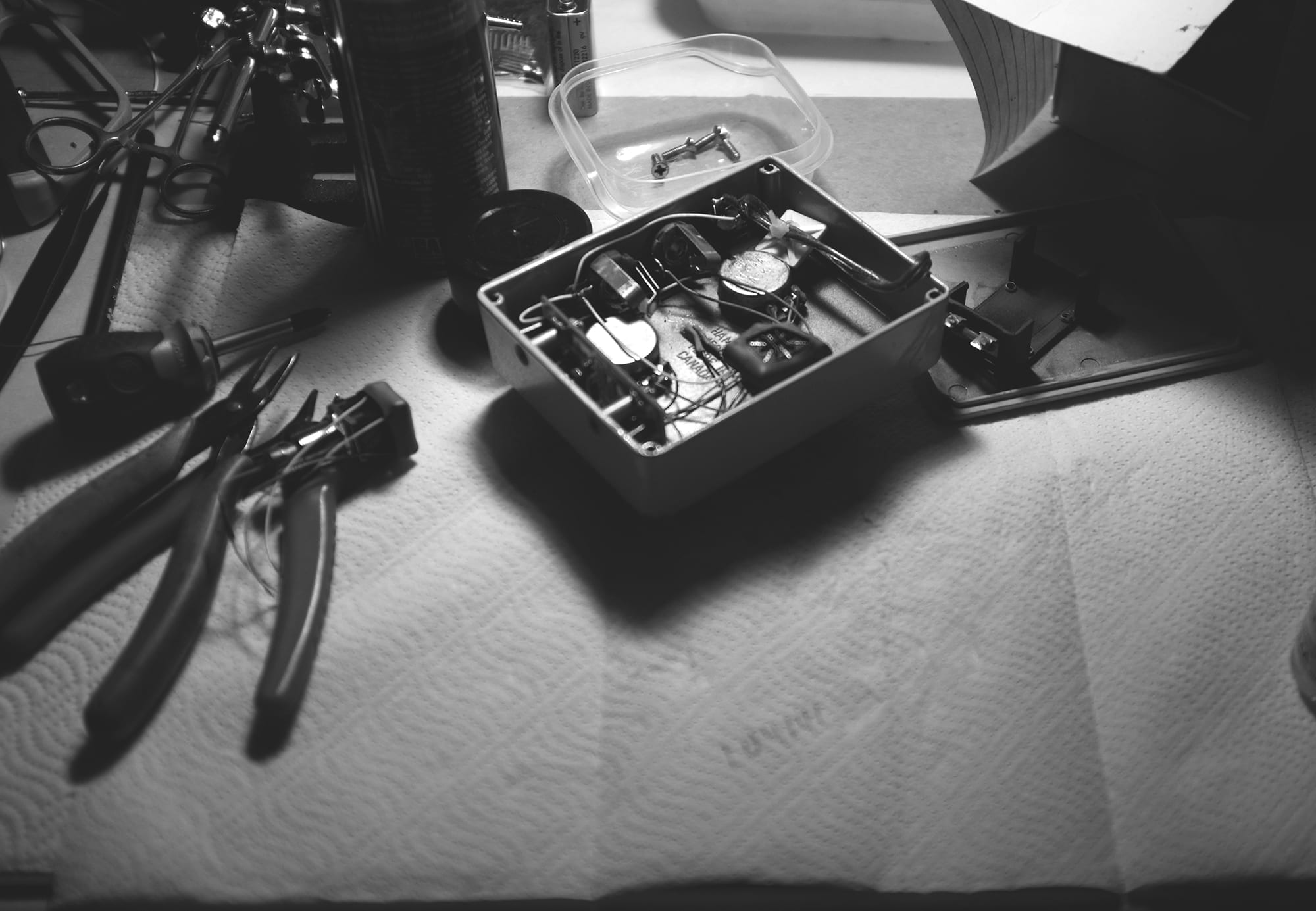
Tools You’ll Need:
Soldering iron
I recommend starting with a 25-30W basic soldering iron with a point tip. There are ones that come with a whole station set up that has a holder and a tip cleaner. These are nice, but they aren’t necessary. You will need a stand, however, to place the iron when not in use. A brass scouring pad or a wet sponge work very well for cleaning the tip.
Solder tube
The most recommended solder is a 60/40 rosin core solder. This means that it is 60% tin and 40% lead.
Small pliers
I like to have a variety of pliers on hand for builds. Needle nose pliers and those on the smaller side work very well.
Wire cutters
Wire cutters are a very important tool to become comfortable with. I like the cutters that have an adjustable screw for wire stripping as well as cutting.
Desoldering braid
If you’re going to be soldering, you’re going to need to desolder eventually. The desoldering braid will help you reverse all the crappy soldering you might be doing at first. Don’t worry; mistakes are part of the learning process!
Soldering safety and tips
Make sure you have a sufficient amount of work space. You will need adequate lighting and ventilation; wearing eye protection is a good idea. You do not want to breathe in solder fumes! They can cause irritation to your eyes, nose, and lungs. It is even known to cause headaches after prolonged exposure. Make sure you never touch the tip of your soldering iron. It is helpful at the beginning to hold wires with pliers as not to burn yourself. Wearing gloves is a good idea if you are going to be touching the solder wire directly. I like to slowly pull the solder out of the tube with pliers and hold the tube to apply the solder.
Make sure you pay attention to the directions/schematics. Some components have very specific placement!
Here are some helpful links to get you started:
Build Your Own Clone’s video on how to solder
Just search “helpful tips for soldering” on YouTube or Google. Read and view as much instruction as you need to feel comfortable.
Build Your Own Clone Beginner Tool Kit $44.73
Helping Hands $9.99
The only tool not included in the beginner’s kit that I use fairly regularly during builds.
Build Your Own Clone Confidence Booster kit $14.99
This kit does not come with an enclosure or foot switch. It will still give you a good idea of what it takes to populate a PCB.
Elenco Digital Bird Sounds Soldering Kit $10.20
I put together an Elenco Bird Sounds kit because nothing says electronic mastery quite like cheap, crappy tweeting. Super fun!
Electronic Projects for Musicians by Craig Anderton $19.28
I own this book, and it has a comprehensive review of all the foundational knowledge you need to get started.
Comprised of bassist/vocalist Rachel Davies, guitarist Thomas Fisher, and drummer Daniel Copeman, the band formed in Brighton, UK in 2008. Based on the strength of their self-recorded debut EP, 33, they were offered a recording contract with indie powerhouse Matador Records in 2010, where they released their critically-acclaimed full-length debut, Violet Cries, the following year.
Following their 2013 LP, Wash the Sins Not Only The Face, Esben and the Witch decided to release their third album, A New Nature, on their own label, Nostromo Records. As the title would suggest, the album found the band changing directions with their sound, peeling back some of the layers of electronics and pedals for a more straightforward approach—a decision that naturally impacted their choice of gear as well. “Now I have a pretty basic setup that works for me; no frills, just battered old stomp boxes that pack a punch,” Davies says. “With the third album in particular, we wanted to strip things way back, create a record that was primal, raw and ultimately human, to take away the machines. We recorded A New Nature with Steve Albini so it all made sense—the process and philosophy complementing the themes of the record. I’m not a tech-head by any means, so this is my favored approach. The punk rock way. Play hard, do it your own way, and capture an energy.”
On Esben and the Witch’s latest album, Older Terrors (Season of Mist, 2016), Davies notes they stuck by their “punk” approach to the studio, but added back some of the effects and synthesizers associated with their earlier releases for atmosphere. “I feel it’s the best balance yet of what Esben and the Witch is about. Punk’s scrappy fervor mixed with black metal atmospherics and gothic melancholy, and vocal melodies more akin to folk or balladry….I often feel we’re a weird band to place. Essentially we’re trying to write hypnotic, emotive, transportive music that people can lose themselves in, even for a moment.
The moods and ever-changing textures of Older Terrors was partially shaped by the band’s relocation from Brighton to Berlin. “I think it’s impossible for your surroundings not to have an effect on the creative process,” she says. When they first arrived in the city, they shared a living space on the outer edges of the city in an area Davies describes as “a strange compound of pre-fabricated family dwellings.” Although they had access to the basement as a practice area, noise concerns and a neighbor with a baby meant they couldn’t play at full volume, which meant Davies found herself sketching out bass and vocal parts without the company of her bandmates. “It’s certain logistics and practicalities like this that undeniably affect the way we write, not to mention the emotional turbulence of moving to a new country and city. It absolutely had a part to play with the lyrics, despite how esoteric and fantastical they at first seem, it’s a medium for me to work some things out,” she says.
The trio eventually found a practice room in an industrial area of East Berlin, and Davies hints that it’s claustrophobia-inducing tiny size has also had an impact on the band’s current sound. “We’re cramped in together, all facing each other with no room to swing a cat. It’s hot, intense, and means we’re locked in as a coven. I hope that translates when we play live,” Davies says.
Davies recently shared some of the gear she considers essential to her sound. Check them out below and get the latest on Esben and the Witch here.
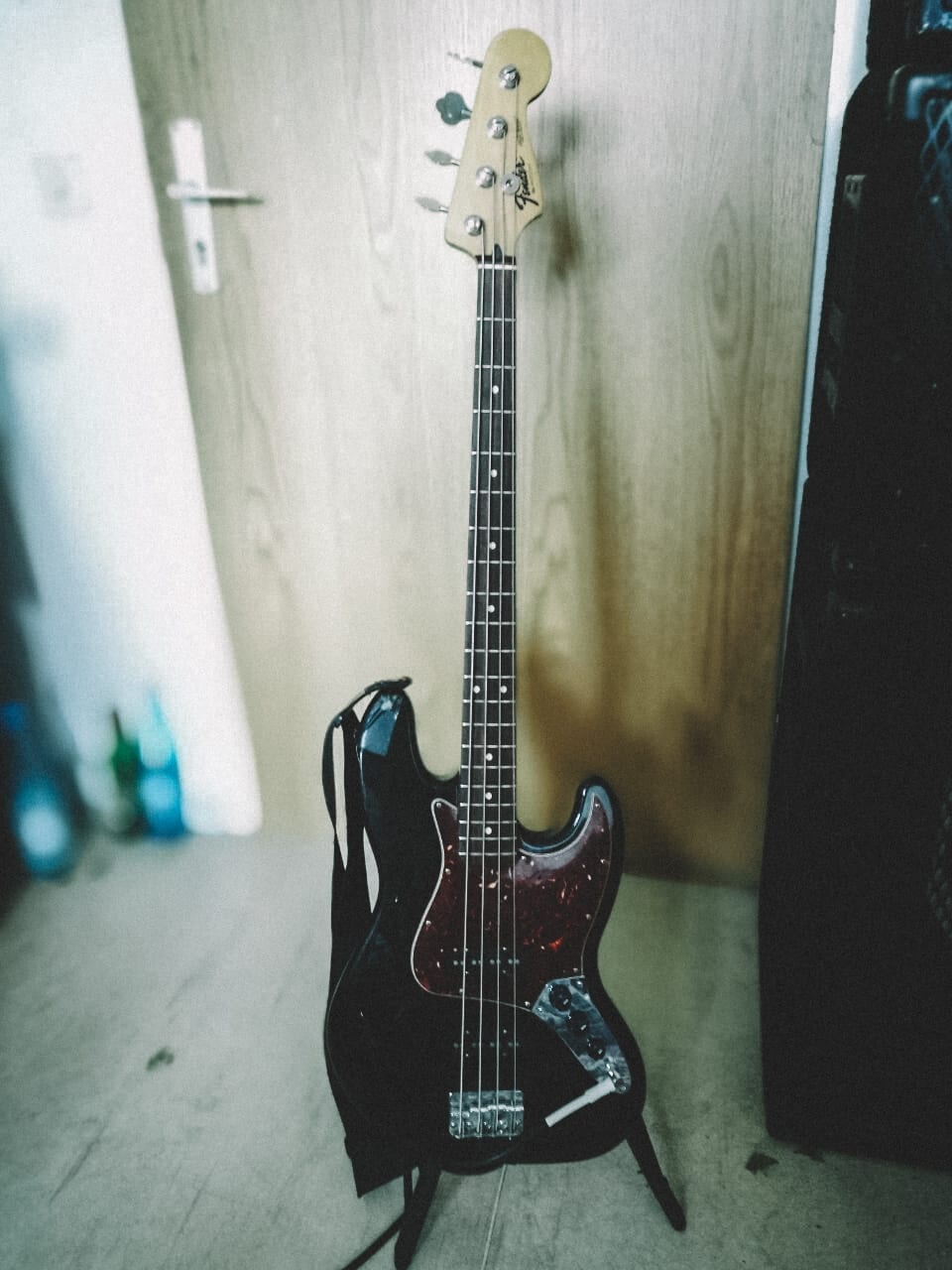
My trusty steed. I’ve played basses that are slightly smaller (I’m 5ft 4) and just don’t like it. It feels strange to me now to play with a shorter neck. It feels almost silly—they seem too dinky and light and I feel less powerful. I like its weight, its curves, I want to be able to swing it around and feel like I could do some damage.
Peavey Amp (1×15, 2×10) / Mark Bass VI XP head
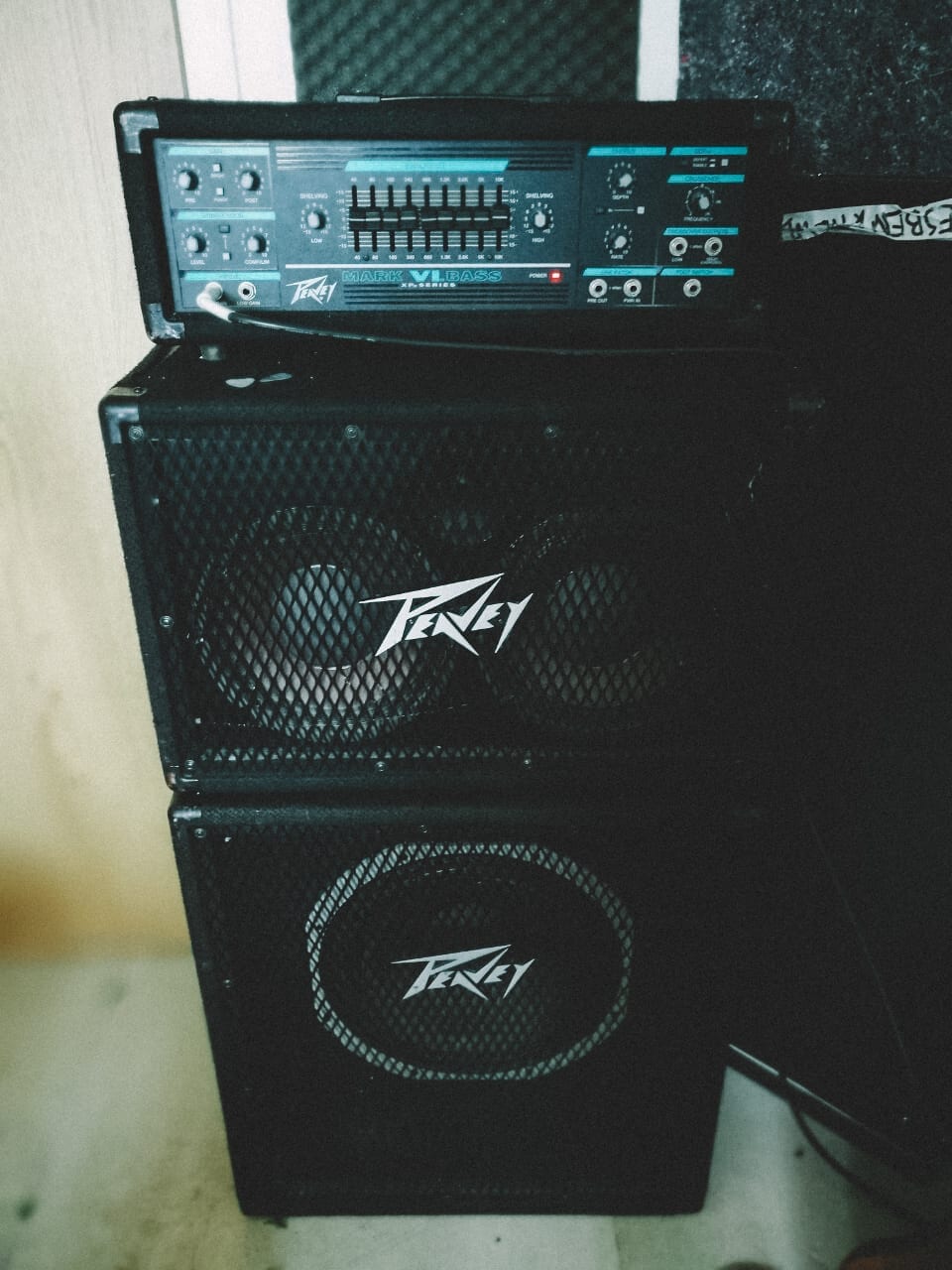
It’s certainly not the most glamorous of amps but it’s a lovable rogue and tough. It’s not fancy, it’s kind of falling apart but it’s loud and aggro and it looks like it should belong on the ship in Alien. I bought this on eBay a few years ago and was delivered it from the back of a car by its beloved owner and his wife who used to cart it around pubs in his prog-rock band days. A spider has also now nestled its way in and made a home/grave in the lower speaker; EATW bringing goth to a whole new level.
Yamaha DI-01 Early 80’s Distortion Pedal
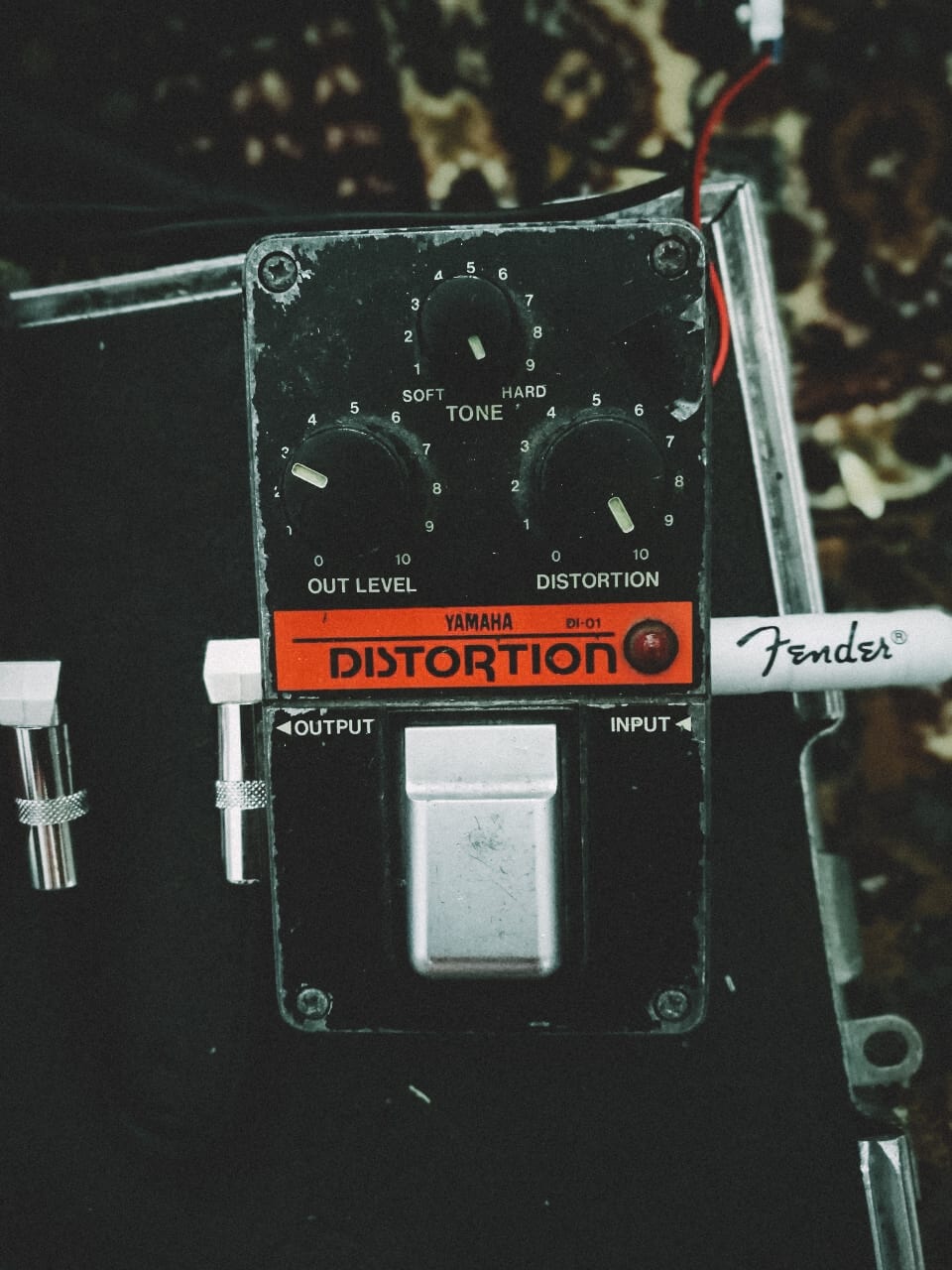
I don’t know why but I love this pedal. Daniel bought this off a friend for £25 quid back in the day. It’s battered as hell now but I’ve come to really rely on its sound. It’s solid, crunchy and has body and sounds more analogue to me than other more ‘professional’ distortion pedals. It also just has three dials, Out-Level, Tone and Distortion so is easy to grasp. I like my pedals simple, I resist a lot of technology on stage. Together with the Peavey they’re quite the gnarly duo, an 80’s force to be reckoned with.
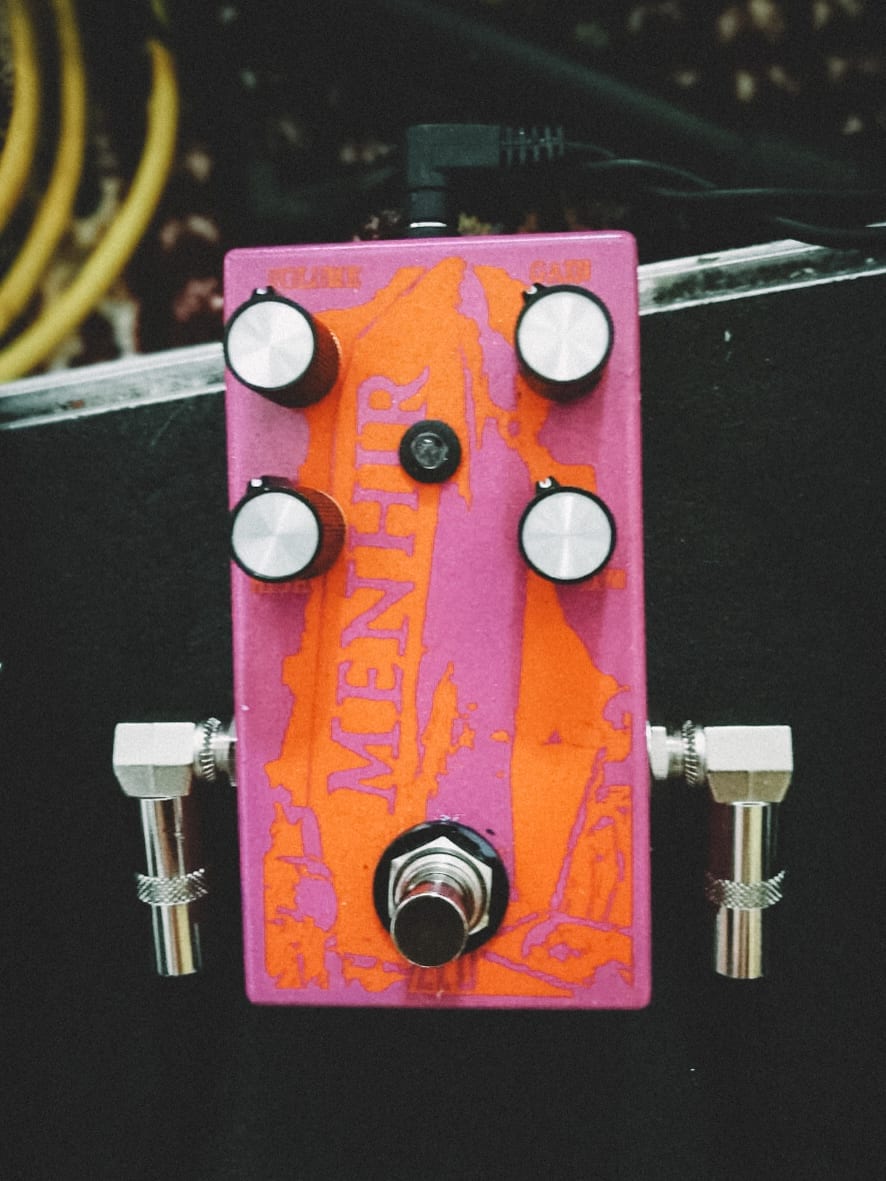
This is a new member to my set-up and one I’m really looking forward to playing around with. It can handle volume whilst maintaining a fierce attack. It seems to have a cleaner distortion with more cut than my trusty yet ragged Yamaha and when they’re both on, an almighty racket ensues. Brothers in arms.
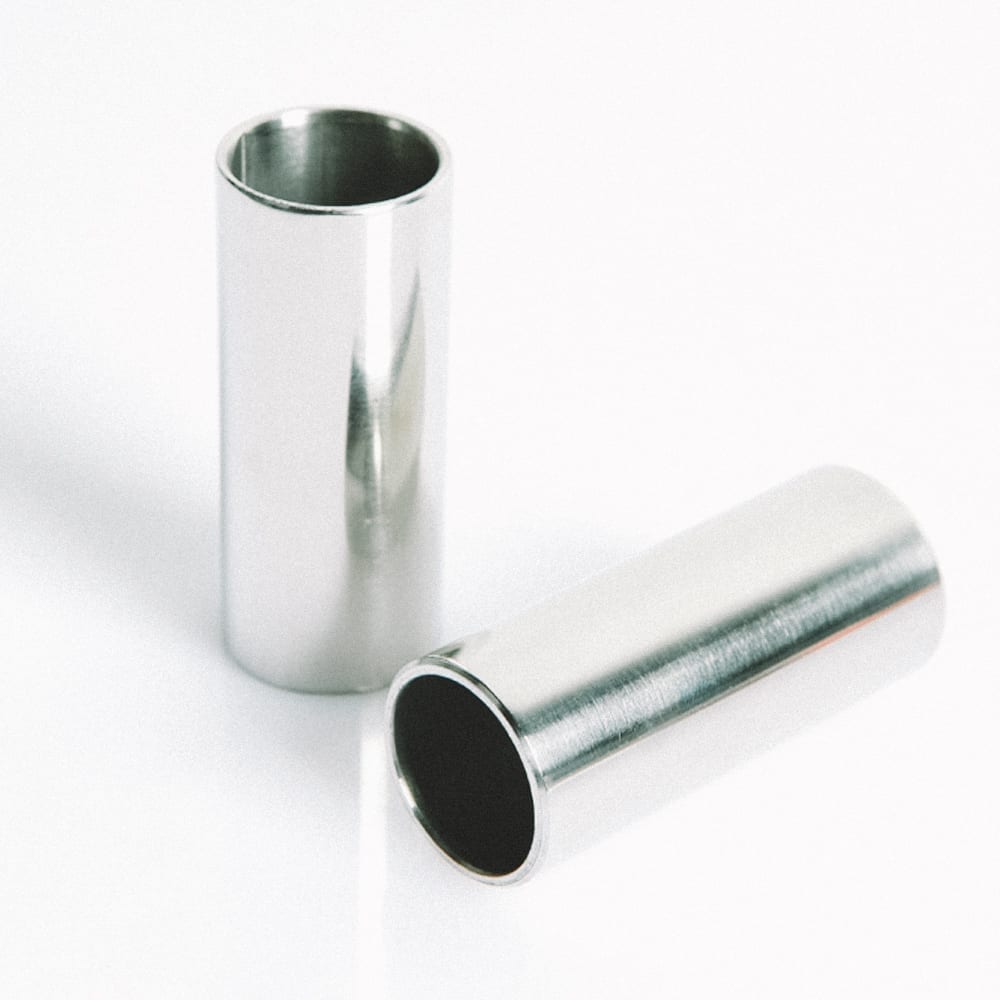
I really love the sound of a slide on distorted bass. It sounds so ugly and abrasive. The clanking of hammers. There’s nothing delicate about it but I don’t think distorted bass should be. I like how human it sounds, no digital effects, just a physical clanging of metal on metal. And when you slide it down the fretboard it sounds like the drone of a hundred angry wasps.
Together, they have forged a unique blend of music that merges indie rock and math-y rhythms with pop sensibilities that wouldn’t sound out of place in the Top 40—often served with hints of jazz and prog as well. Despite the technical complexities of their songwriting, tricot’s music is light, spacious, and accessible for practically any listener. It’s a combination that has helped the band grow a following around the world over two album releases (T H E in 2013, followed by A N D in 2015), a handful of EPs, and tours in both the US and Europe (which included stints opening for The Pixies).
Over the last couple of years, tricot relied on Garage Band and a series of session drummers to provide the beat for their music, A N D and subsequent tours, but for their latest album, 3, they brought in a full time support drummer. The new addition has given them more consistency, and therefore room to focus on their guitars and vocals, resulting in what is arguably their most innovative and compelling work to date.
With 3 available now through Topshelf Records, we asked the members of tricot to share their favorite gear:
With influences ranging from West African music, tropicalia, new wave, doo wop, and more, Della Peruti’s brand of indie pop is at once familiar and adventurous—and despite her admitted love of darkness—leaves the listener feeling energized and optimistic.
After much anticipation, Gothic Tropic will release its debut full length, Fast or Feast on May 19 via Old Flame Records. Produced with Todd Dalhhoff (who also plays bass, keys, and percussion on the album), the album reflects Della Peruti’s eclectic musical interests, knack for storytelling, and of course her many instrumental chops.
“Fast or Feast was my first stab at producing a record, so this process taught me a lot about recording,” Della Peruti says. “I met my fellow first-time album producer Todd Dahlhoff because he was playing bass in the band I was playing keys for, and we decided to enter into the unknown together for this (he’s [also] responsible for that killer bass line in “Stronger”). The album is about duality, and balance and reconciliation both sonically and conceptually. Everything about this project follows that doctrine, and this is sort of the first personification of that. The music and the message embrace both extremes of darkness and light. Mainly I just hope people can groove to it.”
Check out Fast or Feast in full now, and get the scoop on some of the gear Della Peruti used to put it all together. Fast or Feast is out on May, 19 via Old Flame Records. Pre-orders are available now.
A founding member of the post-hardcore band Rodan, O’Neil, or TJO, has been challenging the status quo since they released their formative math rock album Rusty in 1994. While she has been in numerous bands since—including Retsin and the Sonora Pine with Sean Meadow (June of ’44, Lungfish) and Rodan drummer Kevin Coultas—her solo work is prolific, varied and just as adventurous. The music often occupies both a folk and ambient space, the poetry of her lyrics cradled in electronic-informed soundscapes between each song. Or as she calls it: “kind of sound bed for songs to be inside of.”
Last month, O’Neil released the eponymous Tara Jane O’Neil, her most straightforward effort to date. Unlike her albums like You Sound, Reflect or Where Shine New Lights, which flows into itself from start to finish, there are no “beds” here. O’Neil wanted to go back to playing in a band, enlisted some pals to play with her and put together a striped down collection that is as expressive as ever. Or, as her friend, author Maggie Nelson writes about her music: “Unlike some songwriters, whose lyrics have the aura of sophistication because they’re essentially nonsense, or whose lyrics end up pretty banal once deciphered, TJO’s lyrics always repay the effort to discern them.”
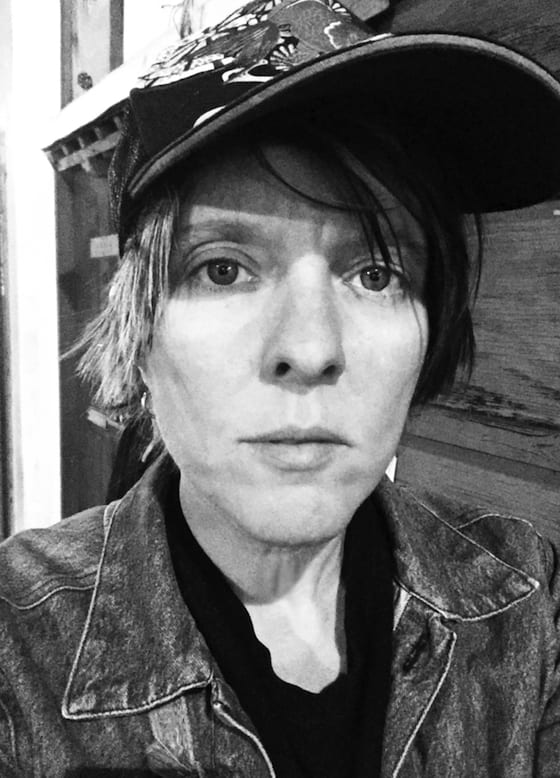
From a quiet corner at LAX, O’Neil spoke to She Shreds about getting back to playing with a band, finding positivity through songwriting and the Danelectro Tuna Melt pedal that she cannot shake. Tara Jane O’Neil is out now on Gnomonsong and available for purchase.
She Shreds: You have always been an artist who welcomes others into your space. Who did you collaborate with on this album?
Tara Jane O’Neil: I always collaborate with somebody on my records, but it’s usually me in my lab figuring out what I need from others and figuring out what the missing parts are and where I’m stumped. This time, I did all of the main recording with a group of fellas in Chicago. I sent them demos of the finished songs with arrangements, drums and bass and all that stuff. Then I flew out to the studio. It’s called The Loft, which is (Wilco’s) Jeff Tweedy’s kind of crazy playground where he keeps his guitars and all his other recording [stuff].
I have some friends who work there, [composer/engineer/musician] Mark Greenberg, and he got some people together and we made a bunch of songs in like two days. That was fun because we all got to play live in the room together which I don’t often get to do because I record my own stuff. When I came home to L.A., [I got together with] my friend Devin Hoff [who] is a bass player and we just did some more songs. My friend Wilder Zoby came and did keyboards, he’s a producer and plays with Run the Jewels. Then I had a lot of people come in and sing. I had a lot of people help me out with this record.
How do you know when to work alone and when you want to call on collaborators?
It kind of depends on the project. This time I definitely wanted to be a player again because I often play on other people’s stuff or in an ensemble in a room where we’re all listening and responding to one another. This batch of songs is kind of like the most straight ahead batch that I offered and so it just felt like the nature of the music, I needed that sort of collaboration to have it live and be a sparkly thing. There’s not like a ton of effects or tricks on this record, it’s really just like people playing and, I think, playing well. I think that’s the spirit of this record.
Sound design always seems essential to your albums. How do you go about creating something more winding like your albums You Sound, Reflect or Where Shines New Light?
For awhile, I had an interest in making a kind of sound bed for songs to be inside of. This new record was difficult because I’m so used to weaving my own narrative songs or different movements in the record with sound. This record is just a bunch of songs. I wanted to figure out a different way to construct an album as a collection of songs instead of, like, on the last record, which is really a whole thing that grew into each other and continued to evolve as its own organism. You Sound, Reflect, I think, was kind of the beginning. There’s straight up sound stuff and a lot of sonic tomfoolery, lots of segues or extended sound moments that maybe then give birth to a song. Not to toot my own horn, but I feel like [on] the last record I resolved some of my queries about that pursuit, if you know what I mean.
But that’s great, right?
Yeah, I mean, and I could do that again but why the fuck would I do [it]? It’s not a formula thing. It was just like, “What else do I like to do? Oh yeah, I really like to sing and play songs on my guitar.”
Aside from wanting to sing songs and play guitar, what else was inspiring you while you were putting this together?
I’ve been writing songs for a long time now, over twenty years, and I’ve noticed in the last several years that my motivation for writing songs is coming from a really different place. I’ve been interested in identifying my intentions about doing it in the first place. I put out a record in 2009 called A Ways Away and I did so much touring, had been touring for so many years, and I just needed to take a little break. I kinda stopped touring in a big way and was really able to identify what my intentions are for putting sound into the world. I’m trying to put forth some positive vibes into the world [laughs]. I had been there before, but I’m trying to be intentional about what I’m putting into the music and then gets put into the world and then I have to play on stages every night: Where’s the positivity, or for lack of a better, less sincere word, where’s the healing in all that?
This record is actually, quite honestly—it’s all about living and dying because there’s been a lot of it in the past few years. It’s not a record that’s like [play-sings], “I’m fuckin’ sad that my friend is dead or my dad is dead.” It’s not like that. That’s not even my [way] of processing that stuff, but [I’m] certainly reaching into those scenarios and feelings to pull out these songs. There’s one song, it’s actually the most upbeat song I’ve ever released, and it’s about the last day of my father’s life.
Is it “Laugh?” That’s my favorite one on the new record.
Well, now you know what it’s about, kinda. There’s nothing in the lyrics that is like, “Somebody just died,” you know what I mean? And [my dad died] a couple years before I started writing that song or any of the songs, really. It’s a longer process. It’s not reactive.
So speaking of process, what’s your preferred setup?
That changes, depending on what I’m doing. I’m just gonna tell you this shit and you can use it however you want. I won’t be a supernerd, but I am very specific about what I like.
Seriously, nerd out as much as you want. That’s why we’re here.
In that case! For several years, when I was doing a lot of touring, and also for the last round of touring for the Where Shine New Lights record, I’ve been using this surprising little guy called a Gretsch BST made in 1979, which I bought used in Bloomington, Indiana. That’s the one that gives me a big sonic range and I can do a lot of the tricks I like to do on stage. I get a lot of robust sound. I use these really heavy strings, they have a wound third and they’re twelves, so I can get those whole bass register. I don’t like twangy guitars. I mean, I like them, but I don’t do that. I have this really low end happening. That guitar is really electric and really a sonic tool. I can get songs to play out of it, too, but when I’m doing drone stuff and harmonic stuff, that is the one to use. But, in the last year or so, I picked up my old friend, a Guild X-170, that I got new. It’s the only new guitar I ever bought, it was in 1997, and I put it down for a couple years because it’s an archtop body and it’s huge! And I have flatwound heavy strings on that one. I have my big bass bottom and I play all these cords, basically what I’m doing when I play these songs live.
I just opened for Tortoise a couple weeks ago, and they have a lot of sound. They have two drum kits and vibraphones and everything else and then there was me opening for them and I got to borrow one of their drummers, John Herndon, and we did dual stuff that was kind of – when i’m doing solo, I don’t just strum the guitar, I gotta hear the bass and feel the rhythm and then I have all these melodies that happen, so when I have this archtop guitar, this Guild, then I can do for the song stuff, I can kind of pull off all the low end movement—it’s a jazz guitar, that’s why jazzers use this shit, so you can make it more like a piano than a guitar. I don’t have lots of pedals and stuff. I have plenty delays and a couple of overdrives and I keep buying the same $30 Danelectro Tuna Melt tremolo pedal for the last fifteen years. Every time I break one, I get a new one.
Rather than get discouraged, she kept playing and began to forge a musical path on her terms. At age 19, as a member of Dischord punk band the Holy Rollers, she started learning about sound as a way to better communicate with sound engineers on the road, opening up both her creativity and another facet of her career in the process.
Today, Wachs is an in-demand audio engineer who has worked with the likes of Cat Power, M.I.A., St. Vincent, Deerhunter, and many others. She also works as a composer and sound designer, collaborating with fashion designers, filmmakers, and choreographers (most recently for Heather Kravas’ “Visions of Beauty” at On The Boards in Seattle) to create the perfect score for their artistic visions. In 2009, she stepped back into the spotlight herself, performing beautiful avant-pop compositions under the moniker Vorhees. Steeped in experimentation and improvisation, her music features an assortment of guitar, analog, and electronic instrumentation, which she manipulates and mixes live on stage.
Following a 7” (“The Orchard”) in 2012, and performances around the world (including appearances at Basilica Soundscape 2013 and Iceland Airwaves 2014), Wachs released Vorhees’ debut EP, “Black Horse Pike” in February this year. Written, recorded, and produced at her own studio (with drummer Greg Fox contributing to the final track, “Millie’s Pinkie”), the multi-textured music may run outside the types of boundaries her early teachers pushed, but it shows her instincts were right: by pushing herself and continuing to create, she developed a style all of her own. “It was only when I started playing on my own and started teaching myself, as well as when I was running sound and teaching myself how to run sound, that I became the musician that I am in the sense that I’ve developed my own style, and I’ve developed my own techniques, and I’ve learned more by being hands on,” she said.
With expertise from her own musical journey as well her work with others, we asked Wachs to share some tips to help other musicians hone in on what makes their style unique and how to develop it from there. “Black Horse Pike” is available now.
Be Free: First off, this is what works best for me. It all started when I saw a guitar player playing and they were so incredibly free about the notes and their fingering on the neck. There was nothing predictable about it and I thought, “wow, I hope I can be that free one day.” You know, there is a term if you’re a writer and you just need to get some words on the page: free writing. If you’re a painter, you’re splashing paint on a blank canvas, just to get the field to start. When I want to start writing a song, or if I just want to play, I just go as free as possible. I don’t think about notes, I don’t think about structure, I just start playing. It’s almost a warm up in a sense. Getting your own style starts with not playing covers, for example, but just finding out what sounds good to you.
Always Be Recording You never know never know what you are going to stumble upon and you might need to reference it. I have hours and hours of [recordings] of just noodling, or playing with effects, just exploring.
Don’t Get Caught Up in Labels One of the things I like to do—bringing my sound engineering into my composition—is I like to play with hardware that is not necessarily geared towards me. For example, I use a KORG Electribe 2 (the newer one), a piece of hardware that is marketed towards DJs and dance music producers. It definitely isn’t something that you would associate with something I would use for ambient guitar tracks, but there are so many nice little features that I do use. I can plug my guitar directly into it and I can modulate the guitar as if it was a synthesizer, and cross the sound differently there… It’s not letting the narrative, or the marketing of what the gear is geared for prevent you from using it. That’s been my biggest boon, really, playing with things that maybe weren’t meant for how I use it. Why not? There are no rules.
Learn Your Technology: I prefer no “rules,” but a general suggestion for every musician is once you start finding your style, get a solid background on the technology you are using. If you’ve been using an Electribe, playing around with it, ignoring the manual to just find your own way around it and develop your own sound, NOW look at how it actually operates and use that to your advantage. It will make your workflow a lot faster if you really understand the equipment you are using. I learned how to do sound when I was touring at 19 and I had no idea how to communicate to the sound engineer how to get better monitors on stage. Once I learned how to do sound, it immediately elevated my relationships. It’s like a chef learning knife skills. It’s only going to help. It is a technical talent, but once you know it you can work right through it and focus on the creative.
Ask Questions I’m self taught as a sound engineer. I learned by asking questions. There is no shame in trying to educate yourself that way. Don’t be afraid to have a dialog. Again, when you’re making music or doing sound, there is no one absolute way of doing things. People will develop their own style and techniques. Even if you are doing something different than another person, it’s going to open a lot of techniques for you.
Know There is Always More to Know It’s about attaining the confidence to finalize your style, but also not putting yourself in a box… When I’m onstage performing as Vorhees, I mix myself. I have my own console up on stage and I’m sending things, sending vocals and guitar to different pedals and electronics, and feeding things into each other. It’s a constant search for that sound. The only way I’ve been able to really embrace that is by knowing everything I can possibly know, while also knowing there is more to learn. It’s that confidence of having that foundation and knowing it’s a true foundation. It didn’t come from a book. It didn’t come from one source, it came from many different sources. Once I got that, it just opened up all of my songwriting. I’ve also been doing it for 20 years—it might be a longer road than the traditional education route, but I feel that it is a very unique road.
Experiment: I want to encourage people to experiment as much as possible. Experimentation is the key to new music. A lot of people say it’s all been done before, but there can be new interpretations. Maybe new technology will bring in a whole new way to bend notes, or there’s just so much still out there, I believe, that experimentation is the only way we’re going to get to a new place with music.
What I’m doing with Vorhees is not even that challenging, really, but all of this, I apply across the board to Vorhees to my dance scores, to anything else I end up doing. I’m no longer afraid to try anything. And if it fails, that’s ok too… you can learn a lot from failure as well.
While the strength and power that Howard delivers on stage is equally evident off stage, the light that surrounds her maintains calmness and presence—as if to remind us that she’s still the same old country girl who was listening to James Brown and Pink Floyd when growing up in the small town of Athens, Alabama.
Since signing to ATO Records in 2012, Alabama Shakes—comprised of Brittany Howard (guitarist, singer, songwriter), Heath Fogg (guitarist), Zac Cockrell (bassist), and Steve Johnson (drummer)—have received global praise for their 2015 sophomore release, Sound and Color. While some of Howard’s achievements include hitting number one on the Billboard 200 to winning three awards at the 2016 Grammy Awards, including Best Alternative Album, perhaps the most admirable is her dedication to where she comes from and staying true to who she is:
“The only time I remind myself [where I come from] is when I start complaining about not being home enough or being tired or getting stuck on the road. I have to be like, ‘You know you’ve got all this shit going on you should probably be more appreciative.’ Besides that I’m pretty much the same. I don’t exaggerate things, I just am who I am.”
Still, the four-piece continues to navigate music the same way they did before making their debut in 2009, back when they’d host jam sessions in Howard’s great-grandmother’s living room: with incredible appreciation and love for the creativity they get to express. After a five hour photoshoot in Howard’s’ home, we drove over to a small dive bar in East Nashville where we discussed collaboration, gear, and making up your own chord shapes.
She Shreds: Tell me a bit about how you started playing guitar. Can you paint a picture of Brittany Howard as a little shredder?
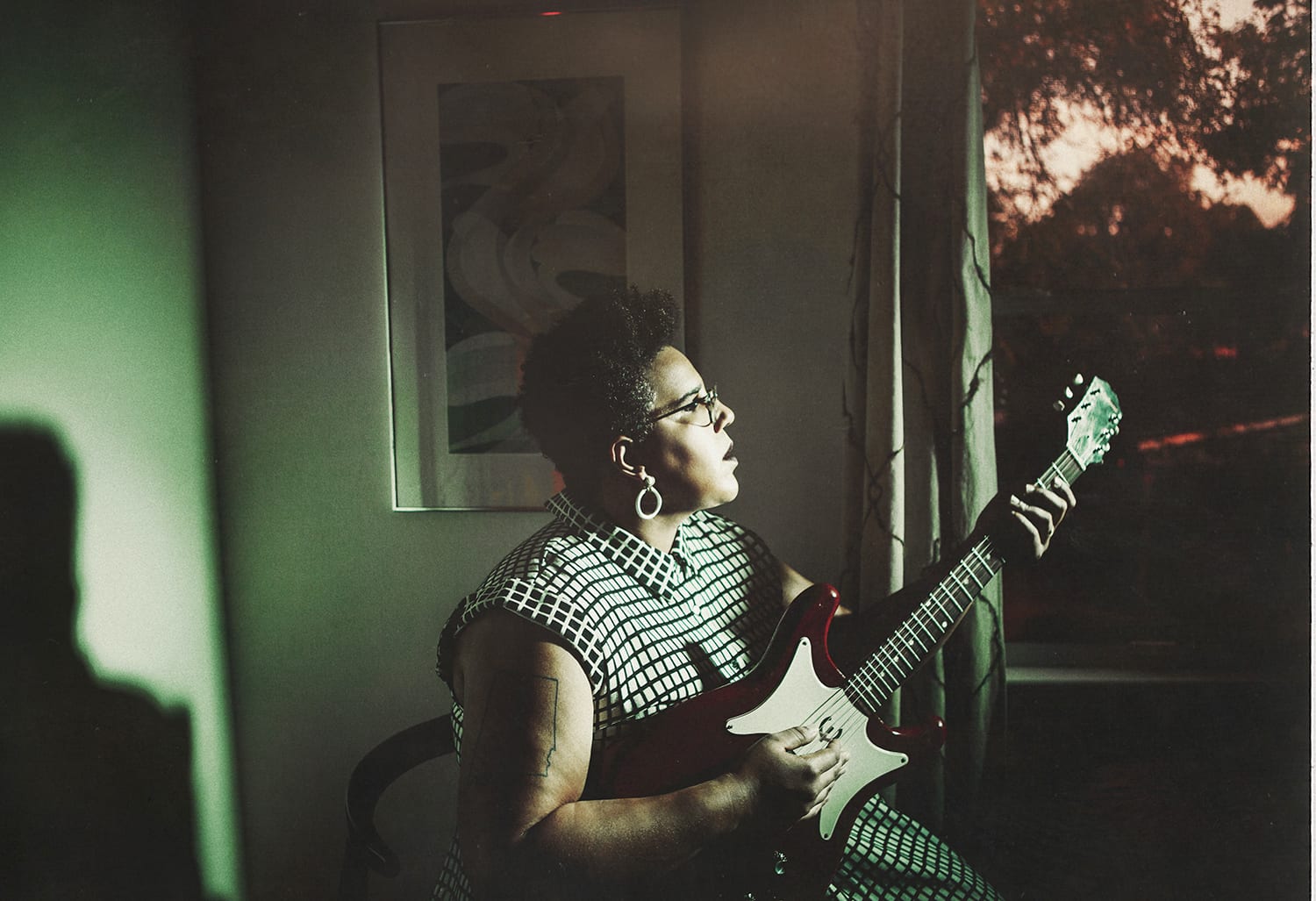
Brittany Howard: I guess I for real started playing when I was 12 or 13, and it was my sister’s guitar—it was just sitting in the closet. It was one of those really heavy Les Paul rip offs. The first thing I did—I didn’t know how to tune it—[was] start writing all of these songs right off the bat. I just used my ear like, “That kind of sounds right.” And then eventually I learned how to read tabs when I was 13 and picked out songs by Blink 182—simple power chord things—but I was always most interested in doing what I wanted to on the instrument.
You grew up with doo-wop, Michael Jackson, real classic style tunes, and then got into Pink Floyd and more psychedelic music. With that contrast in mind, what did you practice to develop your skills as a teenager?
As I got older my tastes changed, so I’d say over the history of my songwriting I’ve written all types of songs. I was more interested in knowledge and knowing how to play different types of music. Like the Spanish guitar—what are those sounds like? What makes a punk rock song good? Obviously it’s the energy, it’s not necessarily the technicality of playing. What’s going on with James Brown’s guitar player? What’s going on with Dave Davies from the Kinks? I didn’t really learn those songs, I just listened. I was like, “Ok, I’m getting that vibe,” and then from there I would be like, “Well, let me write a song.” And then eventually I found out about David Bowie and just lost my mind. I was really into that [idea of] framing a different reality for songs. New, more creative—as far as lyrically, what’s going on in the song.
I got my education just by listening to records. Never had a teacher to teach me chords or anything like that. I don’t really care about chords. You know, technical stuff don’t matter to me—I wouldn’t know what to do with it at this point. I probably should learn it, it’d probably be fun, but I like not knowing it. It’s a mysterious element and then everything I do is like, magical when I find out about it.
Does your upbringing and that mindset of what you developed as a kid affect how you approach music and collaboration today?
I’m not great at collaborating. When I write songs I like to be alone because it lets me visualize what I’m writing. On our new record there’s a song called “Dunes” and to me that was an entire landscape, it had a story. Like the movies, when I make a soundtrack for this little short story I got going on, let me make this short story as condensed as possible—I’m talking like, four minutes—and let me write some songs for that. I like to do that alone because it would get really confusing having to explain all that thinking to somebody else. So I’m not beyond trying to collaborate with someone, I definitely try, but it just makes me kind of uncomfortable and out of my element.
Do you think that has to do with the isolation of living in a small town?
Oh, definitely. The whole reason I started picking up a guitar, or instruments, is because I spent so much time alone. So it was something I could do with my time that made me proud of myself. I could finish this song and be like, “Yeah, I did that!” And then move on. Each time I would learn something, and it was really exciting and totally worth it. When I was younger I had this old Windows 2000 with Audacity—the only program my computer let me run—and I would just record tracks on tracks on tracks. It was so much fun, I could sit there for eight hours if I didn’t have to go to school.
Who’d you first see play guitar that made you go, “I want to do that”?
Well, the music first started with my Uncle Chad, my mom’s brother. He played guitar, he played Guns N’ Roses, Jimi Hendrix—he was really good at it. But I never thought girls could play guitar—I had never seen [a girl] play guitar ever in my life until the fifth grade when we had a music teacher, Ms. Mosely. She played guitar, she just busted out some “Blackbird” and I was just like [makes surprised face], “I want to do that.”
Then the next year I saw my first live band play which just happened to be our guitar player Heath [Fogg]’s band. He was 15 and I was 11 and I saw him play in the old gymnasium. That’s where it started. My sister used to play piano and she was really proficient at playing by ear and she would teach me how to play.
Your guitar playing is super driven by dynamics—it reminds me of waves, like a pull and push. How much do you experiment with resistance and release in your playing and performance?
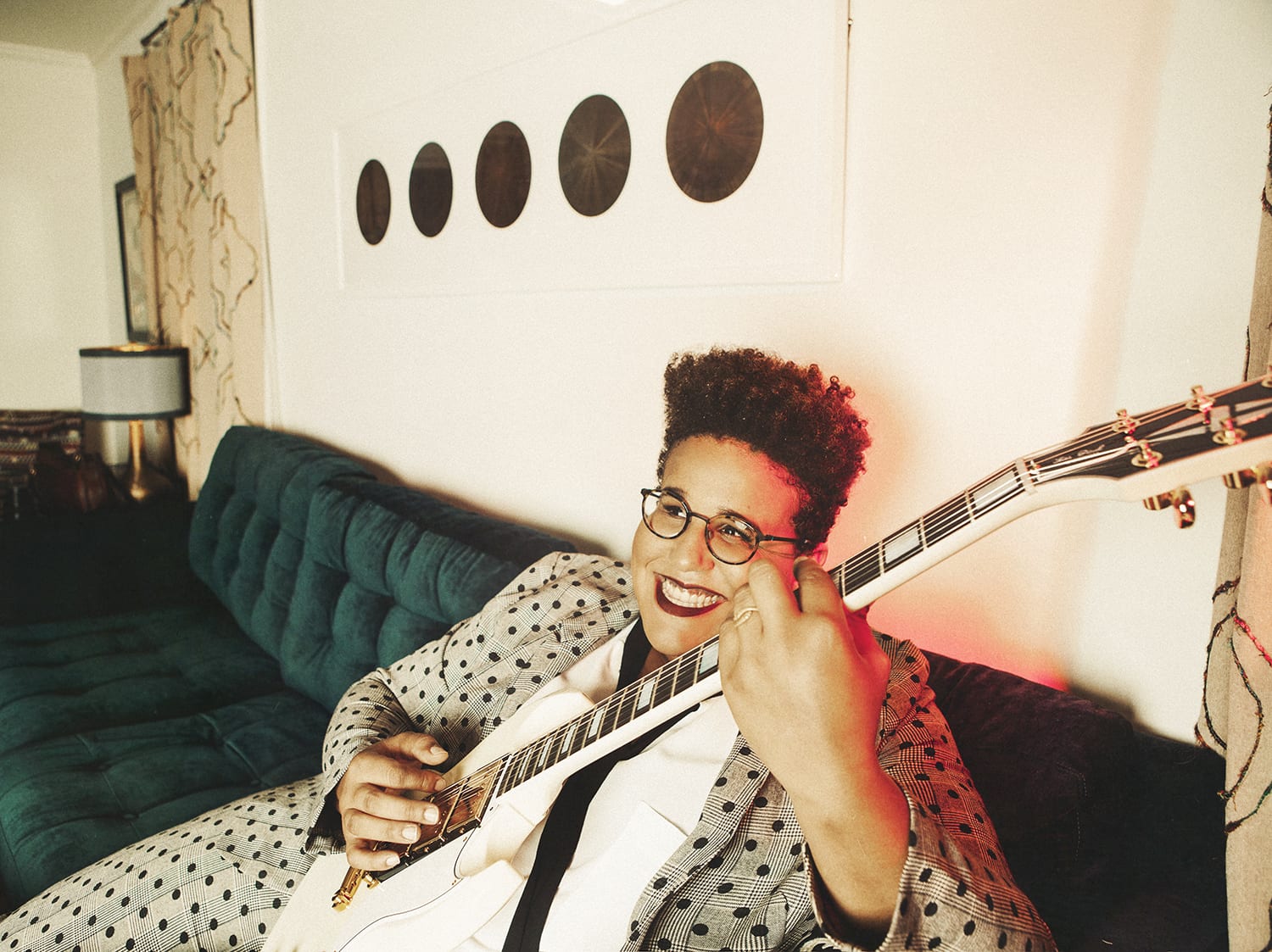
I don’t pride myself on wanting to conquer the instrument or master the instrument, or necessarily even study the instrument. For me, guitar playing was the means to an end to write a song. Everything I play is for the song and not to show off. I actually like to just carry the song along, it goes with my voice, it goes with what’s happening, the swells and the falls. I’m not a showy player, I just play what goes well and that’s it really.
It seems like people see you as equal parts vocalist and guitarist. Do you identify as that or do you gravitate towards one more than the other?
I identify as a songwriter—that’s what’s the most fun to me. I’m excited to be a part of She Shreds because most people don’t come up to me and be like, “Aw man, your guitar playing is so cool,” or “Your tone that you took like four years to pick out is super tight.” They’re usually just like, “Wow you’re singing really good and really loud and I love you so much.” And that’s cool, but it’s nice for people to be like, “Oh, I like your tone.“ Just a little compliment [laughs].
Speaking of, you have this crystal clear tone that, at least in recent years, has really inspired me to pay more attention to tone. What’s important to you and what’s your setup?
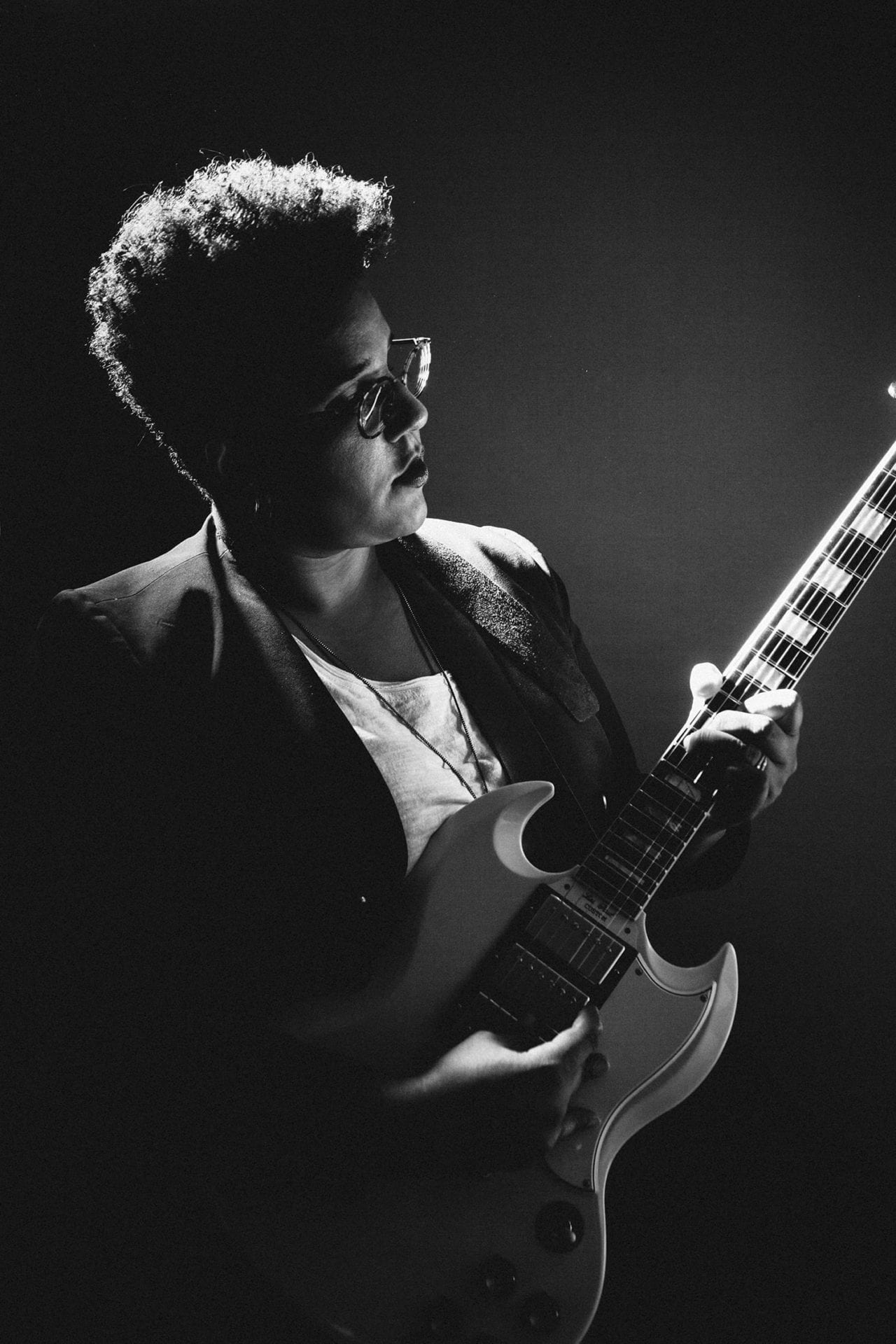
Pickups are important to me. The feel of the guitar—first thing’s first. Like, let’s say I’m at a guitar store . . . alright, it feels good but let’s see if it passes the test—hook it up to a shitty amp, but does it still have any character at all. If it does then like, “Alright, let me plug in to my favorite amp,” and then it’s all about it talking to you and giving you ideas. Like . . . “What if I played this, that’s nice—I could play like this forever on this guitar. “Can I play it fast? Can I play it well? Does it sustain well? Does it have a nice woody tone? Is it natural? Can it be timeless?” Things like that.
I’m really picky about that because honestly it can be any type of guitar—it doesn’t matter if it’s a $5,000 Gibson or if it’s a $150 Kay I found at a garage sale. It’s all about having those sounds that speak to me and inspire me to want to write a song with it.
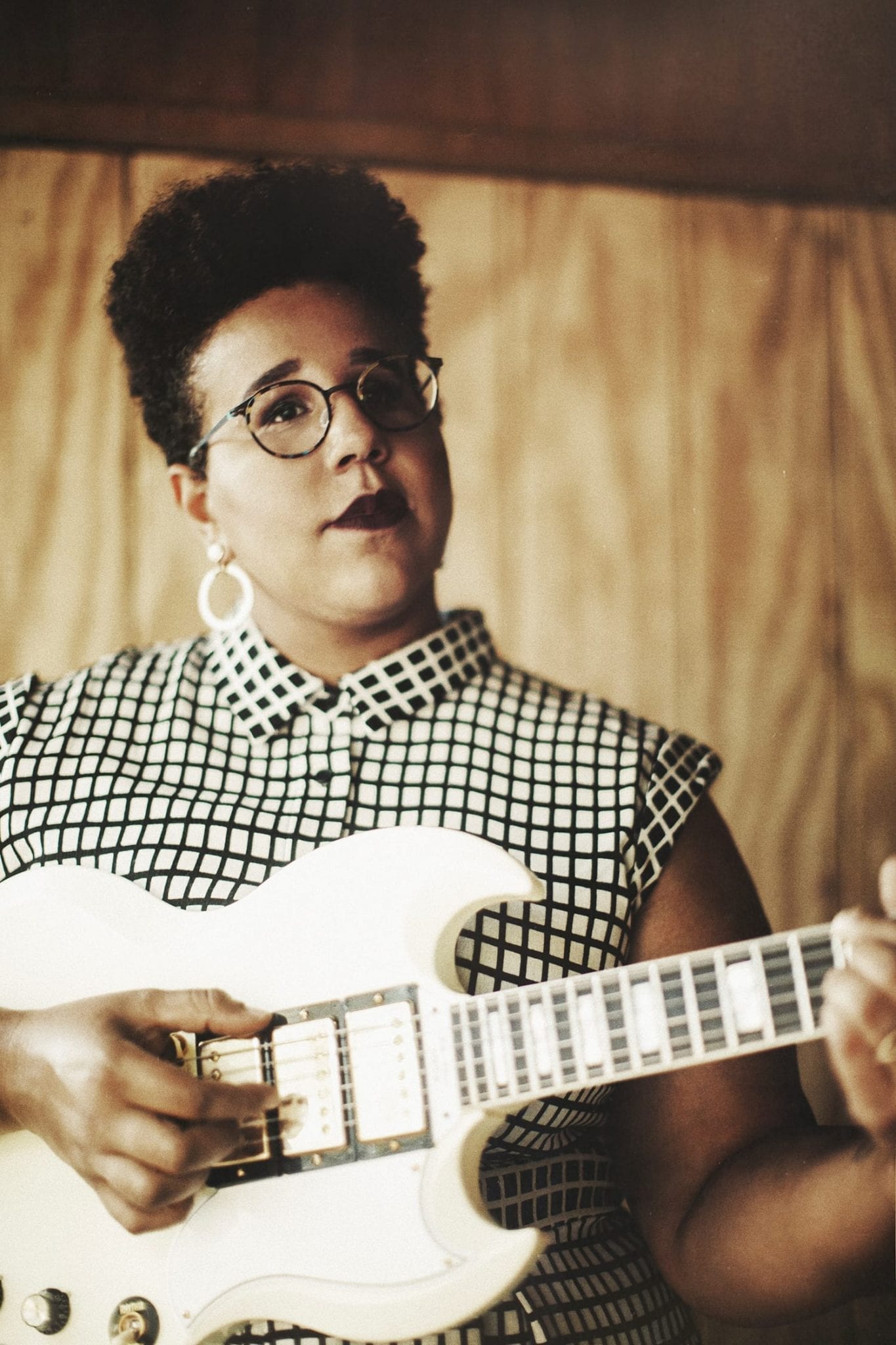
What’s your live setup?
I’ve got a ‘65 or ‘67 Silverstone 100 Watt amp and it’s been through a lot—it’s exploded twice. The amp is badass and I have two Silvertone cabinets. One has two 12”s and the other one has, I think, a big 15” speaker. I can’t run one speaker. I have to run two speakers or else they’ll explode. That’s what I’ve learned—they’ll catch on fire because of the power [from my guitar]. So that’s what I work with on stage. I like it because I got two options: I’ve got one that’s more clear and sharp, and I’ve got one that has a lot of bass in it. It doesn’t have very many options to equalize, which I like. I don’t want to mess it up.
Is it the Silverstone amps that make your sound so crystal clear?
Yeah. It’s also that I don’t overdrive it that much. I like to keep it at a certain point between volume and gain where it’s kind of like the beginning days when people were finding out about distortion, you know what I mean? Things just sound interesting, things are still clear and they don’t get super muddy. I used to play Orange Amps and [they] covered up a lot of my mistakes, but the Silvertones will show every single mistake so it’s made me a better guitar player.
Actually, what is the backstory of that guitar?
So, [Gibson] invited us into their showroom and said, “You can borrow one of our guitars to play on Letterman.” I was like, “Tight . . . I walk into the room, first thing I see is this green guitar. I was like, “I want to play that one!” And he was like, “Yeah, that’s actually the one guitar that you can’t use.” I was like, “ Oh come on, let me use it!” So he let me use it for the show and I had to return it. I was like, “Um, I’ll do anything to buy this from you.” I fell in love with it and that’s hard for me to do. And they were like, “Nah nah nah, it’s somebody else’s guitar, they said they’d never sell it.” But in the back of my mind I was like, “No, I can’t give up, I have to have it.” Because every time I would play another guitar I would think about it.
So this guy said, “If you ever play the guitar on Saturday Night Live, I’ll let you have it.” And he might’ve said it like encouraging us or he might’ve said it like, “Y’all probably ain’t gonna get on Saturday Night Live.” I don’t know, I’ll never know. But we played Saturday Night Live and they called me and said I could have it.
What came first, singing or playing guitar?
Well, I grew up in a household that just let us sing, so we did. Me and my cousin, we used to get buckets out and sit in the garage and when people walked by we’d be like, “Hey! Come listen to us sing and play!” We’d make a quarter. These people used to sell basically what is frozen Kool-Aid in a little cup, so we’d make enough money and go get ‘em. It started there.
Then I’d go to church and sneak in playing on the drum set when I could—I was totally terrified to do it ‘cause I didn’t want nobody to yell at me. So then it progressed there. Singing was just like whatever, I never thought I was that good at it until my mom said I could sing good. I don’t think I showed her a song ‘til I was like 17 or 18 years old. She had no idea.
I saw you play at Sasquatch and was really moved when you told the crowd that you’d never take moments like that for granted. Why is it important for you to express that? I feel like a lot of bands or artists don’t.
I’m just gonna be real about it—after you tour for a long time and play the same songs over and over again you can get . . . I guess jaded is the word. And you can forget what you’re doing and you can just forget all the opportunity of it and how amazing it is because it becomes your normal life. If people didn’t latch on to songs and like us and tell people about us, we wouldn’t get to do the things we do. And what we get to do is amazing. So it’s true, I don’t want to be an asshole basically. And the fans—they can help me not become an asshole.
How do you make sure that your songwriting isn’t affected by other people’s opinions?
Oh, genuinely just not liking their opinion. I think intuition is really important, especially with women, and if it ain’t right, it ain’t right. People can say it’s great all day, but if it bugs you and bothers you then fix it, do it how you want to do it. Because usually your intuition won’t lie to you.
Do you have any chord progression or shapes that your hands just naturally gravitate to and love so much?
Yeah, but I couldn’t tell you what they’re called. A lot of the players in my band will tell you about what they call “Brittney’s chords” [all laugh]. And we have things like the Jimi Hendrix chord which is like, some sort of 7. And then we have eagles claw [makes shape with her hand] which is some sort of 9. It makes sense! Little building tall building [all laugh]—that’s a chord. I get by with what I have to get by! The James Brown chord [makes shape with her fingers].
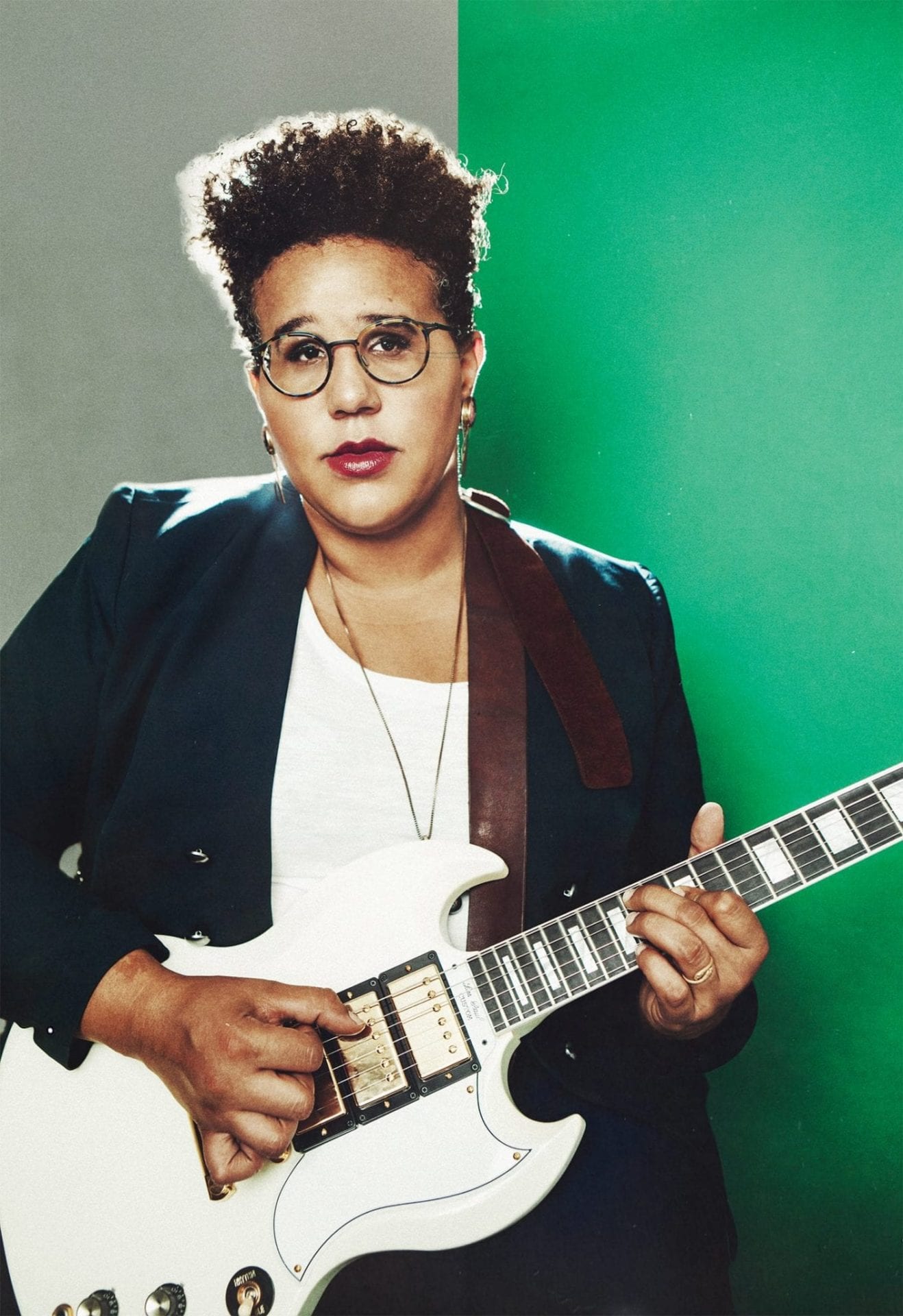
Oh, you do that one in “Give Me All Your Love”!
Yeah! I made them all up. It wasn’t intentional, I was trying to communicate them to other people. I’d be like, “You know, Jimi Hendrix!” [makes guitar playing noise] And then of course I know C, D, E F, G—all that stuff.
Have you been writing new music?
Yeah, I’ve written some things. Have I written Alabama Shakes music? Not yet but see, I like to explore what I want to listen to. What do I want to hear? It’s 2016—everybody’s doing this, doing that, and it’s starting to mix together. It’s exciting and then it’s boring and there’s all this shitty rap. What would be refreshing for me to walk upon? And so I like to meditate on that for a while. And then I like to put it into action.
Is there anything you want to play that you haven’t?
Maybe like ‘80s metal. It seems like it’d be really fun. I think I was made for it.
Volpe works as a visual artist and has composed for film, but many in the music world first got to know her as as the guitarist and co-founder of celebrated all-woman punk band The Lunachicks, and later as guitarist/vocalist of New York rock trio Bantam. This spring, she’ll make her solo debut with an EP titled, “Different Animal.” Along with the “snow creature” video, she also intends to release a video for each of the its five tracks. “I started to think about how I was going to release this into the world and I realized that so many people go on YouTube to find new music, so a lot of people will be introduced to me and to these songs for the first time through YouTube. I didn’t want to have a static image up there… If I think about it in terms of an art project more than a music video, then it becomes a whole package of things,” she said.
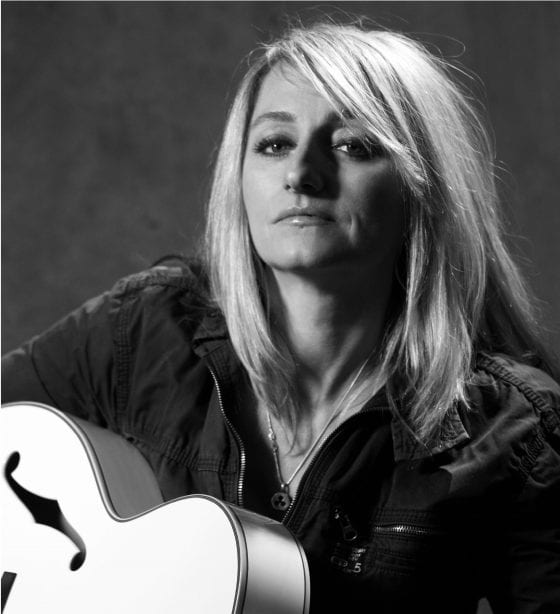
“Different Animal” has its roots in recording sessions Volpe did with Barb Morrison (Blondie, Franz Ferdinand) around 2004-2005. “When Bantam stopped playing in 2006, I decided to take a break from music. I had been touring and recording, and rehearsing—music had been my life since I was in high school. I thought, ‘I’ll just stop for a while, maybe a year or two, and then I’ll make a solo record.’ All of a sudden 10 years had passed and I realized I’d never finished that solo record,” Volpe said. “I had this epiphany around last September, and without thinking any more about it, I picked up the phone and called Barb. I hadn’t talked to her in years and I just said, ‘it’s time for me to pick it up where I left off.’ Except I didn’t want to use any of the old songs. I didn’t have a plan I just said, ‘It’s time. I’ll book the session and the songs will come.’”
The EP was recorded over a series of sessions, with Volpe writing and demoing songs, and building guitar stems in her home studio in between, which resulted in a diverse collection of tracks layered with chunky riffs, pop, and dance sounds. Although she wrote “everything” on guitar, outside of the vocals and guitar itself, the instrumentation on the EP is electronically programmed, a new experience for the veteran musician. One track, the slow-burning, loungy “Shine,” was even transposed entirely from guitar to electronics (with the exception of a lone touch of slide guitar). “I’ve done it for film scores before, but that’s the first time for myself that I wrote a song without any analog instruments. It is really nice to have that freedom. I’m interested in all kinds of sounds and now with technology we have so banks and libraries of different sounds you can dial up and put in, it’s incredible. It’s like making a painting—you have this wide palette of things you can add and blend, and it’s really cool.”
Along with creative liberties, her recording method also afforded her the freedom to create music on her schedule without assembling a band. “Getting a band together, teaching everyone the songs, and recording live is great, but I didn’t want it to hold up the process. Booking with Barb, I knew I could just walk in there with my guitar and that’s all I needed, and we could just see what happened.”
When she brings the project to the stage, however, it’s going to be a “different animal” completely. “When I perform it live that’s going to be another story. I want a band. I’d also like someone to be there to do samples off a laptop, but I want a live drummer, and a keyboard player… I do see a lot of electronic music, but a person with a laptop is not the same as a live band.”
She Shreds is proud to present the premiere of the hard-grooving first single from Volpe’s EP, “Different Animal.” Check it out now, as well as some of the gear behind her sound. More info about the release can be found here.
Marshall Jubilee: The main amp I’ve had since 1989—I love it so much—is a half-stack Marshall Jubilee, the originally anniversary series from 1987. It’s just the greatest head and it has been all over the world with me. So, that’s my main amp, and simultaneously, my husband built me a clone of the 1974 Marshall 18-watt. It’s kind of based off of Billy Gibbons’ (one of my favorite guitar players) amp.
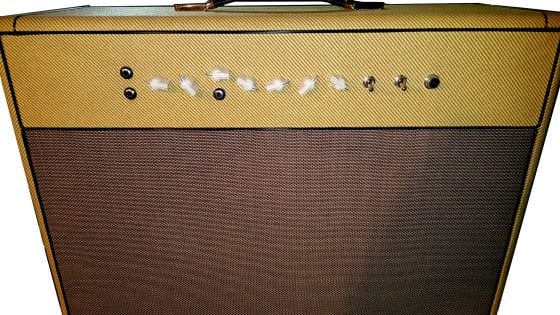
Switch Bone: I got a splitter so I can play both amps at what time, and I just got a new one called the “switch bone.” I can plug three amps into it at once. I have another amp, a bass amp [my husband] also built that is a clone off of a Sunn O))) amp. It’s crazy, and I can play out of three amps.
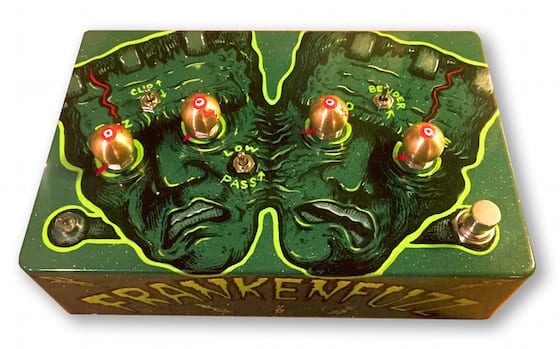
FrankenFuzz: [My husband] built, and I painted this fuzz pedal.
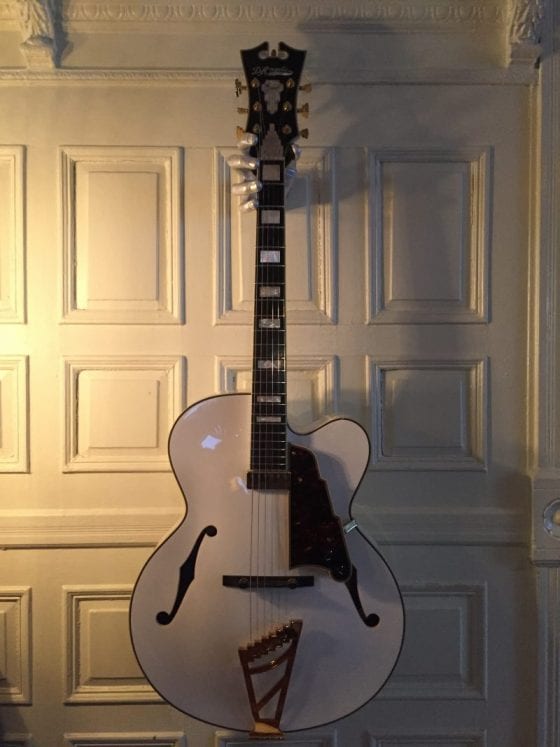
D’Angelico Guitar: I have no business owning a jazz guitar, but I fell in love with it. Barb has a hookup at D’Angelico, that just happens to be around the corner from the studio. We borrowed it for a clean, fingerpicking track, and I fell in love with it so I bought it. On the second track [“When I’m Gone”] there is a clean, jangly guitar, and that’s the D’Angelico.
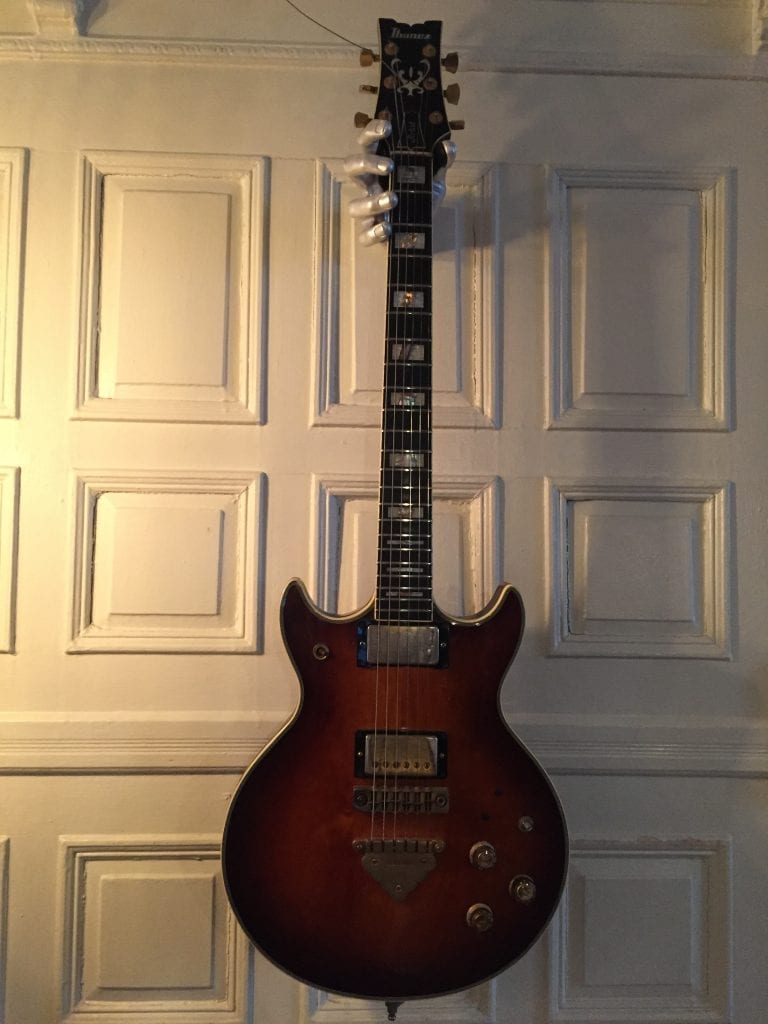
Ibanez Artist: My main baby is an Ibanez Artist. It’s not worth any money, it’s nothing special, but I just love it so much. I’ve always wanted an SG/Les Paul. A few years ago they came out with an archtop SG. I’ve never played one, but that was always my dream guitar and it did not exist before that. I used to play an SG but I would have to wear a weight. I put a five pound weight on my guitar strap because it was so light it drove me crazy. [The Ibanez Artist] Is an archtop and a double cutaway, it kind of looks like a Paul Reed Smith, I imagine they took a look at it.
We notice the gear bands we admire are using, and that’s our starting point, or we get lucky on Craigslist, or we head to a shop, play a bunch of stuff, and pick what sounds best. Whatever you play, the point is, if you’re anything like me there’s a good chance you picked it out more based on sound and feel, and less on technical specs.
If you’re ready to understand your guitar’s tonal character and learn to maximize that potential, the answer lies largely in the pickups. Of course, sound also affected by other aspects of design (wood type, neck construction) – but that’s not our focus right now. Maybe you’re dissatisfied with your tonal range and it’s time to switch your pickups out for a different design, or maybe you’re just curious and ready to do some systematic experimenting to reliably get the tone you want (or as close to it as possible), in any situation. Either way, tone perfectionists: this one’s for you.
Form and Function: Single Coil vs. Humbucking Pickups
Structurally, passive pickups (i.e., any pickup that doesn’t need a battery in it; these are far more common than active pickups) can generally be divided into two groups: single coil and double coil, also known as humbuckers. Humbucking coils have been around in PA equipment since the 1930s, but it wasn’t until that Seth Lover, a designer at Gibson, realized their potential as guitar pickups in 1955. What Lover discovered was that wiring two copper coils with reverse magnetic polarities out of phase effectively canceled the 60-cycle hum that comes through a lot of single coil pickups. This blog entry from Seymour Duncan has more detailed information on phase and polarity, and a previous Nuts and Bolts entry has some information on how pickups work.
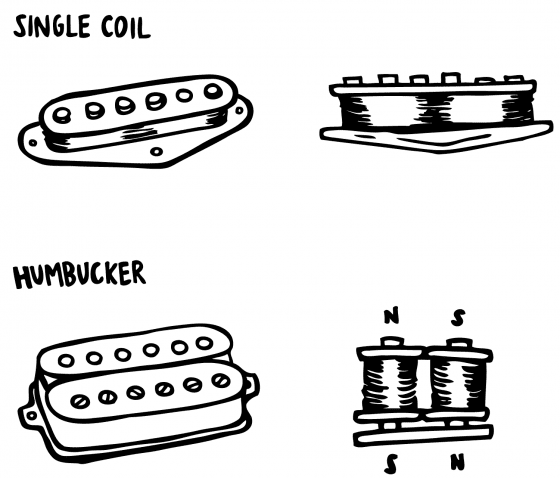
With this new design came new sounds as well. Humbuckers are responsible for that sound that many metal players worship in their Gibson SGs and the like. Here is a compare/contrast list for single coil and humbucking pickups:
Sound: Humbuckers tend to have a warmer sound and distort more readily. Single coils are generally brighter and cleaner, sometimes even twangy.
Output Level: Pickups are generally described as having either a “high” or a “moderate” (not “low,” low is bad) output. Single coil pickups are generally moderate output; humbuckers are generally high. The high output of a humbucker is what leads it to distort more readily: sending a stronger signal to the amp drives it to distortion.
Remember that these are tendencies, not rules, and that there are ways to counterbalance these properties using other elements in your setup. Some manufacturers (Seymour Duncan is a big one) even intentionally make high output single coil pickups designed to fit in a guitar not routed for usually-hotter, and always physically larger, humbuckers. There’s also the ever-popular option of P90s, which offer the crispness of a single coil but with a fatter midrange, and come in a couple of different shapes and sizes. Here are some tips for counterbalancing your pickups to tweak your sound:
Pickup Placement: What Does the Pickup on Your Guitar “Hear?”
Depending on the placement of a pickup on your guitar’s body, it will literally pick up or “hear” whatever frequencies are most prominent on the part of the string directly above it. Each pickup on the same guitar, therefore, will send a tonally unique signal through to the output. It can get a little complicated with interactions between pickup placement and pickup style, but here’s a breakdown:
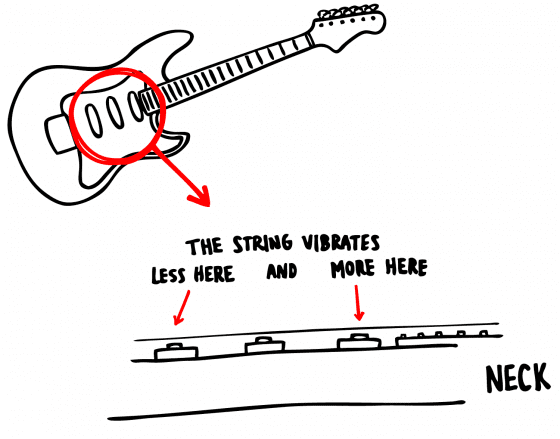
Before You Shop: Tips on Picking Your “Pups.”
Be methodical when shopping for pickups. Try playing guitars with different pickups through the same amp, ideally one similar to yours. The amp is held constant in this experiment, so you can really tell what differences are coming from the pickups. Narrow it down to a few favorite sounds. Take note of what pickup(s) you’re using, and in what position. If you use fuzz or distortion, try your favorites out through a couple of pedals. Guitar Center or a used instrument store with a large and varied stock is a good place to do this.
Once you’ve settled on which pickups you want, you can probably find them online – just make sure they’ll fit into your pickup slots, and if not, search for a similar sounding alternative. Hold on to your old pickups. Maybe see what happens with different combinations of old and new. Just remember that swapping out one thing at a time (pickup, pedal, amp setting, whatever) goes a really long way in experimenting to find the tone of your dreams.
Installing Your New Pup:
Out with the old:
Take the following steps one pickup at a time. Replacing one pickup at a time will help you avoid mistakes. Exercise caution and care when soldering: heat the component and not the wire, tin your tip, etc.
If you are getting no signal or a nasty buzz, you’ve made a soldering or wiring mistake. Open your guitar back up and look for poor solder joints or wires soldered to the wrong location. The entries linked in step 2 may be sufficient, but if you’ve lost track of where wires should go, you can probably find a wiring diagram for your particular guitar online. Here are a few common ones from StewMac.
Adjusting Pickup Height
Play with your new pickups. Check them out one at a time using your pickup selector. Is one too hot? Lower it. Not enough sustain? Lower it. The magnets in your pickups are what make them work, but if they’re too close to the strings, they’ll pull them to stillness when you want them to keep vibrating and keep ringing. If you’ve ever felt like your tone is weird and round when you’re playing on the higher frets, you probably needed to lower your pickups. I may sound like a broken record, but it’s so easy to change pickup height, and many players overlook this! That said, if your tone is muffled, you should raise the pups.
All you need is a screwdriver to fit the screws on either side of your pickups. Turning these to the left or right will let you raise or lower your pickups to maximize clarity, sustain and balanced tone. Generally, you’ll want the treble side of your pickup to be a hair higher than the bass side, but keep in mind that these are all adjustments on the order of 64ths of an inch.
If you’re still having clarity or sustain problems, it’s possible that your action is too low. This is another common problem you can totally fix at home, and we’ll get into how to do that in the next entry.
Happy modding!