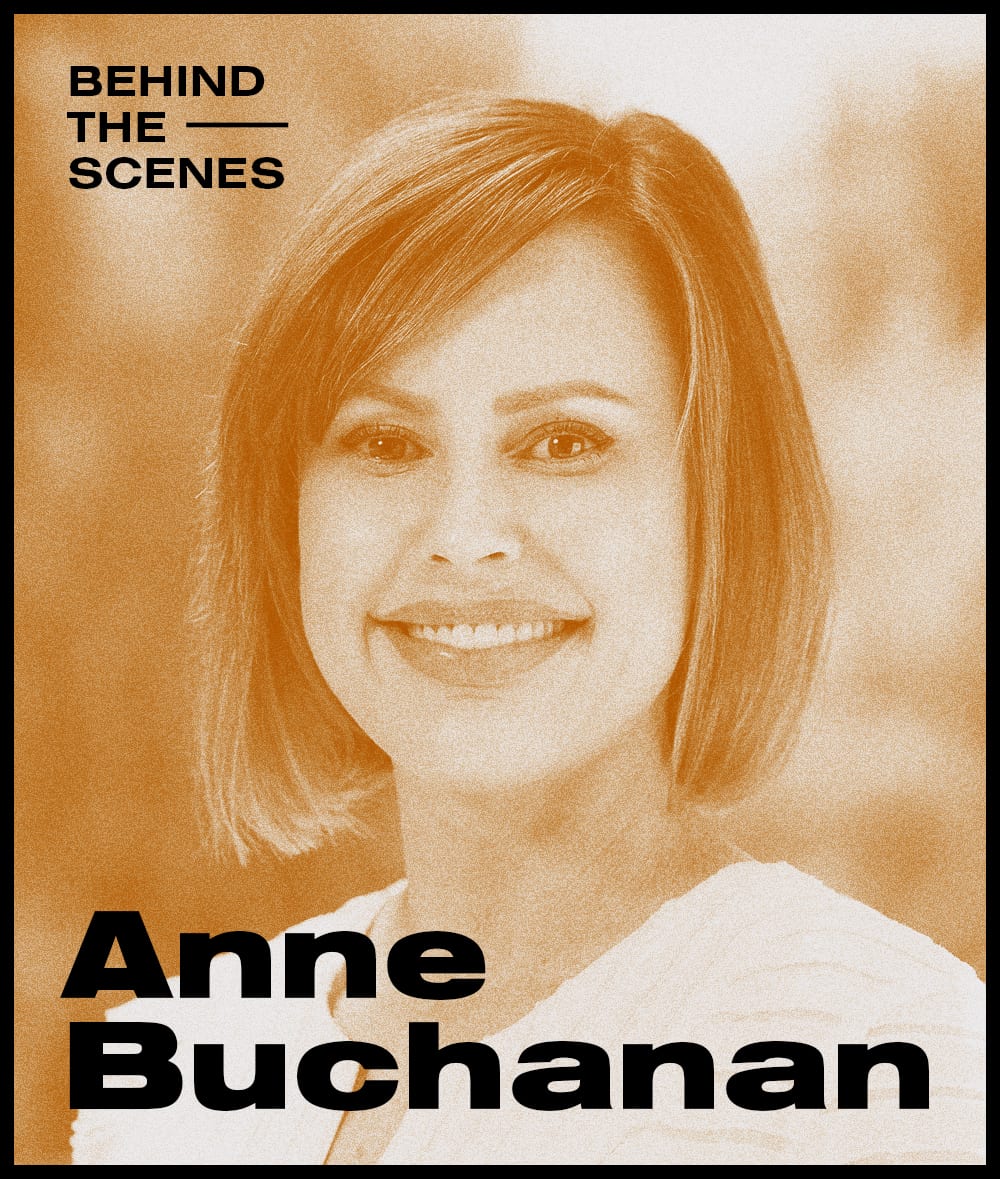
She was a single mother working as an assistant in a human resources department. Her talent and intellect was obvious. Initially tasked with setting up conference rooms and ordering lunches, her bosses gave her more and more responsibilities.
Would she interview candidates? Yes.
Would she write job advertisements? Yes.
Would she tactfully handle difficult workplace conflicts with the utmost diplomacy? Yes.
Would she transform an organization to ensure thousands of employees could deliver their best performance while loving what they do? Duh.
Which is why today Anne Buchanan is the Senior Vice President of Human Resources and Chief Human Resources Officer at Guitar Center. Responsible for formulating the company’s human resources strategy— no small feat, given the company’s almost 300 retail locations, $2.2 billion in annual revenue, and significant online presence — Buchanan took time out of her busy schedule to offer She Shreds readers insight into an array of topics.
Frank, funny, and thoughtful, read Buchanan’s take on how to tell a good manager from a bad one, what advice she wishes she could tell her past-self, what she loves most about working at Guitar Center, and what openings Guitar Center would love to hire for!
What are the values and principles that have guided you throughout your career?
Oh wow! I don’t know how many HR people you’ve interacted with in your career, but I’ve interacted with tons of them. You hear a lot about how HR people keep it close to the vest, and you don’t know what they’re thinking. I have seen that myself, but one of my guiding principles is to be honest. Not hurtful, but honest.
When people ask me how they’re doing, whether they’re my employee or someone else’s, I will tell them. I don’t like to catch people off guard. Being honest helps people reconcile what their next step will be and how they can move forward. As head of HR, there, of course, have been times where I’ve known about information that I can’t really talk about for one reason or another, and I’ll always protect that. But I want to build trust in the workforce and have people come to me.
I read a study recently about relationships in the workplace. The researcher found that unpredictable relationships were more detrimental to employee productivity than purely negative ones.
It’s so true. I’ve seen it. Having been on the periphery and middle of a lot of situations, I’ve seen that managers who are on a rollercoaster all the time are so much more damaging than just a bad manager. At least with bad managers, you know what to expect!
If you could give your past-self advice at the beginning of your career, what would you tell them?
I wouldn’t tell my past-self anything. Everything I’ve learned in every situation that I’ve been involved in, whether it was the right way or the wrong way has made me the HR person I am today. All of the learning has been super meaningful to me. I had to go through it and learn it.
That being said, if I had to tell myself anything, I would tell myself not to get so stressed out. I’ve learned to do that in my older years, but that would have been a good piece of advice for me back then.
How do you approach creating a comprehensive strategy for a company with over 300 stores and a ton of stakeholders? What is that process like?
It really is about keeping things simple. People like to naturally complicate things. At Guitar Center, when I started, my team kept asking me what our strategy is. Our strategy is the company’s strategy. For HR, it’s more planning around Guitar Center’s strategy versus creating our own strategy. We need to create plans that connect to the company’s strategy and drive that strategy. So if we’re growing our lessons business, HR needs to be mindful of our planning to make sure we have lessons instructors built into candidate pipeline funnels. We ask how are we training those instructors. How are we onboarding them? How are we making sure they have a tight connection to the business? It’s less about creating a huge strategy and more about creating projects and plans that support the company’s strategy.
What are you most excited to work on?
I’m excited about everything! The other day someone asked me why I was always so happy, and they may think I’m kind of a dork, but look at all there is to do! It’s fun. I’m really excited about learning and development right now. I see so much opportunity there.
We’re working on our first female leadership institute and I’m super excited about that. We haven’t fully developed the content or candidate selection process yet, but we plan to introduce it next year. It should involve about 15 women in leadership positions, such as a manager, vice president, director, or person with a position of influence. It will be a 12-week course that will talk about leadership, performance management, business strategy, and communication, and how to build those skills so you can apply them in your role in the workforce and beyond.
It’s fun to have a lot of people on my team that thinks and breathes professional development all day long. We ask, “how do we create something meaningful and impactful for our associates?” I don’t really think of it as only for Guitar Center, I think about it for their life. I don’t expect people to be at Guitar Center forever. I make it my mission that should they move on from their careers, we’ve taught them something so meaningful that they’re going to take with them for the rest of their life.
Yeah, when you teach someone certain skills you really can change their life for the better.
Yeah, and when you teach someone something, you can never take that away. It’s really meaningful for me and I get really excited about that!
What job opportunities exist at Guitar Center currently?
I’d love for you to tell your readers about this! Before I go into that, though, I want to touch on the fact that there are so much passion and love for music in Guitar Center. Even if you aren’t a musician and don’t play an instrument—I don’t play one, but I’m not going to lie, playing one does add a different passion to what you’re doing every day. So we love to have musicians come through the system because they have a different emotional attachment to the business than the average person.
In terms of opportunities, we’re hiring for support center positions, store positions, really everything. We’ve been growing and opening new stores. If you go to our careers page, there are a ton of opportunities that we would love for readers of She Shreds to know about and apply for.
We really want to bring in people who are passionate about what they do, are resourceful and have a love for music. I can’t think of a department that’s not hiring.
Are there any books, training, or mentors that have been helpful to you throughout your career that you think back on and refer to today?
Wow, I’ve been fortunate to have great bosses in my career. I had bosses that were tough on me. They were not afraid to say, “this is what you did and this is how you can do it better.” I’ve had them rewrite everything I’ve written.
While it’s easier to do something yourself sometimes, you don’t teach anyone that way. You don’t develop anyone that way. You don’t learn that way. To have bosses that took the time to sit down with me to say, “here’s what you wrote, here’s how you should have written it and here’s why” was so helpful.
I also had leaders that told me I was good and would go far in my career if I did this, that, and another thing. That helped me believe in myself and build confidence and propelled myself. That’s something I take with me everywhere I go, not just at work, even at home and in my personal life. I make sure that I give feedback all the time to my employees. Even if it’s time-consuming and could be easier to do it myself, I remember to give them feedback, because that’s how they grow and develop. The more I can create opportunities for employees the more I can do to lift myself up.
Before I hop off with you, are there any departing words you’d like to leave with our readers?
Gosh, departing words. You know, I really hope readers check out our career opportunities because I’d love to meet them. And gosh, you know, I’d also say be aggressive! Go achieve your dreams. Don’t let anyone stand in your way.
A pair of photos posted by Sleater-Kinney and St. Vincent this morning have been enough to get us (and the rest of the internet) buzzing about good things to come this year. St. Vincent is apparently producing the next Sleater-Kinney album to be released in 2019!
2019. @sleater_kinney produced by St. Vincent. https://t.co/dYEUDRvwHc pic.twitter.com/MOH6rpk5tj
— St. Vincent (@st_vincent) January 8, 2019
Looking back, the signs have been there all long. The legendary punk trio Sleater-Kinney, featuring our very first cover artist Corin Tucker, Portlandia’s Carrie Brownstein, and Quasi’s Janet Weiss, announced in January that they were working “very slowly” on a new record. Their last record in 2015, No Cities To Love, and its following sold out tour, was a triumphant return from a 10 year break in activity.
St. Vincent has shown love for Sleater-Kinney in multiple moments, sharing her own acoustic version of their song “Modern Girl”. St. Vincent has also appeared in multiple Portlandia sketches with Carrie Brownstein, and released these conceptual, comedic interviews scripted by Brownstein to promote her 2017 album MASSEDUCTION.
In the meantime we are blasting the Wild Flag album from 2011, perhaps the last comparable collaboration of guitar idols, featuring Mary Timony, Carrie Brownstein, Janet Weiss, and Rebecca Cole. Stay tuned for more details!
When you listen to Amy Winehouse, there’s no denying the insatiable power that comes through in her voice and lyrics. Arguably one of the greatest voices of our time, Amy Winehouse depicts the uncompromisable battle between struggle and triumph and her ability to carry that message across millions of people then, now, and forever.
As we celebrate her legacy, it’s so important to remember that Amy wasn’t only an incredibly singer and pop icon; she was a musician. “I can say that I’m a distinctive guitarist.” Winehouse says in a 2004 interview for a series of promotional videos for Fender. “I never really liked a lot of guitar bands…I loved the Velvet Underground, I loved the way they used guitars.” Adding that Carol King was a huge influence on her guitar playing, “A lot of chords I write are heavily influenced by the way [Carol King] and James Taylor would write…just quite warm chords, major chords. To me guitar is a very warm instrument and that’s why I love it as opposed to piano..it’s because it’s such a warm instrument.”
Below, watch Winehouse play guitar, and discuss how she started playing, her guitar influences, and how playing guitar on stage makes her feel strong.
How many times have you found a piece of equipment from 50 years ago that you held off from buying because of neck profile issues, or pickup selector issues—and then felt pangs of regret knowing you walked away from killer tone?
The recently announced Fender American Original Series offers an intriguing option for players who’ve had to ask themselves this kind of question. Developed by Fender’s team, the 2018 series offers “best-of-the-decade” versions of Fender’s most iconic instruments produced from the 1950s-1970s, including the Stratocaster, Telecaster, Jazzmaster, Jaguar, Precision Bass, and Jazz Bass.
While each instrument varies, the team paid a deep attention to ensure both neck profiles and pickups were period-accurate. To get a sense of this effort, workers at Fender used original-era construction techniques to carve and fasten each instrument’s fingerboards.
It’s no wonder that the original instruments, developed during the heyday of the mid-century modern design movement in the United States, have retained a timelessness that’s particularly attractive to players. With the updates made by Fender, these instruments live up to their slogan of “classic guitars made new.”
In honor of this series, She Shreds would like to highlight some pioneering woman guitar players who first played these instruments during the eras.
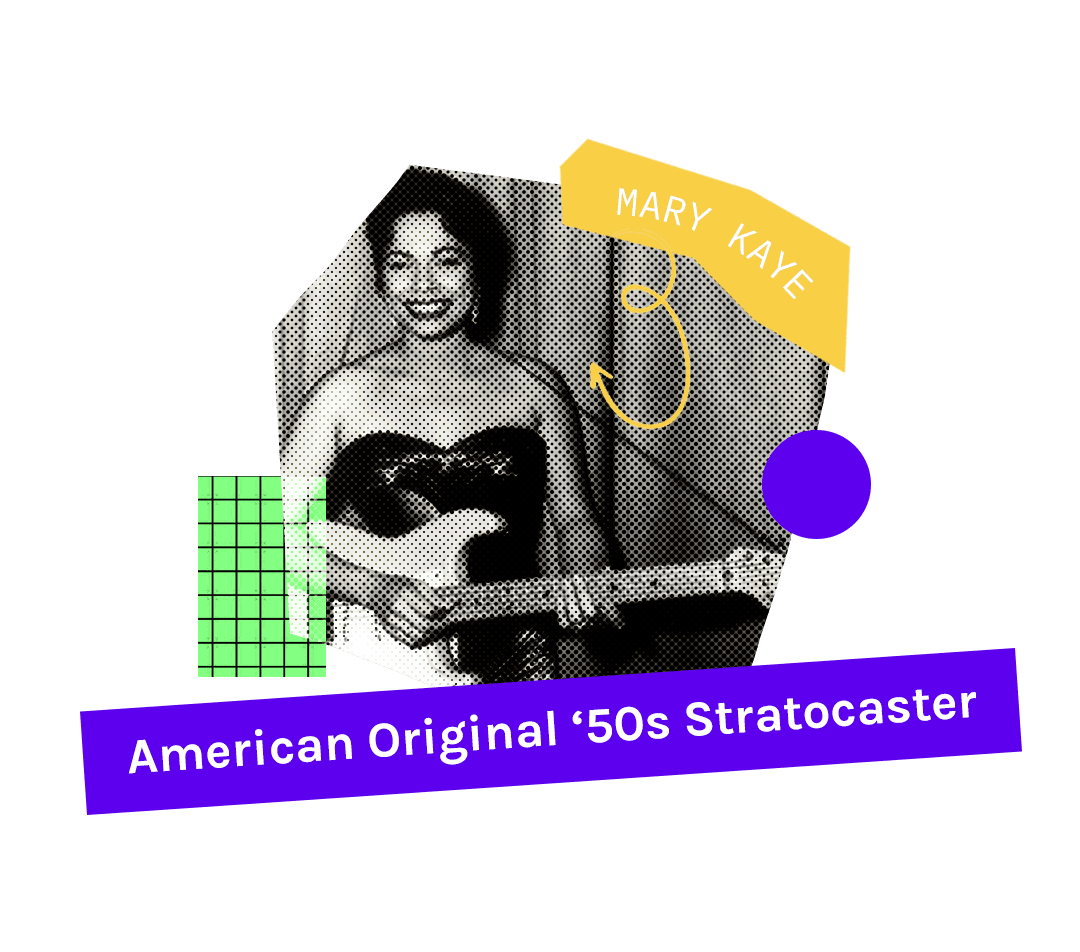
Born in Detroit, Michigan, Mary Kaye was a singer and guitarist whose performances helped cement the Las Vegas Strip’s reputation as a place for top notch playing. A player of a mid-50s stratocaster, Mary Kaye and her bandmates were known for developing a distinctive lounge music sound during their Las Vegas residency. Their act caught the attention of Fender reps, who took an iconic promotional photo of Kaye with a translucent white stratocaster in 1956.

A native and current resident of Beaumont, Texas, Barbara Lynn’s prodigious talent has led her to produce billboard-charting hits, tour with Otis Redding, James Brown, Ike and Tina Turner, and B.B. King. Active since the 60s, Lynn’s work has continued to influence modern artists, including Lil Wayne, who sampled Lynn’s “I’m a Good Woman” on his “Days and Days” in 2013.

Mary Lou Ball of Garage Rock band the Pleasure Seekers was known for playing a telecaster throughout the Pleasure Seekers’ tenure. As one of the first all female garage rock bands signed to a major label, the Detroit-based Pleasure Seekers brief career was packed with a number of criminally underrated singles, including “Never Thought You’d Leave Me” a track that showcases their tight playing and haunting melodies.
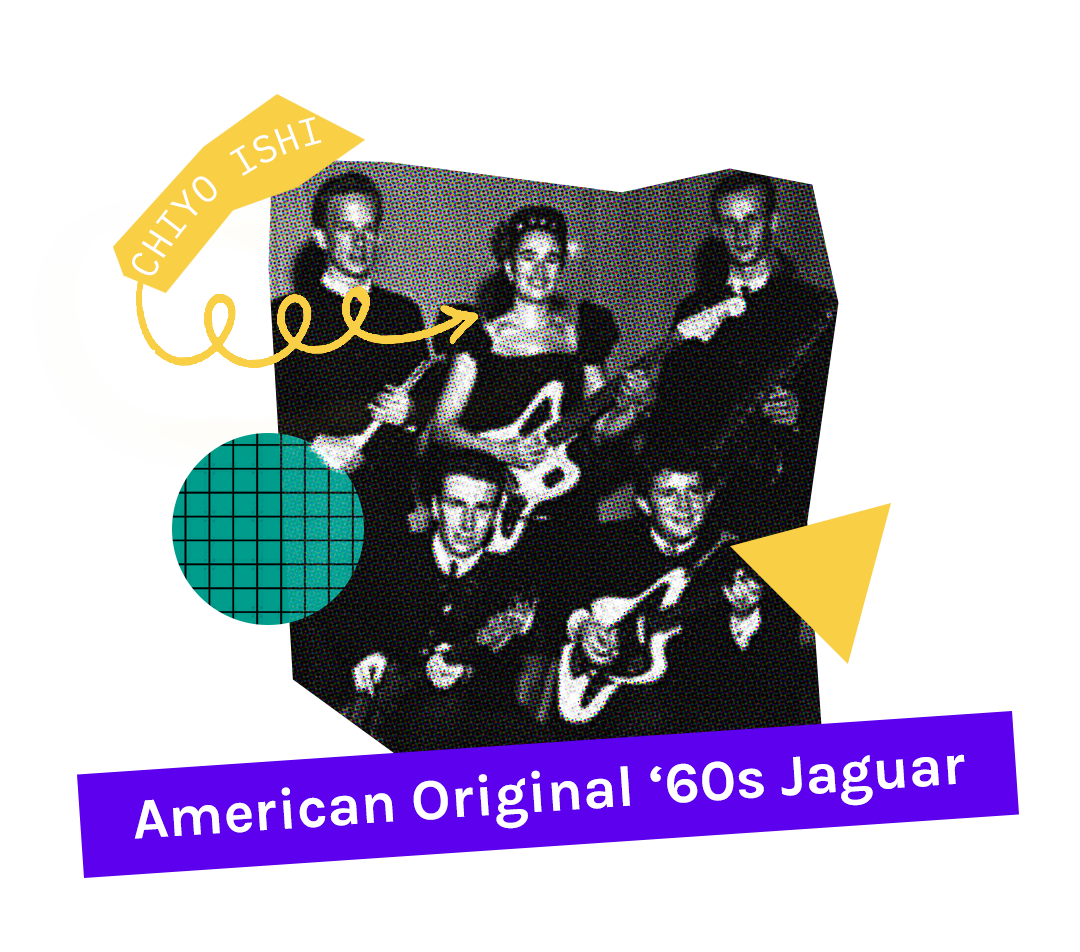
Chiyo and The Crescents was known as one of the only surf bands to include a female lead guitarist. Additionally, Chiyo was known to be incredibly mysterious and very little is known of her other than she owned a guitar store in Oxnard, CA in the early ’60s named “Chiyo’s Guitars and Drums,” in which she sold Fender instruments exclusively.
As lead guitarist for the group, Chiyo was known for playing a white Jaguar. When she wasn’t playing with the group, Chiyo ran the guitar shop above where she also taught guitar, steel guitar, accordion, and piano.

Originally a bebop jazz guitarist, Carol Kaye found her way into doing studio sessions to support her family. Her precise technique and signature Fender bass sound led her to being snapped up to play on records ranging from the Beach Boys’ Pet Sounds to soundtracks for Steven Spielberg.

Originally born in Manila, Phillipines, sisters Jean and June Millington began their career as musicians quickly after moving to the United States in 1961. In high school, the sisters had a vision to form an “all-girl” band which came to fruition as the Svelts. By the early 1970s, Fanny formed and became one of the first and most notable pioneering bands made up of entirely women to sign to a major record label and hit Billboard’s Hot 100. Jean Millington’s 1963 Precision Bass continues to be her number one bass.
It’s a Monday afternoon and Scroggins, vocalist and founding member of New York funk band ESG, is at home in Atlanta. Scroggins is in the midst of some time off due to a nasty knee injury after the band’s last live shows in 2015. Thanks to therapy and medication she’s now doing well, which is timely considering this year marks 40 years of live performance for ESG.
Having first hit the stage back in 1978, a time when Bruce Springsteen was crooning about the Darkness at the Edge of Town and Debbie Harry was headed to the supermarket to check out some specials and rat food, ESG’s primitive steps came from a far more humble beginning than some of their art school peers. While many refer to ESG’s homestead of the Bronx as a hub of musical innovation, Scroggins has slightly different memories of growing up there: “It was a bad time. There were a lot of drugs, gangs, and that kind of activity in the neighborhood. It was inspirational as far as if you didn’t want to be on those streets, you had to find another way out.”
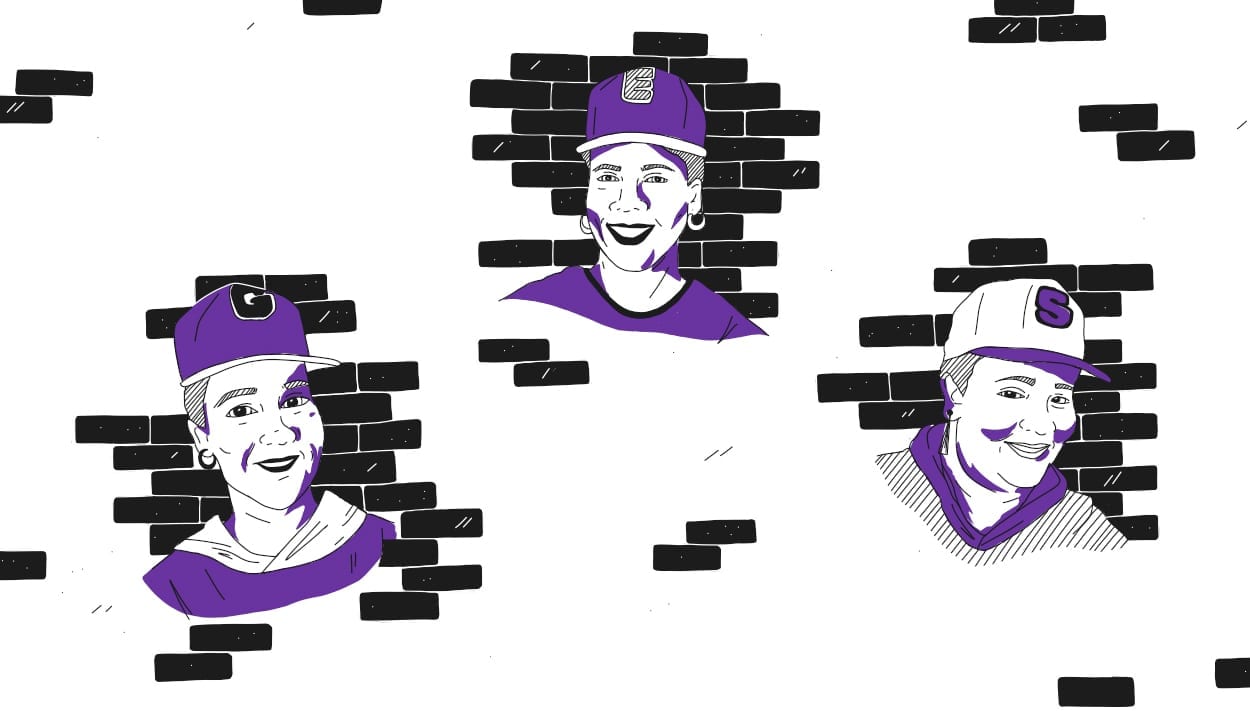
For Scroggins and her sisters, that escape was artfully provided by their best critic; their mother. In the late 60s and 70s, the Bronx saw a sharp decline in population and habitable housing after a wave of arson hit its streets. In a bid to keep her family distracted and in a more developmental environment, she looked to one of her eldest daughter’s biggest passions: “My mother didn’t want us hanging out [on the streets] so we were given a project,” says Scroggins. “She knew I had a love of music, and that my younger sisters would generally fall in line with what I wanted to do, so she got us the instruments. We used to like shows like Don Kirshner’s Rock Concert and we said, ‘We can do that.’”
Scroggins recalls the Christmas when she and her sisters came down the stairs to find the musical gifts under the tree. “I have old Super 8 movies, and whenever we do a [ESG] documentary, that will be part of it,” she says. With a meager income, it was a fairly modest set up: “She got what was affordable,” Scroggins adds. “I got a bass guitar, Valerie got drums, and Marie got tambourines.” There was, of course, one other member of the family at the formation of ESG: sister and original bassist Deborah, who would leave the band in 1987.

ESG’s bass-heavy minimalism was quite the anomaly within the greater NYC no wave scene, but not in Scroggins’ neighborhood. “Where we lived, there was a heavy Latino influence,” she recalls. “They would be in the parks playing congas, and instead of cowbells they would use coke bottles, so that really taught you how to improvise.” At seven, Valerie Scroggins began to rap at the drum kit. Three years her senior, Scroggins tried her hand at both bass and guitar with minimal guidance.
The family might have been gifted with instruments, but not so with imitating what they saw on those shows: “Watching it on TV was easier than the reality, you had to focus!” The sisters quickly realized there was a far more efficient workaround for their creativity. “We first attempted to play cover songs, and that was horrible,” Scroggins jokes. “I realized that if I wrote my own songs nobody would know if we messed up.”
The challenges continued when it came to hitting the live touring circuit. “Once you got out there and started playing, you realized some clubs or venues had liquor licenses, or what they would call cabaret licenses, so you couldn’t be in the club if you were under 18,” says Scroggins. But of course the band maestro, Mrs. Scroggins, had that covered: “My mother came with us when we performed. She’d sit backstage and make sure we left after our sets. Like always, she kept us on the straight and narrow”.
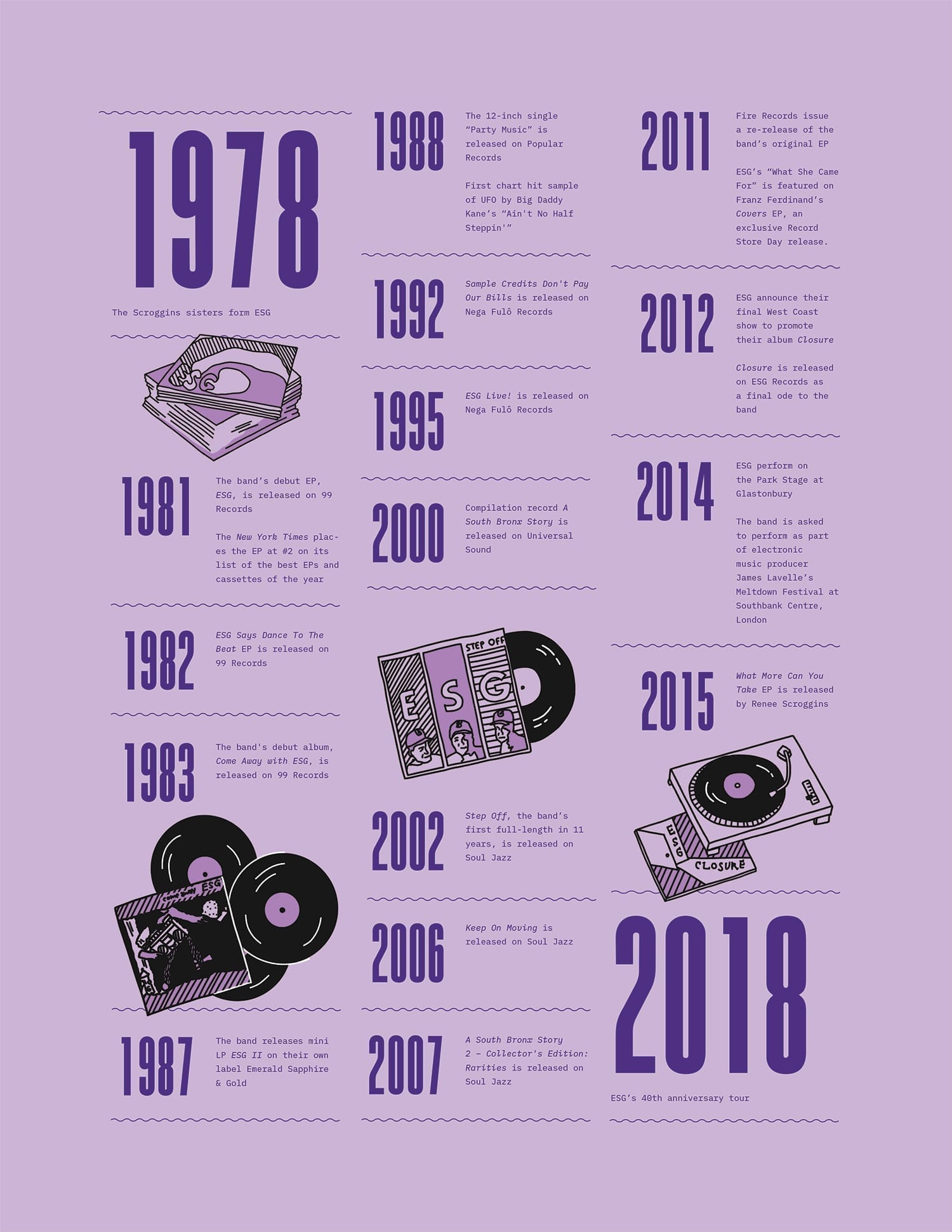
ESG’s 40th year landmark is an apt time to reflect on their achievements and the accolades they’ve racked up. The legendary group played every hip New York club, including The Mudd Club, The Danceteria, and the famed Paradise Garage in New Jersey where cult-followed DJ and dance music pioneer Larry Levan chose ESG to play the closing night. “Some venues have come and some venues have gone,” Scroggins says. “We’ve actually been around longer than some of the venues.”
ESG’s unstoppable funk force has remained a constant, and Scroggins believes that it all comes down to authenticity as an artist: “We kept true to ourselves, we kept it minimalist, we kept it funky. I didn’t try to go with the trend of the moment. We kept to ourselves musically.” One of their best known characteristics might be their transcendence of genres.
Their track “UFO” is one of the most sampled songs of all time; the looping whirr of its guitar sound has been referenced by everyone from Grime Mob, to Wu Tang Clan, to indie rockers Liars—meaning, while you might be unaware of the Scroggins sisters, you’ve undoubtedly heard their string skills. This has led to contentious situations for the bandmates, who, in 1992, released an EP titled Sample Credits Don’t Pay Our Bills.
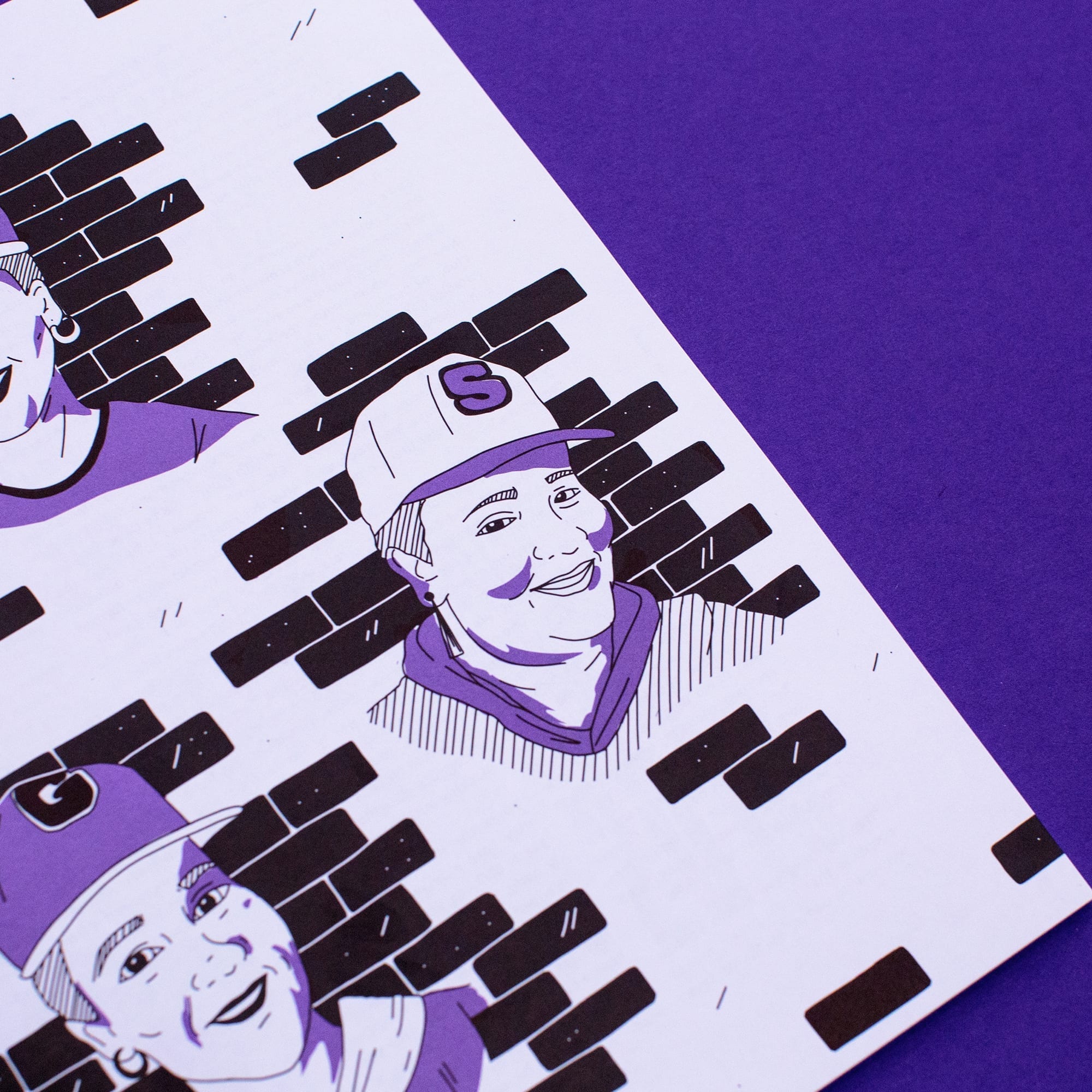
“The only thing I’ve always said to people is that ESG’s music makes you want to dance,” Scroggins says. “Other than that, I don’t like to put us in a genre or a box. We are ourselves.” And dance they do. The band’s first recordings offer a take on the classic 60s girl gang back-and-forths of Motown girl-group, Martha and the Vandellas. “You’re No Good” slays a self-fulfilled lover with some clattering congo fills, while the bass line on “Moody” conjures up a visible shoulder shuffle.
Both were part of the band’s debut EP, ESG, released on 99 Records in 1981, and were recorded in the first take; when they finished those two, their recording engineer had three minutes of time left, so they decided to lay down the distinctive downstrokes of “UFO” too.
The band’s characteristic sound continued on 1982’s ESG Says Dance to the Beat of Moody EP and their first full-length album, 1983’s Come Away With ESG, both released by 99 Records. After this release, the group disbanded, but they unexpectedly re-formed in the early 90s and issued a self-titled 1991 compilation of previously released material. Nine years later, at the turn of the millennium, the band released a career spanning compilation, A South Bronx Story, on the label Universal Sound.
Two years after that the band came back together in a new guise with their first fresh material in nearly two decades. Step Off, released in 2002 by Soul Jazz Records, found Scroggins’ daughter Nicole on bass duties and Valerie Scroggins’ daughter Christelle Polite plucking out abstract riffs on guitar.
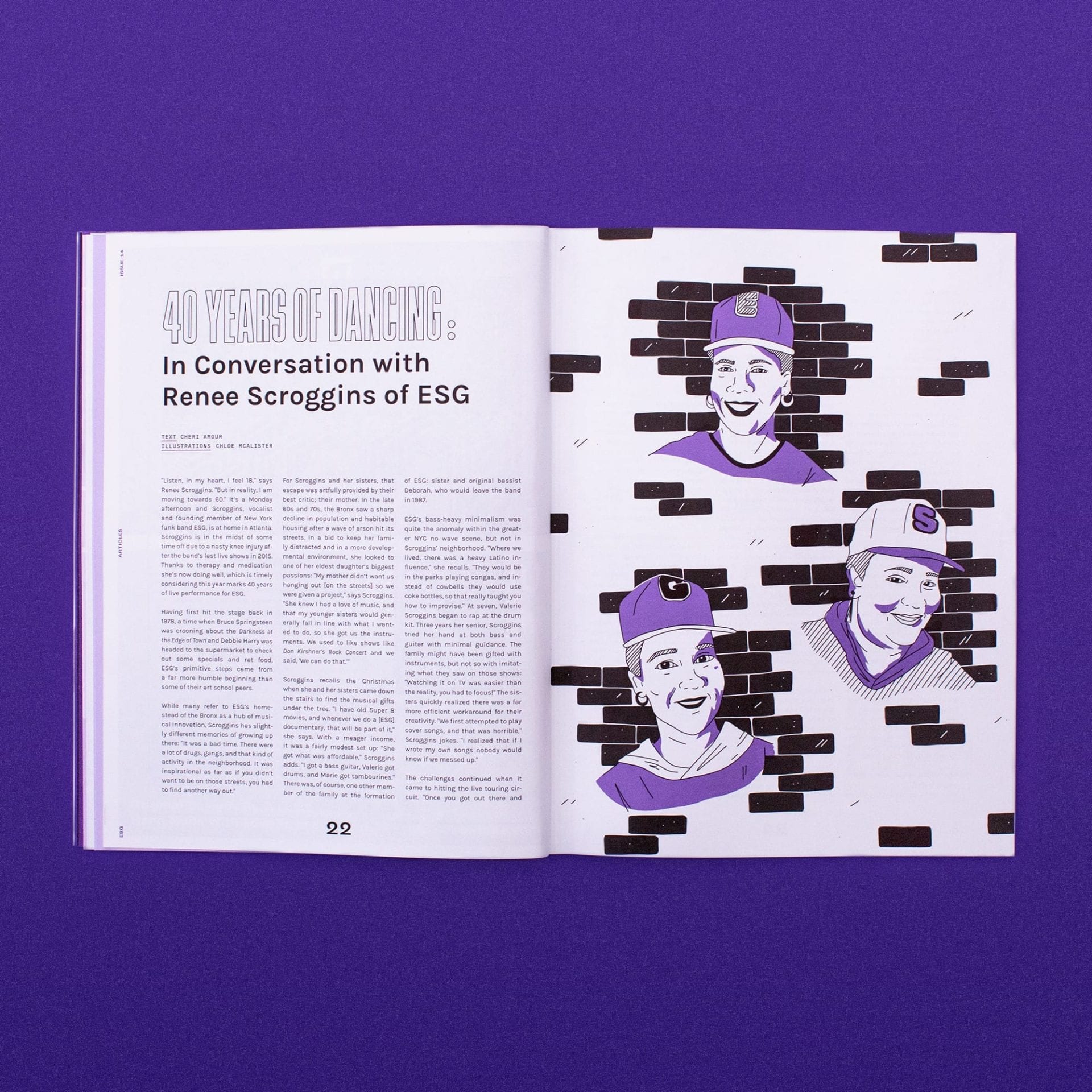
While the iterations of the group may have changed throughout the years, ESG has always been a family band, although it wasn’t always intended to be a matriarchal movement. Scroggins, who now performs with her daughter Nicole and son Nicholas, says, “I just happened to have a bunch of sisters. It was about the music, not our gender. On the same basis, I am happy that I have [had that experience], especially lately seeing so much in the news about sexual harassment. And it never hurt to have your mother at certain places.” ESG has kept both a loyal following and inducted fresh-faced listeners into the fold, which hasn’t gone unnoticed by Scroggins: “Knowing that fans are still dancing and enjoying themselves, that’s what makes me feel good.”
Despite her new Georgia location, Scroggins’ Bronx roots shine through her New York twang and upbringing. It’s this tenacity and resilience—along with the full-bellied laughter that punctuates her storytelling—that has kept ESG on the road, performing across the globe, and releasing countless records for the past four decades. To mark their milestone birthday, ESG will take their music down under to Australia with their latest release, What More Can You Take?, self-released by Scroggins in 2017.
However, Scroggins may not be touring much longer: “I tell my kids I’m getting tired of traveling. I love to perform, but it’s those long trips. I’ve been doing this since 1980. Flying begins to put some wear and tear on the body.” But she is gracious for the opportunity to take on such globe-trotting adventures, not to mention pleasing the sisters’ eternal advocate: “One of the greatest things I can say, and it truly made my mum proud, was that we were able to travel the world on our music.”
Regionally popular denominations had preserved the various folk music practices brought to the States by slaves and settlers alike; over time houses of worship served as incubators where new forms of musical expression took shape. While many influential guitarists and singers crafted secular visions that ultimately inspired the birth of modern popular music, Sister O.M. Terrell used early 20th century innovations and playing styles to add a high-energy touch to sacred music.
Born Ola Mae Terrell in 1911, the Atlanta native experienced a salvation experience at age 11 while attending a Holiness Movement tent revival, a type of gathering where worship songs were played on whatever musical instruments were at hand. By the Great Depression, she had become a blues-minded street musician who used her talents to evangelize passers-by, singing original compositions such as “God’s Little Birds,” to spread promises of both eternal security in Christ and more prosperous times here on Earth.
Terrell eventually went commercial and recorded several sides for Columbia Records. Her spiritual fervor remained intact in the studio, which made for some of the most moving recordings of the Delta blues and gospel genres.
Many of Terrell’s songs, namely “The Bible’s Right,” find her playing guitar with open D tuning (referred to sometimes as Vestapol tuning), and a slide. On other songs, including “Life is a Problem” and “How Long,” she utilized cross-note tunings to convey messages of hope through the lens of unwavering faith.
When the 1960s folk revival gave new life to the careers of various practitioners of African American gospel, Terrell’s talents and contributions went largely unnoticed. What a missed opportunity, as Terrell’s gospel music would’ve sounded at home on the same festival stages as the Staples Singers or Sister Rosetta Tharpe.
Terrell’s music and ministry remained obscure through the final years of her life. An article by musicologist and author Bruce Nemerov for NPR covered the time he was asked by a music publisher to find Terrell and deliver royalties owed her from an off-Broadway play featuring “God’s Little Birds.” Nemerov’s search ended at a Conyers, Georgia nursing home, where Terrell spent her final years. She passed away in 2006 at age 95.
As an overlooked talent representing the musical approaches of pre- and post-War blues, the late Sister O.M. Terrell deserves to finally be remembered as a Southern blues and African American gospel innovator and legend.
I remember seeing the band perform “Zombie”—a protest song written solely by O’Riordan about an Irish Republican terrorist bombing in 1993—on the David Letterman show in 1994, putting a name and a face to the Cranberries songs that reverberated in the background of my youth. Along with O’Riordan’s vocals and outfit, her guitar playing during this performance—on a Gibson ES-335 electric guitar—was aggressive and powerful. The guitar itself seemed to assume the position of a weapon, ala Woody Guthrie’s infamous instrument emblazoned with the warning, “This Machine Kills Fascists.”
In 1989, Limerick, Ireland-based rock band, The Cranberry Saw Us, posted an ad looking for a new lead singer after their original vocalist left the group. O’Riordan auditioned and soon landed the gig. Among the first lyrics she wrote for the group (which soon changed its name to The Cranberries) were for the song “Linger,” which would become an international hit upon its release on the band’s 1993 debut album, Everyone Else is Doing It, So Why Can’t We?. Along with her vocal and songwriting contributions O’Riordan played guitar, and later keyboards, in the band.
As the Cranberries rose to fame, O’Riordan became one of the most iconic rock musicians of the era. The band’s mix of alternative rock and pop with hints of Irish folk, topped with O’Riordan’s heartfelt lyrics and captivating voice, made them a mainstay on MTV, radio, and the international stage, but never failed to touch fans on a personal level.
O’Riordan performed with the Cranberries for 13 years before the band went on a hiatus in 2003. They reunited in 2009. In between, she released her solo albums Are You Listening? (2007, Sanctuary Records) and No Baggage (2009, Cooking Vinyl). She was reportedly working on new material at the time of her death.
Much of O’Riordan’s music, especially her work with The Cranberries, has transcended the test of time and continues to influence musicians around the world. Japanese Breakfast sometimes plays “Dreams” during their live set, while the Philadelphia indie rock supergroup Dove Jeans and Sad Shamir (including Shamir, The Dove and the Wolf, Queen of Jeans, and Sad13) recorded a video cover of “Linger” last year.
With her Irish accent, Celtic inflections, and unique musical talent, Dolores O’Riordan created an individual voice that will never be recreated or forgotten.
Born Kristy Marlana Wallace, the future Poison Ivy first met Lux Interior (born Erick Lee Purkhiser) in 1972 at Sacramento State College. After a brief stay in Lux’s hometown of Akron, Ohio—an American punk hotbed of sorts that also produced Chrissie Hynde and Devo—the pair made it to New York City where they began the Cramps in 1976. The band quickly gained a following as they explored the darker side of ‘50s culture with a rockabilly-influenced sound that blended early rock ‘n’ roll rebelliousness with rural country and blues influences. Working with producer and Memphis rock legend Alex Chilton the Cramps released their first EP, Gravest Hits in 1979, and their debut album, Songs the Lord Taught Us, the next year.
As songwriters and performers, Lux and Ivy exploited the idea that rock ‘n’ roll was “the devil’s music,” first with classic horror movie imagery (“Human Fly”) and later with songs filled with double entendres (“Does Your Pussy Do the Dog?”). While musical trends and tastes changed by the 80s, the Cramps never lost their vision or sense of danger.
In 1980, the band relocated to Los Angeles where they recruited guitarist Kid Congo Powers, and by the mid-80s, they added another new wrinkle, with Poison Ivy briefly serving as the group’s first bassist, both live and in the studio. Although a revolving door of bassists followed, Poison Ivy’s guitarwork remained the backbone of the Cramps’ progressive take on retro sounds.
As the grunge era ushered punk music back into the limelight, the Cramps remained as relevant as ever, finding new listeners among impressionable Nirvana fans and late-night TV viewers. They even appeared on a 1995 episode of Beverly Hills 90210.
In the years that followed, Lux and Ivy kept writing memorable songs, playing raucous sets, and building their cult following until Lux’s sudden death due to a heart condition in 2009. Along the way, Ivy set the standard for many punk guitarists, revving up comparably slow-chugging rockabilly and early rock and pop riffs, first on a 24-fret Bill Lewis guitar before switching to a classic Gretsch 6120.
Along with defining a path for how musicians can revive their favorite elements of rock’s rich past into their own distinctive sounds, Poison Ivy’s prominence as the lead guitarist and songwriter in a co-ed band provided music fans of the 70s, 80s, and beyond a different kind of rock role model. For all of this and more, she ranks high among the most influential punk rock guitarists of all time.
With a closer scan, you might notice it took three entire decades before Barbara Mandrell became the only woman steel guitar player to claim her stake in the Steel Guitar Hall of Fame when she was inducted in 2009. The steel guitar has become associated with country music as its signature howl, and Mandrell is one of the genre’s many influential pioneers. The instrument is most often laid horizontally on the guitarist’s lap and played by plucking the strings with one hand while pressing a smooth, hollowed metal bar down on the strings with the other hand to change the pitch. Because of its method of play, it’s known colloquially as the lap steel guitar (meanwhile, the pedal steel guitar is also played horizontally but its large frame is most often held up by legs and the tone is changed with pedals and levers).
The steel guitar was developed on the islands of Hawaii before its twangy resonance of the became associated with the sounds of American roots. In the mid-1880s, according to folklore, an 11-year-old Hawaiian schoolboy named Joseph Kekuku was strolling along a set of railroad tracks, Spanish acoustic guitar in hand, when he found a loose bolt in the street. He discovered that when applying just the right amount of pressure to his guitar, a ghostly, heart-wrenching wail reverberated. By the 1920s, this style had taken over Hawaii, and musicians from across the mainland flocked to adopt the tricky technique, resulting in the recording of the first country music songs featuring the Hawaiian guitar.
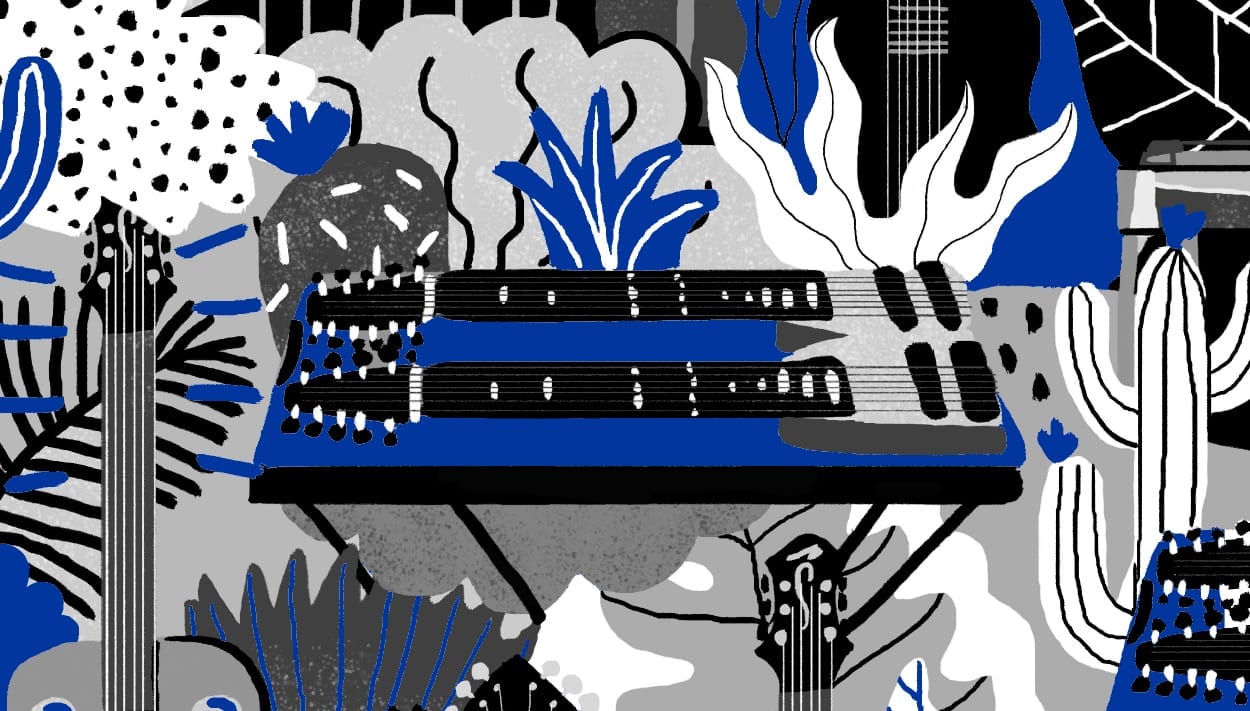
With amplification thrown into the mix in the 1930s, the steel guitar eventually became the first manufactured electrified string instrument. Over time, it would serve as the foundation for a multitude of creative evolutions, as made evident by the addition of multiple necks or the invention of a frame with pedals for playing while standing.
Despite the widespread, historical reach of the steel guitar craze across the nation, women steel guitarists often lack recognition for their contributions. This disparity becomes even more obvious when narrowing it down to women of color, despite the instrument’s island origins.
In April, we published an article on our website that detailed the contributions of Annie Kerr, the first professional Hawaiian woman steel guitarist and frontwoman of an all-woman band. Below is a list of ten additional women steel guitarists in the U.S. who pioneered and mastered the instrument. While a few of these guitarists are well-known household names, there are far more who deserve acclaim. The absence of adequate archiving and preservation has made it so that the legacies of most of these women are currently preserved in the depths of the internet by fervent steel guitarheads and their internet fan forums.
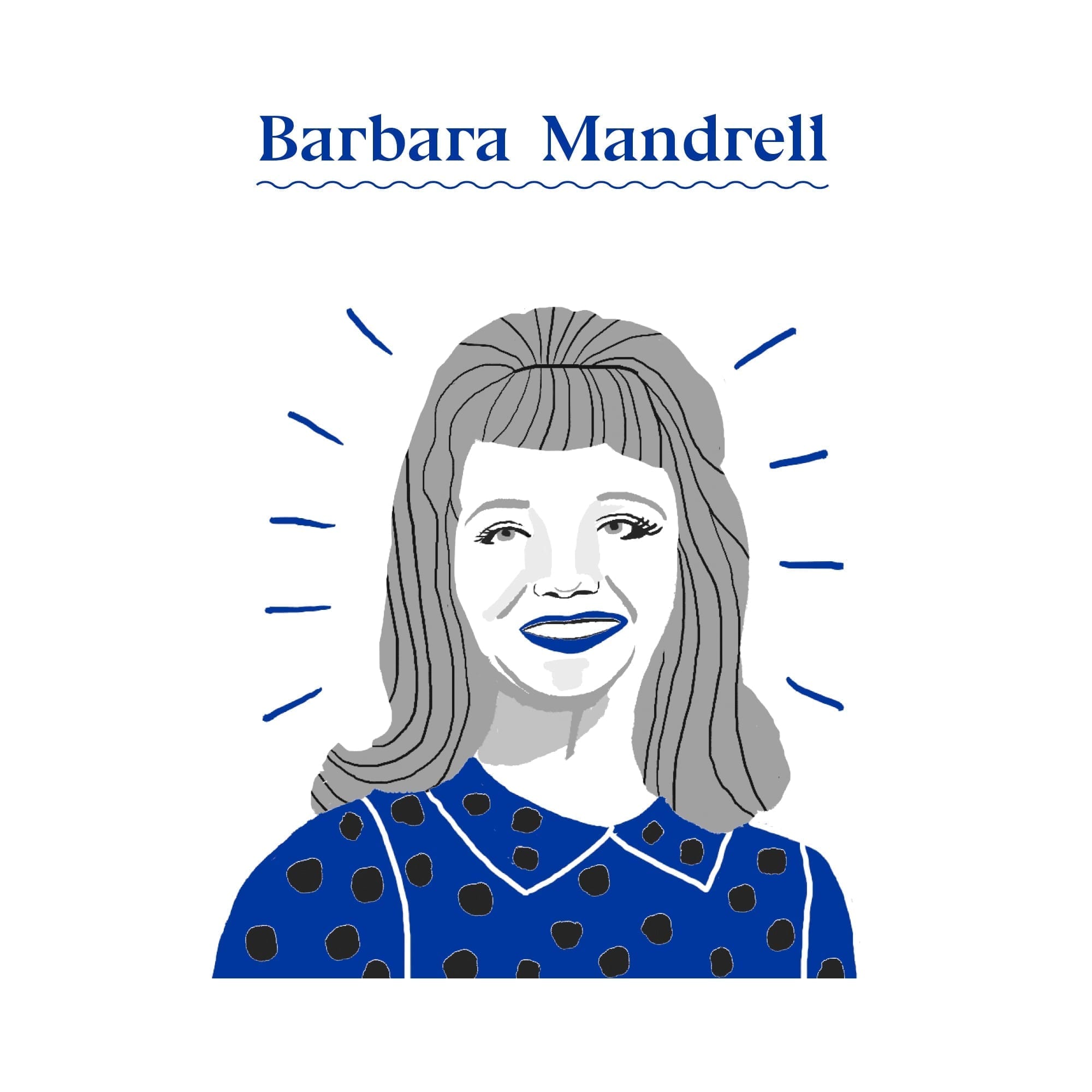
Barbara Mandrell
A professional musician since the age of 11, Barbara Mandrell is one of the most successful vocalists in country music and is known as the “Sweetheart of Steel.” The Texas-born musician has received numerous accolades during her career, including seven American Music Awards, nine Country Music Awards, spots in the Country Music, Steel Guitar, and Musicians Halls of Fame, and two CMA Entertainer of the Year awards—making her the only woman country musician to do so. In addition to plucking on the steel guitar, Mandrell is also proficient at playing the accordion, saxophone, Dobro, and banjo. She retired in 1997.
Cindy Cashdollar
Raised in the small town of Woodstock, New York, Cindy Cashdollar’s resume is lengthy and well-decorated. Making history as the first female inductee in the Texas Steel Guitar Hall of Fame in 2011, Cashdollar paid homage in her acceptance speech to her mentor, steel pioneer Marian Hall, who is credited with bringing the sounds of country swing to the West Coast in the 1950s and played on a variety of country TV shows like Town Hall before she passed in 2008. While playing with the country band Asleep at the Wheel for nearly a decade, Cashdollar earned five Grammys as well as a place in the Texas Music Hall of Fame in 2012. She’s made a lifetime of plucking professionally from lap steel guitar to the Dobro and has shared her extensive knowledge by way of a four-series instructional DVD set she issued in the early 2000s. She continues to tour extensively today, and has played in the bands of Bob Dylan, Van Morrison, and Ryan Adams.
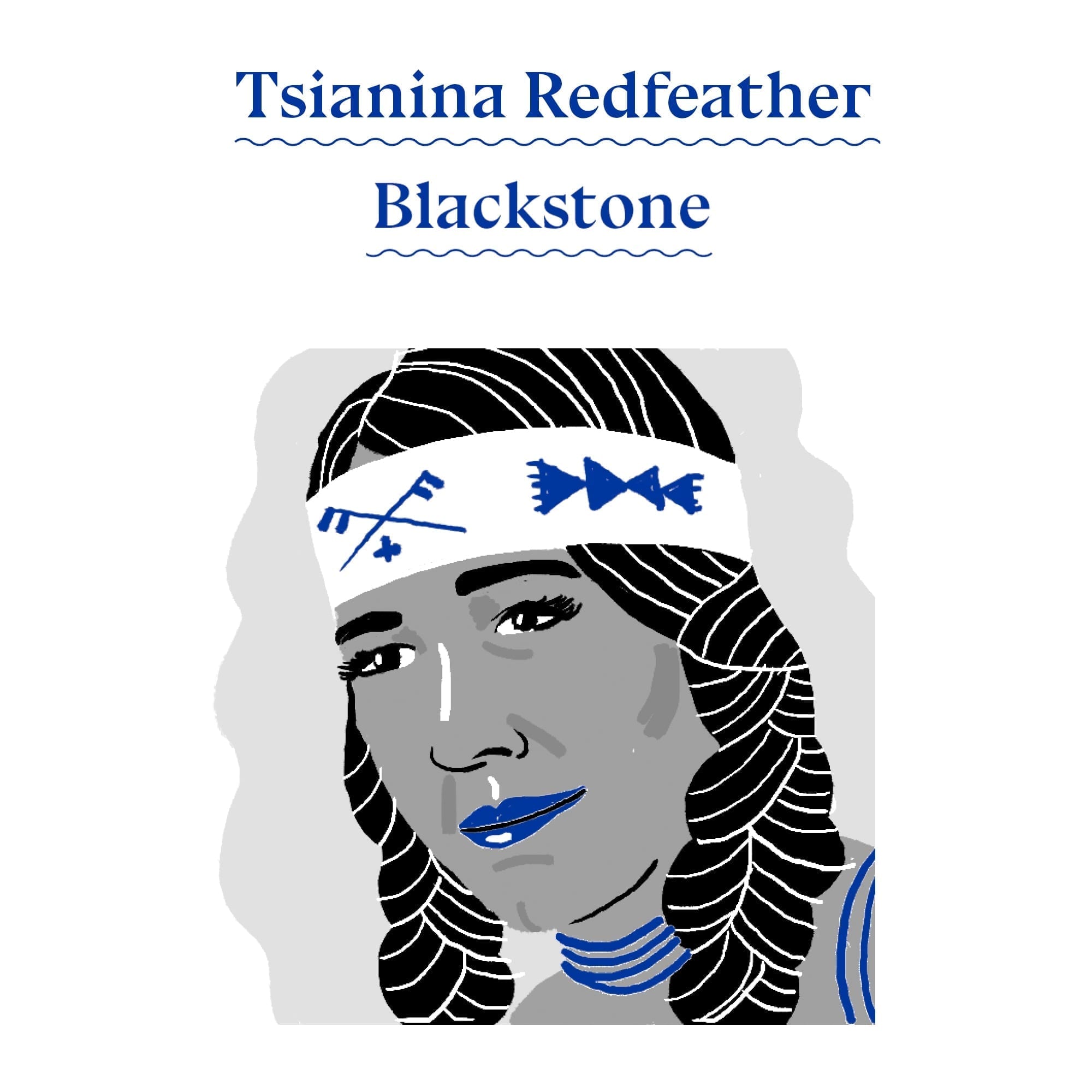
Tsianina Redfeather Blackstone
Before country music co-opted the steel guitar, a youthful Tsianina Redfeather Blackstone of the Creek and Cherokee tribal nations was captured on film playing the Hawaiian-style steel guitar to an intimate audience of soldiers in 1918. It’s speculated that this footage is the oldest known recording of this style of steel guitar, and a clip of it can be found on YouTube. Gaining notoriety for her velvety mezzo-soprano voice, Blackstone continued touring as a professional singer and musician for decades, before retiring in 1935. She later died in 1985 at the age of 102.
Kaki King
In the 14 years since Kaki King released her first album, the guitarist and composer has garnered a cult following for her bold, innovative sound and continued authenticity. Implementing tricky techniques, like high-speed guitar fanning and a multitude of open tunings, King has become synonymous with experimentation. The lap steel guitar made its debut on her sophomore release, “Legs To Make Us Longer.” It was her third album, …Until We Felt Red, where King found her signature, loop-heavy sound. In addition to her musical releases, the Atlanta-born artist has produced scores for numerous popular films and television shows, such as Twilight and Into the Wild.

Dr. Kamala Shankar
Born in Tamil Nadu, India, Dr. Shankar was introduced to music at four years old, when she began taking classical Hindu vocal classes. At 12, she earned a Sangeet Prabhakar, also known as the equivalent to a Bachelor of Music. By 1998, Dr. Shankar earned a doctorate degree in Hawaiian guitar—the first of its kind—and her immense love for the Hawaiian steel guitar inspired her to design a guitar, which was made three years later. Dubbed the Shankar Guitar, the instrument is a unique hybrid between the Indian sitar and the Hawaiian lap steel. She continues to tour and teach in India and abroad, and in 2013 she became the first slide guitarist to receive the prestigious Rashtiya Kumar Gandharva Samman National Music Award.
Donna Hammitt
Well known in tight-knit country steel guitar fan communities, Donna Hammitt began playing professionally as a teenager in the Knoxville area. At 14, Hammitt performed on the country music programming broadcast Tennessee Barn Dance, and played so well that she was invited back regularly for a full year. In college, she studied commercial music at Belmont University in Nashville—she became the second-ever steel guitarist to do so in the discipline and graduated cum laude in 1994. During her career, she shared bills with the likes of Rhonda Vincent and Jimmy Day.
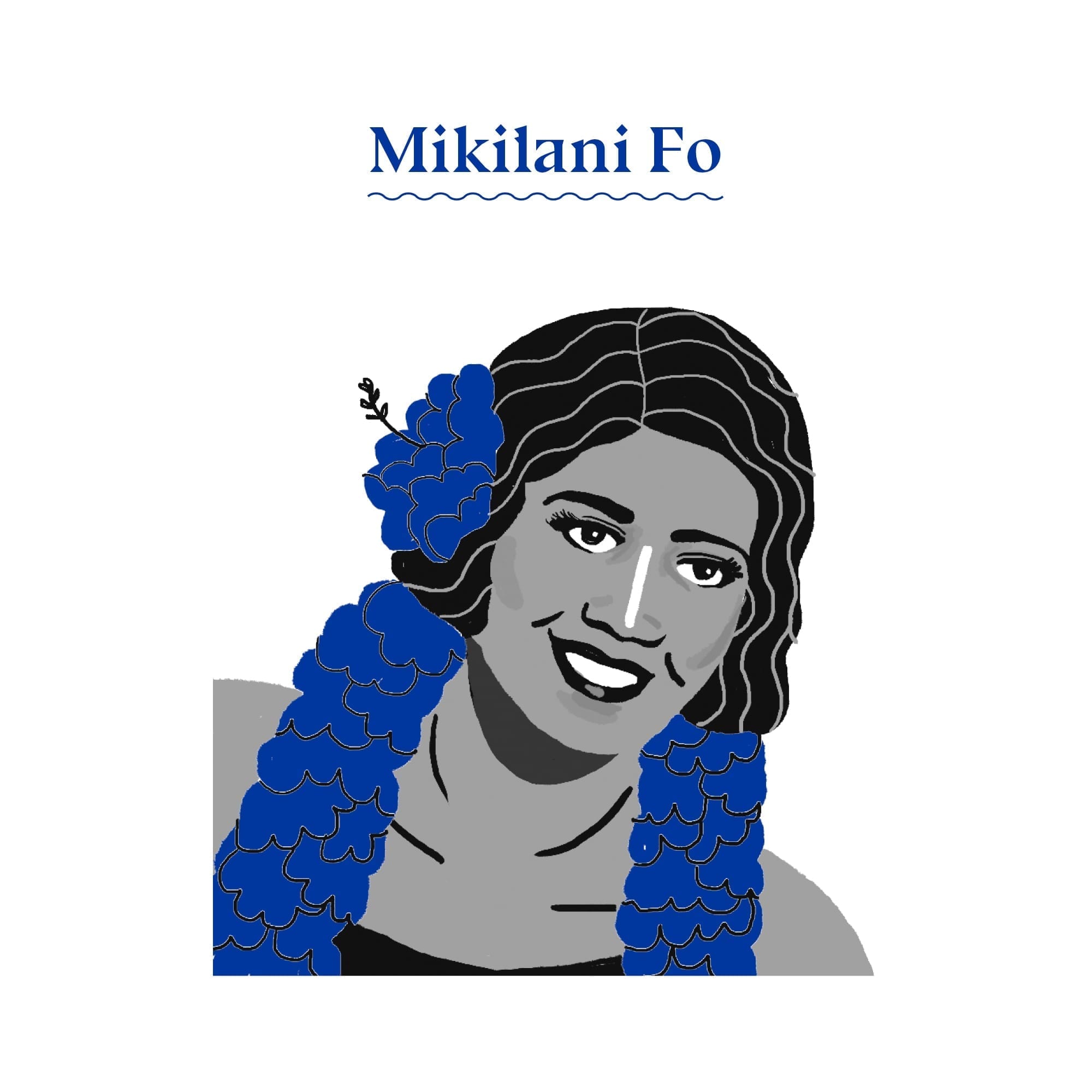
Mikilani Fo
Although Mikilani Fo was a pioneer of steel guitar and one of the very first professional women players, further biographical details of her life are scarce. Luckily, Lorene Ruymar, a steel guitar player and enthusiast who founded the Hawaiian Steel Guitar Association in 1985, authored the comprehensive anthology, “The Hawaiian Steel Guitar and Its Great Hawaiian Musicians,” which provides a snippet on Fo’s life. Taught to play steel guitar by her father, Fo had an affinity for string instruments and excelled in ukulele, bass, and guitar, among others. At 35, the Hawaii native tragically died on stage during a performance in Reno, Nevada. You can find fan uploads of Fo’s tracks on YouTube.
Owana Salazar
A descendant of Hawaiian royalty, Owana Salazar was raised surrounded by music and history. At age 37, she began studying steel guitar, taking formal lessons from Jerry Byrd, a musical mastermind with a plaque in the Steel Guitar Hall of Fame. She became the first woman student graduated by Byrd in 1992, and in the years since, her signature blend of traditional Hawaiian music with contemporary jazz has earned her several honors, including a handful of Hawaiian Na Hoku Hanohano Awards. When not making music, Salazar dedicates her time to advocating for Hawaiian independence and sovereignty.
Sarah Jory
Born in Berkshire, England, Sarah Jory has been plucking steel since childhood. At the young age of five, she received her first steel guitar and quickly mastered it—so much so that by age 11 she released her first full-length album, Sarah’s Steel Line, in 1980. Two years later, Jory began performing extensively at steel guitar events, including Scotty’s renowned (and now defunct) International Steel Guitar Convention in St. Louis. Over the span of her active career, she has maintained steady album releases and accolades, including Female Vocalist of the Year by the British Country Music Association for nine consecutive years.

Letritia Kandle
When researching pioneers of electric string instruments, one will be hard pressed to find a name that doesn’t belong to a cis man, but by 1937, Chicago-based guitarist Letritia Kandle was already making history when she debuted the design of her elaborate console steel guitar. Known as the Grand Letar, the multi-neck, 26-string steel guitar was a literal dream come true; After she envisioned it during a deep sleep one night, Kandle’s father helped construct her vision. Even more impressive than its necks and two embedded speakers was a 120-bulb, four-color built-in light show that danced joyfully during sets. After contemporary steel guitar collector Paul Warnik discovered the creation, he contacted Kandle and restored the instrument to display in 2008 for its first public showcase in over 55 years. Kandle died two years later at 94 years old.
Sister Rosetta Tharpe, the queer, Arkansas-born guitarist / singer / songwriter and godmother of rock ‘n’ roll, came into the spotlight in 1938 with her rollicking song “Rock Me.” Over the next two decades, she crushed every “rule” in her path; crossing between gospel, blues, and early R&B; religious and secular music; and notably, black and white audiences during the days of segregation. She helped launch the career of Little Richard, and heavily influenced the early generations of rock musicians, with artists such as Johnny Cash and Elvis Presley singing her praises.
As surf music and the British Invasion took hold of America in the 60s, Tharpe’s popularity waned in her home country, but she turned around found new audiences among in the UK and across Europe. In the decades that followed, she became overlooked in the mainstream discourse of rock history, but her work continued to be celebrated across roots, blues, and gospel circles.
With the rise of both Internet culture and feminism in recent decades, increasing numbers of young women music lovers with a variety of musical backgrounds and tastes have discovered her work for themselves—and have found new inspiration in the process.
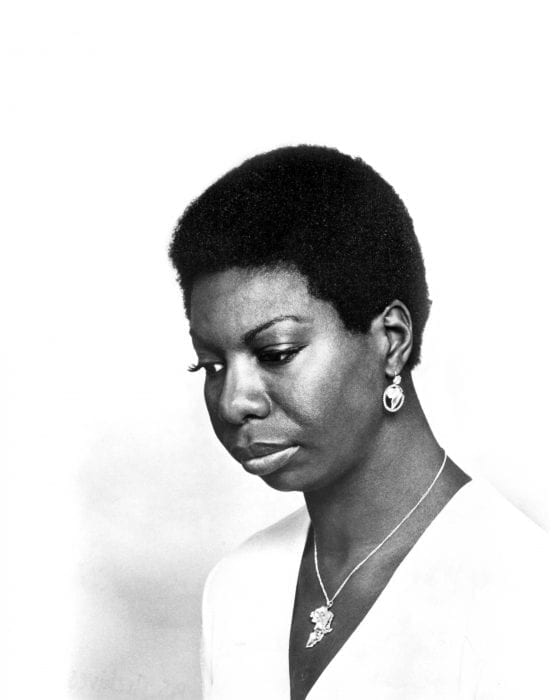
Nina Simone’s brilliant, groundbreaking music has touched on so many genres including classical, jazz, blues, and pop, that some have argued that it doesn’t meet the “rock” requirements for the Hall of Fame. Even without her famous takes on rock classics including the Animals’ “Don’t Let Me Be Misunderstood,” and the Beatles’ “Here Comes the Sun,” nothing could be further from the truth.
Born in North Carolina, Simone was a piano prodigy who turned to performing in nightclubs in the early 50s after she was denied acceptance at Philadelphia’s prestigious Curtis Institute of Music, on which she blamed racial discrimination. Her enigmatic performances and transformative music brought her international fame as an artist, and she went on to release over 40 albums throughout her decades-long career. She later became a staunch activist in the Civil Rights Movement, vividly addressing racial injustice and inequality through her music, starting with her 1964 song “Mississippi, Goddam,” which she wrote as a response to the 16th Street Baptist Church Bombing, which killed four young girls, and the assassination of Civil Rights leader Medgar Evers.
Among artists of the 20th century, few have changed the shape of music and public consciousness as much as Nina Simone, and today both her music and the messages in her songs feel as relevant as ever.
The Detroit native was born in 1950 to a musical family (Quatro may sounds like a glam rock-era stage name, but it’s actually a shortened version of her Italian immigrant grandfather’s last name, Quattrocci). A classically-trained pianist and percussionist, Quatro first played live as a child with her father’s jazz outfit, the Art Quatro Trio. She later taught herself guitar and bass, a decision that changed the course of her life.
After the Beatles changed youth culture forever, Quatro and her sisters Arlene and Patti formed the Pleasure Seekers in 1964. The Detroit-based garage band was one of the first rock groups to feature an all-woman lineup, alongside Goldie and the Gingerbreads and Isis. Patti Quatro also had a stint in the pioneering all-woman band, Fanny.
Following a lineup change in 1969 (with sister Nancy stepping in for Arlene, who had started her family), the Pleasure Seekers’ briefly changed their name to Cradle, and by 1971, Suzi Quatro was courted as a potential solo star by British record producer Mickie Most. Her first single, 1972’s “Rolling Stone,” was an instant number one hit in Portugal, which started a trend of international success. A year later, “Can the Can,” was released; the glam/hard rock track remains one of Quatro’s signature songs to this day.
Only “Stumblin’ In,” a 1979 duet with Chris Norman of soft rock band Smokie, cracked the U.S. top five, but Quatro continued to enjoy commercial success outside of her home country, netting number one singles in the U.K., Ireland, Australia and Germany. In the states, Quatro helped reshape public perception of women rockers on Happy Days, bringing her music and style into millions of homes as the recurring character, Leather Tuscadero (who led and played bass in the fictional band, Leather & the Suedes). Her stint as a television star showed that rowdy rockers—just like the Happy Days’ massive audience— also waxed nostalgic for youth culture’s glory days.
Quatro’s tales of wayward lovers, street wisdom, and fast cars have continued to inspire far beyond glam rock and power pop’s heydays, and through it all, she’s stayed true to her roots. She’s released 16 studio albums across five decades; her latest, 2017 album QSP found her collaborating with two fellow glam legends, Sweet guitarist Andy Scott and Slade drummer Don Powell.
For her immeasurable role in proving that women rock ‘n’ rollers belonged on the concert stage and network television, Quatro ranks among the most important figures during popular music’s seismic creative shifts of the 1970s.
Blues music and guitars have a longstanding personal relationship. Artists such as Bonnie Raitt and Susan Tedeschi have become iconic for bringing their voices and techniques to audiences worldwide. But they aren’t alone. For generations, women have played blues guitar, spanning styles and sounds, and interpreting the genre in their own ways.
The umbrella of blues is enormous, and it’s one that every musician and music fan should explore as a fulcrum for all Western genres that have come since. Whether you’ve been enjoying the blues for years, or are just starting to dig into the genre, here’s a mix of iconic and emerging artists you’ll want to know:
Etta Baker
Etta Baker was born in Caldwell County, North Carolina, in 1913. Proficient on piano, violin, guitar, and banjo, she got her start performing at local dances and parties with her father and music teacher, Boone Reid, and her siblings. In 1956, she met Paul Clayton, who recorded her on an album of Appalachian music, but after its release, she turned her attention to raising her family and working at a textile company. Years later, Baker decided to pursue music full time. After performing at festivals and concerts, she released her first album, One Dime Blues, in 1991—the same year she received the 1991 National Endowment for the Arts’ National Heritage Fellowship. Three more albums followed. Baker is recognized for playing Piedmont Blues, a syncopated, fingerpicking style in which the thumb plays a bass pattern supporting the melody, which is picked on the treble strings. Baker, who passed away in 2006, was still performing well into her 90s.
Rory Block
Recognized as a premiere acoustic blues guitarist, Rory Block has dedicated herself to keeping the tradition of Delta blues alive with her mastery of fingerpicking and slide guitar. Block has released more than twenty critically acclaimed albums and garnered five Blues Music Awards. Her most recent project is The Mentor Series, an ongoing collection of tribute albums recorded in homage to blues artists that she knew, among them her mentors Son House and Reverend Gary Davis. Block’s goal with the series is “giving credit where credit is due, and keeping the names of these founding musicians vivid and alive in our collective consciousness.”
Joanna Connor
In 1984, Worcester, Massachusetts, native Joanna Connor packed up her guitar and relocated to Chicago. It wasn’t long before she became a regular on the blues circuit, sitting in with the likes of James Cotton, Buddy Guy, and Junior Wells, and easily holding her own, whether losing herself in wailing blues riffs or ripping into aggressive solos. In 1989, she released her debut album, appropriately titled Believe It—because Connor is the real deal—and became an internationally acclaimed touring artist. She mostly left the road in 2002, but she never stopped performing in and around the Chicago area, where she averages around 200 shows a year. In 2016, she released the long-awaited Six String Stories, her first studio album in over a decade. September found her on tour again, playing select shows on the East Coast. A Gibson endorsing artist, Connor plays a Les Paul Classic 1960 reissue that she’s owned since 1990. “It’s home for me,” she stated about her guitar. “I know it like my own skin.”
Elizabeth “Libba” Cotton
If you’re not familiar with her name, you likely know Elizabeth Cotten’s legacy song, “Freight Train,” which she wrote as a child, and which has been performed, covered, and recorded countless times. Born in Chapel Hill, North Carolina, in 1893, Cotten taught herself to play guitar and banjo on her brother’s instruments, reversing them so that she could play with her left hand. She created what became known as “Cotten style,” picking the bass strings with her fingers and treble with her thumb. Her long journey from wife and mother to recording and performing artist is a must-read story. In her later years, Cotten was declared a National Heritage Fellow by the National Endowment for the Arts, recognized by the Smithsonian Institution as a “living treasure,” and in 1985—at age 90—took home a Grammy Award for “Best Ethnic or Traditional Recording,” for her album, Elizabeth Cotten Live.
Shannon Curfman
When Shannon Curfman released her debut album, Loud Guitars, Big Suspicions (Arista) in 1999, she immediately turned heads, as she was only 14 and was already a well-versed guitarist and blues musician. The singer/songwriter/guitarist has appeared on numerous morning and late-night television programs, and has shared stages with the likes of Buddy Guy, the Indigo Girls, Carlos Santana, and Jeff Beck. In 2006, she launched her own label, Purdy Records, and released an EP, Take It Like A Man, followed by two full-length albums: Fast Lane Addiction (2007) and What You’re Getting Into (2010). Curfman is currently working on a new solo album.
Debbie Davies
While growing up in Los Angeles during the 1960s, Debbie Davies developed a passion for jazz, blues, big band, and pop music—thanks to her musician parents and their vast record collection. Women in those days were expected to play acoustic guitars, not plug in and turn it up, but Davies was having none of that. Once she discovered British blues-rock, she picked up the electric guitar and never looked back. Davies added cracks to the music-industry glass ceiling: In the mid-80s she became the lead guitarist for all-woman blues band Maggie Mayall and the Cadillacs, then in 1988 she began a three-year stint as a member of the legendary Albert Collins’ band, the Icebreakers. Since then, Davies has continued to be a trailblazer; she’s recorded a dozen solo albums, received ten nominations for Blues Music Awards, and won Best Contemporary Female Blues Artist in 1997 and 2010. Her latest release is 2015’s Love Spin.
Samantha Fish
Samantha Fish self-released her first album, Live Bait, in 2009. Two years later, Ruf Records showcased her alongside Cassie Taylor and Dani Wilde on an album titled Girls With Guitars and billing on the annual Blues Caravan Tour, which is famed for introducing new blues artists to audiences in the U.S., U.K., and Europe. That same year Ruf released Fish’s solo album, Runaway. The album was named Best Artist Debut at the 2012 Blues Music Awards in Memphis—establishing her as a rising contemporary blues guitarist. In 2017, Fish has produced two new albums, each of which find her exploring a new direction. Released in March, Chills & Fever, is a collection of 60s-70s rock and R&B covers recorded members of garage/soul band the Detroit Cobras. Her upcoming Belle Of The West (out 11/3) features eleven songs — eight originals and three covers — with Fish on acoustic guitars.
Ana Popovic
Born in Belgrade, Serbia, Ana Popovic grew up surrounded by music. She discovered the blues though her father’s record collection, and at age 15 taught herself to play on his guitar. Popovic took formal lessons in classical guitar and jazz, and while both still influence her work, her heart is in the blues. She has been nominated for six Blues Music Awards, has been a part of the Experience Hendrix project since 2014, and is endorsed by Fender and D’Angelico. Popovic’s albums have placed in the Top 5 on the Billboard Blues charts. Her latest, Trilogy, is a 23-song, triple-disc collection of funk, rock, blues, and jazz.
Toshi Reagon
Singer/songwriter/guitarist Toshi Reagon has been onstage since she was 17, and has performed everywhere from small clubs to Carnegie Hall. Born in Atlanta before moving to Washington, D.C., she was raised on music and civil rights. Her parents were members of the SNCC’s Freedom Singers, her mother, Bernice Johnson Reagon, is the founder of iconic a cappella group Sweet Honey In The Rock, and folk music legend Pete Seeger is her godfather. It’s no wonder that Reagon combined both worlds into a career. She records, produces, writes, collaborates, and since 1996 has fronted her own band, BIGLovely. She was the recipient of a 2009 Out Music Award, 2007 Black Lily Award for Outstanding Performance, and 2004 New York Foundation for the Arts Award for music composition.
Kelly Richey
Kelly Richey began playing guitar at age 15. In her 30-year career, she has performed more than 4000 shows worldwide and released 16 albums on her label, Sweet Lucy Records. She performs as a solo artist and with her trio that delivers a hard-edge blues rock sound. Based in Cincinnati since 2000, she’s part of the TrueFire online guitar instruction roster, and is the founder of Music for Change, a nonprofit focused on maintaining music education programs in underfunded schools.
Joanne Shaw Taylor
British blues artist Joanna Shaw Taylor was discovered at age 16 by Eurythmics’ Dave Stewart. Fifteen years later, she is an international success. She released her debut album, White Sugar, in 2009; both it and her sophomore disc, 2010’s Diamonds In The Dirt, made it to the Top 10 on the Billboard Top Blues Albums chart. She is a three-time winner of British Blues Awards, and in 2002, she toured Europe as a member of Dave Stewart’s band, D.U.P. Her latest album, Wild, was recorded in Nashville and released last year.
Jackie Venson
Austin, Texas-based Jackie Venson began her musical journey as a classical pianist, and picked up the guitar during her final year of studies at Berklee College of Music. After graduation she found a new home in the blues; A singer, songwriter, and musician, Venson has released two EPs, a full-length album, and maintains a video series on YouTube. Her new EP, Transcends, came out this fall.
Adia Victoria
Born in South Carolina and based in Nashville, Adia Victoria is unmistakable as a blues artist, but hers is not a blues of aching guitar solos; instead, it’s one of musical and lyrical rawness. She spent three years working on her critically acclaimed, 2016 debut album, Beyond the Bloodhounds, a haunting, emotional collection of songs that merge elements of rock, afro punk, and country into her unique phrasings and tunings.