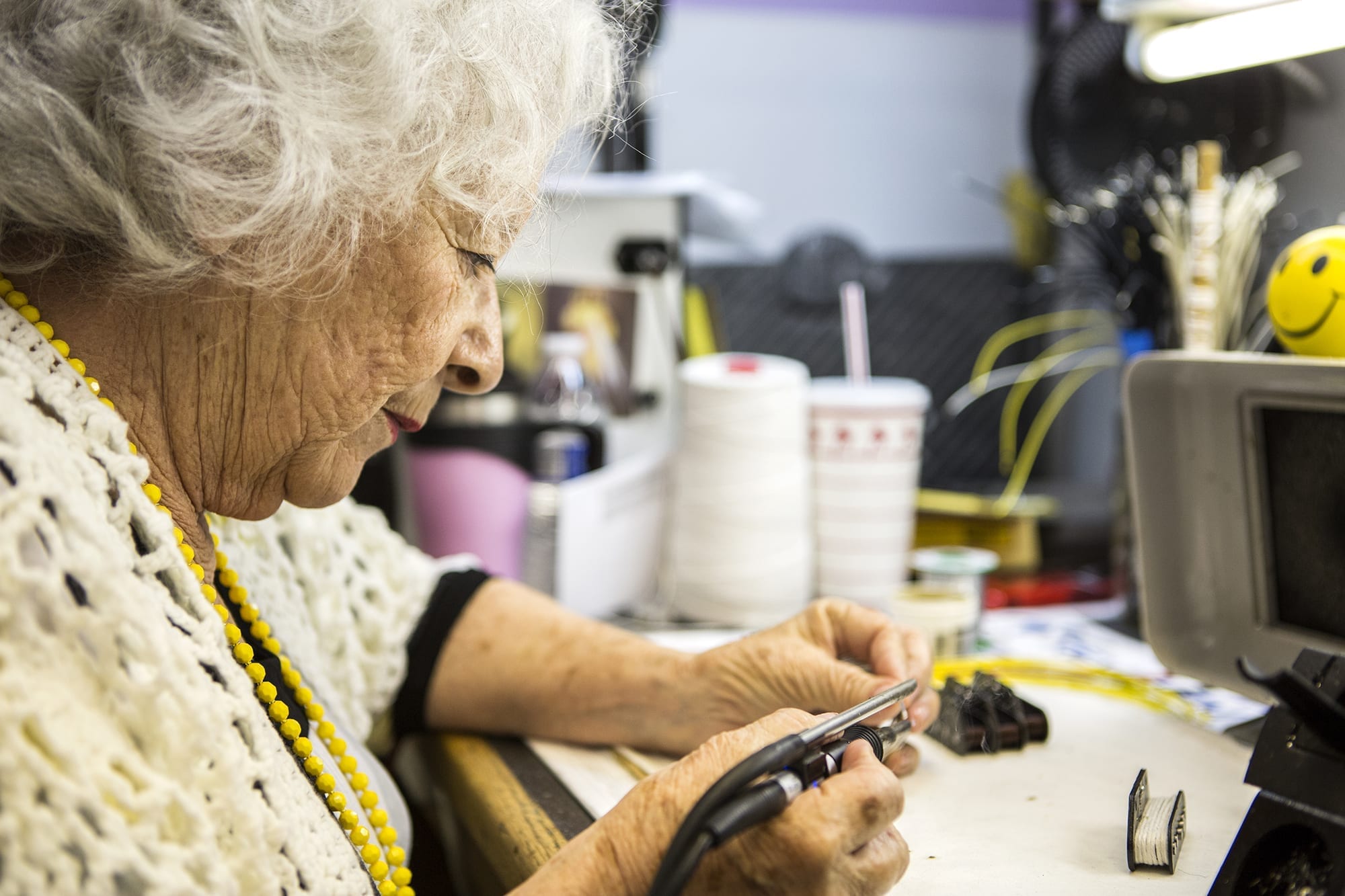
In 1956, while looking for a means to support her family as a teenager, Abigail Ybarra walked into what was then a small 10-year-old factory called the Fender Electric Instrument Company. Fifty-six years later she would be coined the “Queen of Tone” for her handcrafted pickups, and considered a true staple of Fender’s legacy around the world.
While Ybarra’s story is without a doubt monumental on its own, it turns out she comes from a lineage of Latina pickup winders who were prominent during a time when the Fender company sought out women to work on the guitars. First there was Pilar Lopez (whom Ybarra apprenticed under), followed by Abigail Ybarra, and today—after three years of learning from Ybarra herself—Josefina Campos continues what we can seemingly consider a tradition.
Now, after retiring in 2013 at 80 years old, Ybarra resides in Redmond, CA where she continues to dabble in pickup winding. She Shreds had the honor of speaking with Ybarra on the phone to discuss some Fender history, beginning her own operation, and winding enough pickups to wrap wire 16 times around the globe.
She Shreds: How did you first get in touch with Fender?
Abigail Ybarra: Yeah, that’s a story right there. My cousin Corin used to work for Fender and she quit so then—maybe a couple of years later—she was looking for a job, so I decided to go with her, and for some reason they hired me but they didn’t hire her back. When I walked in the office I was given an application and right then and there they took me to the back and I was hired.
You said that your cousin used to work for Fender. What did she do?
She used to solder. She used to do some of the wiring and controls on the pickguards and guitars. That is actually what I started doing—and by the way, I was told that I was going to get 90 cents an hour and that in 30 to 60 days I would get another dime, and I thought that was great.
What did your parents do for work?
My father had died, and it was just my mother and two sisters. So, this was a job. I found out there was a place I liked being a Latina, and the pay was pretty good. It was a time [when] we had an incentive plan and we were earning more money in Fender than in other companies around there. I remember there was this girl that came in working in the office—when she saw our checks, she transferred into the factory.
So, you learned the back end of guitar building in general and not just pickup winding, even though that’s what you are known for.
That was where I ended up somehow over the years, when CBS bought the company from Leo Fender. They pretty much did not let people transfer up and down from one department to another, and there was not that many people who wanted to wind pickups all the time. But I always liked that—for some reason I was comfortable doing that, so I just stayed working on pickups.
What do you think it was about pickup winding they didn’t want to do?
Most of the girls would just say it was boring. I mean, you sit there and you wind. We did not do hand-winding for a long time . . . once CBS took over we got automatic coil winders, so even then the girls didn’t like running the coil winders. They had a lot of problems with wire breaking and somehow I just kind of took to it because I didn’t have that much trouble. So, for many years we did not do hand-winding until I came over here to Corona, California and they wanted me to do hand-winding pickups again.
It sounds like there were a lot of women in the factory. Why was Fender looking for women to work on pickup winding?
They figured that men’s hands were too rough, men just wouldn’t be able to handle such delicate work, so it was just women.
You retired in 2013. Is there a big difference between winding pickups in the ‘60s and in your last years at Fender? As the guitars evolved, how did the pickup winding evolve as well?
Well, by the time I retired I was doing hand winding again. When I started in pickups with Leo Fender, back in Fullerton, we were all doing hand-winding. He asked for and usually got superior work. I don’t want to say—I think it was better back then. Of course when I started doing hand-winding over here in the custom shop I tried to do what Leo Fender had expected us to do back then.
And what was that?
Perfect work. Really serious about what we were doing, taking pride in what we were doing—that’s what he always said. We were part of a great company. Leo always thought that we were the Cadillac of guitar making—in those days Cadillac was the best. So when I came over here to do hand-winding again in Corona, I tried to do the same thing. I was much more of an expert at winding, giving customers what they wanted.
Do you miss being in the shop every day and winding pickups?
I do. I miss the people. I miss the fact that we used to get reporters to come in here and talk to me. It was a fun place to be, I do miss that.
Was there any particular reason why you felt it was time to stop?
Not that I didn’t feel that I could still keep working, but it used to bother me that some people used to come up to me and say, “You’re what? You’re in your 70s and you’re still working? You should be at home.” And I thought maybe they’re right, here I am going on 80 years old and still working.
I feel like that’s what keeps us all alive, is to do what we love, right?
Right? Sometimes I regret that I’m not still there, still going to the NAMM shows.
What do you spend your days doing other than pickup winding?
Nothing, nothing! That’s why I’m telling myself I need to start working, I need to start my own thing, my own pickup.
When Josefina started her apprenticeship with you, what did you make sure to emphasize in the learning process for her?
I trained her exactly the way I was trained back then. I was trained by a girl that Leo Fender trained, and she is the one that trained me. Her name was Pilar Lopez. So when I trained Josefina, [I trained] her exactly the way my work ethic [is], I tried to pass that on to her.
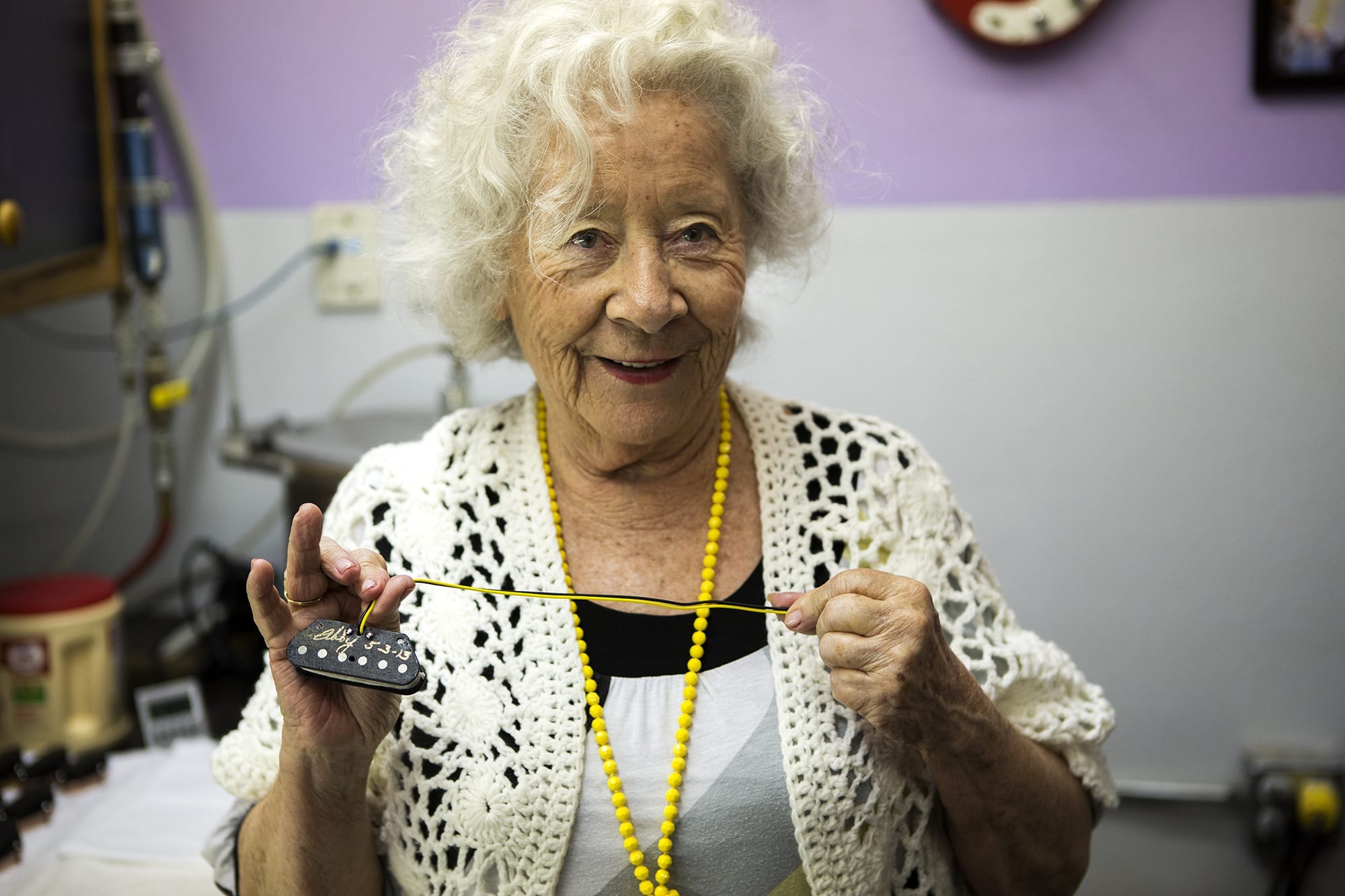
Can you tell me a little bit of what that includes? Is your work ethic based on being authentic and committed to the work or is there something specific, technically?
I taught her, or tried to teach her, to do the job the way I learned to do it—even the soldering. I like to do that with a good pickup that’s gonna last for years. Working in a mass production, I really don’t think that those pickups are that great—seems to me that she needs to take the time to do the job right, not to think about how fast she is going to do it but what a good job she has to put out.
Is it important for you to inspire and encourage other girls to be a part of this kind of work?
My daughter is going to start working with me because eventually I plan to start my own business. I would encourage girls to do that.
How many pickups do you think you’ve wound? Per day or per week?
Leo never had us winding for eight hours. He would only have us do it for four hours because he thought for us to sit there for eight hours was too much. So in four hours we would do something like 15 or 16 pickups. With CBS it was different, we had automatic coil winders, we turned out hundreds on the coil winders. Hand-winding, you can’t wind too many—it’s a slower process.
We had people from Made In America come down to the plant in Corona—it’s a show on Discovery [Channel]. The one guy that was on the show figured out that I had wound wire—just the wire— around the world 16 times.
That’s an amazing fact.
That was so weird. Time just flew . . . by the time I was finished I could not believe it had been that many years. I guess time flies when you are having fun.
Ray (April 21, 1925- July 18, 2013) was born in Manhattan during the Harlem Renaissance. Her father, Elisha Ray, was a Juilliard-trained bass, tuba, and euphonium player who eventually became a postal worker after failing to maintain steady work as a musician.
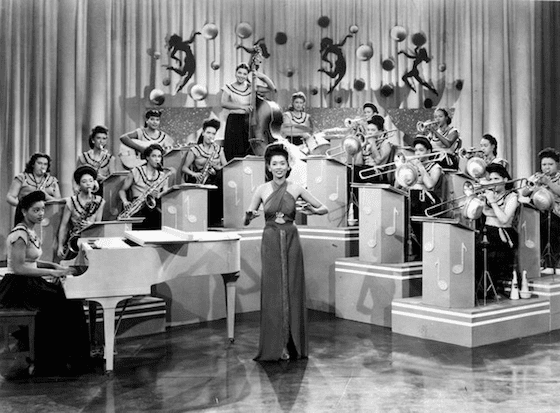 International Sweethearts of Rhythm. Carline Ray is in top row, 3rd from L
Ray followed her father’s footsteps to Julliard, enrolling at age 16 and graduating in 1946 with a degree in composition. That same year, she joined America’s first integrated all-woman jazz and swing band, the International Sweethearts of Rhythm, as a rhythm guitarist and vocalist. The groundbreaking ensemble was formed in the 1930s at a school for needy children in Mississippi and went on to provide women in jazz with a national platform before disbanding in the late 1940s.
As jazz trends shifted from multi-piece swing bands to smaller ensembles, Ray transitioned into a career as a backup vocalist and studio bassist (her preferred instrument was the Fender Precision Bass), with collaborators ranging from acclaimed composer Leonard Bernstein to popular crooner Bobby Darrin. Amid her prolific recording career, she found time to further her studies, completing a Master’s degree at the Manhattan School of Music in 1956.
Due in part to an increasing interest in jazz history and women’s studies, Ray’s profile as a live performer raised in the late 70s. On the festival circuit, she became a mentor to young musicians and a valuable source of information for scholars. In 1997, over 50 years after making history with the International Sweethearts of Rhythm, she co-founded all-woman trio Jazzberry Jam.
Ray remained active until the end of her life. Her lone solo album Vocal Sides, produced by Ray’s daughter, jazz vocalist and former David Bowie backup musician Catherine Russell, was released posthumously.
For her pioneering role in a seminal women’s jazz ensemble, professional versatility that spanned parts of seven decades, and passion for music preservation, Carline Ray is a legend beyond gender or genre. Indeed, she’s among the unsung greats of modern popular music.
Born Lizzie Douglas, the New Orleans native was playing on Beale Street sidewalks in Memphis by age 13. After learning her craft down South, Douglas joined the historic migration of African American musicians to the North, eventually establishing herself in Chicago. It was there that her musical partnership with singer and guitarist Joe McCoy caught the attention of Columbia Records, who rechristened the pair Memphis Minnie and Kansas Joe.
Among the duo’s signature songs are 1929’s “When the Levee Breaks,” a song famously reshaped by Led Zeppelin as the final song on Led Zeppelin IV, and 1930s “Bumble Bee,” the impetus for Muddy Waters’ “Honey Bee.” The pair influenced contemporary “hillbilly” music as well as blues, with country music pioneers Bob Wills and the Texas Playboys adding their own twist to their 1930 single, “What’s the Matter with the Mill?”
In a field dominated by men, Memphis Minnie thrived and played a major role in shaping the sound of Chicago blues. One legendary story from the 1930s finds Minnie publicly defeating renowned guitarist (and her future tourmate) Big Bill Broonzy in a battle of the blues performers, with a bottle of gin and a bottle of whiskey on the line.
As the blues changed, so did Minnie’s penchant for duets. Her rhythmic guitar playing as heard on earlier recordings gave way to a more modern-sounding, standard tuned style that better suits the drum, trumpet, and piano accompaniment on such recordings as her 1939 release, “Hot Stuff.”
Memphis Minnie had a respect for the women that paved the way for her success, recording “Ma Rainey” in tribute to the singer just six months after her 1939 passing. With her own natural talent and embrace of musical and technological innovations, she became a groundbreaker in her own right soon after, playing electric guitar publicly several years before Big Mama Thornton and others laid the groundwork for rhythm and blues.
As one of the greatest and most visible guitarists of her time, and a songwriter and performer who still influences popular music today, Memphis Minnie is simultaneously one of the seminal and unsung blues pickers and singers of the early 20th century.
And in fact, women have been building guitars for a long, long time. In one large-scale example, Gibson secretly hired dozens of women to build their iconic “Banner” acoustic guitars while many of their usual builders were unavailable due to World War II. These women were all but erased from Gibson’s history, until their story was unearthed by Connecticut law professor Dr. John Thomas and revealed in his book, Kalamazoo Gals.
Here are ten awesome women luthiers you should know about, and consider next time you’re in the market to buy a new guitar:
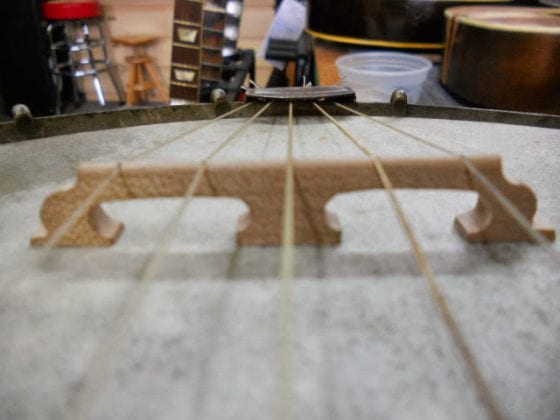 Image courtesy of Brooklyn Lutherie
Brooklyn Lutherie, Brookyln, NY brooklynlutherie.com
Although both Mamie Minch and Chloe Swantner already had about seven years experience in guitar repair and building by the time they opened Brooklyn Lutherie in 2014, starting their own business was the first time either of them had the opportunity to work on guitars in a shop not owned by men. “Over the years it’s become easier to meet other women luthiers; when we started I didn’t know any,” says Minch. “My luthier friends are still are almost entirely men. They’re great, and it’s fun, but you know, they still mansplain all over me.” It was this dynamic that led Minch and Swantner to open their own space, a shop that is centered around inclusivity, where not only they but also their clientele feel at ease.
Brooklyn Lutherie takes on repairs on all string instruments, fretted and in the violin family. Swantner, who began her career in lutherie as a student at the Vermont School of Violin Making, also builds custom violin family instruments.
Kathy Wingert, Rancho Palos Verdes, CA wingertguitars.com
Kathy Wingert has been working on guitars since she was in high school in the mid-70’s. In her own words:
I saw an apprenticeship advertised at a local music store, but I started out on my own because I knew I’d probably be waved away by the guys in there. I started out reading at the library and working on my own, buying cheap guitars and restoring them, selling them for a huge profit…. I was lucky enough to find a course at a local community college. Two months in, the instructor said they were looking for a tech at that same music store, and I applied and got the job. It was very much a full circle story.
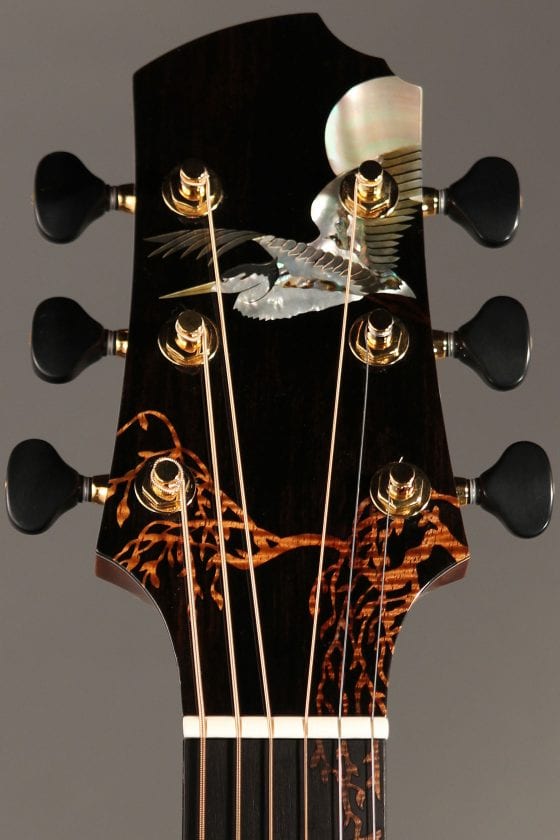
Wingert says that when she started, the glass ceiling had already been “shattered” by master luthier Linda Manzer, the first woman to gain real notoriety as a luthier. So as she started to become more established, it was always “Manzer or Wingert,” she says. “I felt this was an unfair comparison and a sexist one, since Manzer’s career not only preceded, but also paved the way for my own. We were just the only two [women luthiers] anyone knew about.”Wingert’s designs are gorgeous. She makes a wide variety of guitars, including classical, baritone and even breathtaking harp guitars.
Lisa Hahn, New York City sadowsky.com
Lisa Hahn started doing guitar repairs and became more interested in building during an apprenticeship in Chicago about ten years ago. Currently the shop manager and senior guitar maker at Sadowsky Guitars in New York City, her staff bio states she“loves loud amps, cool pedals and a perfect neck fit.”
Sadowsky is most famous for their solid body basses, but Lisa is a guitarist. ““I’m not mainly a bassist, but I’ve spent 12 years working with professional bass players and learning what makes an amazing sounding bass,” she says. Hahn plays one of her own builds in her band, Sursum Verbo, and as our conversation turned to pedals, she mentioned how much she loves EarthQuaker Devices’ Rainbow Machine.
Meredith Coloma, Vancouver meredithcoloma.com
Meredith Coloma started building guitars when she was 17, and at 19 began her career with an apprenticeship with Sadowsky Guitars. In addition to building, repairing and restoring instruments, she also offers classes and workshops in her Vancouver studio. Her website is also a treasure trove of information, with a blog that features videos of her process and even tips on how to get started doing your own repair work.
Coloma says she has felt both the pressure to work harder to prove herself and worry about receiving undue attention due to the “novelty” of her gender. “With anything you do,” she says, “You’ll have people who support you and people who just like to troll. But it’s gotten better over the last couple of years.” She credits social media in part for making it easier to connect with other women in her field for inspiration and support.
Shelley Park, Vancouver, BC parkguitars.com
Shelley Park is a maker of beautiful gypsy jazz guitars in the style of Selmer-Maccaferri. Maccaferri guitars are best known as the favorite guitar of Django Reinhardt, whose music had a big influence on Park as a guitarist and, evidently, as a luthier. She began learning how to build instruments at a community college in New Westminster, BC, just a few years after she started to play.
Park’s website is very informative with plenty of information to help guitarists choose what model will best serve their playing. She even explains the logic behind varying designs, like an oval vs. a D-shaped sound hole.
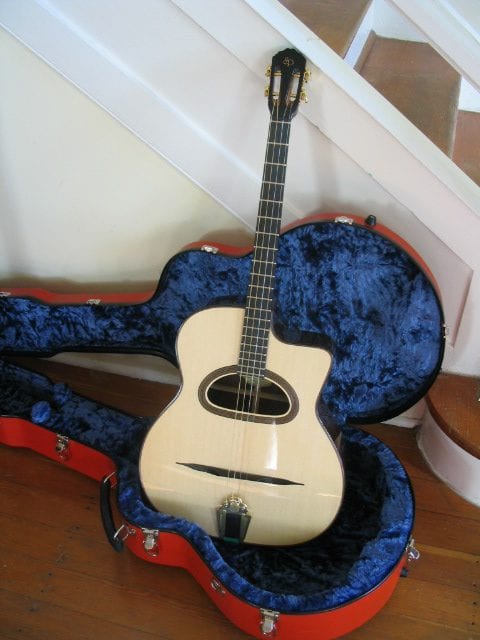 Image from Park Guitars
Joshia de Jonge, Alcove, QC joshiadejonge.com
Joshia de Jonge built her first guitar at the age of 13 in her father Sergei’s workshop. She builds beautiful hardtop cedar and spruce classical guitars with ebony fingerboards, and offers plenty of optional customizations: buyers can choose the wood for the body, add a soundport, or opt for an elevated neck or a “V” neck to head joint.
All of de Jonge’s guitars are built with a subtle twist in the neck for exceptional comfort while playing, and she uses a family-developed lattice bracing pattern that she describes as “[unifying] the top into one vibrating surface” for “powerful projection, clear note distinction, and balance between the strings.”
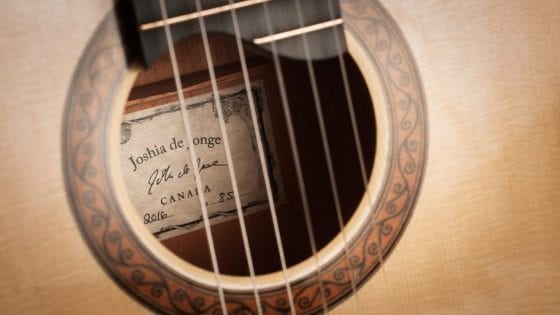 Image from the website of Joshia de Jonge
Dagna Silesia, Shoreline, WA silesiaguitars.com
Silesia Guitars, near Seattle, Washington, is owned and operated by musician Dagna Silesia, who handles guitar repairs and luthier work. Her shop also partners Auralsphere Electronics to take on amp and electronics repairs.
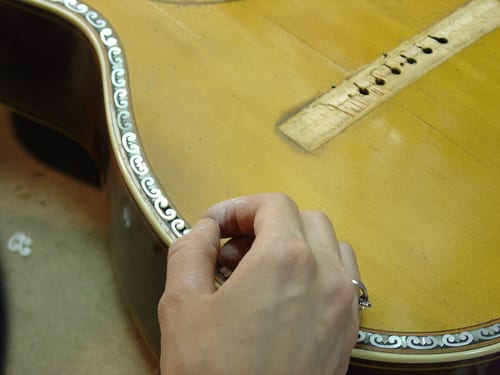
Silesia has an exceptional skill for inlay art: her designs are beautifully delicate and detailed. You can find some of them at the Silesia Guitars website, which also features a repair blog that gives some great insight into Silesia’s process. In addition to her work in the shop, she also plays bass in hard rock band The People Now.
Kathy Matsushita, San Jose, CA theamateurluthier.com
Some inspiration for the DIY-ers: Kathy Matsushita is completely self taught and builds guitars as a “summertime hobby.” She is an English teacher during the school year.
Matsushita’s enthusiasm for guitar building is evident throughout her very detailed website. The site features photos of her workspace for organization inspiration, as well as links to sites that can help you start building from kits, a guide for what tools you’ll need, detailed build tutorials with step-by-step photos, and plenty of photos of her dogs.
Zazu underwent treatment throughout the summer only to find out this November that the cancer had spread throughout her lymphatic system. Despite the prognosis, which she described in a press statement as “typically what they would call a ‘no cure scenario,’” she remains in good spirits and has continued to create music and visual art.
Zazu has released a video statement to share her story and how her song “Ain’t Afraid,” (which she wrote for Those Darlins’ 2013 album, Blur the Line) has helped give her courage throughout her ordeal. In a bold move (and proverbial middle finger towards the side effects of chemotherapy), she invited friends to shave her head on camera in advance of her next round of treatment.
If you would like to get involved, a YouCaring page has been established to raise funds to help pay for Zazu’s medical expenses. She and her friends have also launched the “Ain’t Afraid (of Cancer)” campaign so people can send words of encouragement under #aintafraid on Twitter, Instagram, and Snapchat, or purchase an “Ain’t Afraid” t-shirt from her online shop (all proceeds will go towards her fundraising goal).
Our thoughts, support, and hugs go out to Jessi today. We #aintafraid!
Tentatively titled Simple Case of the Blues, after one of the album’s tracks, it will be her twelfth album and first release since her 2012’s Working Girl’s Guitar. This time she is revisiting the music she discovered as an adolescent through her love for the Rolling Stones, the music she played with her first band, Penelope’s Children, the music that’s subtly been a part of every album she’s made.
Flores has been a groundbreaker from the beginning. Penelope’s Children was the first of several all-woman bands she launched, during a time when just seeing a woman playing an instrument—much less a group of women—was considered an anomaly. By the time she became part of the roots movement of the 1980s with another all-female band, the cow-punk group Screamin’ Sirens, Flores was already recognized as a pioneer, primarily for her guitar playing, but also as a singer and songwriter. Over the years, she has been recognized by fans, critics, colleagues, and the music industry. In 1987, she was an Academy of Country Music nominee for Top New Female Vocalist. She won a Peabody Award in 2007 for her narration of the rockabilly documentary series Whole Lotta Shakin’.
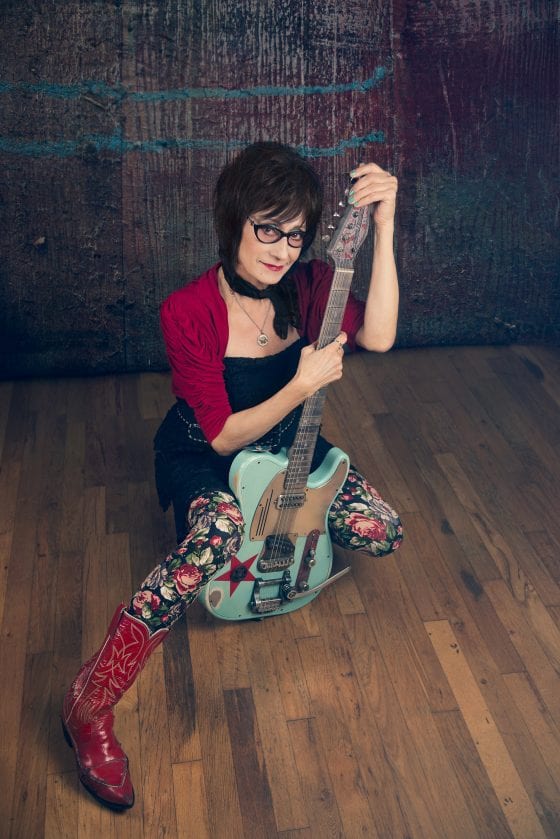
Flores grew up in the Clairemont area of San Diego, California, and began playing guitar at an early age under the tutelage of her older brother. Music was paramount in her life, and like most musicians, she was inspired by certain artists and songs. One that most affected her, however, was far removed from the usual fare: Irving Berlin’s “Anything You Can Do,” from the Broadway musical Annie Get Your Gun. The duet features a male and female singer challenging one another, each claiming they can outdo the other. For Flores, it was not only fun to sing this with her brother; it was the foundation for her positive attitude as a musician.
“That song was a big hit on the radio when I was a kid, and maybe it gave me some kind of confidence,” she says. “My brother was two years older, he knew how to do a bunch of cool stuff, and I looked up to him. He taught me my first guitar chords. We used to sing that song together a lot. It wasn’t so much ‘I can do it better’ as it was ‘Let me do that. Let me share.’ We were friends.”
She started Penelope’s Children in 1966. “At that time I’d never heard of another woman lead guitar player,” she says. “We didn’t know about Elizabeth Cotton or Mary Osborne when we were growing up. All we knew were the bands we saw on television, and none of the women played guitar. I felt unique, and that gave me more drive. It made me want to get better. I wanted to be as good as any guy. It lit a fire and made me passionate about practicing. When I turned 18 or 19, I found out about Birtha and Fanny. I followed them. I became their fan. I felt a sort of camaraderie, knowing that there were other women guitar players. When I look around now, it makes me feel good to see that women are getting their up and commence more than they were, say, ten years ago. As one of the first to sing rockabilly and play guitar, I’m told that I influenced a lot of women, and I’m happy to know that.”
In the early 1980s, living in Los Angeles after several months playing music in Alaska, Flores was working as a cook in a vegetarian restaurant called I Love Juicy when she heard about an audition with the Screamin’ Sirens. She tried out as a bass player, was hired, and soon transitioned to lead guitar, a position she held from 1982 until 1986, during the rise of an underground music scene that became known as New Traditionalist, combining rock, country, punk, and rockabilly, and opening doors for numerous artists, including Los Lobos and Dwight Yoakam. “I loved it because it broadened my horizons,” she says. “I got to be around all these cool bands like X, Dead Kennedys, and The Blasters. I discovered new bands and they were discovering me.” The Screamin’ Sirens released a series of singles and one full-length album, with Flores quickly capturing the attention of her peers and the music industry.
Signed to Warner Brothers Records’ country division in 1987, she released one album for the label, her self-titled debut. A single, “Crying Over You,” made her the first female Latina country artist to place on the Billboard country charts. “All of a sudden the pressure was on,” she says. “I had my rock and roll, bluesy, country picking kind of sound, but I felt all this pressure, because if you listened to country radio at that time, everyone was slick. I didn’t think of myself as slick, and I still don’t. I’m kind of edgy. It intimidated me, and I went through several years of hiring hotshot guitar players to play on my records. I played on them too, they would save solo stuff for me, but for the main part of the records I had these great players, and it did a number on my head. It made me feel like I wasn’t as good. I knew I could hold my own; I’d done it before. I had to pat myself on the back and say, ‘Come on, you can do this.’ I studied, took lessons, and played every morning and every night.”
Her partnership with Warner Brothers was short-lived, but the experience cemented valuable musician relationships within the Music Row community and earned her a nomination as Horizon Artist by the Academy Of Country Music. With her frilly skirts, cowboy boots, coiffed hair, and searing guitar riffs, Flores was a bit much for mainstream country music, but audiences outside of Nashville couldn’t get enough.
“After I was dropped from Warner Brothers, I recorded After The Farm [1992], which came out on Hightone,” she says. “I went in the studio with my band and said, ‘Let’s rock.’ I called the album After The Farm because ‘Now I’m back in the city, I’m going to rock out, turn my guitar up, and play guitar solos.’ That record has a real rock edge and my country fans did not like it, but people who dug rock and roll did. Even Lucinda Williams told me that it’s her favorite record I’ve ever done.”
She recorded two more albums for Hightone: 1993’s Once More with Feeling and 1995’s Rockabilly Filly. The latter featured her in duets with rockabilly icons Wanda Jackson and Janis Martin, marking their comebacks, fully igniting Flores’ career, and putting the spotlight on her guitar playing. “My big jump out was playing guitar for Wanda Jackson and getting her out of retirement,” she says. “I played some of the guitar solos on Rockabilly Filly, but I still had other guitarists playing the ‘meat’ of the songs. When I went out to tour the record with Wanda, nobody could go with me because they were all busy, so I had to do it myself. Every night I stayed up until 3:00 in the morning, fingers to the bone, getting all the licks down, learning licks off of her records and my record. It took me about two months and I was ready to go. I found my footing, and after that I never felt I needed somebody else to do a great show. I could pull it off.”
In 2009, she released Girl of the Century, her first album for Chicago-based independent label Bloodshot Records. By the time she followed up with Working Girl’s Guitar, she was more than ready to step out as sole guitarist. “I always had the best players I could find,” she says, “but at some point it was hurting more than helping me, because people couldn’t recognize where I was playing, or they thought I didn’t play. They’d come to my shows and say, ‘I didn’t know you played guitar, and I’ve been listening to your records for years.’”
“It’s fun working with another guitar player, but I needed to find my sound. You don’t know what that is until you get in there and hear it. It’s like a painting — if someone takes a paintbrush and adds colors to your art, it isn’t just yours. It’s a wonderful collaboration, but you’re not finding your own voice. It’s liberating to have control over the expression and creativity, and when I got to do that in the studio, it was really exciting. That’s what that album was for me. It was a chance to have my own voice on the guitar, self-produce, and make all the choices.”
Those choices, and that sound, are made with several guitars that she plays using medium Dunlop picks and her acrylic nails. Her primary guitar is a seafoam green 2011 James Trussart Steel Top Tele with TV Jones and Arcane pickups and Bigsby. “It’s made from light wood, so the weight is perfect because it’s been chambered,” she says. It’s my go-to guitar. It feels like an extension of me. It’s natural; nothing feels off. The tone and the way it plays — it’s hard to pick up another guitar.”
She also has a Martin DC-16GTE with Fishman Prefix Pro pickup, 2012 Gretsch Jim Dandy parlor acoustic, 2006 Gretsch Corvette Electromatic, 2008 Gretsch Tennessee Rose, 2006 SVK Stratocaster, 2010 Les Paul 1960s reissue, and a 2004 Epiphone Wildkat. She keeps it simple when it comes to amps and effects: a 2010 Fender Blues Junior, a 2008 Deluxe Reverb, Durham Sex Drive Boost, vintage 1980s Boss Delay DM-2, and a Boss Chromatic Tuner.
Her new album may seem like a departure to those who think of Flores as a country artist, but in fact it’s a return to her roots and a continuation of a sound that’s been a part of her musical trajectory. “It’s not like all of a sudden I’m going to be a blues person,” she says. “It’s been in my blood since I started playing guitar. B.B. King, Howlin’ Wolf, Freddie King, Albert King — we collected those records. My love for country music came from Gram Parsons, Emmylou Harris, The Byrds, and steel guitar. I loved the Everly Brothers, and when the country-folk movement came into rock music, I fell in love with the harmonies. Being a singer and a player, I love all kinds of music. On this record I want to show my blues playing, but I also want to show my singing. I’m also trying to move to another genre. If you look online, I’m listed as alt-country, and I want to change that around a little.”
She recorded the tracks, guitar solos, and vocals for her new album in Nashville, with guitarist Kenny Vaughan, bassist Dave Roe, and drummer Jimmy Lester, all of whom have studio and touring resumes boasting years of work with A-list artists. Vaughan, Roe, and Flores produced. “They really got me going on this project,” she says. “Kenny had played with me on several different shows over the years. I used to live in Nashville, and many times I’d hire him when I did an important show, because I wanted to look really hotshot! We’ve been friends a long time, and I’m such an admirer of his. He, Dave, and Jimmy have a blues band, and I’d been sitting in with them a lot. They said, ‘Let’s make a record sometime.’ We started it last November.”
Overdubs, background vocals, additional instruments, and mixing took place at Arlyn Studios in Austin, with Charlie Sexton producing, adding percussion, and playing some rhythm guitar parts. “Arlyn Studios is great,” she says. “It’s where Bonnie Raitt recorded Nick of Time, so it has some good ‘girl guitar’ mojo in there!”
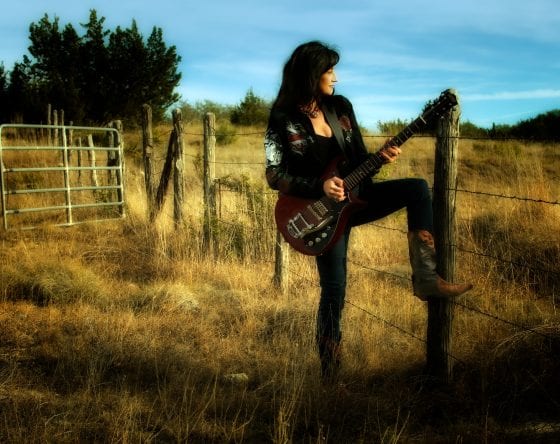
Rosie Flores has come a long way and traveled a lot of roads since her days with Warner Brothers. Over the course of almost a dozen albums, she has seamlessly blended traditional country, swing, rockabilly, punk, alt-country, blues, and rock. Four years ago she assembled the Blue Moon Jazz Quartet “to throw people off even more!” she laughs. The ensemble has a Wednesday night residency at The Gallery in Austin. “I put the guitar down so I could totally immerse myself in the vocals of those standards,” she says. “Improvisation is the number one factor when you sing jazz, just like when you play guitar. It’s like jamming with your voice instead of your instrument. I’m studying jazz guitar now, growing my vocabulary, and I’m going to start working on a jazz record. At my age, 66, I’m still learning and growing.”
While all those blurred musical lines can present a challenge when seeking airplay, bookings, and even press coverage, at the same time they have allowed her to cast a wide net, as she’s not locked into one genre with specific audience expectations. “I never really got famous as one thing, so it’s given me the freedom to explore different things,” she says. “It’s allowed me to be van Gogh and play with different palettes of color. The fact that I didn’t become established one way means I can still have the e-ticket to go wherever I want to go. I want to keep reinventing myself and have it be OK, as long as I’m having fun.”
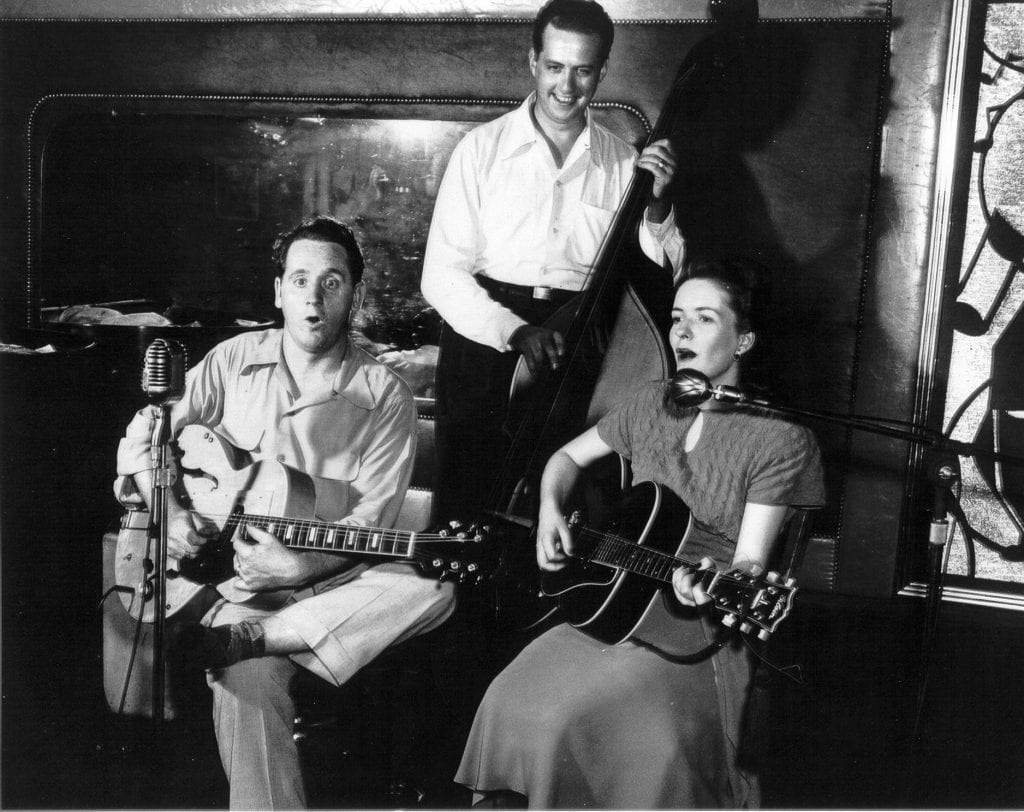
Ford, born Iris Colleen Summers in 1924, spent a bulk of her life performing music. As a child, she sang gospel hymns in Nazarene churches and on the radio with her family. She spent her late teens and early 20s singing country and western music in vocal trio the Sunshine Girls, often backing singing cowboy Jimmy Wakely. In the late 40s, she displayed her acting chops on Foy Willing and the Riders of the Purple Sage’s radio program, The All-Star Western Theatre. It was through her career in early country music and connections to singers Gene Autry and Eddie Dean that she joined her future husband’s group, the Les Paul Trio.
By 1949, Summers was adopted the stage name Mary Ford after Paul turned to a phone directory to find a short, memorable name to differentiate his partner’s new pop-oriented music from her country past. Under this moniker, she went from a background vocalist to the forefront, singing and playing alongside one of the seminal names in guitar history.
The duo had an impressive string of hits in the 1950s. Their collaborations often blurred the lines between then-popular genres, recording versions of country (“Tennessee Waltz”), pop (“Mr. Sandman”), and jazz (“I’m Sitting on Top of the World”) standards. Original compositions such as the bluesy “Deep in the Blues” and the rock ‘n’ roll inspired “Send Me Some Money” further diversified Ford and Paul’s back catalog. Most of these songs were recorded at home or on the road by the couple, with nascent multi-tracking techniques often making Ford sound like a one-person duet.
As the 1960s neared, Ford and Paul were among the fading stars swept aside by the surging interest in rock music and teenage culture. Following the couple’s divorce in 1964, she continued to perform, albeit sparingly, with her sisters. She died in 1977 from complications due to diabetes.
While Paul’s legacy as a luthier and inventor was being cast in stone, Ford helped him reach pop stardom in the 1950s with her smooth vocal delivery, lifetime of performing experience, and platform as one of the most visible female guitarists in mainstream music. By being at the forefront of Paul’s recording career, Ford indirectly pioneered changes to guitar performance and gear for all players that followed.
Parra spent much of her career interviewing and recording aging musicians who had fled rural areas for the shantytowns of Santiago due to economic and political change. In the process, she preserved songs and memories that otherwise might have been lost forever.
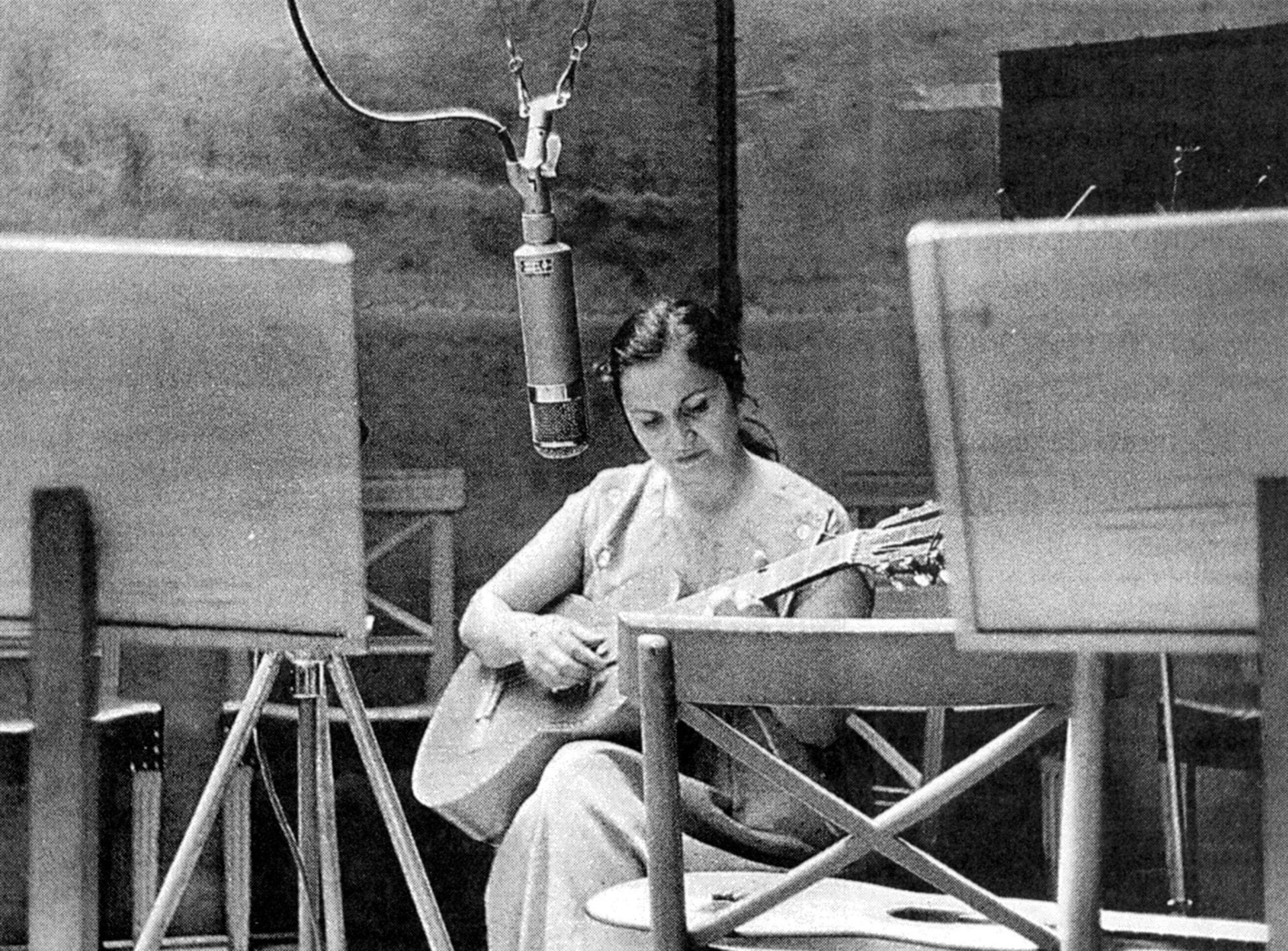
Her efforts helped spearhead Nueva Cancion (“new song”), Chile’s own politically-charged folk revival later carried on by Parra’s son Angel and daughter Isabel. Her original and preserved songs reached a wider audience through the “Canta Violeta Parra” radio program that ran from 1953-1954 on a leftist radio station, offering culturally-rich programming on a medium then-dominated by escapist entertainment. She also helped keep folk traditions alive on the home front by running La Peña de los Parra, a performance space and community center that served a similar purpose as modern D.I.Y. performance and art spaces.
Among Parra’s best-known compositions is “Gracias a la Vida” from her 1966 album Las Ultimas Composiciones De Violeta Parra (RCA Victor). It’s one of the most covered Latin American songs of the past 50 years and was the title track for Joan Baez’s 1974 Spanish language album. Like many of her global folk music peers, Parra compiled a diverse catalog that blended heartfelt love songs (“Volver a los 17”) with socio-political allegories (“La Jardinera”).

In addition to her music, Parra was a multi-talented visual artist, creating paintings, sculptures, and tapestries inspired by Chilean folk traditions. In 1964, she became the first Latin American artist to have a solo exhibition at the Louvre. Yet it’s her dedication to preserving musical traditions swept aside by modernization that makes Parra a giant among 20th century folklorists and songwriters.
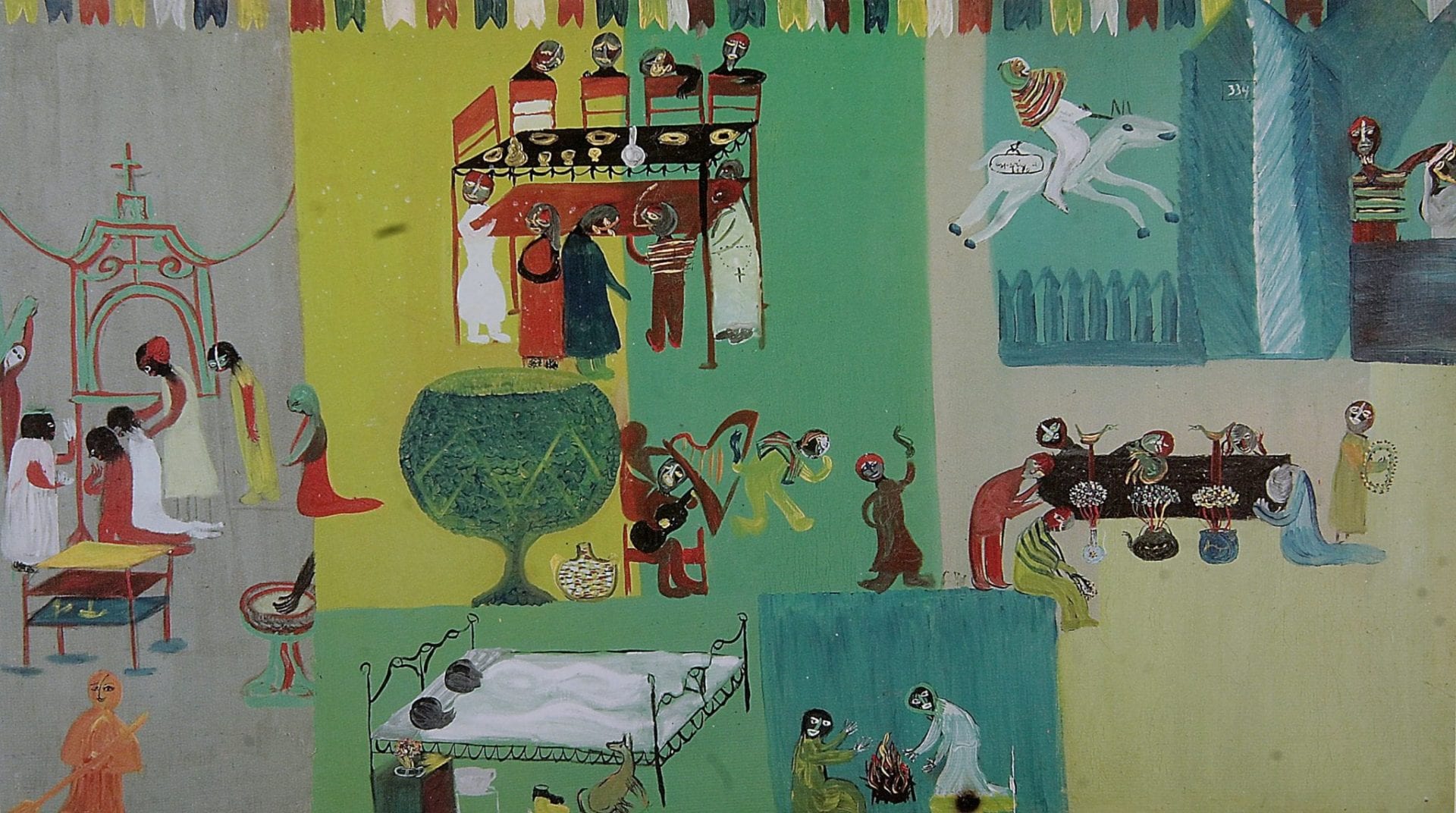
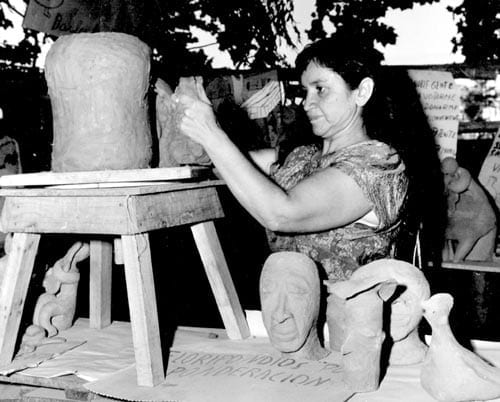
In 2014, Museo Violeta Parra was founded by the artist’s children Angel and Isabel Parra, in Santiago, Chile in order to preserve and share her work and legacy. More information can be found here.
The nineteen artists on the list cross genres, decades, and music scenes, and include pioneers such as punk/metal godfathers MC5 and electronic innovators Kraftwerk, undisputed icons such as Tupac Shakur and Janet Jackson, among others. However, as in previous years, there are few women among them. Unequal gender representation has long been a point of contention among many of the Hall of Fame’s critics. In April, 2016, Quartz’ Noah Berlatsky even reported that less than 15% of all of Rock & Roll Hall of Fame inductees are women.
Along with Jackson, the women on the Rock & Roll Hall of Fame 2017 Ballot include the legendary Chaka Khan, disco queens Alfa Anderson, Norma Jean Wright, and Luci Martin of Chic, and one iconic artist as widely known for her guitar talents as well as her vocals: folk singer-songwriter and activist, Joan Baez.
Born on Staten Island in 1941, the soprano-voiced Baez has been writing and performing music for over 50 years and her influence has, directly or indirectly, touched virtually every genre that has come since. The daughter of a Mexican father and a Louisiana-raised mother, she was impacted by discrimination and intolerance at an early age, and developed a strong social conscience that forever became intertwined in her music.
Baez got her first big break performing at the 1959 Newport Folk Festival. The following year, she released a self-titled studio album. In quick succession, her debut and its follow ups, Joan Baez, Vol. 2 (1961), and live collection Joan Baez in Concert in 1963 achieved Gold status (selling upwards of 500,000 albums apiece). To date, she has released 24 studio albums, most recently, Day After Tomorrow in 2008.
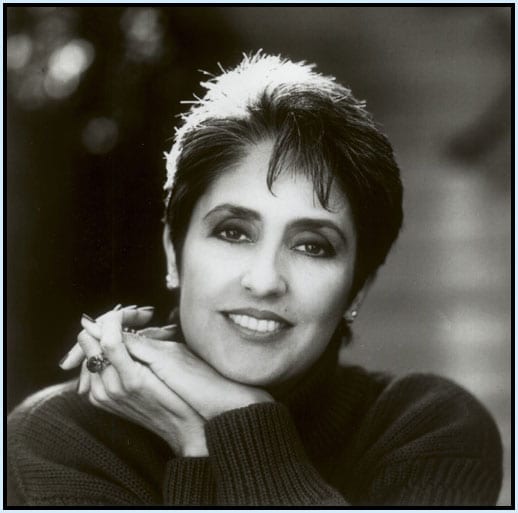
Over the decades, Baez has remained committed to various humanitarian and environmental causes, often using music as a tool to start conversations and open minds. After hearing Martin Luther King Jr. (later a personal friend) speak in 1956, she became involved in the Civil Rights Movement of the 1950s and 60s and protests against the Vietnam War, engaging in acts of civil disobedience, and performing at rallies including the 1963 March on Washington for Jobs and Freedom.
Since then she has continued to share a message of peace and human rights, protesting wars and violent conflicts, becoming a prominent voice for LGBT rights, and those of disenfranchised and marginalized communities around the world. Her work has resulted in honorary Doctor of Humane Letters degrees from Antioch and Rutgers and in celebration of Amnesty International’s 50th anniversary in 2011 – an organization she helped establish in the early ’70s – they introduced and awarded her with the first “Amnesty International Joan Baez Award for Outstanding Inspirational Service in the Global Fight for Human Rights.” Now 75, Baez’ work continues to inspire. On her current, career-spanning fall tour, she has teamed up with the Innocence Project to spread awareness about wrongful convictions and injustice in the U.S. court systems.
To choose its final inductees, the Rock & Roll Hall of Fame sends ballots to over 600 artists, members of the music industry, and previous inductees. Starting in 2012, they’ve given fans the chance to create an impact on the process through a collective vote, of which the five artists will form one ballot to be counted along with the rest. Fans are able to vote for five artists daily until December 5.
Congratulations on the nomination, Ms. Baez! We think it’s long overdue!
Originally conceptualized as the live band for Hanna’s Julie Ruin solo project, Le Tigre formed in 1998 and gained notoriety for its beat-driven party music and progressive sociopolitical lyrics concerning feminism and issues facing the LGBT community. The trio went on to release three studio albums, the most recent being The Island (Universal) in 2004, before going on hiatus.
Later on, Samson and Fateman joined forces in MEN and Hanna launched The Julie Ruin as a full band. Their latest album, Hit Reset, was released on Hardly Art in July, 2016.
Welcome back, Le Tigre! We’ve missed you.
But, while having “the right gear” is of little importance, in some scenes having cool-looking alternatives (like Tina Weymouth’s bass which was nice and super quirky and stylized) is highly-appreciated. That’s why the gear of punk is so interesting—it was all personalized/stylized and interested. Let’s take a look at four influential guitar/bass icons and the gear that they used.
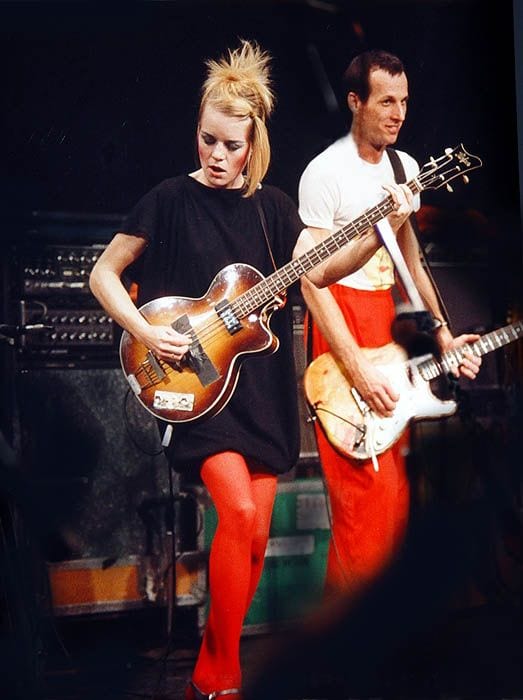
Tina Weymouth of the Talking Heads played a few different basses, most notably (seen on the concert movie Stop Making Sense) the Höfner 500/2 Club Bass, a hollow-body, violin-shaped archtop. Tina learned bass just to play for the Talking Heads, having minimal prior musical experience. Her bass lines are funky and full of syncopated cleverness.
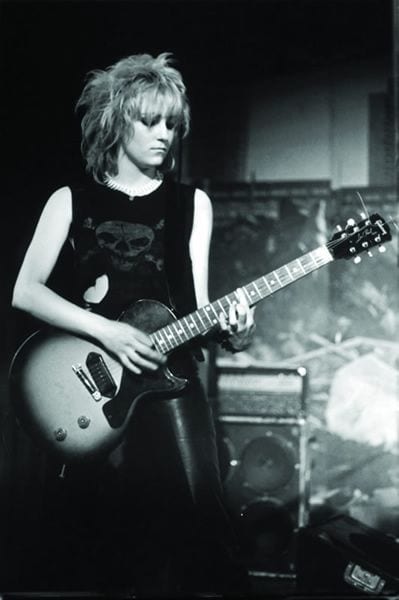
Viv Albertine’s first guitar was a Gibson Les Paul Jr. She learned to play guitar from her friends, who happened to be in popular bands like the Clash and The New York Dolls. After playing in the Flowers of Romance with Palmolive and Syd Vicious, she joined the Slits and proceeded to tour with the Clash in ’77. She now plays a Telecaster in her self-titled solo project.
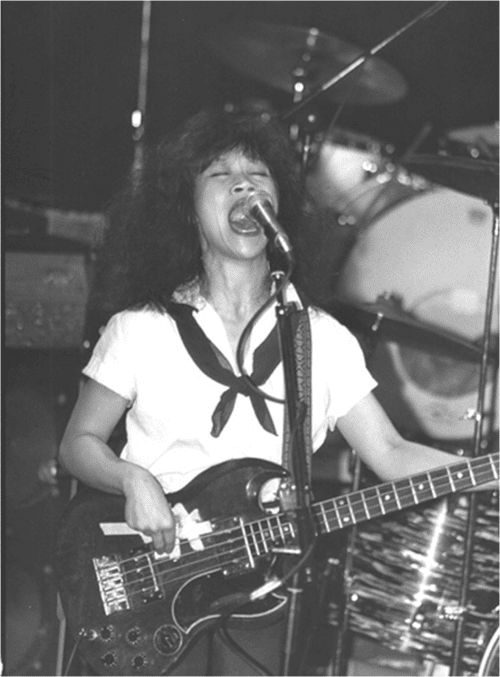
Dianne Chai of the Alley Cats played a Gibson SG bass. Chai’s upfront and riff-driven bass playing was perfect for the power trio, which were a largely forgotten fixture in the early Los Angeles punk scene. The band was originally signed to the famous Dangerhouse Records (along with X) and later became the Zarkons.
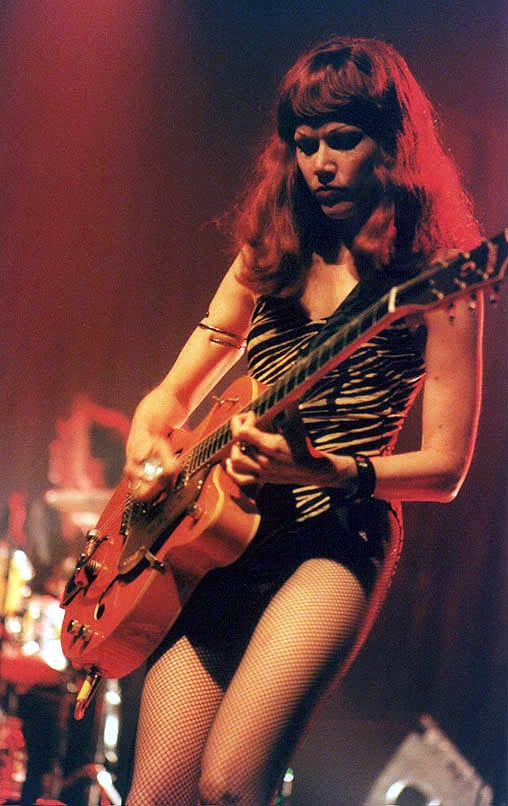
Poison Ivy, the guitarist, songwriter, arranger, and producer from the Cramps is a really interesting guitar player inspired by rockabilly, hillbilly (think Wanda Jackson), and early rock ‘n’ roll. She was really into collecting old gear, records, and the like. Early on, Ivy played an rare, quirky Bill Lewis guitar made in Canada. Then, in the ’80s, she fell in love with a 1958 Gretsch 6120 hollow body—the perfect rockabilly guitar—and never looked back. The Cramps were major innovators of the psychobilly genre and influenced essentially all garage punk bands that followed!
In my opinion, Ballance encompasses the true meaning of the word. In the summer of 1989, despite feeling terrified, she picked up a bass and with her then-boyfriend, Mac McCaughan, formed the seminal ‘90s indie rock band Superchunk. Ballance and McCaughan went on to start Merge Records that same summer, completely unaware of how the DIY project would blossom into one the most respected independent labels of the last 26 years, providing a home for acts like The Magnetic Fields, Neutral Milk Hotel, Wild Flag, and more recently, Waxahatchee. When Ballance and McCaughan split up, she didn’t back down from the band or label in defiance of those who thought she should, and also because she had worked too hard for it.
In 2013, Ballance announced that she would no longer be touring with Superchunk due to hyperacusis, a hearing condition of oversensitivity to certain frequency and volume ranges of sound, but she continues to hold down the fort at Merge Records. When we spoke on the phone from her office in Durham, North Carolina, we talked about touring in the ‘90s, running a record label, and the power of Superchunk fans.
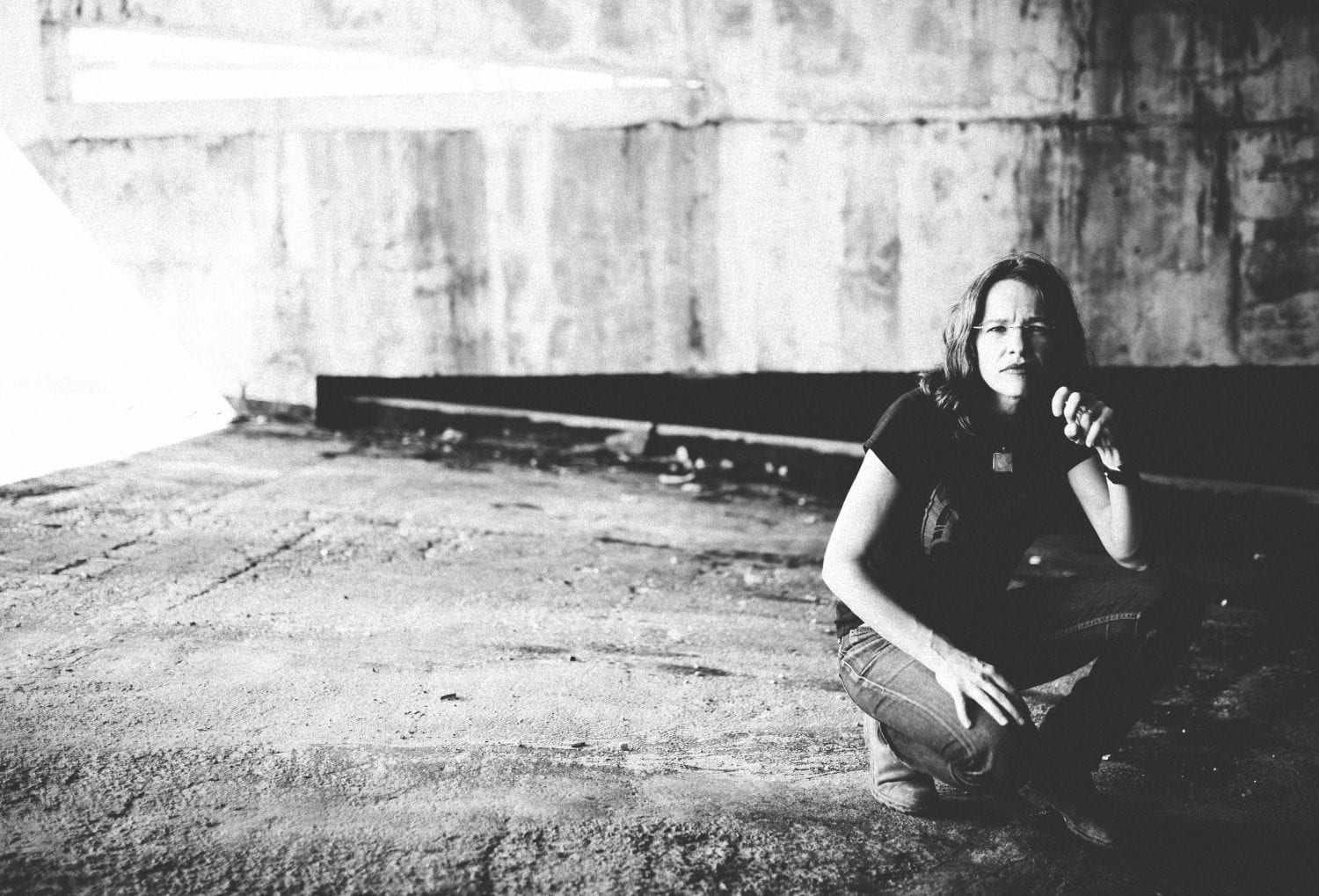
You’ve mentioned that early on you hadn’t considered playing music, but Mac encouraged you to play despite feeling nervous. What was it like the first time you played bass live?
It was terrifying! I was still in college and I was trying to fit in this other life in which we ran a record label and a band and I had a job. The periphery of my vision would go black and I could just see down the middle. I’d feel this weird tingling sensation in my body, and I couldn’t see, I could barely breathe [laughs].
Do you remember when playing the bass felt easier for you?
It started to get better when we [Superchunk] did our first tour. We called it the “Wet Behind the Ears” tour because we were all totally kids, and newbies, and didn’t know what we were doing. It was us, Seaweed, and Geek. We were all rooting for each other, which made it less scary. Aaron Stauffer from Seaweed would give me pep talks. “I want you to at least put your foot on the monitor or I’m going to come up there and knock you over!” He was joking, obviously, but it made me think, “I’m not here to deliver a perfect performance. I’m here to have fun.” I still feel like my focus is more about the performance than delivering a musically perfect product, and having fun and jumping around, or delivering something emotional.
You’ve mentioned that early on in Superchunk you played with Hole, and Courtney Love came up to you backstage and called you the “hot new chick.” That got me thinking about what the interactions between women musicians were like back then. Did you feel like it was competitive?
Courtney, by nature, is a competitive person. At that time, she looked at other women as competition rather than cohorts. That could also be me and how I felt insecure and threatened by her. Coming up and having these women that I admired suddenly playing at the same clubs or shows as me… I felt like, “What am I doing here? This is crazy! We’re going to play with Sonic Youth?” [Laughs] For the most part it felt like other women were supportive and happy to see more women playing in bands. Like Versus! Oh my god, Fontaine Toups! Such a badass, and greatest vocalist and bass player. We actually played a lot of shows with Versus and it was very comfortable and easy. Maybe because they started at the same time as us, rather than Kim Gordon. It felt harder to talk to people like that.
Besides Kim Gordon, were there other musicians you looked up to?
Kim Deal, Exene Cervenka, and Julie Cafritz from Pussy Galore were huge inspirations. I was really drawn to these ladies who you wouldn’t want to get in a fight with in an alley. Not that I could ever fight anybody [laughs], but they are tough and I’m sure they don’t whine about anything! One time we played a show with—oh crud—that band that was really popular in the early ‘90s with Billy Corgan. Oh shit…what were they called?
Smashing Pumpkins?
Yes! Smashing Pumpkins. It was at Maxwell’s in Hoboken. It was a pain in the ass playing at that club. You had to walk through the room you were going to play in, through a restaurant, and move your gear into a gross basement. D’arcy [Wretzky, of Smashing Pumpkins] complained about carrying the amp down the stairs, and I remember thinking, “God, how dare she complain! She’s not tough!” [Laughs]
Did you feel like if you complained, it would feed into this idea of you being inferior to men?
Yes. I felt like I had to be stronger than any man. They could whine, but I wasn’t going to whine.
In Our Noise: The Story of Merge Records someone mentions that they figured “the bass player chick would quit” when you and Mac broke up. With unsupportive sentiments like that, what made you stay?
It felt like Merge and Superchunk were bigger than the relationship. It was valuable to me and had become a part of my identity. Mac and I agreed that we should try, and I’m glad we did. It was unpleasant, not just for us but for Jim and Jon who had to put up with occasional bickering or tears. It’s really interesting to think about what would have happened if I had stepped away. My role in the band was not only bass player, but also den mother, accountant, bookkeeper, tour manager, and merch seller. There were big shoes to fill if I left, and I don’t know that they could have done it.
Foolish was written and released shortly after the breakup. You painted a portrait of yourself for the cover, and I always thought that was so badass since Mac wrote that album—and correct me if I’m wrong—about you and the relationship.
I felt like it was completely about me, and it was rough. It was hard to do that tour. There were times where I would be crying while I was playing and I’d try to keep my hair in front of my face so no one would see me.
That’s really intense.
It really was, but it was also cathartic. While I was crying I was jumping up and down, and mad [laughs].
Did it feel powerful to make the cover a painting of yourself?
I guess so. Obviously, it was pretty deliberate. Frida Kahlo inspired me—taking yourself as your muse and expressing something through your own space and surroundings.
When did you realize that Merge would be a bigger label than expected?
It was a gradual realization, really. Mac and I worked at it for the first 10 years without paying ourselves a dime. Once I realized we could pay ourselves, it felt more solid. For a long time, Superchunk was the biggest band on Merge and really helped build it, but also made it feel like less of a serious label since it was our band. Once 69 Love Songs by the Magnetic Fields became a sensation, it felt more real and legitimate.
What I’ve always liked about Merge is how consistent and relevant it’s always been, even though the breadth of bands signed has always been so diverse. I’m wondering what you look for in a band, aside from music, that makes you want to sign them.
We are definitely attracted to people who are self-sufficient, resourceful, and think about growing like we did—slowly and patiently. You should be in a band because you’re driven to make music or to perform music, and you get to hang out with your friends and your band and have a good time.
We’ve never stuck to one genre. Our musical taste is diverse, as I think most people’s is. We work with bands that we think sound good, and hopefully bands that we can be friends with. That’s a really important part to me, but as the label gets bigger, it’s much harder for me to feel connected with every band like I used to. Plus, being in a band is such a busy thing. I think if you feel like your band is your career, it’s harder to be friends with your label. I hope something that we provide is a good platform for the record, but also a better sense of sympathy than some records labels. We’ve done it. We know it’s hard and demanding and you have to be tough…and sometimes you don’t feel tough.
That’s what’s so great about Merge—you and Mac are aware of how amazing being in a band can be, but also how draining and hard it is, too. You’ve lived this. You’re not some unsympathetic record executives.
There are the things that make you feel kind of gross, you know? There were plenty of shows where I didn’t feel like playing but I still had to perform. It’s a strange construct to think about people getting up on stage and people paying to watch them. People don’t feel like they can do it themselves, they feel like they have to listen to it and there’s a distance that is sort of sad.
Now that you’ve stopped touring with Superchunk due to your hyperacusis, how are you feeling about that loss? Have you gone to see them play without you?
I saw them one time. I volunteered to bartend while they were playing, so I had a distraction. I was afraid it would make me cry and I would feel left behind. But…it was totally fine. I should have [quit] 10 years earlier than I did, so I was more emotionally prepared for it than I realized. Part of what kept me from quitting was that I knew so many people loved Superchunk, and I didn’t want to take it away from them. People become really attached to certain things about your band, or records, or seeing you play. It’s so beautiful and so sweet. Superchunk, or any band, doesn’t belong to just the people in the band—it belongs to the fans, too. When you’re playing, if they’re into it, they’re adding something to the show. They’re feeding you when you’re playing. They’re a part of it.