
Eve Alpert of Palm on Exploring Time Signatures and Meter
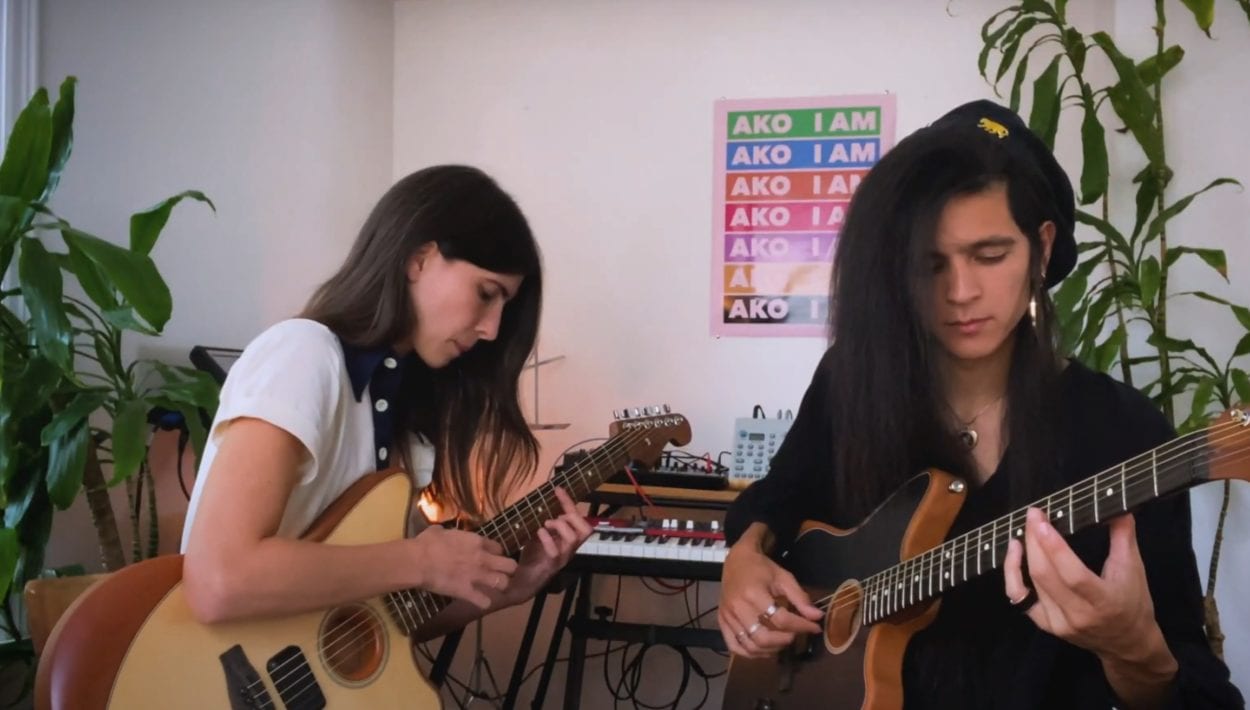
Palm is a four-piece indie rock band that is currently based in Philadelphia. Their sound mixes a wide array of influences, but what stands out the most about their music is their strong rhythmic components. Each instrument acts as its own rhythm section, with various spurts of spontaneity sprinkled in between.
Palm’s newest EP, “Shadow Expert,” was released in June, 2017. It offers a refreshing take on the broad spectrum of popular indie rock. The songs often feel as though they could fall apart at any moment, yet somehow Palm remains steady and constant.
For Palm, music is like a pleasant, yet complex machine, with everything working together as a cohesive unit. Even the vocals, which often alternate between the two guitarists and vocalists, Eve Alpert and Kasra Kurt, tend to drive the music as much as the other instruments. The band’s songs progress from often minimalist riffs, repeating and developing into something more complex, while remaining very rhythmic. The style is not unlike their previous releases, but the production is a lot smoother, making it more pronounced.
Guitarist / vocalist Eve Alpert has been playing guitar since she was twelve. She was inspired by a family friend from Peru, who lived with them for a year and a half when he was 16. “He was into punk rock and played drums in a band in Lima,” she says. “I’m an only child and he was like a big brother to me.” He showed her a few chords on his acoustic and she continued to learn from there. Palm formed after Alpert and some friends started playing music together in college, and expanded into a four-piece in 2012. “Before that, Kasra and I played the same four songs together in his dorm room most days for a year, blasting amps tucked under his raise single bed,” she recalls.
Although Alpert and her bandmates are adept at using uncommon time signatures and meters, their intention is not to make complex music. Alpert explains that sometimes during the band’s writing process, their drummer, Hugo Stanley, manipulates the rhythm to create a different feeling over the guitars. “After we get comfortable looping a particular idea we might look back and remark on the fact that it’s maybe in an odd meter,” she says. “But in general it’s not our intention to throw around different time signatures into our songs.”
Nevertheless, there is a mastery in how Palm is able to simplify complexities in their music. The songs on “Shadow Expert” are a smooth blend of pop and something leaning towards chaos, as the title track perfectly demonstrates. The songs bounce between mechanical-sounding riffs, gleaming vocals, and sharply driven rhythms, creating something much more organic.
Alpert offered us some tips on how to keep time and remain rhythmic while conveying emotion through different meters. The technique may be more intuitive than one might think; it just requires a little thinking outside your normal patterns of thought when it comes to music.
“Shadow Expert” is out now on Carpark Records.
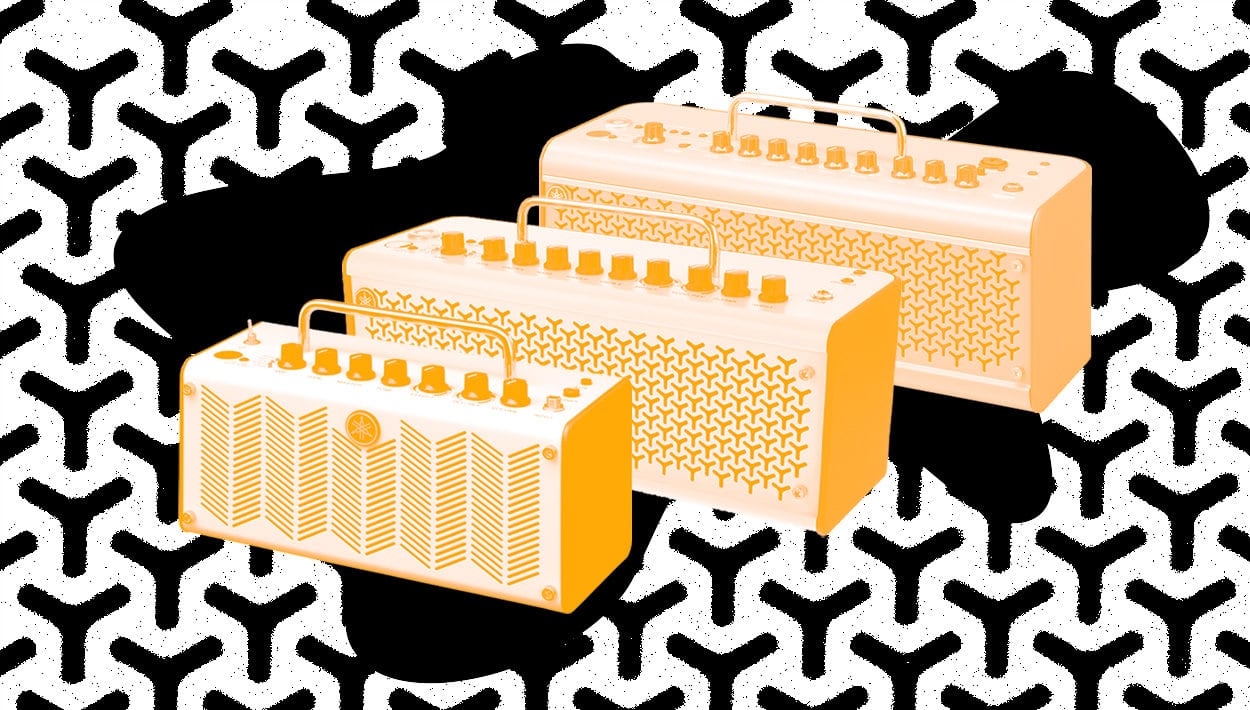
Get a drum machine: “Preferably one that allows you to make beats in odd time meters. Play along. Sometimes we’ll make a drum pattern completely randomly, with no intention, just randomly hit buttons and then we’ll try and use that as a compositional tool. I.e I’ll play on all the high hats and Kasra will play on all the toms.”
Stop thinking in terms of meter: “Listen to sounds around you: cars, birds, people yelling. These things are rarely in ‘straight time,’ but we don’t think of them as “odd meter”. Thinking in terms of meter makes everything rigid.”
Speaking of listening to cars: “Most machines have a rhythm and often they’re pretty interesting. Escalators in malls, trains etc. We were all influenced by the CD player in my old car that would shred all our CDs because it was constantly skipping.”
Count until you find your flow: “Count initially if you need to but if it doesn’t start to flow naturally after a while it’s probably an idea you should move on from.”
Think about how rhythms interact with and reflect emotion: “In Palm, rhythms are often used to express anxiety or feeling unsettled, like there’s no ground beneath your feet. If you’re just jumping from time signature to time signature for the sake of it you’ll probably end up with something cold, calculated, and uncompelling on a human level.”
Explore styles of music from around the globe: “Listen to music with odd meters that isn’t western bro-y progressive or math rock. A lot of music from all around the world employ unusual rhythms, without toxic masculinity! Lots of music from Southeast Asia and West Africa use bizarre meters. Gerry from Palm used to Greek dance and apparently some of the pieces were in 13/8.”

More posts
-
 By: Cynthia Schemmer
 -
Powered By: Fender
-
By: Cynthia Schemmer
-
By: Cynthia Schemmer
-
By: Leila Sidi
-
By: Leila Sidi
-
Powered By: Reverb
-
Powered By: Marshall Amps
-
Powered By: Positive Grid
-
By: She Shreds






Comments
Since when is all math and prog rock laden with toxic masculinity? Like what? We’re not talking about butt rock or hxc here.
Not to mention Palm IS a mathy prog. band..
Comment by What? on August 17, 2017 at 4:58 pmNot to mention that most Southeast Asian and West African musicians come from deeply patriarchal cultures. I guess that’s fine for her since they aren’t Western. Embarrassing…
Comment by Anon on August 18, 2017 at 3:52 pmI firmly support the other comments. Shows the writers ignorance and perhaps even Eves. Palm is a great band.
Traditional Greek folk music and anything Greek is WESTERN…
Assymetrical meter was championed by great Western Composers of our time like Tchaikovsky, shostokovich, rachmaninoff, bartok, and countless others. Its used all around the world. Nothing “bro-y” about that.
In fact the concept of meter was inherited from ancient greek and latin poetry:
“Western music inherited the concept of metre from poetry (Scholes 1977; Latham 2002b) where it denotes: the number of lines in a verse; the number of syllables in each line; and the arrangement of those syllables as long or short, accented or unaccented (Scholes 1977; Latham 2002b). The first coherent system of rhythmic notation in modern Western music was based on rhythmic modes derived from the basic types of metrical unit in the quantitative meter of classical ancient Greek and Latin poetry (Hoppin 1978, 221).”
So, if Palm has a strong greek influence, then they are inherently Western. So is rock, pop and a dozen other genres we all love and that she shreds supports.
Please dont attempt to use certain cultural aspects of music to demean men. We love women. We respect you. When you spout ignorance about western music being bro-y it makes you sound ignorant and misandrist.
Other than, that, study up on western music and culture. Its largely what has shaped the beautiful modern world we live in and “shredding” itself would not exist without centuries of Western music and culture. Show gratitude.
Thanks for everything else and good job!
Comment by Jim on August 23, 2017 at 4:54 pmWOW you’re making everyone so wet with your knowledge of ethnomusicology! I’m sure the women behind this article were just waiting for a big strong smart man like you to show them how wrong they were
Comment by anon on August 27, 2017 at 2:36 pmTank trouble is a online videos game,you have easily to understand this game and simple to control all function,so that follow this simple steps tank trouble 2 this game are single player game,million user play and this game are most famous ans rating is 4.3 in the market.
Comment by sergi constance on March 5, 2018 at 12:01 amI deeply love Palm and I’m glad this interview was done. I think EVE would probably take back a couple things she said, not that mathrock isn’t just full of dorks, but they’re not so much bros anymore. I think of most twinkle math rock bands as basic bitch millennial types, but of all genders. I’m a millennial and I am all genders..
Comment by davey on August 25, 2023 at 2:01 am