In 2017, Geoff Edgars published a requiem for the guitar in the Washington Post with “The Slow, Secret Death of the Electric Guitar.” According to the piece, electric guitar sales had dropped significantly during the previous decade, from about 1.5 million annually to just over 1 million, and the biggest names in the business were either bankrupt, in debt, or making major budget cuts. However, the following year Fender’s market research showed that the market was evolving: the new generation’s motivation had shifted, with a focus on emotional benefits, and 50 percent of all beginner and aspirational players identified as women—with 19 percent as Black and 25 percent as Latinx. This critical progression of both motive and player offered the industry a seemingly clear cut way to resurrect the guitar: by taking the demands of women—especially those of women of color—more seriously, and offering more visibility.
And yet, many music industry leaders and media outlets seem to prefer to bury the guitar alive—or wait for a catastrophic pandemic—rather than include us in the conversation.
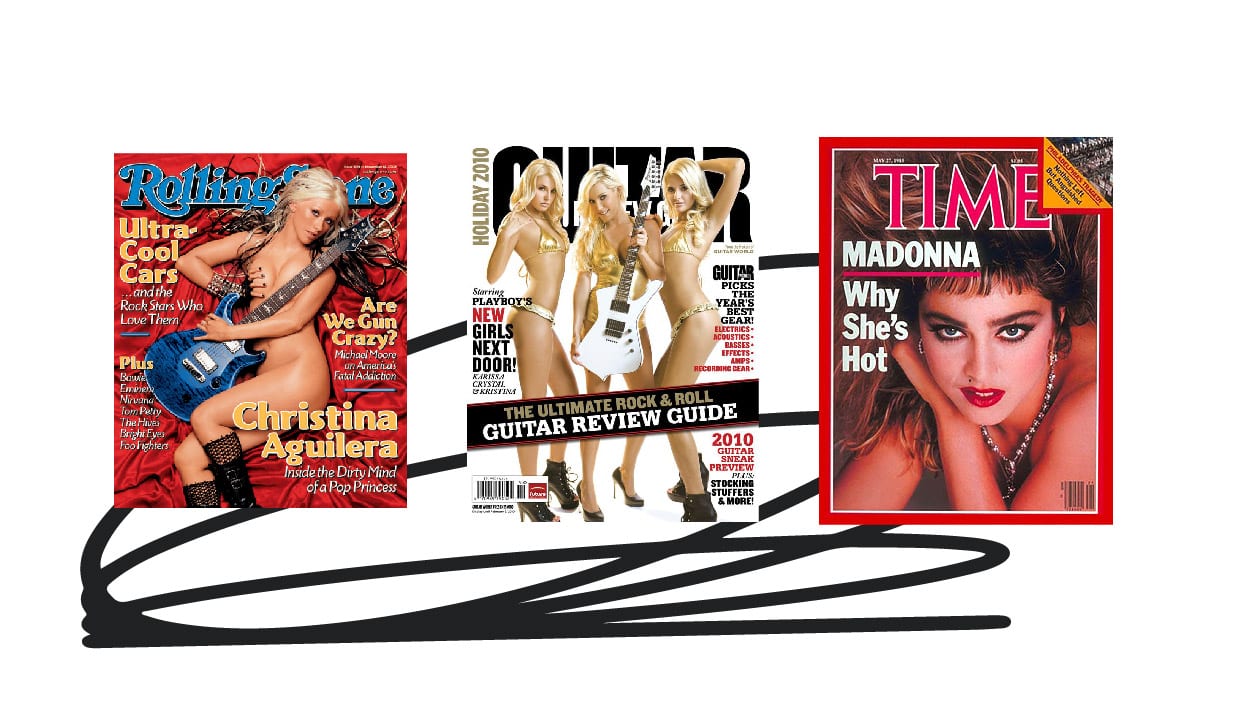
Earlier this month, the New York Times published, “Guitars Are Back, Baby!,” which reflects on 2020’s record-breaking increase of guitar sales due to the pandemic. The piece includes quotes from some of the industry’’s leading companies, demographic statistics, the influence of the guitar hero, and a few slight nods to the role of women. However, this piece fails us in the same ways previous writing about the relevance of guitar has: the visual portrayal and influence of BIPOC women are nowhere to be found and, more often than not, images of women rely on sexualized and feminine depictions.
The inherent problem lies in who’s doing the writing (older white men), who they are writing for (certainly not us, who make up half the market), who is invited into the conversation (older men), and who is being visually represented (cis white men and women). These same regurgitated voices and images preserve an antiquated guitar industry and culture, and in turn, these pieces speak exclusively to an older, white demographic. Apparently we, a community of diverse players from many different backgrounds and ages, are not included.
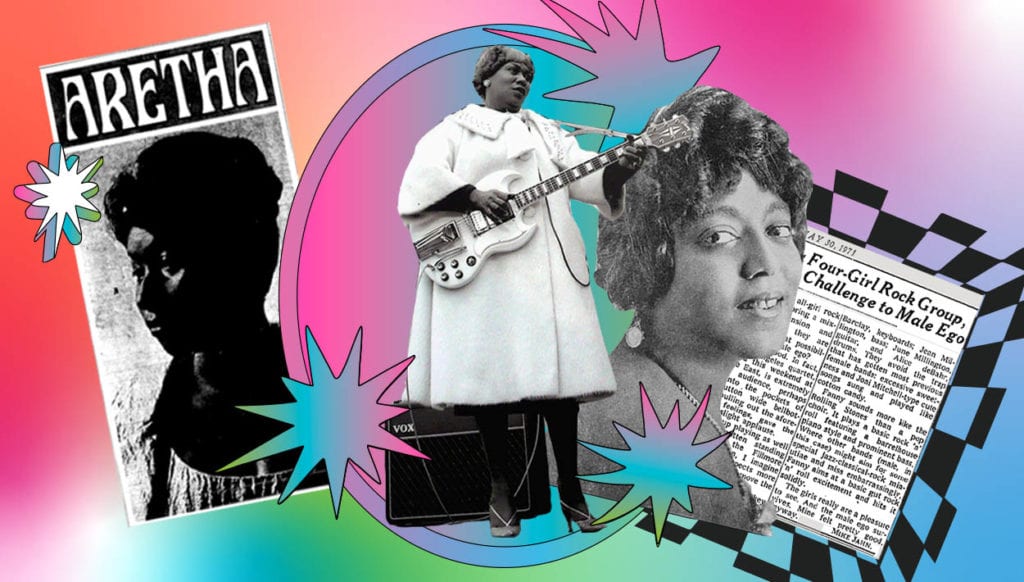
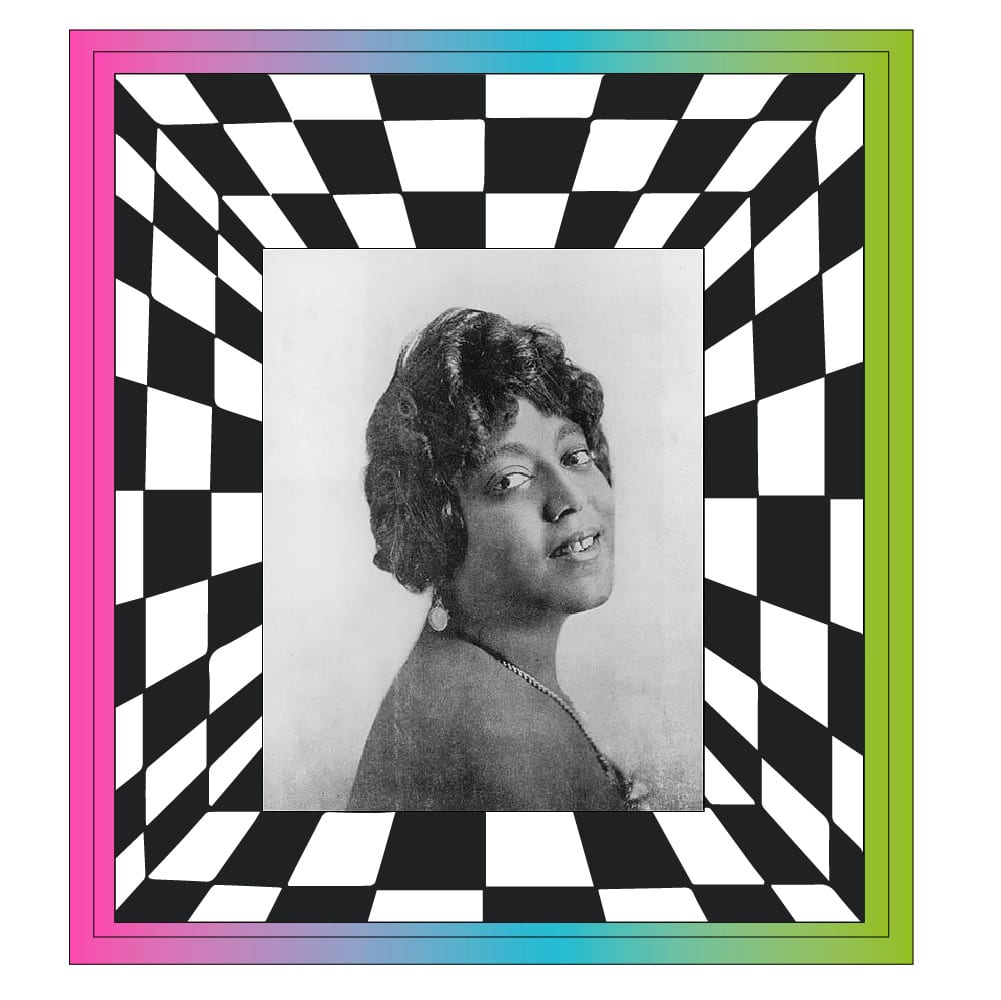
Mainstream media, as we mentioned in “Changing Tides: The Evolution of Women in Music Media,” shapes our understanding of who truly embodies and belongs in guitar and music culture. Imagine how these guitar death/rebirth pieces might read if they were written by a woman of color guitarist—the choices in language, representation, and dialogue would be drastically different, and more representative of players as a whole.
In an attempt to fill some of the gaps left by the New York Times piece, we aim to answer the following questions: Why are mainstream publications repeatedly failing to document our experiences and stories? What parts of the guitar and its culture are we saying goodbye to? Who are we welcoming and how is that shifting our understanding of guitar culture, education, and community?
The role of the guitar hero is almost always speculated upon in these articles. This archaic and masculine model (or overtly sexualized when women are depicted) perpetuated by these writers has long been dead in many of our communities. In general, the term refers to a guitar player’s specific individual ability to inspire through technical ability, and someone who fits this definition, yet very rarely mentioned, is H.E.R.
With an amazing combination of inspiration variations, H.E.R. plays with a technical presentation that leans toward melodic and ear-heavy training, as discussed in our cover interview for She Shreds Issue 20. Just last week, she became the first Black woman to release a Fender Signature Guitar, and yet the mainstream is still choosing to almost exclusively showcase Taylor Swift—as if women who play guitar should exclusively stick to acoustic, singer-songwriter music.
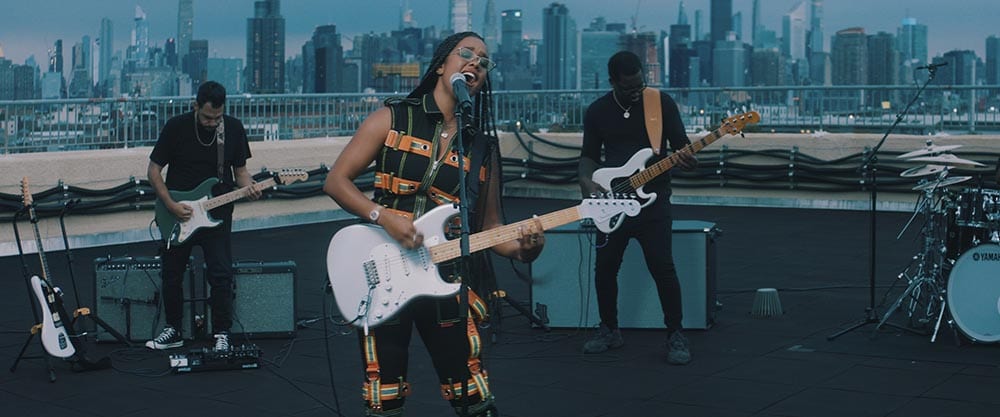
In 2020, the mainstream media must prioritize the representation and influence of communities outside of the white cis mold in order to keep up with trends and, ultimately, to showcase the reality of the culture, which is why H.E.R.’s signature guitar is a massive milestone. There is plenty of mainstream visibility for women and women of color guitarists right now (H.E.R., St. Vincent, Willow Smith, Brittany Howard, Yola, and the increased popularity of pop stars and their all-women bands, like Beyonce and Lizzo) but when guitar is discussed at an industry level, we’re still seeing the same old faces and hearing the same dull voices.
On the other hand, the guitar hero is no longer our sole source of inspiration. The ability to immediately connect via social media has strengthened our desire to learn and our ability to create community through guitar and music. On the ground level, we must recognize that community over individuality is of utmost importance for change—something that the mainstream and older generations seem to have a hard time grasping. To inspire outside of the mainstream understanding of guitar heros, we need to broaden our definition of what inspires us. And in order to include an intersectionality of women players, we need to look outside of ourselves to create and find inspiration through each other.
The death of the 20th century guitar hero seems to be at the hands of technological advances, resulting in a shift toward community-based inspiration and learning. “Maybe the issue isn’t too few guitar heroes, but too many of them,” writes Alex Williams in the New York Times article. “As any 30-minute foray through cover-song videos on YouTube will attest, there are approximately 1,000,000,007 much-better-than-average guitarists out there, many of whom are in their teens or early 20s. A great many of them are tearing through Hendrix, Eddie Van Halen or Jimmy Page licks. And a great many of them positively shred.” But Williams overlooked two crucial changes in the culture: first, that being “a good guitar player” no longer only means playing like the aforementioned men (for many, it’s to have the ability to express feeling and communicate); and second, that there is strength in community—modern players seek inspiration through representation.
In Fender’s 2018 market research, the company found that 72 percent of respondents picked up the guitar to learn something new and better their lives (players don’t necessarily want to become rock stars anymore), 61 percent of guitar players want to learn how to play for themselves, and 42 percent viewed guitar as part of their identity. While the 20th century beginner guitarist may have needed a hero to inspire progress and stardom, players today can learn more easily than ever through technological advances which equipt just about everyone with the right tools. But oftentimes, because of the overwhelming options and stimulation, there might be a lack of emotional, cultural, or personal connection, and the process might not be as meaningful or engaging. Watching a player show off their soloing speed is no longer as fulfilling as the right combination of chords, personality, and kindredship.
The shift toward community-based learning and inspiration is even more apparent in 2020, with stay-at-home orders and more time on our hands. While Williams credits the resurrection of the guitar to the pandemic, he fails to consider the recent trends that have greatly contributed as well—many of which are led by women and women of color. Musicians are hitting IG Live for more intimate performances, often accompanied by a minimal set up including an electric or acoustic guitar. One example has been Girls with Guitars, a weekly Instagram live performance and conversation series hosted by H.E.R. that gave viewers a glimpse into her technique, and even helped the rise of other participating guitarists including Cat Burns, who has recently become the face of TikTok UK. There’s also Pickup Music, a monthly membership artist-taught guitar education community built on showcasing the talents of a young Instagram community; In Session, a free six-day digital camp for women and nonbinary music producers of color from all levels and backgrounds; the influx of TikTok performances; Tiny Desk Home Concerts; and the many weekly IG live performances that we’ve flocked to in the absence of live music, such as Victoria Boyd of Infinity Song.
“The guitar will always evolve with popular music,” says Sam Blakelock, founder of Pickup Music. “The problem is the way the guitar is often taught is stuck in the 1980s. Many online guitar courses are still dominated by old white men teaching classic rock. This doesn’t speak to young players and isn’t representative of the new community of guitarists.”
Pickup Music is just one example of how social media has changed the landscape of guitar education, by breaking out of the mold with a modern and inclusive guitar-based community with reflective teachers of all ages, genders, and race. “Bringing people together who are interested in similar styles of guitar and who are at the same stage of their learning journey is the key to reaching new levels as a player,” says Blakelock.
Fender’s recent revival, as stated in the New York Time article, is accounted for by the following: in 2020, nearly 20 percent of beginner guitarists were under 24, 70 percent were under 45, and 45 percent identified as women.
“We’ve broken so many records,” Andy Mooney, chief executive of Fender Musical Instruments Corporation, told the New York Times. “It will be the biggest year of sales volume in Fender history, record days of double-digit growth, e-commerce sales and beginner gear sales. I never would have thought we would be where we are today if you asked me back in March.”
This information, combined with Fender’s 2018 research that showed 19 percent of beginner’s identified as Black and 25 percent as Latinx (and what we can only imagine has increased since, with role models like H.E.R. and Willow breaking further into the mainstream) should act as a glaring indicator as to who the mainstream media should be passing the mic to. Any mainstream publication that addresses the death/rebirth of the guitar and fails to include the voices of women and younger generations is damaging not only to those voices, but to the sustainability of the industry at large. If mainstream media shapes the general population’s understanding of guitar and music culture, and mainstream media is not accurately representing that culture, then perhaps the guitar’s demise has just as much to do with the media’s negligence as it does with consumers.
Grasping onto a culture that simply doesn’t hold a future for the music industry anymore is detrimental on many levels. And as a result, if the question remains, “Is the guitar dying?” then the answer is yes: let the guitar, as the media has forced us to perceive it, fissile out. It’s time to let those who are being left out of the narrative—the major contributors to the guitar’s resurrection, thus lining the pockets of these major music companies—to lead the conversation, and to be recognized and uplifted for the imperative role they play in saving the industry.























Aries is the sign of recovery. The warrior rises at dawn with an intention set in stone—integrity and strength of character drive the actions that are in tune with universal spirit. Now is the time to dig up the pieces that have been buried in the mud. The dust has not yet settled, the fight has only just begun. Remember what you came here to do—the Earth is giving you the time to do it.
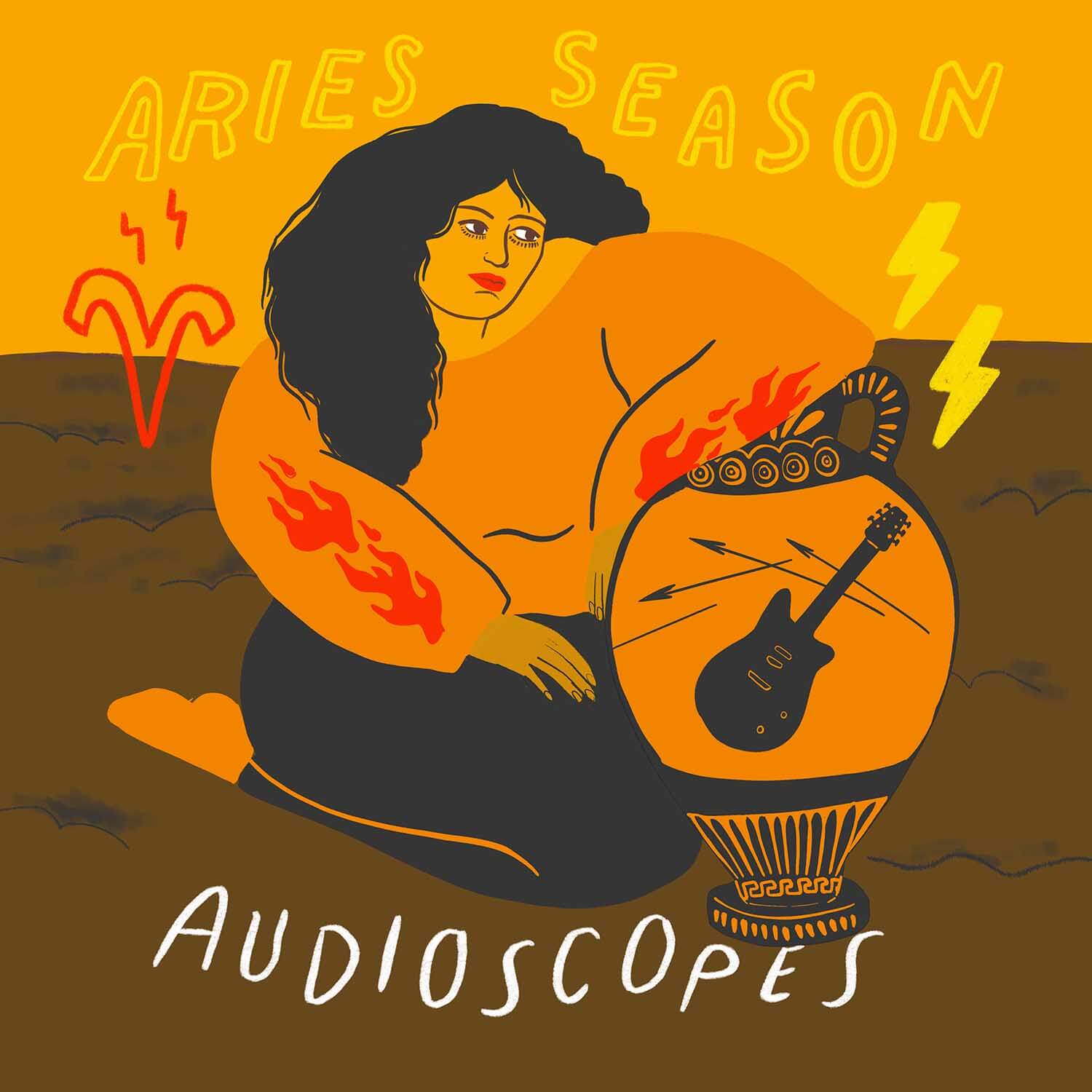
Your fight through the thick undergrowth, densely populating the ground between the trees, hasn’t been for your own benefit alone. As you clear a path through the thick foliage—light in one hand, guide in the other—you set down the steps that others may follow. Someone had to go first, and your wildest impulses are now met with the recovery of purpose. We are all one and yet we are all many. The energy that drives you brings forth the path that is necessary for expansive recollection of what has once been and will be again. Don’t fear what is to be revealed beyond the next field of vision—you have ample practice pushing forward through the shadows of the unknown.
Audio Tip: Find inspiration for a new song from something you have overcome.

Spring is at your door. What will you plant in your garden this year, once the fog clears up and the rain begins to fall? This is a time for new roots to take hold. The ground no longer accepts the same seeds from last year’s bloom—the environment is different now, and so are you. Take this time to understand in what ways your heart has changed over the matter. From the soft soil of your solar plexus a new seed begins to bloom, even now, as it has yet to take root. Feed it. Let it grow within and extend its branches out into the open, ringing in the new dawn. You will give this seed a home soon.
Audio Tip: Try out a new creative practice – style of music, video project, or visual interpretation of a song.

The narrative is changing. The same stories you’ve told before have new endings, the characters you’ve known have grown. You cannot keep giving us the same message day in, day out with the same tenacity as before. Your heart has moved, like an iceberg slowly treading water, but you’re not sure where it’s headed. That’s ok. Let things shift around you and find the clues within the lyrics of your song. Write the lines out for yourself, perform behind closed doors—get the sound right. You are your own audience right now, and you’re perfecting a new song.
Audio: Write a new song with a theme you’ve used previously, but from a different perspective.

The groove you find yourself in is dictated by the people around you who play the hedges, guiding the needle down the track, filling in the background noise. You can only see as far as you dare to tread, the distance dictated by the voices you entertain when night falls. Are you dedicated to your practice, or to the people that fill in the chorus? Have you let your sound be taken over by the background, afraid to tread ahead alone? Only you know if you’re ready to shed comfort for the vibrancy resonating in your core. Only you can pull out the shard of light that is lodged in your throat.
Audio Tip: Play a song in the style of one of your closest friends.
The sweat dripping down your back isn’t the only thing you miss about the dance floor. In every moment of movement, there is your energy meeting their energy meeting the universal energy through resonant flow. Your body slices through the air like jelly, your feet carve out new paths on the floor. Do you need a partner to keep dancing? Or can you negotiate the rhythm alone? The sound of your heels hitting up against the floor is for you alone—can you keep dancing if there is no one left to see it?
Audio Tip: Collaborate on a project with someone new.
You can decimate the particles of pestilence with the wrath of a self-convicted sun. You can scrub your hands raw on the grindstone, ridding every last flaw. Revealing the bone cold truth of every living moment will satisfy the urge to cleanse, but only for a moment. Skin grows back. Cells, too. Tomorrow, a new threat will rise, as sure as the little hairs on the back of your neck that will respond. You need to cleanse on a different level—not with bar soap or scrubs, not with sage or crystals, not with light rays or photons. Deep in the crevices of your bones there lies your enemy: memory.
Audio Tip: Record a hymn to the energetic field of your choice.
Would you refuse to put a seed to flower knowing that the bloom will fall come autumn? The world follows a natural rhythm, a spring, a blossom, a fall, a renewal—who are we to get in the way? The seed that is yearning to bear fruit doesn’t bemoan the renewal of its offering. Trees are gifted with the absence of self-knowledge: you have to contemplate loss before you begin. Is this burden worth the practice, or will you choose to hold back your desire, waiting for a better spring? You may have the world’s worth of time to wait on, but only if you can keep the window open and the sun shining in.
Audio Tip: Release a pre-recorded song that you shelved.
Test out each square on the bedroom floor. Jump up and down on the softer areas, listening for cracks between the tiles. There are places where the foundation has corroded and needs to be replaced, while other weaknesses in the ground can be mended through care and practice. Make your decisions now about how to best deal with the creaks and cracks beneath your feet. A solid platform is necessary for movement, and no one will ensure you—this work is your own. Cutting away the rot comes first; the band-aid is ripped and the wounds laid bare. This is a time of mourning. Next comes the setting of new boards.
Audio Tip: Practice a new percussion instrument this month.
Playing aloof is a luxury for those who can afford to let opportunities pass them by. As you sharpen your arrows on the grindstone, restring your bow, watch patiently from the vantage point of the sidelines as your opponents take the floor, you’ll notice no one is looking over anymore. The time to bide your time has ended, and if you want to recoup your losses you’ll have to step into the challenge and claim your space on the ring’s floor. Aim your bow at the target you’ve intended, step back, breathe into it, and let your shot ring true.
Audio Tip: Ask to join a tour that you think is out of your reach.
The pretty little boxes you’ve built have been decimated by fire, buried by ice, and laid bare by the storm. But you haven’t walked away empty-handed. You’ve learned how to set a foundation right, what materials to use, who you can call on to help secure the roof. Knowledge is a much sturdier material than metal, and now is your time to rebuild. Let the grief refine you, sanding down your edges into fine pin-pricks of desire. There is more for you here than the field you have known, but first you have to let it burn, the soil turning over for new roots to take hold.
Audio Tip: Let your grief be given a song.
You step up to the plate, bat in hand, weighing down the options as you stare down the ball. You can’t let your swing flow when you are trying to consider the airflow, the emotional state of the pitcher, your teammates leg on the base, your coaches rough breath, the texture of the dirt between your toes. You have to focus on your grip, the tension in your muscles, the way your arm moves through the swing as it has done countless times before. Correct contact is directly dependent on trust. Let it flow.
Audio Tip: Record a jam session. Play it back. Build on it.
This is the time of reaping. Your fields have all gone to pasture, the fruits of your labor are sitting in store, the sweat that has poured down your back is now dry salt shards. Are you satisfied? Is this the same row you’d like to walk down next season, or are you ready to put down the plow, hoping for a reason to look up at the sun instead of down at your shadow? Celebrate this moment of necessary respite, as the sun goes down and the herald crows. The sun is setting on an old way, and in this night you will dream anew.
Audio Tip: Create a healing track for yourself only.
Murder ballads are everywhere. From songs, to movies, and beyond, the centuries-old subgenre is ingrained in our culture—and sometimes, we may not even pick up on the violent, and often misogynistic, messages.
You may have encountered murder ballads in the podcast Dolly Parton’s America, in which an entire episode it dedicated to how they influenced Parton’s earlier albums, and how she became a feminist icon by flipping the script; on The Hunger Games soundtrack, in which the foreboding song “The Hanging Tree” draws from Appalachian folk; the bluegrass standard, “Pretty Polly,” which has been performed by everyone from jazz guitarist Bill Frisell to Judy Collins to Throwing Muses frontwoman Kristin Hersh; or songs like “Hey Joe” (popularized by Jimi Hendrix), “I Used to Love Her” by Guns N’ Roses, or “Love the Way You Lie” by Eminem (featuring Rihanna)—all of which may not strictly follow the murder ballad formula, but continue the violent lyrical tradition.
However, there’s an entire history of women performing traditional murder ballads, as well as writing some of their own, as an act of taking ownership of a tradition that often kept them defeated and, well, dead.
Originally, the murder ballad subgenre sprung from the ballad tradition, a narrative song form that often depicted an event (in the case of murder ballads, the killing is the event). While many ballads remembered and performed in the US today largely originate from the British Isles, there are various ballad traditions from all over Europe. And in the US, many murder ballads come out of Appalachia, where the majority of the early settlers were from the Anglo-Scottish border country.
In this context, ballad has a different meaning from modern day musical parlance; historically, it’s a song or poem that chronicles a particular story, with or without music. Broadside ballads were poems about real events that were printed and distributed to the public. Eventually, there were melodies added to some of these poems, and many renditions were performed by an array of musicians, which accounts for the variations of these songs (often with no known author) that one might hear today. These broadside ballads were used to make money, chronicling a crime and sometimes sold as souvenirs outside of court houses. They also acted as a way to convey information throughout communities—and in some ways, they were almost like tabloids.
What many listeners don’t realize is that traditional American murder ballads often depict the real and true murder of a woman. Many were pregnant, often slain by the father of their unborn child (maybe their lovers were already married, or of a different social standing, and these women became a problem that needed to be taken care of)— in any case their pregnancies apparently made them inconvenient and disposable.
Murder ballads focused exclusively on homicide, and often the homicide of women. They were sung and written from various points of view: Sometimes the killer expressed their remorse (“Banks of the Ohio”), other times the victim sang from beyond the grave (“The Twa Sisters”), and in some songs the narrator was omniscient and removed from the direct action of the story (“The Ballad of Pearl Bryan”). The women in these songs were perceived as innocent, helpless victims who were “led astray” by their lovers—who, more often than not, were also the murderers—powerless against their fate. The messages of these songs were heard as warnings to other young women of the time to not to go down the same path, while the men were often portrayed in a bizarrely sympathetic way, seemingly not responsible for their own actions, but rather co-victims in these “crimes of passion.”
Murder ballads based on true stories turned real-life victims into narrative stereotypes, warning other women what would happen if they “misbehaved”—in other words, women engaged in their rightful autonomy while men disturbingly pushed back. This, in turn, fed the public curiosity of violence as entertainment, and perhaps was one of the earliest forms of true crime media that is so rampant today.
“The murder ballads witness that Appalachia, specifically in the 19th-century period of industrial change, was defined by essential tensions between cultural traditions of the past and emerging notions of American modernism. This tension is met in the songs with responses of violence against women whose life situations—marked by sexual freedom—are the very depiction of a new cultural modernism that threatens the hegemony of the past.”
“‘This Murder Done’: Misogyny, Femicide, and Modernity in 19th-Century Appalachian Murder Ballads.”
One of the most famous murder ballads, “Omie Wise,” tells the story of the 1808 murder of Naomi Wise, who died in North Carolina. While the actual facts of this case are lost to history, according to folklorist Eleanor R. Long-Wilgus, it was suspected that John Lewis, who was thought to be the father of Naomi’s unborn child, killed her. It is believed that Naomi may have been older than Lewis and knew that he was engaged to be married to someone else. When Naomi became pregnant, it appears that her fate was sealed. In one of the most famous versions of the song, by guitarist and singer Doc Watson, the lyrics state:
John Lewis, John Lewis, will you tell me your mind?
Do you intend to marry me or leave me behind?
Little Omie, little Omie, I’ll tell you my mind,
My mind is to drown you and leave you behind.
Have mercy on my baby and spare me my life,
I’ll go home as a beggar and never be your wife.
Meanwhile, “Pearl Bryan,” another well-known and particularly gruesome ballad about the killing and beheading of a pregnant 22-year-old Indiana woman in 1896, does not usually reference her pregnancy, but it does refer to her alleged killer, Scott Jackson, as her beloved:
What have I done Scott Jackson that you should take my life,
I’ve always loved you dearly. I would have been your wife.
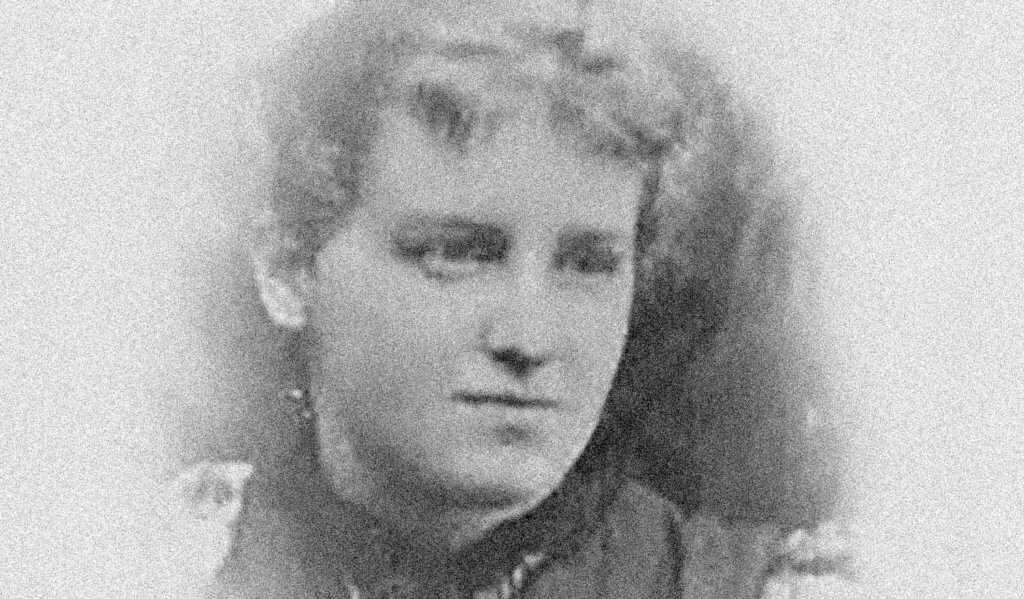
While dozens of songs recounting the murder of Bryan have been recorded, they all vary in the way the story is told. The real story, according to folklorist Sarah Bryan (no relation), began when Bryan contacted Scott Jackson, whom she believed could be the father of her unborn child. With the help of Alonzo Walling, it’s been speculated that the two either brought her to a doctor in Cincinnati who mishandled the abortion, or Jackson and Walling, using what they learned in dental school, attempted to perform the procedure and failed, resulting in her death. The two brought Bryan to Kentucky and disposed of her body, but not before beheading her as an attempt to prevent identification. Jackson and Walling were eventually caught, found guilty, and sentenced to a double hanging.
As the 20th century carried on, murder ballads continued to burrow their way into the American consciousness. And not surprisingly, women stepped in and put their own stamp on this tradition, turning the tables and questioning the status quo of murder ballad lyrics. In the 1920s and 1930s, many traditional murder ballads had made their way into the collective folk/country/bluegrass repertoire, resulting in them often being sung by women.
In 1924, North Carolina musician Eva Davis, along with friend and fellow musician Samantha Bumgarner, traveled to New York City to record some songs, including the murder ballad, “John Hardy” on banjo. The song can be traced back to West Virginia, where it’s believed that John Hardy killed Thomas Drews in a disagreement over a game of craps.
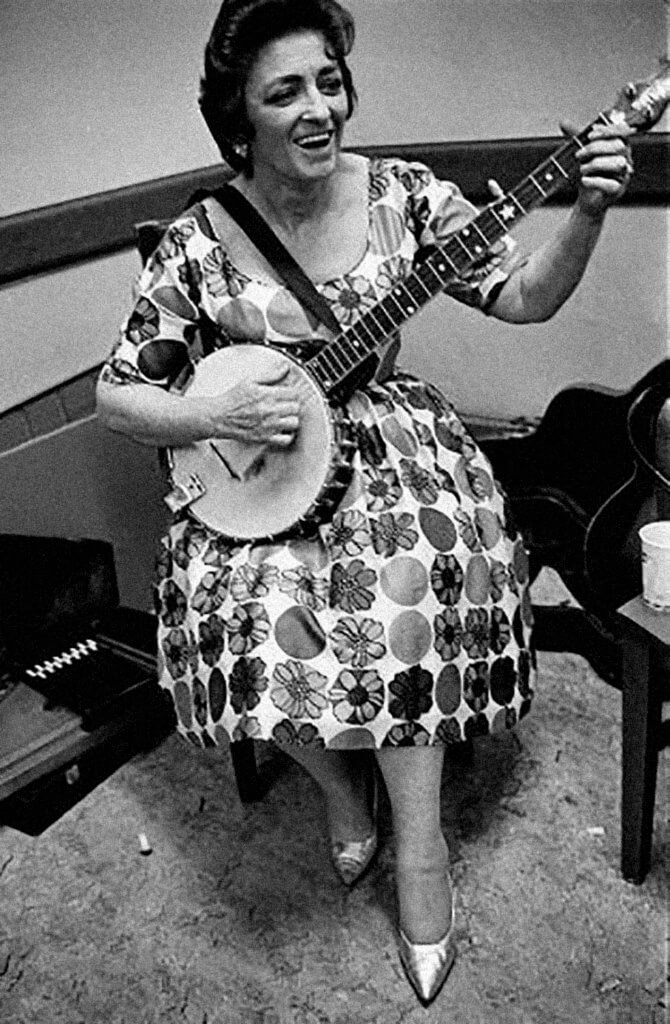
Following in 1928, the Carter Family, with Maybelle Carter on guitar, recorded a variation of the song, titled, “John Hardy Was a Desperate Little Man.” Maybelle Carter, with her distinctive style of playing called the “Carter Scratch,” influenced legions of guitarists, and her iconic Gibson L-5 sits in the Country Music Hall of Fame and Museum in Nashville.
In the late 1930s, the Coon Creek Girls, an influential all-women string band that appeared regularly on the Renfro Valley Barn Dance radio program, recorded the murder ballad “Pretty Polly.” The song has roots dating back to the 1760s, and its impact is still felt today with versions heard on television shows such as House of Cards and Deadwood. The Coon Creek Girls, along with singer Idy Harper, also recorded a variation of “Omie Wise,” titled “Poor Naomi Wise.” The group featured Lily May Ledford, Rosie Ledford, Esther “Violet” Koehler, and Evelyn “Daisy” Lange. Lily May Ledford enjoyed a resurgence in her career during the folk music revival of the 1960s, and was awarded a National Heritage Fellowship before she passed away in 1985.
It wasn’t until around the 1940s when women began regularly reclaiming murder ballads as their own, writing and recording original music and putting women in positions of power.
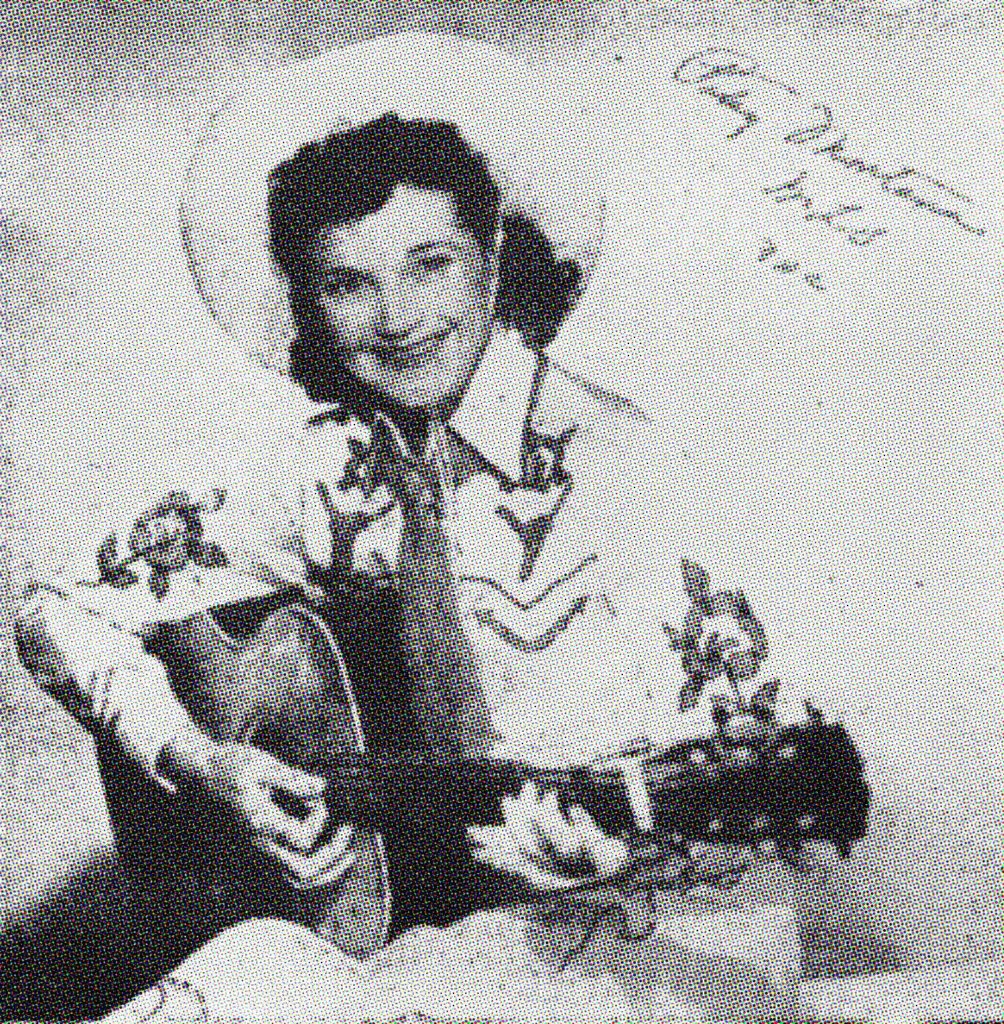
Patsy Montana, who was the first woman recording artist to have a million-selling record with, “I Want To Be A Cowboy’s Sweetheart,” had another tune in her repertoire with a decidedly darker bent. “I Didn’t Know the Gun Was Loaded” tells the story of a murderous, gun-toting femme fatale, Miss Effie. Written by Herb Leventhal and Hank Fort (who was born Eleanor Hankins), the song was recorded by several different artists in 1949, with notable versions by the Andrews Sisters and Montana. The second verse is positively revolutionary for a song recorded at the time, as it could be interpreted as Miss Effie shooting a man who tried to rape her:
Now one night she had a date,
With a wrestling heavyweight.
And he tried a brand new hold,
She did not appreciate.
So she whipped out her pistol,
And she shot him in the knee,
And quickly, she sang this plea.
I didn’t know the gun was loaded,
And I’m so sorry my friend.
I didn’t know the gun was loaded,
And I’ll never, never do it again.
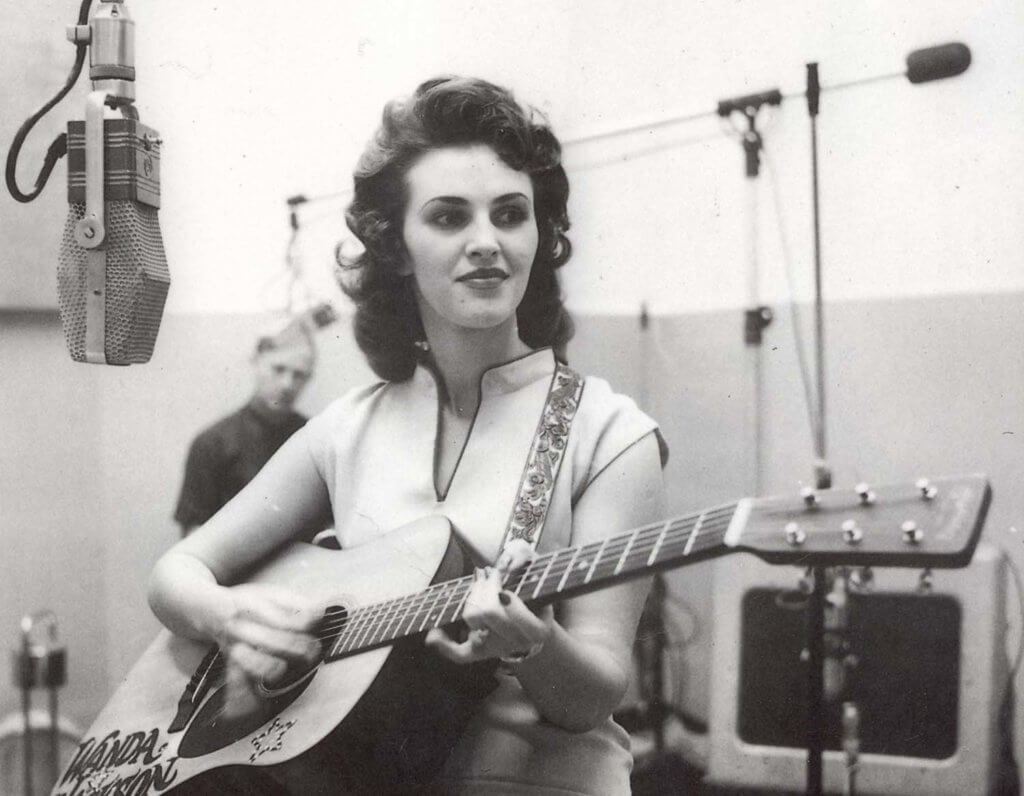
In 1966, rockabilly and country pioneer Wanda Jackson recorded another song of revenge, “The Box It Came In.” Written by Vic McAlpin, the song peaked at #18 on the Billboard Hot Country Songs and spent 11 weeks on the charts. In her autobiography, Every Night is Saturday Night: A Country Girl’s Journey to the Rock & Roll Hall of Fame, Jackson wrote, “In 1966, Capitol released ‘The Box It Came In,’ which was my first Top 20 country single since 1961. That was one Ken Nelson [producer] was a little worried about because of the subject matter.” She felt strongly about the song, adding, “I thought it was great, but Ken was always a little scared of courting controversy. I always like feisty songs, so I convinced him we should do it.”
My clothes are all ragged my goodwill coat’s not the best,
And I’m a walking on cardboard in my last dollar dress.
I looked in the closet for my wedding gown,
But the box that it came in was all that I found.
He took everything with him that wasn’t nailed down,
Bet he’s got a new sweetheart to fill my wedding gown.
But somewhere I’ll find him then I’ll have peace of mind,
And the box he comes home in will be all satin lined.
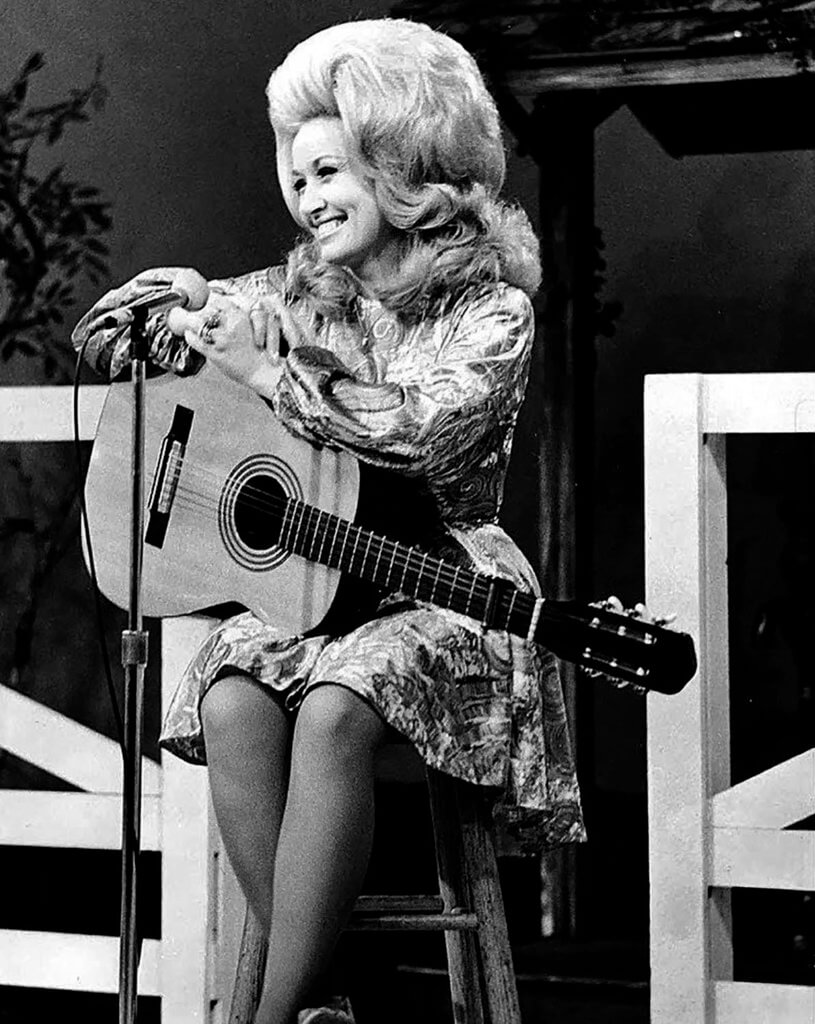
Dolly Parton is a trailblazer in many ways, and her contribution to murder ballads is no exception. Her first four albums, recorded in the late 1960s, delve into the reality of life for women in a way that not many had done. Helen Morales, Argyropoulos Professor of Hellenic Studies at UC Santa Barbara, author of Pilgrimage to Dollywood, and guest on Dolly Parton’s America states that Parton’s songs “provide an insistent witnessing of women’s lives,” and speaks about “women being treated really badly by men.” During her career, Parton has covered traditional ballads including “Banks of the Ohio” (also covered by Joan Baez, who was known to often perform murder ballads) and “Silver Dagger,” but in 1967, she wrote the murder ballad, “The Bridge.” The song is told from the perspective of a woman who falls in love with a man under a bridge. He gets her pregnant and flees, resulting in the woman returning to the bridge to commit suicide: “Here is where it started, and here is where I’ll end it.”
Many contemporary songwriters have drawn inspiration from these old stories, creating their own modern day murder ballads. And women, specifically, continue to subvert the violence in both subtle and overt ways.
One of the most famous murder ballads, written at the end of the 20th century, is the Dixie Chicks’ righteously revengeful “Goodbye Earl,” in which lifelong best friends, Mary Ann and Wanda, kill Wanda’s abusive husband. The song was controversial for its time, and some radio stations refused to give it airtime—according to the LA Times, about 20 out of the 149 radio stations tracked by Radio & Records refused to play the song when it was released.
But what makes this song different from other murder ballads is its happy ending: Maryann and Wanda open up a roadside stand and face zero consequences from the murder of Earl, because, as the songs states, “It turns out he was a missing person who nobody missed at all.” The video won the Academy of Country Music and Country Music Association award for Video of the Year, and some radio stations that did play the song often aired it alongside messages that referred domestic violence victims to hotlines for support.
On Gillian Welch’s 1998 album, Hell Among the Yearlings, the singer-songwriter, along with David Rawlings, contributed a new staple of the murder ballad genre with the song “Caleb Meyer,” in which a woman kills her rapist while he’s attacking her. The song does not present any easy answers, and the narrator wrestles with what she did out of self defense:
Caleb Meyer, your ghost is gonna
Wear them rattlin’ chains.
But when I go to sleep at night,
Don’t you call my name.
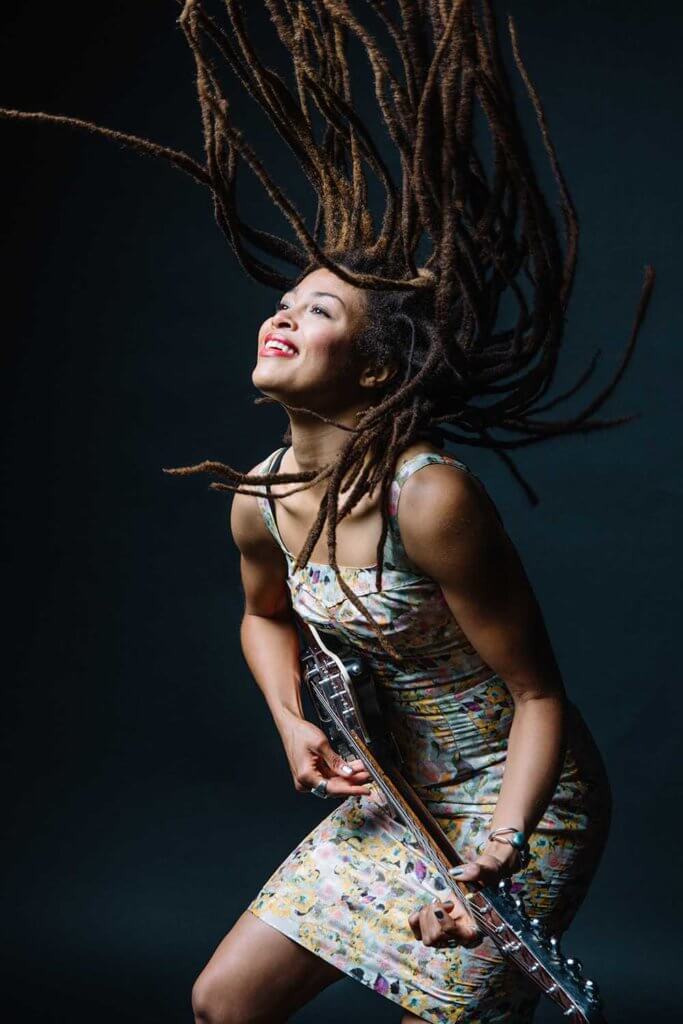
Valerie June’s “Shotgun,” released on her 2013 album, Pushin’ Against A Stone, tells the story of a jealous lover who kills their cheating partner and then kills themself. This visceral, bluesy track features June’s stirring guitar work and haunting vocals.
Again, moral ambiguity is on display; an unfaithful lover is met with revenge. In an interview with NPR, when asked about writing “Shotgun,” June responded, “Many times in the older songs, the woman’s the one to die. And I was like, no, no, no—it can’t always be that. We have to balance out the murder-ballad situation.”

Perhaps one of the most notable modern songs to address murder ballads is Hurray for the Riff Raff’s “The Body Electric,” released on 2014’s Small Town Heroes. Songwriter Alynda Segarra uses the song to address how our culture treats violence with detachment, especially violence against women, and she expertly frames this by pointing to the casual violence of murder ballads: “While the whole world sings / Sing it like a song / The whole world sings like there’s nothing going wrong.”
“I am mostly familiar with how [‘The Body Electric’] has taught me there is a true connection between gendered violence and racist violence. There is a weaponization of the body happening right now in America. Our bodies are being turned against us. Black and brown bodies are being portrayed as inherently dangerous. A Black person’s size and stature are being used as reason for murder against them. This is ultimately a deranged fear of the power and capabilities of black people. It is the same evil idea that leads us to blame women for attacks by their abusers. Normalizing rape, domestic abuse and even murder of women of all races is an effort to take the humanity out of our female bodies. To objectify and to ridicule the female body is ultimately a symptom of fear of the power women hold.”
“The Political Folk Song Of The Year,” NPR
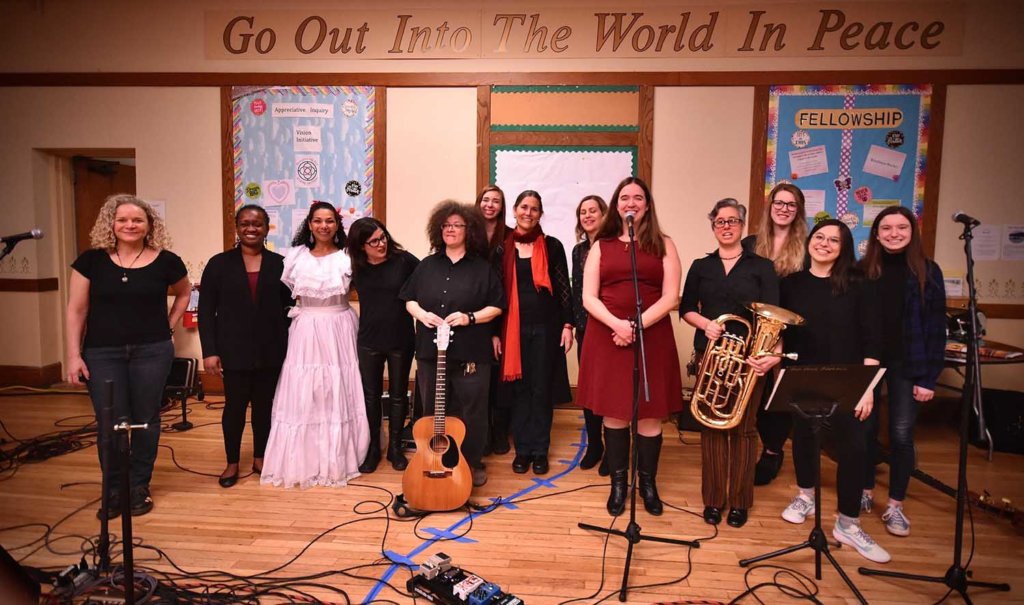
Musicians today are creatively reckoning with the ghosts of American folk music. Women are taking control of a narrative that was once physically and creatively forced upon them, and pointing out the hypocrisy of the detached view of violence—in fact, on International Women’s Day in Middletown, Connecticut, a group of musicians did just that.
With funding from a REGI Grant (Regional Initiative Grant Program) from the state of Connecticut, I organized the event, The Murder Ballad Project: Reframing Songs of Violence, as a response to my lifelong fascination with murder ballads and their place in our culture. I invited some of my favorite artists from the region, including Rani Arbo, Pamela Means, Lara Herscovitch, Amanda Monaco, and Karen Dahlstrom to perform both murder ballads and songs of empowerment. We partnered with New Horizons Domestic Violence Services to raise money for them, but to also provide context that the violence women faced in murder ballads is still very much a reality.
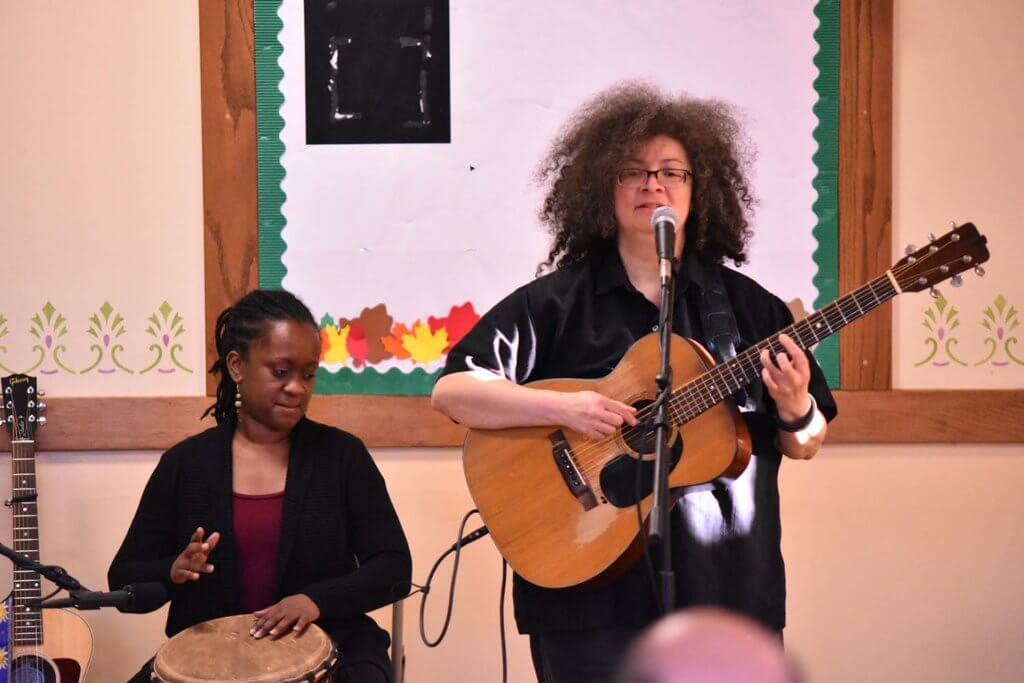
My hope is that if we look at the violence in these songs head on, without a sense of detachment or denial, then maybe our collective resignation to violence will change. I was humbled to be a part of the long tradition of women taking what has been given to them—in this case, murder ballads—and flipping the script.
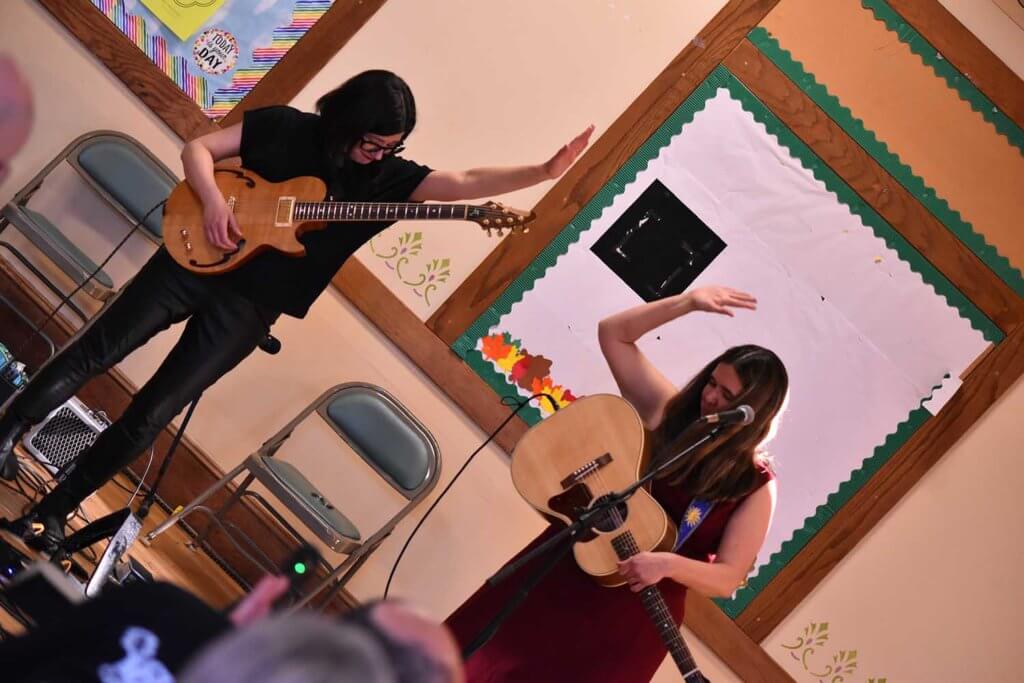
The narrative landscape of Amelia Jackie is sumptuous and decadent. There are ripe peaches, ice cold plums, butter, and sweet cream. A magic mouth, a red velvet mouth, a “girl that I love” who’s got “a big, golden tongue”—her songs build an entire world. I describe it to Amelia as “Southern Gothic, Bastard Out of Carolina, lesbian Americana” and she laughs, surprised.
“That is what it is,” says Amelia. “Do you remember in that book how she can’t sing and she really wants to? I really related to that. I grew up without much, but a lot of passion. Bone in Bastard Out of Carolina [by Dorothy Allison] had this extreme pain around not being good, about not being able to sing, and that made her sing alone. I had the same fear, but I did it in public anyways. I have to try really hard to be good.” She paused for a moment. “The problem for a long time was that I was trying to be good, when I should have just been who I was.”
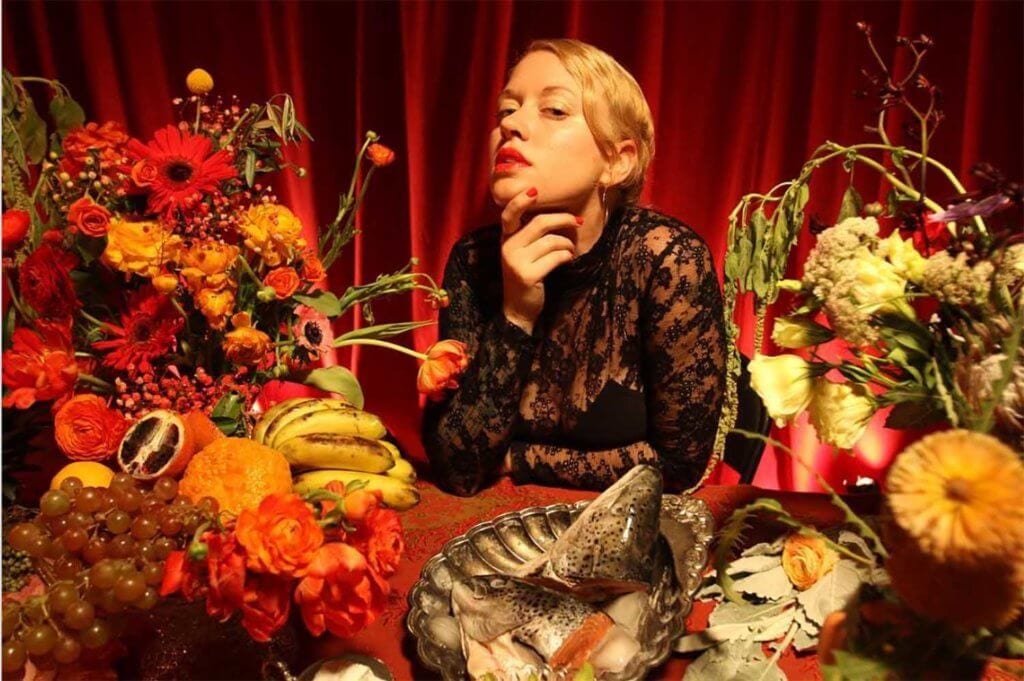
In 2018, Amelia released a video for “Velvet Leash,” her first song released since 2013’s Molasses Gospel, a country-inflected alt-rock bop dripping with a syrupy sexuality, like Sade singing a Lucinda Williams song. “When I was studying feminist theory and women’s writing, one of the things we talked about was sexual subjectivity, describing your experience,” says Amelia, chuckling. “And I guess I really ran with that.”
The video is a perfect accompaniment—a visually stunning world of vivid colors, plump fruits, and lush fabrics. It’s decadent without seeming affluent, a world populated by women and queers. They eat, take baths, and do their makeup in groups at the bathroom mirror. They attend a party together at a picturesque LA craftsman bungalow. They’re butch, femme, androgynous, cis, trans, waifish, zaftig. They’re all beautiful and they’re all friends. When the video came out I joked that it was the L Word reboot we all wanted but didn’t deserve.
The first time I saw Amelia play was in 2006 at Lorena Haus, named for Lorena Bobbitt, Amelia’s shared apartment in Borough Park, Brooklyn that hosted shows. I also played that night, (a solo set of songs I’d written with my twink punk band, Gloryhole), along with Alynda Lee Segarra, who still makes music under the name Hurray For The Riff Raff. I can vividly remember sitting on the living room floor watching Amelia play her guitar harder than I thought was possible. Until that point (and well beyond) I had spent most of my free time at punk and hardcore shows, and while Amelia certainly didn’t play the most aggressive music I’d ever heard—on the contrary, her songs were deeply vulnerable—she was one of the most aggressive guitar players I’d ever seen. She looked like she was trying to harm the guitar: “I really used to hurt myself back then. My hands would bleed after I played. And now I’m like, ‘what was I doing?’”
The highlight of Amelia’s set was “City Kid,” a song about her mom trying to hide an eviction from her and her sisters. I can still hear her singing the end of the first verse: “And mama didn’t pay the rent / So we’d just come home from school / And everything was out on the lawn / She said, ‘Take what you need, but need what you take, we’re going away today.’”
Walking home from that party as the sun came up and a light snow fell, I felt like I was living the life I had dreamed about as a teen: Roaming the city at dawn, still drunk from the night before, coming from a party full of cool, talented women with a song I’d heard one of them sing still stuck in my head. We were all young and there was so much future stretched out ahead of us.
In 2007, my drinking had become constant. I spent all my time either drunk, or hung over and getting there. I had failed out of college and worked a series of bottom-rung service industry jobs that paid me enough under the table to keep partying, but didn’t require any kind of acuity to perform. I was beginning to develop an awareness that I was drinking to blot out something inside me, but I didn’t yet know what.
At the same time, Amelia and a few friends moved to a loft in Bushwick where they continued to have shows—and not just intimate singer-songwriters like Lorena Haus, but full bands. In my fuzzy memories, 1087 Loft felt like a space for queer women, but it wasn’t always that way. “When we first started booking shows there, we just booked whoever,” Amelia says. “We had a Leftover Crack show, the biggest show we ever had, and there were so many underaged kids puking off the porch and breaking our shit. After that we realized we had to be more intentional about our shows and we started only booking queer, trans, and women bands. Because making another space for men to act out, we were just like, creating something that already exists. We wanted to make something different.”
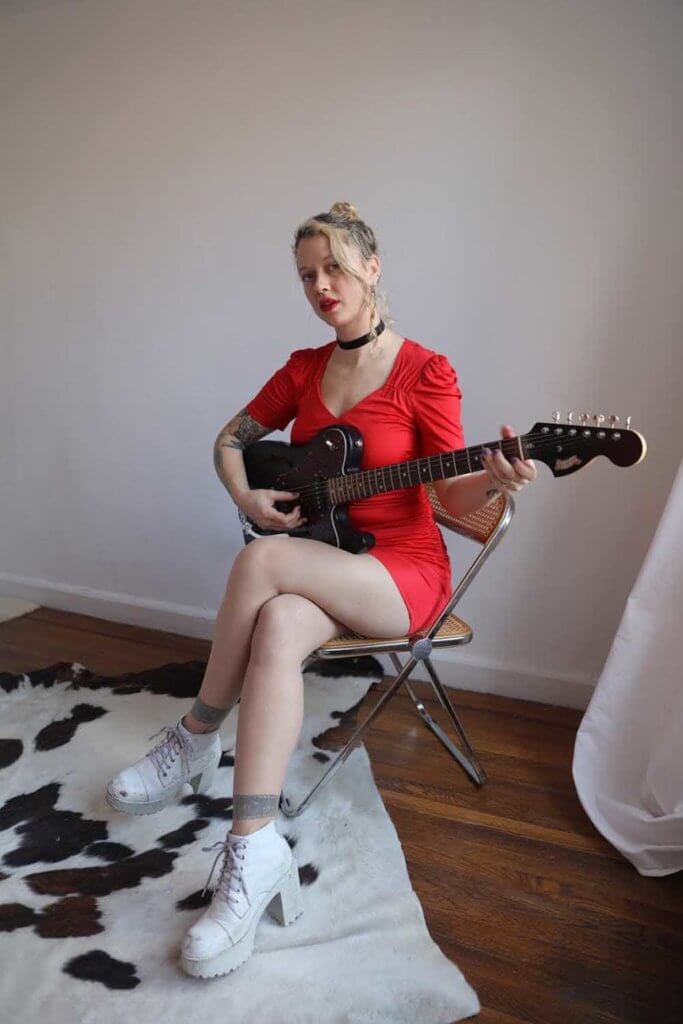
In the 15 years since Amelia and I met, she’s come into her own as a musician. She’s more confident, and plays an electric guitar with a more minimal, softer touch. She tunes it differently, at the behest of her drummer and producer, Robin MacMillan, who she met working at the now closed restaurant Mama’s in the East Village. “You know who else worked at Mama’s?” asks Amelia, barely pausing long enough for me to begin to stammer out the name of an old friend. “…Cat Power.”
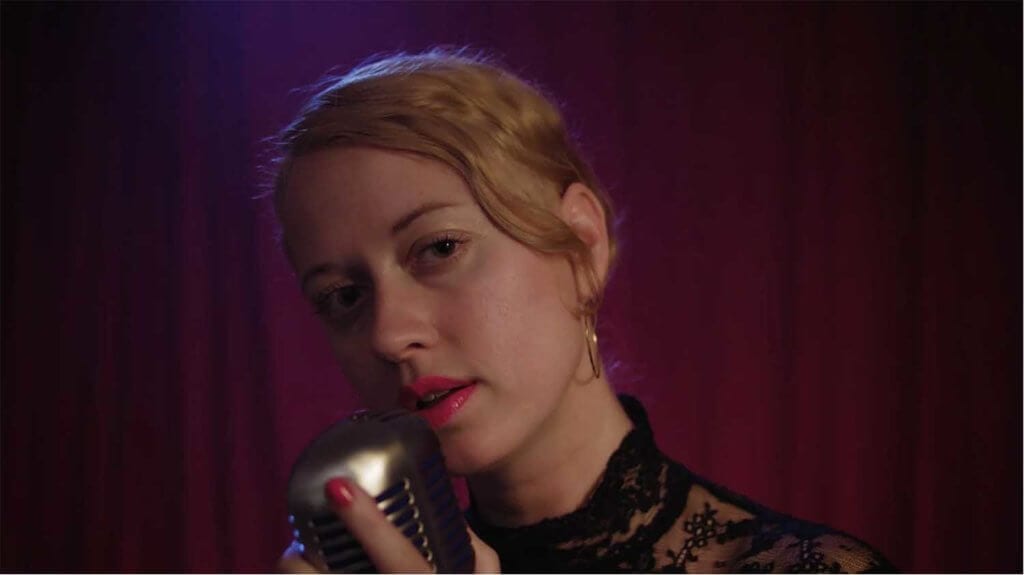
“Velvet Leash” is the first single from Amelia’s new record of the same name, which she is still seeking a label to release. In November, she released her second single, “Most Beautiful Name.” It’s slower than “Velvet Leash,” less sultry, more gentle, but still powerful, as Amelia’s music always has been. The first time I heard her sing the line, “Just because I hate my body doesn’t mean I can’t love yours,” I got chills.
Velvet Leash isn’t easily categorizable. The songs are not quite folk, not quite pop, not quite country, but somehow all three at once, like early Joan Armatrading. Even individual instruments jump genres: Contrast the slide guitar that opens “Ice Cold Plum,” an urbane ballad that could fit right in on Mazzy Star’s She Hangs Brightly, with a similar sounding slide on “Electric Eyes,” a kinetic alt-country ode to young love that invokes the expanses of America you might see from the back of a pickup, an open box car, or the passenger seat of your girlfriend’s Outback.
“Electric Eyes” is Amelia’s most recent single, and it’s a perfect encapsulation of her oeuvre. Its sound is pure bad girl Americana, and the lyrics, a paean to a series of bratty exes—like “Mambo No. 5” meets “Stubborn Ass”—are full of women with “sugar in [their] blood, and sugar on [their] minds.” Amelia’s delivery is sometimes sung, sometimes almost growled, but it’s always slick and sweet as molasses.
“Most of the new songs were written a whole step above, and Robin was like, ‘I think this is where your voice should be,’ says Amelia. “When I heard it, I was like, ‘Oh my god, I’m singing in the wrong place.’ Like sometimes when you go somewhere with your voice, it feels good, but it doesn’t necessarily sound good. And when I tuned the guitar down, everything started to make more sense. It was an epiphany. My music finally sounded good to me.”
As for me, I’ve become more comfortable with myself. I got sober, wrote a book, switched from a cat person to a dog person, and from a man to a woman. In the months leading up to publicly coming out, I started thinking back on all the moments that had preceded it. I kept returning to my time at 1087, and my friendship with Amelia. As much of a woman’s space as it was, she kept asking my ostensibly all-male punk band to play shows. She made sure I felt invited and vital every time I was there.
Turning over my simmering transness in my head, it’s impossible not to see the role Amelia played. In going out of her way to make sure I always knew that I was welcome wherever she was, that I was a necessary part of her community, Amelia made space for me to become the woman I am. When I came out to her a few months ago, she laughed and said, “That doesn’t surprise me.” And why would it? From her early days at Lorena Haus to the “Velvet Leash” video, Amelia has always made space for all kinds of women.
Protest songs breathe power. They are born in defiance, resisting the sinking feeling that nothing will ever change. Some even present the message with clarity and simplicity of truth—consider Sam Cooke’s civil rights era anthem, “A Change Is Gonna Come.” Drawing from an experience in 1963, when he was turned away from a Louisiana hotel for being black, the song entwines personal experience with audacious hope. The result is a collective voice, a call to action, a hunger for change.
While some social change has come since segregation, other issues are on the brink of dangerously backsliding. Shreveport, Louisiana—the same city that refused Cooke—is now the focal point of another civil injustice, this time concerning restrictions on reproductive rights. While the case against the state awaits review by the US Supreme Court this week, local musician AJ Haynes is breathing power into both music and activism during trying times.
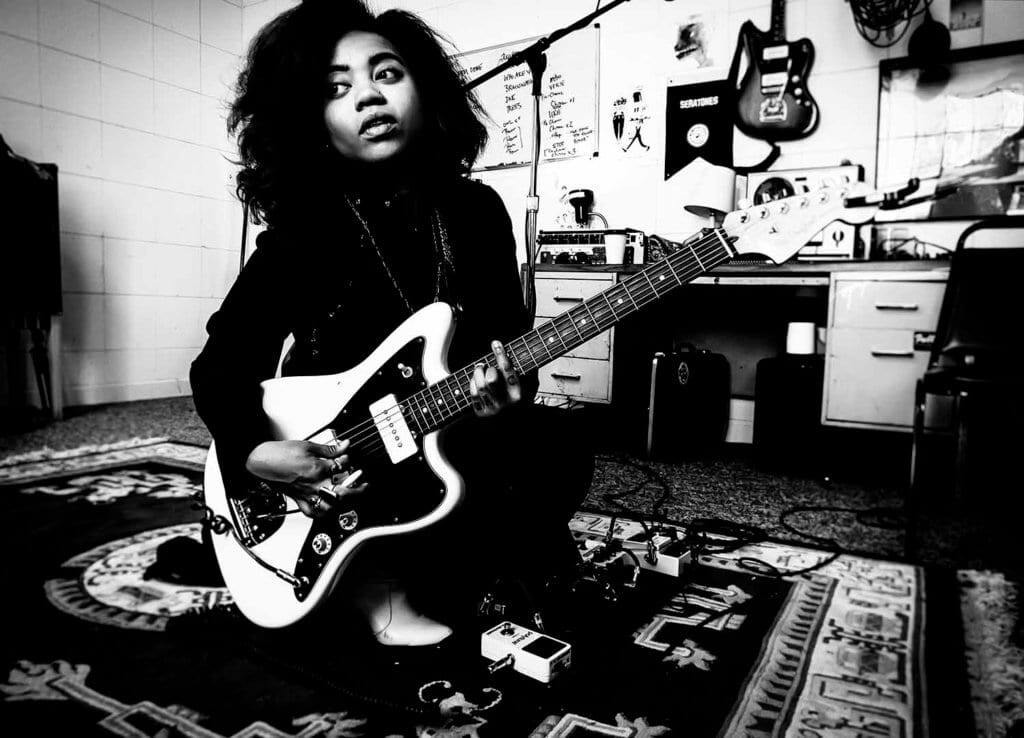
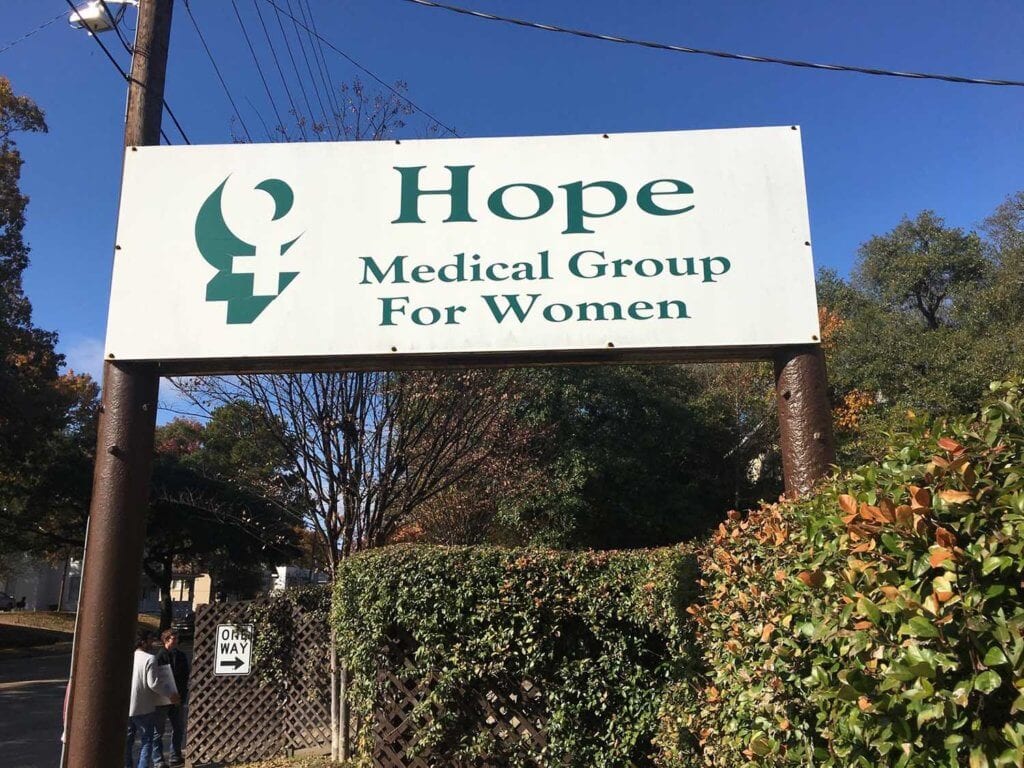
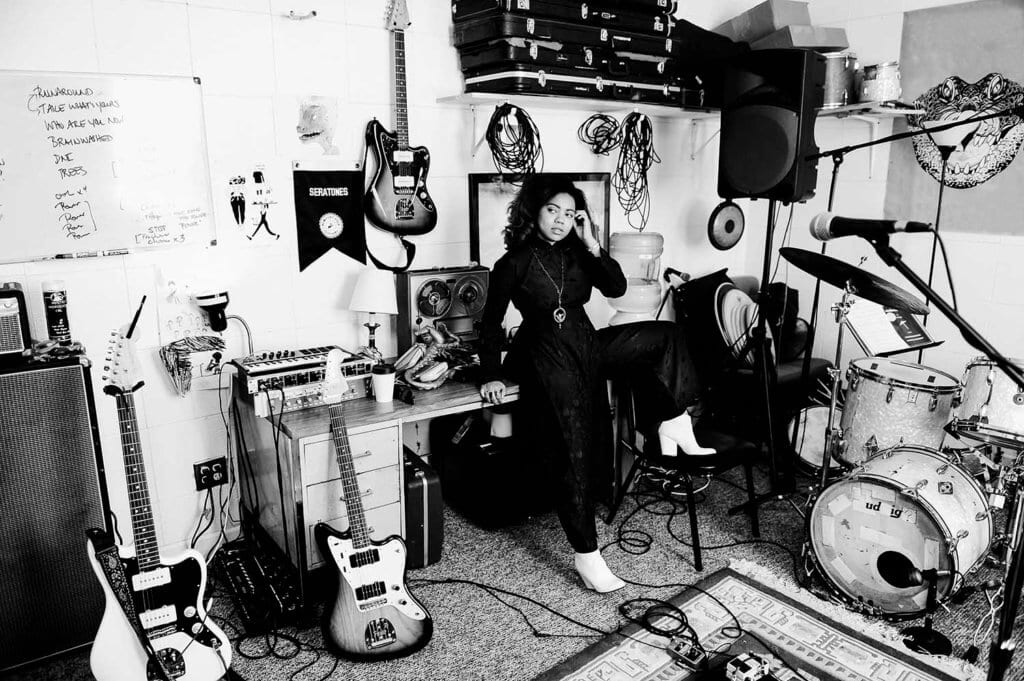
Haynes, the frontperson of soul rock band the Seratones and abortion clinic counselor at the Hope Medical Group for Women in Shreveport, speaks with me from a coffee shop in Massachusetts the morning after a show at Great Scott, a Boston music venue. “It was actually one of the most diverse groups I’ve seen,” she says, excited that the crowds at her shows have been changing. “I feel more women are showing up. More people of color. It’s really important for me to curate a space where people will feel comfortable, and where people will feel safe, moreover.”
Hayne’s concern for her fans comes from experience. Oftentimes, women don’t feel protected—a fact she has witnessed over and over again as an abortion clinic counselor at Hope Medical Group—and she is fiercely protective of fans and clients alike. Anytime she sees a single woman at a Seratones show, she worries about their safety, sometimes even asking them to message her on Instagram when they’ve arrived home. “People need to feel safe,” she asserts, recognizing that living in a woman’s body at this time can be frightening, especially if you live in a state that has passed 89 abortion restrictions since Roe v. Wade.
A series of hostile restrictions by Louisiana lawmakers have culminated in June Medical Services v. Russo (formerly June Medical Services v. Gee), a case that the US Supreme Court will hear this Wednesday, March 4, 2020. Filed by the Center for Reproductive Rights, the lawsuit challenges a Louisiana law aimed at implementing admitting privileges. Known as Act 620, the law was passed by the Louisiana Legislature in 2014, and it models a Texas law that the Supreme Court struck down in 2016, requiring that a physician performing an abortion must have active admitting privileges at a hospital within 30 miles from the abortion facility. However, in a state that only has three abortion clinics (down from seven in 2011), such stipulations would mean the closing of two more clinics—Hope Medical Group for Women being one of them. “The state of Louisiana is trying to undermine the constitutional precedent,” says Haynes, perplexed at the state’s audacity to impede the civil rights of approximately one million women of reproductive age within the state.
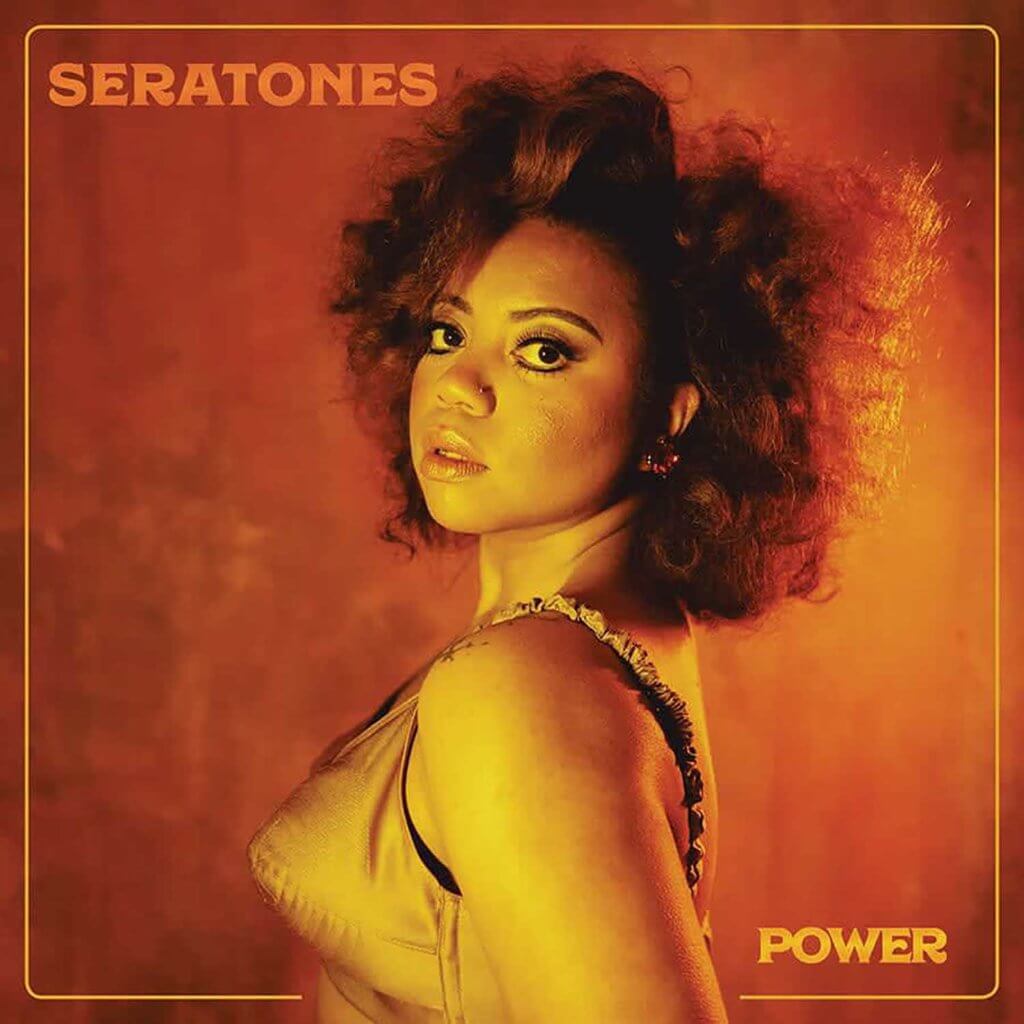
“Brighter days coming, but I can’t see where I’m going,” sings Haynes on the title track of her band’s most recent album, Power, released last year on New West Records. When she began writing the lyrics to the song, Haynes was thinking of her daily struggles as a teacher (“getting up early as shit”) when she taught at a local middle school, as well as the daily struggles of her patients at Hope Medical Group. She mentions that she has seen patients who wake up at 3 AM, work on their school assignments, get their kids ready for school, go to work, go to the clinic on their lunch break, pick up their kids, help their kids with homework, then continue working on their own homework. “This is the story of so many people,” says Haynes. “And it’s not acknowledged how many are grinding like that.”
Louisiana has one of the highest rates of poverty in the nation, and was in the top three according to findings from the 2018 census. Not everyone has the resources to benefit from the services of a clinic, especially when they’re so few and far between. For example, let’s say a woman who lives in northeast Louisiana is in need of an abortion: the closest clinic, which is Hope Medical Group, can be a three hour drive. Not having access to a vehicle, childcare, and/or the leisure of being able to miss a day of work further prohibits access to proper health care. “This is an attack on people trying to get out of cycles and systems of poverty,” says Haynes, adding that in Louisiana, people of color disproportionately suffer the most from abortion restrictions. As we are meant to be living in a post-Roe v. Wade reality, Haynes asks in frustration: “What is the point of having something that you can’t have access to?”
In order to have an abortion in the state of Louisiana, a patient is required to navigate through a few steps 24 hours before the procedure:
In addition to the physical and financial strain these visits create, especially for patients traveling from rural areas, the emotional toll can be just as substantial. Since Haynes began working at Hope Medical Clinic over a decade ago, she has continuously witnessed her colleagues show up for their patients. “Being compassionate means that you have to give up yourself, hold space for people,” says Haynes. “That’s exhausting sometimes.” There’s no way to compartmentalize witnessing the heartbreak of others on an hourly basis. “That’s the thing,” says Haynes, “We value our patients; the state of Louisiana clearly does not.”
Like her work at the Hope Medical Clinic, Haynes writes songs that hold space for the listener, creating something they can hold, and that can pull them (and herself) out of the fire. Haynes recalls a morning when she was getting ready to go to the clinic after a 5 AM yoga class. She hastily made coffee as she listened to All Songs Considered on NPR, when they played “Power.”As the hosts talked about her song, she realized, “Damn! I made the song that I needed to hear for myself to go to work.” Coupled with an infectious beat and killer arrangement, the song has certainly resonated with people—last year, the Center of Reproductive Rights asked the Seratones to play “Power” at their New York gala at Lincoln Center. “As we were playing the song, motherfuckers were writing checks,” says Haynes. “That’s what I’m talking about.”
Haynes writes from perspective, always keeping her lineage in the back of her mind. She’s deeply inspired by women like her mother, an immigrant from the Philippines, who managed to raise three children in Columbia, Louisiana while her father attended a recovery program. “That is magic! [There is] truly divine magic in that labor,” says Haynes. Tapping into that wellspring of perseverance, and taking a page from artists like Octavia Butler and Toni Morrison, Haynes strives to get into the mind and lives of characters she imagines for her songs. “I can’t do that unless I understand myself first,” she says. “And this record was a lot about understanding myself.”
In the music video for “Power,” a young black girl traverses different sites in Shreveport, including Hope Medical Group, and the message is clear: It’s time for women to reclaim themselves, especially when on the verge of a court decision that could be detrimental to reproductive rights. “We take two steps forward / They take one step backward/ We take each step to lift us up higher,” belts Haynes in the chorus, reminding us, like Cooke did 56 years ago, that we are the change we seek, because we are the power.
Pisces season helps us dissolve the barriers between our own hearts and the hearts of others. By opening the door to greater intimacy with ourselves, we learn to share our truths more vibrantly and true.
Use this Pisces season to check in with the health of your own imagination, the dream life of your heart, and the wisdom of your experience. You’re ready for what lies ahead—you just need a few more weeks to fully realize the image.
An album has been included with each reading. Take it as inspiration, reflection, or energetic connection. I find that having a soundtrack helps integrate the vibe.
Disclaimer: We recently started publishing our Audioscopes on the first week of the new sun sign, so you might have noticed that we skipped Aquarius in this transition—so sorry our wild, airy friends! But be sure to read our January Audioscopes!

The focus isn’t the outcome—the promise of a contract, the appreciation of the audience, the better pay available on the edge of the horizon where you, singularly talented and brilliantly played, sit in a future of your imaging. You have been brought here for this moment. You chose this time, this place is yours and yours alone. The talent you are testing, the skill you are putting into proper place are the gifts you brought with you from another time, from a previous space. Will you share them? Will you trust your own cunning and the dignity of your sword? No one was gifted this vision but you. You are the only one who can sit on that horizon and call it home.

You can survive the stripping away of every guiding post for reason, every light at the end of the tunnel, every foundation laid bare in the changing winds. You’re more than the treasures you have salvaged from the sunken ship—you’re testing the waters of a new and much more open sea. But in order to navigate freely, a new flag must fly from the mast of this ship. One made not by the relics of the old order, but from the inspiration of the new shore you’re approaching. You can trust that solid land will meet you on the other side of this journey. This Pisces season, focus on the navigation: listen to the winds you choose to fill your sails, the constellations which guide this voyage, and the hands on the wheel. Are they your own?

I wonder if a snake knows that it will survive the shedding of old skin. As your colors are renewed and intensified, the scales of a former life fall all around you, a perfect storm unleashing its wrath in the silence of a still night. Will you scramble to hold on to the ashes that fall through your fingers, destined for the floor? Your colors will shine like the Sun in the early morning, photons invigorating your body with the new light of another life that will be yours. Find the quiet place within your belly that will provide protection during the night. There is a rocky shore that will hold you, a light within that will glow through the pitch black till dawn. The time is getting shorter now—I can already see the brim of the new dawn.
Doors can open magically now, through no effort or push of your own. Dreams bring you new visions of future projects, collaborators come knocking on your door, opportunity arises out of thin air, and barriers, made out of fog, fall. But there’s no secret controller to the ease or difficulty of this period. There are no angels guarding your bedroom door. Whom you have chosen as peer, partner, and comrade will now hinder your movement or facilitate your development. Do you invite a skilled green thumb to your pasture, an eye for exquisite detail and commitment to rich soil, or do you wish for over pruning, doubt, and dry plots of land? The choice is always yours—the seed is your own.
Yes, it’s true—the battle was lost, the commitment was broken, the base of the project has been cracked through. But what you make of the tabula raza moment is what defines everything. A space has been cleared in the garden for you to plant something new. Whether by force or by will, you have the capacity to choose which seeds will be brought to fruition, what blossom will shine through the moment of loss. You can rail against your enemies, devote more of your energy to the fighting, but what you hope to gain has already been lost. Start again this Pisces season. Invite those who held you through the long night. You will rebuild. The work will go faster when the burden is shared.

Facilitating the creative spark within requires humility. The work that is being birthed through you is not your own—it is the energetic frequency of change and innovation that is channeled through your spirit into being in this realm. You don’t own the notes of a chord as much as you don’t own the flowers that bloom in your garden. Both are necessary for vibrance and joy, both are born through this realm, not of it. Step into your power as facilitator, breathe into being the joy that wants to be spread through your arms.
This is your home: the hands that build new beginnings, the heart that dreams of stronger connective ties, the legs that carry you to new pastures, the feet that keep you solidly on this ground. Now is the time of renewal of this vessel, setting to work the new patterns and rituals that will carve out the crevices where doubt has crept in. Only the ties that you choose to bind you, only the spaces that provide adequate light will be shown. You can never change the story that has already been written, but you’re the only one who will direct how it’s applied moving forward.
We all make compromises in order to move forward in this world, and in each divergent path, a truth about self is revealed. But there is another perspective that happens when we stop moving forward and take a moment to breathe. Every single left turn and twist through the field has brought you to an opening, a clearing on the journey. Is the destination what you envisioned for this voyage, or have you made too many sacrifices along the way, losing yourself on the path? You can cut across the field now, find a new way through the trees, if you choose. Listen to the sounds of the forest around you. You’ll know which way rings true.
Legacy isn’t all trauma dials in the DNA and genetic disposition to patterns of past pain—it’s also the strength of your grandmother’s hands in the dead of night when it mattered, the compassion of a soft heart that kept you safe. Now is the time to lead with the courage of a thousand hearts born before you, all beating as one, linked through time in the strands of your memory as much as your living breath. You have been here before, and you know how to navigate loss. Now remember how to move with brilliance, trust, and the legacy of courage. You’re meant to rise through this moment and find a new sun to call home.
A series of small failures and regrets can pin prick a small hole through the fabric of a life constructed out of hot air, buoyant but empty, floundering back to the ground and collapsing in a pile of unsustainable momentum. Pick yourself up now, a series of small gestures leading to a rising tide of acknowledgment and acceptance. You cannot continue down the same road you had taken before. You’ll be better for it—this time next year—when the perspective shifts from the standing point of a peak looking down at a valley you once thought was home.
If you believe you’re only worth a small spot under the sun, then you will receive exactly what you are expecting. Why do you doubt the brilliance of your heart, the gifts you’ve inherited, the talents that crave expression through your hands? You can build an altar and ask for guidance, but you’ll only be returned what you have the nerve to ask for. Dare to believe you’re worth more than a pittance in salary, time, energy, and spaciousness. Treat your soft self to the gorgeousness of luscious expansion. Ask for it in return.
Another year passes by, and the best that you have to offer is the degree to which you can cultivate a soft heart. The walls that keep you safe from incursions also keep you guarded from deeper connections, the opportunity to share your energy, the capacity to build together. Your biggest strength is your dream life and the visions you can bring down to manifest—but you need help. Ask for those who can help you on your journey to rise and meet you. Welcome new intimacies with an open heart. Opportunity lies in the welcoming trust built with others.
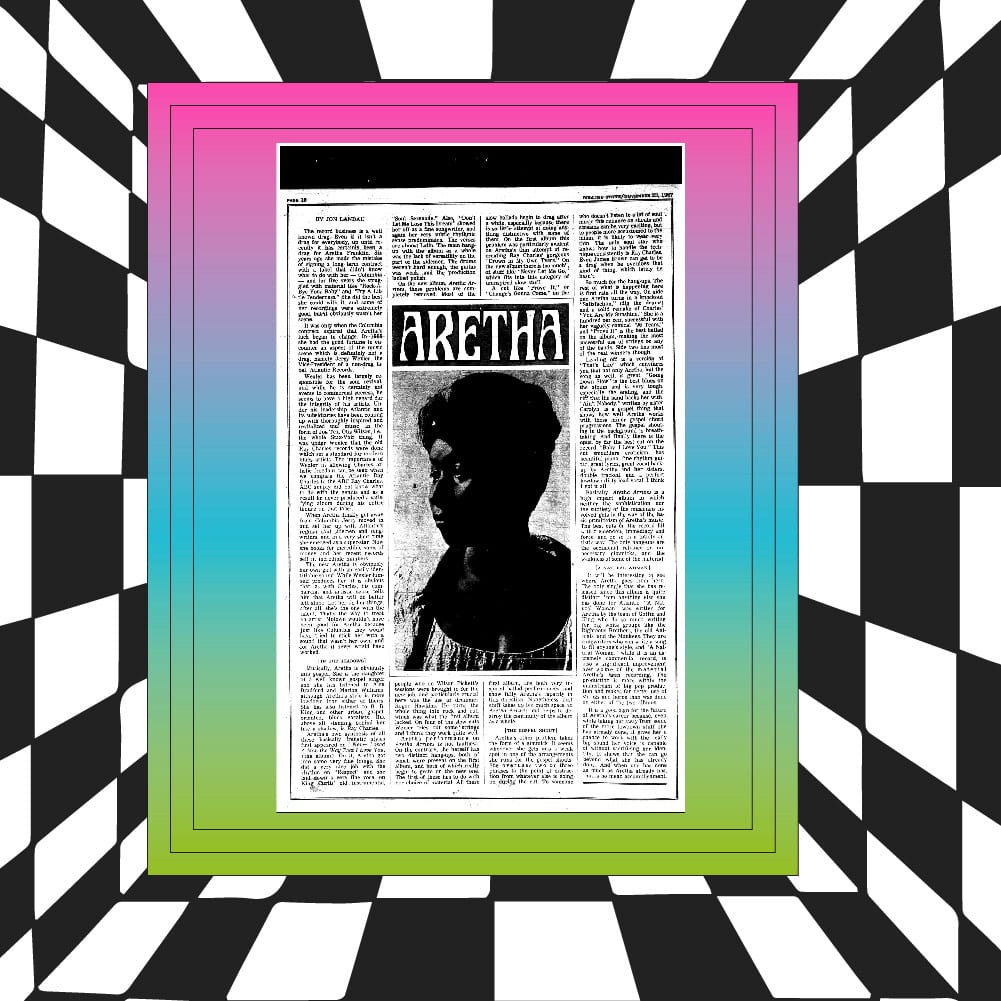
Joan Armatrading always knew she was right. The legendary British singer-songwriter knew when she first felt the unshakeable urge to wrap her fingers around the neck of a guitar as a teenager. She knew when she first stepped on stage, pushing through the debilitating nerves that plagued her. She knew at the peak of her career in the ‘70s and ‘80s when she spent her days in studios, telling her all-male band how to play her compositions.
She knew she was meant to be.
“If I wasn’t right, the keyboard player would be right… well, how does he know?” laughs Armatrading, speaking to She Shreds over the phone. “Somebody’s got to know they’re right, and I’m the person who’s written the song—I should know.”
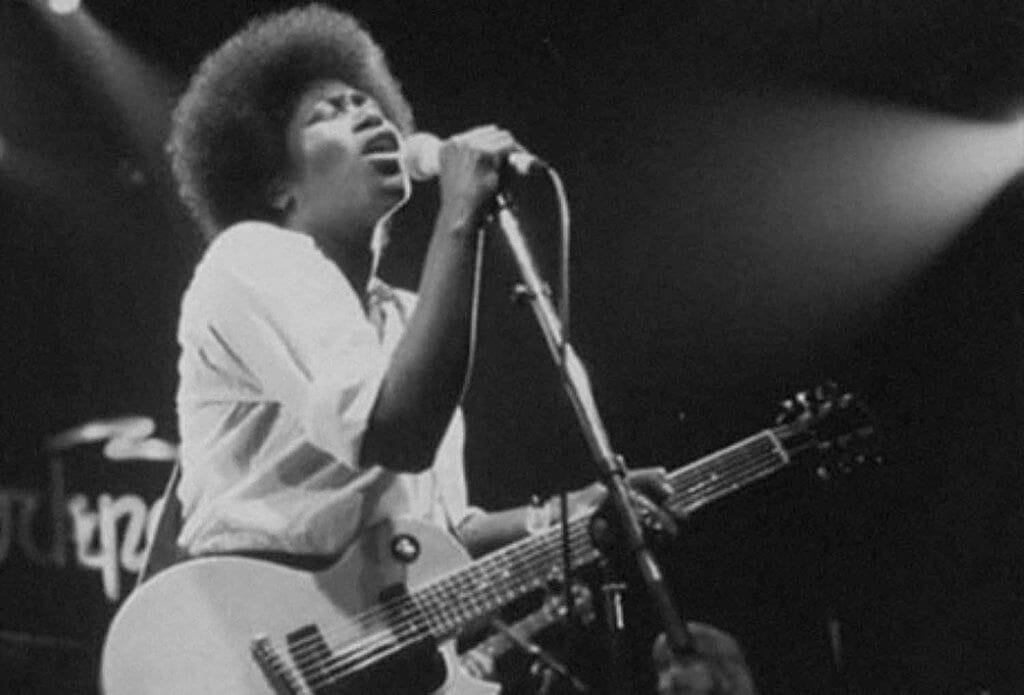
When it comes to a belief in her songwriting, Armatrading has a brazen confidence, but take her outside of the dazzling world of lyrics and guitars and she transforms into an introvert. (So true to type she once quipped in a 2005 Guardian interview that she preferred “birdsong to chatter.”) It’s an unusual trait for a pop star to embody, but every aspect of Armatrading refuses to fit into any predetermined narrative around what or who a pop star should be.
Beginning her career in the early ‘70s with a repertoire that blended jazz, folk, blues, pop and soft rock, Armatrading became one of the first black British female singer-songwriters to enjoy international success. She released numerous hits throughout her 40-plus year career, earned several nominations for the Grammys and Brit Awards, and in 1996 she won an Ivor Novello Award for Outstanding Contemporary Song Collection.
Even though Armatrading has eschewed the spotlight and refrained from speaking about her sexuality (she celebrated a civil partnership with her long-term girlfriend, Maggie Butler, in 2011), her presence as well as her confessional songs about desire and passion opened the doors for many queer artists to follow. She managed to achieve all of this without losing herself, forcing white suburban England and middle class America to be confronted with her trademark androgynous outfits, makeup-free face, and mini afro.
Born on the Caribbean island of St. Kitts in 1950, Armatrading was a child of the Windrush generation. Her parents migrated to Birmingham, an industrial city in the middle of England, when she was three, leaving her behind in St. Kitts. Armatrading eventually joined them in the UK when she was seven—a normal practice at the time. Like many recent immigrants who were concerned about fitting in, Armatrading’s father saw music as a luxury, and despite playing several instruments and keeping a guitar at home, he forbade his children from playing. Nevertheless, music was destined to be in her life, and when her mother bought a piano to decorate the living room, she taught herself how to play. “The piano is a wonderful instrument,” she says. “I always say you could just dust the piano, because all you have to do is hit something—it doesn’t matter what you hit. You could sit your bottom on it and make music.”
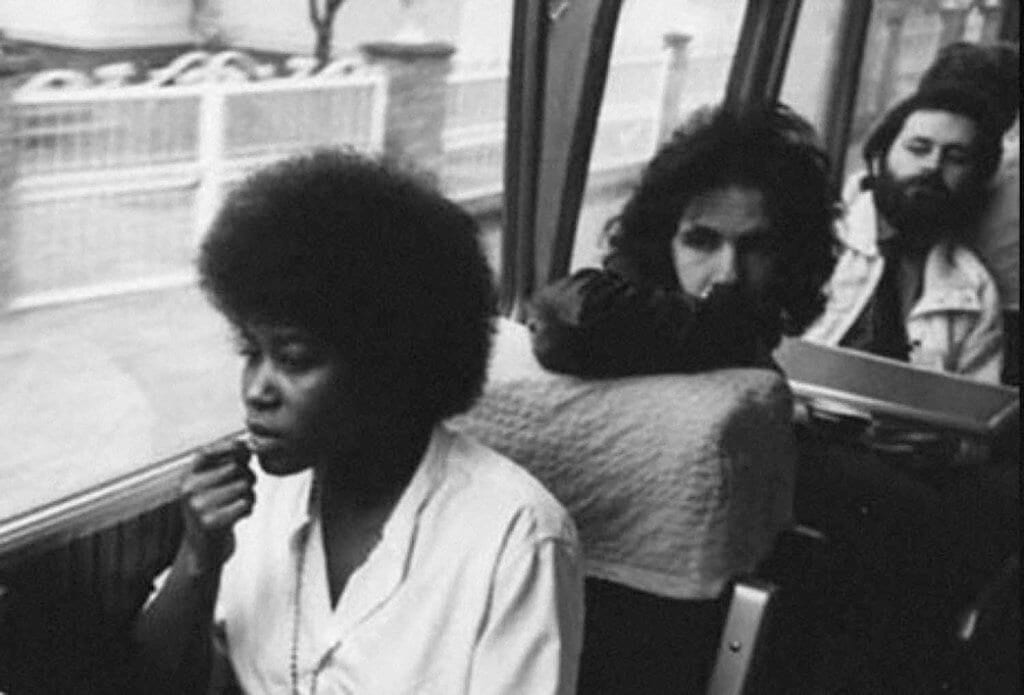
The sparks of her developing love for music were fully ignited when she came across a guitar in a shop window. Unable to afford it, her mother gave her two strollers to swap for the guitar and she was soon writing songs that she would perform at local open mics. Her fascination with music was deep, but her early songwriting didn’t seemed to come from a set source. She wasn’t a diehard Beatles fan or a Monkees aficionado like many girls her age. Even now, she cites no influences (that she’s willing to share) that have shaped her songs, insisting she writes simply because she was “born to do it.” When asked about what she’s interested in achieving through her songs, she says, “When you hear it, you think, ‘I’ve experienced that, I’ve gone through that, I’ve known what they’ve been through. And I can sympathize because now I’ve heard this song, and it explains those emotions.’”
Armatrading joined a production of the musical Hair in 1970, where she met songwriter Pam Nestor. The pair formed a partnership, writing dozens of songs, and released their album, Whatever’s For Us, on Cube Records in 1972. But Nestor was not featured on the album, as the label wanted to promote Armatrading as a solo artist. The duo quickly disbanded and Armatrading took a hiatus from the industry while breaking her Cube Records contract and signing with A&M to release her second album, Back to the Night, in 1975. Both albums were critically—though not commercially—well received, and can be seen as an early reflection of the artist who would go on to captivate so many. On her debut, Armatrading’s vocals occasionally adopted an American twang, perhaps a result of the Southern blues and American folk that was informing her work. By her follow up, she had already honed the earthy burr in her voice, one she uses to conjure the searing pain of heartbreak in one moment, and gasps of full-throated desire in the next.
Her breakthrough album, Joan Armatrading (1976), produced by Glyn Johns (known for his work with Led Zeppelin and the Beatles), was released to critical and commercial acclaim, spawning the hits “Love and Affection,” an evocative vignette of emotional intensity, and “Down to Zero,” a rousing piano ballad. Her new found success opened numerous doors, but it was evident that Armatrading cared for neither the money nor fame. She sees herself as a conduit, here to translate the words and music for others to enjoy—but little else. “I just like writing songs,” says Armatrading. “It’s as simple as that. The record company never had to come to me to say, ‘It’s time to make a record.’ It would always be me saying, ‘I’m ready to make a record.’ I’m 68 now, and I love it just as much—probably more—than when I was starting out.”
Replicating the success she achieved with Johns, Armatrading continued to work with him on her next two albums, Show Some Emotion (1977) and To The Limit (1978). She began touring, recording, and writing constantly over the next few years, and as a result began to veer away from the blues-drenched folk that had previously driven her career. After hearing Blondie’s self-titled debut, released in 1976 and produced by Richard Gottehrer, she knew exactly who to call on for her next release.
At the time, Gottehrer was already an established producer and songwriter. After making a name for himself writing the ‘60s classics “I Want Candy” and “My Boyfriend’s Back,” he went on to work in the punk scene, producing records for Richard Hell and the Voidoids. Gottehrer’s contemporary style was the perfect match for Armatrading’s new collection of pop-centric songs. He brought together an extraordinary group of musicians that included jazz funk guitarist Hiram Bullock, English session guitarist Chris Spedding, and saxophonist Clarence Clemons (who was also a key member of Bruce Springsteen’s E Street Band). Despite the talented company, Gottehrer maintains that one key element lifted the album: Armatrading herself. “She captures a soulfulness,” he says. “She can express the feeling of the lyrics, the tone of her voice. She was different.”
The resulting album, Me Myself I (1980), became her highest charting release, incorporating slick-crooning gospel on “Friends,” jolting reggae-lite rhythms on “Simon,” and stadium rock punch on “All The Way From America.” The album propelled Armatrading into the pop arena and established her legacy as an artist who could draw in the suburban mother just as easily as a gruff, hard-rock loving biker. Despite wanting to work with Gottehrer again, Armatrading envisioned being the sole player on the album (a dream she would later fulfil on 2003’s Lovers Speak). Her label scrapped the demos they worked on together and instead paired her with English producer Steve Lillywhite for the new wave-influenced Walk Under Ladders (1981), followed by The Key (1983), which spawned her biggest hit single, the power-pop inspired “Drop The Pilot.”
Armatrading’s career had given her everything she wanted from music, but her shy nature constantly clashed with the reality of her job, leading to rumors about her apparently difficult nature. Gottehrer was warned as much by Armatrading’s manager, but when he met with her in his New York apartment, he saw a woman who did not resemble the fearsome description. “I’m anticipating the worst,” laughs Gottehrer. “I walk in and I see my four-year-old daughter sitting on her knee and they’re singing Muppet songs.” It’s hard to imagine so many being spooked by a soft-spoken woman who didn’t consume alcohol, smoke, or even drink caffeine, but in an industry so used to dominating over female singer-songwriters, dealing with a forthright black woman who had no intention to follow the rules probably sent a few industry bigwigs over the edge.
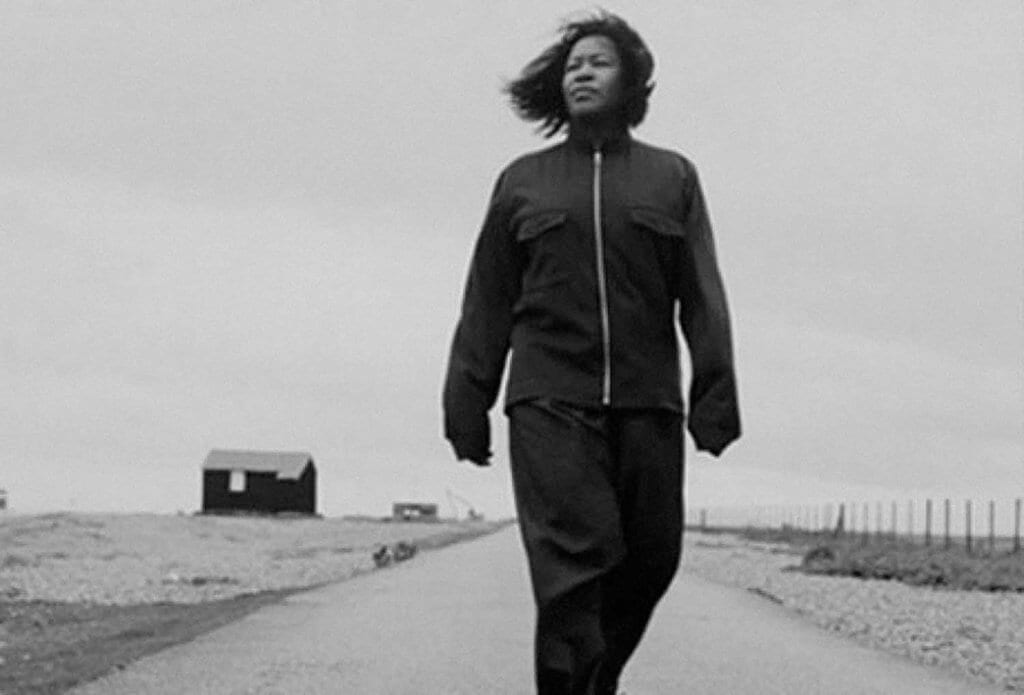
Today, Armatrading continues to write and release, including her latest album, Not Too Far Away (2018), a return to the dark intensity of her late ‘70s work. With such a prolific back catalog and diverse audience, Armatrading knows her songs have a profound impact on her fans. “I love when people say to me, ‘That song means this to me, we got married to that, I named my child after that song, or we communicate with each other through this song.’ I did an interview with somebody, [and] he said when he finished the interview he was going to propose to his girlfriend with my music.”
Over the years, Armatrading has inspired generations of artists, including country rock singer-songwriter Melissa Etheridge and musician/songwriter/DJ/producer JD Samson (from feminist pop acts Le Tigre and MEN). For British folk singer-songwriter Minnie Birch, Armatrading has become an almost omnipotent force in her life: “She’s one of those people you just know, like a fairy tale, because she’s so ever-present in music.” For Birch, who supported Armatrading in 2012 and 2014 after winning a competition that gave a local artist from each of her tour stops the chance to perform, her impact was apparent in the devotion she showed towards her opening acts. Birch was enthralled by Armatrading introducing her on stage, including her and the other artists in a compilation CD on sale at the gig, and even offering up songwriting advice. “She’s still the first black British woman to have been an international success,” says Birch. “When you’re feeling a bit low on your music, that inspires you to think, ‘Well, she saw something good in me.’”
There is often the long standing—and ageist—opinion in the music industry that once you reach a certain age you should move aside and let the youth take over. Armatrading has never considered veering from the path she’s chosen, with her defiant eschewing of popular trends and her monastic-like dedication to her musical mission. In fact, she feels that there’s still more for her to bring to the world: “There are lots of songs that I’m really happy I wrote, but I don’t feel as if I’ve written the best song I’ll ever write. I think once I do that, I’ll be finished. There will be no more for me to write.”