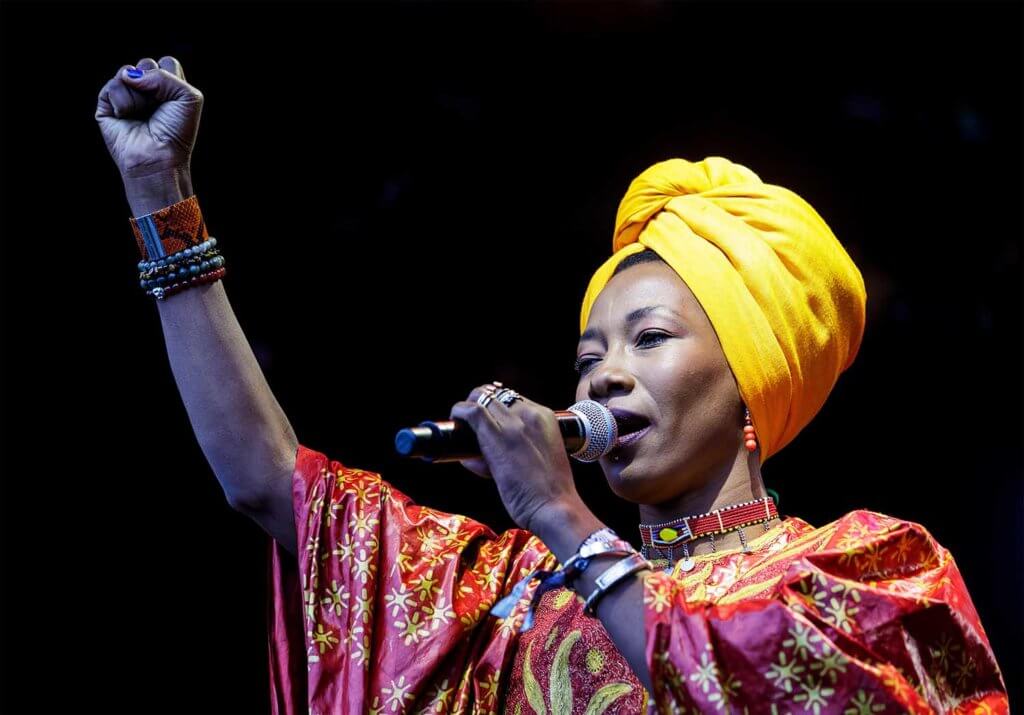
Fatoumata Diawara finds inspiration through honesty: “For me, the best way to write is to close my eyes, think about my life, and defend my truth,” she explains, speaking from her home in Paris. “It’s always about the truth, always about being yourself, and having no fear to share your own experiences.”
Over the last 10 years, the Malian singer-songwriter has woven her stories into stark songs that blend traditional Malian rhythms and inventive guitar melodies. And each of her releases contains traces of her personal history. Diawara was born in the Ivory Coast to Malian parents. As a teenager, she was sent to live with an aunt who worked as an actress, leading Diawara to eventually break into the world of cinema. In between films, she began composing her own music, writing out personal reflections in the Malian language of Wassoulou, and setting them to song.
In her rich, soulful voice, Diawara has shed light on everything from adoption to motherhood to female mutilation. Her most recent album, the Grammy-nominated Fenfo, was released by Shanachie Records in 2018. Its title translates to “Something To Say,” and its songs feature experimentation with swatches of electric guitar and modern instrumentation. Like Diawara herself, it is bold and unafraid.
You were working as an actress when you first began writing music. What led you to pick up the guitar?
It was the commodity of it, the fact that you can take it everywhere and it’s easy to transport. It can be [like a] best friend to a human being. In Mali, we use a lot of guitar in our music—we have a lot of traditional instruments similar to guitars—so to me, it was one of the best instruments. The first one I got, I think, was a Martin.
I read that you started playing guitar after a musician who performed with you cancelled right before a concert.
It’s true. I started writing songs first—it wasn’t my idea to play an instrument, because in Mali, that’s not common. Women normally don’t play instruments. You don’t grow up to be something like this. But I was too dependent on other people when I began performing, and I don’t like that. I like to be independent, if I can. It was becoming necessary to play and perform without a band. The best way was having an instrument, piano or guitar, because I was always giving up my shows when the guitar player or the drummer couldn’t come. All of my music was composed by guitar, so I realized that if I wanted to do something my way and I wanted to go far and be independent, it was better to learn how to play the instrument. I went to the market, bought a book, and began learning… It’s a freedom that’s really necessary in the music industry.
You mostly started with an acoustic guitar and later—especially on your album Fenfo—you began experimenting with more electric sounds. What led you to move into this new territory?
I like what the acoustic guitar gives you because it’s more melancholic in a way, and you quickly catch the emotions behind the music. That’s why on this tour I’m very interested in writing with an acoustic guitar—it’s a Martin that I really like. But onstage, I like the electric guitar, especially because it’s not always often that women play electric guitar… And now I’m doing small solos onstage. But in the studio, I always like to take my acoustic guitar. It’s a very emotional thing; all the songs are composed with acoustic guitar. And then maybe the second guitar is electric when I record.
How do electric guitars change or enhance traditional Malian elements that appear in your music?
Malian people are used to playing the guitar as a traditional instrument because we have a lot of traditional instruments that are similar—the n’goni, the kora. Once you can play some of those, you are easily able to play a guitar. But most of the time, the traditional instruments are very spiritual. So, for example, when you have your period, you cannot play some of [the traditional instruments] and it makes things more complicated for women. It’s changing quite a lot now, but I think that’s part of the reason why we didn’t grow up seeing women playing those traditional instruments—it was usually about being good singers. Many people don’t have the same experience, of course, but in Mali, we don’t see many [women] artists playing an instrument. We never go on the harder side, making solos and being more involved.
[In Mali], we also don’t learn the same way to play music. It’s totally different, and we start a lot from the blues. I cannot read music and I cannot write music [in normal ways], but I feel the music. I don’t know what the normal way is, really, and that’s something my piano player [Arecio Smith], who is a teacher, always says to me. He tells me that I have a very big sensitivity with music, even more than him. And every time I tell him, “But I have to learn and I have to read the music,” he always says, “Don’t do that.” For him, it’s better for me to have my instincts and my relationship with music. It’s very physical. I react very physically.
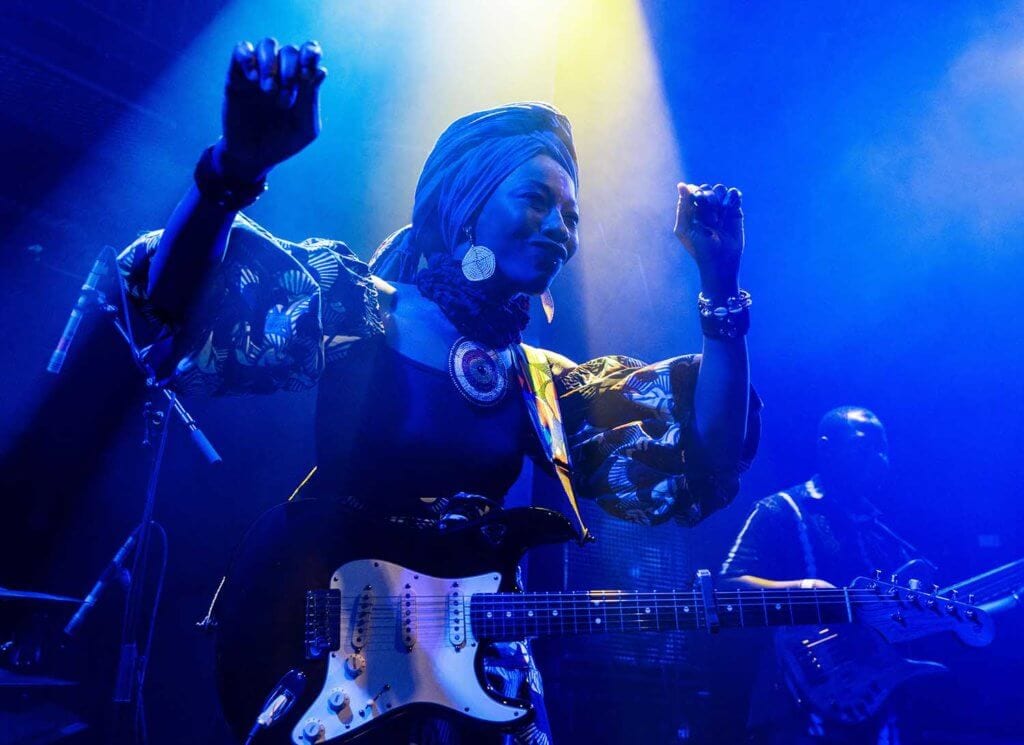
You’ve played with a number of renowned guitarists from around the world, including Paul McCartney, Amadou Bagayoko, and Sam Dickey. How has your experience of collaborating with Western musicians differed from your collaborations with musicians from Mali or Africa?
That’s quite complicated. There are no boundaries. There is something very strange about music that might be why people say it’s an international language. The fact is that we all have a heartbeat, and to your heartbeat you can set any type of music. We can collaborate together—jazz to traditional Malian music to Indian music—but there is a point that we all find in each other, once you get the boom. And once you get that, you make the connection. From there, there is no type of music. Once I’ve told myself I found the right moment, it becomes easy to find the heartbeat and the soul of the music.
Wassoulou culture is known for “songs of advice,” in which women singers educate other girls through music. How does this aspect of Wassoulou culture play a role in your own music? How have your messages or “songs of advice” changed since you’ve become a mother?
In our society in Mali, this is something that is very common. I’ve been standing by my own story, which has a very strange background, so I don’t need to go very far away when I’m writing music. I just have to close my eyes and open one door from my brain and I can make a story, add a melody, and make a song. So, through that, as a Malian woman, I can reach many subjects from my society naturally. If it’s female mutilation, I can talk about that because I’ve been mutilated. I wrote a song about adoption because I’ve been adopted. If I’m talking about my own story, I will hopefully touch many women. I’m writing my songs to my truth. Everything started from my own story.
The visual elements of your music are incredibly bright, colorful, and sometimes even futuristic. How do you come up with these visual concepts? How do the images help reveal the messages in your music?
It depends on the moment. I’m very connected with myself most of the time, and I’m very fast when I have to select what I want. When we are about to create music or videos, my manager or people that I’m working with will sometimes propose things to me and I very quickly tell them what I want. Nothing is prepared before. Everything is very instinctive with me, and that’s how I’m working with my images. It comes from the feeling I have at the moment.
You’re in Paris right now with your son. Are you working on music while you’re with him, or do you like to space out time to focus on writing?
I like to do everything together. It doesn’t matter if I’m a mom or not. I’m always busy working. [For] the next album, we already have a lot of stuff, and I’m excited, so we’re going to just keep working.
The life of an artist can feel like a beautiful yet vicious cycle of intensive creating, recording, and touring. It requires an ambitiously determined spirit; the artists who reach a comfortable coasting status through their work’s recognition can finally breathe a little easier. But what if the road to “success” wasn’t such a straight line? It’s not, especially for artists capitalizing on sync licensing.
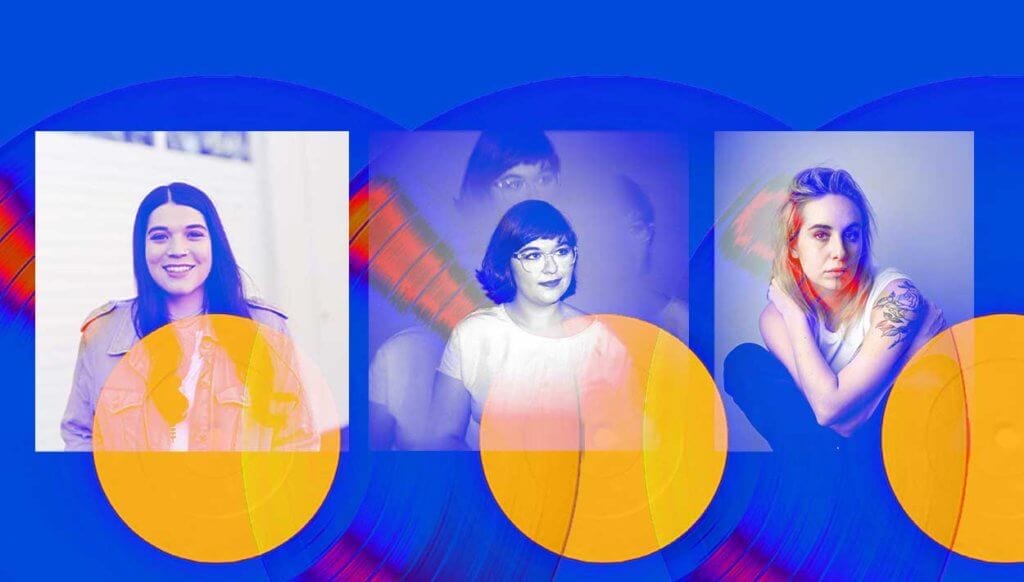
A music synchronization license means an artist can “sell” the usage of their music to be used in media, like TV shows, films, movie trailers, video games, and more. Musicians like Lelia Broussard (SKLLY, Amico Mio) have tapped sync opportunities along the route of becoming an established, touring artist. A collaborator of Marmoset’s original music team, while also being featured on their roster of artists, Broussard is no novice to music licensing.
“I first became aware of licensing a long time ago, when the Grey’s Anatomy thing was happening,” says Broussard of the hit show’s reputation for using indie music throughout its episodes. “It gave a voice or platform to a lot of artists and singer-songwriters, and a lot of people were discovering music that way. And to get your song on a show could kind of change your career.”
Broussard has worked with many different licensing and publishing companies throughout the years, creating original songs or curating music to picture. Utilizing sync opportunities not only meant getting paid for her musical work, but being a proactive, working musician who had a higher potential of being heard and, most importantly, discovered.
Sync licensing is an evolving territory within the music industry that has made huge strides in past decades; the lingering dark cloud of ‘selling out’ has pretty much dissipated. For a lot of earlier iconic artists, licensing wasn’t even a permissible thought, but today artists have figuratively stormed the gates, claiming sync licensing as their own. It’s become an empowering tool; a means of taking more ownership of one’s work, and getting paid for the fruit of their labor.
“Bands used to be super hesitant to license their music,” says Broussard. “Obviously this has changed so much now. A big part of this is because our revenue streams are going down, there are not as many places to make money, and this is one of those few places that you can actually make money as a musician these days.”
In the era of online streaming platforms and declining physical music sales, sync paves the way for musicians and bands to earn a livelihood in music; it’s also a field where artists are changing their approach toward making music. When CD and record sales were once a prominent focus, musicians set their sights on creating an entire album of hits, whereas now syncing a single song under the right distribution terms could guarantee a hefty payout.
But taking this leap toward capitalizing licensing opportunities requires staying sharp and diligent, as any artist should be when stepping into the business side of a competitive industry.
“There are a lot of people and companies out there looking to take advantage of young artists,” says Broussard. “It’s important to be careful entering into any kind of agreement because this can be a lucrative income stream and a passive income stream. You can also make money owning your own publishing and working with companies like Marmoset. Just be wary of what kind of publishing you’re getting into and have a good lawyer because you can always get out of it.”

Once identifying which publishing or music licensing agency to work with, get to know the team who’s pitching the music. Places like Marmoset have an onsite A&R (artists and repertoire) team who will answer any questions during the on-boarding to roster process. This team also works alongside music licensing coordinators who are doing the actual pitching to clients; they’re on the front lines of music trends and what clients seek in relation to music needs. Essentially, music licensing agencies and music supervisors exist to pitch an artist’s music to big brand campaigns, TV shows, and even film soundtracks; they’re in the trenches of music licensing catalogs, Soundcloud, Spotify, and other corners of the internet to find that perfect song their client is requesting.
For other artists like Sarah DiMuzio (Allebasi, Whim) who divides her time between creating music for herself/fans while fostering her expanding roster of licensable music, she acknowledges there’s a harmony she strives to maintain between the two.
“It can be pretty stressful. Sometimes everything will kind of converge in one week but then things will straighten out,” says DiMuzio. “Getting that balance is key for me, to keep going but stay present so you’re not signing onto too many projects at once.”
Apart from the music she has on Marmoset’s music catalog, DiMuzio often receives creative briefs from music producers and publishers. While it might take hours or days to perfect a song and album under standard recording studio settings, collaborators like DiMuzio endure a quick two day deadline once equipped with the project’s brief. If the first round is well received, it’s common for another round of edits or fine-tuning. And so the cycle repeats.
“Everytime I get a brief, I have to wait and read it at the right time because as soon as I read it, my brain explodes with hundreds of ideas,” says DiMuzio. “If I have two days to write and produce, I love it. It’s almost like a creative high.”
Acknowledging that there’s an undeniable creative side to the sync process, DiMuzio notes her analytical side is what guides her along scoring to picture. “My dad calls me a hybrid because while I’m totally an artist, I’m also really punctual and super organized. I try to pull the best from both and just keep going.”
If artists are up for the enduring, fast-paced nature of the sync beast, they should also keep in mind that it’s important to create authentic content. Creative agencies are often on the hunt for music that carries high production value that still sustains artistic integrity. When submitting music to licensing platforms like Marmoset, providing a lyrical version and strictly instrumental version of a song can hold great benefit—instrumental versions are frequently requested over lyrical due to union laws, or in some cases instrumental is easier to cut to picture in terms of shorter ad placements.
While sync licensing is one way to generate a steady stream of revenue, musicians should approach opportunities as they would any business venture by understanding there will be successes and failures along the way.
“You just have to keep writing. You never know what a song will do, you can’t be attached to the outcome because it’s really not up to the artist,” says Broussard. “Look at Lizzo’s ‘Truth Hurts’—it’s a great example of a song that came out and went to radio like two years ago but didn’t do anything. Now it’s incredible with what’s happened to that song. So learn to let things go, keep writing, don’t stay attached to previous things you’ve written. Even if it feels like no one’s paying attention, keep creating and find the right business people or a good licensing company that believes in what you do.”
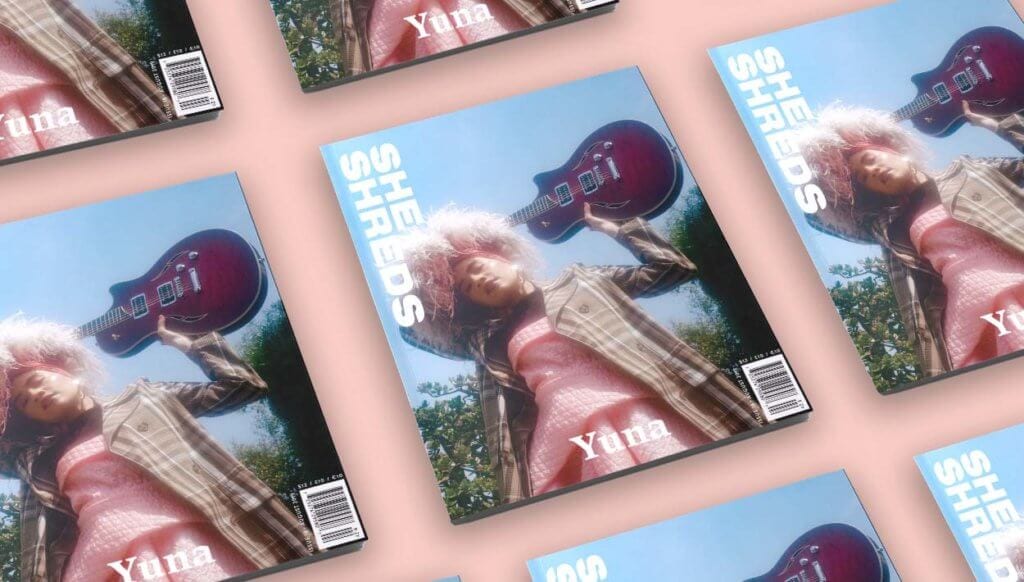
Want to carry She Shreds? Email accounts@sheshreds-staging.jzck3hem-liquidwebsites.com.
Thank you to our Issue #18 sponsors: Fender, Martin & Co., Ernie Ball, Epiphone, Reverb.com, Sam Ash, ZT Amps, Walrus Audio, Strymon, and Red Panda Labs. We literally would not be able to produce this issue without their support.
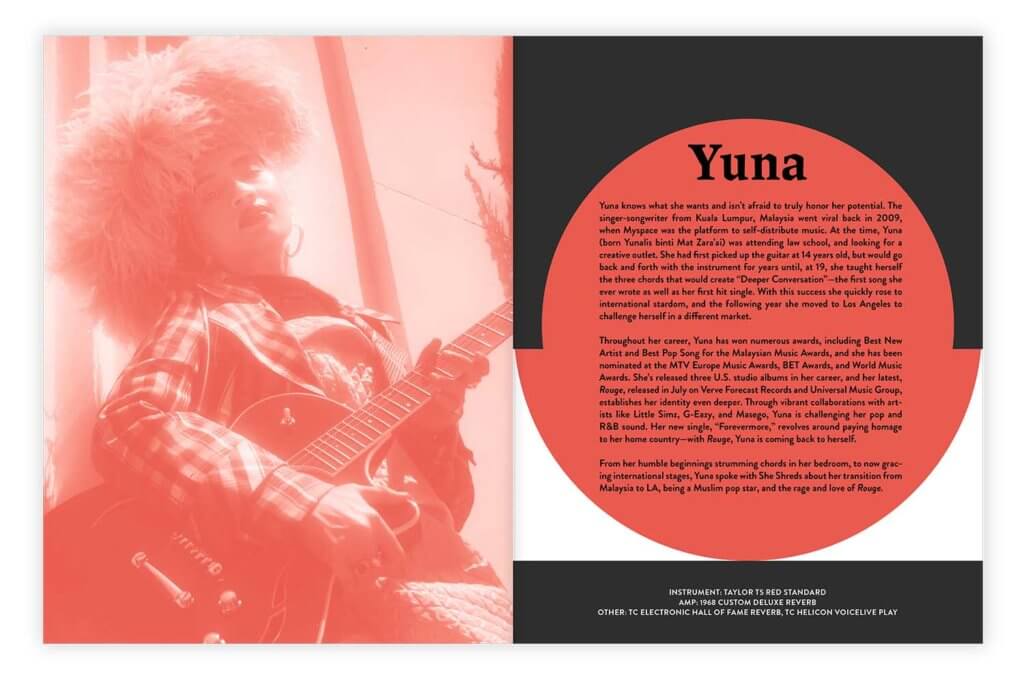
Cover Story: Yuna
Yuna’s sound and purpose are unapologetic, while her aesthetic intersects fashion, feminism, and passion. From her humble beginnings sharing her music on her blog, to now gracing international stages, she speaks to her transition from Malaysia to LA, being a Muslim pop star, and the rage and love of Rouge.
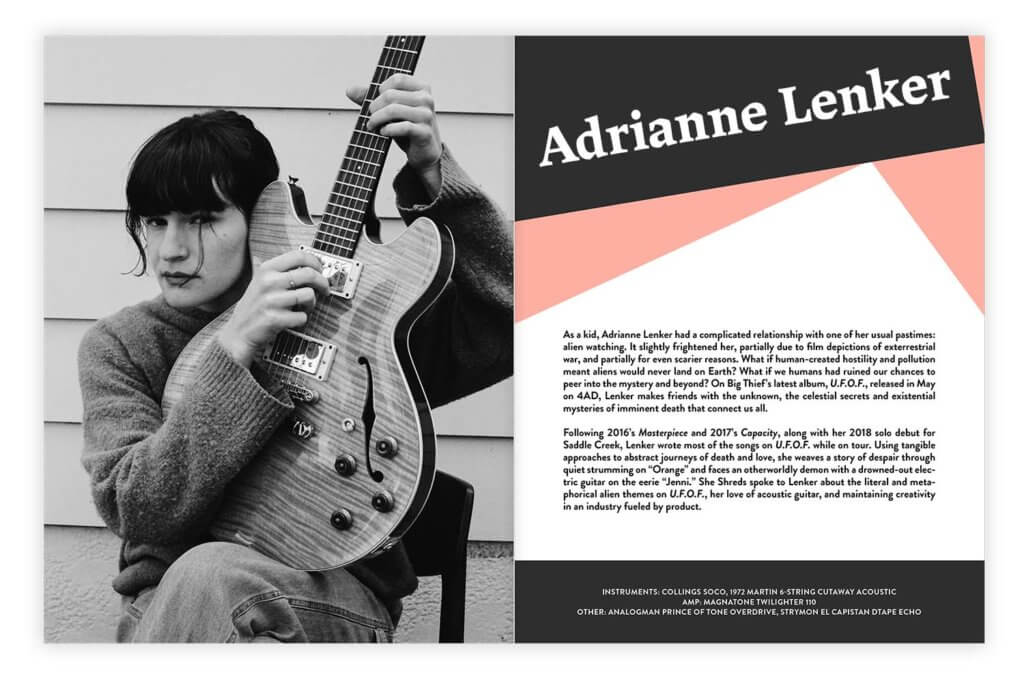
Adrianne Lenker
The guitarist and vocalist of Big Thief talks about alien themes on their latest album, U.F.O.F., her solo project, and maintaining creativity in an industry fueled by product.
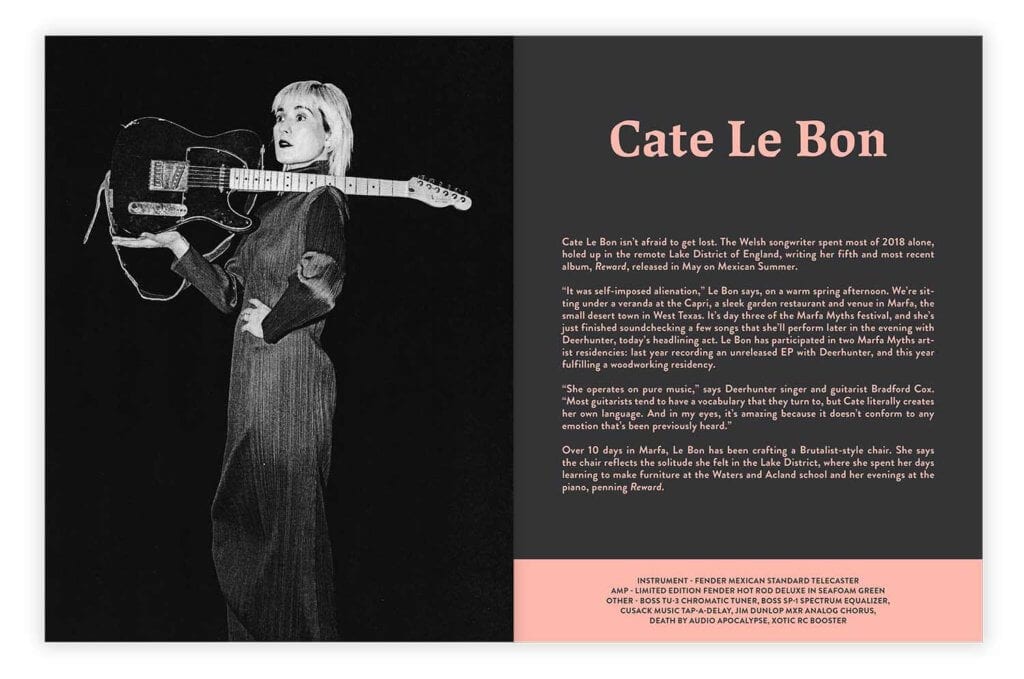
Cate Le Bon
From self-imposed alienation to learning a new skill, Cate Le Bon opens up about taping into the unselfconscious awareness of childhood, and how writing Reward mirrored the process of building furniture.
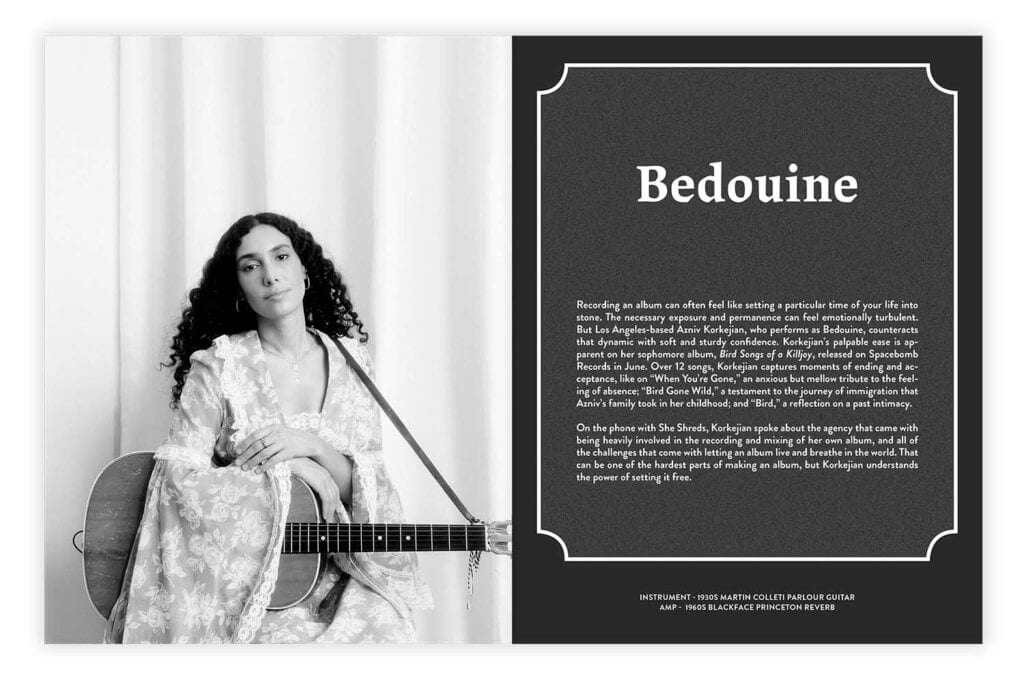
Bedouine
This summer, Azniv Korkejian, who performs as Bedouine, released her sophomore album, Bird Songs of a Killjoy, and spoke to She Shreds about the power of setting her music free.
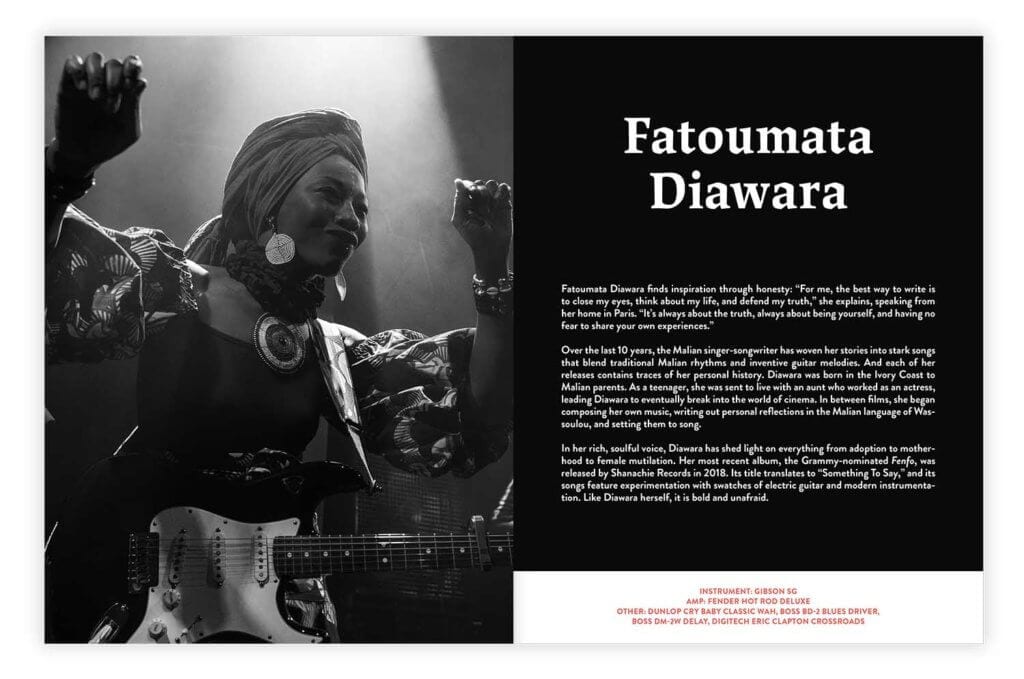
Fatoumata Diawara
For the last decade, the Malian singer-songwriter has woven traditional rhythms, inventive guitar melodies, and her personal stories to create her bold and unafraid sound.
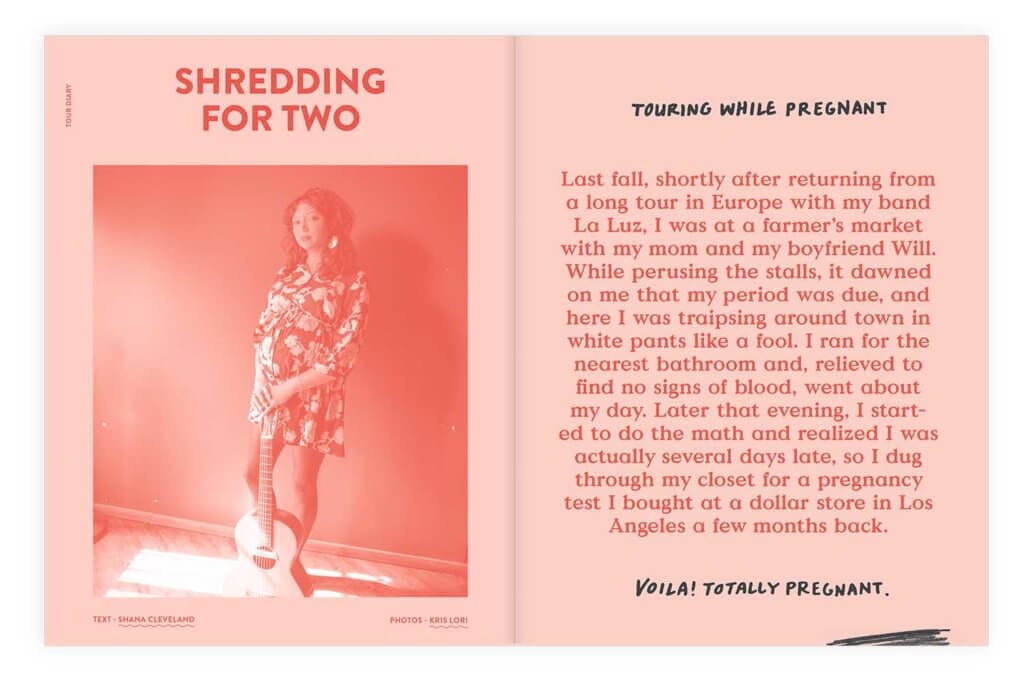
Tour Diary: Pregnant on Tour
Shana Cleveland, lead guitarist and vocalist in La Luz who recently released her sophomore solo album, Night of the Worm Moon, shares her experiences with and tips for touring while pregnant.
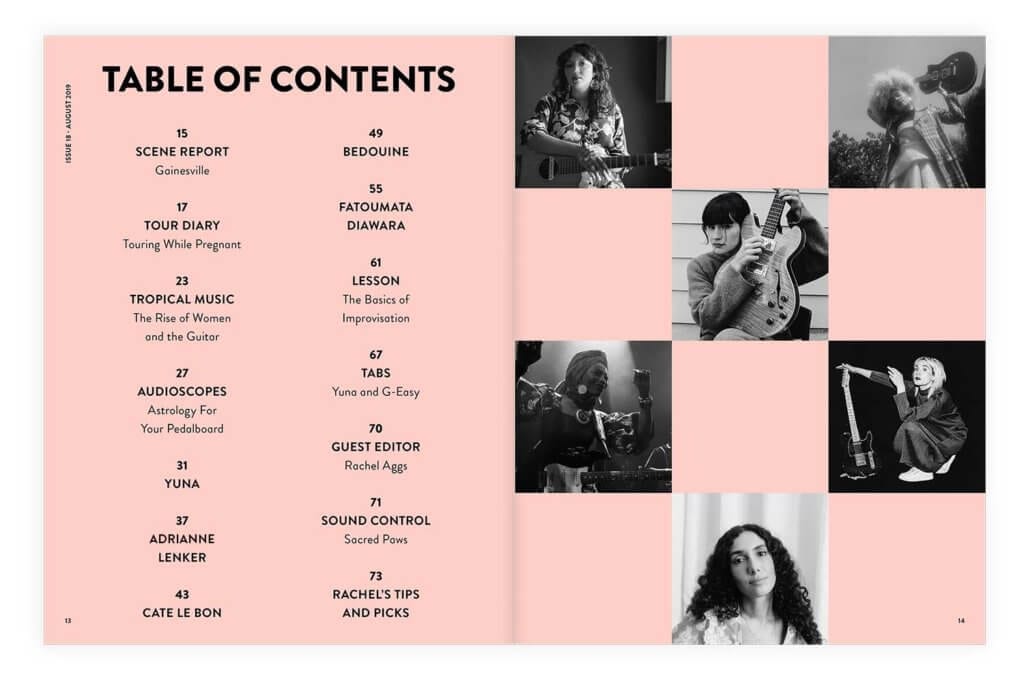
15 Scene Report: Gainesville
17 Tour Diary: Touring While Pregnant
23 Tropical Music: The Rise of Women and the Guitar
27 Audioscopes: Astrology for Your Pedalboard
31 Yuna
37 Adrianne Lenker
43 Cate Le Bon
49 Bedouine
55 Fatoumata Diawara
61 Lesson: The Basics of Improvisation
67 Tabs: Yuna & Easy-G
70 Guest Editor: Rachel Aggs
71 Sound Control: Sacred Paws
72 Rachel’s Tips & Picks
On the last Friday of every month, She Shreds will share our staff favorites of what we’ve each been grooving on lately. From new bands and new records by old favorites, to dance parties and an Instagram teenage shredder; we’ve got you covered.
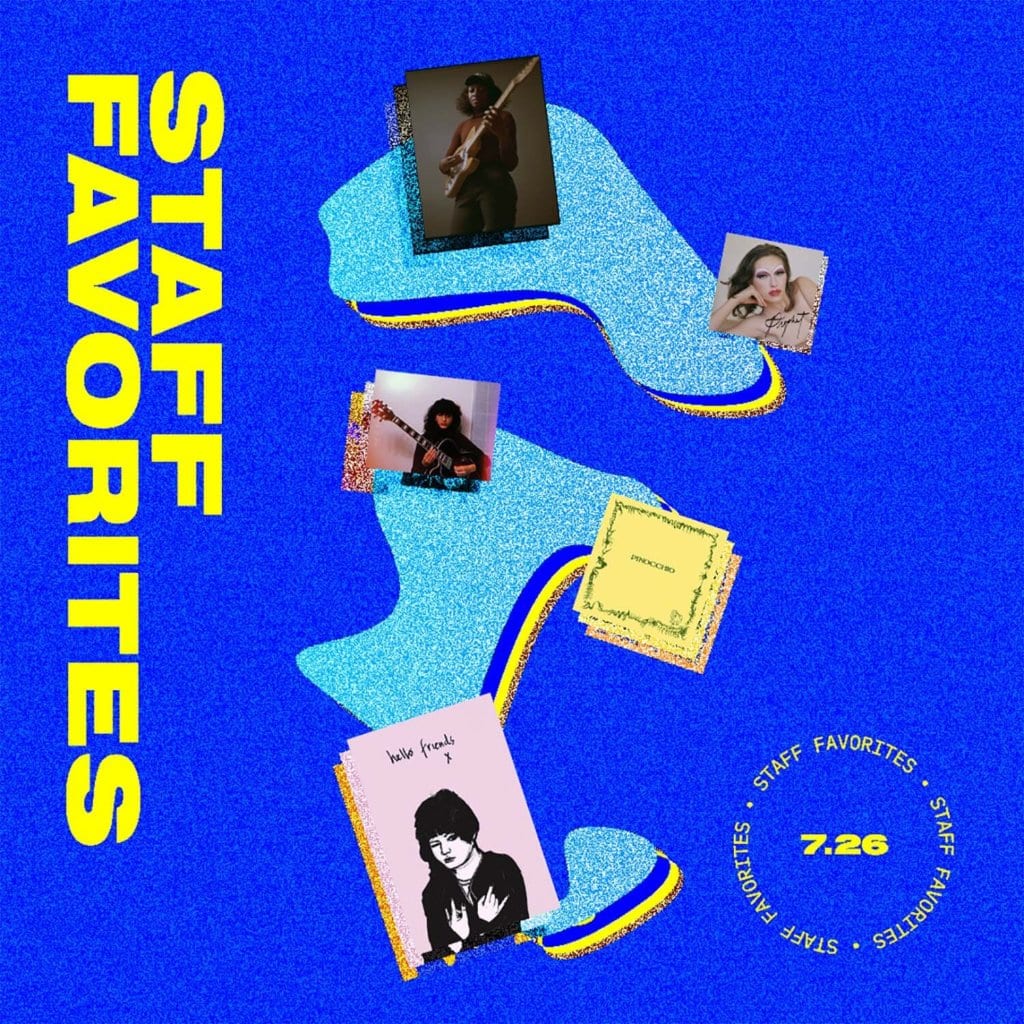
Kali Flanagan
Few times in our lives will we get a feeling about a musician that says, “There’s something extraordinary about this.” I imagine it’s the feeling that, back in the day, a record executive felt when they discovered “the next” Billie Holiday or Elvis Presley performing at a small club or even on the street. It makes you think, “Wow, I’m listening to someone who has the potential to make history.”
As saturated as the internet might be, I’ve been following the path of Kali Flanagan for the last year or so, who fully encompasses that feeling. She’s how I want to imagine what I was like as a teenager, only she’s fully aware of her powers as a guitarist, composer, producer, and possibly even an engineer. Her music will seep into your dreams and you’ll find yourself humming it all day, eventually needing more. I’ve met Kali a few times, and she doesn’t know that I think she’s a literal hero, but hopefully this message will encourage y’all to join the Kali fan club, too.
Check out Kali Flanagan’s latest releases on her Instagram and more videos on her YouTube!
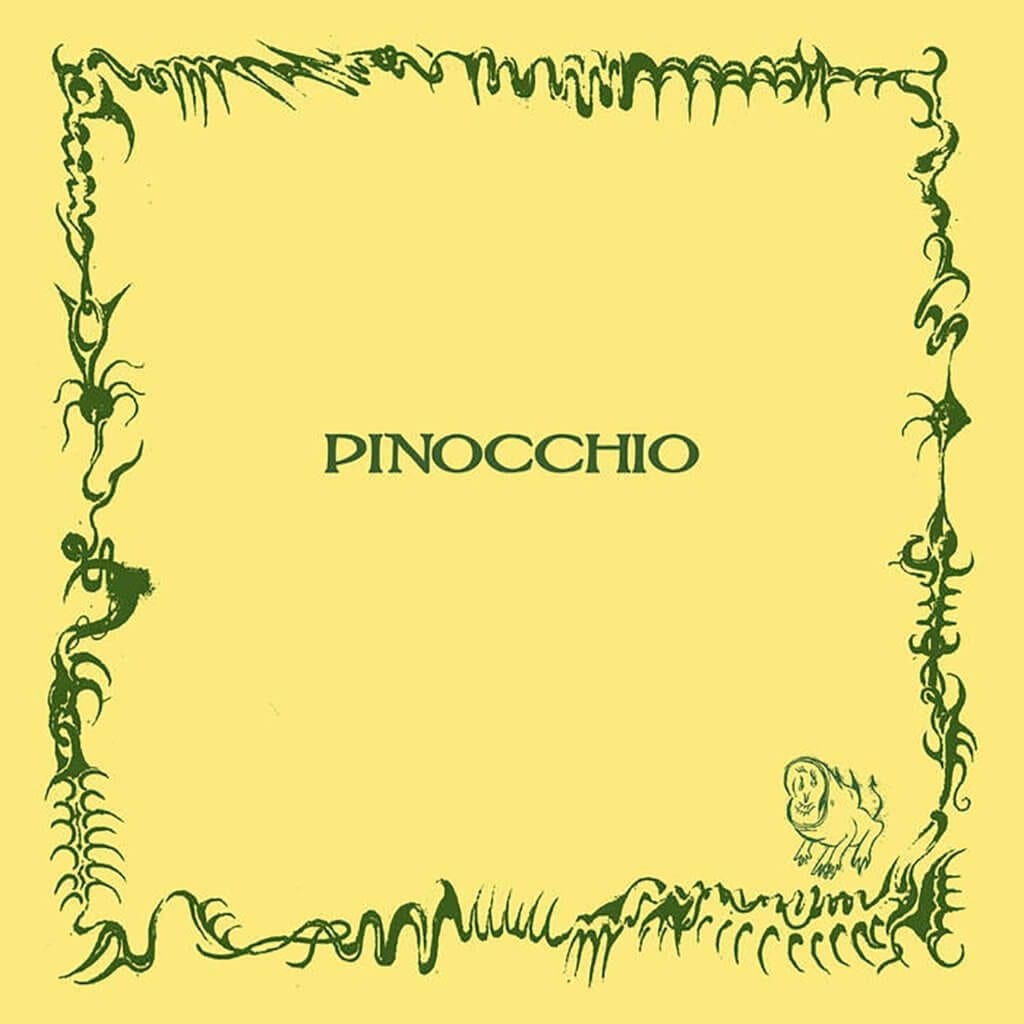
Pinocchio, Self-Titled EP
Aimlessly scrolling while waiting for the train, I came across Pinocchio on an Instagram story. They were playing a raucous jam with front person Mary Jane Dunphe (VEXX, CC DUST, The County Liners) powerfully singing while improv dancing in mime-esqe makeup. And I’ve been listening to them ever since (like, actually, because I literally learned about them today).
The four-piece is based in New York and released their self-titled EP on Toxic State Records in April, followed by opening for Bikini Kill at Kings Theatre in June. The eight-songs are unintuitive in their composition, both over the top and minimal, and the EP opens with an arena-like crowdpleaser drum beat, accompanied by a pop riff, and the closest I’ve heard to a voice legitimately being compared to Kate Bush’s. Dunphe’s vocals match the unexpectedness of the songs, traveling throughout the EP like a runaway train, ranging from theatrical to maniacal to sweet—and always on a mission to breathe more life into punk.
Pinocchio doesn’t seem to have anything coming up (and with little information on the internet), but I can’t wait to see what they do next!
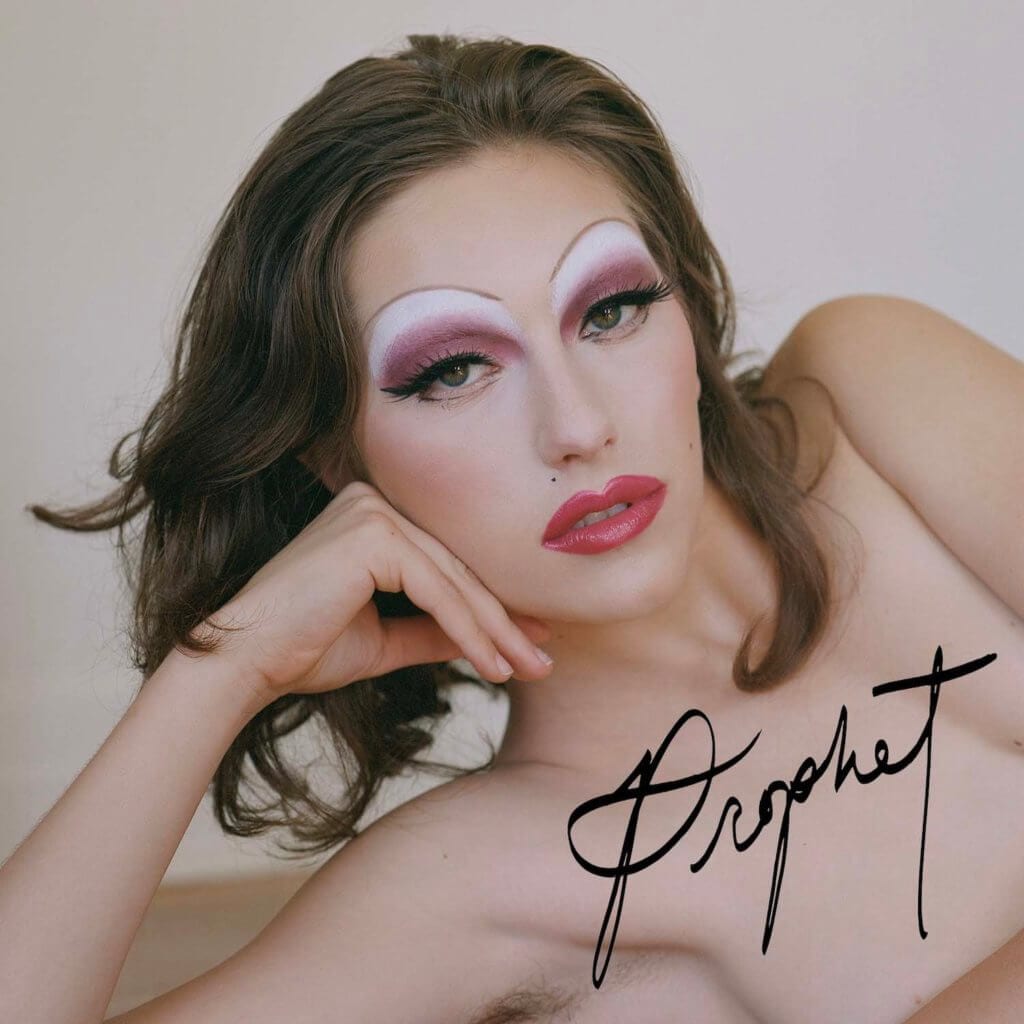
King Princess “Prophet”
Last Friday, King Princess announced the arrival of her much anticipated debut album, Cheap Queen, to be released on Zelig/Columbia Records, along with a full U.S. tour that kicks off this September. If that wasn’t enough, she teased out yet another single, “Prophet,” and it does not disappoint. Unlike the summery synth pop feel of the title track “Cheap Queen,” released earlier this year, “Prophet” has a dark, soulful vibe and we’re here for it. While no official date has been announced quite yet, the anticipation is just getting started.
For more information on King Princess’s tour dates, check out her website and Instagram.
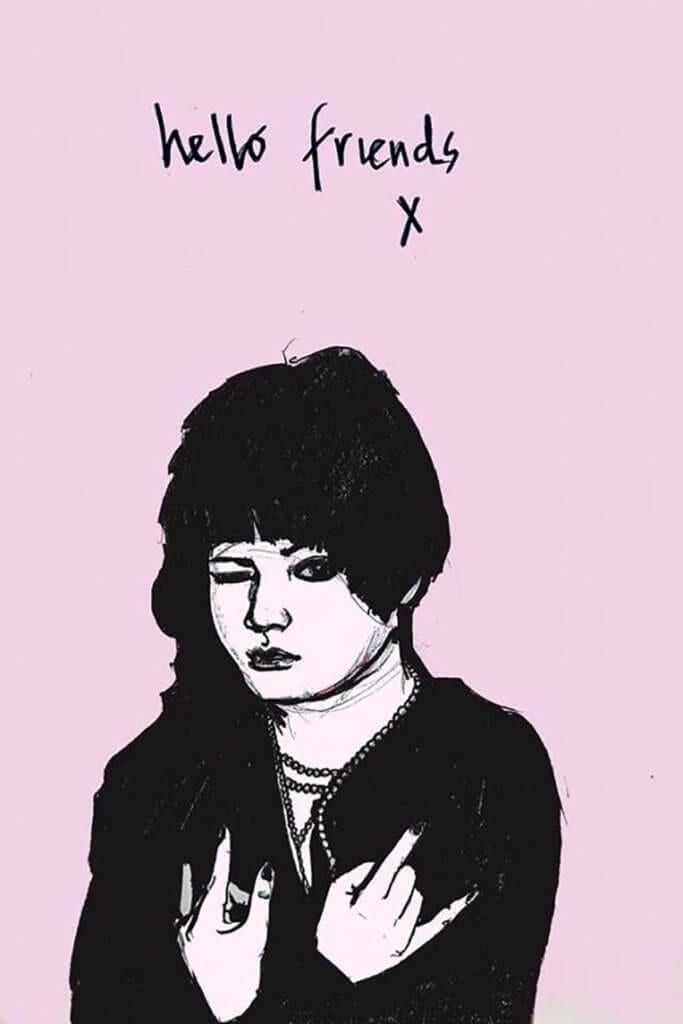
Club Fomo Presents: Light Asylum and Sink Ya Teeth
Nothing is better than a perfect meeting of worlds, and we are having major fomo for this DIY dance party at Club Mofo in London on August 22! Industrial goth legend (and fellow Portland-based homie) Light Asylum is headlining with post-punk duo Sink Ya Teeth, who was just featured in our event at The Great Escape. Thanks to this event we’ve also stumbled upon dreamy R&B punks Secret Power, who we’ll be keeping an eye on too!
A few lucky cities can catch the last dates of Light Asylum’s 2019 summer tour:
8.10 KRAKEN CLUB – SWEDEN
8.16 FEKETE ZAJ (BLACK NOISE) FESTIVAL MATRA SASTO, HUNGARY
8.22 CORSICA STUDIOS – CLUBMOFO PARTY LONDON, UK
8.23 INFEST BRADFORD, UK
8.30 ENTREMURALHAS LEIRIA, PORTUGAL
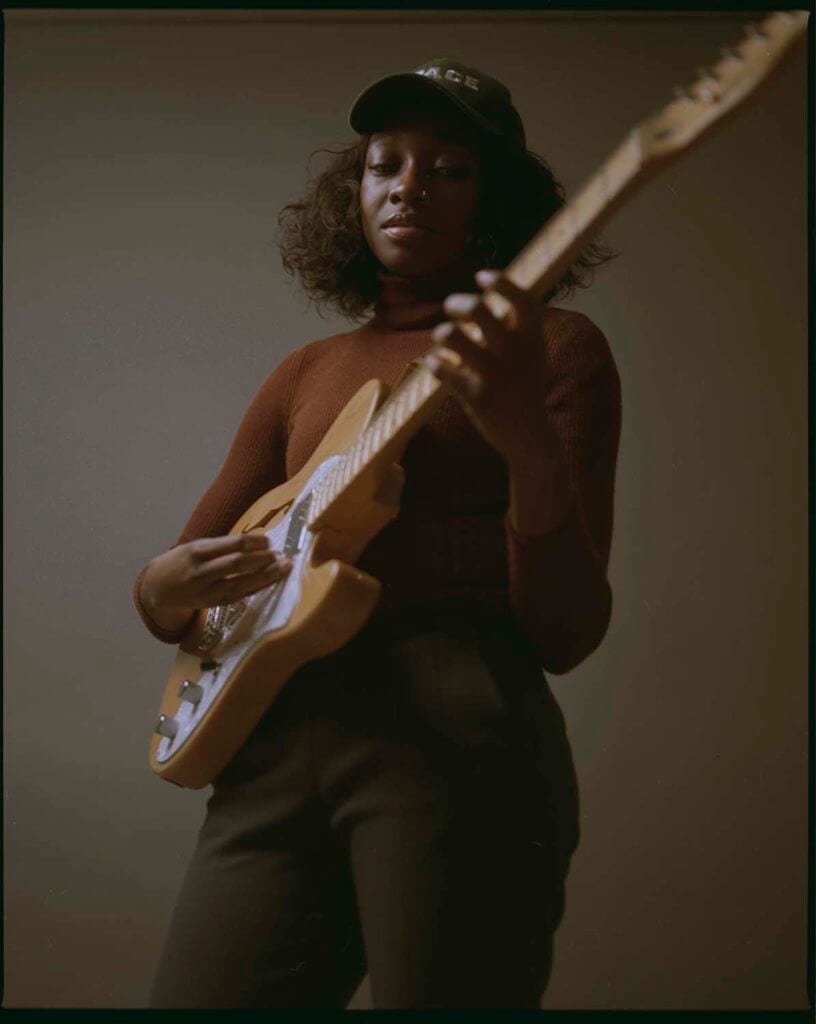
Little Simz Grey Area
Grey Area is the third studio album by Little Simz, released March 1, 2019 via her own label, Age: 101 Music. It’s real good, but you’ll just have to hear it for yourself. Read our 2017 interview with Little Simz from She Shreds print issue #12 where she shares why she picked up the guitar, how the guitar influences her writing process, and being independent by starting her own label.
Be sure to catch Little Simz on tour in the upcoming months.
“Are you in love? Do you feel it in your stomach? Does it twist and turn and scream and burn and start to make you cry, but you like it?”
So opens the sophomore album, How Do You Love? from Los Angeles purveyors of power-pop, The Regrettes. In a slow and steady spoken word, 18-year-old front-woman Lydia Night, displaying a depth beyond not only her years but mine and yours as well, poetically lays out the delightful affliction we define as love.
The arc of the album, like most love stories, starts with butterflies, peaks at a breakup (or breakdown), and ends with the protagonist finding herself—along with some closure.

“I think of the album as a puzzle,” shares Night. “There had been pieces that were finished, definitely, but without even realizing it directly, there were things the story needed to make sense and to finish it. There are things I went through in my life at that time… Having members leave the band is a big life thing when you’re close friends with [them]. So there are songs on the album written about that, that still fit into this love story, but the emotions are written from that place.”
The Regrettes, currently comprised of guitarist Genessa Gariano, bassist Brooke Dickson, and drummer Drew Thomsen, had literally came of age together, going through veritable life and lineup changes since their debut album, Feel Your Feelings Fool, released in 2017 on Warner Records. “All that shit was not fun to go through. But then again, I don’t know if we’d have the correct story without it.”
How Do You Love? is set to be released this August on Warner Records, and kicks off with “California Friends,” a dance-worthy ode to the excitement and hope entangled in the first brush at potential love. Then, half-way through the album, comes “Stop and Go,” a tale of caution once initial feelings fall way to analysis: “Stop before we lose control / Let’s take a breath before we go.” Reality hits with tracks like “Go Love You” and “Hasn’t Hit You” when the protagonist chooses themselves and walks away, swimming out from the complicated depths of affection.

Night realized she wanted to be a guitarist when her father took her to see The Donnas when she was just five years old. Since then, she hasn’t stopped channeling her emotions through guitar, taking a figurative and literal axe to issues both sentimental and political, including a track called “Poor Boy” that she and the band released earlier this year in response to the Kavanaugh trial.
“I think the coolest thing about writing music is that you can take your own personal experience and shit that you’re going through and not only help yourself and have it be a therapeutic thing, but also make art out of it,” says Night. “That’s going to help others feel less alone in their feelings and what they’re going through, and have it be this relatable thing out in the world.”
What Night and The Regrettes convey so well through their second album, and what I’ve felt in my experience (and what you more than likely have, too) is that if we fall hard, whether it be for a song, an instrument, or a person, there are no treatments or cures to restore us to our previous state. In fact, if given a remedy, we’d most likely turn away from the prescription, preferring the pain instead.

So, what are the symptoms? If you find yourself resonating with the infectious beat and lyrics from the album’s lead single, “I Dare You,” or if any of the lyrics of How Do You Love? hit you where it hurts (but you like it), then, as Night diagnoses at the close of the opening monologue: “Yes, my friend. I’m sorry. It appears you are in love.”
The remedy? Night shares the correct dosage of audible medicine in the message she hopes listeners will walk away with from How Do You Love?: “Self-forgiveness for not knowing the right answer. Knowing that all forms of love are tricky, and if it takes you some time to figure it out, or if you never feel like you’ve quite figured it out, everyone else is in the same boat. No one has it. Relationships can look perfect from the outside, but no one knows what they’re doing all the time. Everyone has their shit. Remember to be patient with yourself, love yourself, and learn from it. I think that’s what’s most important.”
Watch Lydia Night speak on the She Shreds x Guitar Center panel, “Transforming the Music Industry: A Conversation with Five Guitarists Shaping Music & Culture,” here!
Kallemi is a diverse group taking an innovative approach to their music by blending synths, groovy guitar riffs, soulful harmonies, and hip hop with lyrics in English, Arabic, and Spanish. The band is comprised of Swiss, Palestinian, and Dominican musicians split between Basel, Switzerland; Berlin, Germany; and Haifa, Palestine. The band started out with the intention to do a one-time performance at Kaserne Basel—one of the biggest musical showcases in Switzerland—but the compatibility between the women was so strong that they decided to continue despite the geographical distance.
“It’s challenging, but I feel that the chemistry that we have, our relationship, and our musical relationship is so organic, it’s really almost effortless… It is a long distance relationship, but we are making sure to meet and play quite often,” says guitarist and vocalist Rasha Nahas.
Joining Nahas are Jasmin Albash, who produces beats, sings, and plays synth; Jennifer “La Nefera” Perez, who raps exclusively in Spanish; and Maysa Daw, who sings and plays both percussion and classic guitar. Albash, Nahas, and Daw come from Palestinian backgrounds, while Perez is from the Dominican Republic.
“Yo vine al grupo siendo la única que no tiene el origen Palestino, pero yo creo que como quiera es una cosa tan internacional y tiene una diversidad tan grande que encontré en mi espacio acá también,” says Perez. “Yo creo que también es importante que tengamos todas estas lenguas diferentes — el Español, el Ingles, y el Arabe — por que así tocamos a muchísima gente de todo el mundo y le llega el mensaje de muchas formas diferentes, y por eso es algo muy lindo.” (“I came to the group being the only one who didn’t come from a Palestinian background, but despite this, it’s so international with a diversity so big to find in my space here,” says Perez. “I also believe it’s important that we have so many different languages—Spanish, English, and Arabic—because we play to so many people from all over the world, and the message gets across in so many different forms, and it’s very beautiful.”)
Inevitably, language and communication are significant factors for the band, and these elements ultimately inspired the group’s name.
“Kallemi is Arabic and it means speak, or speak up, so it’s like saying speak up in the female singular,” says Nahas. “The choice of the name—the fact that we are all women—makes for me, personally, this encounter a lot easier, a lot safer, a lot more embracing, and it’s a very big part of the project.”
“It’s also beautiful to speak to the audience. The audience speaks to us to create this vibe, so that’s also the meaning for me,” Albash adds.
Their multifaceted experiences and identities have consequently inspired their music, which focuses on themes of travel, distance, and home. Their song “Viajeras” (which translates to the feminine plural for travelers) touches on the hurdles they’ve faced in their individual diasporas, and their intersectional positions.
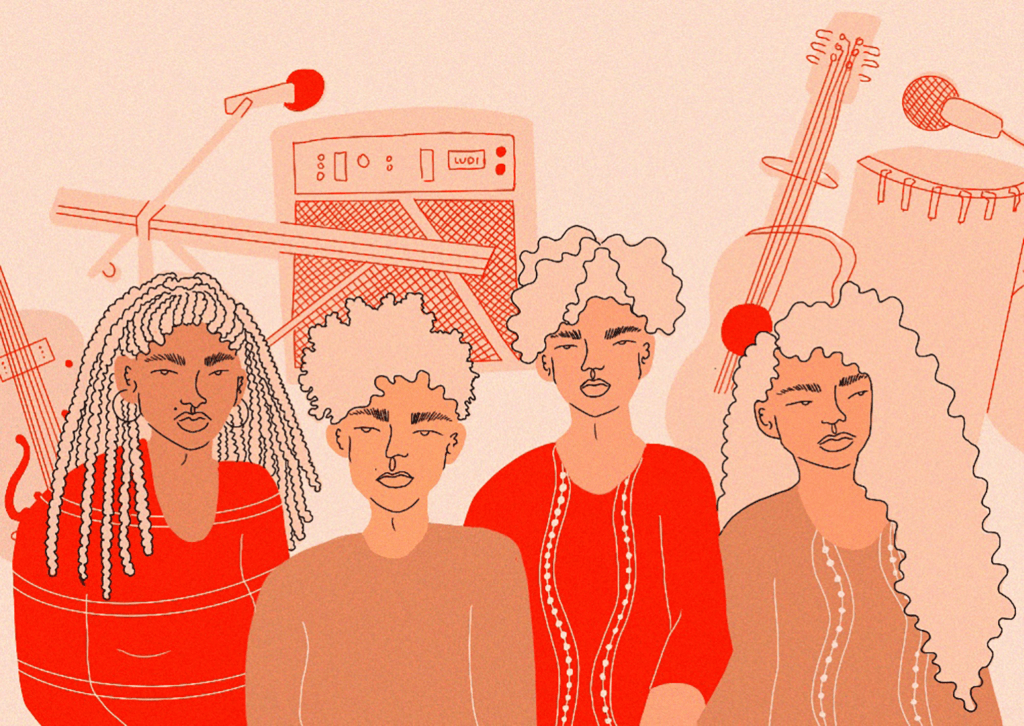
“We’re all facing our identities, and exploring our relationship with where we come from, if it’s the language, or if it’s the political identity, or if it’s the geographical circumstances,” says Nahas. “I’m a Palestinian but I grew up inside of Israel. So where is home for me? Where do I belong? How is my relationship with my identity? Am I oppressed?
“For me personally, I feel that these questions are very much amplified. They get louder in Kallemi because we are meeting as musicians with different backgrounds, and all of a sudden we realize that we have a lot in common, and we have a common ground which is first music, but also these questions and these reflections.”
The band collectively credits music for being the means in which they can explore these thematic concerns with one another.
“We come from different backgrounds and at the same time go through very similar yet different experiences,” writes Daw in an email to She Shreds. “We talked a lot about belonging as Palestinians, Dominicans, Swiss, [and] how we feel in this world as women, as musicians. So naturally, these topics came into our songs without even deciding on it.”
As different as the women are in their identities, their musical experiences vary greatly, too. Albash comes from a jazz background and sings/produces music in a solo project called The RK. Perez raps under the stage name La Nefera and mixes electronic influences with merengue. Daw is rooted in rock music, but she currently sings for Palestinian hip hop group DAM. Nahas does theatrical rock ‘n’ roll and will be releasing her first full-length album, The Name is Desert, next January.
Kallemi’s members are undoubtedly distinct as standalones, but together their talent combines to create a musical experience that is larger than life.
“It makes it unique that we have so many influences and we’re all solo artists,” says Albash.
“When this fusion happens, when each of us brings her world, something else happens,” adds Nahas. “It’s not about me anymore, it’s not about one person anymore, it’s about four people creating something else, something other, and it grows beyond us.”
As Kallemi moves forward, they have numerous shows lined-up in Switzerland this year, most recently playing the B-Sides Festival in Sonnenberg. They’re also currently writing songs and gearing up to record in the studio for their debut EP.
“We are really still in the process to figure out how the songs will develop, but I think [fans] can expect something powerful,” says Albash.
“Es una mezcla muy única, algo nuevo,” adds Perez. “Y también por tener la posibilidades músicas tan limitadas con los instrumentos que tenemos, es algo super inovativo y por eso vale la pena de oírlo y mirarlo,” Perez adds. (“It’s a very unique mix, something new,” adds Perez. “And for it having such limited musical possibilities with the [few] instruments we have, it’s something super innovative, and for that reason it’s worth listening to it and seeing it.”)
How does a Saudi-based dentistry student go from cramming for dental medicine exams to DJing for international crowds throughout the globe, producing and writing numerous songs for herself and clients, starting a record label, and writing a self-help book?
For Afra Khan, aka ANAKHEMIA, the pivotal moment to switch careers occurred while watching Tiesto in concert on television. Still occupied with her third year coursework in dentistry, Khan was nevertheless struck by a very clear vision that she should pursue DJing. Upon graduating, she spent her days working at a hospital. At night, she wrote about music and art for the English-language publication Arab News, and later started her own online magazine that covered electronic music. Through this work, Khan interviewed heavyweights like Tiesto and Paul Oakenfold, learning about their process and approach. Informed by these experiences, she slowly entered the DJ space.
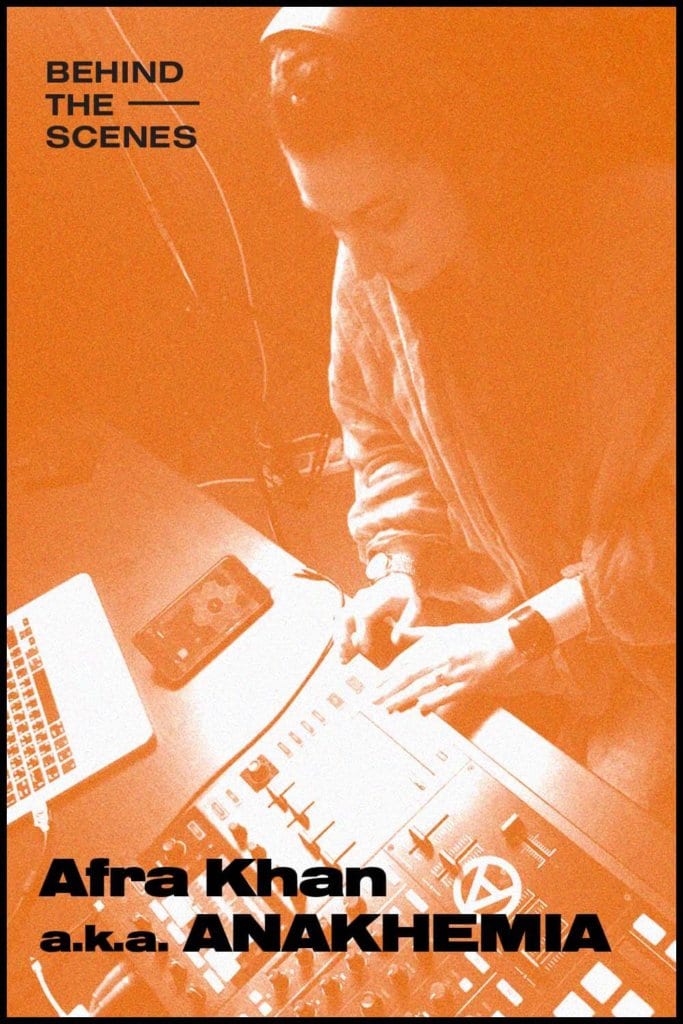
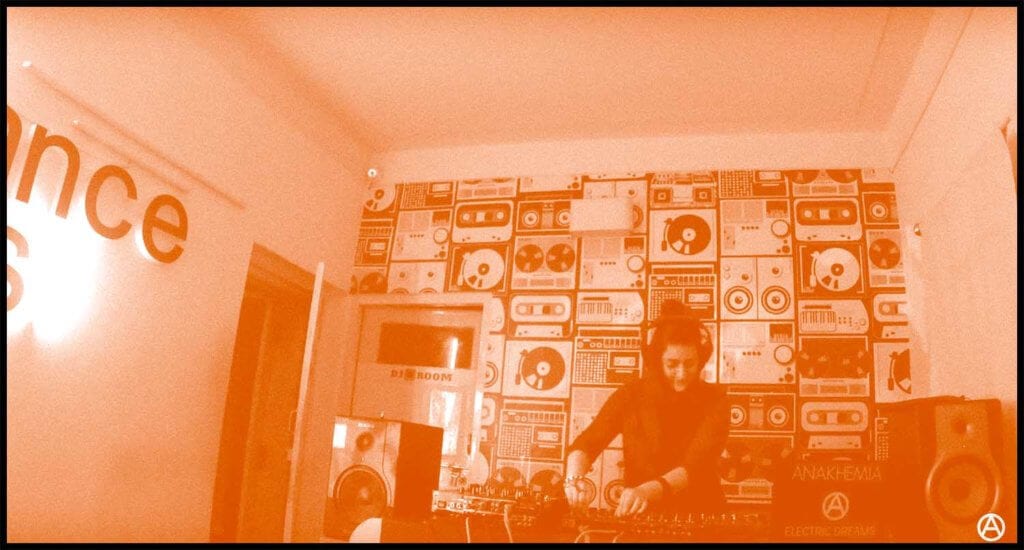
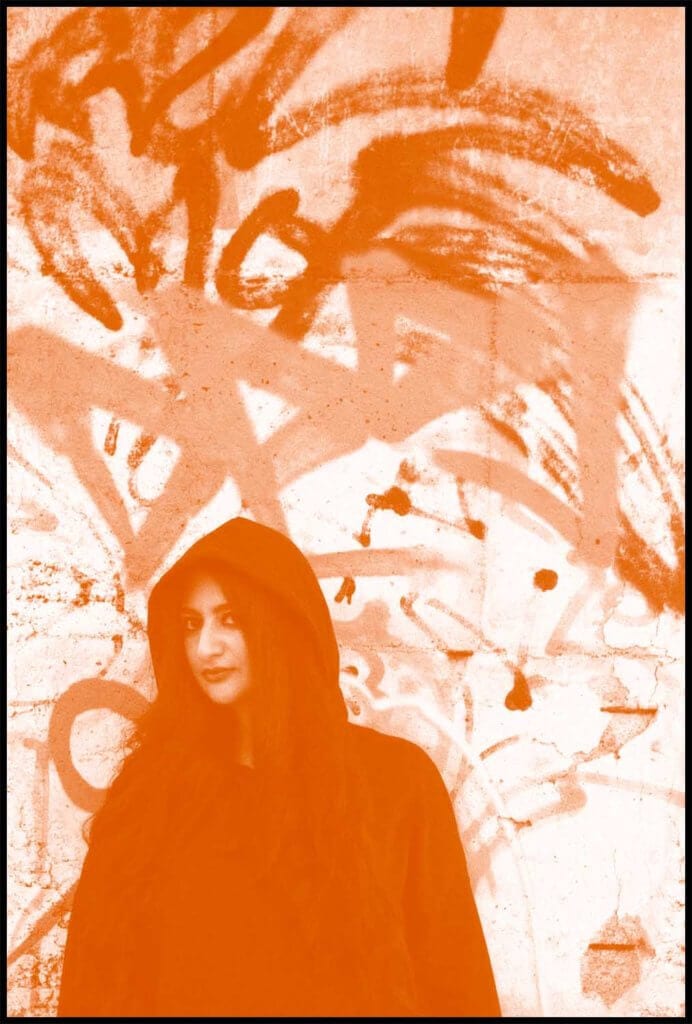
Self-taught, Khan has since released numerous tracks and played gigs in the Middle East, Asia, and Ibiza. In August 2015, her debut demo, “The Prophecy,” peaked in the Top 10 of the Casablanca Records (owned by the Universal Music Group) demo contest. She is currently part of the VISIBILITY exhibit at Philharmonie de Paris, a major music complex that looks at the history of electronic music from the ‘60s through today.
Grounded by a vision to inspire dialogue through musical storytelling, She Shreds happily sat down with Khan, who currently resides in Jeddah, Saudi Arabia’s second largest city, to hear her own epic narrative.
What does a typical day look like for you? How much of your day is spent focusing on producing, DJing, and managing your career?
What’s constant is music. I try to spend at least an hour of the day working on music sessions at my home studio apart from clients’ music projects. However, it’s really dictated by the project of the hour. For instance, I just finished writing a self-help book for young women and girls called Girl Alchemy, and I’m laying the groundwork for my music label AZOT.
Could you tell our readers about your background?
Two words: rich and complex. I come from a mixed heritage, so I totally feel closer to the idea of being a third culture kid, and I don’t identify with one thing in particular. Academically, I graduated as a dentist and moved into music. I’m like a Gemini riding waves on a surfboard—fluid. It’s what I feel like inwardly.
How did you decide to break into the music industry? What’s kept you producing and DJing?
Music has been a very influential part of my life. My mum was a total music fan growing up. Since childhood, I’ve always been involved in creative work one way or another. I was doing theatre since age 10, then picked up the drums in my teenage years, but I couldn’t see any of it as a career because I didn’t know how.
The first time I was truly awed by a DJ was after watching Tiesto in Concert at Gelredome on TV with my mum. I was still in school and preparing for exams; my mum and I still joke about it. But I think it was actually in my third year studying dental medicine when I was struck by a very clear vision of pursuing DJing. I went to a rave with my friends just to babysit them and ended up being totally blown away by the DJ playing a straight 8-hour set. It was just mad how he was able to control the emotions of so many people in front of him, moving their spirits with literally his fingers, just like a magician. You could almost touch the feeling of the music.
What do you enjoy most about your work, and what’s surprising about it?
I love that music allows me to extend and exercise my creative spectrum. If you check my Instagram account, you will notice that visuals are a huge part of my music scores. For me, a visual story or imagery is as important as the music, and I like them both to work in tandem.
What’s surprising is that my work has allowed me to marry my childhood interests of music, art, emoting, and storytelling—like when I get to create a video for my music scores or work on ad collaborations on Instagram. Music has brought all of those loves together into a beautifully woven basket of sensations.
How do you think about your work? Are there general principles you keep in mind prior to every project? Or are there some projects where everything is negotiable?
Everything is negotiable until it’s not. For me, I don’t ever want to do music for the sake of doing music, you know? Everything has to serve a purpose or it’s a waste of everybody’s time and energy. I want to only do work that creates a moment of transformation in a person’s psyche when they experience it.
What do you enjoy doing the most?
I can watch movies all day long. Is that a boring person activity? I think so, no?
Growing up, I used to be into reading a lot, but now I’ve kind of lost the patience for it. I love physical books and they actually calm me, but reading on a digital device for a long time just gives me anxiety.
What piece of work are you most proud of?
I would say my debut single, “The Prophecy.” It will always have a really special place in my heart.
What are your thoughts on current approaches to production? How has the widespread availability of software and home recording equipment changed things for you?
It’s bonkers to be alive as a music producer at this time in world history. I’m looking forward to what’s to come in music technology. Imagine telepathic production? It can happen. We know a lot of stuff in the music production process is moving towards AI based algorithms, and although it’s exciting and has room to evolve and assist in creating a wholesome music experience, having humans as master controllers of the end product makes it that much more richer. A human’s personal predilections makes everything quite unpredictable, and that aspect lends an air of mystery to the artistic experience.
But what’s important is asking how are we going to use this easily available music technology to benefit each other? I’ve been able to reach people in various parts of the globe who resonate with my personal expression in music just because of the readily available music softwares and resources that have allowed me to create and share almost instantly with them. And for this, I’m grateful to be a part of this technological generation.
Are there any resources you would recommend to our readers who would want to break into production?
I personally started out learning on my own, experimenting with all the buttons and knobs inside the box. That gave me a lot of confidence and the ability to rely on myself. But of course, you reach a point where you really want to add finesse to your skill set and that necessitates learning under those who can actually help you evolve. I learned a lot about certain aspects of mixing from Josh Carney who runs “MusicTechHelpGuy” on YouTube, and Mitchel Pigsley’s videos for specific technical stuff.
Can you tell us about some of your favorite gigs?
My favorite gig so far is still my very first proper gig, which was at The Tao Terraces in India. It started to rain and people just got that much more into the vibe. The energy on the floor was so special. It was all about the force of nature, the spirit of the dancers, and the magic of music.
Do you ever work with other artists or producers?
Of course! Last December, I did this remix—“Check Out”—for a very talented friend and veteran producer, Nicola Zanni. He’s based in Italy and has really cool records out with some very celebrated labels. I only did it because his original was so hot for me that I was happy to be a part of the vibe when he asked. What’s important for me in terms of collaborations now is that I have to feel like we’re on the same wavelength on various levels, adding value and uplifting each other’s vision.
Could you tell us about the music scene in Jeddah?
It’s a great time to see entertainment and music being supported so openly, as never seen before in Saudi Arabia, and at supersonic speed. It’s quite something. But the support of diversity in the scene still needs voice, un-bias, and maturity, both from a media and grassroots perspective. We’re at the cusp of a new world, and I want to make sure I’m visible and vocal about important transformations that need to occur in our time.
For more information on Afra Khan, be sure to visit her website, Instagram, and YouTube.
This article originally appeared in She Shreds Issue #17, released in April 2019.
Calgary, located in the Alberta province of Canada, is often overlooked as a musical hub. Touring bands tend to stop in Vancouver or Toronto thinking they’ve fully covered our abundant country. What they’re missing out on, however, is a rich cultural landscape nestled perfectly between the vast Canadian prairies and the picturesque Rocky Mountains.
Calgary was built on oil and conservative politics, so its artistic community is understandably not high on people’s expectations for this boom-and-bust city. However, where there is conservatism there is always opposition, and thus a vibrant music scene has emerged. What started in basements and backyards has now grown into a hotspot that’s home to the National Music Centre, the world-class Sled Island Music & Arts Festival, and much more. Community radio stations and local entertainment publications are at the core of it all, while independently-owned record stores and music gear hobbyists enrich the DIY ethos. If anyone still thinks a Canadian tour means a direct flight from Vancouver to Toronto, they’re missing out on an eclectic scene in Calgary.
VENUES:
The Palomino Smokehouse & Social Club (109 7th Avenue SW) is a longtime institution within Calgary’s music scene, and the place to be for both local and touring bands alike. The two-stage venue sets up nicely for a rowdy eight-to-ten band bill, plus it’s home to the best BBQ in the city.
The King Eddy (438 9th Avenue SE), established in 1905, was Calgary’s longest-running music venue before closing its doors in 2004. Just recently, it was acquired by the National Music Centre and reopened with a Southern-inspired menu and live music every night of the week.
Tubby Dog (1022 17th Avenue SW) can cram about 50 people in its doors, and hosts some of the best shows in Calgary. Every local musician has probably played their favorite show here. Go early, grab a cheap beer, eat a hot dog smothered in peanut butter while hovering over a vintage arcade game, then prepare to experience the sweatiest show of your life.
McHugh House (1515 Centre Street S) hosts everything from noise and drone to hardcore shows, and provides a vital spot for all-ages bands and audiences alike. This fantastic venue was recently launched inside an old, historic brick house as a collaboration between CJSW, a widely popular community radio station, and the Beltline Neighbourhoods Association.
The No. 1 Legion (116 7th Avenue SE) in downtown Calgary isn’t your typical music venue, and most days of the week it’s part of a larger institution across Canada that supports veterans. But it is truly integral to our music community and opens its doors to some of the best shows downtown. The building is huge, lined with old carpet, and has two stages with a capacity for 700+ people. Get ready to see anything from amateur wrestling to world-class musicians.
GEAR SHOPS:
Long & McQuade (225 58th Avenue SE) is a national chain that stocks some of the best guitars, amps, and pedals. Their selection of percussion, brass, keys, and woodwind instruments is also extremely impressive. Long & McQuade also has a stacked rental section, which makes trying new gear super affordable and fun.
Kickaxe Guitars (1409A 11th Street SW) is conveniently nestled downtown for folks who just need to grab a set of strings or replace a patch cord. Operated by two long-time guitar players, they also offer affordable amp repairs and guitar set-ups.
Tone Hungry Effects is run by local musician Juan Ortiz, who turned his hobby of constructing guitar pedals into a business. Fuzz, distortion, and overdrive are his specialties, and his unique hand-crafted quality is evident in every pedal that he builds.
TunaTone Instruments is based in Edmonton, our provincial capital, located just three hours north of Calgary. It’s the name under which Leila Sidi (profiled here) crafts beautiful electric guitars, often short-scale and ergonomically designed for smaller bodies. They may not be based in Calgary, but ask any local musician about their favorite luthier, and most will mention TunaTone.
RECORD SHOPS:
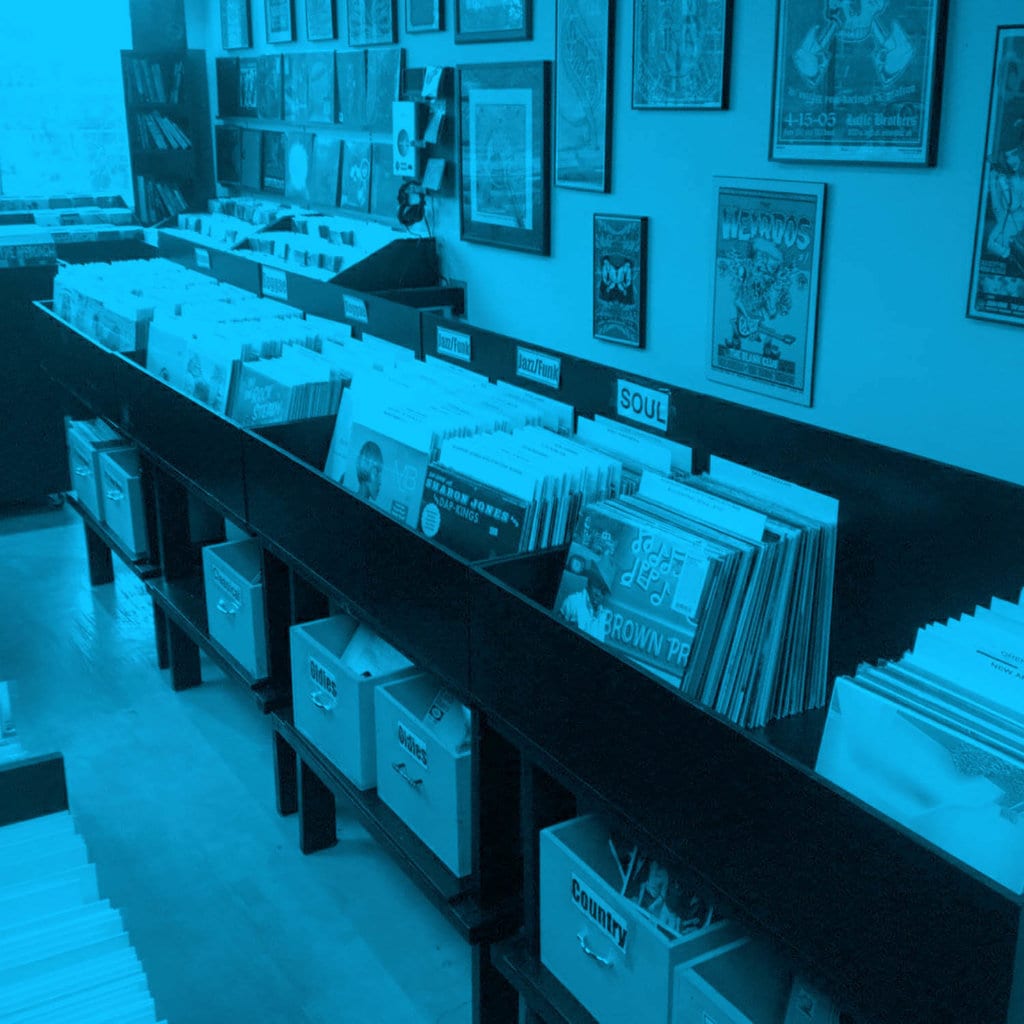
Melodiya Records (2523 17th Avenue SW) is located in the back of a comic shop, offering everything from local releases to niche collector items. They’re knowledgeable, friendly, and have an ever-rotating collection of used one-dollar records.
Sloth Records (736b 17th Avenue SW) is located on 17th Avenue between the city’s best selection of pubs, coffee shops, and clothing retailers. This is the place to find the best local releases on vinyl or cassette. If you’re lucky, you might even catch an intimate in-store performance.
Hot Wax (114 10th Avenue NW) was recently purchased by new owners who renovated the space, refined their collections, and put an emphasis on deep back catalogs with plenty of curiosities in between. No need to be intimidated; the friendly staff won’t judge you for not knowing the complete Boris back catalog, but they will absolutely find it for you.
Recordland (1208 9th Avenue SE) is one of those record stores that you have to see to believe. Used records line the walls from floor to ceiling, and the rooms seem to be never-ending. This is the best spot to find vintage soul, jazz, or doo-wop gems to fill out your collection.

OTHER THINGS:
Calgary is completely landlocked, so it’s often overlooked by traveling bands. Starting in 2007, Sled Island Music & Arts Festival took it upon themselves to fix that, hosting over 250 bands each year in intimate settings. During the festival, shows happen at over 35 venues, with over 30,000 attending. Over the years, with the help of different guest artist curators for each festival, Sled Island has brought in a range of artists including St. Vincent, Cherry Glazerr, Mitski, and Shonen Knife. And in addition to their eclectic artistic programming, they’re progressively adding safe(r) spaces policies and working with local Indigenous organizations to create a welcoming atmosphere for all artists and attendees.
Calgary is also home to Western Canada’s first multidisciplinary feminist festival, Femme Wave. (Full disclosure: Femme Wave was founded in 2015 by myself and my bandmate while spinning records at The Palomino and discussing our experiences as women in an overwhelmingly male-dominated music industry.) Femme Wave has rapidly grown into a four-day festival with a mission to create a safe, positive, and inclusive space for women and non-binary artists. The festival has begun to include visual arts, comedy, film, and workshops to inspire participation of marginalized voices. In just four years, it has gained international acclaim, and brought in artists from across North America including Peach Kelli Pop, Sammus, and JB the First Lady.
The National Music Centre (850 4 St SE) is perhaps the most tangible evidence that Calgary is home to a burgeoning music scene and history. The stunning architecture of their location in Studio Bell is home to Canada’s largest music museum, including over 2,000 musical artifacts. In addition to the museum, the building includes unique performance spaces, educational programming, and a recording studio.
CJSW 90.9 FM is Calgary’s dearly beloved campus and community radio station. It’s known for executing the nation’s most profitable funding drive each year, inviting dedicated CJSW listeners to offer financial support and keep those dreaded corporate sponsorships at bay. Nearly everyone involved in the city’s music community either hosts their own radio show or knows someone who does. Traveling and local bands alike often play live sets in the station and head home with 360-degree videos documenting the experience.
CRAFT BEER:
Since 2013, provincial and municipal governments have relaxed production and small business laws allowing a greater number of local breweries to emerge across the city. What was once only a handful of breweries has blossomed into 30+ unique local brewers, with new ones opening regularly. In addition to the relaxed liquor laws, the vast Canadian prairies cultivate some of the best barley and hops, making Calgary an epicenter for beer lovers. Here are just a few breweries to check out:
The Dandy Brewing Company (2003 11th Street SE) was one of the first craft breweries to open after the laws were revised, and they remain one of the best. Sour beers and stouts may be their specialty, but their small production and high standards mean a bad beer never hits your lips at this local watering hole.
Banded Peak (519 34th Avenue SE) can be found amid industrial warehouses and massive shipping yards, also known to beer aficionados as Calgary’s “barley belt.” They not only make fantastic brews, but are known for keeping community at the forefront of the constantly expanding local craft brewing industry.
Both Cold Garden Beverage Company (1100 11th Street SE) and Eighty-Eight Brewing Co. (2600 Portland Street SE) serve whimsy alongside beer, offering the two hippest tasting rooms this fine city has to offer. At Cold Garden, pool noodles, picnic tables and pup-friendly patios set the environment. At Eighty-Eight, grab some pepperoni pizza in an ‘80s-reminiscent neon glow.
COFFEE SHOPS:
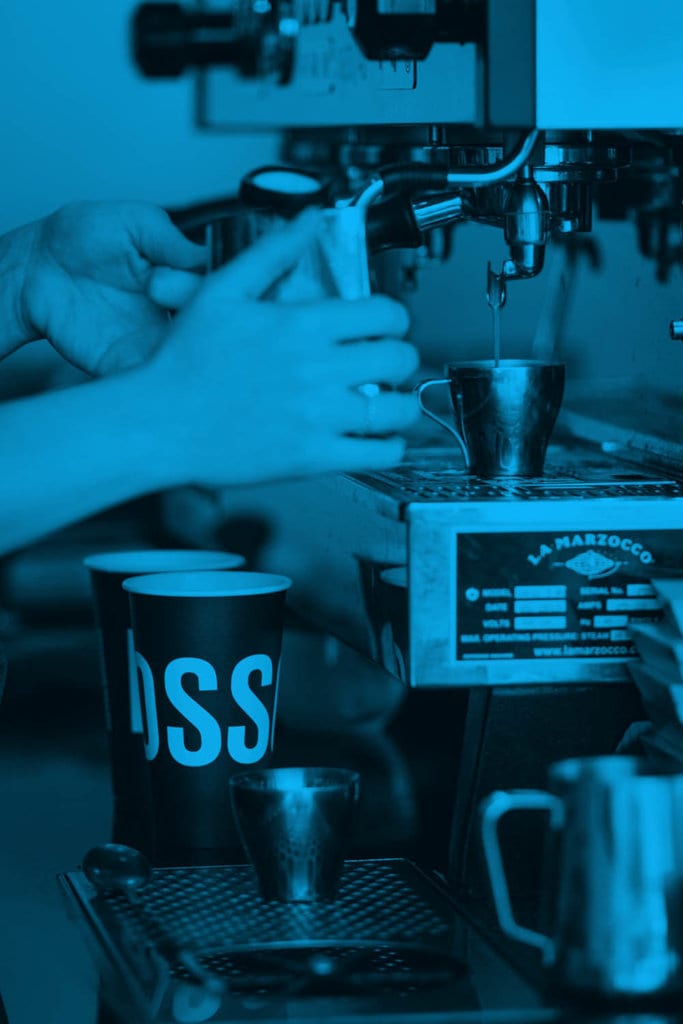
Between all the local breweries and live music in Calgary, a good cup of coffee is nearly as essential as the air you breathe.
Caffe Beano (1613 9th Street SW) has been around for over 25 years and is a local institution, conveniently located just off the bustling 17th Avenue. Their dark roast is strong and their baked goods are made in-house—what more could you want?
Rosso Coffee Roasters (1402 9th Avenue SE) is another local favorite, now with seven locations throughout Calgary. They source and roast all of their beans in-house, and have traveled the globe to bring the best coffee beans to their shops.
When Ana Perrote, the guitarist and vocalist of the Spanish band Hinds, made plastic waste reduction her 2019 resolution, she knew it was a goal that would be directly tied to her work as an artist. It makes sense, considering the extent to which plastic is part of music: from the materials that are used to press vinyl, and the hard cases that still often protect CDs, to the water bottles included on artist riders.
For Perrote, reducing her own plastic use is just as important as spreading the word about senseless consumption. On Instagram, she has dedicated a highlighted story to the topic, and regularly adds updates demonstrating how she avoids plastic use throughout the course of her daily life. “As someone with a bunch of [social media] followers, I can make a bigger change by influencing other people, rather than by just living a plastic-free life myself,” Perrote says. “Once you are aware of the problem we are facing, and how easy it is to change some habits, the need to let others know grows, creating a domino effect.” Perrote’s recent updates explain how she refuses straws and plastic bags, purchases unwrapped fruits and veggies, and opts for reusable menstrual cups.
In 2019, plastic waste remains an increasingly devastating problem. The destruction caused by plastic has started to get some media attention over the past couple of years, including a National Geographic cover story, Rolling Stone and BBC News features, and a 60 Minutes special. However, this slow trickle of attention, and the small changes that have followed—such as reduced use of plastic bags and straws—are not nearly enough to effectively address the massive scale of this problem, or the cultural and economic norms at the root of it. And with the proliferation of extreme right-wing governments worldwide deprioritizing the environment, the urgency of advocating for change lies in our own hands.
Within music, one specific action that artists, industry professionals, and fans can collectively take is addressing plastic consumption at live shows. At Doug Fir Lounge, a venue in Portland, Oregon, show booker Eric Zamarripa and marketing manager Rochelle Hunter have made progress by eliminating plastic cups in their bars. “In the green room it gets tricky, because a lot of bands request bottled water,” says Hunter. “One thing that would [help] is to inform bands in advance of how high quality the tap water is.” Doug Fir has seen an increase in riders that refuse plastic, but only sees those requests a couple of times per month.
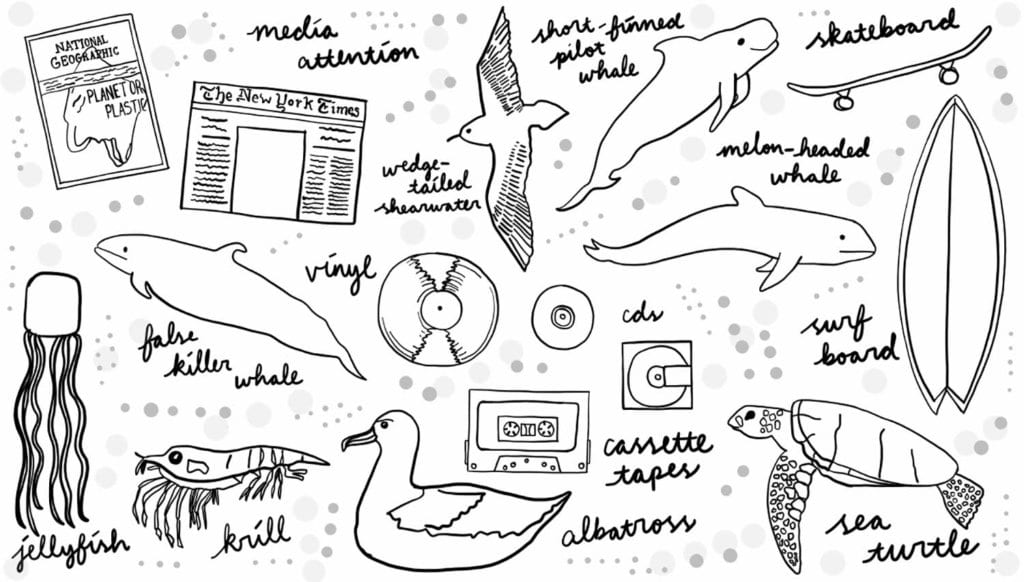
Hinds’ tour manager Fiona Campbell has observed the consumption of plastic water bottles on the road getting exponentially worse over the past decade: “Now [water bottles are] considered a necessity rather than just something nice to have around,” she says. Campbell (also a drummer who’s played with Vivian Girls, Shamir, and Chain and the Gang) has encouraged Hinds in their efforts to address plastic waste. Growing up in New Zealand, Campbell remembers public campaigns from her childhood, such as Double J and Twice the T’s 1990 eco anthem, “Def to be Green” and the catchphrase, “Wash it, squash it, and put it in the bin.” She’s observed much more waste produced in the United States than New Zealand, too.
Many artists are becoming more aware that reducing and reusing plastics are more effective than relying on recycling alone. According to the The New York Times, much of the plastic put in recycling bins in the United States, Canada, Australia, Britain, and Germany began going straight to landfills last year, after China stopped accepting foreign plastics as part of a new anti-pollution program. Furthermore, hardly any of the plastic waste produced by the music industry is even recyclable: CDs, cassettes, drum heads, and the packaging that so much of our music gear is wrapped in. Colombian organization Plástico Infinito sees those kinds of plastic waste as reusable material; they work with local communities to develop economically productive ways to reuse it. They sort and clean the plastic, and use specialized but accessible machinery to reform it into household items, skateboards, and parts for surfboards. Plástico Infinito’s social management coordinator, Robert Vivas Londoño, has high hopes for the music industry to “stop thinking linearly and start thinking circularly.”
“Music can speak for those who can’t speak,” says Londoño. ”The earth, its species, its fauna and flora—through songs, messages, [and by] thinking of their industry as environmentally conscious. If you learn about the issue of ‘garbage,’ you will realize that it’s an important economic resource, not a waste, and can support associations of recyclers, which here in Colombia, for example, [are] important. Companies producing instruments [can] increasingly modify their designs and handle recycled materials. Their designs [can become] modular and allow easy separation at the time of disuse. They [could accept] damaged instruments as part of payment for the purchase of new instruments. And they [could be] responsible for managing their own waste.”
Toronto’s Ace of Wands took this ethos to heart with last year’s release of their album, Grown from Good. “We printed download cards on paper embedded with native wildflower seeds and paired them with a glass jar full of soil,” says the band’s guitarist and songwriter, Anna Mernieks. “There’s a lot of potential for packaging to reach beyond the act of listening to music. It would be wonderful if people in positions of power would spearhead these efforts.” Beyond the limited environmental impact that Grown from Good might have, Mernieks saw it as a way to inspire people to think creatively about plastic waste. Similarly, members of Colombia’s Bomba Estéreo have also used their voices to reach a huge audience concerning deforestation, mangrove loss, and other environmental issues in Colombia. Their project, Siembra (which means “sowing” in Spanish) is an “initiative to generate environmental awareness through the power of music,” and appears throughout the band’s online and social media presence.
Other conspicuous culprits within the music industry are the mediums on which music is distributed. Cascade Record Pressing in Portland is aware of the environmental impacts of its product—vinyl records are made from a polyvinyl chloride (PVC) compound made specifically for record pressing. To address this, the company runs its business with plastic waste in mind. “We recycle all of the [extra] flash [vinyl] that comes off the record in the pressing process,” says Jeff Truhn, Cascade’s operations manager. “We run that through a granulator, grind it back up, and introduce it at a ratio of about 20 percent to virgin vinyl. Anything considered waste, we don’t consider waste.” With their onsite recycling, Cascade strives to keep vinyl waste at under 7 percent. “I think people get really enthusiastic and gravitate to pressing as many records as they can; they want to press 1,000 records [regardless of anticipated sales],” says Truhn. “But we aren’t sales people. We see it more as project management. So we’re like, ‘Do 300 or 500 instead.’”
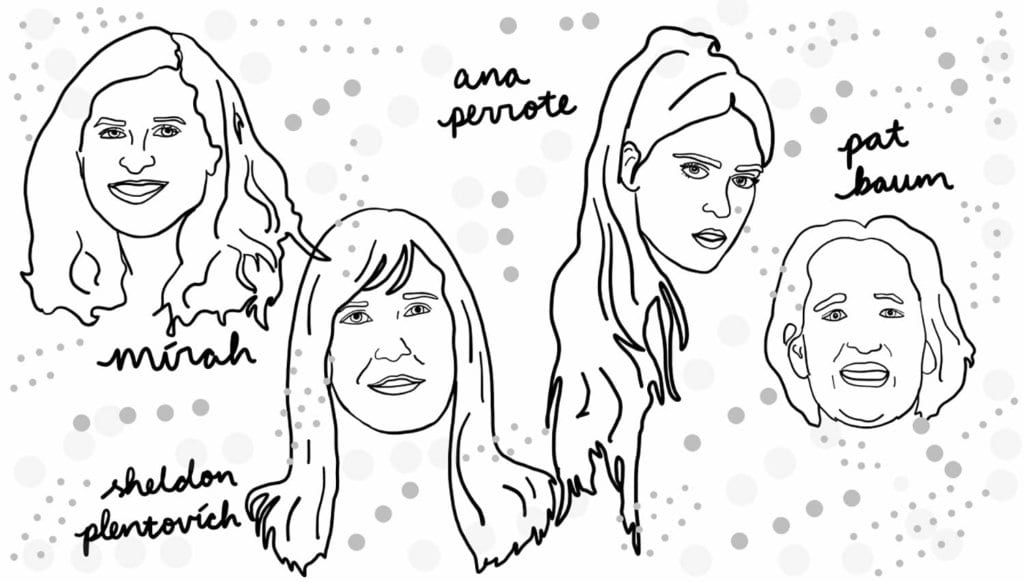
Vinyl’s archival quality and value as art might keep it from the landfills, but according to the Plastic Pollution Coalition, over 10 billion CDs and DVDs made their way to landfills as the music industry transitioned to digital downloads. “I always release my CDs in either a cardboard sleeve or digipak,” says singer-songwriter Mirah, who has been very aware of plastic use in her 20-plus years in the industry. “The advent of digital downloads and streaming cuts down on the plastic involved with physical merchandise, but it’s not like there are no environmental impacts [from] the ‘device industry’ that digital media depends upon.” Streaming a song or downloading an album depends on vast physical data centers that consume energy and require cooling and, according to The Yale School of Forestry and Environmental Studies, gives the data industry a comparable carbon footprint to the airline industry. For Pat Baum—drummer of the late-’‘70s/early-’‘80s band Neo Boys, environmental educator, and filmmaker—the less visible environmental impact of digital media is just one reason she’ll always stick with other mediums. “I still want to have something tangible that I can hold,” she says. “The other day I discovered some CDs I didn’t even know I had. They didn’t get lost into the digital world.” Baum works with underprivileged youth on environmentally-themed film projects and has been very active with turtle conservation efforts in her hometown of Todos Santos, Mexico.
Some institutions are responding to calls for action. According to environmental think-tank Powerful Thinking, several United Kingdom music festivals, including Glastonbury and Shambala, have significantly reduced their plastic waste over the years. If the public pressure was there, perhaps similar strategies could be adopted internationally, reaching the greater festival industry and event sponsors. According to NPR, the pressure from Filipino activist and environmental educator Froilan Grate’s brand auditing program has won the attention of the very companies producing plastic that clogs Filipino beaches. Grate organized activists to sort through the trash, tally the brand names on the garbage, and publicize this information to put pressure on companies.
Sheldon Plentovich, who works as the Pacific Islands Coastal Program Coordinator with the U.S. Fish and Wildlife Service, has witnessed first-hand the impact of plastic waste on the environment. She works in coastal habitats in Hawaii and the Northwest Hawaiian Islands, and has seen the effect on turtles, the endangered Hawaiian monk seal, and seabirds such as albatross and wedge-tailed shearwaters. These species are primarily affected through ingestion and entanglement. Plentovich emphasizes that we must recognize the effect of plastic on all levels of the food chain: “Plastic is lipophilic. It attracts fatty substances and also bonds with persistent organic pollutants that bioaccumulate… So, [plastic] becomes a little more toxic after attracting these compounds. It is ingested by sea turtles who mistake it for jellyfish, and also by whales. It breaks down into microplastics, gets into krill, and enters us through the fish we eat. It’s going to get worse as more plastic enters oceans and breaks down. In mainland environments, you have this sense of endless space, but in Hawaii the effect is so pronounced. We are seeing the results of how the rest of humanity is living.”
Plentovich has hope that musicians can bring about change when it comes to our waste: “Seeing [an albatross] sitting completely devoted on her egg, you develop this fondness for how trusting these species seem. And when you see them die, full of plastic, it’s so heartbreaking. Humans’ desire to live a convenient lifestyle has a far-reaching effect. I would love for people to think, ‘Is it ok that [my] behavior [has] significant negative effects on other beings?’ Do what’s right in your own life; and if you’re a musician, maybe [there’s an opportunity to] have significant influence on others.”
In the face of all the environmental issues facing society today, it can be difficult to feel the urgency surrounding plastic consumption. But reducing plastic waste is a great way to introduce environmentally conscious behaviors into our decision making processes. And the problem of plastic waste is tied to other environmental and social issues: it is a product of the petroleum industry that contributes to global warming, and also quite possibly the most visible marker of unbridled consumerism. Many musicians and industry professionals seem to agree that limiting our plastic consumption is not only necessary, but empowering. Our collective action demonstrates that we have the ability to affect the capitalist designs that cause plastic waste in the first place. And musicians are in the ideal position—behind the mic and on stage—to instill hope and inspire change.
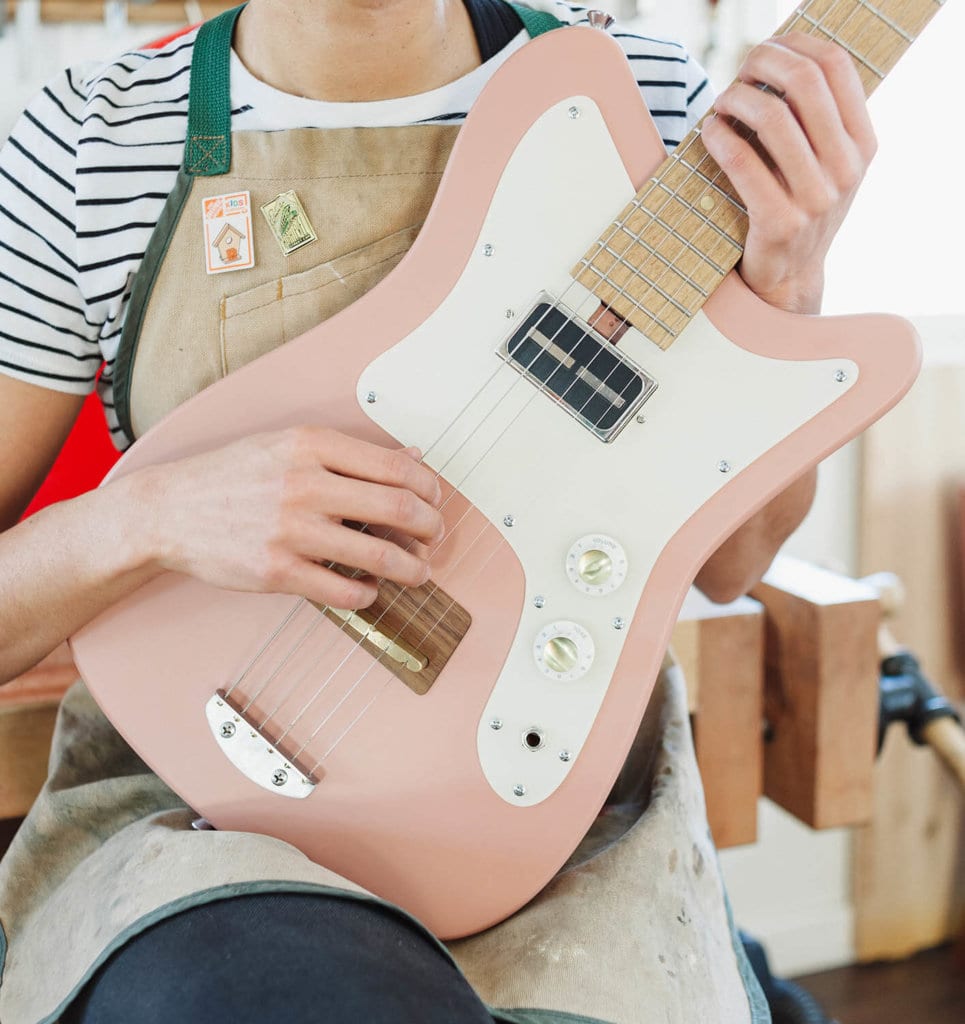
Leila Sidi knew it was risky to build a pink, short-scale guitar. “I was worried about falling into the stereotype of building a pink guitar for women,” says Sidi, owner of TunaTone Guitars, over the phone from her woodshop in Edmonton, the capital of Alberta, Canada. The color was inspired by the work chair she sits on every day while cutting, sanding, and shaping wood—dusty rose with flecks of grey from the daily wear and tear of the shop.
When she stumbled across a similar shade (“Mars Red”) in a paint store, she knew she had to take the creative risk. “I recognized that people were going to interpret a guitar in that color in whatever way they wanted, but I also knew I was going to build a serious instrument and it was going to look good,” says Sidi. “So I did it. And a vast majority of my orders for next year are in that color.”
As a luthier, Sidi isn’t afraid to push boundaries. She designs her TunaTone guitars in Mars Red, black and white, and natural finishes that have a distinct, mid-century-meets-futuristic feel—a look she credits to her love of “1950s and ‘60s guitars sold in Sears catalogs.” Sidi’s style emerged out of her first project as a luthier, a replica of a friend’s 1969 Fender Musicmaster Bass that had been used mostly by children in an elementary school.
“Guitar companies like Fender and Gibson would make short-scale basses, but they wouldn’t include them in their professional series,” Sidi says. “Part of their reasoning was systematic. The Musicmaster Bass was made for children to learn on, or for women. So it was never considered a serious instrument and builders didn’t pay the same attention to detail that they would with full-scale guitars.”
Originally, short-scale guitars were designed to be cheap and accessible, so they didn’t have a high-quality sound. Sidi took this as the ultimate design challenge: to create her version of a short-scale bass for women. “As I was thinking about who short-scale instruments were made for, I realized I wanted to build smaller scale, lightweight guitars that are serious instruments, but also accessible for all body sizes,” Sidi says. “Most short-scale guitars are built for large hands and male bodies. I want to build beautifully-made, high-fidelity instruments that are comfortable for the rest of us.”
Sidi leaned on a community of woodworkers and artists in Edmonton, where she grew up after emigrating from Nairobi to Canada with her family. Growing up, she always enjoyed working with her hands, starting out as a bike mechanic before switching to woodworking. Currently, she shares a workspace with her mentor, Dion James, who crafts acoustic guitars under the name Dion Guitars and was especially supportive of her goal to build a guitar from scratch. The guitar took Sidi a year to complete, partly because she was only able to work on it between jobs, and partly because she had to learn from her mistakes.
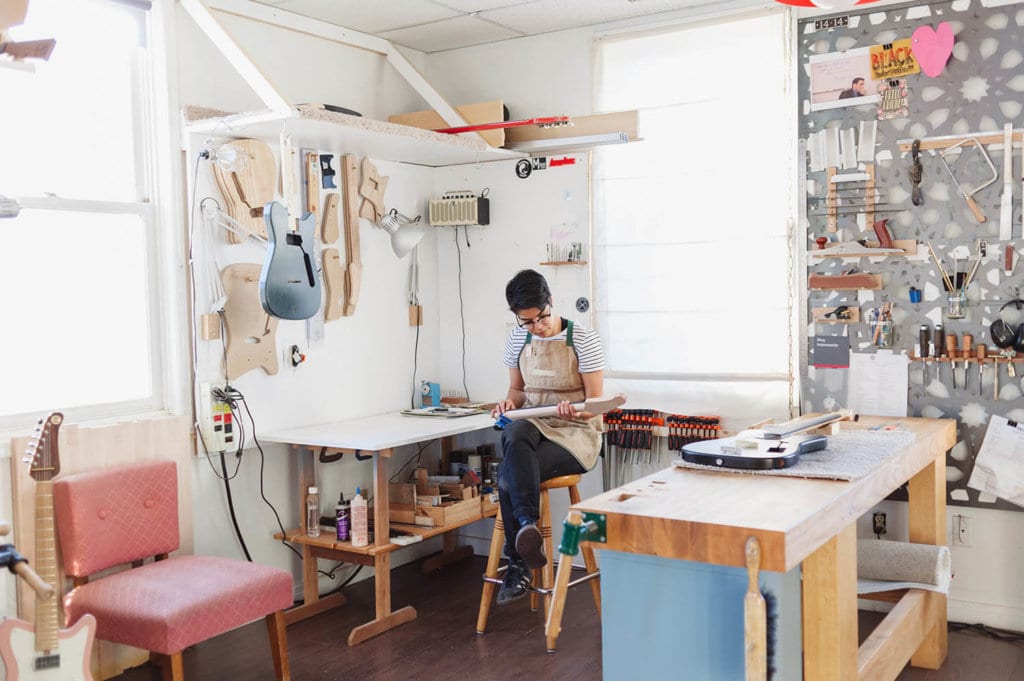
“The creative process is pretty emotional for me,” Sidi says. “It’s a good feeling to see my skills grow, but it can also be very demanding.” She admits she has ambitious standards when it comes to her designs, considering her seven years of experience in woodworking, which is relatively low by luthier standards. “It can be frustrating to see details that I want to achieve, and then having to do it and redo it to get what I want. But the process teaches me a lot about myself. I’m always dealing with the potential for failure. Eventually, I have to learn to accept my fear of failure and be able to keep going.”
Sidi is quick to point out that designing, prototyping, and building a guitar is a collaborative effort. Though she builds each part of her TunaTone guitars by hand, she relies on friends in graphic design and electronics to help her learn 2-D modeling and guitar wiring. Being a queer woman of color in the guitar world can be a challenge, especially as a builder, and Sidi is grateful for the support she’s found.
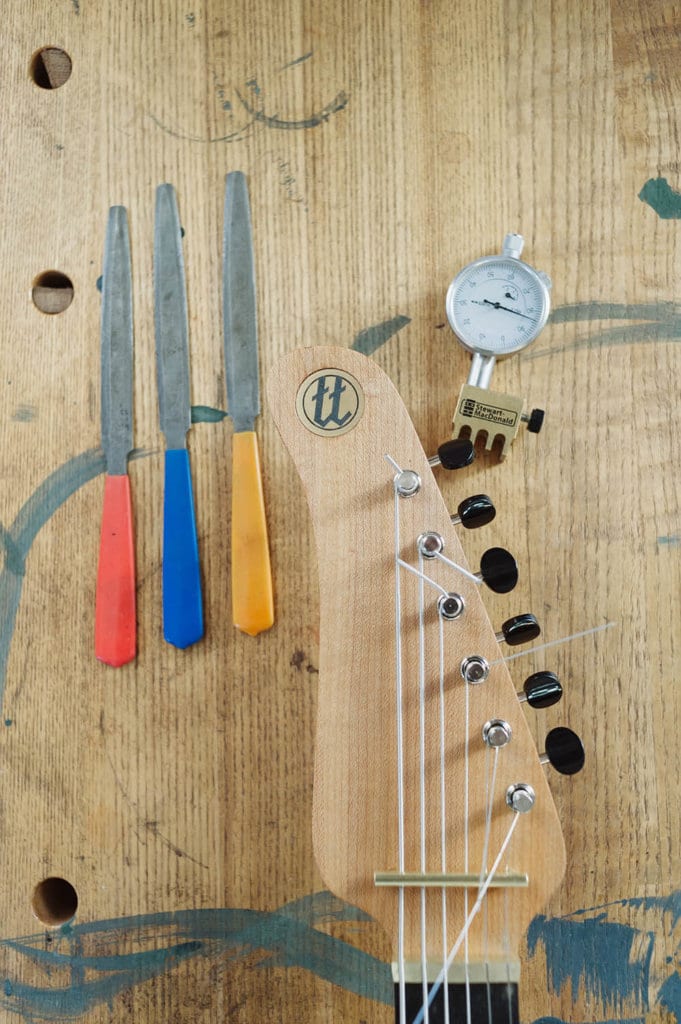
“As someone who embodies a lot of different identities, I have managed to build a community of people around me who have been so generous with their collaboration,” Sidi says. “Every single one of my collaborators are white, cis men, and they are sharing skills that they have acquired with me. They’ve been willing to uplift me and help me get better at my craft.”
This approach to mentorship is part of Sidi’s belief in “designing for the world we want to live in,” where an industry typically dominated by men, and their designs, is challenged by everyone involved. Inspired by the work of the Design Justice Network, a collective out of Toronto that looks at how design affects gender, race, and the environment, Sidi strives to be socially and environmentally conscious about every TunaTone guitar she builds, using sustainably-sourced wood from nearby Turtle Island, and screws and brass from local shops in Edmonton.
“I don’t subscribe to the idea that the more exotic the wood is, the better it is,” Sidi says. “In the guitar world, they’ve really normalized and upheld exotic woods as superior in quality. So many of those woods are facing endangerment or are harvested unethically.” She notes the deforestation of Brazilian rosewood, a hardy wood often used for fretboards, and the long list of endangered woods in Canada and internationally. “Guitar building isn’t the main reason why certain woods are going extinct, but I think we do have a collective responsibility to think about what materials we are using and how they are being extracted from the land.”
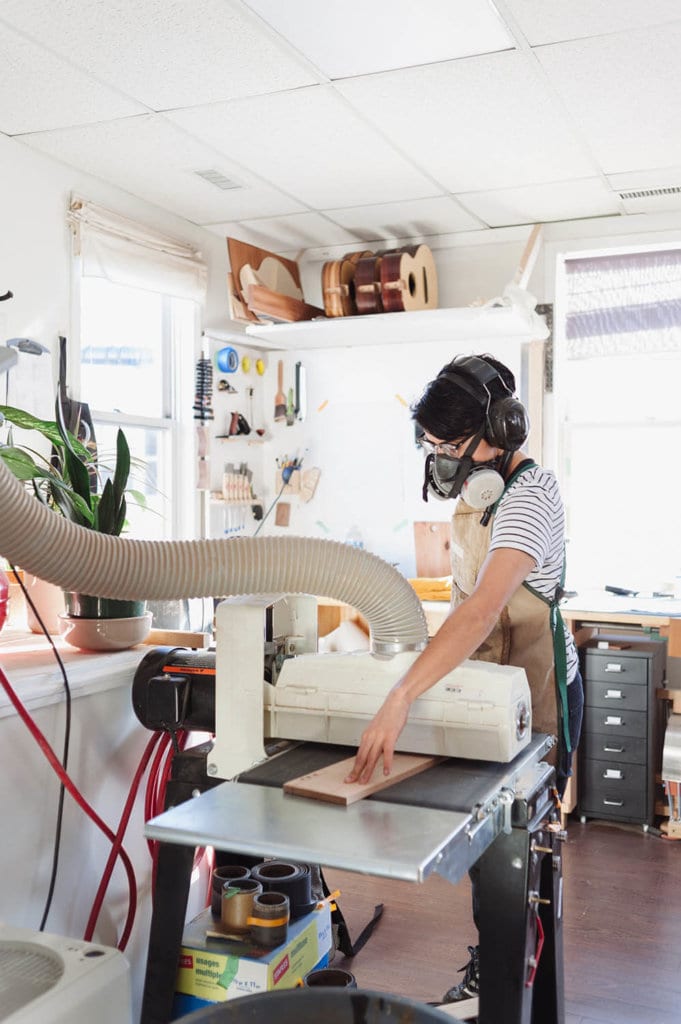
Sidi’s focus on sustainable materials and practices has been informed by her inspiration of the Tiny House Warriors, an organization building tiny houses to stop the Kinder Morgan TransMountain pipeline from crossing unceded Secwepemc Territory, and Indigenous Climate Action, who work against deforestation and climate change. “There are choices that I can make that may seem small, that allow me to be less damaging to the environment and not contribute as much to colonial practices,” Sidi says. “Eventually I would like to cut down my own trees and be involved in harvesting my own wood, but for now, I try to do what I can to act responsibly about my materials.”
Sidi has also found support through partnerships with Femme Wave and Sled Island, two music festivals based in Calgary, and recently facilitated her first woodworking class at her shop. Most of the participants were friends—“queer and gender non-conforming folks”—and she likens the experience to “bringing people I associate with home into my home.”
On an international level, Sidi is starting to feel like a part of the guitar building community, meeting some of her heroes and fellow luthiers at guitar shows, many of them women. “In the world of luthiers, there are lots of women who have paved the way and made space for builders like me,” Sidi says. “I’ve definitely benefited from their work.” Luthiers like Maegen Wells and Linda Manzer are two examples. When the the Woodstock Invitational Luthiers Showcase recently honored Manzer with its annual lifetime achievement Traditions Award, she invited every women luthier present to join her on stage. Sidi sees this as a necessary shift, where women are being admired for their luthier skills and are supportive of one another in the community. “I really feel like builders I have followed and looked up to are starting to see me as a peer,” she says. “I didn’t expect that and I didn’t even know I could hope for that, so that’s been a super wonderful surprise.”
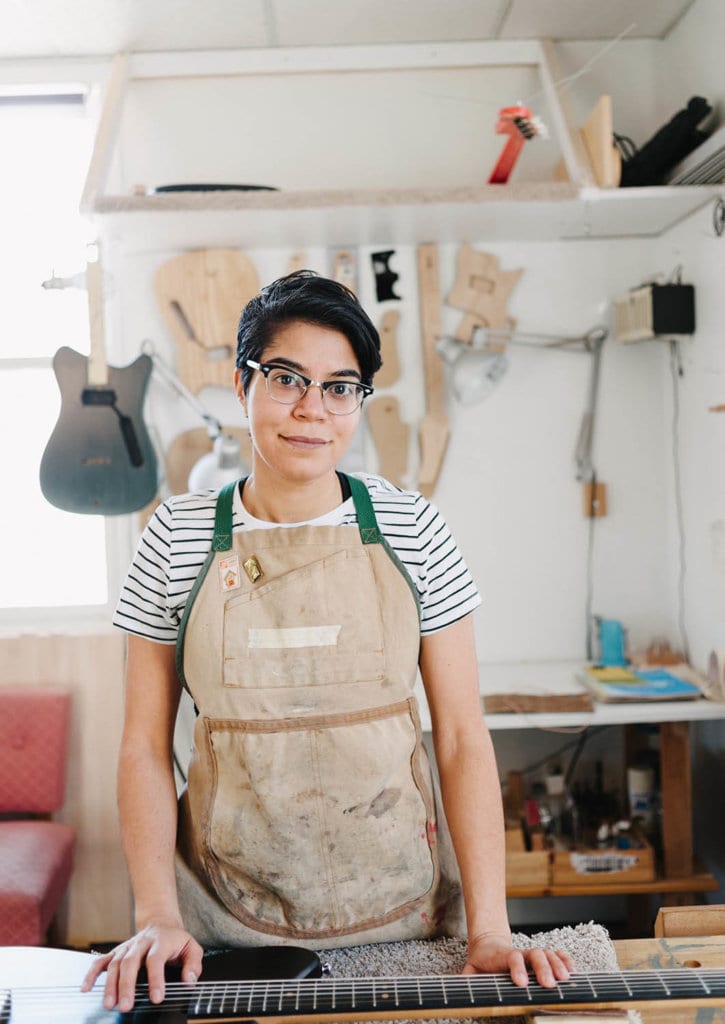
There is one area where Sidi does feel left out, which is actually playing her guitars. As a non-player, Sidi has to put absolute trust in her skills as a builder, working on a guitar for months at a time before it comes alive. “Once the guitar is done and it’s being played, there is this feeling of letting go. In that moment, it becomes something separate from me,” she says. Sidi compares the experience of hearing one of her guitars being played to using a well-made tool in her workshop, where you can feel the craft and skill that went into it. “It feels like a gift to hear someone play an instrument I’ve made,” she says. “It’s this one part of its expression I could never give to myself, and in a way, the person playing it is giving a gift to me.”
With a full build list for 2019, TunaTone guitars for sale in shops in the United States and Germany, and a few new designs she’s dreaming about, TunaTone is a guitar company on the rise. Sharing a shop with her mentor, and her scrappy tabby, Tuna, who inspired the TunaTone name, Sidi feels firmly rooted in her shop in Edmonton. The staunchly conservative political environment of the region pushes her to seek out mentorship and community, creating a space where skills are shared and deep connections are made through art.
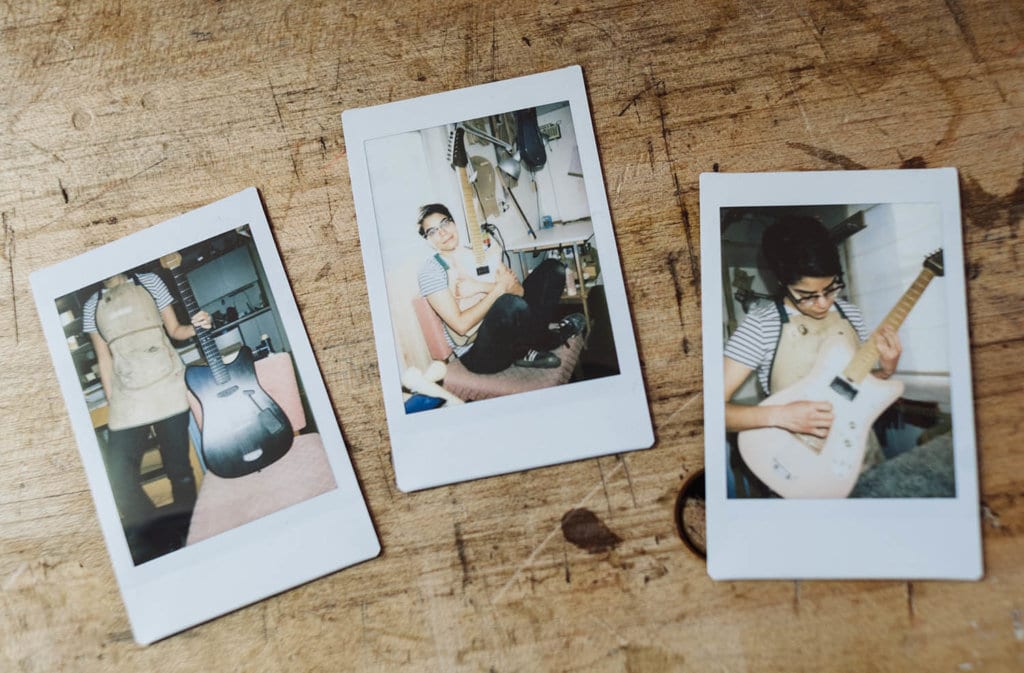
And that worrisome pink, short-scale guitar? TunaTone’s Sidi is slated to build five more this year for musicians all over the world, a prospect she finds exciting; a pink guitar women players can shred. “It’s almost the difference between a patriarchal idea of femininity and queer femmes owning it so hard,” she says. “I want to build guitars that are like that.”
You can donate toward Jean Millington’s stroke recovery expenses, equipment, and modalities of therapy at www.gofundme.com/jean-millington-go
Fanny was the ferocious Los Angeles band anchored by sisters Jean and June Millington from the late ‘60s through the early ‘70s. Despite being one of the first visible rock groups made entirely of women, only in recent years has Fanny gained recognition as the throttling and critical part of the rock ‘n’ roll canon that they are. And that is nothing short of mind-boggling.
The Millingtons have performed and harmonized together since childhood, and started gigging in junior high: first with their band the Svelts, followed by Wild Honey, which ultimately morphed into Fanny. With June on guitar and Jean on bass, Fanny signed to a major label, becoming one of the first women rock groups to do so. They released an album every year from 1970 to 1974, often melding hard-edged riffs with soul-drenched keys. Along the way, Fanny held legendary jam sessions at their Hollywood Hills house, Fanny Hill, leaving jaws dropped wherever they played.
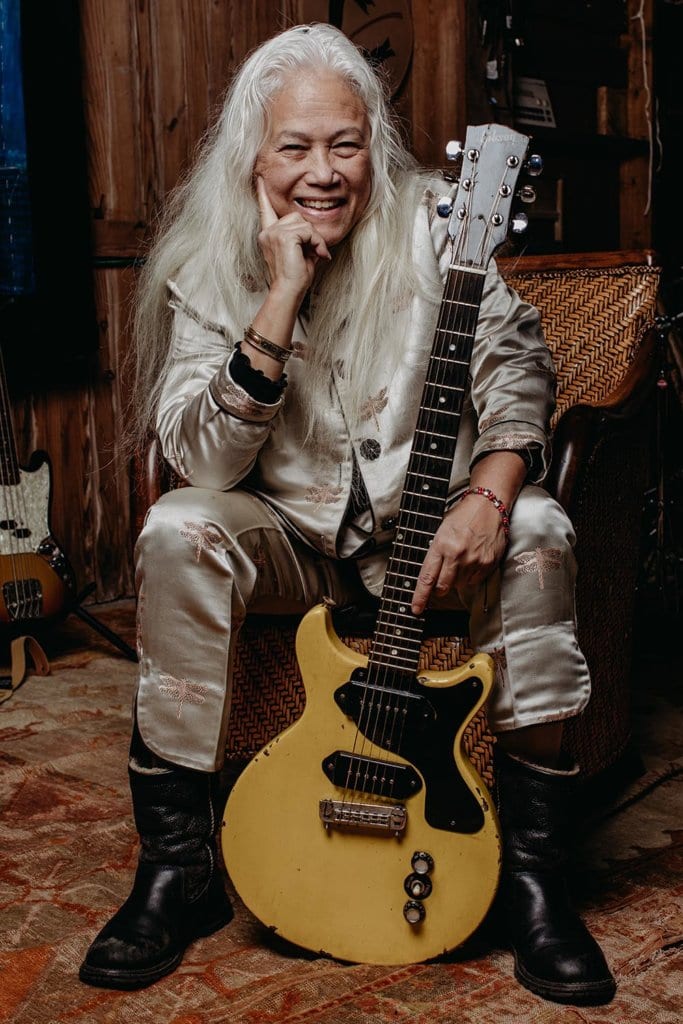
After June left the band in 1973, Fanny released its final album, Rock and Roll Survivors, with Patti Quatro on guitar; the band ultimately disbanded in 1975. Today, June works as the artistic director of the Institute for the Musical Arts, an educational institute that she co-founded with her partner Ann Hackler in 1986 with a mission to support women and girls in music. Jean has continued playing music over the years, and is currently recovering from a stroke.
Fanny’s legacy is the subject of a forthcoming musical, written by Jessica Hagedorn and commissioned by Two River Theater in New Jersey, and a documentary is slated to release in 2020. Following the release of June’s book, “Land of a Thousand Bridges: Island Girl in a Rock and Roll World,” the two sisters reunited with Svelts drummer, Brie Darling, to form the band Fanny Walked The Earth—a testament to Fanny’s seismic impact in music, then and now.
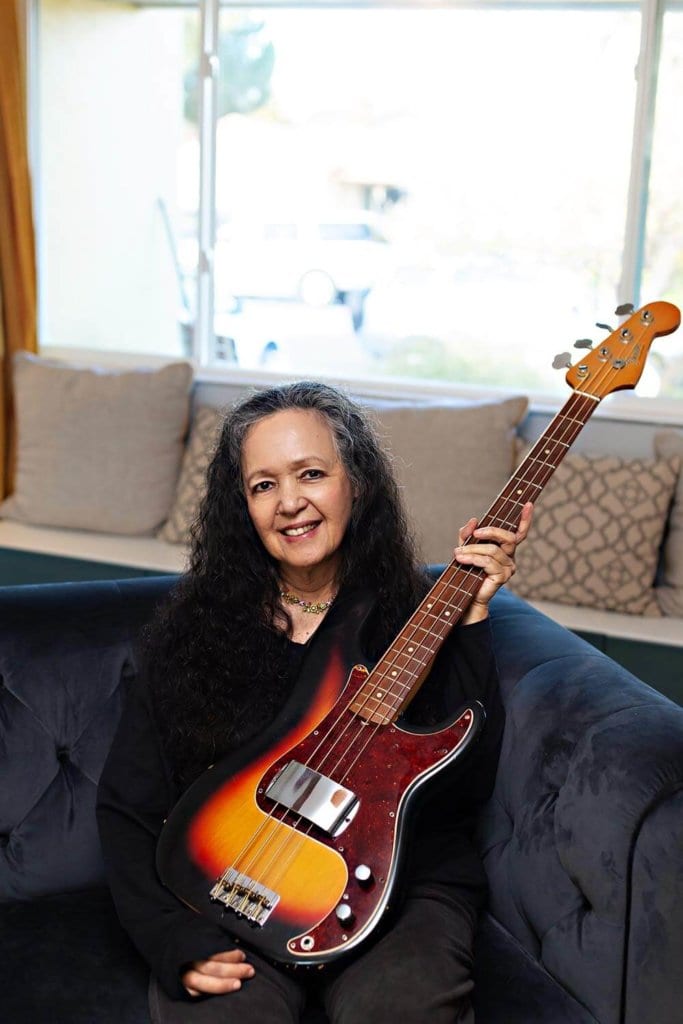
Can you tell me about growing up in the Philippines?
Jean Millington: In the Philippines, music is such a huge part of the culture. We were watching a TV show, [Estrella Watch Time], which was kind of like Soul Train, before any of that was ever on air in the States. From pretty early on, we were definitely inspired, and we both got into playing ukulele. After a bit of time, we got into more exciting things, and the guitar was certainly next.
How old were you both when you started playing the ukulele?
Jean: I was probably around 9 or 10, and June was 10 or 11. We picked it up quite naturally. It was actually amazing; we didn’t even think about it, or that it would be hard to do. We just did it.
June: I remember somebody, maybe one of our cousins, handed me a ukelele and said, “This is how you tune it: [sings] my dog has fleas.” He showed me three chords, and I think [the song], “How Much Is That Doggie In the Window?” Next thing you know we were playing songs off the radio. It was totally natural, like eating or breathing.
Did you perform for your family and friends?
June: At Sunday dinner every week, [our family] would have us sing. And if we went to the beach, especially in my mom’s hometown, we would play for extended family. They were so proud of us. They couldn’t figure out how we did it. But everyone sang along.
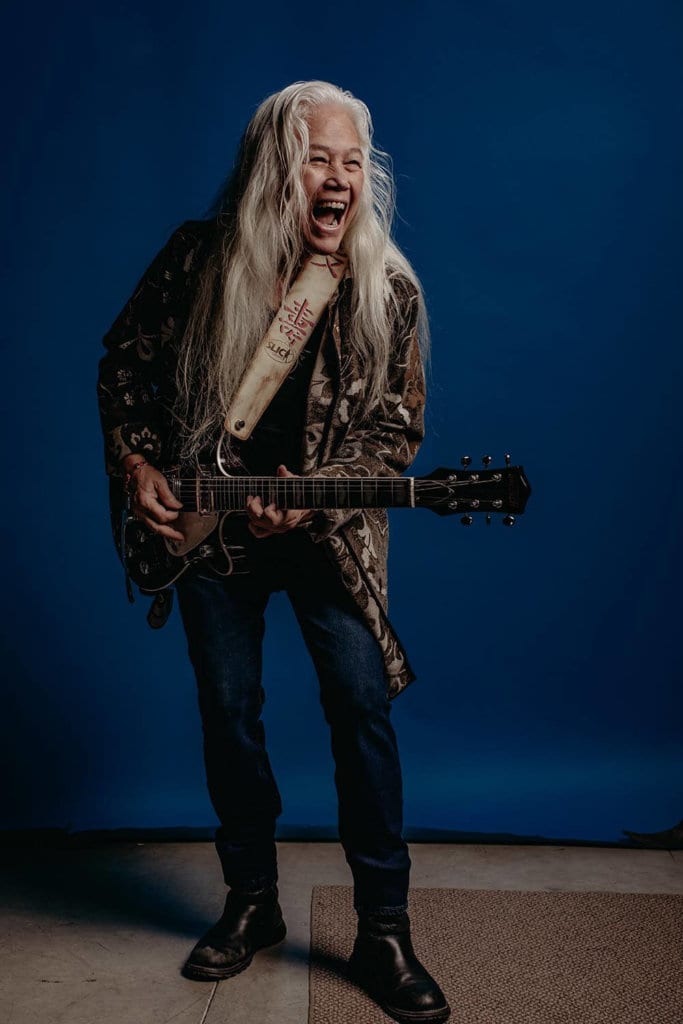
And then you moved to Sacramento as teenagers?
Jean: I was 12, and June was 13. That was certainly a really hard period, entering your teens. In the Philippines, school lets out in March, or something like that, and we didn’t start school until September in Sacramento. So we were out of the loop for a long time, and how you meet kids is through school. It was very awkward and difficult for us. Besides the fact that kids [are] in a very cruel phase in junior high, June and I were total oddballs.
June: But they changed once we started playing music publicly. We sang a song at the junior high variety show in early spring
Jean: There was a song that June wrote [for the variety show] called, “Miss Wallflower of ‘62.” [Laughs.]
June: So we’d arrived in ‘61, and by ‘62, we were singing that song. We met two other girls who also walked to school, and the four of us started singing together, with me and Jean playing the guitars and the other two singing with us—and it was kind of a hit! Kids started to stop us in the hall and talk to us, which was a complete revelation. We had no idea that was going to happen… I mean, for immigrants, that was everything.
That must have been a tough experience.
June: We found the same thing later when we started to play in the Svelts and people just rejected the idea completely because no one had ever seen it. [They] could not accept the idea that girls were in a band. Their reaction was to hate it right away. But when we started to play, they loved it. Music can turn stuff around like that—feelings, resentments, and prejudices. It’s incredible.
It was a whole journey for us to get from playing acoustic guitars and singing folk songs basically—we sang at hootenannys—to starting the Svelts and playing gigs and booking them ourselves when the Vietnam War was starting. We were able to not just get gigs at high schools and frat parties at UC Davis, [but also], for example, at Air Force bases. That was a very formative period because we were able to get so many gigs. And we had to change really fast and get up to speed with what was happening in the world, in the country. And believe me, we did.
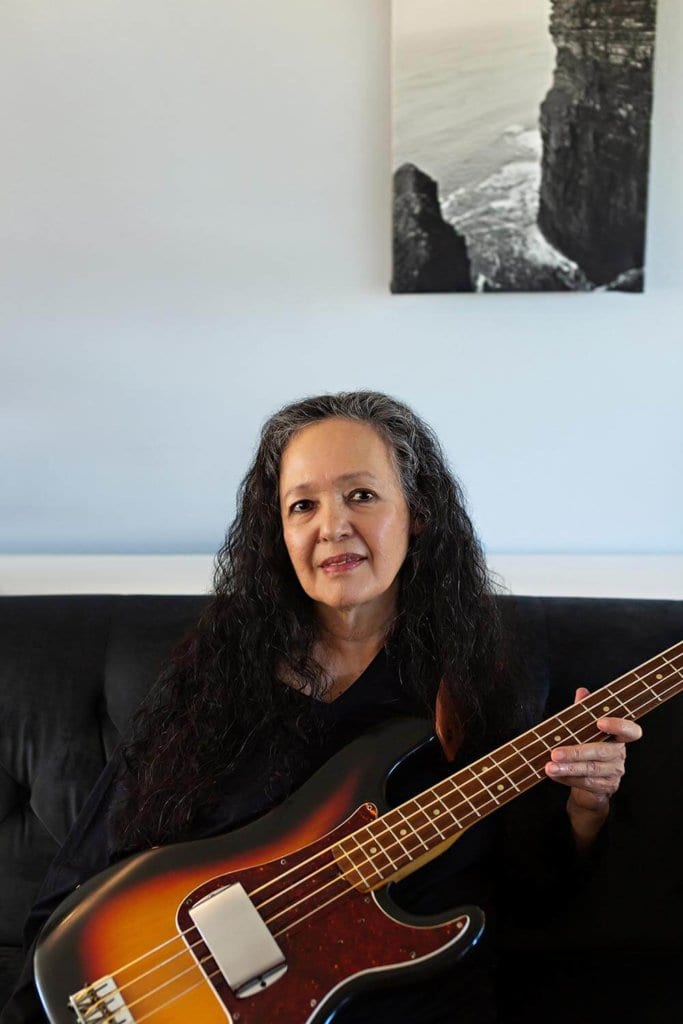
Jean: This was still the era of sock hops, and [our boyfriends] would get a gig and we would play when they were on a break. Pretty soon we were getting the gigs, and our boyfriends were not happy about that. But people really loved what we were doing. We played popular songs like “Be My Baby” [by The Ronettes].
June: “Nowhere To Run” by Martha and the Vandellas.
Jean: Not to mention Beatles stuff. “Eight Days A Week” was a big deal. Or the Beau Brummels [song] “Still In Love With You Baby.”
June: We didn’t start a band in a conventional way. We would hop on boys’ instruments. Then we heard that there was a gig we could audition for. Of course, the boys auditioned, and we auditioned on their equipment as well, but we got the gig. And from that point on we had to get our own equipment. That was sort of our entry into show business: Are you going to rise up and do it? Are you going to somehow get that equipment so you can keep going rather than having something be a stumbling block?
But how did we do it? Through our mom!
Jean: I don’t even know how she did it because at that time, I don’t think my dad really allowed her to have a checking account or anything, so it’s a mystery to me how she was able to sign for it. But she did.
June: It was a lot of equipment: bass guitar, bass amp, a PA, a bigger guitar amp than I had already. I had a Sears Roebuck, I think, from a pawn shop, so I got a real amp and a real guitar. Not that those Sears guitars are bad, but that’s how we got our rig, man—with a PA! So within a few months we were booking our own gigs, pulling our own equipment around to Air Force bases and whatnot, and setting up the whole thing ourselves.
What were your first pieces of gear?
Jean: I think I had a Framus bass. And probably because Paul McCartney had one, I’m guessing that’s why I got it. I don’t remember what bass amp I got…
June: You probably got a Vox amp, because the Beatles were so big. I got a Gretsch Country Gentleman guitar and a Vox amp because that’s what George [Harrison] played. I also had a Fender Mustang that got stolen. Those were my two first important guitars.
Jean: I still have my Fender Precision Bass that I’ve had since the ‘60s.
How does the story of Fanny getting signed to Reprise Records go? It happened one night that you were given five minutes to play at the Troubadour?
Jean: We were supposed to play probably two songs, and in the audience was a woman named Norma Kemper. She was [record producer] Richard Perry’s secretary. She saw us play, and [the audience] loved us so much that we kept getting encores.
June: The audience literally got up on the tables and were stomping. That’s when the Troubadour manager panicked. He ran up to Jean and said, “Play more, play more!”
Jean: And then Norma told Richard about us, and about two days later we auditioned for him. We probably played for a whole hour. If only we knew what happened to those tapes.
June: It was against all odds. No one had done it quite like that.
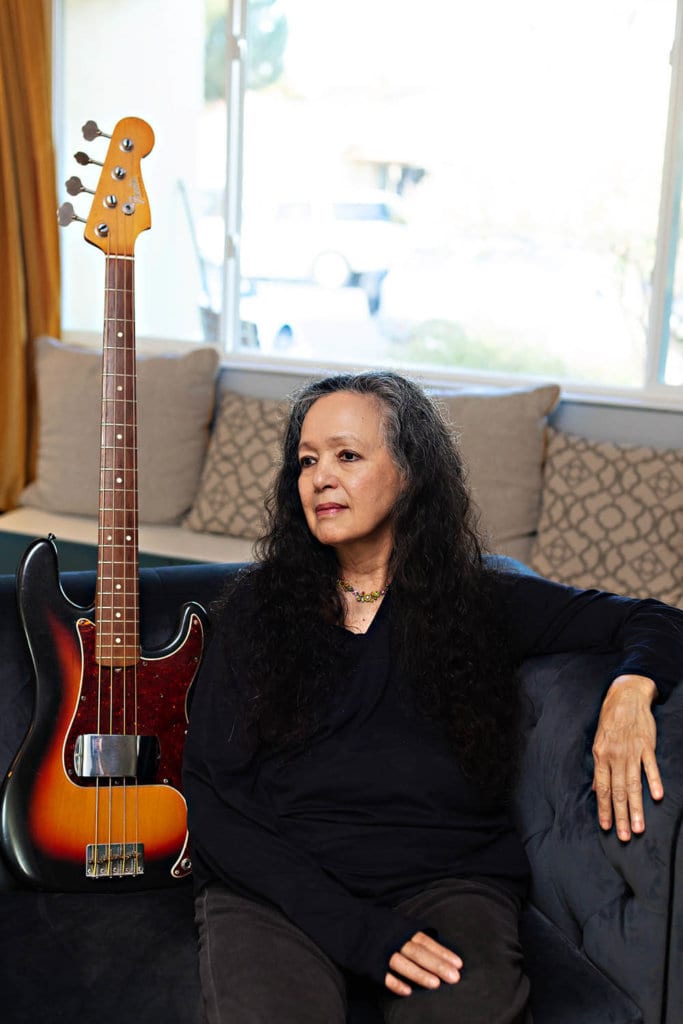
What happened after that?
June: We started to record, record, record. I mean really, it was just pure hard work all the time. We rehearsed in the house. We did gigs around Hollywood. And we were really good. That’s one of the reasons Reprise were so behind us. They knew what they were marketing, and they were proud of us.
Warner Brothers, [which Reprise was a part of], let us rehearse at their movie sound lot, any soundstage that wasn’t being used. And so we got used to projecting a bigger sound. Six months later, when we were playing at the Fillmore West, we knew how to handle that hall. On the album cover for Charity Ball, our second album, we used outfits from My Fair Lady—we actually went into wardrobe at Warner Brothers and each picked out our outfits and parasols.
June: Since we were signed to a movie company as well as a record company, a lot of opportunities were thrown our way, like practicing at Warner Brothers. Like having [actress] Candice Bergen shoot [the album cover]. And other artists like Little Feat—we loved them, they loved us—would jam with us at [our house] Fanny Hill. There was an awful lot of hanging out and horseplay and jams, which is what you need at that age, when you’re working really hard night and day.
Jean: We definitely had a scene going. We had the basement setup for playing, and the guys really liked to come over and jam with us.
June: As I was learning how to play, all the guys who were really good would spend time with me, and that’s how I learned how to shred in the way that I do. I learned how you hold the guitar, how you vibrato, how you push the string up, push it down, how you make it moan in the moment when you need it to.
How did you avoid burn out when working that much?
June: It’s just what we did. We didn’t try to avoid getting burned out. I think what really got us was, after our album on Apple [Records], we realized we hadn’t gotten the hit yet. And we should have. Whether it was one of our songs, or “Hey Bulldog,” which the Beatles let us add a verse on to… it seemed like society wasn’t ready to accept us full-on. And that hurt us. I think that’s why we’re not in the Hall of Fame, because we didn’t have a top 10.
But I really feel like we tried to write songs with a deeper meaning. We worked hard at it. Take a look at any of the songs that we wrote ourselves. They’re not nonsensical. I don’t even understand all of [Fanny keyboardist] Nickey [Barclay]’s lyrics, but when you put it together, you get a narrative. Like her song “Conversation With a Cop,” it’s quite beautiful. I wrote “Thinking of You,” the love song. There’s “Think About the Children.” There’s a lot of stuff that really had content.
Jean: There’s a song I wrote called “What’s Wrong With Me?” Just really thinking about what’s going on in your real life.
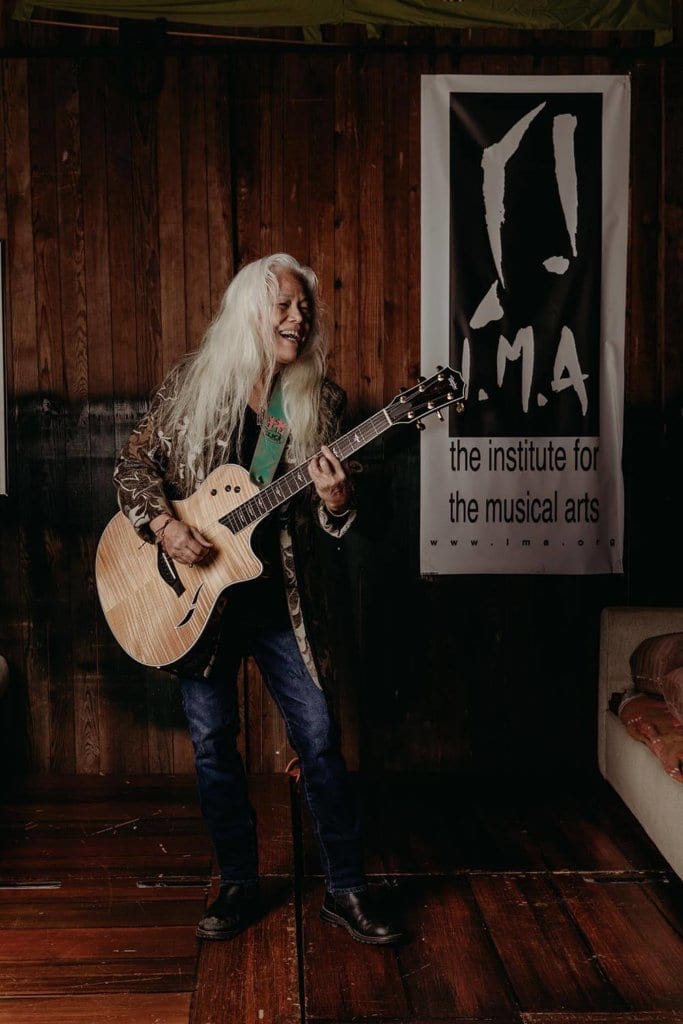
June, do you mind telling me about your decision to leave Fanny?
June: Well, like I said, we realized we weren’t getting a hit and we were so tired. There wasn’t enough money coming in, and the record company started to panic and that filtered down to us. That undermined our confidence. Also, the woman I was with at the time left me, and so I had no personal life. That really freaked me out. And you’ve got to remember, we were in our early twenties. We were babies. So handling that and all of the pressure when we were so tired was, for me, too much. I had this feeling that I had to leave and I talked it over with Jean. I had to find out what was wrong and how I could be a real human being. I didn’t know how to be a person.
That was truly frightening because I was going to leave Jean, which I didn’t want to do. And everything we had worked so hard for since 1964, dreaming so hard—we were doing it. It was like a bad acid trip for me: we didn’t have a hit, we were constantly on the road, creditors were hounding our management, and the record company was losing their edge on us. It was like ashes in our mouths. I also made a promise not to leave until we found my replacement, and then we found Patti Quatro playing in a band in Detroit. Jean and I looked at each other and said, “Hey, maybe this is the woman who’s going to take my place.”
Jean: Frankly, June, I blocked out so many of those memories that I don’t remember how it came about with Patti playing… I was so blown away that you were going to leave, and it was not going to be what we had. It was a very difficult time period for me.
June: But I think it was really clear that I was so agitated. I mean, my mom thought I was going to die. It was not drugs, it was because I was so freaked out by where we had found ourselves. You can’t help but feel a little bit sad. You wonder if I could have hung in a little bit longer, but nobody knows, because society was changing towards [bands] like KISS behind masks. And we wanted to be seen for who we were, and the music.
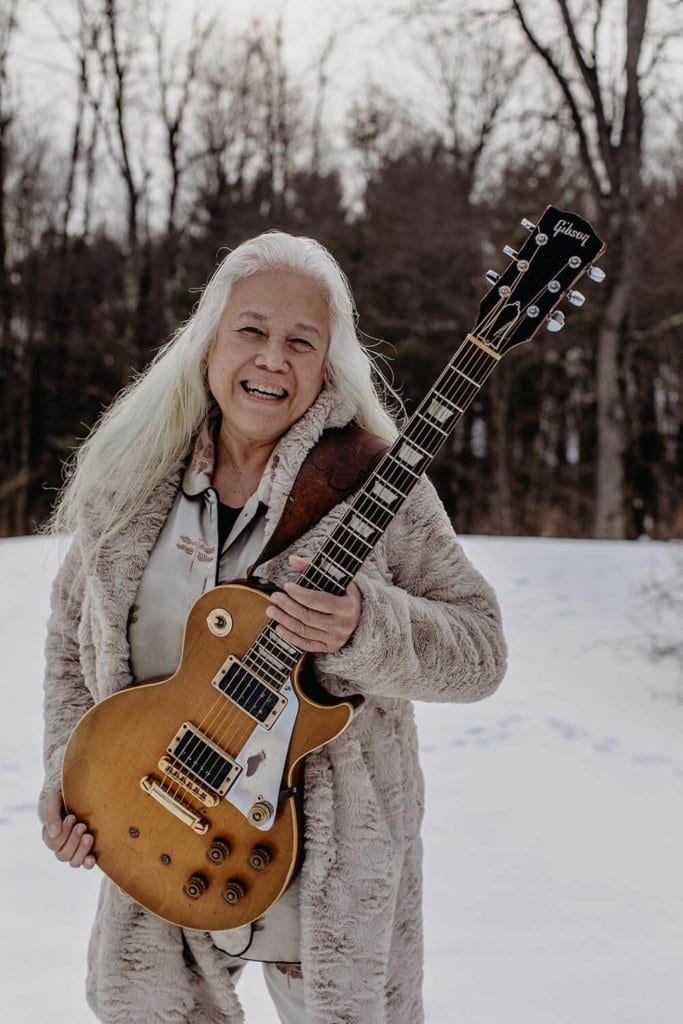
What was it like coming together again with Fanny Walked the Earth, after you played at a tribute show for June in 2016?
Jean: I think it mostly stemmed from that. We were playing together and saying, “Oh my god, this feels so good,” and the vocals flowed.
June: It was pretty phenomenal. This tribute became a reading from my book plus everybody singing something that was associated with me, or a song that the Svelts used to do.
In order to understand Fanny, you have to get the Svelts, because that’s where it all started. The energy that was the Svelts, when Brie [Darling], Jean, and I were in the band, manifested itself exactly as when we were 16 and 17. We were like, “Whoa, this is hot!” And that’s exactly what happened [with Fanny]. It was supposed to happen. We have a rock and roll destiny that we just can’t deny. It’s so powerful.
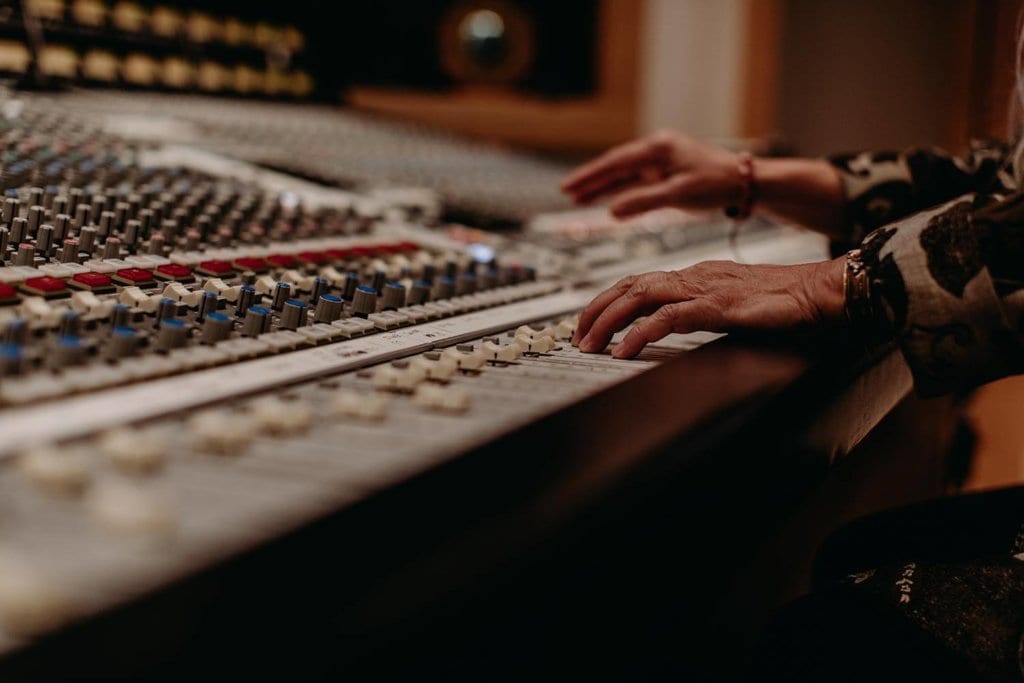
JUNE
Instruments: Vintage 1957 Gibson Les Paul, 1959n Gibson Les Paul Jr TV Model, 2007 Taylor T5 Electric-Acoustic, 1960s Fender Stratocaster, 2011 Gretsch Electromatic
Amp: Fender Hot Rod DeVille 410
JEAN
Instruments: 1962 Fender Precision BassAmp: Genz Benz 6.2 Shuttle with a 12-inch speaker main cab and a 12-inch extension cab
This article originally appears in the 17th issue of She Shreds Magazine. Available for purchase online.
Like many young hopefuls in the music industry, Beverley Akua Mansa Tawiah (who goes by Tawiah) found herself at the mercy of the pop machine at the beginning of her career. In 2007, following the self-release of her first EP, In Jodi’s Bedroom, Tawiah toured the world with acts like Mark Ronson and was signed to Warner Brothers. It was a life that seemed perfect, until creative differences proved irreconcilable and she and Warner Brothers parted ways. Tawiah soon found herself without a band, label, or any of the structures she’d grown used to.
Away from the spotlight and free from the pressures of the industry, Tawiah learned to connect with the guitar. She released 2017’s Recreate EP on her independent label Lima Limo Records, followed by a transformative trip to her familial home in Ghana that inspired her writing. Now ready to release her debut full-length album, Starts Again, Tawiah remains independent and determined to find the right label for her music. The debut is a stripped down, dreamy collection of neo-soul influenced songs woven with interludes of joy and laughter recorded in Ghana. Ahead of its release, we spoke to Tawiah about her time at the performing arts college BRIT School, how her great grandmother’s favorite hymn played a part in her album, and learning to work within limitations.

She Shreds: Let’s start with your childhood. You grew up in Battersea, right?
Tawiah: I grew up in Battersea, South West London. In my childhood, I always had music in my life. My Uncle Jeddy, my mum’s little brother, introduced me to a lot of soul music and hip hop. My mum is strict Pentecostal, so we listened to gospel in the house. When my uncle used to babysit was when I got my soul fix, and my big brother got his hip hop fix, and we’d listen to secular music.
You grew up singing in church. Do you think that influences your music?
My earliest memory is in primary school. I remember writing a Christmas carol and the school choir singing it. My music teacher was like, “Yes, the choir is going to learn this song.” That was the very first song I wrote. From there, I continued writing for fun, and when I got to the BRIT School, I met my musical collaborators, Blue May and Jodi Milliner. That’s when I really started getting into songwriting. I was 14.

You started at the BRIT School with contemporaries like Kate Nash and Amy Winehouse. What were your main takeaways from your time there?
I had an amazing time. I had my first-ever experience of life on the road when they picked a few students to promote the BRIT Awards album. We went on the road and performed in big shopping centers on little stages, and we sang covers from the album. That was in a proper splitter van; [we] stayed in a hotel. I think we did three nights, but little did I know that was going to prepare me for the next 10 years of life on the road.
You started out collaborating with other musicians when you were on a major label. How different is life for you now that you are creating on your own?
When I started with Blue and Jodi, they would do the music and I would do the lyrics and topline. Then I went through a period of my life where, after my first record deal and management went to shit, I was on my own. I didn’t have a band, management, a label, or anyone. I just brought it back to me. I picked up the guitar, started playing, and brought it back to basics. I didn’t used to play guitar. It was funny when She Shredscontacted me, I was like, “Oh my god, yeah, I guess I do play the guitar now.”
It was out of the limitations of not having a band anymore and reconnecting with music on my own terms and being like, ”What do I want to say? It’s me, myself, and this guitar; where are we going?” I’ve grown in that limitation. I would have never called myself a guitarist. It’s mad because I started doing solo shows [when] I wanted to reconnect and still sing. I was doing really little gigs with 30 people there, playing the guitar really badly but with all the conviction in the world. I just carried on, and now when I play shows, I have guitarists I really respect going, “Yeah, your guitar playing is wicked.” So that feels really good to me.
What kind of guitar do you play now?
I used to sing in a praise and worship team. They had a red Fender Strat and I still have it to this day. I’m definitely on the lookout for buying my first guitar, so send me good vibes. I [just] found a 1973 Fender Mustang, and it looks incredible.

Starts Again sounds more stripped back than your previous releases. Was that intentional or is it just how you’ve changed as an artist?
I think it has to do with how I’ve changed as an artist and how this record was made. It’s been a proper labor of love, out of my own pocket. These things take time to get done. Sam Beste [who co-produced Starts Again] and I mixed it ourselves. It’s a raw record, but I love that about it. We did add a lot of additional production in the beginning, but it lost a bit of the essence of the intentional live energy. We stripped a lot of it back for that reason.

How would you say you’ve changed over the decade that you’ve been in the music industry?
I want to have fun, because before I wasn’t necessarily enjoying the direction the label or my management was taking me in. I didn’t feel like I had a voice. It was weird. It was like, “You’ve signed me because you loved my vibe but now you’re trying to change everything about me.” So it was an upward battle. Whereas now I’ve created this record and I’ve got a team of amazing people around me. I started an independent label [Lima Limo Records]—that’s how I put my [2017 Recreate] EP out—with a group of musicians that love each other and encourage each other.

I read that a family trip to Ghana was a huge catalyst for the record. What did you experience while you were out there?
I went to Ghana to celebrate my great grandmother being 100 years old. There’s a track called “Mother’s Prayer” on the album. When I was out there, I got my Dictaphone [voice recorder] and we had a whole conversation. I asked her what her favorite song ever was and it was a hymn, obviously. She sang it for me and when I got back it was in the same key as “Mother’s Prayer.” It’s the intro to that song. It’s one of those magic moments.
All the interludes on the album are from my trip to Ghana. At the beginning, I’m having a conversation with my papa; we’re listening to a highlife record and I’m asking him what the meaning of it is. He was like, “Many people have prospered, but your time will come. God’s time is the best time.” It was quite profound for me at that time because I was going through a dark period, and I was like, “What’s happening with my music?”
It was an amazing trip for me. I learned a lot about my great grandmother’s history and about my family. After that trip, I went back home, phoned Sam and was like, “Look, let’s do it. I want to record these songs.”

I enjoy the interludes on the record as they showcase other parts of black British culture. Do you feel you now have the freedom to show different sides of yourself, like your heritage?
Yes. It feels like there’s been a big shift in black British people really discovering their roots and where they come from and taking more trips to the motherland. I went on Instagram today and it feels like everyone’s in Ghana.
When I used to go back, I used to be “other.” Not quite Ghanaian, because we’re from Abrotsri [England], which is what they would say. And then being in the U.K., you’re not quite British because you’re black. But now I feel like there’s a lot of talk around that and having that identity—black British African—and living with it, having peace with it, and celebrating that.

When you were recording the album, were there any guitars or pedals you used that you really liked?
I only use two pedals: a Boss RC-20XL Loop Station and a Boss DD-20 Giga Delay. Sam just bought me a JHS distortion pedal for my birthday, which is very lovely. I do feel like my setup is about to grow. I’m really finding my feet with the guitar. I’m always like, “Ooh, what pedal’s that?” when I play with other guitarists. I’m excited about getting into the world of pedals and growing.
I want to touch on the song “Queens” from the RecreateEP, which focuses on how society overlooks black female beauty. What led you to write this song?
It was an important thing. It was a conversation I was having with a lot of my friends, and I wanted to write something that would empower us. When I was growing up I had dark-skinned friends who would say, “I wish I was lighter.” You grow up and think it doesn’t still exist, but colorism is still real, even within our own community. I wanted to say, “You are who you are and you are beautiful, whatever your complexion.”