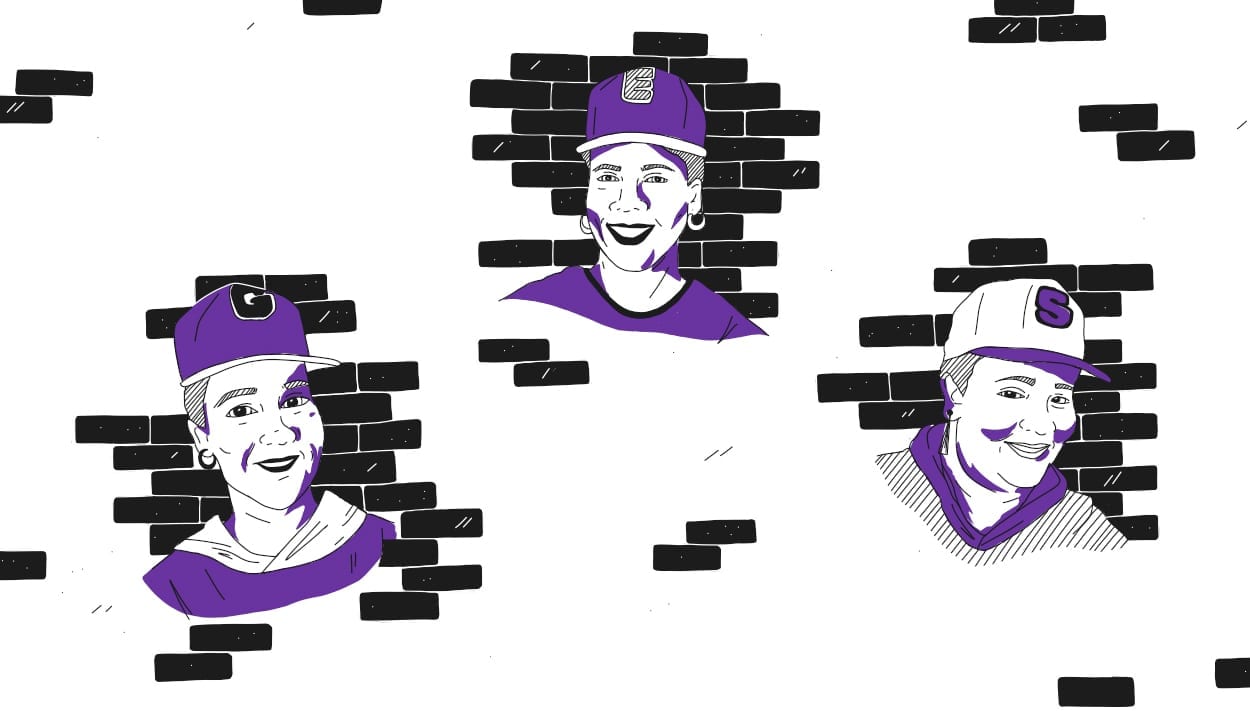
It’s a Monday afternoon and Scroggins, vocalist and founding member of New York funk band ESG, is at home in Atlanta. Scroggins is in the midst of some time off due to a nasty knee injury after the band’s last live shows in 2015. Thanks to therapy and medication she’s now doing well, which is timely considering this year marks 40 years of live performance for ESG.
Having first hit the stage back in 1978, a time when Bruce Springsteen was crooning about the Darkness at the Edge of Town and Debbie Harry was headed to the supermarket to check out some specials and rat food, ESG’s primitive steps came from a far more humble beginning than some of their art school peers. While many refer to ESG’s homestead of the Bronx as a hub of musical innovation, Scroggins has slightly different memories of growing up there: “It was a bad time. There were a lot of drugs, gangs, and that kind of activity in the neighborhood. It was inspirational as far as if you didn’t want to be on those streets, you had to find another way out.”
For Scroggins and her sisters, that escape was artfully provided by their best critic; their mother. In the late 60s and 70s, the Bronx saw a sharp decline in population and habitable housing after a wave of arson hit its streets. In a bid to keep her family distracted and in a more developmental environment, she looked to one of her eldest daughter’s biggest passions: “My mother didn’t want us hanging out [on the streets] so we were given a project,” says Scroggins. “She knew I had a love of music, and that my younger sisters would generally fall in line with what I wanted to do, so she got us the instruments. We used to like shows like Don Kirshner’s Rock Concert and we said, ‘We can do that.’”
Scroggins recalls the Christmas when she and her sisters came down the stairs to find the musical gifts under the tree. “I have old Super 8 movies, and whenever we do a [ESG] documentary, that will be part of it,” she says. With a meager income, it was a fairly modest set up: “She got what was affordable,” Scroggins adds. “I got a bass guitar, Valerie got drums, and Marie got tambourines.” There was, of course, one other member of the family at the formation of ESG: sister and original bassist Deborah, who would leave the band in 1987.
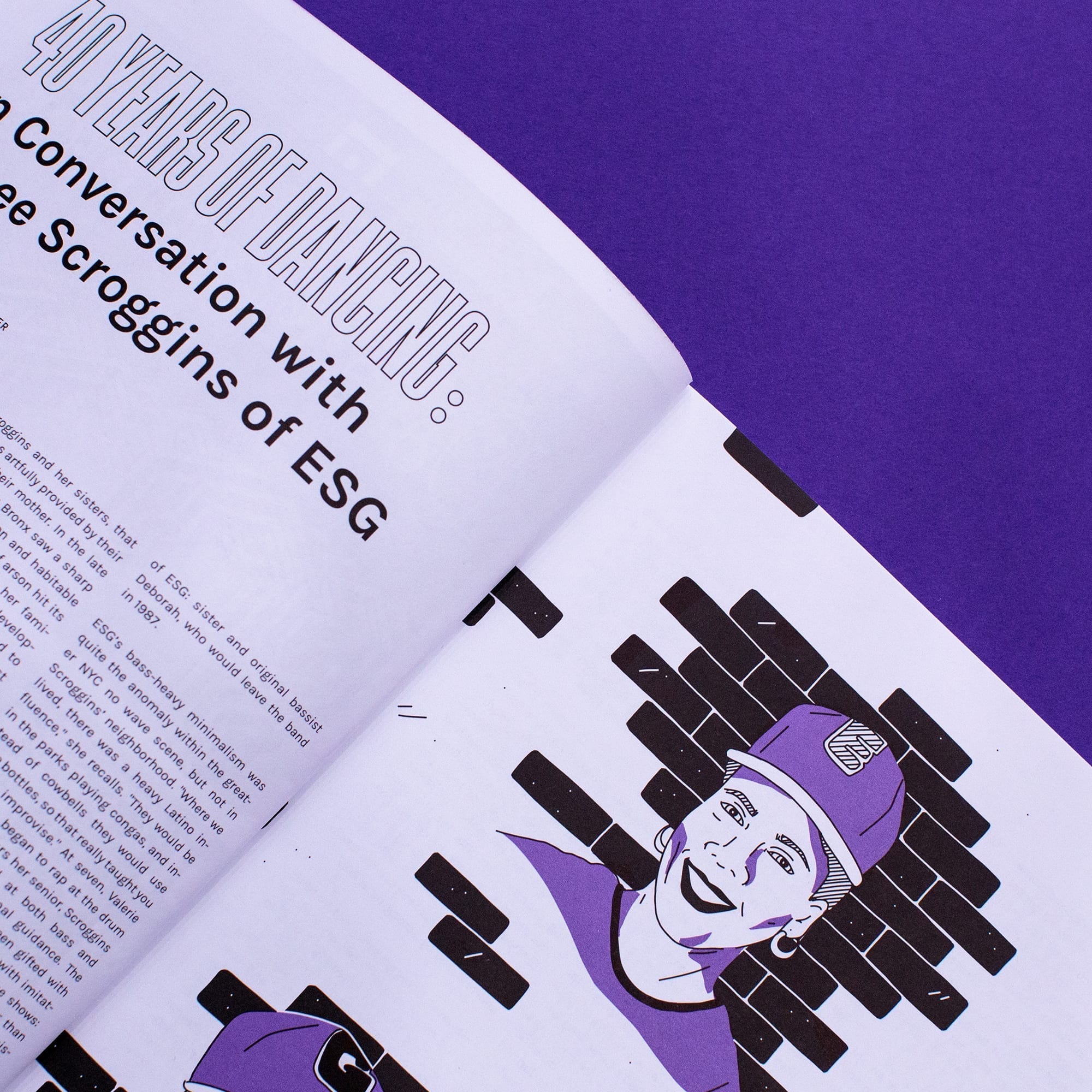
ESG’s bass-heavy minimalism was quite the anomaly within the greater NYC no wave scene, but not in Scroggins’ neighborhood. “Where we lived, there was a heavy Latino influence,” she recalls. “They would be in the parks playing congas, and instead of cowbells they would use coke bottles, so that really taught you how to improvise.” At seven, Valerie Scroggins began to rap at the drum kit. Three years her senior, Scroggins tried her hand at both bass and guitar with minimal guidance.
The family might have been gifted with instruments, but not so with imitating what they saw on those shows: “Watching it on TV was easier than the reality, you had to focus!” The sisters quickly realized there was a far more efficient workaround for their creativity. “We first attempted to play cover songs, and that was horrible,” Scroggins jokes. “I realized that if I wrote my own songs nobody would know if we messed up.”
The challenges continued when it came to hitting the live touring circuit. “Once you got out there and started playing, you realized some clubs or venues had liquor licenses, or what they would call cabaret licenses, so you couldn’t be in the club if you were under 18,” says Scroggins. But of course the band maestro, Mrs. Scroggins, had that covered: “My mother came with us when we performed. She’d sit backstage and make sure we left after our sets. Like always, she kept us on the straight and narrow”.
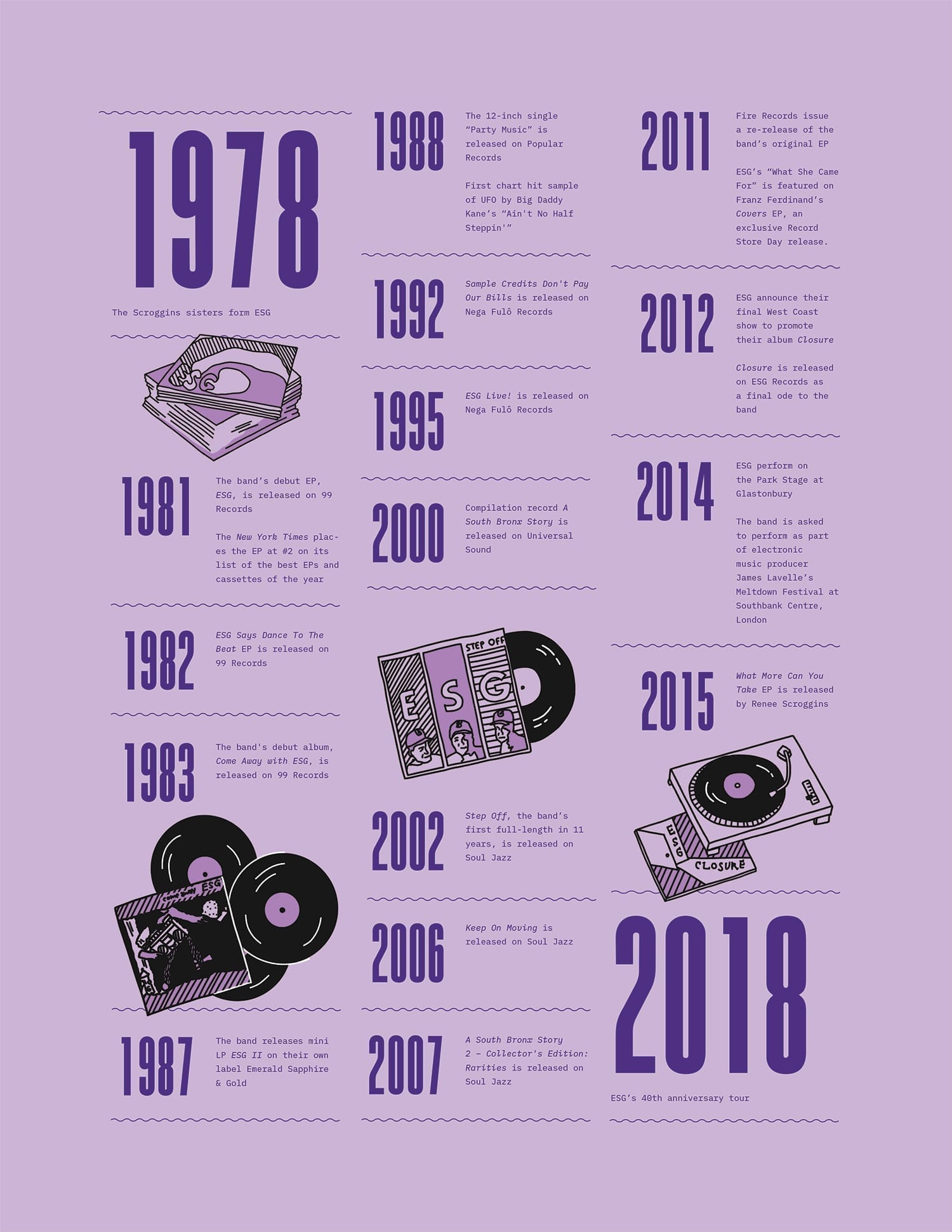
ESG’s 40th year landmark is an apt time to reflect on their achievements and the accolades they’ve racked up. The legendary group played every hip New York club, including The Mudd Club, The Danceteria, and the famed Paradise Garage in New Jersey where cult-followed DJ and dance music pioneer Larry Levan chose ESG to play the closing night. “Some venues have come and some venues have gone,” Scroggins says. “We’ve actually been around longer than some of the venues.”
ESG’s unstoppable funk force has remained a constant, and Scroggins believes that it all comes down to authenticity as an artist: “We kept true to ourselves, we kept it minimalist, we kept it funky. I didn’t try to go with the trend of the moment. We kept to ourselves musically.” One of their best known characteristics might be their transcendence of genres.
Their track “UFO” is one of the most sampled songs of all time; the looping whirr of its guitar sound has been referenced by everyone from Grime Mob, to Wu Tang Clan, to indie rockers Liars—meaning, while you might be unaware of the Scroggins sisters, you’ve undoubtedly heard their string skills. This has led to contentious situations for the bandmates, who, in 1992, released an EP titled Sample Credits Don’t Pay Our Bills.

“The only thing I’ve always said to people is that ESG’s music makes you want to dance,” Scroggins says. “Other than that, I don’t like to put us in a genre or a box. We are ourselves.” And dance they do. The band’s first recordings offer a take on the classic 60s girl gang back-and-forths of Motown girl-group, Martha and the Vandellas. “You’re No Good” slays a self-fulfilled lover with some clattering congo fills, while the bass line on “Moody” conjures up a visible shoulder shuffle.
Both were part of the band’s debut EP, ESG, released on 99 Records in 1981, and were recorded in the first take; when they finished those two, their recording engineer had three minutes of time left, so they decided to lay down the distinctive downstrokes of “UFO” too.
The band’s characteristic sound continued on 1982’s ESG Says Dance to the Beat of Moody EP and their first full-length album, 1983’s Come Away With ESG, both released by 99 Records. After this release, the group disbanded, but they unexpectedly re-formed in the early 90s and issued a self-titled 1991 compilation of previously released material. Nine years later, at the turn of the millennium, the band released a career spanning compilation, A South Bronx Story, on the label Universal Sound.
Two years after that the band came back together in a new guise with their first fresh material in nearly two decades. Step Off, released in 2002 by Soul Jazz Records, found Scroggins’ daughter Nicole on bass duties and Valerie Scroggins’ daughter Christelle Polite plucking out abstract riffs on guitar.
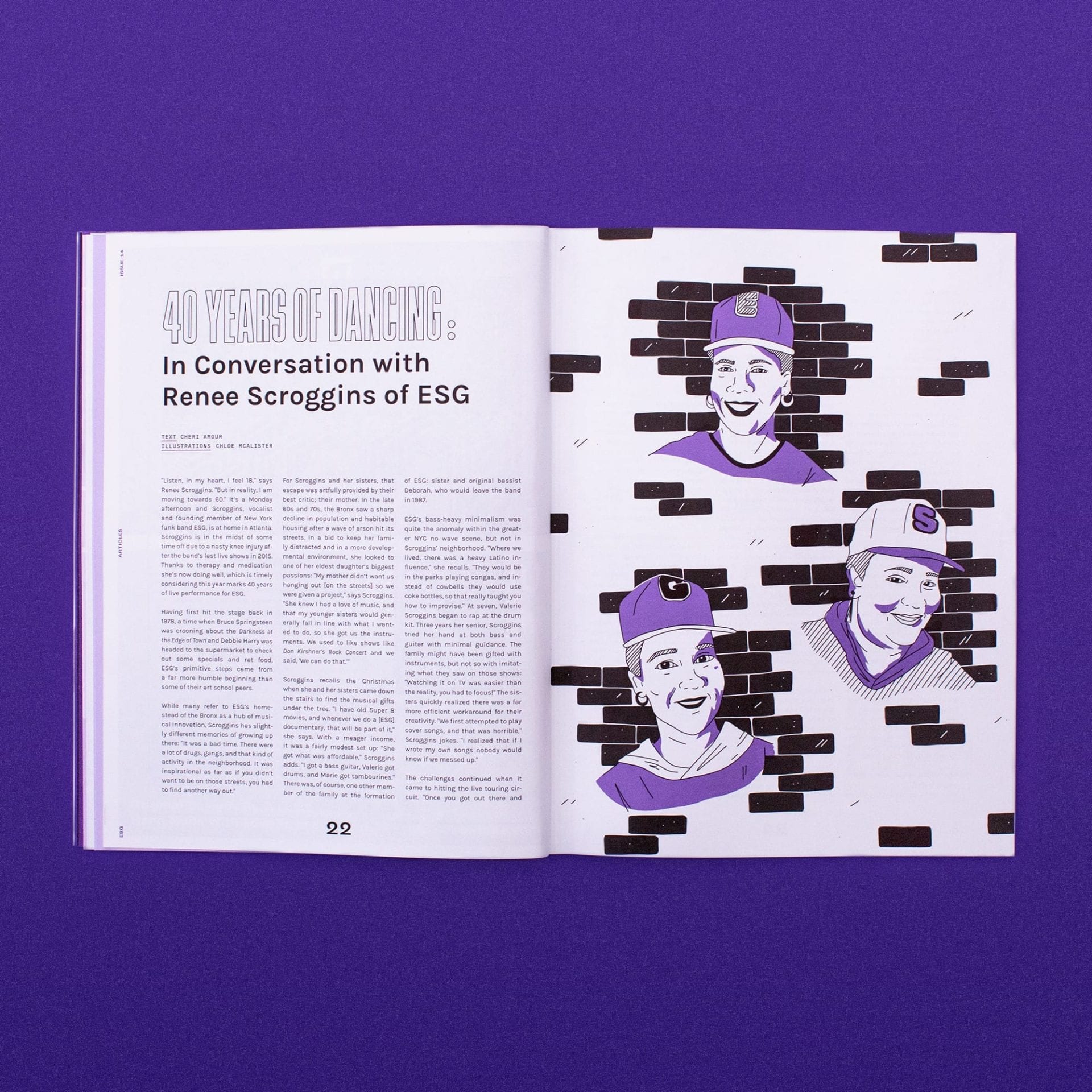
While the iterations of the group may have changed throughout the years, ESG has always been a family band, although it wasn’t always intended to be a matriarchal movement. Scroggins, who now performs with her daughter Nicole and son Nicholas, says, “I just happened to have a bunch of sisters. It was about the music, not our gender. On the same basis, I am happy that I have [had that experience], especially lately seeing so much in the news about sexual harassment. And it never hurt to have your mother at certain places.” ESG has kept both a loyal following and inducted fresh-faced listeners into the fold, which hasn’t gone unnoticed by Scroggins: “Knowing that fans are still dancing and enjoying themselves, that’s what makes me feel good.”
Despite her new Georgia location, Scroggins’ Bronx roots shine through her New York twang and upbringing. It’s this tenacity and resilience—along with the full-bellied laughter that punctuates her storytelling—that has kept ESG on the road, performing across the globe, and releasing countless records for the past four decades. To mark their milestone birthday, ESG will take their music down under to Australia with their latest release, What More Can You Take?, self-released by Scroggins in 2017.
However, Scroggins may not be touring much longer: “I tell my kids I’m getting tired of traveling. I love to perform, but it’s those long trips. I’ve been doing this since 1980. Flying begins to put some wear and tear on the body.” But she is gracious for the opportunity to take on such globe-trotting adventures, not to mention pleasing the sisters’ eternal advocate: “One of the greatest things I can say, and it truly made my mum proud, was that we were able to travel the world on our music.”
With their passion, sharp lyrical content, and musical dexterity in full force, Las Caras Lindas is a more than fitting title for Flor de Toloache’s latest album (recorded with producer Felipe Fournier and released May 26 on Chulo Records). “We were really excited to finally record our second album that everyone’s been so eagerly waiting for,” Ramos said.
The record’s title comes from a hip hop-infused cover of “Las Caras Lindas (de mi Gente Negra)” featuring Puerto Rican DJ Velcro, and Afro-Cuban percussionist Pedrito Martinez. Originally written by late Puerto Rican musician Tite Curet Alonso and popularized by salsero Ismael Rivera, the song is regarded as an anthem of Afro-Latino empowerment.
Their sound also incorporates elements of country, cumbia, folk, jazz, and salsa. Such fluidity comes naturally to Fiol, “and to us as a band,” she said. “I come from a rock, soul, jazz and blues background, so it’s more comfortable for me to express myself in those genres; fusing it all with mariachi is exciting.”
Launched in New York City in 2008, Flor de Toloache was founded by singers Mireya Ramos (violin, occasional guitarrón) and Shae Fiol (vihuela, guitar). The group also features Eunice Aparicio (guitarrón), and Julie Acosta (trumpet). Other members who have recorded with Flor de Toloache are Luisa Bastidas and Sita Chay (both on violin); Domenica Fossati (flute and vocals); trumpeter Jackie Coleman, and Jacquelene Acevedo (cajón).

“New York has exposed us to so many different cultures and music, and we express that in our arrangements and compositions,” Ramos said in an email interview with the band. “It helps you to look out of the box. You’re inspired by the diversity and the innovative vibe in NYC.”
Following a critically-acclaimed self-titled debut and a Latin Grammy nomination, Flor de Toloache embarked on a year-long tour opening for The Arcs, led by Dan Auerbach of the Black Keys. Along with the Arcs, Flor de Toloache wowed audiences at Lollapalooza and Coachella, and appeared on The Late Show with Stephen Colbert. Flor de Toloache also contributed backing vocals on Chicano Batman’s March 2017 release, Freedom is Free.
“Fusing mariachi with other genres was always part of the vision when I came up with the idea of forming the group,” Ramos said, “but it also came to us very organically since the ladies in the band come from different musical backgrounds and have played all kinds of music. We have a lot of fun arranging covers and making them our own and composing new songs in where we get to experiment with the mariachi instruments with a different approach.”
Their songs move seamlessly from Spanish to English. “We chose to do some bilingual songs because it’s a reflection of the new generation of Latinos born in the US who grow up speaking Spanish or Spanglish,” said Ramos.
The members hail from all corners of the United States, with roots in a multitude of Latin American cultures. Ramos characterized mariachi as “a tradition that connects with all cultures. It’s surprising how a lot of Mexicans don’t know how big mariachi is around the world, even within Latin America and the Caribbean.”
Cultures around the world (including in the U.S.) have embraced mariachi music, a phenomenon that lies in contrast with the current Presidential administration’s points of hostility with its nation of origin.
The long, rich tradition of mariachi music functioning as a voice of national pride and political protest serves to counter that. In “Performing Nationalism: Mariachi, Media and the Transformation of a Tradition (1920-1942),” Donald A. Henriques, PhD, points out that the Mexican government bolstered Mariachi music as a symbol of Mexican cultural identity following the Mexican Revolution. Mariachi music also served as an unofficial soundtrack for the U.S. Chicano movement (or El Movimiento) in 1970s America. Recently Mariachi has been used as a means of protest against US cities and states that have vehemently opposed the notion of sanctuary cities; to speak out against gentrifying rent hikes that push Mexicans out of their homes; and as a way to command the attention of local politicians who were willfully ignoring Latino community members.
In light of today’s cultural and political climate, how might mariachi continue to function as protest music? “We protest by standing together as women from different ethnic and cultural backgrounds,” Fiol said proudly. “We speak of themes in our music of empowerment and loving yourself.”
Along with their fierce willingness to push boundaries, Flor de Toloache is firmly based in the musical traditions of Latin America in general, and Mariachi in particular. Las Caras Lindas features a tribute medley to late mariachi legend Juan Gabriel who, like Flor de Toloache, broke down barriers in the machismo world of mariachi by being one of the one of the only openly gay performers in Mexican popular culture. Ramos and trumpeter Acosta each sang the praises of the Mexican superstar, who died in 2016.
“Since we put together this tribute and performed it live (first at the Ravinia Festival outside of Chicago, opening for Los Tigres del Norte), everyone in the audience went crazy,” Ramos said. “One of the things that I learned from Juan Gabriel is passion. When you listen to his voice you know it’s genuine. I try to sing this way every time I sing.” Acosta described JuanGa (as he was also known) as “the ultimate package: an artist, a prolific lyricist and composer. He’s definitely someone to refer to when writing your own music.
Aside from a love for giants of the genre, another factor in creating an authentic Mariachi sound is the instruments. Fiol described the role of her vihuela as “harmony and percussion. It has five strings, re-entrant tuning on string 2/B and 1/E, but the same tuning as a guitar. It’s got all nylon strings and a rounded back to project the sound.” Fiol also noted that “my vihuela is from Candelas Guitars in East L.A.” The internationally renowned luthiers, whose work is so admired that they have one of their guitars on display at the Smithsonian, also made Flor de Toloache’s guitarrones.
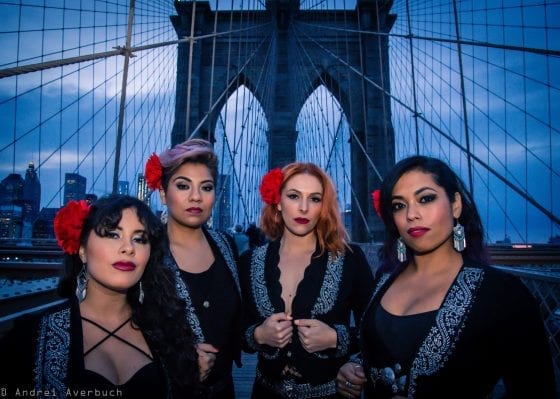
Two members of Flor de Toloache have guitarrón experience (Ramos and Aparicio), but Ramos is quick to point out which of the two brings out the best from the this rich, sonorous bass-like instrument.
“I play guitarrón, but not even close to Eunice,” Ramos said. “I had to learn because we didn’t have a bass player when we started the band. I fell in love with the deep sound. After hearing Eunice play and seeing all the melodic things you can do with it, I’m even more in love with this instrument.”
“When I started playing mariachi, guitarrón was not my choice,” Aparicio confessed. “But when I saw this instrument, I was intrigued—and not gonna lie, a little scared: the thing was huge! But as soon as my teacher showed me the basic technique and asked me to play my first note, I was in love! Ever since, we’ve been inseparable. There’s no comparing the guitarrón with anything else. It was specifically made for mariachi. The guitarrón is the heartbeat: it keeps the beat, and hopefully, the band together!”
She Shreds Issue #12 features:
Cover Story: Hurray for the Riff Raff
She Shreds Editor-in-Chief Fabi Reyna interviews Hurray for the Riff Raff’s Alynda Segarra about the Americana/blues band’s new album, The Navigator,” evolving identities, and the relationship between musicianship and activism, and assimilation versus acclimation in today’s cultural climate.
Cherry Glazerr
At 20 years old, Clementine Creevy already has three albums under her belt as guitarist/vocalist of indie trio, Cherry Glazerr, including the recently-released Apocalipstick. The rising talent shares her thoughts on the songwriting, stagnation versus movement, and why she doesn’t want to write pop songs about love.
Little Simz
London-based rapper Lil Simz (Simbi Ajikawo) talks independence, and describes how learning guitar as a teenager added new dimensions to her music and why she still loves writing on it today.
Anoushka Shankar
Grammy-nominated sitar player, composer, and activist Anoushka Shankar discusses how music can create connections and inspire dialog, and how she balances classical traditions with contemporary life and issues.
40 Years of Fairytales: A Retrospective of the Raincoats
Formed in the 1970s, British all-woman post-punk band The Raincoats were truly ahead of their time. Bassist Gina Birch and guitarist Ana da Silva look back at their band’s four-decade career, from their boundary-pushing beginnings to their continued connections with new generations of listeners.
Sleuthing Out Lutherie
She Shreds’ Cynthia Schemmer interviews lutheries Jayne Henderson and Rachel Rosenkrantz about the roads that led them to careers building guitars and their advice to other women looking to delve into the industry.
First You Get Depressed, Then You Get Mad: Women and the Protest Song
Louise Brown explores the history of women in protest music from the jazz age through the Hippie generation, to the present day and sheds light on how the current political and social climate may lead a new generation of rebellious women to raise their voices.
Issue #12 Table of Contents:
06 Scene Report: DC
08 Photo Diary: Women’s March DC
12 Sleuthing Out Lutherie
16 First You Get Depressed, Then You Get Mad: Women and the Protest Song
20 40 Years of Fairytales: A Retrospective of the Raincoats
26 Hurray for the Riff Raff
32 Little Simz
36 Cherry Glazerr
42 Anoushka Shankar
48 Lesson: Right Hand Technique
50 Tabs: Joan Baez + the Raincoats
56 Sound Control
58 Reviews: Albums
59 Reviews: Gear
60 Reviews: Events
62 Comic
63 Crossword
64 Glossary
[This feature was originally published in the eleventh issue of She Shreds Magazine, November 2016 and has been edited for timely accuracy.]

The Tuareg society, a nomadic people living throughout the Sahara, are known for their tende—a style of music and the mortar drum played—and their traditional folk guitar playing. Tuareg guitar has gained notoriety locally in the Sahara and internationally due in part to Tinariwen, a band from Mali that won a Grammy Award for Best World Music Album for their 2011 release, Tassili.
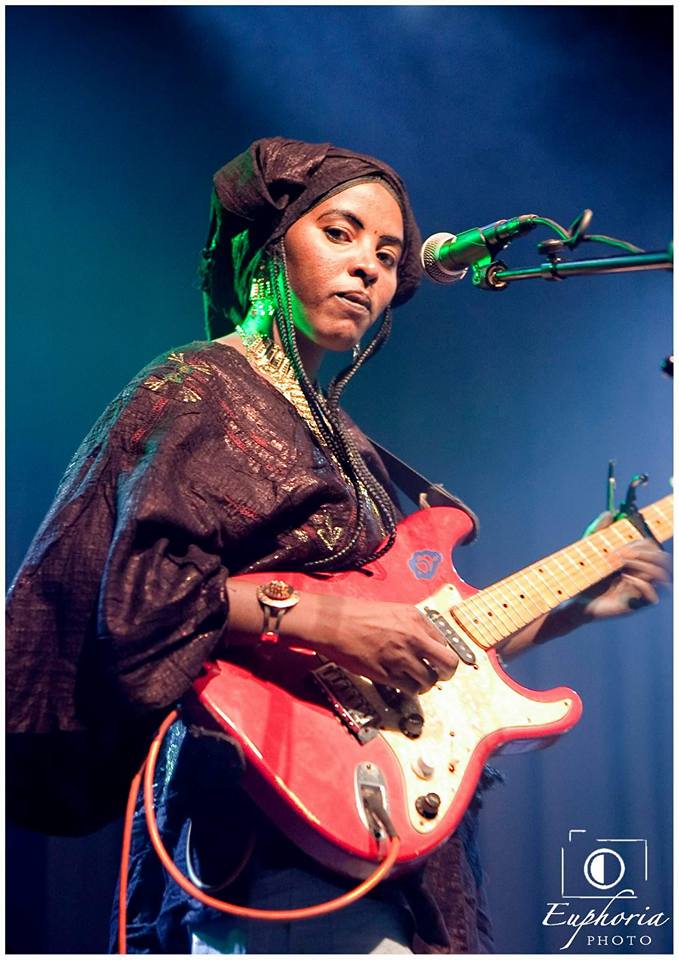
Around six years ago, Ghali’s brother brought home a guitar and she taught herself how to play. Today, she plays an old blue acoustic guitar, which is bruised and warped due to the harsh Sahara climate. When she plays publicly, she is accompanied by her cousin Alamnou Akrouni.On February 2016, the two women released the six-song self-titled LP, Les Filles de IIllighadad (which translates to “The Girls of Illighadad”), on Sahel Sounds.
Sahel Sounds is the project of Christopher Kirkley, music archivist based out of Portland, OR. Beginning as a blog in 2009 and later evolving into a record label, Kirkley has traveled through the Sahel region of Africa—spanning between the Sahara to the north and the Sudanian Savanna to the south—to meet musicians, create field recordings, and release music online as well as vinyl. Kirkley found out about Ghali by seeing a photograph on the Internet of her playing at an Illighadad festival. He was intrigued, having never seen a Tuareg woman play guitar. He brought the photograph with him when he returned to Niger and showed it to Ahmoudou Madassane, a Tuareg musician he had been working with who turned out to be Ghali’s cousin. Kirkley and Ghali eventually met and arranged to record Les Filles de IIllighadad.
“We recorded at her home, and she played with a bunch of friends around,” says Kirkley. “When she plays guitar, all of her cousins and brothers and sisters and the kids in the village are around clapping along and singing. It’s well known that she plays guitar, and they’re really proud of her in the village.”
While women have historically been musicians in Tuareg society—despite their limited social mobility outside of the home—guitars have primarily been played by men. “For a woman to play a guitar, or even sing songs with a guitar, is really exciting for a lot of people,” says Kirkley. Ghali and Akrouni also perform tende, which refers to the drum, the style of playing, the rhythm, and the events in which it takes place, such as curing ceremonies, evening entertainment, camel festivals, dance traditions, and other special occasions. The tende drum is created out of a mortar and pestles with goat skin stretched over top. The two pestles are leaned against the side of the mortar, parallel to the ground, and a woman sits on each side of the pestles like chairs, stretching the goat skin over the mortar to create a drum. It is a communal form of music in which participants sing, recite poetry, dance, and clap along to the drum. According to Kirkley, Les Filles de Illighadad are currently working on songs in which they bridge the world of tende and guitar playing. “They are taking this new direction of music, of adapting old tende songs into a guitar repertoire, which I think is really revolutionary for Tuareg music in general,” says Kirkley. “I think they are on the cusp of creating something new and really exciting.”
In an interview with Kirkley from earlier this year, Ghali stated, “I want to have a great future with the guitar, to be successful, and I want to have girlfriends who play guitar so we can play together and be successful together.” This November, Les Filles de Illighadad will tour across Europe for a month. They will be joined by a third woman who plays tende, as well as Madassane who will act as their manager and translator. The three women have not spent much time outside of their village—some have been to Niamey, the capital of Niger, but otherwise they have not traveled far.
She Shreds recently spoke with Ghali through email. Her answers were given in her native language, Tamasheq, which was then translated to French by Madassane and then to English by Kirkley. Some of the questions were difficult for Ghali to understand, due to cultural differences, and some of the answers may be lost in translation, but nevertheless, her innovation and passion shines through.
What was your early life like? Did your parents play music?
My youth is very different from the world of which I am, with the music. My parents wanted to give me away in marriage very young, because I started to love the guitar.
How did you get introduced to Tuareg guitar?
It was my older brother that came with the guitar of his friends to the house and when he left, I took the guitar and searched how to play. Always when he played, I watched his fingers. Afterwards, I really started to love the guitar and people always tell me that I’m very beautiful with the guitar.
What other instruments do you play?
Before we played the tende with my sisters and my friends, so I play the tende, and I sing.
Did you have ambitions to release a record before you were found by Sahel Sounds? How did you feel about releasing your music through the label? What was that process like?
Before I didn’t even know the importance [of recording] and it’s become a big advantage to us. Christopher opened our understanding of the importance of recording. Here, everyone records with their telephone, and no one receives any income.
Is music how you both earn money? Do you have any other jobs?
Yes, we earn with the music now. Here the girls do not work, even the majority of girls that are in the city.
What is the music industry like in Niger?
Almost nothing for us here.
You call yourselves The Girls of Illighadad. How does your community influence your music?
People love our music, and this title also, because we are the only ones.
In a video of you performing, there’s a man sitting next to you as you play. Who is he?
My big brother. I work with him, it is he who manages us. As we are women, sometimes we can’t do anything if it’s not playing.
What subjects are you drawn to write songs about?
It’s poetry when you make the tende. Other songs are of love, or tradition and religion.
What are your favorite lyrics that you’ve written?
The message that we make for our community is [the subject of] love.
Another photo of Elastica at Abbey Rd this week (no @thefrisch of course!). pic.twitter.com/cHyUL8edEd
— Britpop Memories (@Britpopmemories) January 21, 2017
With the release of its self-titled 1995 album, the British four-piece of guitarist/vocalist Justine Frischmann, guitarist/vocalist Donna Matthews, bassist Annie Holland, and drummer Justin Welch became one of the most celebrated bands of the decade with its harmony-laden combination of punk, alt-rock, and New Wave.
The album, which included radio singles, “Stutter, “ “Connection,” and “Waking Up,” brought the group acclaim across the UK, US, and Canada, was nominated for a Mercury Prize the year it was released, and has since been ranked as one of the best albums of all time in NME, and the Robert Dimery-edited book 1001 Albums You Must Hear Before You Die. Elastica released their “6-Song EP” in 1999, and the eclectic album, The Menace, in 2000, before breaking up.
This week Vanyaland broke the news that on January 20, 2017, Elastica entered Abbey Road Studios in London with engineer Sean Magee, evidenced by a series of social media posts. As of now, the band has not yet released an official statement about what they were up, but they have been pretty communicative with fans, which leads us to believe whatever news they reveal next will be worth the wait!
Each of these women left an incredible mark in the history of music and their legacy will never be forgotten. Rest In Power.
Vi Subversa: June, 20th 1935 – February 19th, 2016
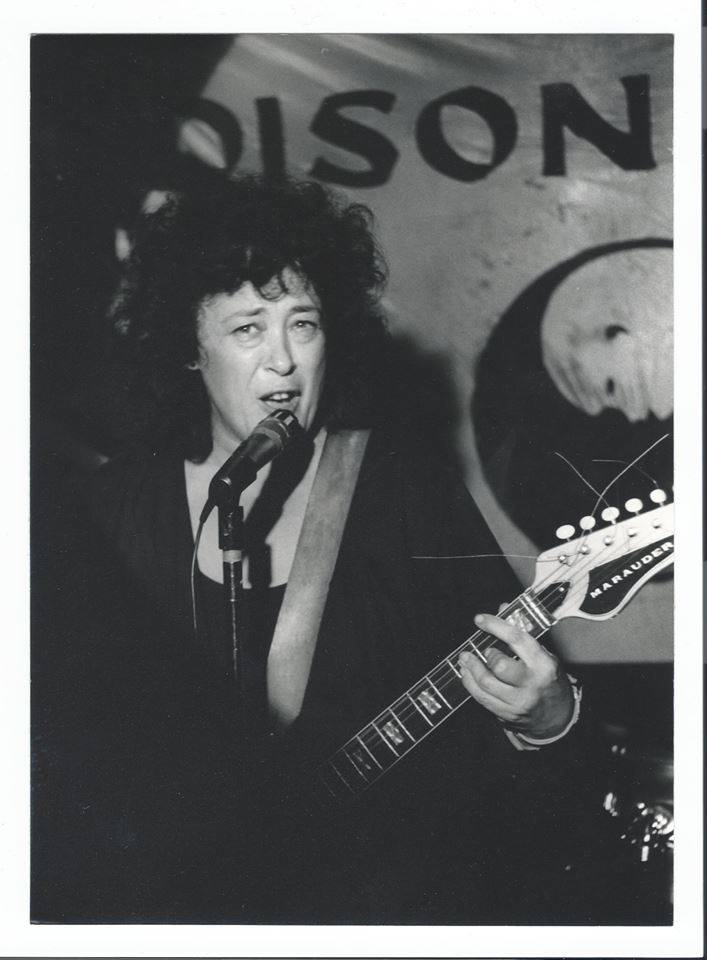
Born Frances Sokolov on June 20th, 1935 in London England, Subversa was much more than a musician—she was a mother, an anarchist, a pioneer and someone who broke a lot of norms to pave the way for future music and political movements. As a 40 year-old mother of two during the band’s inception in 1976, Subversa wrote songs explored gender and sexuality, and challenged convention.
Geneviéve Castrée: 1981 – July 9th, 2016

Geneviéve Castrée was a Pacific Northwest Icon and known throughout the world for her illustrations that matched the compositions reminiscent of the PNW under fog in the winter. Originally from Quebec, Canada, Castrée relocated to Anacortes, WA and released many recordings under Ô Paon and Woelv.
Jane Little: February 2nd, 1929 – May 15th, 2016
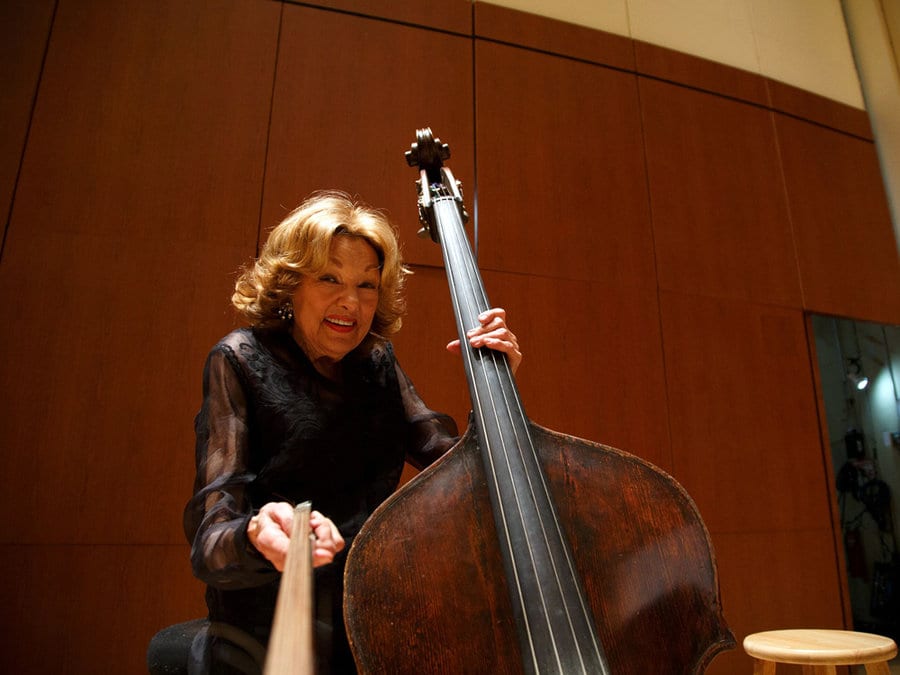
Jane Little first joined the Atlanta Symphony Orchestra at 16 years-old in 1946. As a 4’11 tall woman playing one of the biggest instruments in the orchestra, observers questioned her ability to perform but once Little began to play she never looked back. Little then found herself dedicated to the Orchestra for the following 71 years until her death on May 15th, 2016.
Marlene Marder: 1954 – May 15th, 2016
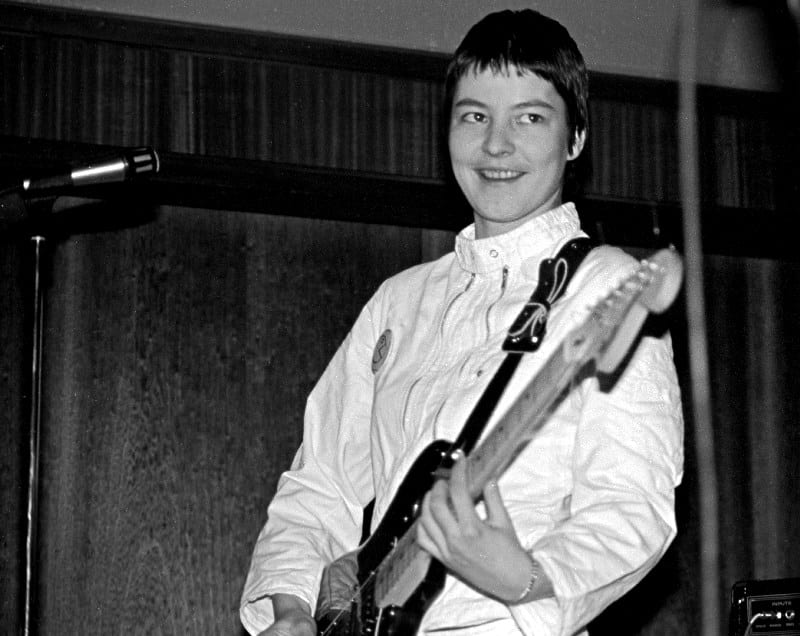
Marlene Marder was the guitarist of legendary first-wave punk band, Kleenex/lilliput from Zurich, Switzerland. She was known for her angular guitar work and piercing riffs that were tastefully sparse—a style that was virtually unheard of during those times in Switzerland. Kleenex/Lilliput is credited as one of the first all-women punk bands and have continued to influence new generations of musicians.
Her presence there is, of course, a testimony to how women guitarists are still shut out of the canon. But it’s also a statement that her music is so original (the magazine could only describe it as “Van Halen meets Bootsy Collins”), her talent so fierce, her creativity so boundless, that her influence is undeniable. Now, King is taking that influence to a whole new level with a different project—a place that seeks to make the finest guitars, and knowledge of them, available to anyone who stops by.
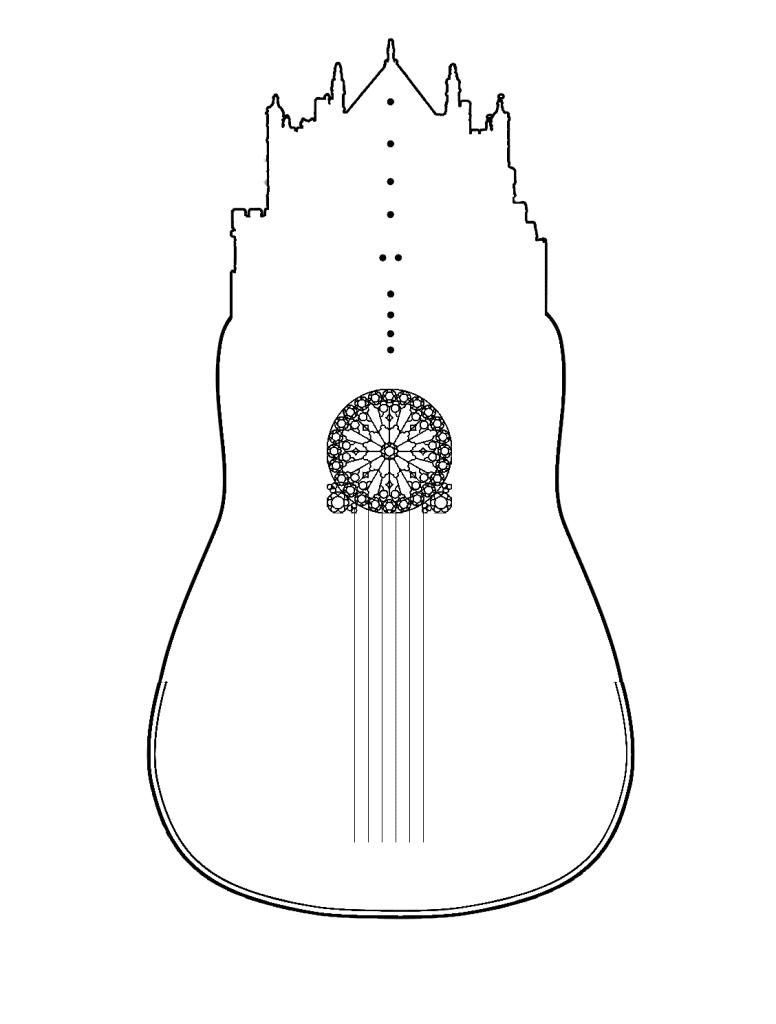
That place is named Other Cathedrals (after celebrated English guitarist Adrian Legg’s album Guitars and Other Cathedrals). Other Cathedrals includes a guitar library that showcases many guitars from King’s personal collection, including custom-made instruments, and makes them available for anyone to play. Lessons are also available; King herself teaches advanced students. Finally, a recording studio is available—musicians have the option to bring in their own engineer or work with one in-house [ed note: rehearsal and recording space is available for hourly/day rates or per project].
The idea for Other Cathedrals came to King when she noticed two problems she could solve at the same time. This first problem was one she noticed after having a baby last year, and giving music lessons over Skype. Even her most gifted students were limited by the quality of their instruments. “These people had terrible guitars they really could play, and they were not informed enough to know that there were really great instruments out there that could help them. They would say things like ‘well, how come when I do this, it doesn’t sound like you?’ And I’d be like, ‘God, you know, you’re doing it perfectly; you’ve just reached the limit of the instrument that you have.’”
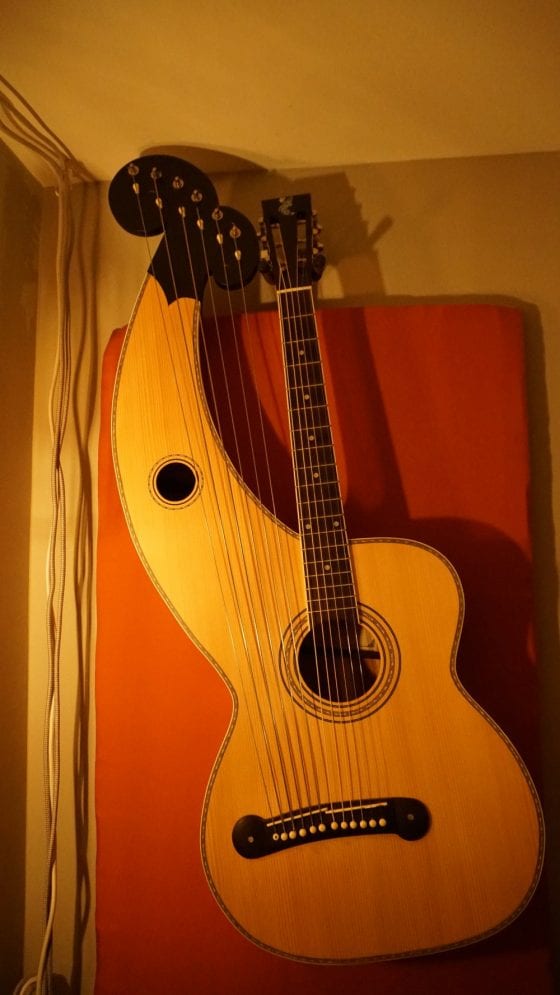
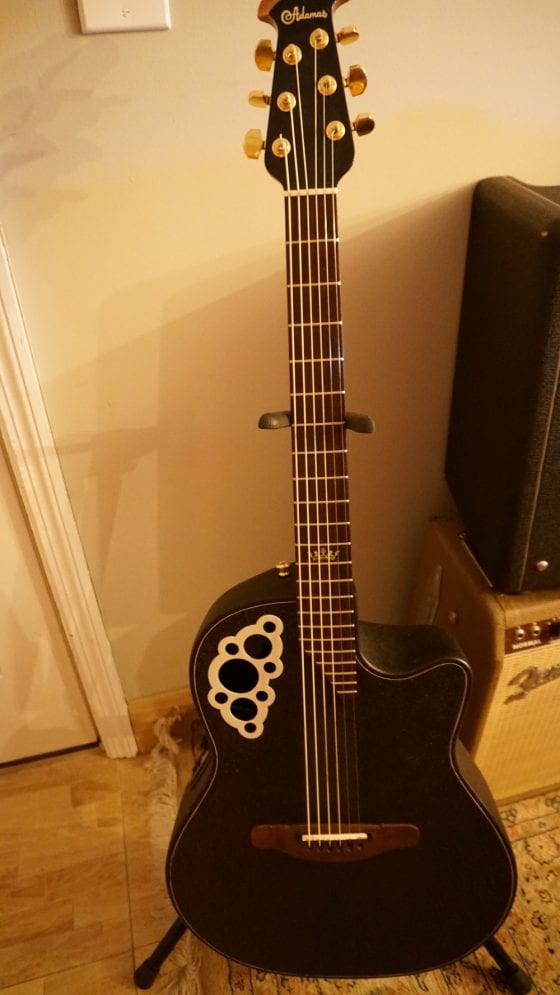
As King thought about how to better equip her students, she also thought about how her guitar collection was making her feel like the guitar hoarders she hated. She owned many guitars, mainly Ovation and Hamer, and she also had been accumulating custom-built guitars that proved hard to sell. “So they started sitting around in cases, and I’d move the cases from the storage unit to basement, [or] whatever. It became burdensome and also embarrassing because I really frown on people who are collectors, meaning collectors who just buy and hold, buy guitars that never even get played a note. I saw this need for people to play instruments that they couldn’t afford or even have access to because so many are one of a kind. This is my solution to both of these problems.”
King realizes that guitar stores can be intimidating, with foot traffic coming and going and sales staff staring customers down, which often leaves musicians without time to get to know an instrument they might purchase. Worse yet, the atmosphere can scare people away from playing at all.
She designed Other Cathedrals to have the opposite effect. When people visit, she gives them a tour to show them where everything is, and what the function of all the equipment is. She’s careful to keep things organized with lockers for picks, slides, and capos so time isn’t wasted looking for them. But the most important things she offers are more ephemeral.
“As I was developing the concept, maybe the most important part of this idea was the idea of solitude and time. The guitars are only half the equation. You can go and get far nicer guitars at a high-end guitar shop. But you’re not gonna get the solitude, and that and the privacy—all those things are very important to me. Even if they’re a little intimidated by the guitars or they don’t know where to begin, I hope that is something they can immediately grasp onto. ‘I’m alone, I’m free, and I can just sit here and figure out the rest.’”
King hopes to make Other Cathedrals even more accessible through community projects, and offering a scholarship is high on her list. That scholarship would be for young women who wouldn’t ordinarily have access to high-end musical instruments. “I don’t want this to become an ivory tower where people who can afford it can come. I want this to be a place where anybody who wants to can come in there and we can figure out how to make that happen,” King says.
Though she’s never taken guitar lessons herself, as a teacher, a key component of her style is to practice new techniques with the student during the lesson. Many of the techniques she uses in her own songs, so students are able to learn with a context where they can apply their knowledge. By practicing together, her hope is that her students won’t go home feeling unsure of whether know how to do something correctly. “I think that you can get a lot done in a really small amount of time if you have someone helping you and coaching you,” she says. “So that’s what I do. I say ‘here’s what we’re going to learn, and for the rest of the lesson we’re going to practice it.’ I can know beyond the shadow of a doubt that I’ve gotten something into their fingers.”
My first memory of Warpaint was as a teenager in 2009. I was walking past Valentines, one of the smallest venues in Portland, Oregon, and stopped to watch the entrenching hypnotism of the band’s onstage chemistry. At the time, I was beginning to write my own music and still practicing the incredibly rigorous theory of classical guitar. Collaboration was foreign to me, which is why watching four women so in tune with each others next moves—like a wave to the ocean—was so mesmerizing. I began thinking that this band actually didn’t have an option but to create together.
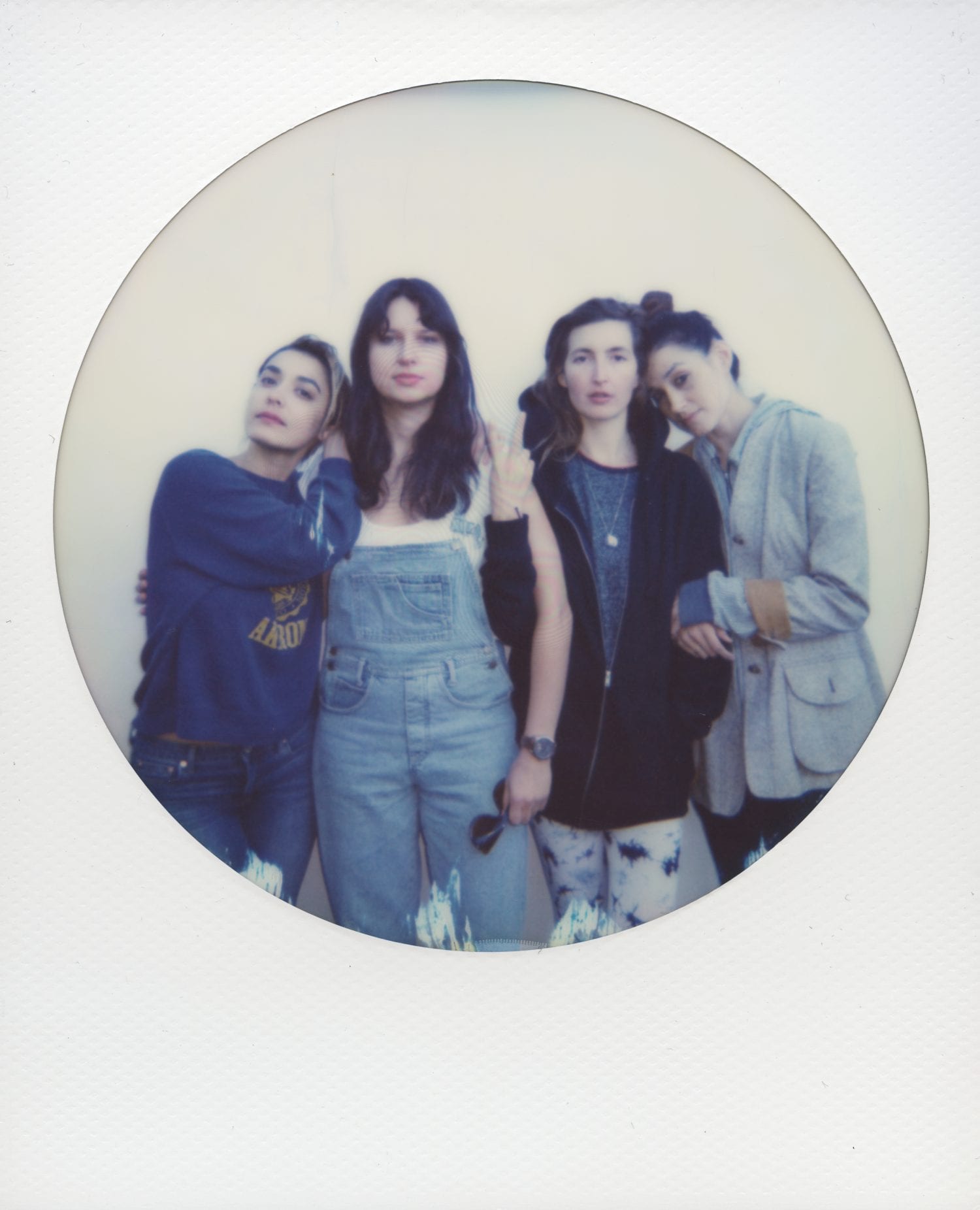
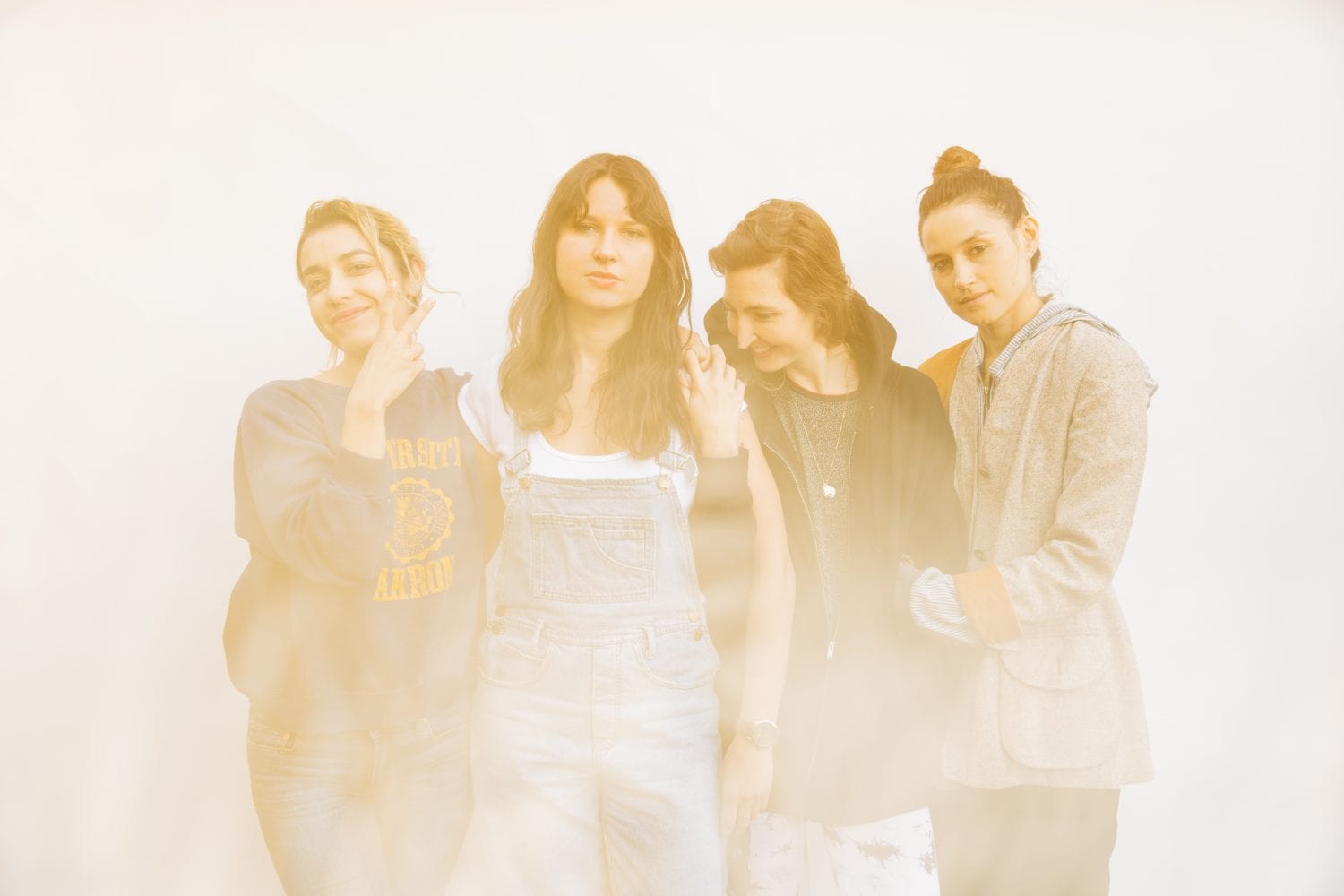
In 2010, Warpaint debuted their first full length LP, The Fool. Both fans and critics fell in love with the moody intricacies of Emily Kokal and Theresa Wayman’s interchanging harmonic melodies while Jenny Lee Lindberg and Stella Mozgawa maintained the foundation.
By the September, 2016 release of their third album Heads Up via Rough Trade Records, it’s still hard to truly pinpoint any member of the band as a “frontwoman.” In rock music, bassists and drummers are often seen as the rhythm section and, for whatever reason given less credit than vocalists and guitarists, but Warpaint battles that with an individual read on when to push and release energetically.
On a day before their Portland appearance at the Wonder Ballroom (the band’s third show of their latest tour), I sat with Jenny Lee on a nice green patch of grass in between a school and a busy street to discuss the band’s songwriting approach for Heads Up, Lee’s list of gear, and five things you need to be Warpaint for Halloween.
She Shreds: Tell me about the intention behind this record.
Jenny Lee Lindberg: [With] the last two albums, we were on tour and we would have the songs written, and we would go record them and they were always a little bit, I want to say, subdued on the album as opposed to the live performance. We’ve been told that for years and it even feels that way. It’s always more energetic [live] and you’ve seen us before—we often jam and we go off into little moments. So the idea behind this album was to take that energy that we have when we play live together and put it on an album. Let’s actually be a little bit more representative of how we are live together, you know what I mean?
I read a quote from Emily saying, “I want to go back to the basics with this [album].” Do you feel the same way? Do you think that you went back to the basics in the studio?
I don’t really know if I would say that. I wouldn’t describe it as going back to the basics, but I feel like we definitely recorded it differently than we ever have.
Whatever we wrote in the moment we stuck with it as opposed to the way we’ve done it in the past which was write the songs and they’ve been songs for three years and then had forty different versions of that one song. You just keep changing your mind. But when you first write the song you’re like, “This is amazing.” That’s what happens when we jam together and when we’re on stage. We’re just making shit up in the moment. A lot of that was happening in this record where you had to just go with your first instinct and you didn’t have time to ponder.
The bass feels more at the forefront of these songs. Was that intentional?
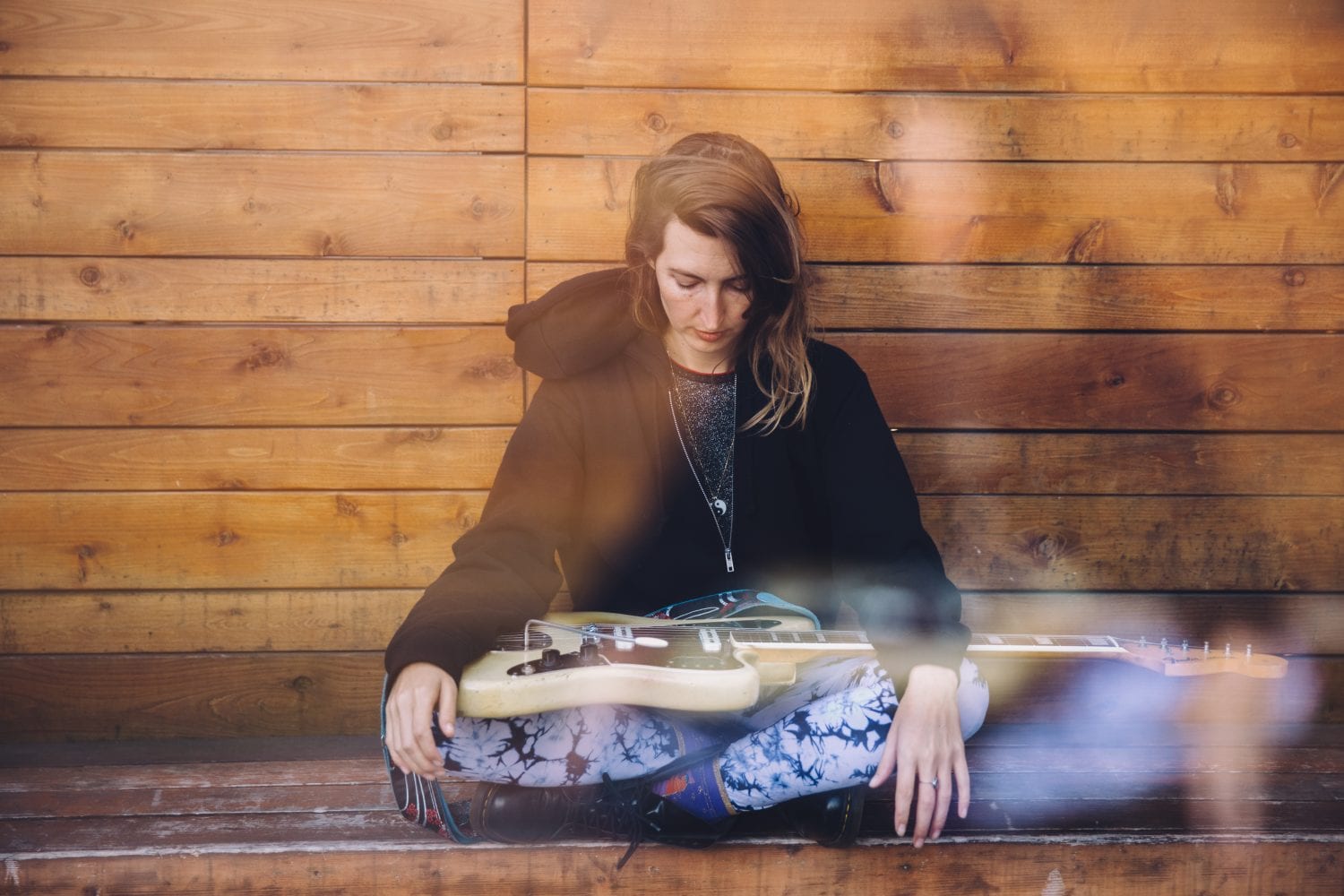
I think maybe things are just a little bit more minimal and I feel like maybe it’s just not as complicated. There’s a lot of things that we would do in the past that were super intricate. A lot of the times people will tell us, “Oh it’s interesting, this new electronic path that you guys are taking.” We’ve been using the same shit since day one. You just can’t really hear it in the mix as well because there’s Emily’s guitar, Theresa’s guitar, my guitar.
I think right now we’ve just become a little bit more spacious and giving each other room to breathe and let the parts shine the way that we just have evolved as a band, I think. We didn’t say like, “Let’s make this a bass-driven song,” but there are definitely some things that started with the bass and then things were written around that. That often happens in the band for sure. It’ll be drum and bass and then people will put stuff on top of it. I think the intention was just let’s make a dance-y record. Let’s have fun. Let’s try and capture the energy that we have playing live and put it on an album for once.
Gear wise, did that change what you brought into the studio?
No. It didn’t, actually. There’s a couple of tracks that I play guitar on and there’s a few when I played a [Fender] Bass VI. Theresa is playing bass on a song. The one thing too that we did differently this time around, which I love, is that the vocals are more present. They’re not as reverb-y and there’s a lot of three part harmonies going on which we never used to do. It would be two parts or whatever, but it was like there’s full on three part harmonies happening on a lot of it and I think that’s great.
Like you said, there’s always a few layers of effects. Do you all take time to experiment with effects for your guitars?
On my pedal board I’ve got digital delay. I’ve got an overdrive. I’ve got an octave pedal. I’ve got a rat pedal. A chorus pedal and I think that’s it. It’s a lot, but I’m not using those at the same time at all. No way. I don’t really ever use the delay. I did use the delay on one song. I didn’t use the reverb. I used the overdrive and the chorus. That’s it. So I only used three pedals. I always have the chorus on, but that’s just my pedal board from over the years.
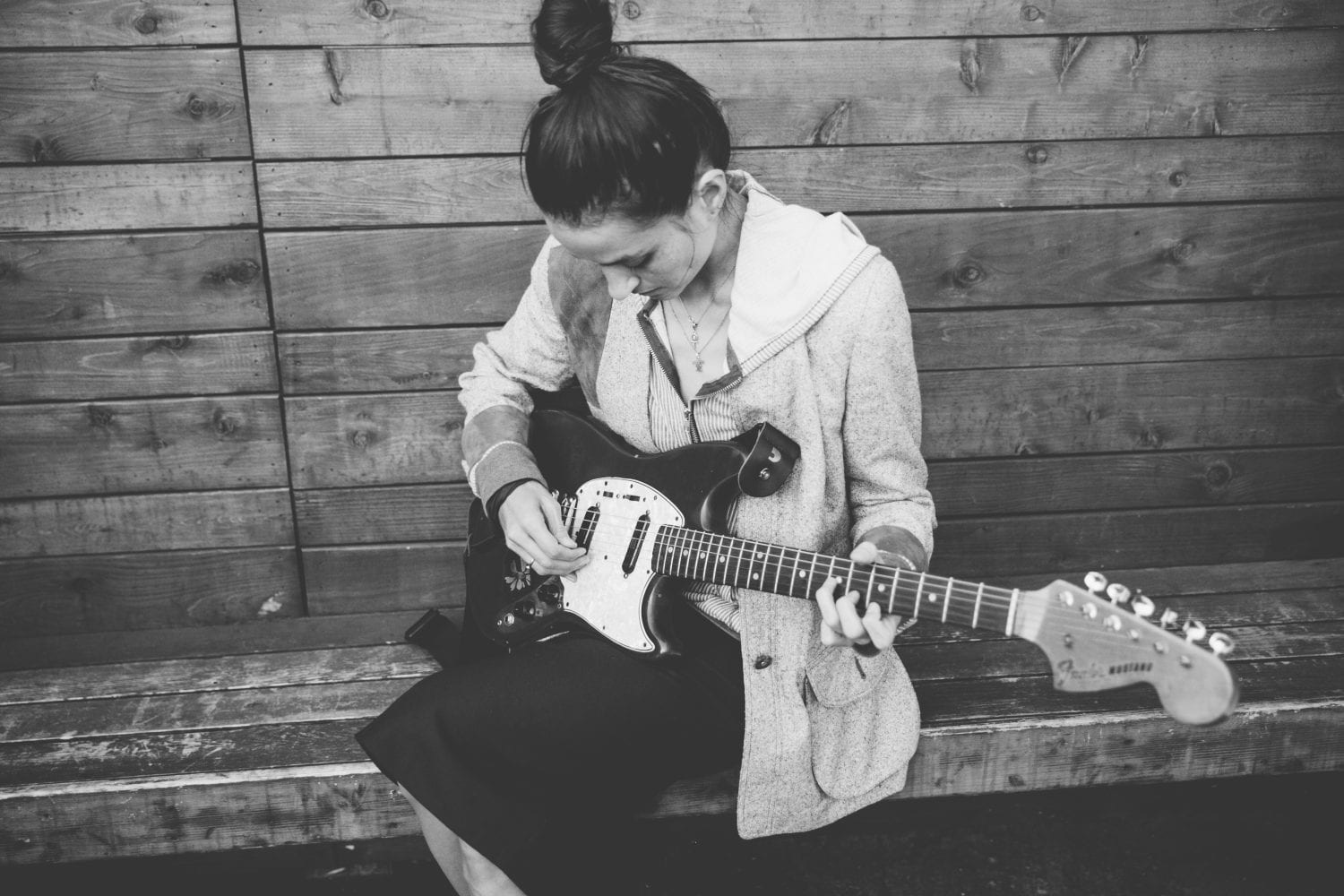
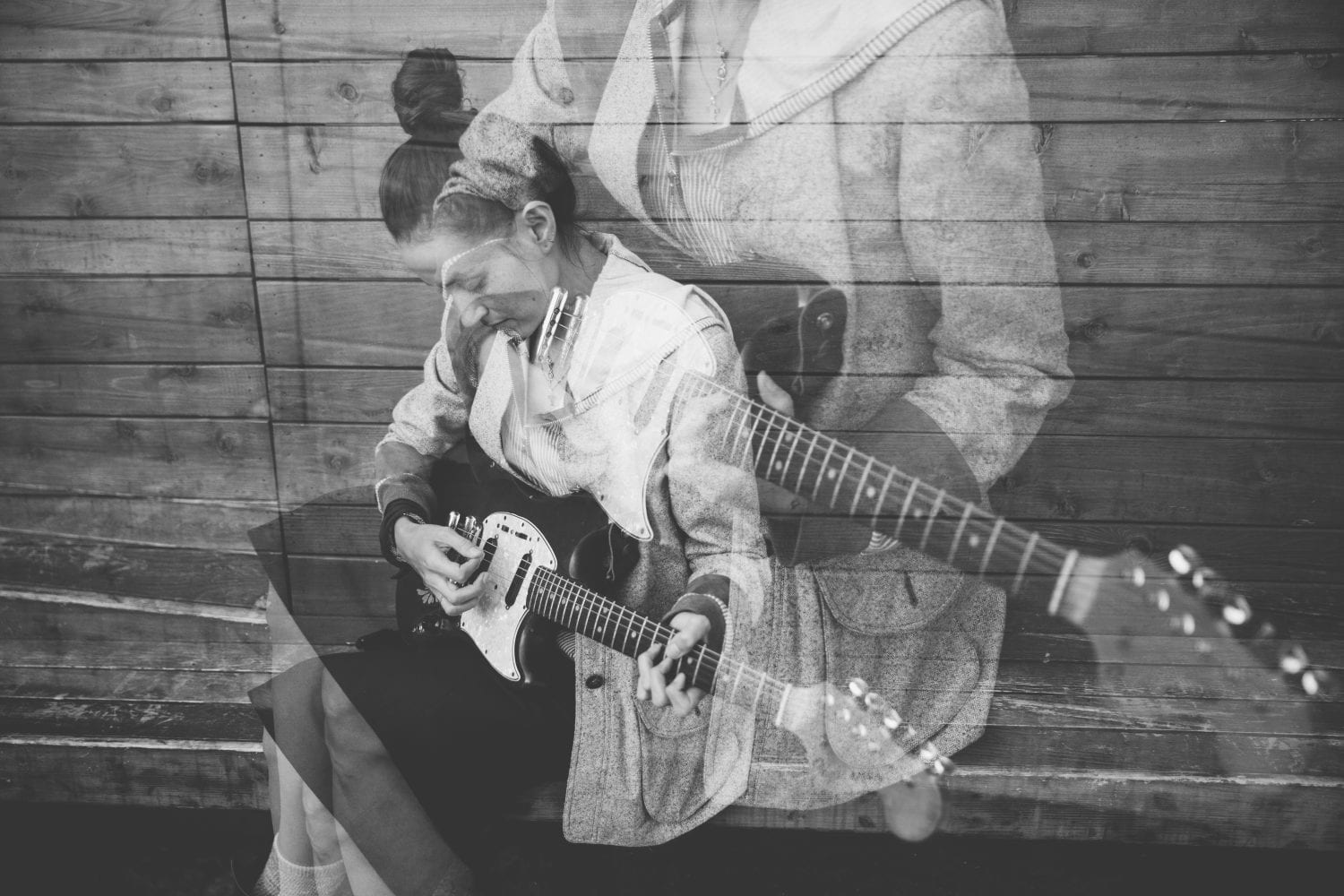
You put out a solo album end of last year. Did that change the way that you approached the collaboration on this album?
It definitely did. I think that I got some stuff out of my system. I was able to execute my visions. I was able to have control over the whole situation. I was the director. Do you know what I mean? It was my vision and my creativity. In this band, obviously there’s four people in the band, but it was amazing to be able to exercise that and to come back to the girls. I was able to relinquish control a lot more and sit back and let things happen and not feel so precious about everything.
I was excited to hear what the girls had been writing and to play on top of their songs. In the past, everybody was a little antsy like, “Okay. It’s got to be fair. We’ve all got to write our bits and have our songs,” and I just didn’t care about that [this time]. I was just excited to be a team player and just collaborate because that’s the antithesis of what I’d just been doing. It was actually very refreshing for me to collaborate and also just have different ears and listen to things differently. Not that you do it on purpose, but even subconsciously you might be coming from more of an ego place when you’re collaborating or doing anything artistic or creative.
With other people you don’t know that you’re doing it but sometimes it’s like, “what are your intentions and your motives behind that decision for writing something?” I’m not really sure about that. Who knows. It’s not intentional but it’s subconscious and I feel like there just wasn’t any of that happening. It felt very loose. Very free. I felt very supportive and just excited to let things be. Restrict. Put limitation on things. Cool, let’s do that with a song. Cool, let’s just see what happens. It was a good feeling. I really enjoyed this recording process for sure. I felt like it was the most blissful—It was also the quickest! I’m really proud of this—it might be my favorite.
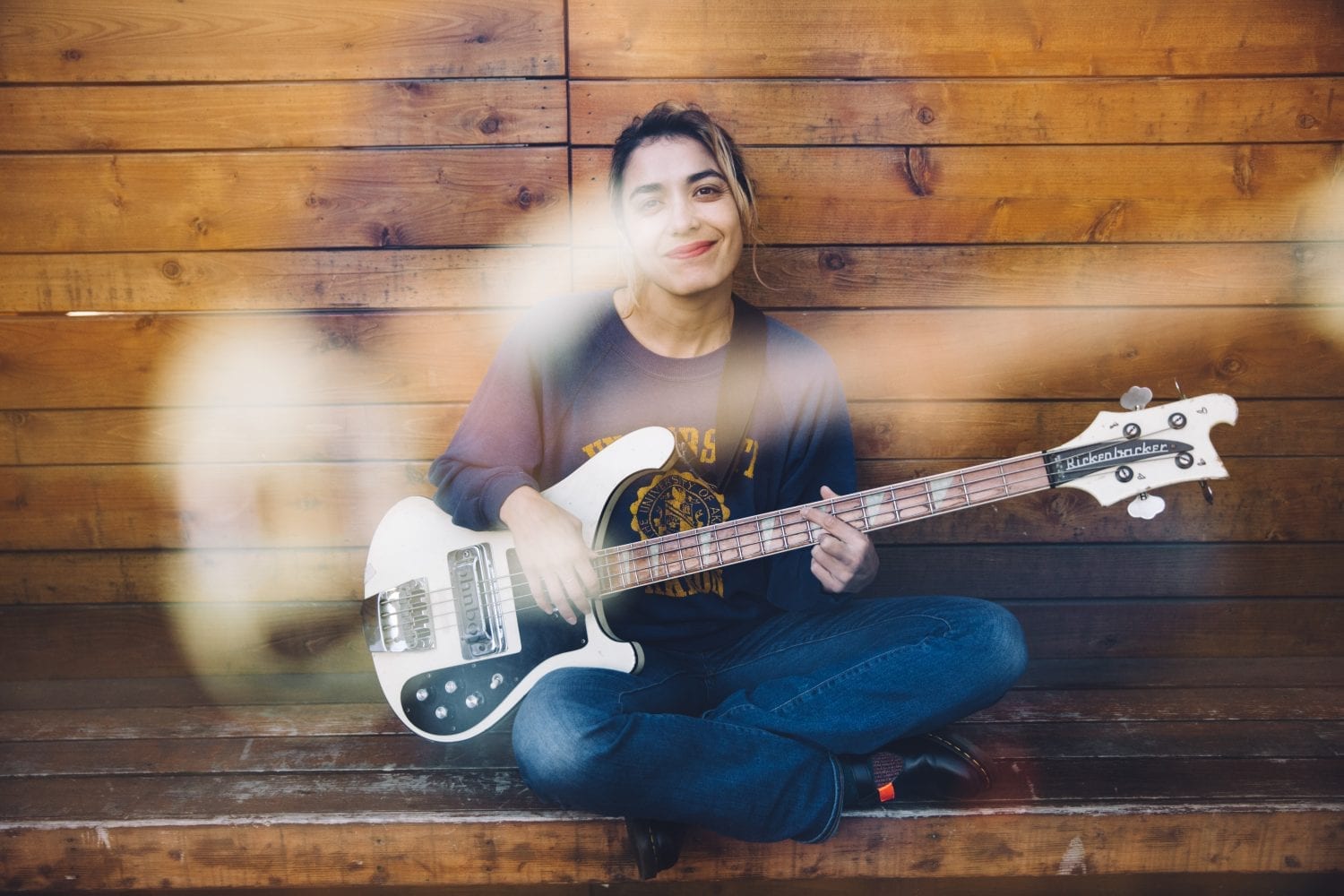
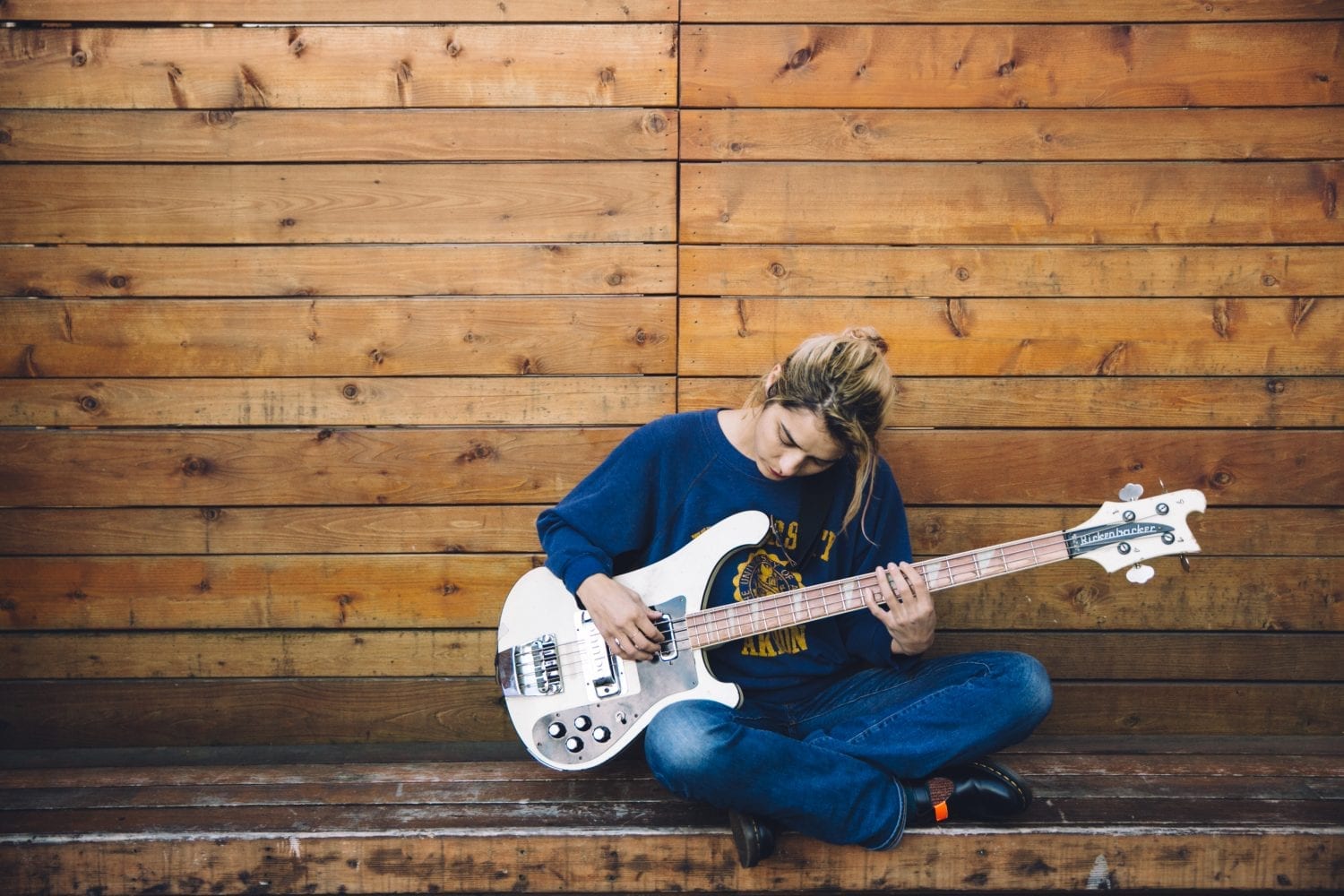
If you saw yourself ten years ago, what is the biggest thing that you feel like you’ve learned that you would want to tell yourself?
[Long pause] I like that I’m having trouble answering this question. Hmm. Nothing, I’m doing everything right [laughs]. I guess just to be in the moment, to be present, and to have gratitude for the moment, which is something I’m still doing, even from yesterday telling myself today, “Be in the moment. This is sweet. This isn’t going to last forever.”
I think we’re all pretty good about appreciating and having gratitude for what’s going on. I feel like that’s why we’re still a band after twelve years. We’re best friends. It is very challenging, but it’s also really easy for us to go, “Fuck. We’ve got something really special. Let’s appreciate it and not take it for granted.” That’s the one thing. Life goes by so quick, it’s just important to be in the moment and to appreciate things. You could die tomorrow or in five minutes. You just never know.
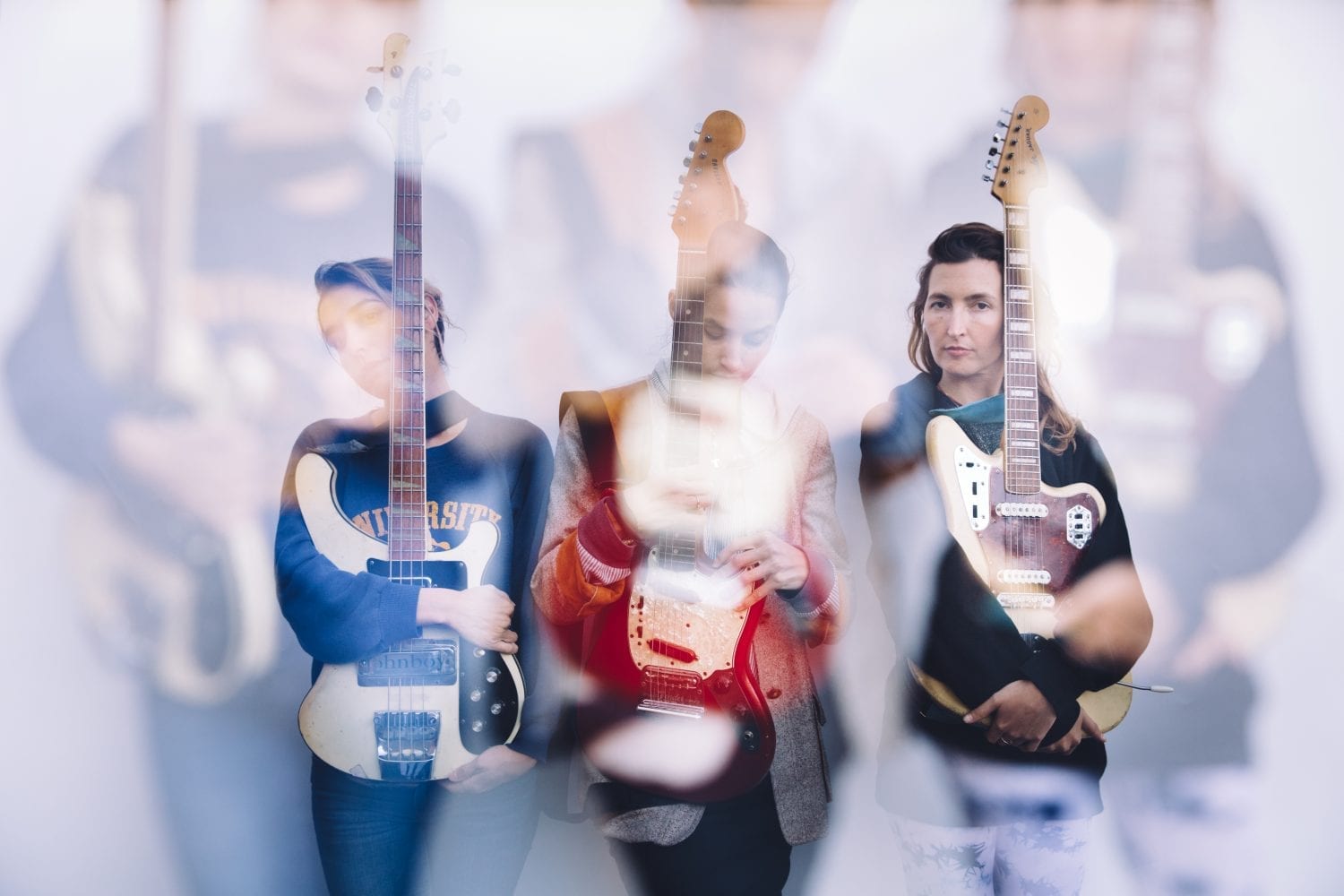
Let’s talk about gear for a second. The main thing that I noticed is that you play Rickenbacker and everyone else plays Fenders.
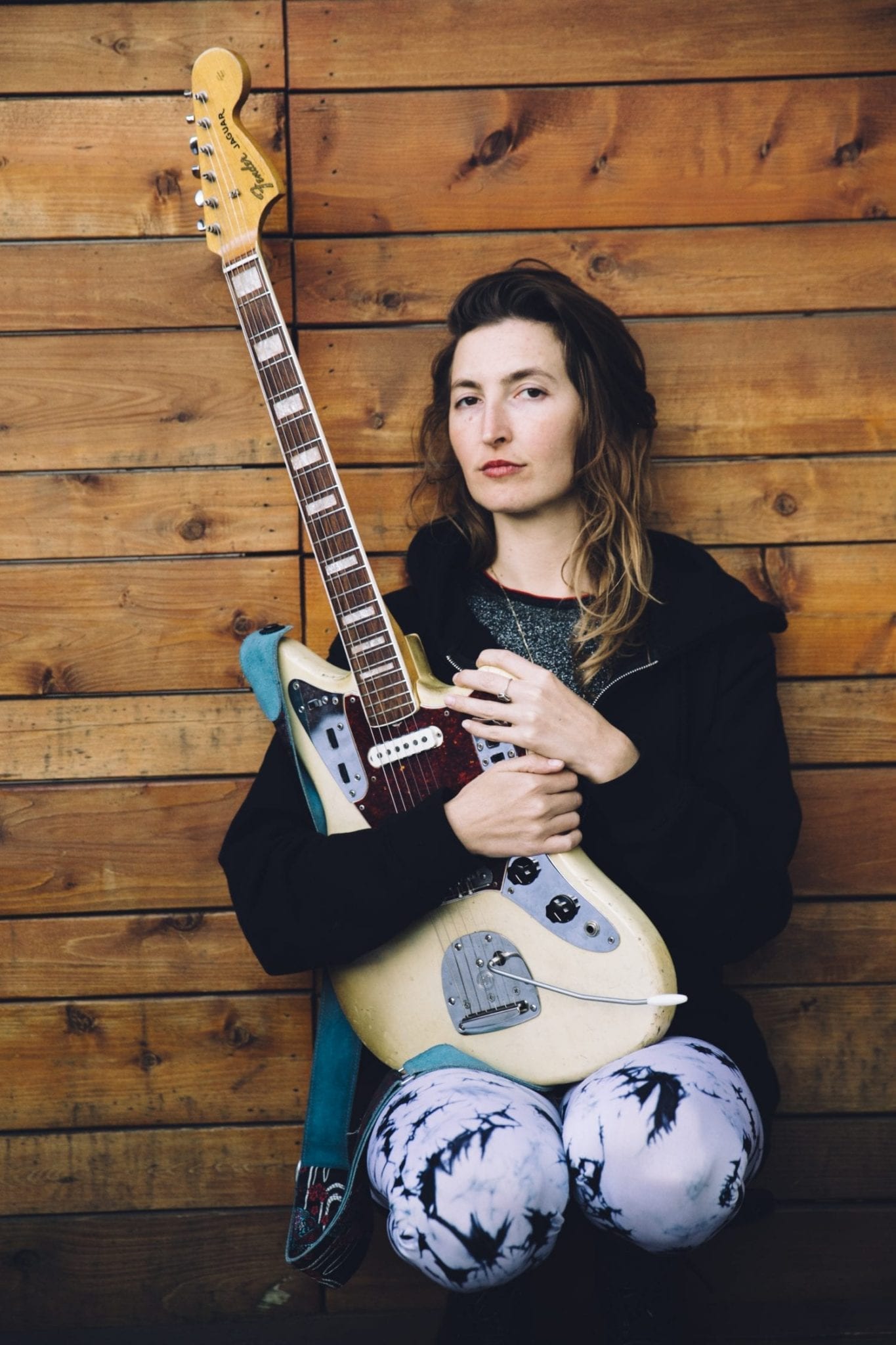
Yeah. We’ve just recently been gifted some things from Fender which is really nice. That Bass VI is a Fender. They just gave me a Mustang which is their new model which has a jazz bass and a P bass pickup, so there’s double and it actually sounds really nice; which I brought. I also have a Fender P bass, a ’79 P bass that I play from time to time. I’ve got a lot of things that, especially when we record, it’s fun to switch it up. It’s not always playing with the Rick, but when we play live I’m not going to have seven basses for every song. The Rick does the job for everything. I love that thing to death. Yeah, but when you record it’s fun to get a little crafty.

Is there anything else you’ve been experimenting with? It doesn’t even have to be bass.
Yeah. I guess I’ve been playing guitar a little bit more. I really, really love that six.
The Fender Bass VI?
Yeah. I love it to death. It’s amazing. It’s sort of like a guitar. It kind of looks like a guitar, but the top three strings are a little fatter than the bottom three. You could still kind of play bass with it, but they’re not as fat as an actual bass strings.
What about baritones? Have you ever messed with those?
I have. I actually have one of those. Those are amazing. That’s basically what the Bass VI is like. I have a baritone, but the strings are a little weird and the tuning is also funky, which is really nice.
Odd question but If someone was going to be Warpaint for Halloween, what are the five things that they’d need?
Oh if they were going to be a cover band. Well, they would need a Rickenbacker, a chorus pedal, a jag, a mustang….
It can be more than five, too.
I guess just all the gear we play with I suppose. Maybe they wouldn’t need that even. Some personality: A sense of humor, some colorful clothing. What else? A fog machine…
That’s a good one.
Fog machine, some carpets, some Christmas lights.
Some mood?
Some mood. Yeah. Some cozy homey mood style shit.
Since 1998, the volunteer-run punk paradise has hosted affordable and accessible shows every night, and all of them are all ages. The response to the impending closure was massive. Petitions were started, fundraising efforts to save the space began, and stories spanning nearly two decades made it clear how important all-inclusive spaces are to the scene.
Baritone guitarist Claudia Meza of Explode into Colors grew up in LA, and spent every possible chance at The Smell. “It’s the club I used to go to when I was a teenager and I’m still good friends with Jim [Smith] who runs it. Downtown LA… maybe ten years ago it was uninhabited. As soon as the businessmen went home it was like a post-apocalyptic movie…. It was pretty sketchy. But now it’s so bougie. The reason [that transition] is happening is because of The Smell. So now The Smell can’t afford to be there. It’s going to be a parking lot.” This weekend, beat-driven punk trio Explode Into Colors will reunite for the first time in six years for two shows at Portland’s Mississippi Studios supporting The Smell and Portland organization Friends of Noise, which supports all ages music.
Explode into Colors was formed in 2008 by Meza and a rhythm section of drummer Lisa Schonberg and percussionist Heather Treadway. The trio quickly generated a huge buzz with their thumping, echoing punk. Following the release of their 2010 EP, “Quilts” on Kill Rock Stars, the band dissolved to pursue different artistic endeavors.
The band’s eclecticism can be partially attributed to Meza’s time as a volunteer at The Smell. “Before The Smell became more democratic, Jim would just hand it over to the kids. [So the shows were] our taste in music, and we were freaking weirdos. It was mainly noise music or what you might call “art rock,” quick is why we had Nels Cline playing all the time.” This kind of power over music spaces, the kind of access it provides, is rare.
While organizing the reunion shows, it became clear that something needed to be done for the future of other all ages venues, including in Explode Into Colors’ local scene in Portland. Friends of Noise was launched last year to preserve the local arts scene by educating youth. Made up of Portland music professionals and teenagers, the organization has been raising funds to create a brick and mortar space. In the meantime, they are providing workshops and classes for people of all ages.
High school senior, Stella Augustine is involved in Friends of Noise, focusing on booking and promotion. “As someone who has been to a show, experiencing the all ages section of the show [Editor’s note: In Portland some venues may section off part of the room for underage concertgoers], there is a clear level of separation and access,” she says. Noting the recent gunfire on October 6th at a Portland venue, the Roseland, which is a frequent host of all ages shows, and the fear of sexual harassment, especially towards young girls in larger crowds, Augustine sees a huge need for a safe space that carries a real sense of community and inclusion.
LA, Portland, and other DIY scenes around the country are struggling against the forces of development, where people are moving into neighborhoods shaped by the artists and residents. The countless closure of spaces around the world like Brooklyn’s 285 Kent and Aviv, and The Owl Sanctuary in Norwich, UK, are eerily similar to the demolition of The Smell. This type of growth and change makes it hard for all ages spaces to continue because it is a group with no financial stake in development. As an artist of color and young artist, Meza remembers “It was really hard for me to exist,” in two cities that are increasingly whitewashed.
Advocating for a space where people of all ages can be expressive is vital to the future of music. Most importantly, it takes a lot to run a space, so community support is integral. Meza decided to bring Explode Into Colors back together for this express purpose. “I don’t have enough money to just donate thousands and thousands of dollars, the only thing I could think of to raise that money was to get Explode Into Colors [to reunite] because it possibly would get people excited,” she says.
Get all the info on Explode into Colors reunion shows here. If you are interested in supporting The Smell and following their fight to survive, there is a petition against the demolition of the building as well as a fundraiser to save the building or move into a new space. Friends of Noise also accepts donations.
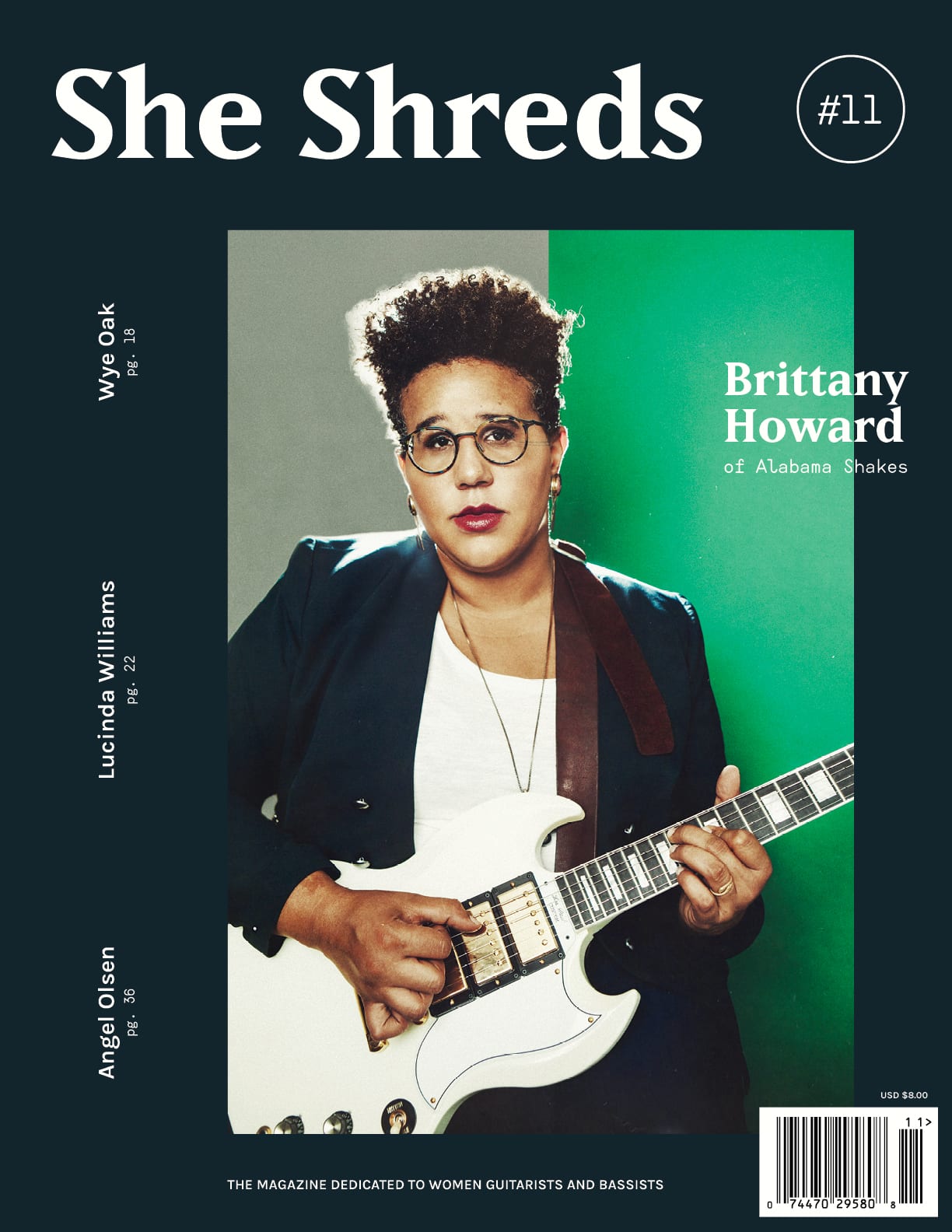
Cover Story: Brittany Howard
The Alabama Shakes / Thunderbitch frontwoman talks to She Shreds Magazine founder Fabi Reyna about growing up in the small town of Athens, Alabama, discovering her musical talents, and using her guitar to “carry” her songs.
Lucinda Williams
The prolific singer-songwriter speaks with Cynthia Schemmer about charting her own path in the music industry, storytelling, and the devastating personal losses that impacted her latest album, The Ghosts of Highway 20.
Angel Olsen
The rising indie/folk star spoke with La Luz guitarist Shana Cleveland about being an introvert on the tour circuit, finding time to write music when you’re surrounded by people, and how recording herself has helped her develop her songwriting chops.
Jenn Wasner: Wye Oak and Flock of Dimes
The indie rock songstress provides insight into her creative process, her newly released signature guitar, the Reverend JW-1, and how learning to self-record and produce opened up a new realm in her musical expression.
Abigail Ybarra: Winding Pick-ups Since 1956
As a Latina teenager in 1950s California, Abigail Ybarra got a job at Fender to help support her family. By the time she retired fifty-six years later, she had become internationally renowned as the “Queen of Tone” for her handcrafted pickups. She shares her unique story in our exclusive interview.
Table of Contents:
06
Scene Report: Nashville
08
Being Brief with Bleached: A Photo Diary
12
Les Filles de Illighadad: Pioneering the Tuareg Guitar in Niger
14
Abigail Ybarra: The 83 Year-Old “Queen of Tone”
18
Jenn Wasner of Wye Oak
22
Lucinda Williams
26
Brittany Howard of Alabama Shakes
38
Angel Olsen
46
Tabs: “Don’t Wanna Fight No More”
48
Sound Control: Field Mouse
50
Reviews: Gear
51
Reviews: Albums
52
Reviews: Books
54
Comic
55
Crossword
56
Glossary
Today, Grace is a celebrated figure in the pop-punk / rock community, activist, and author—her memoir Tranny: Confessions of Punk Rock’s Most Infamous Anarchist Sellout (co-written with Noisey editor Dan Ozzi) will be released November 15—but like many musicians her first guitar was a basic Harmony Acoustic Guitar (purchased through a Sears catalog with money she earned mowing lawns). “I make the joke when you’re eight years old and starting out on that Harmony Acoustic, it’s so difficult [to play] because the action is so high and the neck is practically bent for archery.” she says.
Thankfully she stuck with it, and over the years she’s grown to become a guitar enthusiast with a particular fondness for Rickenbackers. “I have a lot of Rickenbackers that I don’t even like to play,” she says. “Some of them are damn near impossible to record with because the tuning is so weird with them. It’s almost impossible to get the G string of a Rickenbacker to be in tune with a G string of a Les Paul but I just think they are really beautiful, really unique guitars and whenever I see a unique one I’ll get it…They’re really temperamental guitars. They require a lot of attention.”
For Grace, that extra time and care has been worth it. Her  Rickenbackers are a huge component of Against Me!’s distinctive rootsy sound, and while they may be challenging in the studio, on stage (where she typically runs them through a Vox HT30) is another story. “Live, I specifically switch between a [Rickenbacker] 360 and a newer 370. They’ve been my staple touring guitars for years, and I still record with some of them too.”
When it comes to musicians still in search of their own sound, Grace advises, “You don’t need a fancy guitar to make something great or write great songs. You just need to find a guitar you’re comfortable playing.”
“I get really mystical when it comes to guitars. I feel like they have souls, often, or my guitars get mad at me if I haven’t been playing them enough. Sometimes I feel like I’ll stumble onto a relationship with a guitar where I feel that, ‘this guitar has songs in it,’ and I’ll pick up the guitar and write songs with it and feel like if it had been another guitar there wouldn’t have been songs.”
And for Grace, the song itself is ultimately more important than what it’s played on. “The song has to be good enough that it could rip on whatever piece of gear,” she says.
Read on for more about Laura Jane Grace’s current favorite gear. Against Me!’s seventh album, Shape Shift With Me, is available now through the band’s own label, Total Treble Records.
Nash Wayfarer:
“My new favorite piece of gear is the Nash Wayfarer guitar. It’s a great,  lightweight guitar.”
Rickenbacker TR7: 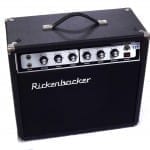
“With our new record, on 90% of the songs I used a Rickenbacker solid state TR7 amp, like a 30-watt amp with a 16″ speaker. I’d been carrying that amp around for years, always wanting it to sound good with something but it never did. Somehow the combination of the [Fender] Coronado through it works, I love it. It’s my favorite recording duo I’ve ever had. Live, it’s totally unrealistic because it can’t produce that kind of volume, but for the record it worked.”
Blackstone Overdrive Pedal: 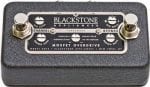
“I’ve had that guitar pedal onstage with me for ten years now, and it still works. Our song, “Teenage Anarchist,” that’s the sound. That’s the Blackstone. The single note picking on the one string, concise and and tight.”
Rowland S. Howard Pedal (Reuss RSH-03):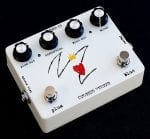
“I’ve used it with different combinations of gear, but it’s funny because instead of in and out it says, ‘Jaguar,’ and ‘Twin Reverb,’ because that’s the gear he used. If you plug it into a Jaguar and a Twin you think, “Nice. I sound like Rowland S. Howard.” I love his songwriting. I knew his music from The Birthday Party but I’d never really gotten into his solo stuff until 4-5 years ago.
Gibson Acoustic J-40: 
Instead of the J-45 it’s a J-40 and it’s blonde, and I bought it used. There is a store here called Chicago Music Exchange and when you walk in you think, “Goddamn, I’m going to buy something here.” But I’ve always been happy with anything I’ve picked up, and this is my favorite used guitar I’ve ever bought.
When they opened Brooklyn Lutherie, their guitar and violin repair and restoration shop, many of their loyal customers followed them, and they started to form a true community. Just over one year into the shop’s life, Brooklyn Lutherie is thriving, and Minch and Swantner couldn’t be happier or more fulfilled. “To see a lot of people following us here, and to see a lot of Brooklyn local people seeking us out and finding us, that’s been amazing,” says Swantner, who repairs, restores, and even sometimes makes violin-family instruments in addition to repairing and restoring guitars along with Minch.
Minch and Swantner are still the sole owners and employees of Brooklyn Lutherie, and their thoughtful, equal working relationship is one of the strong cores of their success. “Part of what makes us strong individually is that we’re good collaborators,” Minch notes, adding that the nature of repair and restoration work can be naturally isolating; sharing ideas has been key to the Brooklyn Lutherie philosophy.
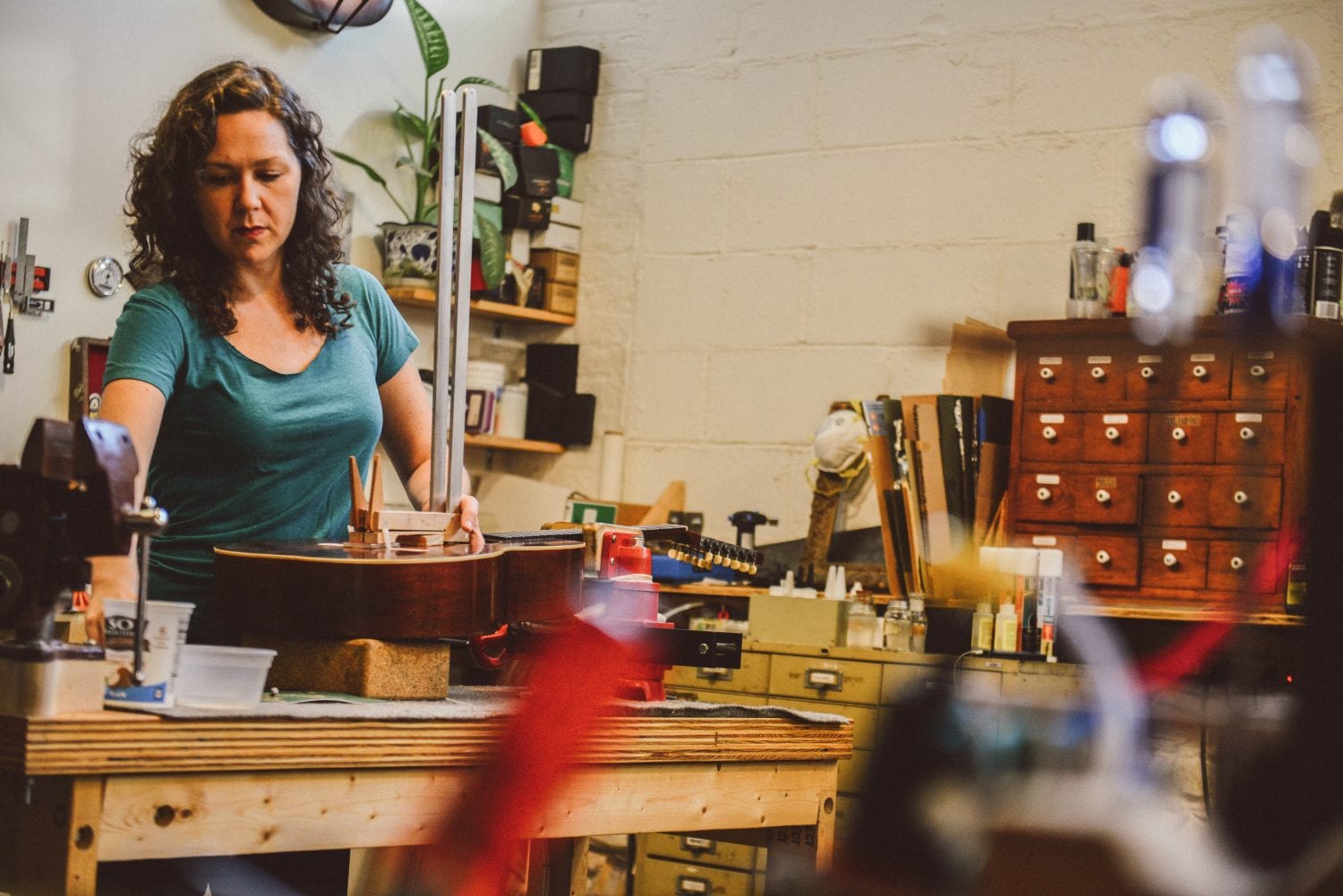
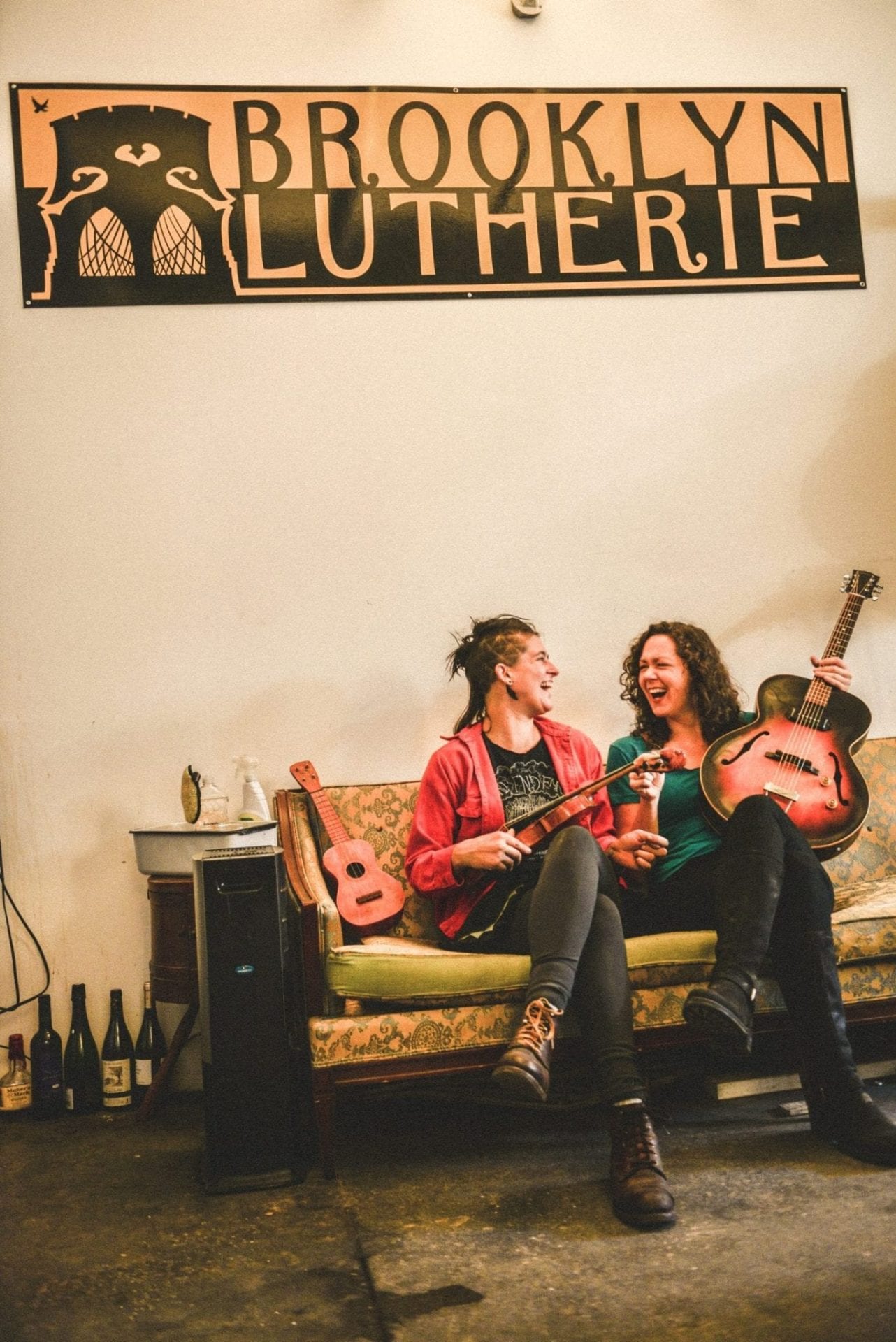
We discussed the unnecessary gendering of building and repair work in general and the pressure of cultural stigma and collegial disapproval that prevents many women from entering the field. “That’s a real thing,” Minch sighs. “It can be intimidating.” But she’s quick to point out that the approbation and judgment doesn’t come from clients; Brooklyn Lutherie’s clientele is so loyal partially because they have been seeking a judgment-free space.
“Women seek us out,” says Minch. “They come to us. Repair shops and guitar shops aren’t necessarily set up to make people feel included.” Brooklyn Lutherie, breaking the mold, was designed to be as accessible and open as possible; they also have a lot of trans clientele and clientele of varying skill levels with stringed instruments across the price range, people who are all more likely to face judgment in more traditional spaces. Minch and Swantner are also determined to keep repair costs as affordable as possible, something their clientele greatly appreciates. “We really haven’t had to advertise at all,” Swantner observes. “So, it just proves that there was a need for a different spot that just kind of broke the mold of the guitar shops that you always walk into and are all condescending.”
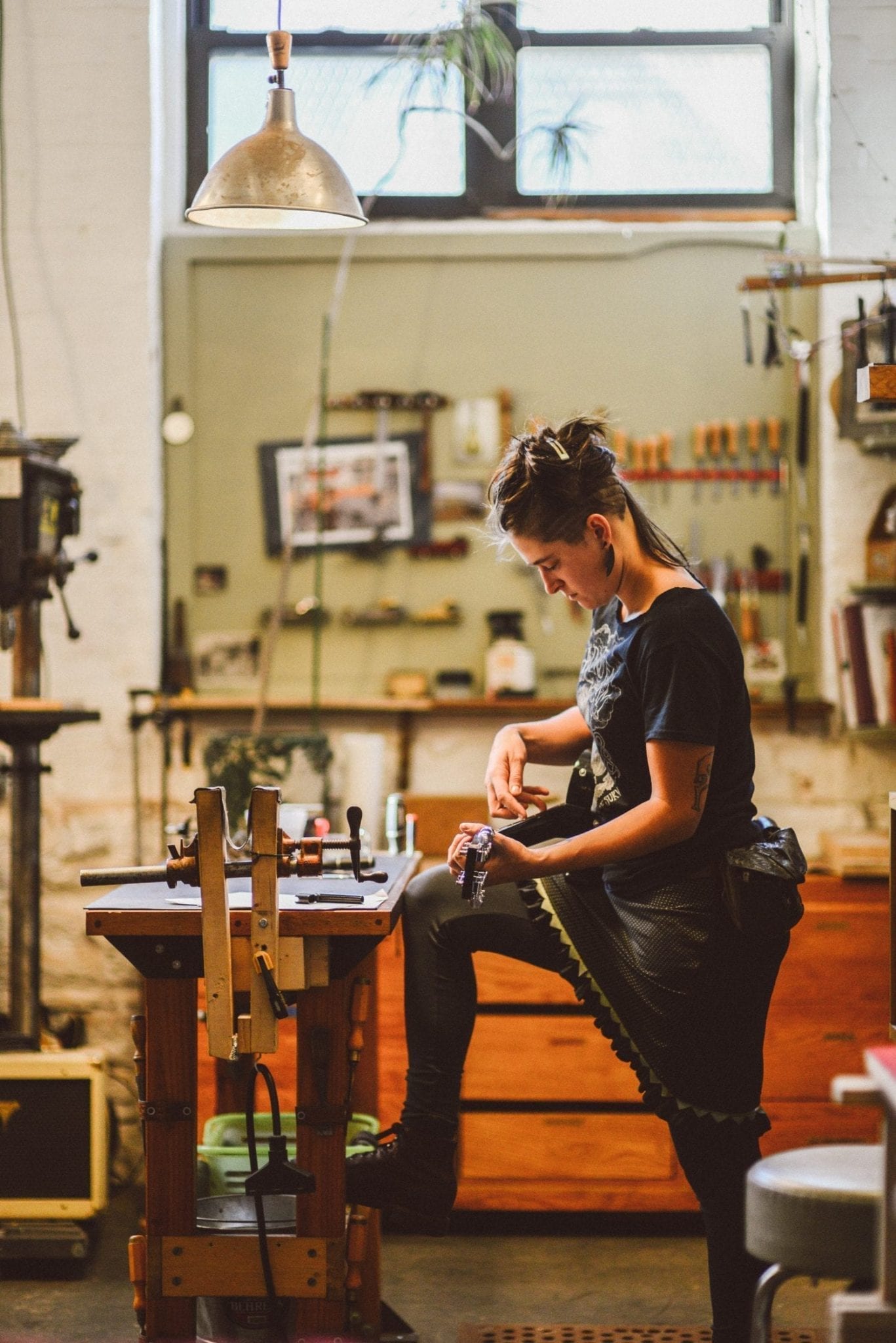
Minch’s solution to the judgment and condescension she’s faced from colleagues is to simply work as hard as she can and be good at what she does. “The longer you’ve been doing it and the more well-known you are in your community, the less likely people give enough of a crap to make it difficult for you,” she laughs. She also believes “keeping lines of communication open” in the small luthier community serves her well; as she refers jobs to other luthiers, she finds others refer jobs to her, and that sharing of work leads to positive, healthy, and respectful relationships, much like the relationships Minch and Swantner have with their clients.
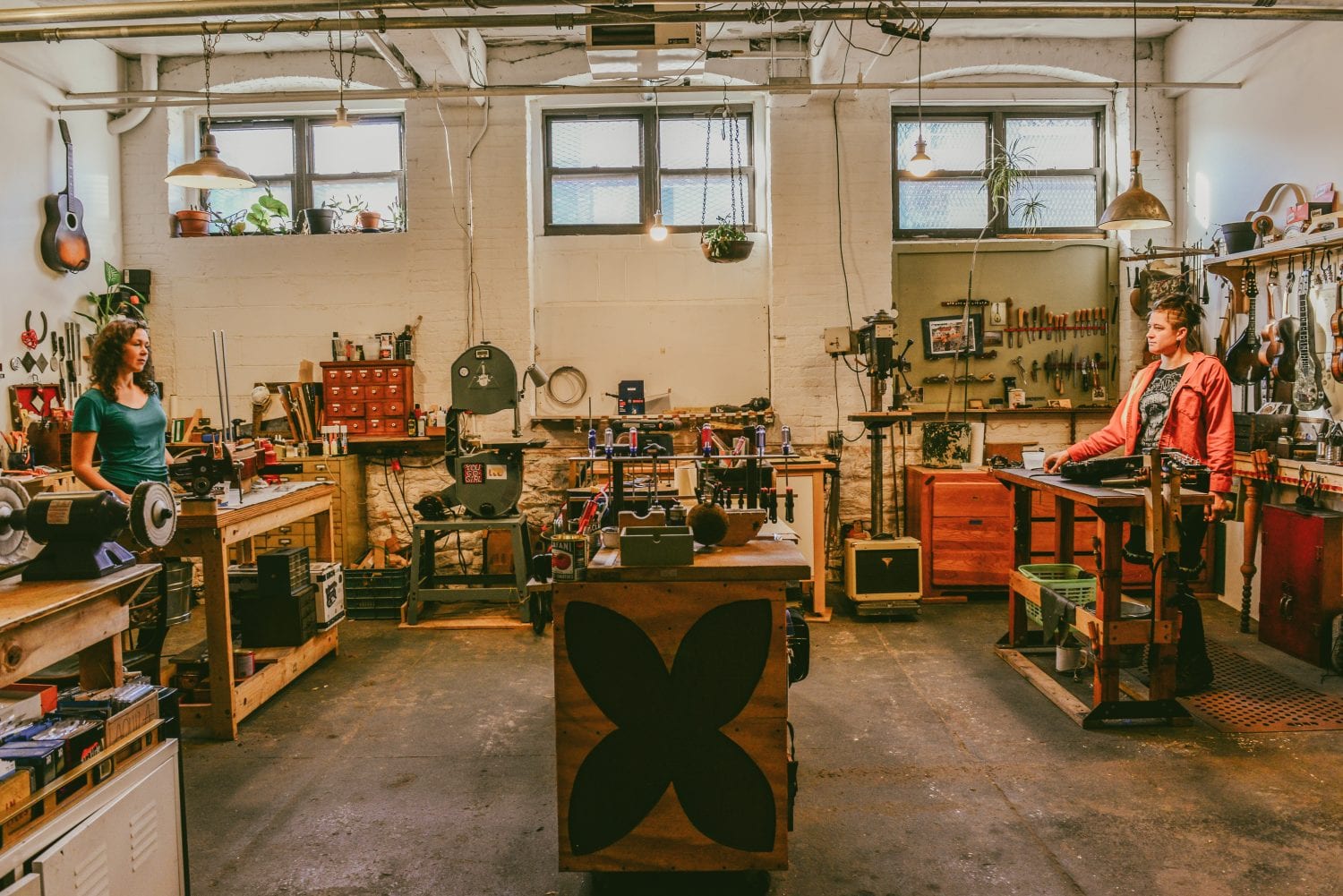
Brooklyn Lutherie’s success truly shows that there’s a deep need for shops that break down the more archaic traditional barriers of the world of musical gear—nearly all of us as musicians have experienced those barriers and can speak to them and how frustrating and painful they are to navigate, but we rarely envision spaces without them. It’s heartening to see these two talented women thrive precisely because they’ve designed a space where all are welcome.