Longtime musical collaborators Lucinda Livingstone and drummer Conor Dawson, reinvented themselves into Kamikaze Girls in 2014, and set to work creating a huge wash of sound that combines 90s alt-rock, pop, riot girl-inspired punk, and more.
Last month, the Leeds and London-based duo released their debut EP, “SAD,” a powerful listen that is aimed at destroying the stigmas surrounding mental health and give support to those who are suffering from conditions including depression, anxiety, and addiction.
Along with the potential of music to bring people together and create social change, one of Livingstone’s greatest musical passions is for guitar pedals. Her interest started when she and Dawson played in a trio called Hearts & Souls with guitarist Andy Castle, whose own love of pedals rubbed off on her. “I used to show up to shows with a TU-2 tuner and nothing else,” Livingstone says. “Eventually I grabbed a compressor for my bass, and then one day Andy, Conor and myself went into a music store and I tried out my bass with an Electro Harmonix Pog 2 and a DD7 Delay. I left the store with both and then our shows and sound got a lot more interesting. Eventually I expanded A LOT as a bass player and built a board. It’s an addiction, once you start getting into pedals you can’t stop. You’re always searching for the perfect setup for your sound and you can always build on that.”
Her love of pedals, especially fuzz pedals, led her bandmates to dub her “Ladyfuzz,” and, as Hearts & Souls morphed into Kamikaze Girls, the nickname inspired a song, and then a zine of the same name (though she notes, “There was also a great band called Ladyfuzz too though!”). The zine was originally intended to be released with the band’s EP, but when Livingstone found herself in Brighton and out of work for a few weeks, it turned into something more. “I started making this zine, and I realised that I had a bunch of really talented friends all over the UK whose work needed way more recognition and exposure then it was getting. At that point I sent a bunch of emails around and got a really positive response and before I knew it the first issue of Ladyfuzz was born.”
As a two-piece, Livingstone’s pedals play a major role in filling out Kamikaze Girls’ full-bodied sound. “When we recorded the record, myself and Bob [Cooper, producer] spend a long time getting the crunchy, fuzzy sound you hear in most of the songs. The pedal chain we used was an OCD, a Fuzzrocious, and a Blues Driver. We layered up this sound however there are very few places on the records where there will be two different guitar parts at the same time. I think that happens once on the whole record (“Hexes”) with the exception of feedback running over things which does happen a lot.”
Due to comparative limitations of performing versus the studio, Livingstone has developed a different live setup. “I have a splitter at the end of my pedal chain that splits my signal between a guitar amp and a bass amp. I then have my Electro Harmonix POG 2 turned on 90% of our set which gives me a lower octave of everything I play for the bass, and a very subtle higher octave that isn’t hugely obvious but if it wasn’t there I would miss it.” She also counts a Freeze Pedal, a Fulltone Full Drive, two delay effects, and a chorus among her live essentials. “I used to have a bigger pedalboard but I had to force myself to scale it back a bit and try and be way more consistent with my sound. It’s so easy to overdo it, I guess.”
Check out a few of Livingstone’s favorite pedals below and see Kamikaze Girls when they tour the US this month. “SAD” is available for purchase now.
Colorsound Bass Fuzz: Colorsound is a little company based out of Macari’s, a music store in London. Their pedals are used by Smashing Pumpkins, The Cure, and a bunch more great bands. The Bass Fuzz they have is next level and it was also the first fuzz pedal I ever bought. It doesn’t translate to guitar too well but it’s easily the best bass fuzz pedal I’ve ever heard.
Electro-Harmonix POG 2: This is the pedal that fills out my guitar sound and as a two-piece that’s so important. It’s basically our bassist. The other great thing about the Pog 2 is that you can make incredible organ and theremin sounds from it as well. There’s definitely been times where I’ve hit the wrong preset during a show and some incredible noise has come out of it instead of what I initially wanted. It’s great!
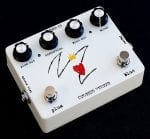
Third Man Records – Bumble Buzz: Another fuzz pedal. I bought this pedal from Jack White’s Third Man Records store in Nashville last year when we were on tour. This pedal isn’t great for playing more than one note, but it’s fantastic for riffs made up of single notes or guitar melodies and solos that you want drenched in fuzz. When we went into the store and I saw that pedal I was a goner. They have an amp / guitar and test pedal set up in the shop and as soon as I plugged in there was no going back. There’s just on and off, there are no tone or level controls on it so you can’t change it at all, it’s just fuzz or no fuzz and that’s why I love it.
Blue Ocean Delay: This pedal only costs $20 and is just your run of the mill delay, but I just use it for making weird noises live. Tyler [Bussey] from The World Is a Beautiful Place and I Am No Longer Afraid to Die recommended me this. I went to one of their shows in London, and after the show we nerded out about pedals for a bit and looked at his board together. I was asking him about a specific part in their set where he made a very drawn-out sound that went on forever. It turned out to be a $20 pedal and I ordered it as soon as I got back from the show. Pedals don’t always have to be expensive to be great and this is a solid example of that.
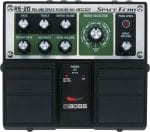
RE20 Space Echo: I don’t own this pedal but I’ve used one on a few occasions. This is a space echo pedal and again it’s just incredible to making some really unique sounds. By now you might have realised I’m into making very strange and eerie noises. On our record we have a lot of weird feedback under and over my guitar parts in a bunch of places. The thing I like about this space echo is it has two main stomp controls and you can really customise the type of echo you’re getting out of it. You can also completely just go off on one and make horrible (but brilliant) shrill, loud, delayed feedback, which I love.
For out latest Gear Guide, we spoke with none other than Against Me! frontwoman and She Shreds Issue 9 cover artist Laura Jane Grace.
Today, Grace is a celebrated figure in the pop-punk / rock community, activist, and author—her memoir Tranny: Confessions of Punk Rock’s Most Infamous Anarchist Sellout (co-written with Noisey editor Dan Ozzi) will be released November 15—but like many musicians her first guitar was a basic Harmony Acoustic Guitar (purchased through a Sears catalog with money she earned mowing lawns). “I make the joke when you’re eight years old and starting out on that Harmony Acoustic, it’s so difficult [to play] because the action is so high and the neck is practically bent for archery.” she says.
Thankfully she stuck with it, and over the years she’s grown to become a guitar enthusiast with a particular fondness for Rickenbackers. “I have a lot of Rickenbackers that I don’t even like to play,” she says. “Some of them are damn near impossible to record with because the tuning is so weird with them. It’s almost impossible to get the G string of a Rickenbacker to be in tune with a G string of a Les Paul but I just think they are really beautiful, really unique guitars and whenever I see a unique one I’ll get it…They’re really temperamental guitars. They require a lot of attention.”
For Grace, that extra time and care has been worth it. Her Rickenbackers are a huge component of Against Me!’s distinctive rootsy sound, and while they may be challenging in the studio, on stage (where she typically runs them through a Vox HT30) is another story. “Live, I specifically switch between a [Rickenbacker] 360 and a newer 370. They’ve been my staple touring guitars for years, and I still record with some of them too.”
When it comes to musicians still in search of their own sound, Grace advises, “You don’t need a fancy guitar to make something great or write great songs. You just need to find a guitar you’re comfortable playing.”
“I get really mystical when it comes to guitars. I feel like they have souls, often, or my guitars get mad at me if I haven’t been playing them enough. Sometimes I feel like I’ll stumble onto a relationship with a guitar where I feel that, ‘this guitar has songs in it,’ and I’ll pick up the guitar and write songs with it and feel like if it had been another guitar there wouldn’t have been songs.”
And for Grace, the song itself is ultimately more important than what it’s played on. “The song has to be good enough that it could rip on whatever piece of gear,” she says.
Read on for more about Laura Jane Grace’s current favorite gear. Against Me!’s seventh album, Shape Shift With Me, is available now through the band’s own label, Total Treble Records.
Nash Wayfarer:
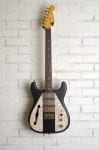
“My new favorite piece of gear is the Nash Wayfarer guitar. It’s a great, lightweight guitar.”
Rickenbacker TR7:
“With our new record, on 90% of the songs I used a Rickenbacker solid state TR7 amp, like a 30-watt amp with a 16″ speaker. I’d been carrying that amp around for years, always wanting it to sound good with something but it never did. Somehow the combination of the [Fender] Coronado through it works, I love it. It’s my favorite recording duo I’ve ever had. Live, it’s totally unrealistic because it can’t produce that kind of volume, but for the record it worked.”
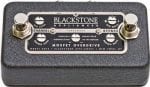
Blackstone Overdrive Pedal:
“I’ve had that guitar pedal onstage with me for ten years now, and it still works. Our song, “Teenage Anarchist,” that’s the sound. That’s the Blackstone. The single note picking on the one string, concise and and tight.”
Rowland S. Howard Pedal (Reuss RSH-03):
“I’ve used it with different combinations of gear, but it’s funny because instead of in and out it says, ‘Jaguar,’ and ‘Twin Reverb,’ because that’s the gear he used. If you plug it into a Jaguar and a Twin you think, “Nice. I sound like Rowland S. Howard.” I love his songwriting. I knew his music from The Birthday Party but I’d never really gotten into his solo stuff until 4-5 years ago.
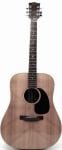
Gibson Acoustic J-40:
Instead of the J-45 it’s a J-40 and it’s blonde, and I bought it used. There is a store here called Chicago Music Exchange and when you walk in you think, “Goddamn, I’m going to buy something here.” But I’ve always been happy with anything I’ve picked up, and this is my favorite used guitar I’ve ever bought.
In punk music, a disregard for what is considered the mainstream “cool” gear of the day (Les Pauls, Marshalls, etc) is part of the aesthetic: You don’t need to have expensive gear to play great music.
But, while having “the right gear” is of little importance, in some scenes having cool-looking alternatives (like Tina Weymouth’s bass which was nice and super quirky and stylized) is highly-appreciated. That’s why the gear of punk is so interesting—it was all personalized/stylized and interested. Let’s take a look at four influential guitar/bass icons and the gear that they used.
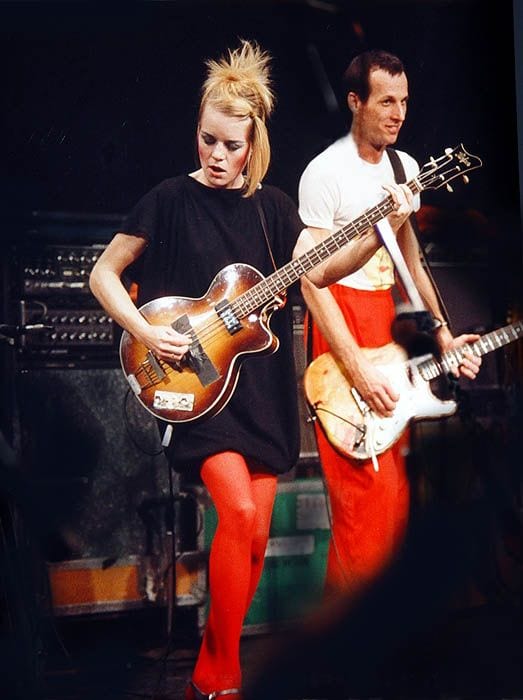
Tina Weymouth of the Talking Heads played a few different basses, most notably (seen on the concert movie Stop Making Sense) the Höfner 500/2 Club Bass, a hollow-body, violin-shaped archtop. Tina learned bass just to play for the Talking Heads, having minimal prior musical experience. Her bass lines are funky and full of syncopated cleverness.
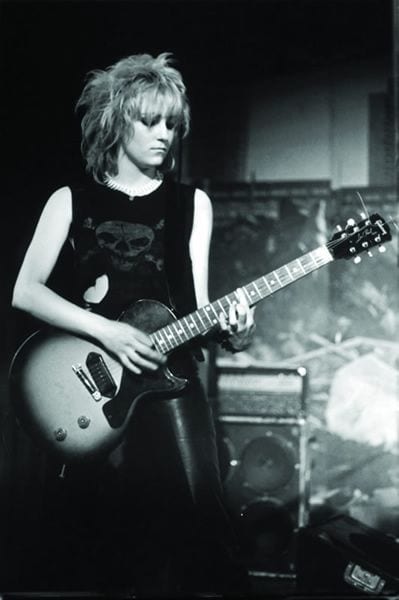
Viv Albertine’s first guitar was a Gibson Les Paul Jr. She learned to play guitar from her friends, who happened to be in popular bands like the Clash and The New York Dolls. After playing in the Flowers of Romance with Palmolive and Syd Vicious, she joined the Slits and proceeded to tour with the Clash in ’77. She now plays a Telecaster in her self-titled solo project.
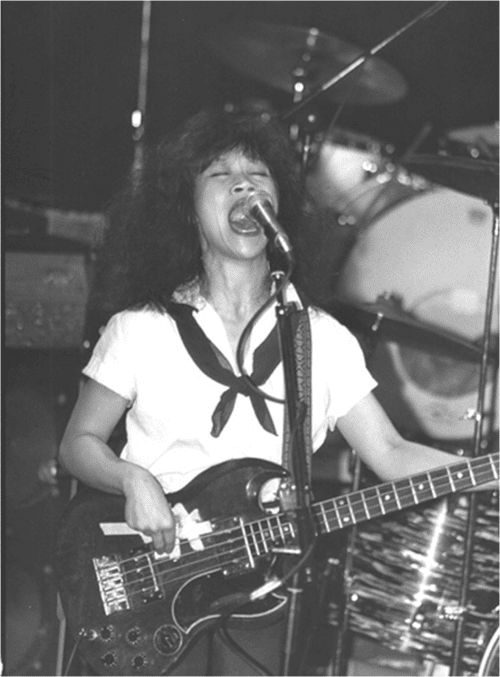
Dianne Chai of the Alley Cats played a Gibson SG bass. Chai’s upfront and riff-driven bass playing was perfect for the power trio, which were a largely forgotten fixture in the early Los Angeles punk scene. The band was originally signed to the famous Dangerhouse Records (along with X) and later became the Zarkons.
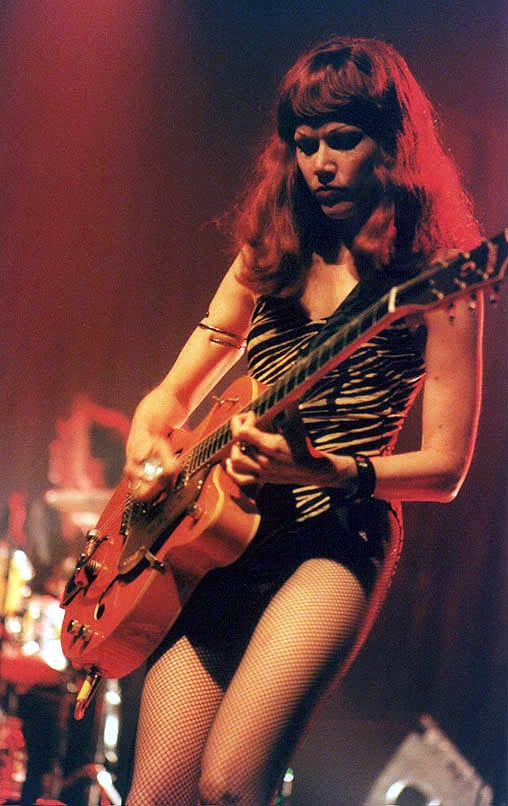
Poison Ivy, the guitarist, songwriter, arranger, and producer from the Cramps is a really interesting guitar player inspired by rockabilly, hillbilly (think Wanda Jackson), and early rock ‘n’ roll. She was really into collecting old gear, records, and the like. Early on, Ivy played an rare, quirky Bill Lewis guitar made in Canada. Then, in the ’80s, she fell in love with a 1958 Gretsch 6120 hollow body—the perfect rockabilly guitar—and never looked back. The Cramps were major innovators of the psychobilly genre and influenced essentially all garage punk bands that followed!
The electric guitar and amplifier first became popular in the 1930s, and in the nearly 90 years since, guitarists have been experimenting with unique ways to manipulate the sounds that these revolutionary instruments produce.
One of the most famous manipulations of the electric guitar tone is distortion. Distortion is the overdriving of the guitar signal to create a sound that is dirtier and crunchier than it would otherwise be in its unaltered, “clean” state. It can be heard in popular music starting with early blues and is still a well-used guitar sound to this very day. Turn on the radio and you are likely to hear a fuzzy or distorted guitar.
The early blues players were the first to be known for using distorted tones. They played heavy strings and they played hard, which would distort the small speakers with the powerful resonance of the lower strings, creating speaker distortion.The first amps were low fidelity and would often distort when their volume was increased beyond their design limit, or if they sustained minor damage. You can hear this distorted guitar sound in early Muddy Waters, Buddy Guy, Sister Rosetta Tharpe, and Howlin’ Wolf recordings. Chuck Berry had great success using these dirty tones on songs like “Maybellene” and “Johnny B. Goode”. In the 1950s, guitarist Link Wray found his distortion by poking holes in the speakers of his amp (check out his instrumentals “Rumble” and “Rawhide” to hear his signature tone). These days we don’t have to use damaged amps or take a razorblade to the speakers to achieve these fuzzy sounds.
Tube amps are now made with a master volume knob and a gain knob. Gain is the input volume, which means how much signal the preamp is receiving. Drive is another label for gain, as turning up the input volume (gain) drives the preamp harder. Overdrive is when you run out of headroom and the signal, a sine wave, is no longer clean and it clips at the top and bottom before going to the speakers. If the master knob is up higher than the gain you get a clean, glassy sound. If you crank the gain up higher than the master you start to hear the tone break up or distort. This is a desirable effect for certain applications. In order to go between the two settings you will either need an amp with a footswitch to switch between two channels on the amp, or you will need a distortion pedal that goes between your guitar and the amp.
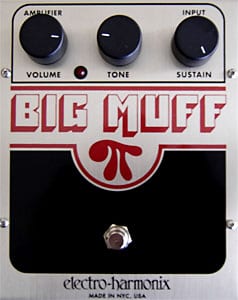
For the last few years, my main distortion pedal has been the Reissued Electro-Harmonix Big Muff “Pi” pedal. Designed in 1969, it was a favorite pedal of first wave guitar heroes like Jimi Hendrix and Carlos Santana, and later became popular with rock bands and grunge bands of the ‘80s and ‘90s.
The Big Muff’s high distortion cut, violin-like sustain, low boost, and beautiful break up is perfect for my playing style with The Ghost Wolves, my drum & guitar duo, where I am the only chordal instrument on stage.
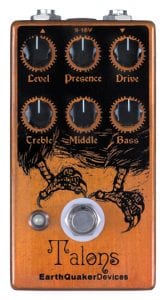
Recently, I have also been experimenting with another distortion pedal called The Talons, made by Akron, Ohio based pedal company EarthQuaker Devices. The Talons isn’t modeled off a particular era in distortion pedals, but instead is designed to give the user more flexibility in finding their own flavor of distortion. I am a big fan of their company and especially their Organizer pedal, and their distortion box lives up to their reputation as a purveyor of fine guitar pedals and electronics.
I recently compared these two pedals against one another, testing them on a 1970’s Music Man HD-130 Reverb amp through a 4×12 Fender cabinet wired with Eminence Speakers. I had the volume set at a medium level and the EQ arranged in their middle settings when testing both pedals.
Read below to see how the Reissued Big Muff and The Talons stack up against each other:
POWER
Let’s first address the power situation. I power my pedal chain with a Truetone 1 Spot 9 volt DC adapter. The Big Muff is slightly annoying in this instance because it doesn’t work with this setup without an extra adapter cable. On the other hand, the Talons pedal works out of the box with my power supply, no extra adapter needed. This would be nice when you’re on stage and have to troubleshoot a bad connection in the chain – the simpler your set up, the easier it is to find issues. You can also use an 18 volt power supply with the Talons for greater headroom and more volume.
CONTROL
One of the most immediate physical differences between these two pedals is the level of complexity in their control system.
The Talons has 5 separate control knobs:
LEVEL is the master volume control.
PRESENCE: turns clockwise for a brighter tone, counterclockwise to mellow out.
GAIN: pre-amp volume control, controls the amount of dirt available from clean to heavy dirt crunch.
There is a powerful active three-band equalization sector – TREBLE, BASS AND MIDDLE. The noon position is flat, boost is clockwise from noon, and cut is counter-clockwise from noon. I find this to be an intuitive cut and boost control system.
GAIN control gives you extra flexibility that allows you to go from clean to crunch and all points in between with a swift turn of the knob.
The Big Muff has three controls, a much simpler system:
VOLUME sets the output level.
SUSTAIN adjusts the amount of sustain and distortion.
TONE provides a range of sounds from high treble to deep bass. The control knobs are much bigger than the Talons which makes adjusting in the heat of a live performance a little bit easier.
TONE & FUNCTION
TALONS is described by Earthquaker Devices as “an ultra-flexible dirt machine.” I’d say this is pretty accurate after having played it. The EQ and presence knobs do indeed give you more flexibility over your tone. The gain is very hot on this pedal, and I’d say my overall impression of the sound could best be described as “crunchy”.
BIG MUFF – The Big Muff cuts the distortion in the high end, which sacrifices a small amount of clarity but also prevents an overly raspy tone. I really enjoy the sustain on this pedal, but the wide open tone can occasionally get out of control and cause unwanted feedback. I usually play the tone knob at noon or to the left of noon, which gives me a larger, more bass rich tone. Soloists or shredders might like to turn it up higher than that for a smaller, brighter sound.
FINAL SUMMARY
These pedals both provide wonderful distortion sounds in their own ways. The Big Muff has a slightly more limited scope of tonal possibilities when compared to the Talons, but a simpler control system which is nice for keeping things straight when playing live. The Talons has the crunch and clarity, while the Big Muff has a wider, fatter sound. They’re both fine pedals. We’re lucky to have such excellent choices in foot gear these days.
I’m a guitarist. My guitar, my amp and my pedals are the tools of my trade. I understand how to manipulate them to get the sounds I hear in my head. So far, typical of any gigging musician.
Why, then, did I feel so out of place when I overheard the guitarist (Jon Tufnell) and bass player (Ben Chernett) in my band talking about the fuzz pedal Ben recently designed and built? It’s a custom Saint Agnes pedal he made as an experiment that we’re now selling as merch. I use it alongside my Fuzz Face and my cloned Soda Meiser for a fuzz with decent note articulation (yes, all three fuzz pedals are strictly necessary).
Ben and Jon were talking about silicon and germanium transistors, trim pots, potentiometers, capacitors and so on. I’m rarely short of something to say in any conversation but on this rare occasion I genuinely had nothing to contribute. It’s not that I’m not interested. I work hard on my tone. I am obsessed with pedals. As well as regularly spending money I don’t have on my own pedals, I also “borrow” them to “try out” from both Ben and Jon on a regular basis. Much to their irritation, they often end up stuck down to my board (the ultra strength Velcro means they’re not going anywhere! 3M Dual Lock is mighty stuff!) Now Ben and Jon don’t have engineering degrees so why did they have a seemingly inherent, working understanding of the mechanics of their gear? And why didn’t I?
It’s strange to me, as someone who has been playing guitar since I was seven years old, that I have actually had very few conversations about the inner mechanics of my beloved gear. If something is broken, I take it to the menders. It never even occurred to me that I could make a pedal. Or fix a pedal. Ben just went ahead and did it.
This bothers me a lot. I’m a feminist. I fight everyday against societal expectations of what men and women historically “ought” to do and how we ought to behave. I’m in a rock band. From the studio to the road, it’s a notoriously male-dominated industry and I regularly encounter, and rebel against, sexist arseholes with warped world views. It really, really bothers me that I’ve got a blank space where my contemporary males seem to have knowledge.
Reader, I did a Google search on female pedal builders. These were my findings: lots of people on pedal forums asking, ‘‘are there more female pedal builders than Frantone and Devi Ever?” and an endless stream of misogynistic bullshit (“Big Muff” jokes were plentiful), before Google started doing that thing where it can’t find enough results so started crossing out the word “female.” I found very little information on women engineering or designing musical equipment.
I thought, perhaps, that attaching “female” to my search wasn’t yielding results because it’s often used as an unnecessary and derogatory prefix. I can tell you that when my gender has been linked to my instrument, for example “female guitarist” as opposed to “guitarist,” it’s pretty much always a demeaning experience, a surprised exclamation of “you can really play for a girl or “you don’t just play chords” blah, blah, blah. Maybe there was no need to label pedal builders by gender? Maybe it’s offensive to do so. But it seems strange to me that my research was so completely unfruitful.
Whilst I could find very few leads on the Internet, I want to make it clear that I am aware that there are women out there building gear. I’ve learnt a lot from Kirk Hammett in my life but maybe the most important thing I’ve learnt is that sweeping statements are unhelpful (I’m referring of course to thattweet where Kirk intimated that he was the only actual guitarist to make a pedal in the history of time.) I’m not saying there are no women building gear; I’m saying that the industry is male-dominated. It’s apparent that most of the big-name pedal/amp/guitar companies are made up of males designing and males building.
This points to a wider issue at play. It is a widely-recognised fact that there is huge gender disparity in fields like engineering, science, and technology. I read an interview with this badass Professor of Electrical Engineering called Kathleen Kramer who thinks the gender problem starts young. Engineering is a career choice rarely advertised to young women and there are few female role models.
From my own experience this was patently the case. My brother was gifted Meccano, Lego and model airplanes. I was always given china dolls, jewellery, and books. And I did really love those things, but it’s not as if I wasn’t interested in mechanical things too. When I was little my brilliant old grandad had a drawer he used to keep old, broken electrical appliances in ready for me to take apart, investigate and put back together. Screwdriver in hand, I would set about unscrewing an old plug or a broken doorbell with intense concentration. I would be fascinated by the innards and have him explain to me how each component worked. But the idea of being an electrician, for example, was something that I never even considered could be an option for me. My brother had, “electrician,” “plumber,” “mechanic,” constantly directed toward him as potential career options (fun fact: my nan really wanted me to be a newsreader) but those professions, and technical talk in general, weren’t included in the language used to speak to me about what I might want to do with my life. This has meant, I guess, that I [learned to] tune out of any tech speak because it never seemed relevant. Having spoken to female friends in the wake of writing this article, this seems to be a fairly common, shared experience.
Starting now, I’m going to do a number of things differently. I’m going to learn how my pedals are put together. I’m going to find out exactly what mechanism it is that makes my three fuzz pedals distinct (and necessary!). I’m going to learn how to solder. I’m going to research what the problem with my reverb tank on my amp is before I just hand it over to my amp repair(man). I’m also going to buy my niece Lego and Mechano and when she’s old enough I’m going to tell her she can be an aerospace engineer, an electrician or a guitar builder if she wants to be. To be honest I’m quite probably not going to start my own pedal range, but I want that intuitive technical knowledge that seems to have passed me by. I have, once again, been reminded that it’s not good enough to allow societal gender norms to influence the shape of my life, or the shape of my circuit board.
Guest columnist Kitty Arabella Austen is a guitarist/vocalist for London blues rock band Saint Agnes. Hear her rock the hell out of those three fuzz pedals here.
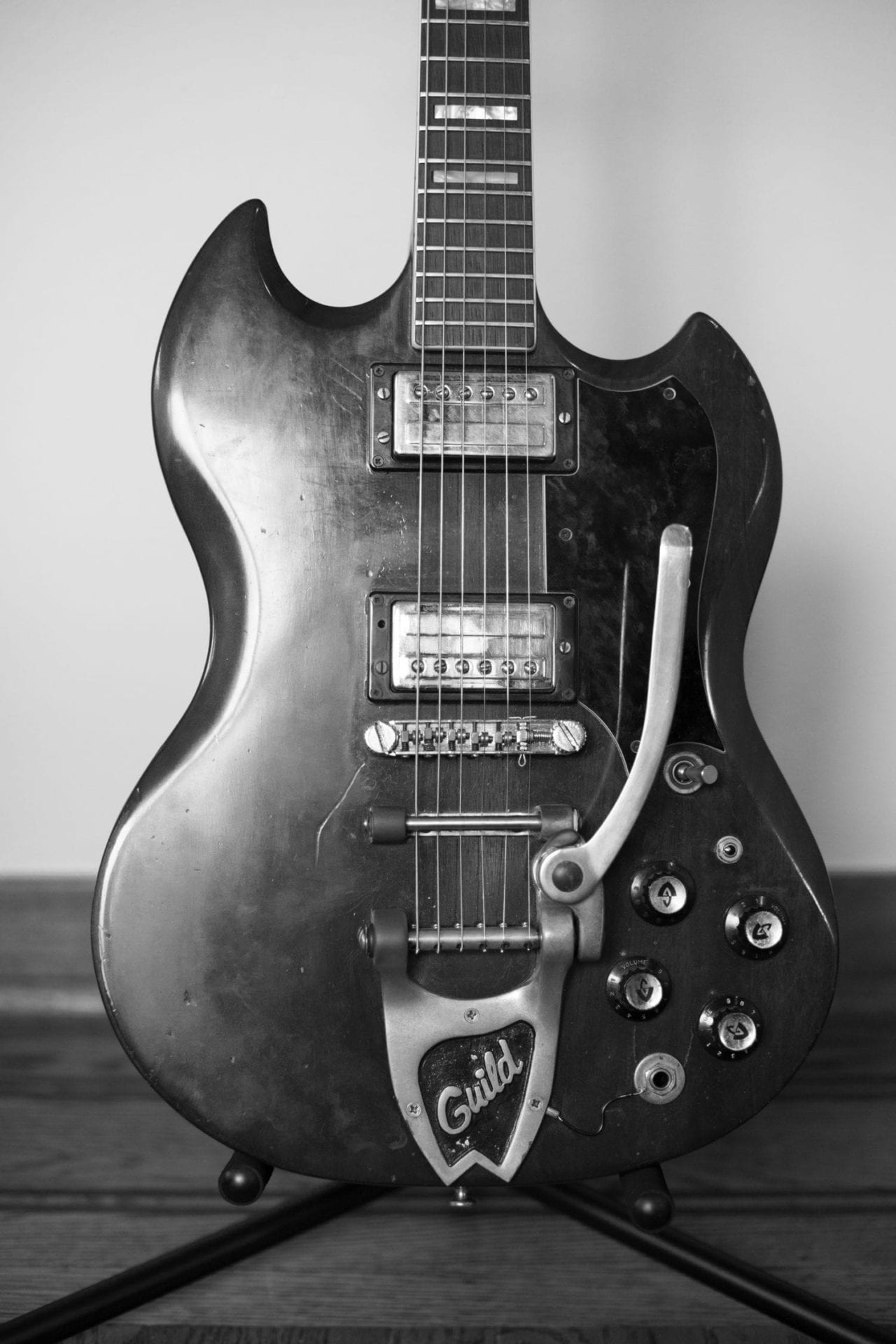
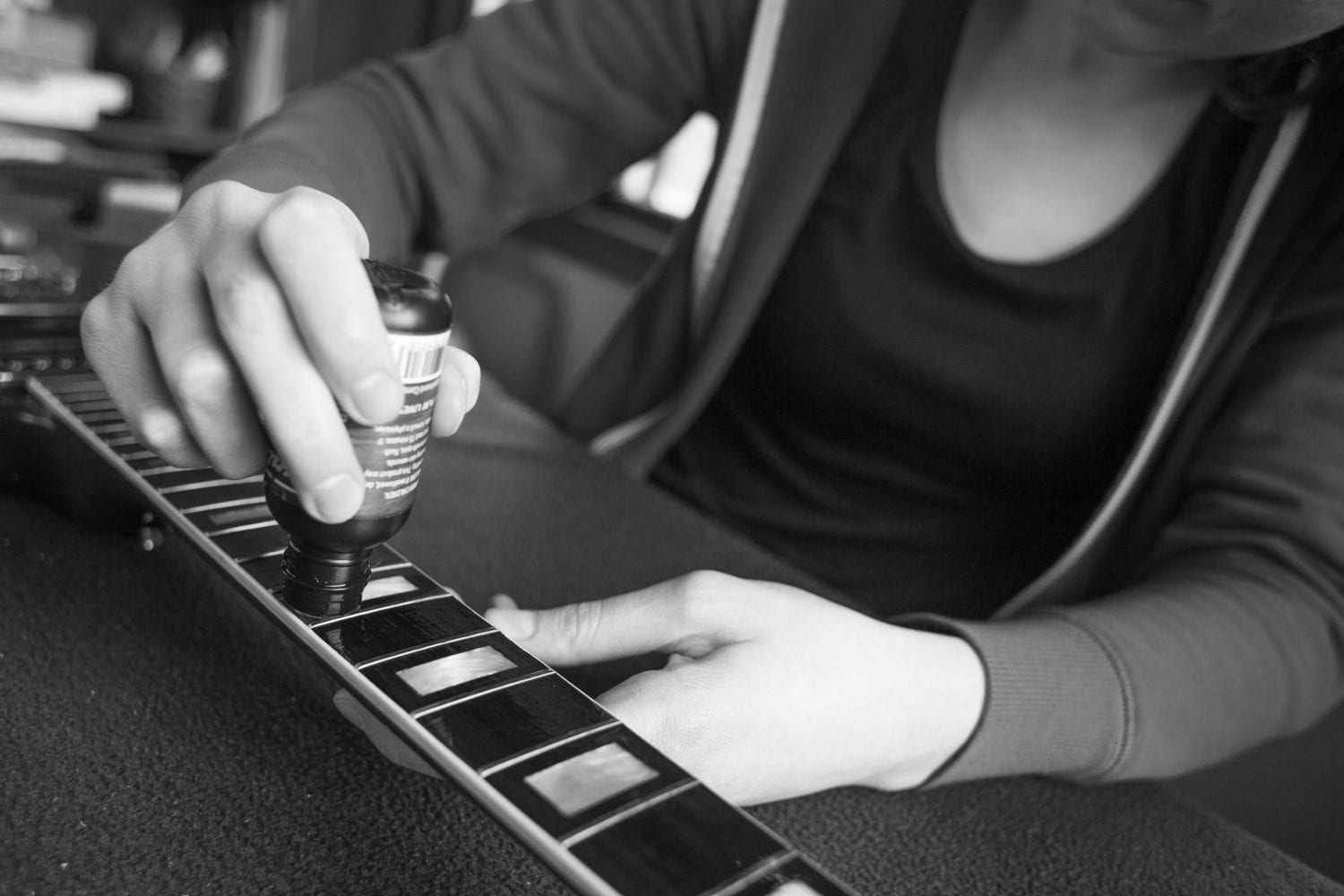
On Saturday, June 25th 2016, She Shreds hosted a workshop in Portland, Oregon that taught you how to set up and maintain your guitar. An essential follow-up to these lessons is the restoration process. Over time, you may have noticed that your guitar isn’t looking as bright and youthful as it once did. If you play regularly, it doesn’t take long for the natural oils and dirt from your hands to start to collect on your instrument. You’ll notice that the fretboard wood has started to look dry, grime is collecting around the frets, and the pickups don’t shine like they used to—it’s easy for these conditions to sneak up on you! With a little TLC and two to three hours to spare, your guitar can look as good as it did the day you bought it.
Why Should I Restore?
While restoring your guitar may seem purely aesthetic, maintaining the cleanliness of your instrument can greatly prolong its life. Guitars are primarily made from wood, which can dry and crack over time. Regular maintenance can keep the wood in the best shape possible and reduce the risk of discoloration and cracks. Keeping your frets free of corrosion will also keep your string bends nice and smooth.
When Should I Restore?
There is no hard and fast rule for how often you should clean and condition your guitar, and it depends on how often you play. A couple times a year is a good suggestion, and it’s easiest to do when you change your strings.
What You’ll Need + Instructions: Duration: 2-3 hours
Dunlop 01 Cleaner & Prep(not for use on maple fretboards)
Dunlop 02 Deep Conditioner (or lemon oil) (not for use on maple fretboards)
Dunlop Formula No. 65 Guitar Polish & Cleaner (not for use on unfinished wood)
Dunlop Bodygloss 65 Cream of Carnauba (or 100% carnauba wax)(not for use on unfinished woods.)
** Tip! Take before and after photos! You’ll be amazed how nicely your guitar cleans up and you’ll want to show off your work!
Fretboard Cleaning/Conditioning
1. Remove your guitar strings.
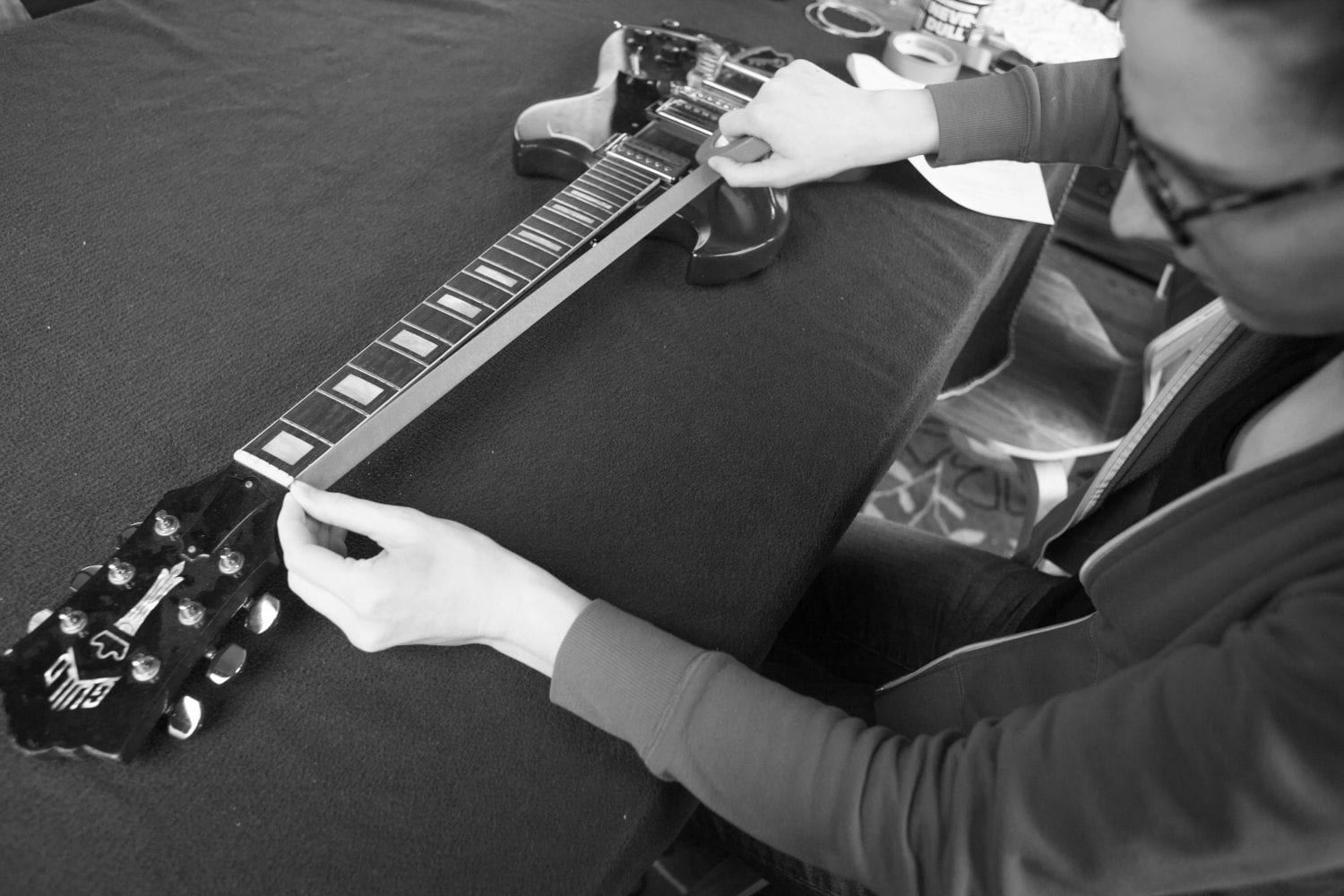
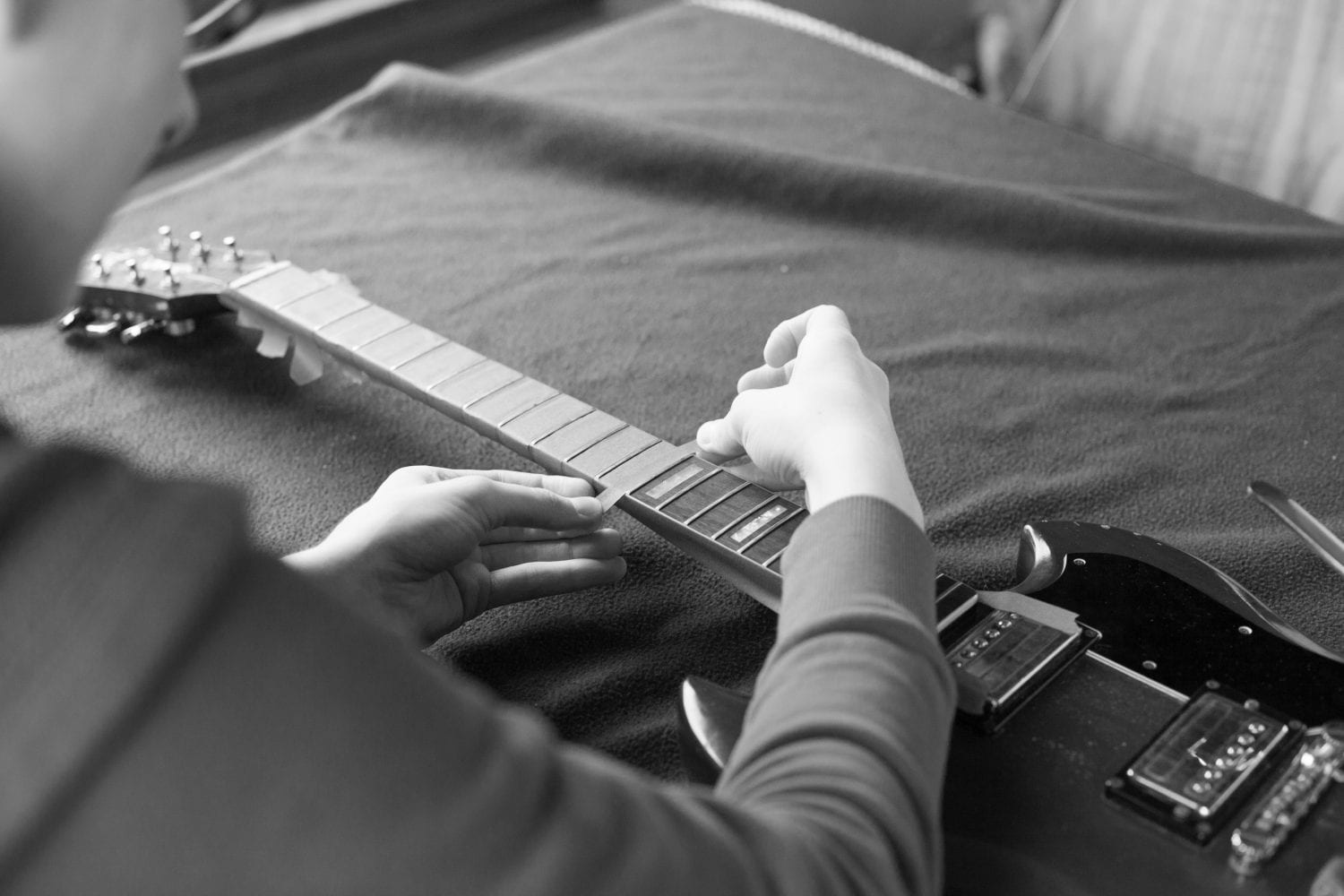
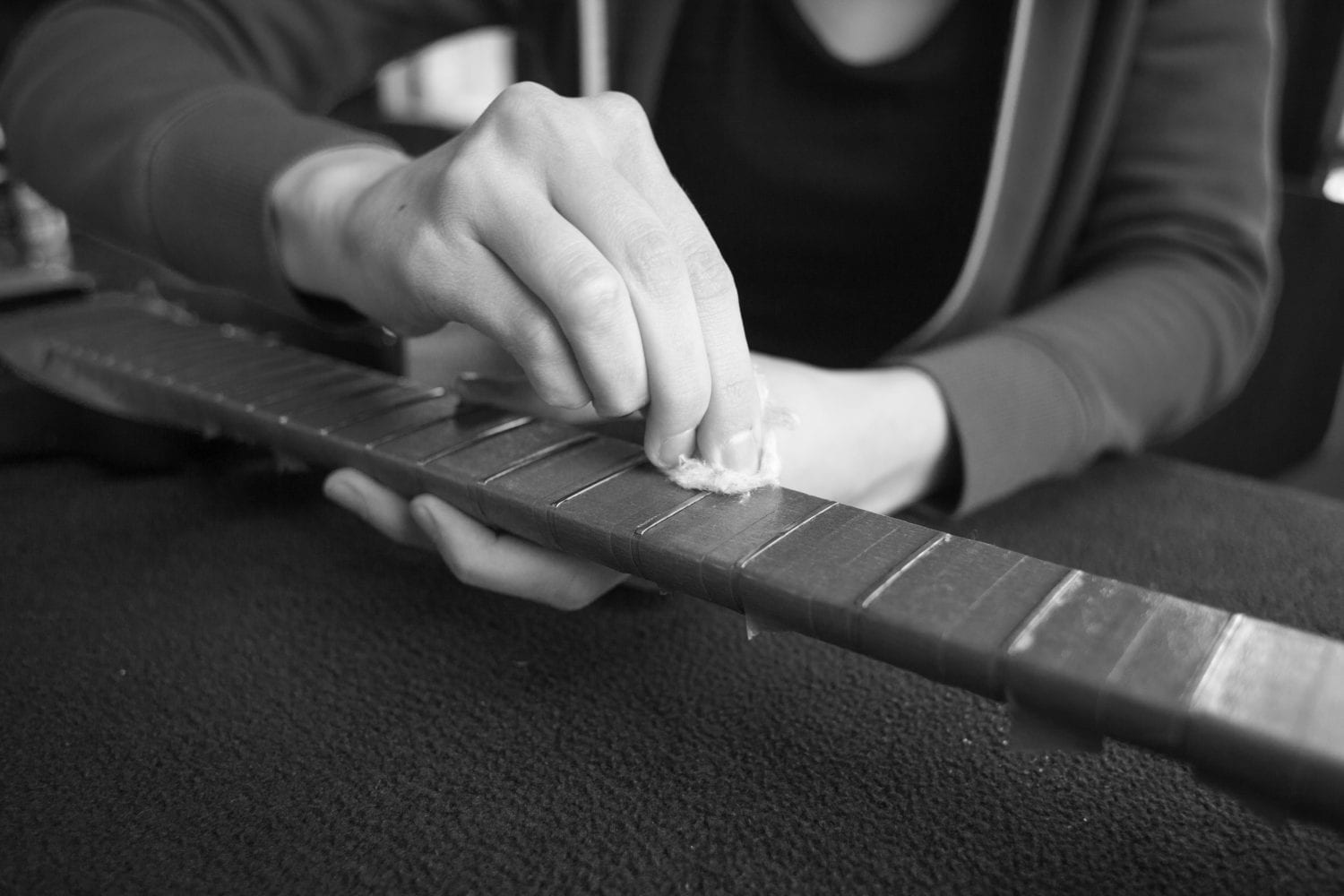
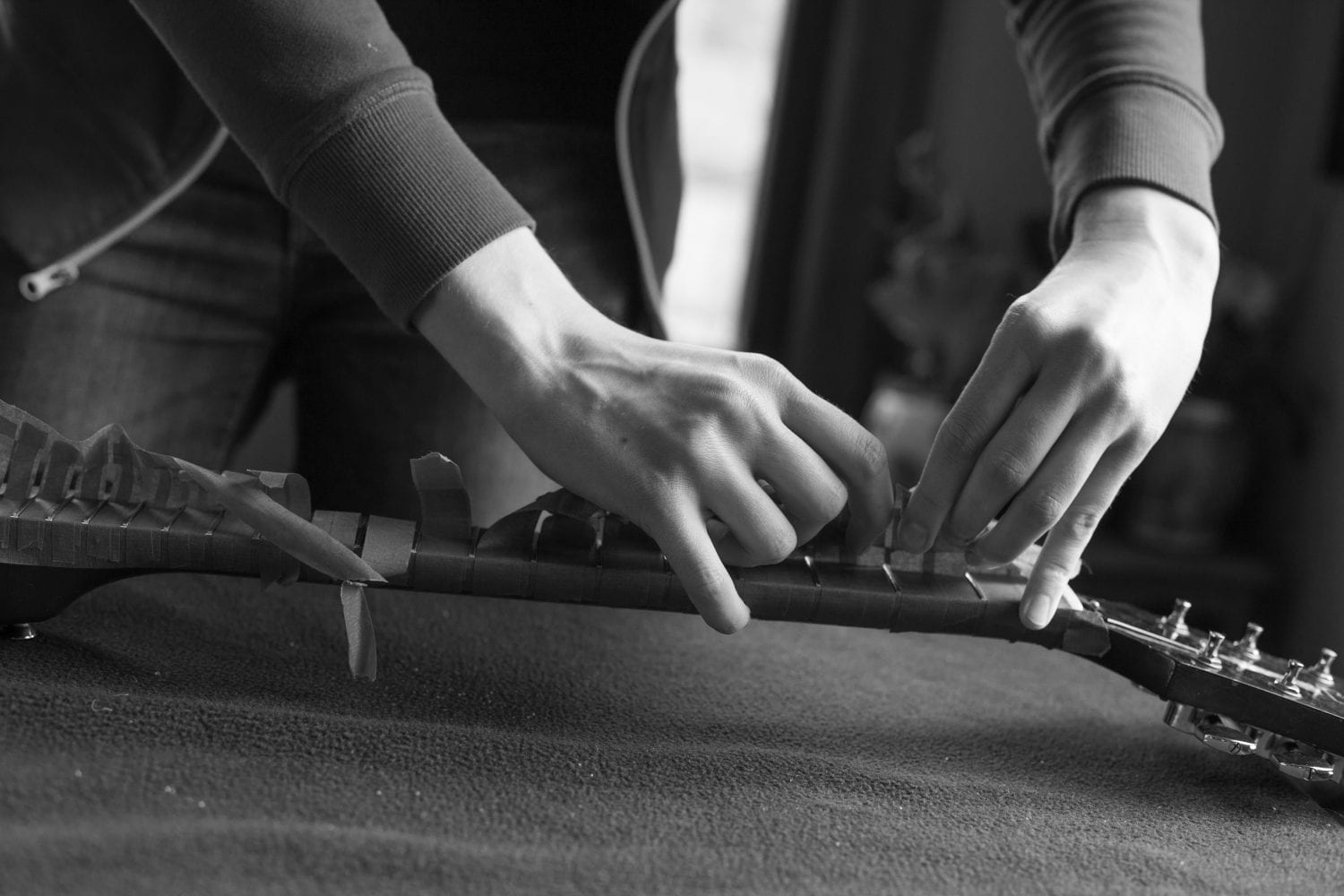
2. Tape the fretboard with painter’s tape leaving the frets exposed, but fully covering the wood to protect it while you polish the frets. This can get tough on the high frets once the tape is wider than the space between the frets. If the tape is too wide, cut it in half lengthwise to fit. **Tip!Before you start taping across the fretboard, put a strip of tape along each side of the neck from the headstockto the body. When you remove the tape later, you can start from this long strip of tape and remove it all at once!
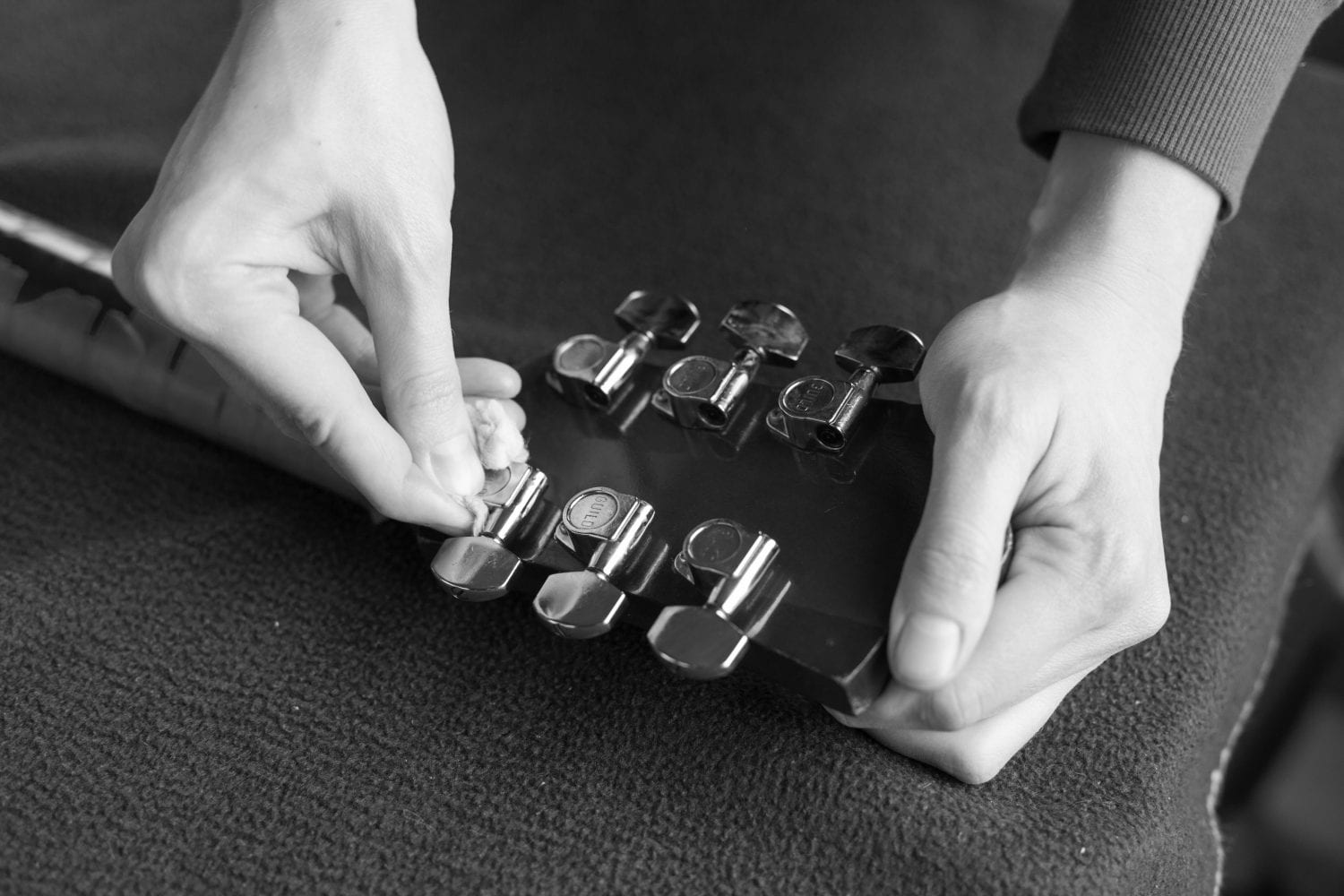
3. Rub the frets and other metal material (tuning knobs, pickupcovers, etc) with a small wad of Nevr-dull to remove corrosion. Once applied, polish off with a dry, lint-free cloth.
4. Carefully remove the painter’s tape.
For Finished Wood Fretboards (e.g. Maple)
1. Gently wipe down the fretboard with a clean, damp cloth.
For Unfinished Wood Fretboards (e.g. Rosewood) ** These steps will make a HUGE difference in the beauty of your guitar!
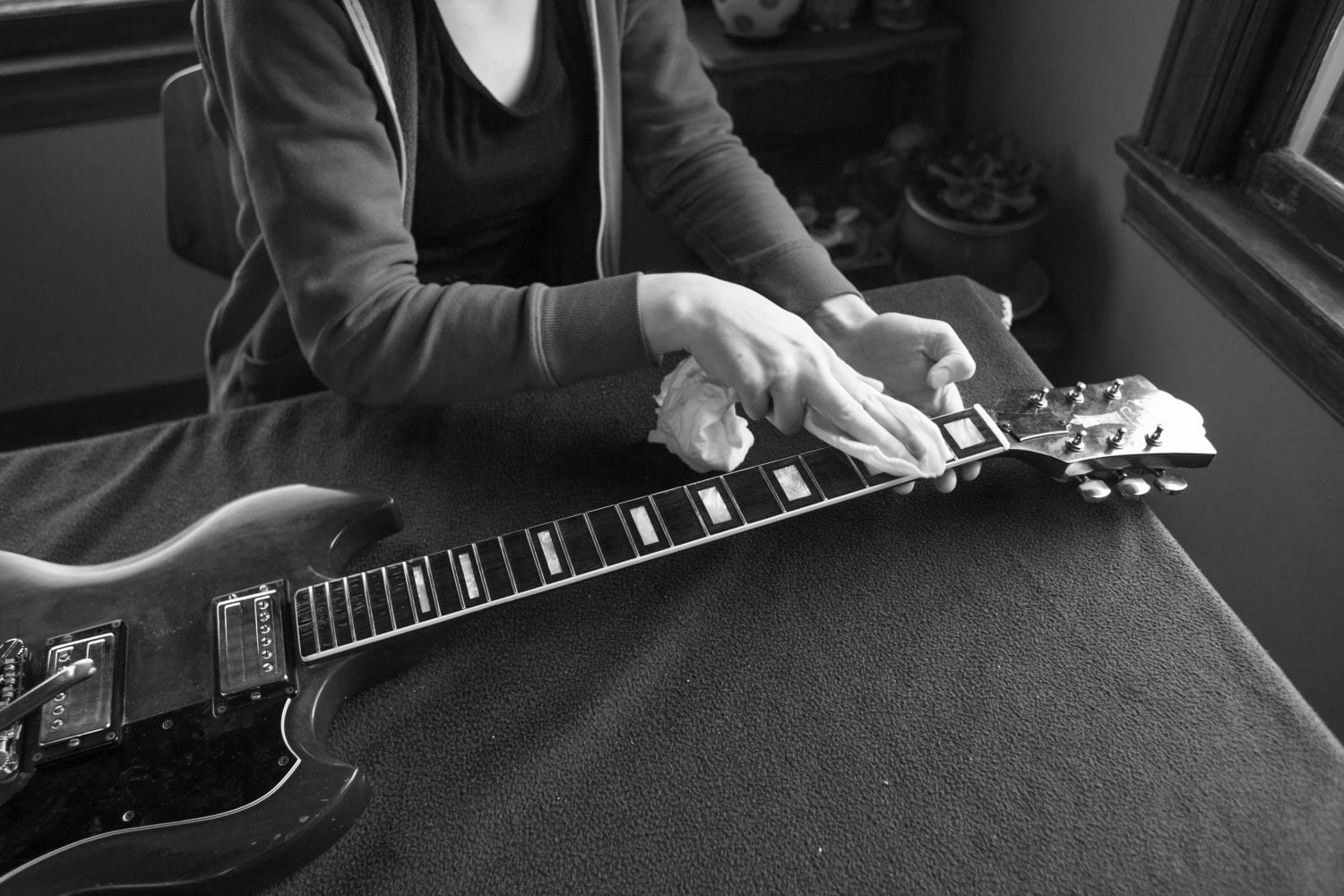
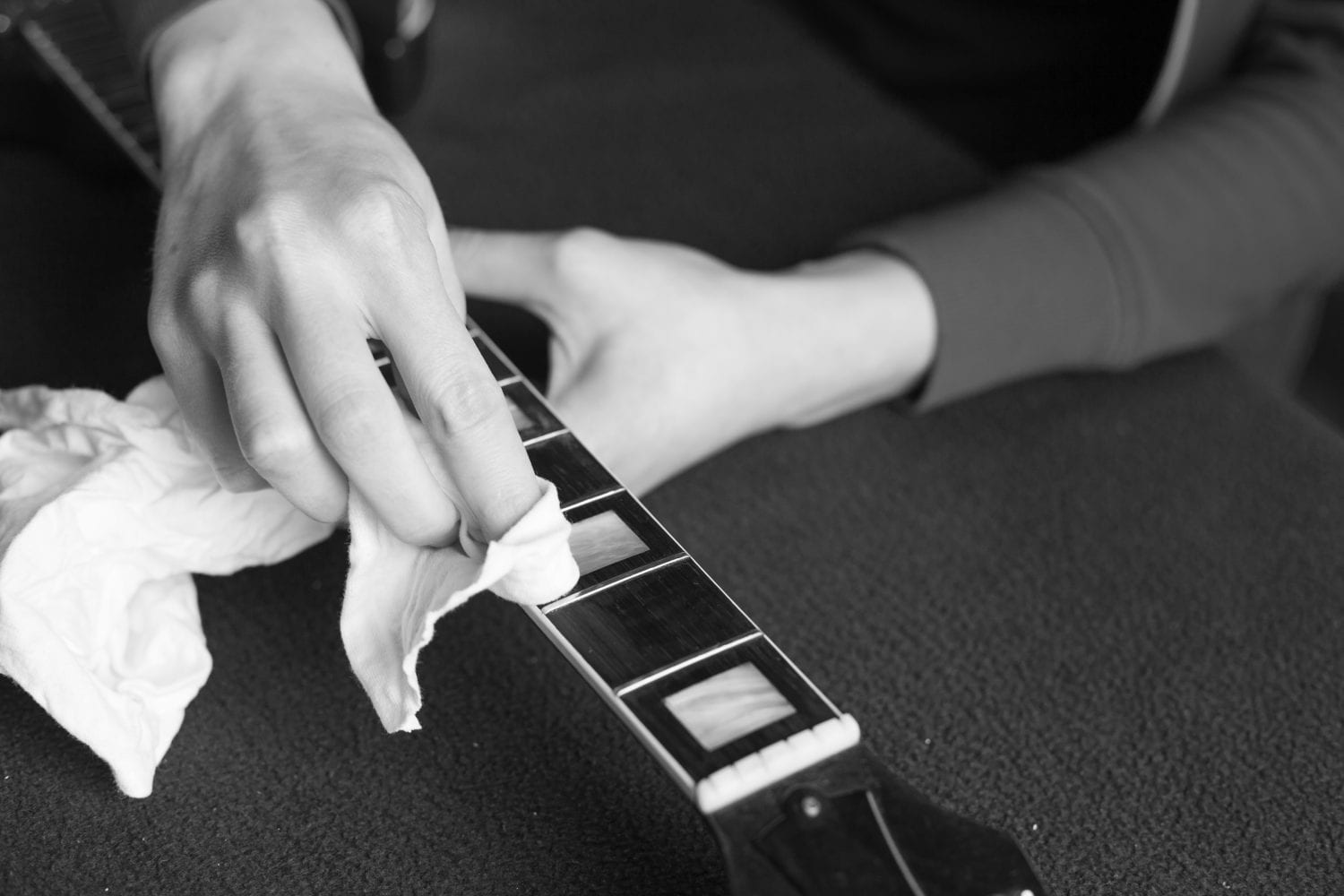
1. Apply Dunlop 01 Cleaner & Prep to a dry, lint-free cloth and use it to gently clean the fretboard. You may need to do this a few times in heavily soiled areas (e.g. right around the frets).
2. Using the dry, lint-free cloth, apply Dunlop 02 Deep Conditioner to the fretboard. After applying to the entire fretboard, wipe away the excess oil with another dry end of the cloth.
Guitar Body Cleaning
If your guitar has a glossy finish:
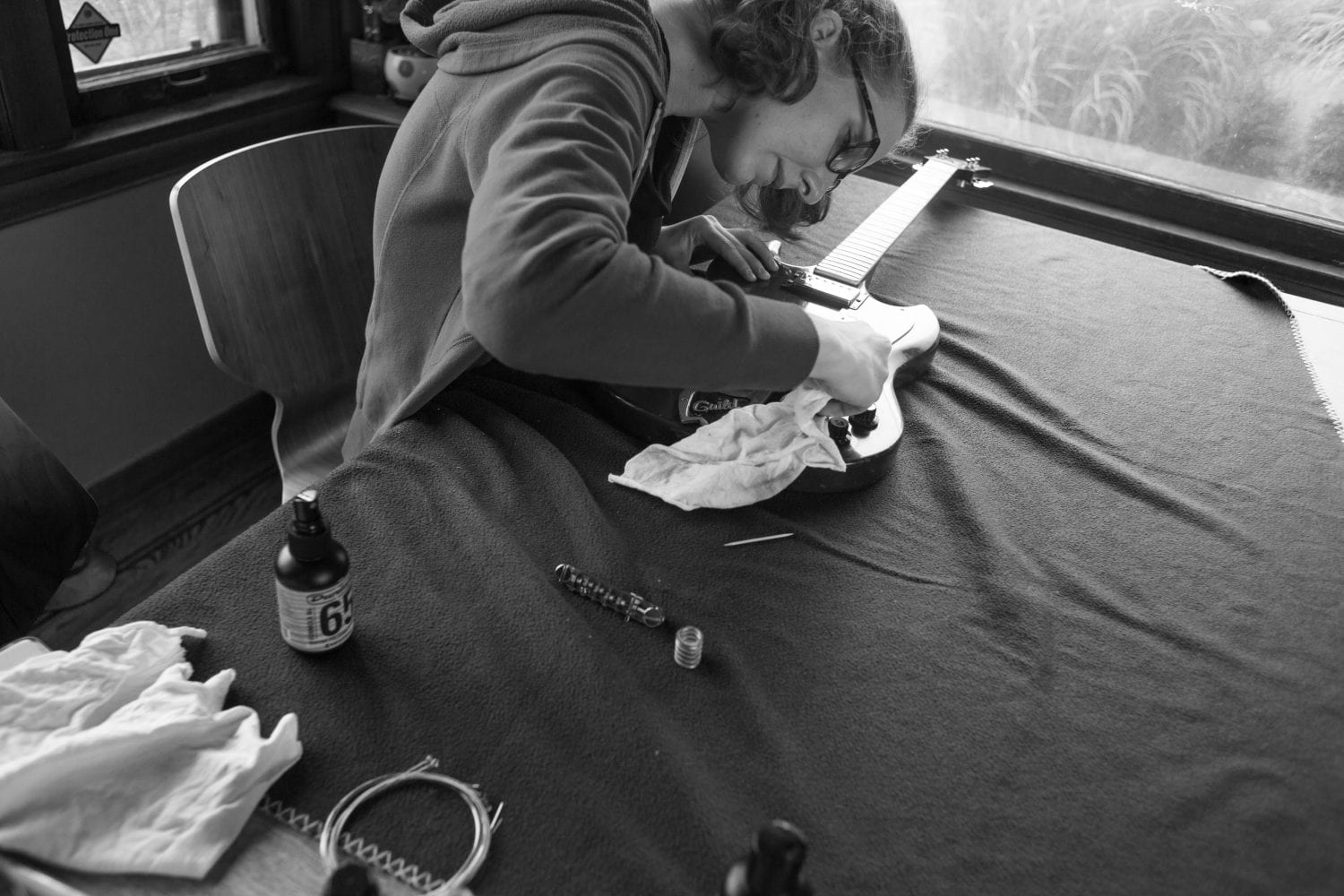
1. Apply Dunlop Formula No. 65 Guitar Polish & Cleaner to a dry, lint-free cloth and gently wipe down the body, back of neck, and headstock of your guitar.**Tip! A little bit goes a long way! Don’t over apply as it can become difficult to remove if applied in excess.
2. Apply a small amount of carnauba wax to a dry, lint-free cloth and apply to the guitar finish in small circular motions.
3. Allow the wax to dry. This usually takes about 30 seconds.
4. Remove the wax with a dry, lint-free cloth by polishing in a circular motion.
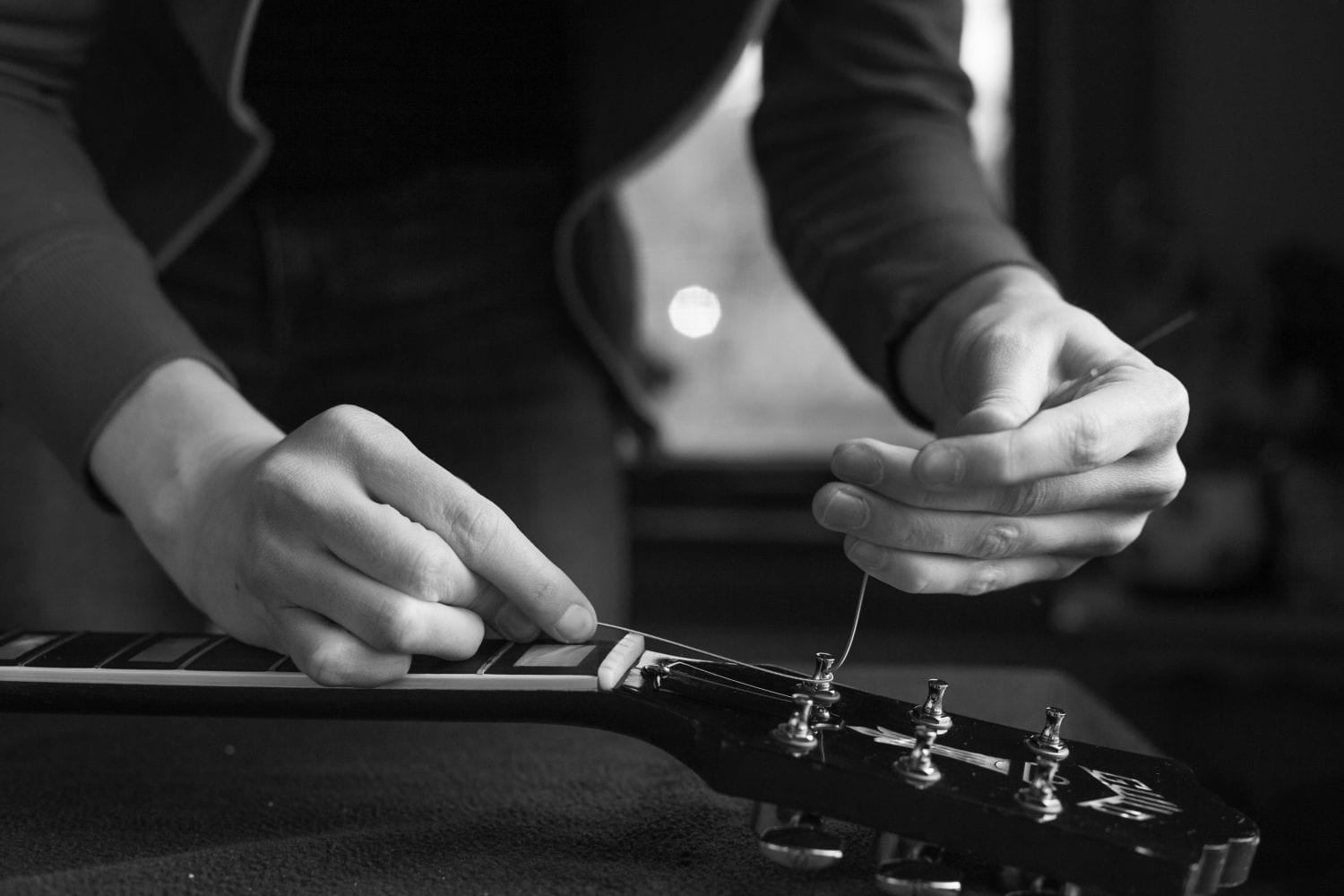
5. Install new strings.
Dilly Dally has been a band for seven years, and over those seven years its original members Liz Ball and Katie Monks have gone from fingerpicking during stoned-in-the-park BFF jam sessions to playing their 90s-influenced alt rock in front of some pretty big audiences, including the Great Escape Festival in Brighton, UK last month and on their cross-continental tour with The Fat White Family.
Both guitarists grew up in Toronto, where they still reside with the rest of the band that includes Jimmy Tony on bass and Benjamin Reinhartz on drums.
Due to her background as a singer-songwriter, Monks didn’t get into pedals or accessories until recently — which is part of the reason she claims she’s not a “gear nerd.”
“Liz always wanted to sound like an alien, she knew a lot more than me going into the studio about tones and terms,” Monks says about the recording process for Dilly Dally’s 2015 debut, Sore (Partisan Records), where she learned how to compliment Ball’s fuzzed-out sound. Her strong and guttural vocals sound like they’ve been pulled off of a crackling TV screen. Clearly, she experiments with her voice. She caws, howls, even screams her way through songs, bending her pipes in a way that most people couldn’t if they tried. It’s funny that she didn’t worry much about mirroring that type of experimentation with her guitar in the past, unless you factor in Liz’s thundering lead work.
In our latest Gear Guide, Ball and Monks discuss how they learned to play off of each other and how their most valued gear has come second hand from dusty shops, generous friends, and family members (including Monk’s brother David, who is the singer/bassist of Tokyo Police Club).
While Dilly Dally has evolved and changed rhythm sections over the years, you two have always been the consistent figures in Dilly Dally. How important is it that you two are able to play off of each other?
Monks: Our tones are really important in relation to each other. I fill in the gaps between Liz’s leads because I’m playing rhythm, so I’m more about creating these textures surrounding what Liz is saying with her guitar, that’s how the two meld together. Liz’s guitar tone and my tone are very different, and they are best buds for that reason. Kind of like our personalities, you know?
How has your friendship factored into your songwriting and chemistry as bandmates?
Ball: I think it just came naturally, because we would spend so many days and nights getting stoned, drinking and just jamming for hours—I think we figured out how to finish each other’s sentences and fill in the gaps.
How did that start? What were some of the first effects or features you played around with?
Monks: When Liz and I first started playing guitar, we didn’t really have the language to express what was happening. We didn’t know how to talk about guitar tones or gear. I think the only effect we really understood when we started out was reverb, and we were like, “Oh my god, reverb is so cool!” and we just wanted to put it on everything. Then eventually we learned you can’t put reverb on everything because then you can’t hear anything. It wasn’t until we got into the studio that we really started learning the language.
Can you please share a list of 5-6 of your favorite pieces of gear and how they affect the sound of your instrument?
Monks: What I’ve learned in the studio by working with Josh Korody, who was one of the producers for our record, [was] that if you play much brighter guitar it can take to pedals more and you can hear the notes come through. You can put more distortion on it and you can still hear the notes shine through. That’s why Fenders are good if you’re using a lot of distortion.
2. Vox AC30 Amp Monks: Vox amps are just much brighter and treble-y sounding amps. [This one] was passed down to me and Liz just so happened to have a Fender amp passed down to her, which was lucky. It’s cool that they both have these different tones and work so well together.
Monks: RAT is a distortion pedal that sounds super high-end and bright. When we’re in the studio, we have 30 different pedals in front of us and many amps and we try a lot of different things, but live—and what Dilly Dally spawned as and what all of the recordings are inspired by—is that brighter sounding distortion where you can hear the notes come through.
4. Gibson 1966 Melody Maker Monks: The Melody Maker is more mid-range sounding. All of Liz’s gear—her guitar, the pedals she uses, her Fender amp—all of that stuff is again, mid-range sounding, it’s meaty and beefy-sounding so it occupies a different sonic space than my gear.
Ball: I have my Cathedral pedal, which is a reverb pedal. I love that pedal. It’s fucking awesome [because] it has five or six different reverbs and you can program and a sustain. It’s my most essential pedal for sure, and the main one [I use] for effects.
Monks: I’ll tell you one thing, it’s fucking heavy as hell! All Fender amps are weirdly heavy for the size that they are, probably because they’re older. It’s real hard to carry and it has a nice, natural gain as well that comes out of it. You wouldn’t be able to get a clean tone out of one of those, it’s just naturally dirty. Liz and I started jamming without any pedals, so our amps have a lot of character.
Gear Wolf is a new column exploring gear and instrument options in today’s marketplace.
I have always had an affinity for vintage instruments. As a kid, I grew up playing my dad’s ‘70s Ovation, and as a teenager my first acoustic guitar was a 1950s Gibson LG-O flat top. There’s nothing quite like a quality guitar that’s been passed through the generations, with every scratch and scuff on its body adding to its character, the wood sweetened by age, the neck smoothed down by the hands of each previous owner. I enjoy the worn feeling of old instruments, the special way they sit in your hands. Playing an instrument with a deep history can energize you and inspire you to make your own music with it. From Willie Nelson’s Martin N-20 named “Trigger” to B.B. King’s Gibson ES-335 “Lucille,” there is a mystique and spirituality that only an old instrument can provide.
Despite the beauty of owning vintage gear, if you’re an active player, running into issues on the road is more likely to happen. Eventually, you end up spending too much money on repairs, and the stress factor of dealing with broken gear gets out of control. All of this has me thinking – is vintage gear really worth the hassle for the modern touring musician? Should we leave our beloved antique guitars, amps, and pedals at home or at the studio? Without a guitar tech, I am left completely on my own to mend the situation when something fails, and most times, it’s not a pretty sight.
From Ernie Ball’s Music Man amps to Silvertone’s reissue of the same model 1478 guitar that I play, to Eastwood Guitars’ reproduction of the Airline “Map” model ’59 (that Jack White and PJ Harvey made famous), nowadays almost all of the major guitar and amp companies have some sort of reissued gear available. There is obviously a group of consumers out there looking for reliable instruments that were built to the same specs as their counterparts from previous eras but will hold up to the touring schedules and daily use of modern musicians.
I will be writing more about these reissues here over the next few months, exploring the build qualities, tonal properties and durability of these new (old) instruments. First, let’s check out a company I’m familiar with, Silvertone.
Before I got the Silvertone 1478 reissue, I played a vintage model from 1968 on the road for several years. When I played the vintage and reissue side by side, I actually enjoyed the sound of the new guitar more. Like I said, I’ve always been a vintage junkie but the single coil pickups on the reissue have a cleaner, crisper, brighter sound, and I love having the Bigsby vibrato, which my old guitar didn’t have.
The body of the reissue is a solid mahogany core capped with maple on the front and back. A nice improvement over the 1960s era guitars is the four bolt neck to body connection, which provides more stability in the neck. The Sears-era guitars had a strange three bolt connecting point which could prove weak in some instances. The C profile neck is a little bit on the thin side, which makes for easier handling compared to my vintage model. The neck has beautiful mother of pearl inlays and features 20 medium nickel silver frets. I had the action of my guitar set up higher for playing slide, a simple adjustment made on the bridge.
There are two pickups on the guitar, one towards the bridge and one closer to the neck. Each pickup has its own volume and tone control—exactly like the original model. There is also a three-way switch which allows you to move between pickups. I typically play the up position with all four tone and volume knobs cranked. This gives me a bass-rich sound that doesn’t sacrifice clarity or precision in my slide playing.
With the heavy touring schedule I keep, I have had a few screws come out on the pick guard and tuner pegs, so it’s important to keep an eye on them if you’re moving around a lot. I actually have taken the neck off the guitar twice when traveling on airlines who charge ludicrous fees for instruments, and the guitar goes back together quite easily. The reissue Silvertone 1478 may not be a collectors dream, but as a working musician I have found it to be totally roadworthy and much more reliable than my vintage gear. I’m also happy to leave my rarer 1960s guitar at home where it’s safe, and take this new guitar on tour, but still have the consistent tone and look that I loved about the original guitar.
For over a decade, New York’s White Hills have been at the forefront of modern psychedelic rock.
Comprised of bassist/vocalist Ego Sensation and guitarist/vocalist Dave W., along with a revolving cast of drummers and additional musicians, the group has over 40 releases to their name, including most recently, its 2015 LP, Walks for Motorists (Thrill Jockey). In addition to their prolific recorded output, the band is a staple on the touring circuit where their explosive fusion of psychedelic, space rock, post-punk, krautrock, and ambient experimentation makes their performances feel less like traditional rock shows and more like full body and mind experiences. And when it comes to this area of music, that’s the best litmus test for knowing if shit is good.
White Hills is currently on the road with Vancouver-based psych collective Black Mountain before heading to Europe for a month-long tour, which will include an appearance at Eindhoven Psych Fest. This summer will find the group back in the studio recording a new album and working on a collaborative project with video artists Rachel Rampleman and Vanessa Albury on a sound installation for a gallery show in New York’s Hudson Valley.
With the current tour underway, we asked Ego about White Hills’ latest incarnation, the creative flow that can come from changing things up, and got the lowdown on her five favorite pieces of gear. Check it all out below and get your brain melted by White Hills in a venue near you.
She Shreds: This tour marks White Hills’ first time touring as a duo. What have you been doing differently to fill out the band’s sound? The band is known for changing things up a lot, but do you think you will keep this version of the band for the foreseeable future?
Ego Sensation: For these duo shows we’ve been exploring more of our atmospheric material. We use some drum loops but mainly the sound is filled out the way we usually do it with the bass and guitar. We aren’t tied to any one version of the band so it probably will continue to shift depending on the type of new material we’re working on. The other great thing about doing these shows as just the two of us is that we have one less person to share the booze with.
Psychedelic music is special in part for its “anything goes” mindset as far as experimentation is concerned, and although it is often associated with the 60s and 70s there is no shortage of musicians or listeners drawn to it. What keeps it fresh for you? What are some tips you would give to musicians looking to incorporate psychedelic sounds into their art?
Try different things all the time! True psychedelic music is disorienting in some way, so the best way to get there is to throw yourself for a loop. Whenever I feel stuck I use a technique similar to Brian Eno’s Oblique Strategies. I’ll give myself a different task as a starting point for a song. It could be using an instrument I’m not as familiar with, using an awkward chord structure, anything that forces me to mix up my habits. Changing your habits allows for real exploration and discovery.
Do you prefer vintage or modern gear, or a combination? Why?
There are benefits and drawbacks to both. I do prefer the sound of older/analog effects and synths but at the same time, modern technology has provided us with so many portable, great sounding options. The possibilities are too vast to naysay.
Can you please share a list of 5-6 of your favorite pieces of gear and how they affect the sound of your instrument?
1) Ampeg Dan Armstrong Bass: I love this bass and don’t like to play anything else right now. It was made in the ’90s as part of a limited run of copies of the original 1969 version. It has a clear, Lucite body, a medium scale, and it comes with two quick change pick-ups: Broad Bass and Deep Bass. It’s funny because I get complimented all the time on how beautiful it is but when I first saw it I thought it was hideous. My friend Jeff from Caveman was selling it and convinced me to give it a try and I ending up really loving the way it sounded and felt in my hands. On the downside, it’s pretty heavy.
2) Homebrew Electronics Hematoma 2 Channel Bass Overdrive/PreAmp: I use the preamp on everything. It gives my sound a huge boost. Because we tour in so many different situations, I’m often using amps that aren’t my first choice and this pedal helps me keep my sound consistent. The overdrive is gritty which is perfect for my taste.
4) Moog Cluster Flux Chorus/Flange: This is a fantastic pedal I got directly at Moog headquarters. You can switch between the flange and chorus settings and adjust the waveform, delay, rate and mix. I use it as an instrument with the Freeze to create spacey landscapes and also as a straight effect pedal on the bass.
5) Moog Bass MuRF: This has a 7-band array of resonant bandpass filters, a shelving (lowpass) filter and an animation module that generates sequences of envelopes that modulate the levels of the 8 filters. I use this with the Freeze pedal to create sequences to play against.
.
[In celebration of the 10th issue of She Shreds, we will be posting some of our favorite selections from across our print catalog throughout April. The feature was originally published in the seventh issue of She Shreds Magazine, March 2015 and has been edited for timely accuracy. Subscribe here and receive your copy of She Shreds’ 10th issue when it is released later this month!]
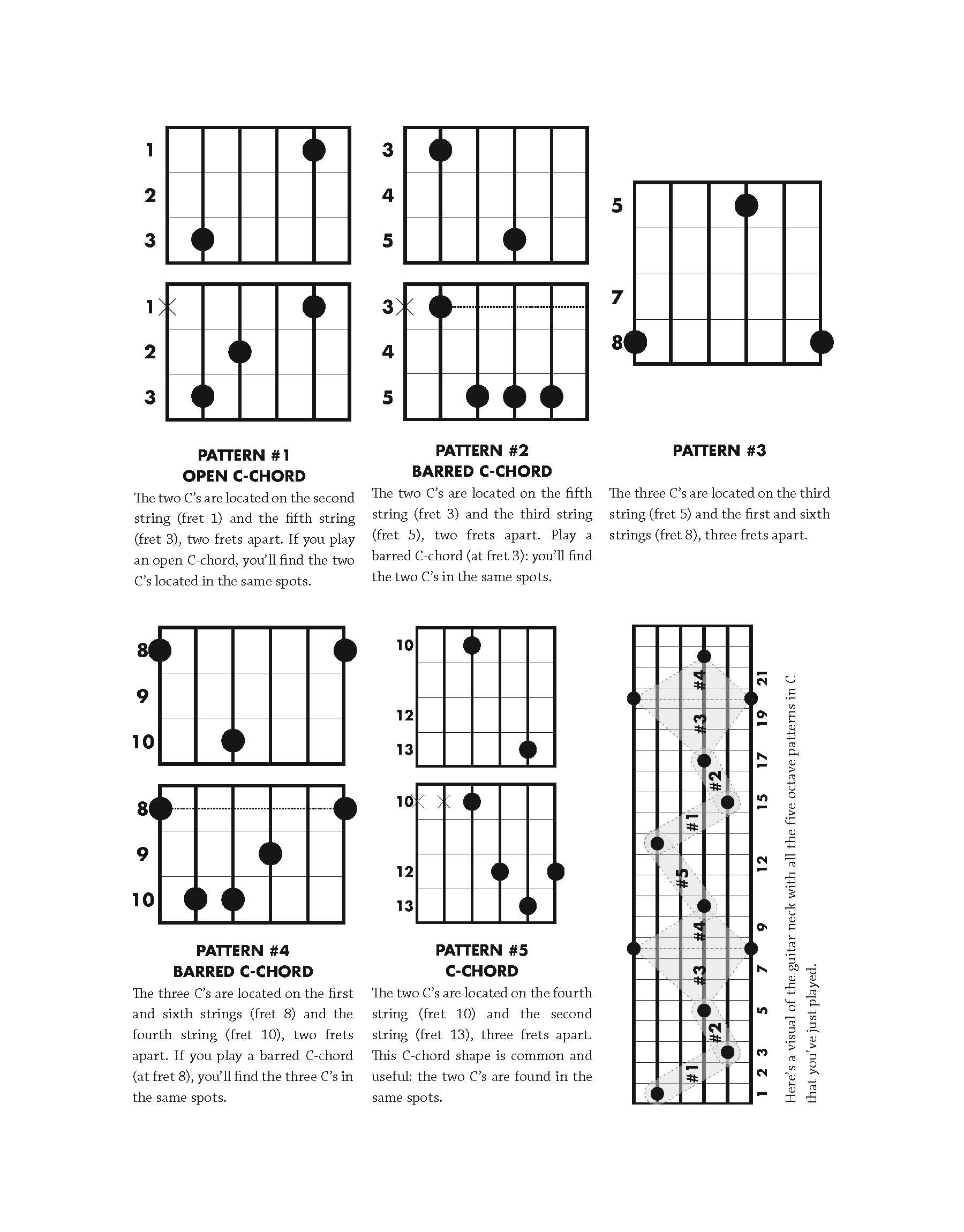
Learning the five octave patterns is the easiest way to see how the notes are laid out on a guitar. You’ll be able to find your way around the neck, play with more confidence, and broaden your creative palette as a rhythm and lead guitarist.
GLOSSARY
Octave: Many musical scales in the West use eight notes. The distance between the first and eighth note is called an octave.
This octave distance can be broken down into 12 semitones (on a guitar, each fret is one semitone.) You can hear an octave by playing the open 1st string (high E string) and then the same string at the 12th fret: that note is also an E, but an octave higher. Also: playing any note an octave higher will double it’s frequency vibration rate.
Octave Pattern: The shape created on the fretboard when you locate a note and find its closest octave on another string.
WHY LEARN OCTAVES?
– The fretboard will be less intimidating when you play or write a solo, riff or fill.
– Playing a melody in octaves creates a sonic change—the notes get thickened up. This can raise the energy in a song or solo. You can also emphasize a melody this way. Try using an effects pedal for even greater contrast.
– If you want to learn scales, knowing where the octaves are makes it much easier to learn and remember them.
– If you’re not big on scales, you can instead improvise around the notes of the chords you’re playing. The octaves can be really helpful guideposts.
– It helps you break away from just playing open chords and barre chords. It lets you easily locate smaller chords (on fewer strings). Smaller chords can open up space in a song arrangement, make for more creative guitar parts, and better complement the bass, keys, or other guitars.
THE FIVE OCTAVE PATTERNS IN C
Grab your guitar. We’re going to locate every C on the guitar with the five octave patterns. Some patterns include two C’s, others three C’s. Notice which strings are included in each pattern. Some have a two-fret distance between the C’s (use your index finger and ring finger to play them); others a three-fret distance (use your index finger and pinkie). Once we’ve played through all five patterns, they’ll repeat again in the same order until we run out of frets. Notice how all five patterns overlap each other.
[In celebration of the 10th issue of She Shreds, we will be posting some of our favorite selections from across our print catalog throughout April. The feature was originally published in the fifth issue of She Shreds Magazine, June 2014 and has been edited for timely accuracy. Subscribe here and receive your copy of She Shreds’ 10th issue when it is released later this month!]
Snobby gear bros and tech-heavy publications can make buying and troubleshooting issues with your amp seem daunting. Don’t be deterred. The information in this article is meant to equip you with basic amp knowledge, lend some tips so you can confidently seek out the perfect amp for yourself, and help you figure out what’s wrong when it isn’t acting so, well, perfect.
BUYING AN AMP
When you’re buying an amp, you need to know your goals. Are you wanting to use the amp for playing live? Practicing at home? If you’re playing with a band, what sort of band is it? Knowing the sound you need is very important. Your amp is your canvas, your pedals are your colors and the electric guitar in your hands is your paint brush. The size, style and brand you choose should be based on the outcome you’re looking for.
Once you know what you need from your amp, you can quickly narrow down your options. Be patient, though. Many people go through two, three, or even 10 amps before finding the right one, and that’s totally fine. That is the beauty of buying and selling on sites like Reverb.
Remember that no single brand works for every sound. For example, Fender amps have an unmistakable chimey, clean sound. They are a great blank canvas that take pedals very well. On the other hand, Marshalls and other British rock amps (like Orange) have that dirty sound: classic rock grit. And there are endless boutique and smaller companies. Once you know what kind of sound you want, you can pick the brand that fits.
When considering an amp’s wattage, keep in mind that tube amp watts are (usually) a lot louder than solid state watts. For example, a 15-watt tube amp can sometimes be as loud as 150-watt solid state amp. For a typical rock band, anything 25 tube watts or above will work depending on how loud your drummer is. If you’re lucky enough to play a venue with monitors and mics for the amps, a lower wattage amp will work. There is a misconception that double the tube watts equals double the volume. To get an actual doubling of your volume, you have to go 10 times your wattage. So a five-watt amp turned all the way up is half as loud as a 50-watt amp turn all the way up.
EQ-ING ON STAGE
It’s simple: you are the only person who understands exactly how you want to sound. EQ-ing your amp (adjusting the knobs) is an important aspect of achieving your sound live, and even if you play at a venue with a sound person, they can’t be relied on to EQ your amp. So make sure to find the right balance of settings for your sound. For example, if you’re playing heavier music with lots of distortion, cranking the mids and turning down the bass and treble will help your guitar cut thru through in the mix (you’ll come through clearly). There’s no magic formula, though, so take the time to figure out specifically what works for you.
TROUBLESHOOTING AMP PROBLEMS ON STAGE
Problem: amp lights up but no sound.
Step 1: Make sure you’re fully plugged in both at the guitar, between your pedals, and at the amp. If you have a separate head and cab, make sure the speaker cable is fully plugged in on both ends. If you have a tube amp, make sure it is out of standby mode.
Step 2: Make sure the volume on your guitar, the volume on your pedals, and the volume on your amp are all turned up. Both of these steps sound really obvious, but they are the most common mistakes people make that result in not getting any sound.
Step 3: Check that all of your pedals have a solid power connection (i.e are plugged in and light up when you step on them). True bypass pedals will let a signal go through even when they are not powered, whereas buffered pedals (most common pedals, such as Boss pedals and Digitech) will not.
Step 4: Investigate the integrity of your cables. If you use pedals, disconnect them and plug your guitar directly into your amp to see if they’re the problem. If you still don’t get sound, you might have a bad cable. Always carry extra cables!
Step 5: If you’re using a tube amp look behind the amp to make sure all the tubes are lit up, if visible.
Step 6: Wow! If none of those steps solve your problem, you probably have an issue that needs some more in-depth repair.
Problem: amp will not power on.
Step 1: Is your amp fully plugged in? Does the outlet work? Are you using a power strip that works?
Step 2: Check your fuse. The fuse is generally located in the back panel of the amp. Take it out (after turning the amp off and unplugging), and if you can see any visible burning or charring, you know you’ve got a bad fuse. Sometimes a fuse can go bad without showing any visible difference, so either way, see if using a new fuse does the trick. Always carry an extra fuse! The back of your amp should say what type. Replacing the fuse may very well get you through your show, but afterwards you should still get your amp checked out by a professional, as fuse problems can be indicative of larger issues.
HOW TO REPLACE YOUR TUBES
Preamp tubes:
There are two types of tubes in your amp: preamp tubes and power tubes. We don’t recommend replacing power tubes on your own because it can get a bit tricky but pre amp tubes can be replaced in just these four easy steps.
Step 1: Very, very important: make sure your amp is off and unplugged.
Step 2: Make sure your amp has been off for about 10 to 15 minutes then lightly touch the tubes to make sure they’re no longer hot.
Step 3: Very gently wiggle the tubes until they come loose from the tube socket (you may need to unscrew a panel on your amp to access the tubes).
Step 4: Get the appropriate replacement tube (generally preamp tubes are 12AX7, and power tubes should be clearly labeled when you look inside your amp). Align the pins on the tubes with the holes in the tube socket and gently press down until secure.
AMP GLOSSARY
Tube Amp: Any amp that uses vacuum tubes for power. They tend to produce a warmer, rounder sound. Solid State Amp: Any amp that uses transistors for power, rather than tubes, which produces a more flat sound. Head: A guitar amp where the amplifier section is in one case without any built in speakers. Cabinet: A speaker box with no built in amp. Half Stack: A head and a cabinet. Full Stack: A head and two cabinets. Combo: An amplifier with built in speakers. Fuse: A small metal and glass tube that is in the circuit of your amp to protect it from being damaged by electrical spikes. If there is a sudden power surge, the fuse takes the damage (and blow), thus preventing the surge from getting into the inner workings of your amp. Watts: the output rating for an amp. Ohms vs. Khz: Impedance refers to Ohms, which are units of measurement for electrical resistance. The only reason you need to know this is if you have a tube head and cab (rather than a combo), you need to make sure they are paired correctly. You need to match your impedance from the amp to the speaker. The way to do this is look at your cabinet or speaker and read what the impedance (ohm rating) of the cabinet is. Generally it will be eight or 16 Ohms. Your amp/head will either have different outputs for eight and 16 ohms or an ohm selector that will allow you to switch between eight and 16 Ohms. This subject can get very complicated if you’re running multiple cabinets or if you don’t know the impedance reading of the cab you’re using. In these cases, go to your local gear store and ask for some assistance. Generally, you match 8 to 8 and 16 to 16. This is just for guitar amps. For bass amps you’ll generally find 4 or 8 Ohms as your options and you’ll match in kind. The risk of not matching is damage to either your speakers, output transformed in your amp or both. Also! Make sure you’re using a speaker cable, which is different from an instrument cable, to plug your head into your cab. This should be clearly marked on the cable but if it’s not, ask! Head Room: The volume that your amp can achieve before the tubes start to distort. If you want a loud clean sound, you’re going to want a higher wattage amp.
Over the past 30+ years Guitar World has had a huge influence on overtly male-dominated culture we’ve learned to identify as the guitar industry; a culture that we recognize as alternately objectifying or ignoring women and dismissing our voices for as long as the rock ‘n’ roll industry has existed; a culture that uses women’s bodies as objects and props to sexualize in order to sell products.
Of course, this can be said about many business and cultures, but in the guitar industry, the sexualization really becomes clear flipping through an issue of Guitar World’s Gear Guide—an annual edition of the popular guitar magazine that embodies everything wrong and discriminating about the guitar industry for the past 30 years. This is an issue that I’ve personally been fighting against since I started playing guitar at nine years old.
In this industry discrimination can be traced back through decades of advertisements, the way many women musicians are treated at music shops and venues on a daily basis (not to mention women attendees at industry trade shows), and through product development, language, video demonstrations, endorsements, images, and other depictions of representation. Since She Shreds began forcing our way into the guitar industry about three years ago, we have addressed and overcome many of these issues with the help of progressive and like minded companies eager to see change—instrument manufacturers keep us alive through sponsorship and many of the big fish are now actively seeking guidance about how they can permanently throw away the idea of “sex sells” marketing ploys.
We’ve written about this time and time again, always asking the question of why and how long this will continue. What do we have to do to change this?
Despite all of these efforts, Guitar World’s annual gear guide always reinforced the painful reality of the guitar industry’s historical reputation of using sex and naked women to engage with men—because to a lot of companies the idea of women even playing music was literally unheard of, so how could we be consumers and therefore why would they consider our reactions at all?
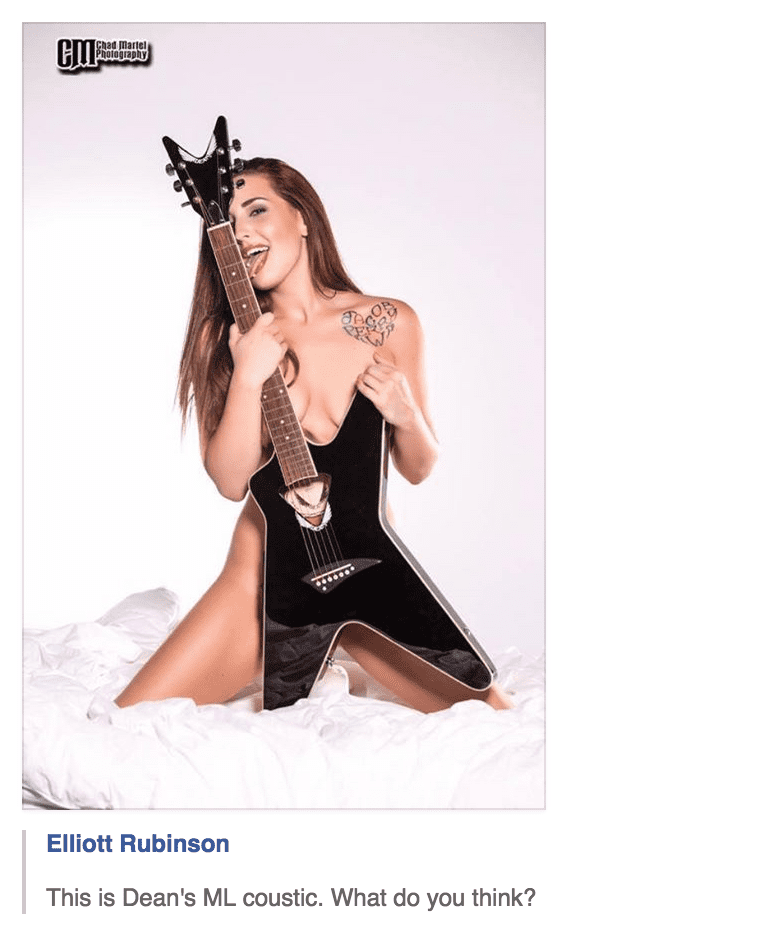
In 2013, Dean guitars published a new advertisement on their Facebook asking the question, “What do you think?” After reposting to our Facebook and asking our audience to leave comments replying with their thoughts they took the post down and declared that they would no longer advertise in such a way—and it truly was one of the last times we witnessed this type of advertising from them.
This was the beginning of the guitar revolution in our eyes.
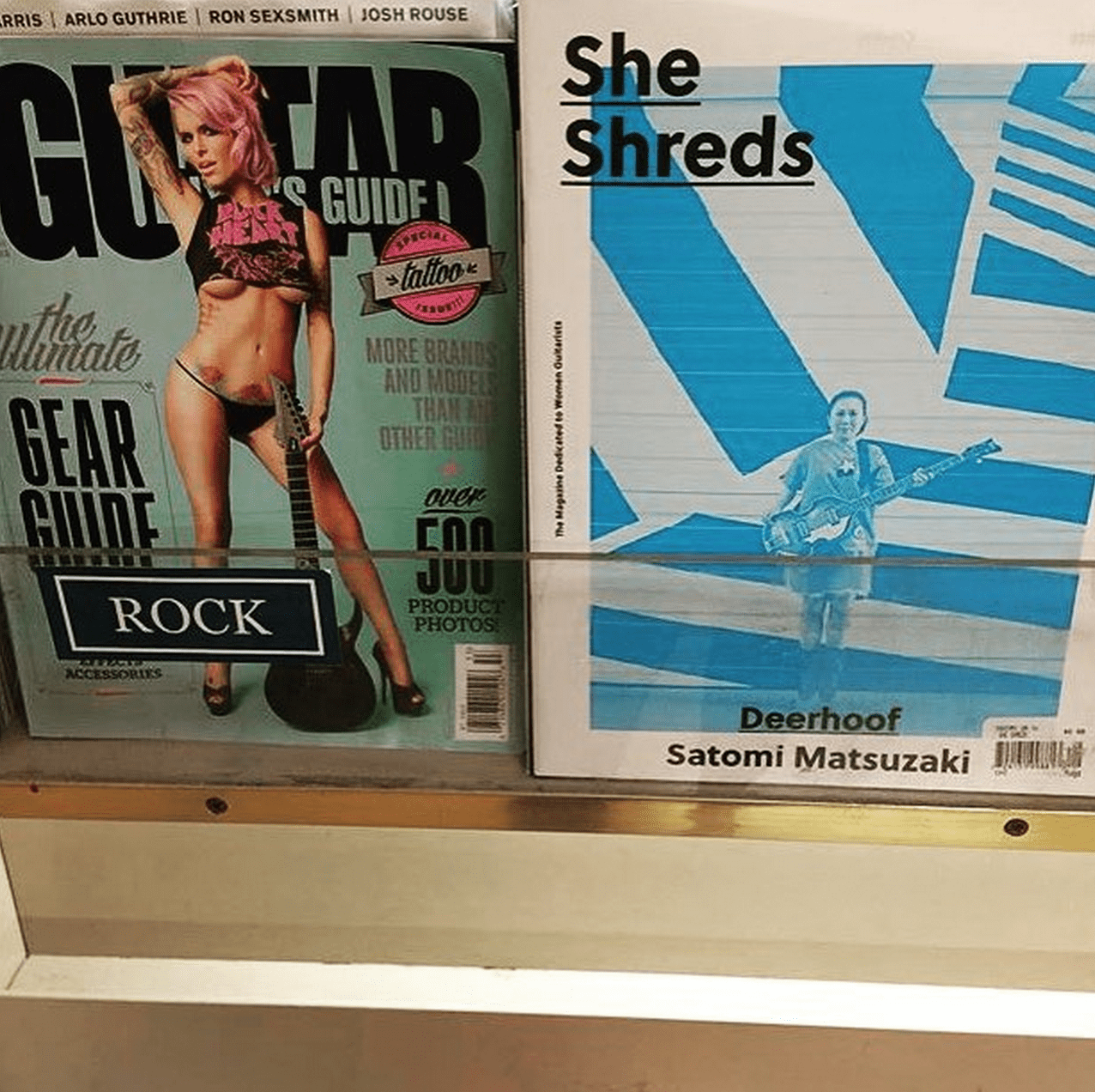
In July of last year the viral image of She Shreds and Guitar World back to back surfaced and the juxtaposition was a wake up call to both media consumers and companies about the reality of our presence. Women are musicians, and we deserve to be represented as such.
Yesterday, Guitar World publisher, Bill Amstutz, announced that they will be dropping the bikini girl angle from their gear guide issue and begin representing women as musicians.
According to Reverb.com, Amstutz says the decision was based on a larger decision to rebrand the company but mentions that “the main driver of this decision was economic, but bikini models were outdated, and we didn’t want to associate the brand with what could easily be viewed as sexist, as a misrepresentation of women guitar players, or that women in general may find offensive. The number of women players is growing and we want to support them.”
On what influences their decision, Amstutz continues saying “We’ve been dealing with this for the past couple years, We want to reach female readers and cultivate them. And we can do a better job, as all guitar media can do. It’s a bit of a boys’ club and we are taking steps this year to change that. This is part of that, as is making a concerted effort to create content that attracts women.”
To this we say job well done to you as readers who actively seek and demand for equal media, to the companies who make an effort in combating this kind of representation and to Guitar World for listening and finally seeking an alternate route. This kind of tangible progress—which is clearly a result of serious demand and reoccurring conversations—proves that the future looks bright for equality as long as we continue to seek it.
Our Official Newsletter
She Shreds Media: Our mission is to educate, empower, and inspire people through unexplored musical and cultural landscapes. Our vision is to continuously refine, redefine, and reimagine the possibilities of how music connects us, ensuring an inclusive and accessible music community 100% of the time.
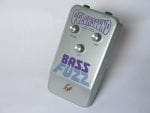 Colorsound Bass Fuzz: Colorsound is a little company based out of Macari’s, a music store in London. Their pedals are used by Smashing Pumpkins, The Cure, and a bunch more great bands. The Bass Fuzz they have is next level and it was also the first fuzz pedal I ever bought. It doesn’t translate to guitar too well but it’s easily the best bass fuzz pedal I’ve ever heard.
 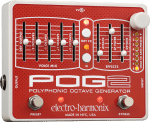 Electro-Harmonix POG 2:
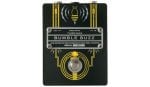 an Records – Bumble Buzz:
 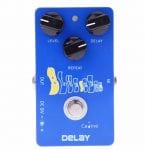 Delay: Th
 Echo
Echo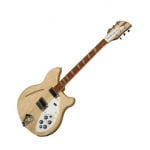 Rickenbackers are a huge component of Against Me!’s distinctive rootsy sound, and while they may be challenging in the studio, on stage (where she typically runs them through a Vox HT30) is another story. “Live, I specifically switch between a [Rickenbacker] 360 and a newer 370. They’ve been my staple touring guitars for years, and I still record with some of them too.”
 lightweight guitar.”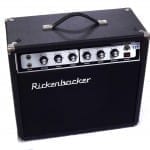
 For the last few years, my main distortion pedal has been the Reissued
  Recently, I have also been experimenting with another distortion pedal called The Talons, made by Akron, Ohio based pedal company