Dedicated to Women Guitarists and Bassists

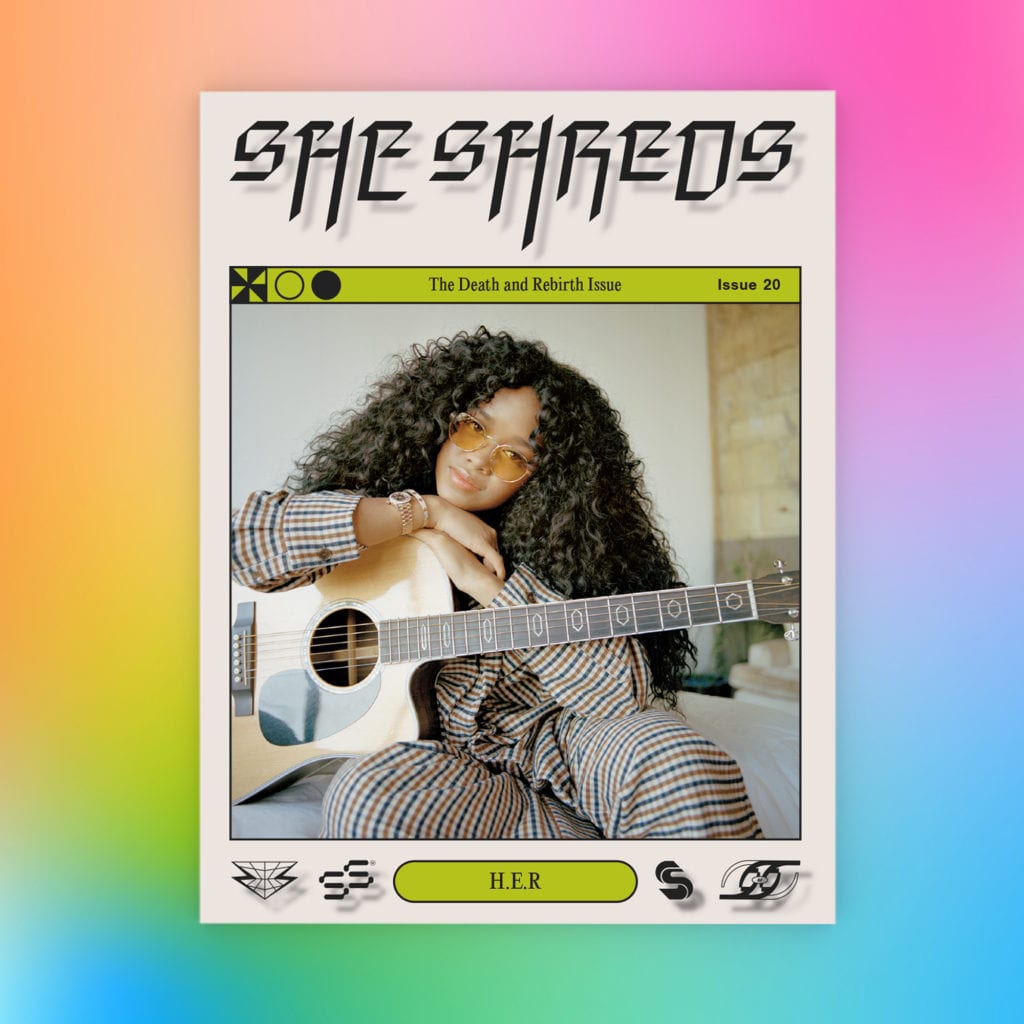
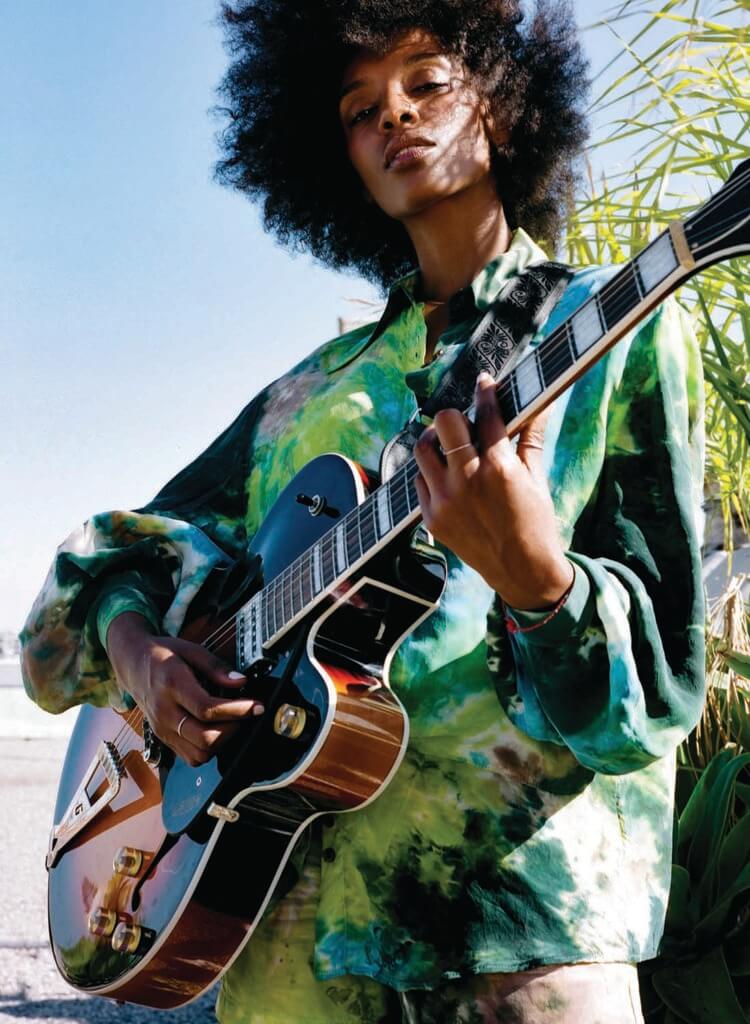
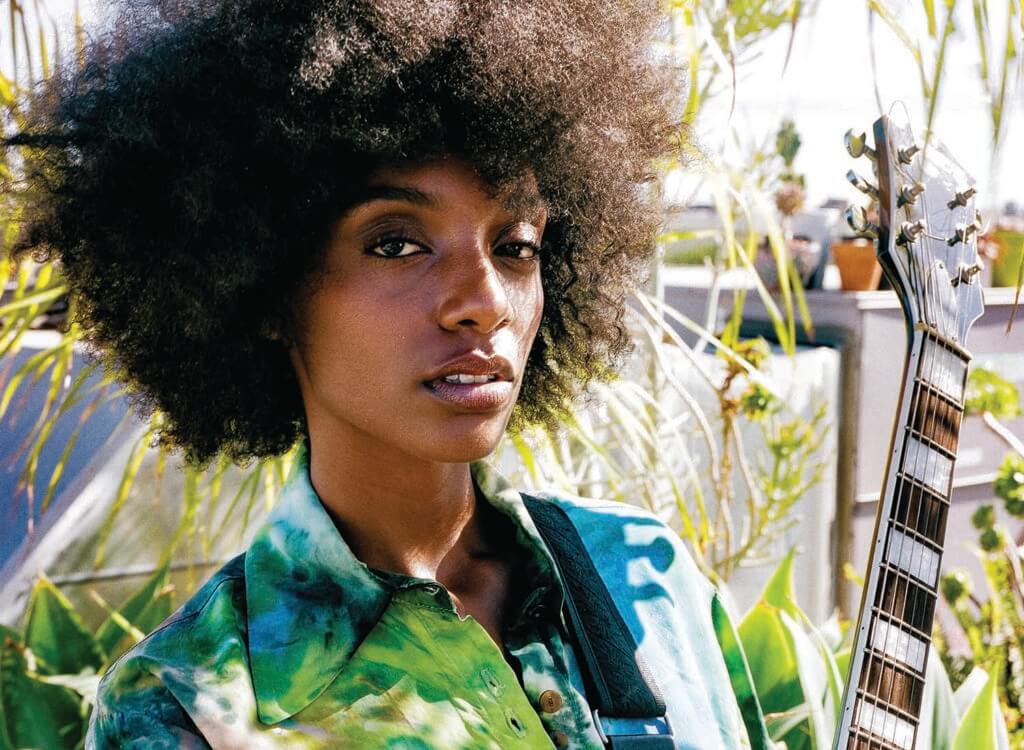
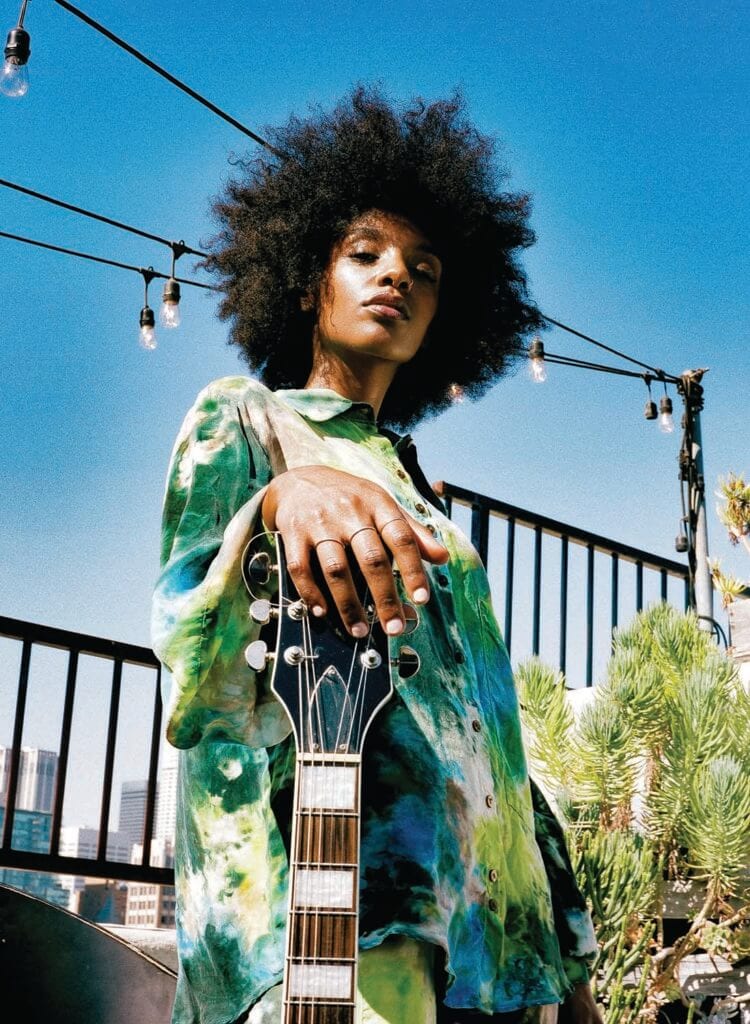
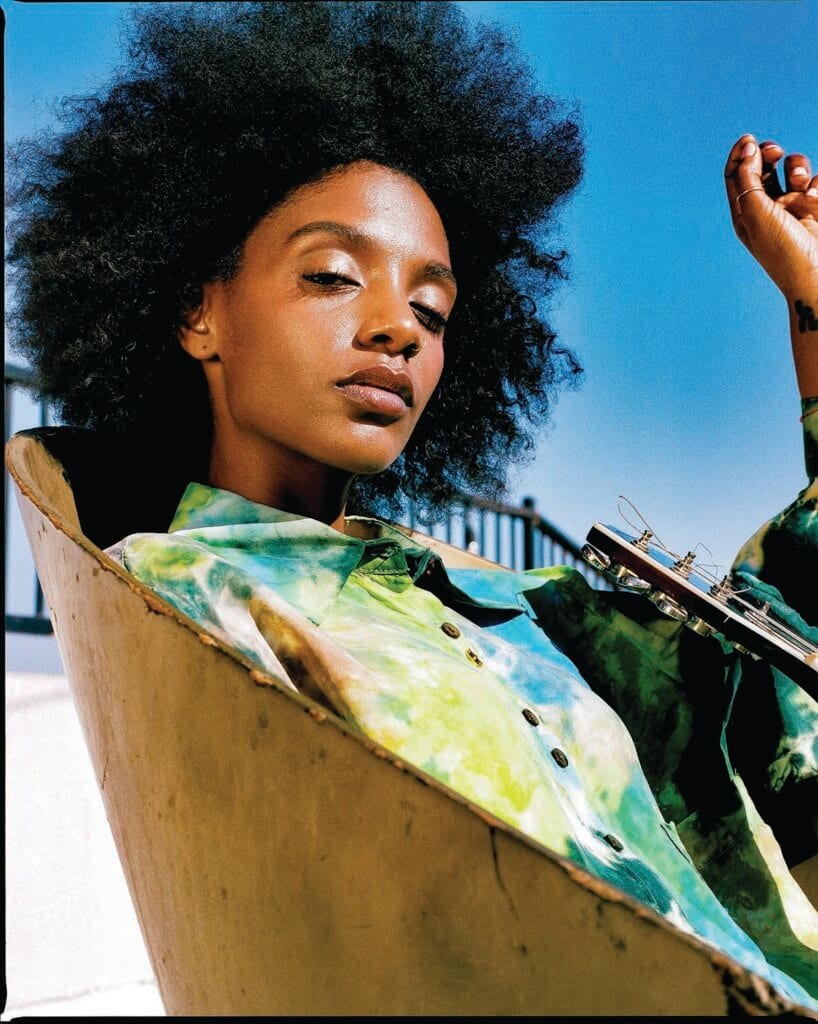
For the release of our 20th and final issue—the Death and Rebirth Issue—H.E.R. performs soulful acoustic renditions of “Fate” and “Uninvited” from her Grammy-nominated 2019 release, I Used To Know Her (RCA Records).

In our Issue 20 interview, H.E.R. spoke about her connection to the guitar and her learning process, mentioning that sometimes playing what feels good is all you need. We’ve included an excerpt from the interview to inspire you to learn “Fate” and “Uninvited” by using the guitar tabs below and playing along with the video.

And if you at any point feel incapable, repeat H.E.R.’s own words as a release: “Sometimes you just have to feel and know nothing.”

How has being proficient at the guitar and being a multi-instrumentalist helped you navigate the music industry?

Well, I mean, being a musician is part of who I am. It’s always been my superpower. When I would perform at a talent show as a kid, most young girls would sing to a track, and there’s nothing wrong with that, but I definitely was the only one who would bring a keyboard or a guitar. I’ve always felt so different, and I’ve always felt like it was just a piece of me, you know? It was just like, “Oh, I need my guitar. I love to write on guitar.”

It definitely helped my songwriting and my ear a lot. But in the beginning, when I released [H.E.R.] and before I went on my first tour with Bryson Tiller, I heard a lot of people say, “Oh, she shouldn’t play instruments… it’s gonna go over people’s heads, like, it’s not cool anymore.” And I was like, no, that’s never gonna happen because it’s part of who I am. And people loved me for it, and I feel like now I’ve inspired other people to play instruments on stage, and to want to pick it up and make it cool again, to practice and be in a band or to play.

Did you ever doubt yourself as a musician presenting as a musician?

I mean, it’s always tough. We always have doubts as musicians. There’s no right way to play. It’s about making somebody feel something. I’m not a huge music theory person; I’ve played by ear my entire life. Everybody’s different and I just like to play what feels good. And some people are very structural and they can’t necessarily play what feels good, they have to read a paper or go buy something. And then I think sometimes you just have to feel and know nothing.

In the first three Rolling Stone covers of 2020, more musicians were women of color (Lizzo, SZA, Megan Thee Stallion, Normani) than all of its covers combined from 2010 to 2015 (Rihanna, Whitney Houston, and Nicki Minaj). 

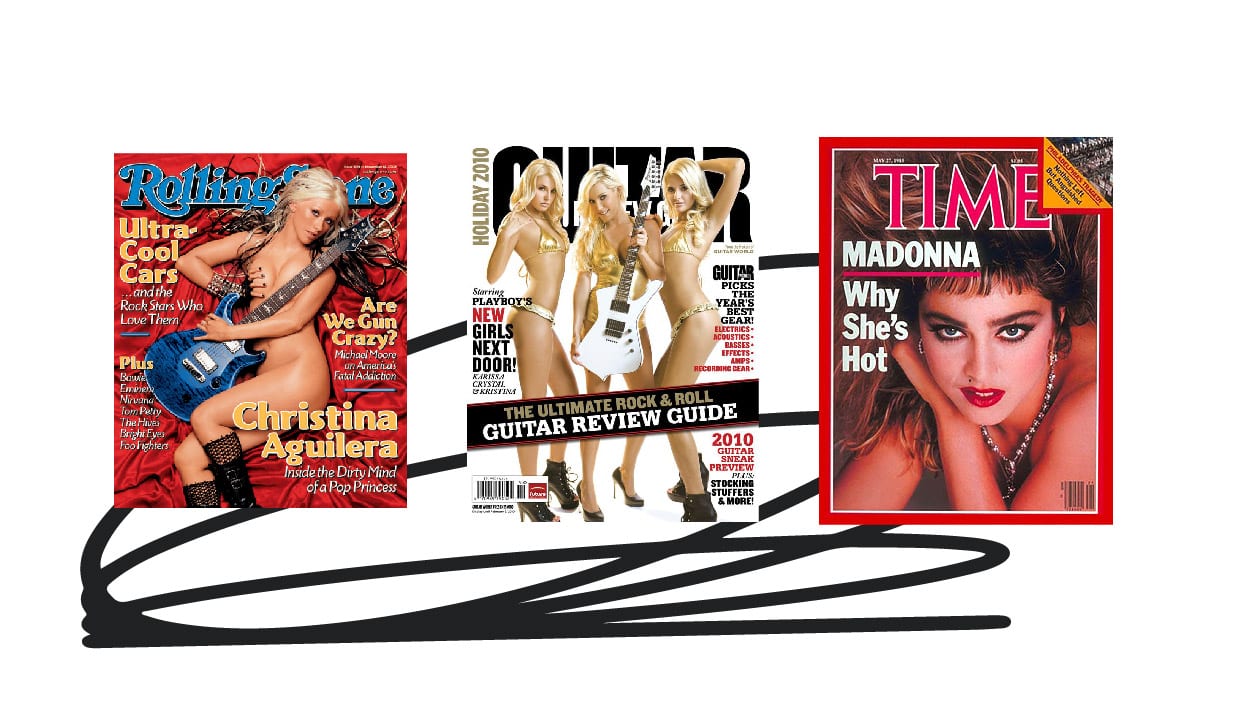
This shift in representation hasn’t been swift so much as sudden: a whiplash undoing of mainstream publications presenting scattered gendered exceptionalism, packaged and sold under a slobbery male gaze as music journalism. Plenty of people have been calling it out (or mutely unsubscribing) for decades, but to little avail. However, over the last few years, a combination of capitalist survivalism and good old-fashioned public shame has jolted greasier-than-glossy magazines into accepting that short-term impulse buys for sexy covers can’t remedy the consequential reputation rot.

Plus, it wasn’t like the wrung-out “sex sells” strategy, with all its thin assumptions of who’s doing the buying and what they want, had actually been working. Over the course of a decade, Rolling Stone newsstand buys had slunk from 139k per issue in 2007 to 28k in 2017, surviving more on a few bouts of impressive political journalism than much else. In 2018, the new owner of Rolling Stone’s parent company announced that their goal for the publication was to be relevant to millennial consumers—a hell of an endeavor for a magazine that has been recycling Bob Dylan and The Beatles since its inaugural issue. Guitar World similarly changed its tune in 2016 when it announced an end to the annual bikini gear guide.
Changing Tides Web 2 02

The corporate notion of appealing specifically to younger generations emerged in 1954, when Billboard announced that jukebox operators had been increasingly stocking R&B records to meet the demand of white teenagers who weren’t interested in the orchestral “popular music” that dealers had been pedaling in segregated shops. Fast forward more than 70 years and the business goal of remaining relevant to young buyers is increasingly intertwined with an expectation of respect for the web of identities musicians hold. While it’s unwise, if not difficult, to espouse an eagle-eye understanding of a phenomenon while living through it, it can feel at times like things are changing for the better.

However, change can be an elusive, slippery thing when touted imprecisely. Who are we including when we talk about how women are recognized, celebrated, or ignored? Who fits within that gendered category, and who do we consider entitled to recognition? Which voices count as “the media?” When we compare “right now” to “back then,” with which moment do we begin and how does our linear conception of time encompass the waxing and waning nature of progress?

This article is about how mainstream music publications have portrayed musicians who live outside of the cis male mold, because widespread visibility can have a powerful impact on our understanding of what is possible. As Oprah put it in a documentary about the Ed Sullivan Show’s impact: “You don’t understand what it’s like to be in a world where nobody looks like you. When I first saw Diana Ross looking glamorous and beautiful, it represented possibility and hope. It was life changing.” Achieving visibility and respect that fully reflects the contributions of a person or group to our culture is part of a systemic cycle of awareness, acceptance, and appreciation. Maddeningly, these cycles wax and wane without regard to the unity of our intersecting identities, which is why so few of the musicians discussed in this article are openly trans or nonbinary. To discuss how certain musicians have been talked about over the course of history is to be limited to those names that were uttered loudest to begin with. It is paramount, then, to distinguish between an analysis of what was and an analysis of what we have found. This is the latter.

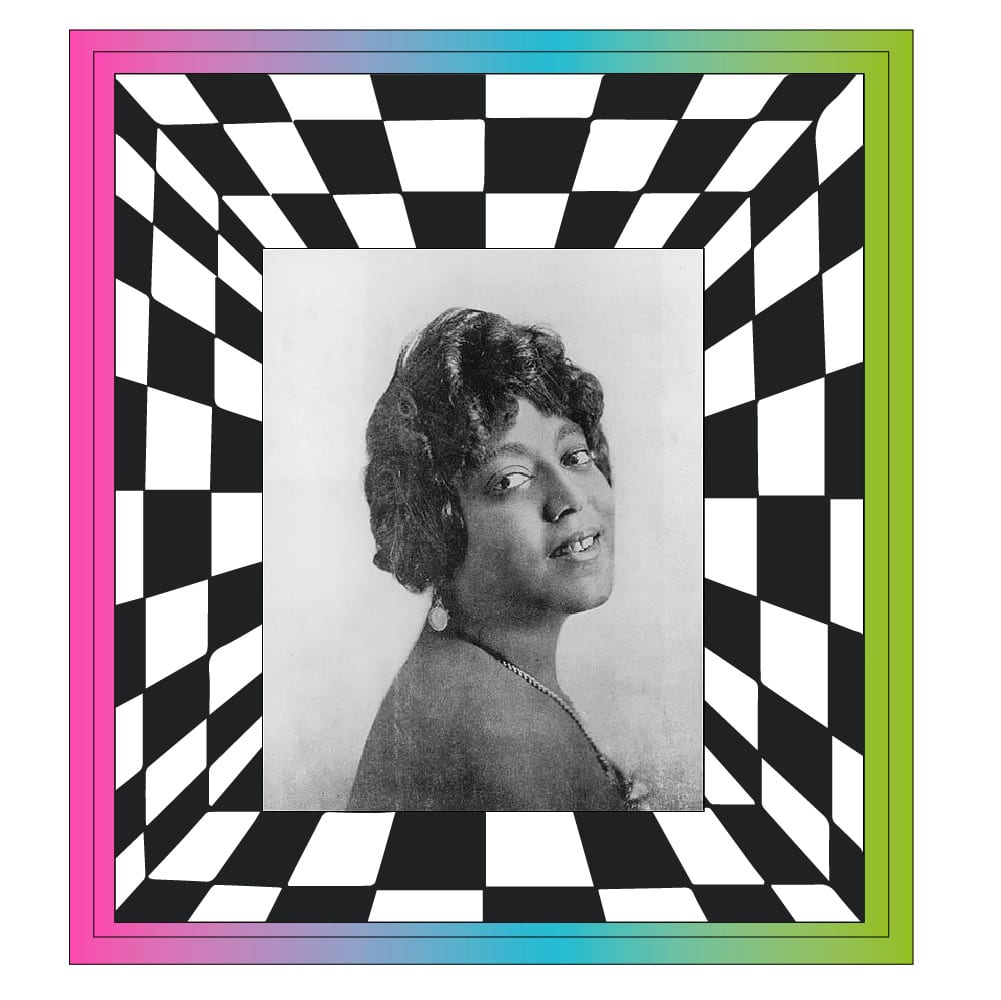
And it started with Mamie Smith.

Early Blues Women and the Black Consumer, 1920s
Mamie Smith Web v2
“A studio headshot portrait of American blues singer Mamie Smith,” photograph, circa, 1923, Frank Driggs Collection/Getty Images
Mamie Smith Web v3
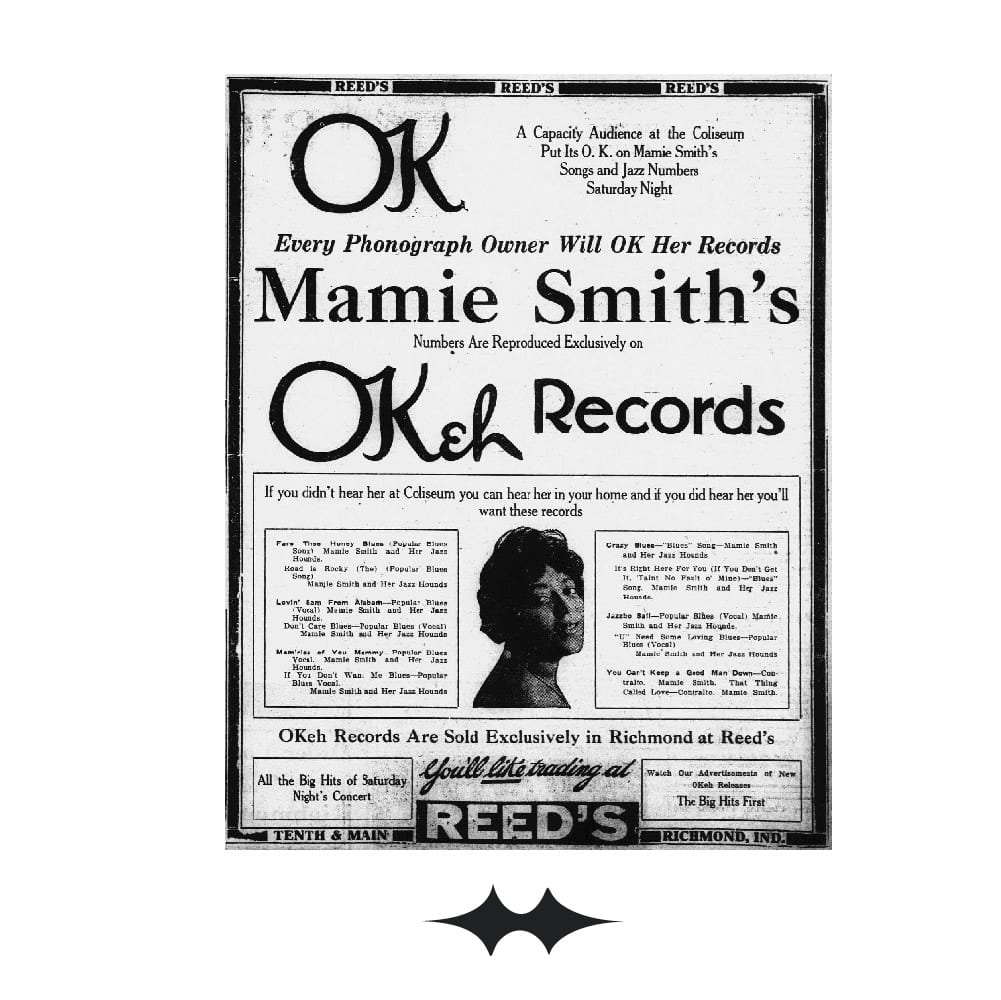
Richmond Palladium and Sun-Telegram, April, 25th 1921

Rock created the music publications we read today, R&B created rock, blues created R&B, and Mamie Smith made the blues a national sensation. In the summer of 1920, a small label called Okeh Records recorded Smith singing a rendition of Perry Bradford’s “Crazy Blues.” The record was an overnight sensation among Black working-class consumers, catalyzing a series of reactions by the record industry that would change popular culture forever. As Angela Davis pointed out in her book, Blues Legacies and Black Feminism, Smith’s success simultaneously led record companies to finally consider the tastes of Black consumers (while pigeonholing them into segregated buyer categories) and producing the music of Black women musicians. As blindly rooted in profit as these corporate labels’ reactions were, the ultimate impact was that rock ‘n’ roll and some of our biggest music icons’ signature sounds originated in Black communities—often Black women musicians, specifically. Because of Mamie Smith’s success, the country’s biggest record labels rushed to sign Black women musicians such as Ma Rainey, Memphis Minnie, Ethel Waters, Gladys Bentley, and Bessie Smith (no relation to Mamie Smith), who a teenaged Billie Holiday listened to before moving to Harlem and singing in the nightclub where Benny Goodman discovered her. The rest is history—or as Frank Sinatra put it in a 1958 interview with Ebony, “Lady Day [Billie Holiday] is unquestionably the most important influence on American popular singing in the last twenty years.” Little could he know that, as was finally acknowledged in 2000 by the Rock and Roll Hall of Fame, Holiday’s genealogy of sound extends to today.

At a time when white women’s orchestral pop music still held up marriage and heteronormative domesticity, these early blues recordings were the first instances of women singing to a national audience about independence, fluid sexuality, domestic violence, and working class struggle—phenomena that have often been mistakenly treated as inceptive when they later re-emerged in everything from the sexual revolution colliding with second-wave feminism to Madonna to the #MeToo movement.

Changing Tides Web 2 07 1
Not only were the messages of early blues women revolutionary, but their popularity being based on the music they produced rather than their appearances was new too. Before records became an affordable way to listen to music, women’s musical successes and their ensuing coverage in the mainstream were tied to their visual performances on vaudeville stages.
________

The Influence of Tharpe and Thornton, 1930 – 1950s 

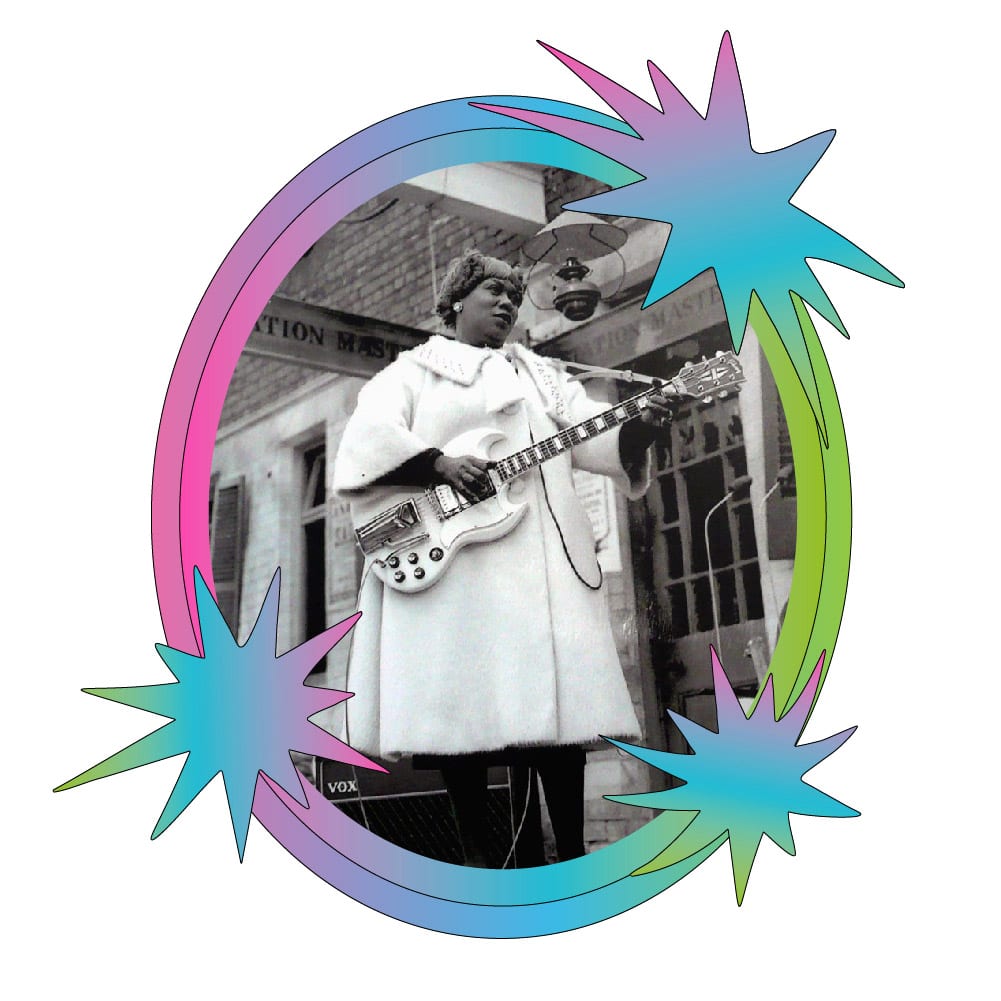
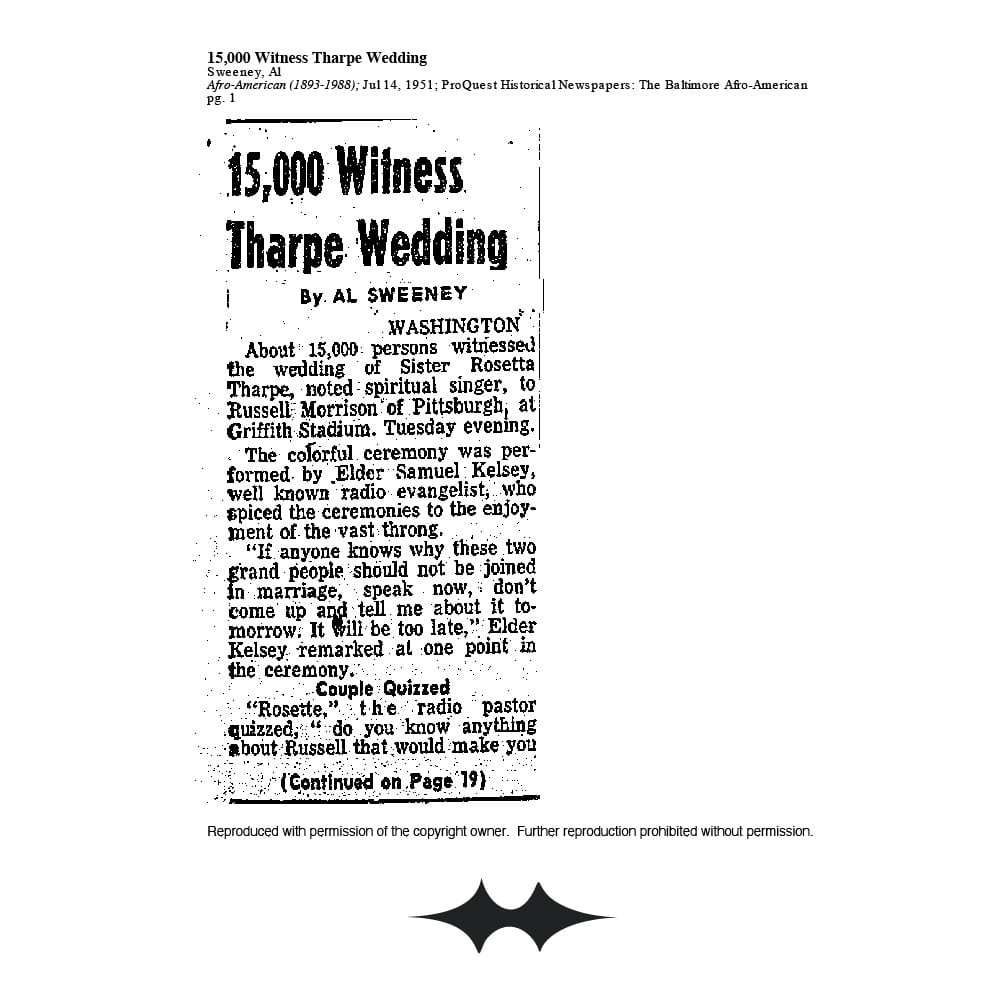
The Second World War came and went, and temporary openings for women in factories (such as Gibson’s Kalamazoo Gals) as well as the mainstream music business along with it. When the war ended, government propaganda of women’s equality did too, leading to a spike in pop music as a vessel for messages of feminine domesticity. When the war ended in 1945—seven years after she packed an audience at New York’s Carnegie Hall—Sister Rosetta Tharpe’s “Strange Things Happening Every Day” made history as the first gospel song to cross over into popular appeal, while Doris Day’s “Sentimental Journey” topped the charts, marking the beginning of Day’s career as an “armed forces sweetheart.”

Sure, Sister Rosetta Tharpe was so popular that she played to a massive stadium 14 years before The Beatles’ Shea Stadium concert (popularly cited as the first such performance), but Variety’s white male writers couldn’t resist framing their kudos as being about a person “of considerable heft” whose music was “even for sophisticates.” The same drivel applied to Willie Mae “Big Mama” Thornton, whose 1953 charts-topper “Hound Dog” rocked the musical landscape at #1 for seven straight weeks while she was subjected to vile physical comparisons and blatant respectability politics. Elvis may have idolized Tharpe, but he played right into the hands of industry executives looking to put a white man’s face on Tharpe’s and Thornton’s sound. Worse than Presley’s co-opted success was the white-washing of rock ‘n’ roll history it triggered. The British Invasion, as rock critic Kandia Crazy Horse would later point out, finished what Elvis had started. By 1970, Tharpe was described by one publication as “so rhythmically exciting that when she accompanies herself on guitar she might be a blacked-up Elvis in drag.”
Changing Tides Web 2 07 1
Changing Tides Web 03
Sister Rosetta Tharpe
Changing Tides Web 04
Afro-American, July 14, 1951

Emergence of the Modern Rock Critic, 1960s

Considering how the 1960s birthed second-wave feminism, it’s impressive how dude-centric the emergence of modern rock journalism was. In fact, if there’s a moment from which you can directly trace the peak crudeness of mainstream music magazines, the mid-1960s might be your best bet. While the 1980s took the objectification of women to appalling heights, it was the 1960s emergence of the modern rock critic as well as gonzo journalism—which prided itself on making dumpster fires of professional ethics—and the left’s rejection of sexual mores that provided a rebranding opportunity for deeply entrenched misogyny in the music industry.

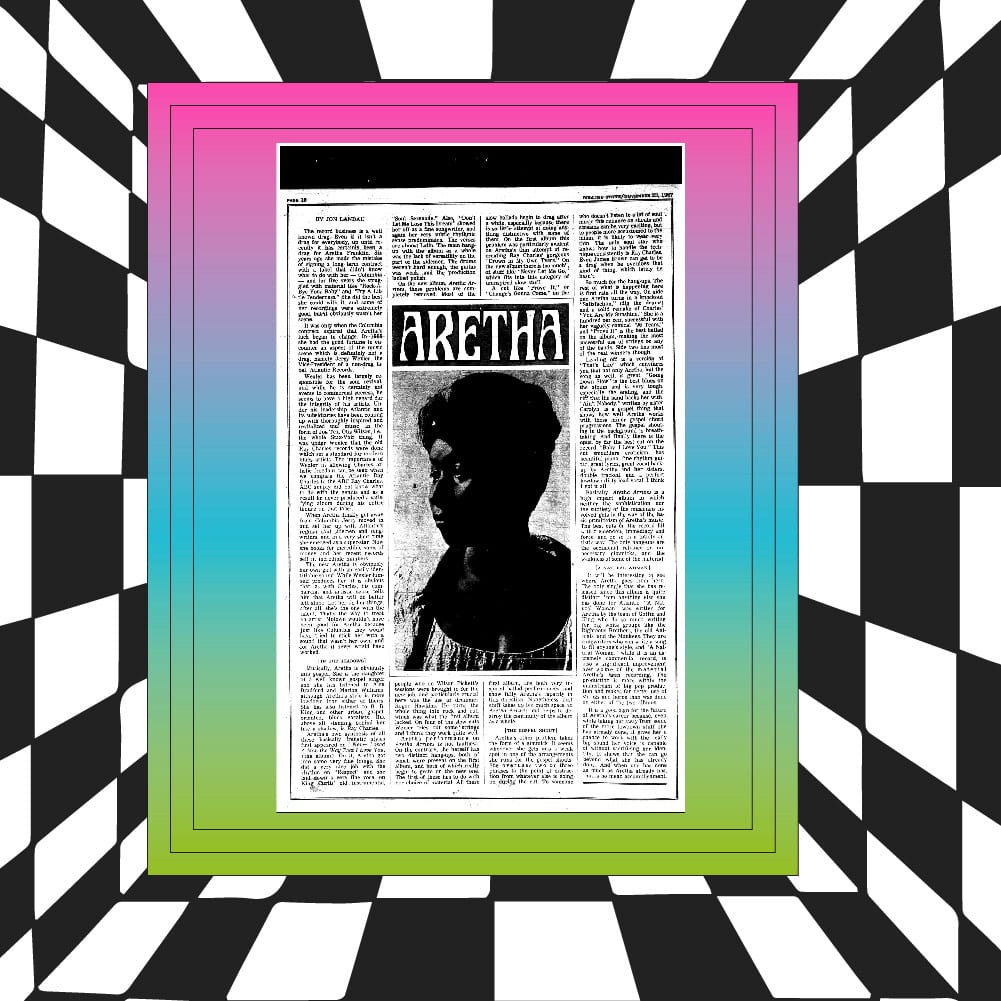
Even Rolling Stone had its exceptions, though, as any vessel of exceptionalism must. A few months before the magazine published its first issue in 1967, Aretha Franklin’s “Respect” hit #1 on Billboard’s charts. Taking a break from its worship of Jimi Hendrix and John Lennon, the second issue of Rolling Stone dedicated a full page to the Queen of Soul. “Let her do her things, after all, she’s the one with the talent,” the piece advised Franklin’s new producer before launching into a song-by-song analysis of Aretha Arrives (1967, Atlantic Records). The next year, the young music outlet published an eerie echo of Billboard’s 1923 acknowledgment of Bessie Smith’s triumphs: “In this day when groups and infrequent solo male artists dominate the music, the public interest and the charts, Aretha Franklin’s incredible commercial success is extraordinarily noteworthy.” Whether it was in Rolling Stone or The New York Times, Franklin got credit—and even though she made history when she was inducted into the Rock and Roll Hall of Fame in 1987, the mainstream media’s serious treatment of her talent was revolutionary 20 years prior too.

However, journalists still found ways to gender their coverage of Franklin, erase the women who came before her, or both. In 1968, The New York Times published one of their earliest articles about Franklin: “Establishing an identity through asserting the basic female emotions does not sound like a very original or interesting development for a pop singer—yet it is, in fact, almost without precedent in Miss Franklin’s tradition,” claimed white male writer Albert Goldman. “The old-timers like Bessie Smith or Ma Rainey (or Mahalia Jackson today) were massive matriarchs,” Goldman lazily stereotyped before turning to the woman-as-victim cliche of “the Billie Holidays or Dinah Washingtons [who] loved, suffered and learned resignation before they opened their mouths… Aretha’s woman may suffer, but her soul is whole and untrammeled by depression or abuse.”
Changing Tides Web 05
New York Times, May 30, 1971
Changing Tides Web 06
Aretha Franklin, 1967 Rolling Stone

Gonzo Journalism and the Male Gaze, 1970s

In hindsight, the 1969 Woodstock and Harlem Cultural festivals served as a perfect transition into the 1970s. Joan Baez and Janis Joplin were notable exceptions to Woodstock’s celebration of men in music, while Nina Simone and Mahalia Jackson headlined the 300,000-strong Harlem Cultural Festival weeks prior. Choice exceptionalism prevailed in both the festival circuit and mainstream media coverage, but it was also an era of milestones: the Filipino-American rock trio Fanny made waves on the Billboard charts, inspiring The Runaways, fronted by Joan Jett; Sylvia Robinson recorded her chart-topping “Sylvia” before founding Sugar Hill Records and bringing hip hop into the mainstream with her production of the Sugar Hill Gang’s “Rapper’s Delight”; and Suzi Quatro became the first woman to reach rock star status for her bass playing. Not surprisingly, the media’s response was mixed.

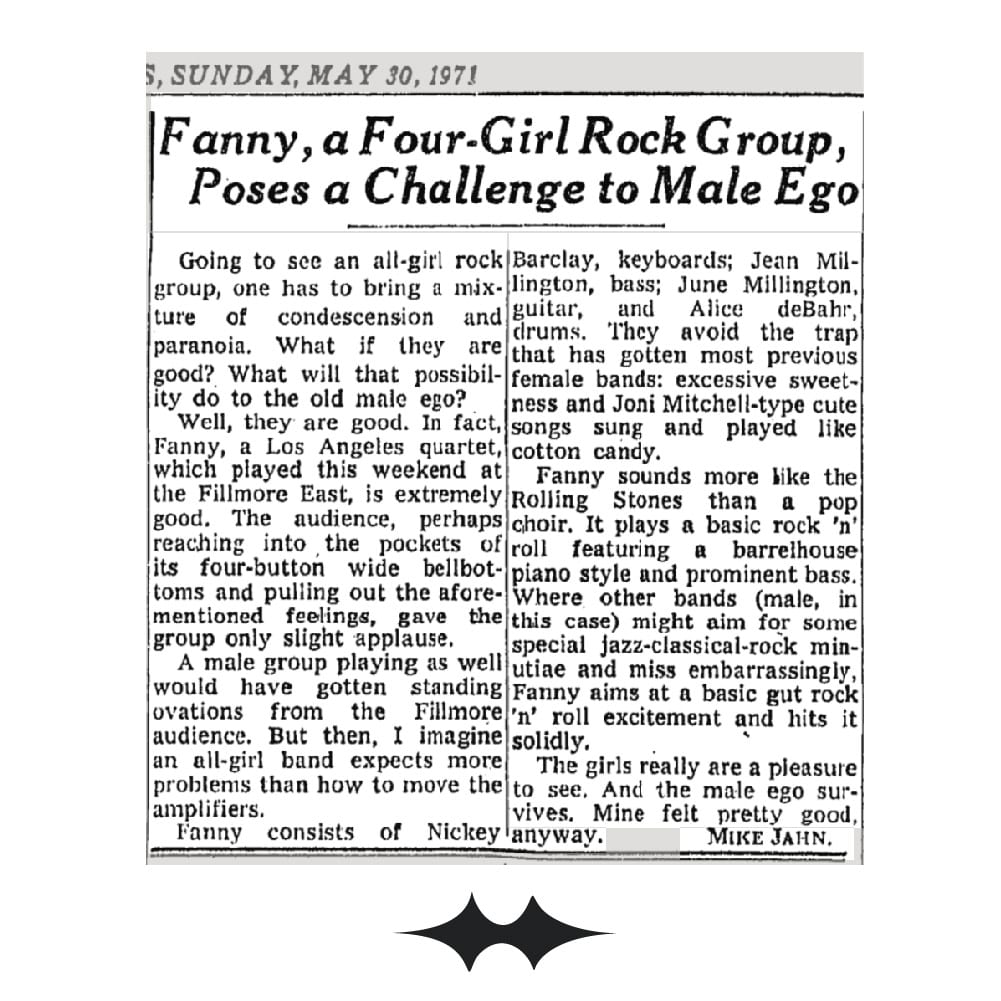
In a 1974 article published in the influential and permanently-dated music magazine Creem, writer Robert “Robot” Hull seemed stuck between masturbating through his own words and acknowledging Suzi Quatro’s talent: “Suzi Quatro is a real cutie, rootie tootie, not sweet hog honey like Linda Ronstadt but a tight roller derby queen with juice and enuf krassiness to rank her right up there with the Sweet and Slade,” he drooled. Fittingly, Hull would go on to become a major rock critic and eventual producer of CD series’ like “Sounds of the ’70s.” Rolling Stone’s own coverage of Quatro later that same year was mild in comparison, but still ensured that any recognition came through a lens of male gaze, with the bassist propped onto the empty pedestal of “glittering sex queen” in one line and taken down in the next as “a short, trim woman from Detroit who moved to England after nine unsuccessful years in the American music business.” The New York Times couldn’t resist following the fad, with white male critic John Rockwell choosing to focus his coverage on his opinion that “Quatro dresses in leather jumpsuits and tries to project an image simultaneously aggressive, indifferent and raunchilly sexy.” The newspaper’s coverage of Fanny was equally stupid. “Going to see an all-girl rock group, one has to bring a mixture of condescension and paranoia,” wrote Mike Jahn, admitting the band was good before launching into time-tested cliches: implying they couldn’t move their amps, praising them for not being “Joni Mitchell-type cute,” and making sure the reader knew that this rock group wasn’t just a “pop choir.” Even with androgyny sweeping the mainstream musical landscape (with an apparent absence of acknowledgment of aesthetic contributions by non-cis musicians like Jayne County) this uninspired combination of visibility and ignorance continued into the 1980s.

Changing Tides Web 2 07 1

The Rise of Independent Publications and Women Critics, 1980s – Now

“Annie Lennox began her life as a man two years ago,” reads the intro of choice for Rolling Stone’s 1983 cover story of Eurythmics’ newfound fame. In an act of truly gymnastic erasure, the piece recited Lennox’s explanation for her switch to an androgynous style as an anti-harassment strategy before concluding that “sexual speculation” at her recent concert “suddenly seemed irrelevant in the presence of such triumphant talent.” Nevermind the implication that abuse is reserved for those who are inadequate or that the musical ingenuity of other powerhouses from the era like Whitney Houston didn’t stave off the collective gnashing of teeth by arena crowds or magazines alike (Rolling Stone would wait until 1993 to publish a proper feature of Houston, promoting its unremarkable interview with a bright red splash of “Whitney Houston Gets Nasty” across its cover and another “Whitney Houston Gets Down and Dirty” for its headline).

As hip hop exploded and rock and pop kept morphing into a mind-numbing multiplicity of genres, music journalism was slow to evolve. The New York Times covered the beloved Grammy-award winning Selena for the first and only time before her death in its 1994 stereotype-laden coverage of a Mexican Independence Day party in New York City, while Rolling Stone didn’t even manage to mention her until late into 1995. Both publications treated TLC the same, ignoring the group except to insult them, even as they broke international records with CrazySexyCool (1994, LaFace and Arista Records) and shook the world with their famous call-out of the greed of the music industry in a 1996 Grammys press conference.

In the same way that TLC fought back against their management, the 1990s also ushered in a new generation of independent music publications founded and run by women who were sick of the mainstream press. Carla DeSantis Black founded Rockrgrl in 1995, publishing interviews and articles about bands like Sleater-Kinney and Tegan and Sara long before bigger publications took notice. Even before then, beginning in 1985, Lori Twersky published the zine Bitch: The Women’s Rock Mag with a Bite, a title that would live on in the separate pop culture magazine Bitch, founded by Andi Zeisler and Lisa Jervis in 1996.

All three of those influential publications were founded in California, so it’s fitting that San Francisco became a hub for women music journalists in the 1990s before their migration to the East Coast’s biggest publications. Evelyn McDonnell became SF Weekly’s music editor in 1992 and moved on to take the same job at the Village Voice in 1996, but not before overseeing an intern named Sia Michel. Before becoming today’s deputy culture editor at The New York Times, Michel was the first woman editor-in-chief of Spin, where Caryn Ganz climbed the music journalism ladder, eventually becoming deputy editor at Rolling Stone and then pop music critic at The New York Times. Ganz has joined other rock critics like the inimitable Jessica Hopper (who, true story, penned her first piece of music journalism because of lousy coverage of Babes in Toyland) in using her influence to sing the praises of acts ranging from Haim to Lizzo to Chastity Belt. And when Rolling Stone started 2020 out on the right note, it was women—Brittany Spanos followed by Emma Carmichael—whose writing dominated the centerfold features.

Our understanding of time may be linear, but cultural trajectories rarely are. The volume and tone of the mainstream media’s recognition of our communities has been a similarly fickle thing. To take their words and hold them up to the light isn’t an act of independence so much as accountability. We’ve always been here, taking music to new places, and we always will be. Or, as Mamie Smith sang in the song that started it all, “There’s a change in the ocean / Change in the deep blue sea… I’ll tell you folks, there ain’t no change in me.”


Dear Shredders,

Where do I begin? So much has changed since I made the decision to close this chapter of She Shreds. In that time I have found myself in between feelings of grief and relief, and trying to find answers to questions that I’m now realizing, at this very moment, have stayed consistent throughout the last eight years: 

How do I properly acknowledge and support the transformation and the collective understanding through community that this manifestation has grown into? How do I respectfully honor the thousands of girls, women, non-binary, BIPOC, LGBTQIA+, and male-identifying allies who have found inspiration and evolution alongside these pages? What purpose do we, as the collective voice represented in this space, serve to the world around us, and how does the world around us affect and navigate our collective voice?

poppy 2

Like all of our previous releases, this issue shaped itself in a lot of ways. Long before COVID-19, our intention for the “Death and Rebirth” theme was to leave behind what was no longer serving us as a community, and to identify and introduce routines to strengthen our goals over the next decade. However, little did we know that we’d be producing this issue in a space between those two words: the death of World A and the rebirth of World B.

We are experiencing a historic moment in time, when the entire world is currently shedding layers of what life used to be and living in a daily unknown of what’s to come. Alongside a global pandemic, we’re also witnessing a climate crisis, the continuous murders of innocent Black men and women by police, and horrific cases of brutality against women around the world.

As crushing as that might be, it is significant to why we’re all here in the first place: justice. In 2012, the She Shreds community banded together to demand justice in visibility and to be acknowledged and treated as the musicians that we are. In 2016 that demand was reframed to include justice in representation and equality, and to hold the industry accountable not just for their acceptance, but for the unapologetic inclusion of who we are, what we look like, and how we sound. 

Today, as we face social upheaval in 2020, I believe that we’re all fighting for justice in truth: the death of cycles that harm us, and the rebirth of our practices—not as something that we eventually lose and forget, but as daily commitments through our actions.

poppy 3

In my eight years of living in and researching communities of guitarists who have been underserved and underrepresented, both historically and contemporarily, I’ve come to three conclusions that I feel are important to document:

  1. The biggest misconception of how the guitar and the player are portrayed is that our expression is singular and our practice is strictly cerebral (ie. you can’t be a good player unless you know and follow the technical rules and guidelines). On the contrary, what I think you too will find in the interviews featured in this final issue is that we, as musicians, are the voice of the earth. Our purpose is to translate the pain, joy, needs, and desires of the world around us in a way that the masses can easily digest. We are the historians of our time.
  2. There is a difference between the way that we (those who have been historically excluded from guitar culture) learn, connect, and express through our instruments from those who this guitar culture was created for in the first place. That method of skill building is what I’ve learned to be best described as Intuitive Technique.
  3. The writers of history have always found a way to erase the accomplishments of women, and especially those of Black and Brown women. Right now is one of the only times in history when the space for Black and Brown women to be recognized as guitarists and musicians is not only accessible, but acceptable and encouraged on a mainstream level—a change that our She Shreds community no doubt played a leading role in.
And so, how do we continue to carry these truths for generations to come?

What I have found during my time spent raising awareness for her is that it’s only a stepping stone in the journey of unifying us. Moving forward, our mission as She Shreds Media is to provide the tools and resources that guide musicians through unexplored musical and cultural landscapes. Our vision is to continuously refine, redefine, and reimagine the possibilities of how music connects us, thus ensuring an inclusive and accessible global music community 100 percent of the time. 

From the bottom of my heart, I want to thank all of our magazine subscribers, readers, sponsors, contributors, artists, bands, and everyone else who put a piece of themselves into this mission. Because of you, we did exactly what we intended to do with this publication: distribute awareness, redefine shredding, and reimagine the world of guitar.

Shred Forever,
-Fabi

poppy
SQ Cover H E R v1
SQ Cover Willow v1

We are thrilled to announce She Shreds Magazine #20: The Death and Rebirth Issue (read more about this in Fabi Reyna’s Editor’s Letter). Our final issue features two exclusive cover artists, H.E.R. and Willow; featured artists Buffy Sainte-Marie, Laura Lee (Khruangbin), Yola, and Margo Price; articles “The Evolution of Women Musicians in Mainstream Coverage” and “La Doña and the Unity of Her San Francisco Community”; a yearbook spread of the last eight years of She Shreds, and much more.

Today through the month of July we will be donating 100% of digital sales to organizations chosen by She Shreds, H.E.R., and Willow:

– Give A Beat a 501(c3) organization reducing the harmful effects of incarceration through music production, DJing, and education programs, chosen by She Shreds.

– Rock The Vote, a 501(c)3 organization building the political power of young people, chosen by H.E.R.

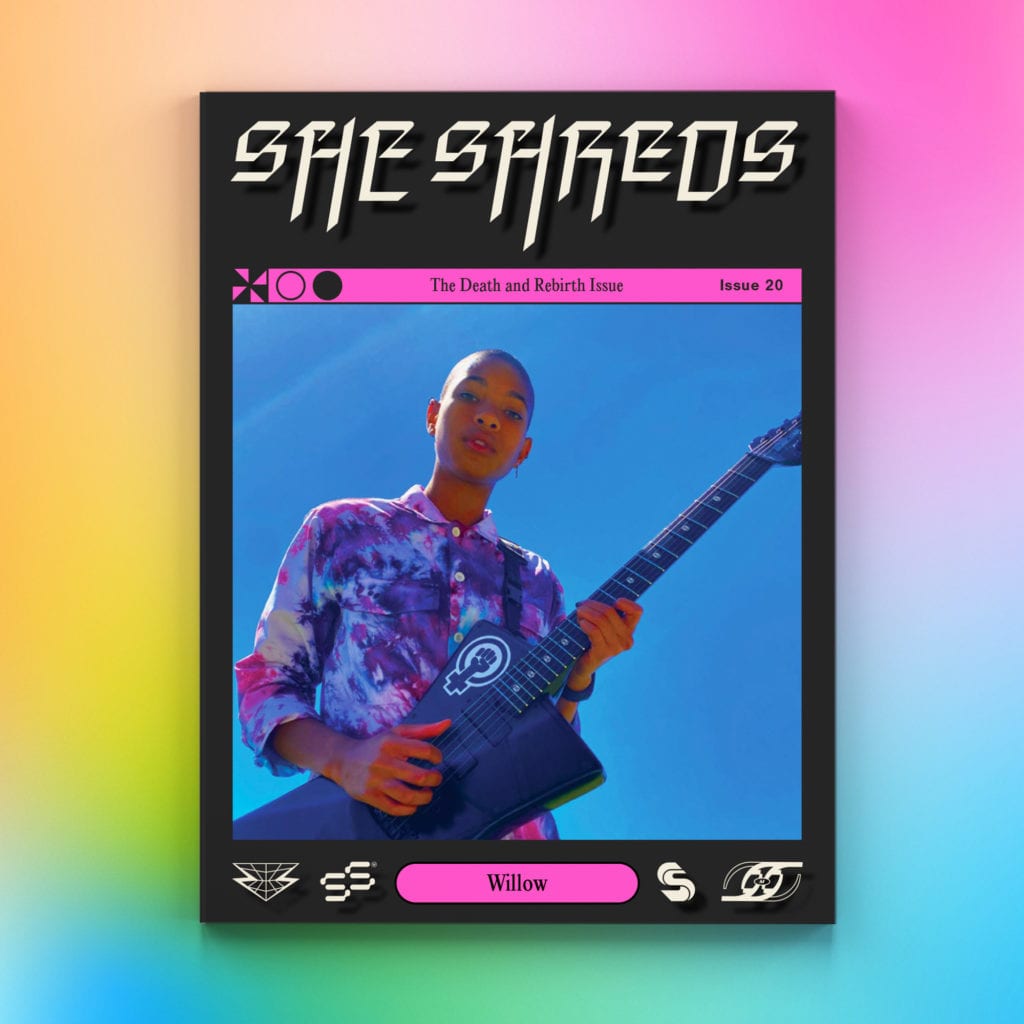
– #TOGETHERFUND, x Will & Jada Smith Family Foundation, a global fundraising campaign to support organizations engaged in critical Racial Justice work and  COVID-19 Relief efforts chosen by Willow Smith.

Important note: Accessibility is crucial to us. If you are a Black, Indigenous, Person of Color and cannot access this content due to financial circumstances please email us at orders@sheshredsmag.com

A special thank you to our Issue #20 sponsors: Fender, Martin, Mint Records, Red Panda Lab, Sam Ash, Walrus Audio, Reverb.com, Yousician, Father/Daughter Records, Sennheiser, EarthQuaker Devices, and TunaTone. We literally would not be able to produce this issue without their support.

Cover Story: H.E.R.

Grammy Award winning musician and guitarist H.E.R. (Having Everything Revealed) speaks about doubting ourselves as musicians, staying connected to our passions, the importance of camaraderie, and her Instagram series, Girls With Guitars.

Cover Story: Willow

For the last issue of She Shreds Magazine, we invited Willow to discuss her journey as a guitarist, her connection with music as a healing and transformative power, and creating space for Black and brown women guitarists.

Buffy Sainte-Marie

From performing in the 1960s Greenwich Village folk scene, to being blacklisted by the Johnson and Nixon administrations, to advocating for and educating about Indigenous voices, Buffy Sainte-Marie speaks about her 60+ year career with Katherine Paul (Black Belt Eagle Scout).

Laura Lee of Khruangbin

The bassist of the Houston three-piece Khruangbin, who released their fourth studio album, Mordechai, in June, discusses intuitive technique, the band’s international influences, and what she’s discovered about herself through performance.

Yola

The English singer-songwriter, whose 2019 debut, Walk Through Fire, received four Grammy nominations, opens up to She Shreds about how you can reinvent yourself after making it through the flames.

Margo Price

The Nashville-based singer-songwriter discusses her growth as an artist, progressive shifts in country music, and her latest album, That’s How Rumors Get Started.

La Doña and the Unity of Her San Francisco Community 

Cecilia Cassandra Peña-Govea, who performs as La Doña, practices her art through the lens of collective survival. From playing all over San Francisco with her family, to teaching music in public schools, to organizing with her city during a global crisis,  La Doña believes in the power of collaboration and community.

The Evolution of Women Musicians in Mainstream Coverage

From the major impact of early Blues women musicians on the record industry and its inclusion of Black voices in the 1920s, to the atrocious gonzo journalism in major glossies of the 1970s, to the women music editors making a difference at major publications today, we dive into how women musicians have been written about over the past century and the shifts in representation.

This cover interview originally appeared in She Shreds Magazine Issue #19, released December 2019.

For musicians and writers, there’s no motivational catalyst quite like nostalgia. We cannot access our imaginations without first crossing through the blurry hallways of the past. But sadly, the once seismic rattlings of our teenage antics generally begin to wane over the years into mere vibrations. It leaves us with only the pockmarks of first heartbreaks and a few hazy memories of real, unequivocal connection—like a severely scratched CD you find in a closet at your parents’ house.

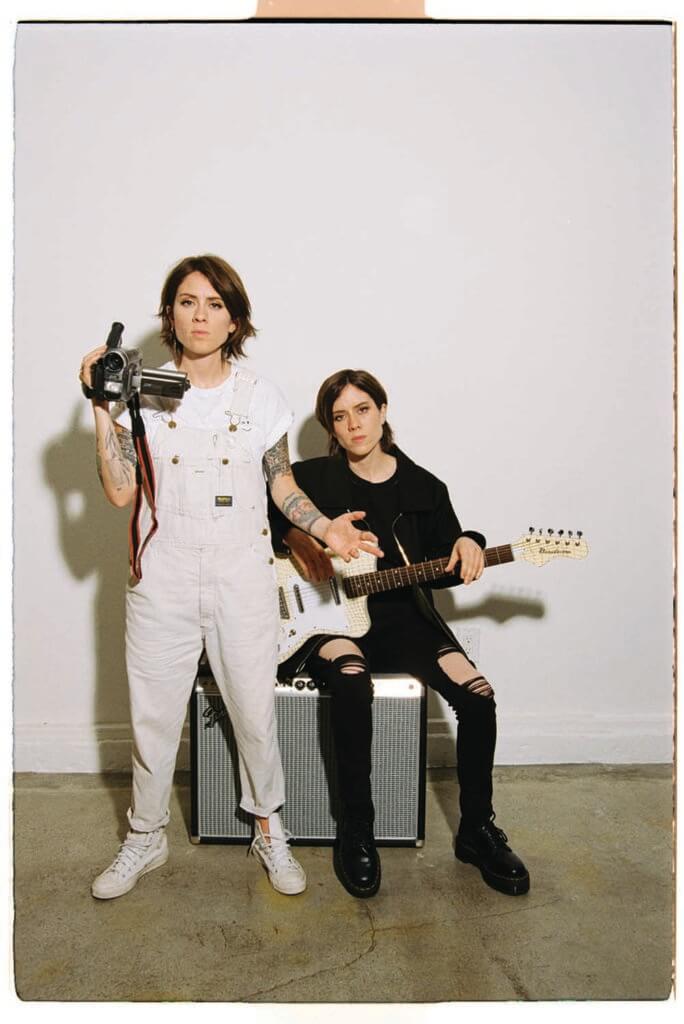
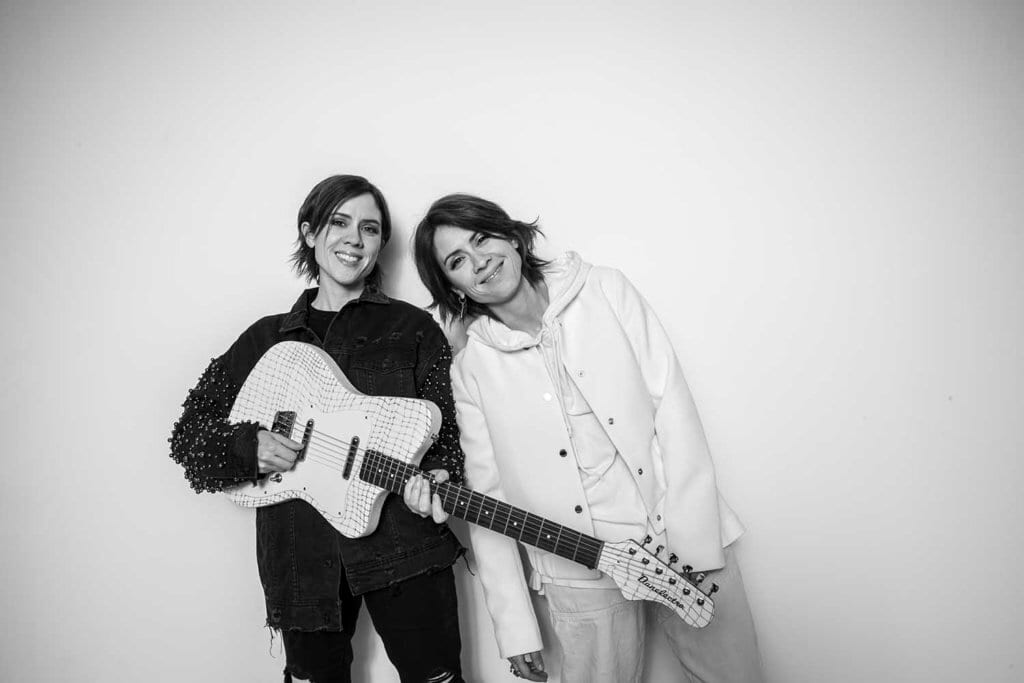
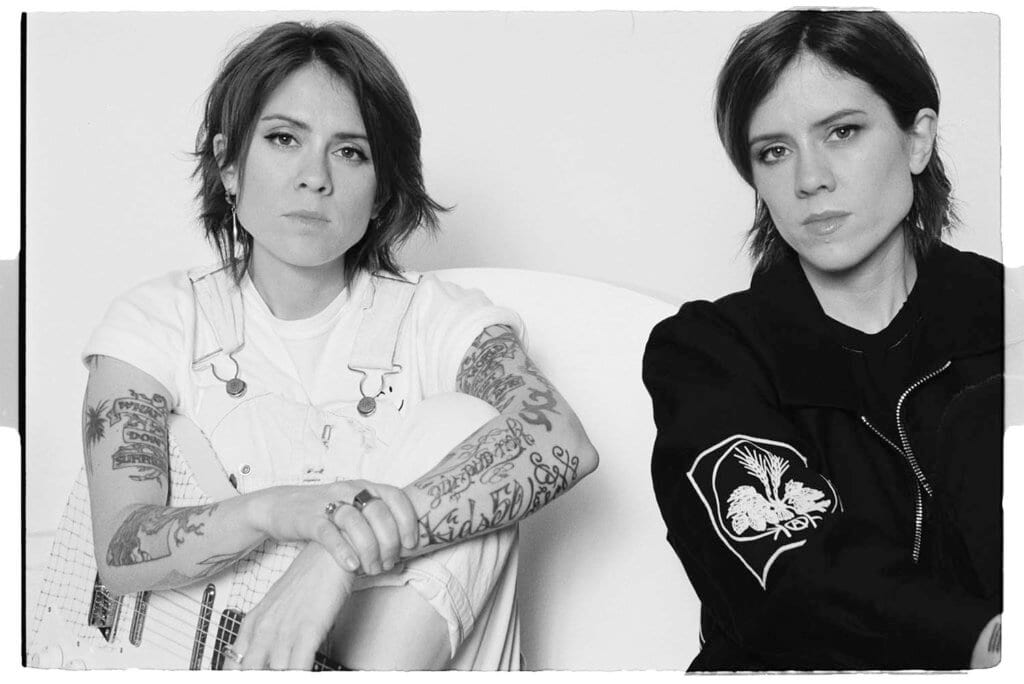
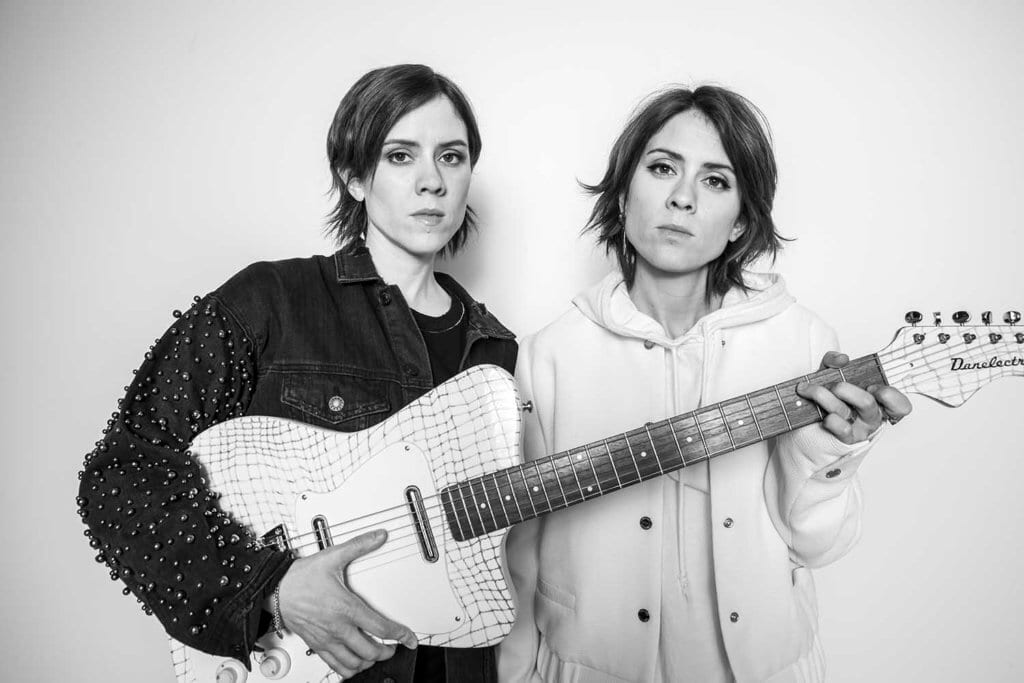
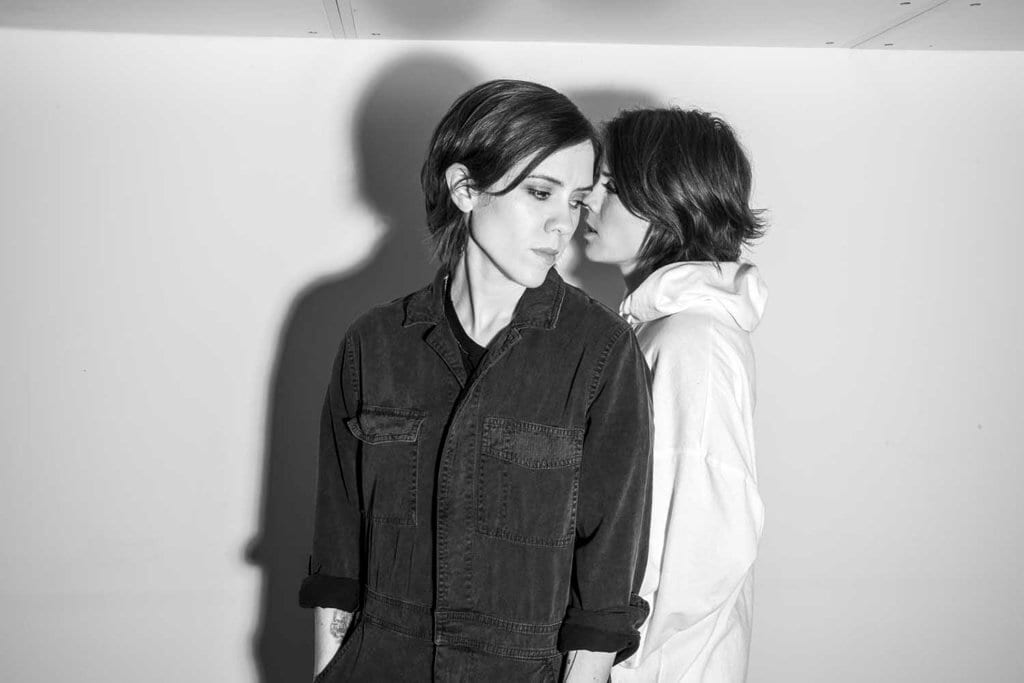
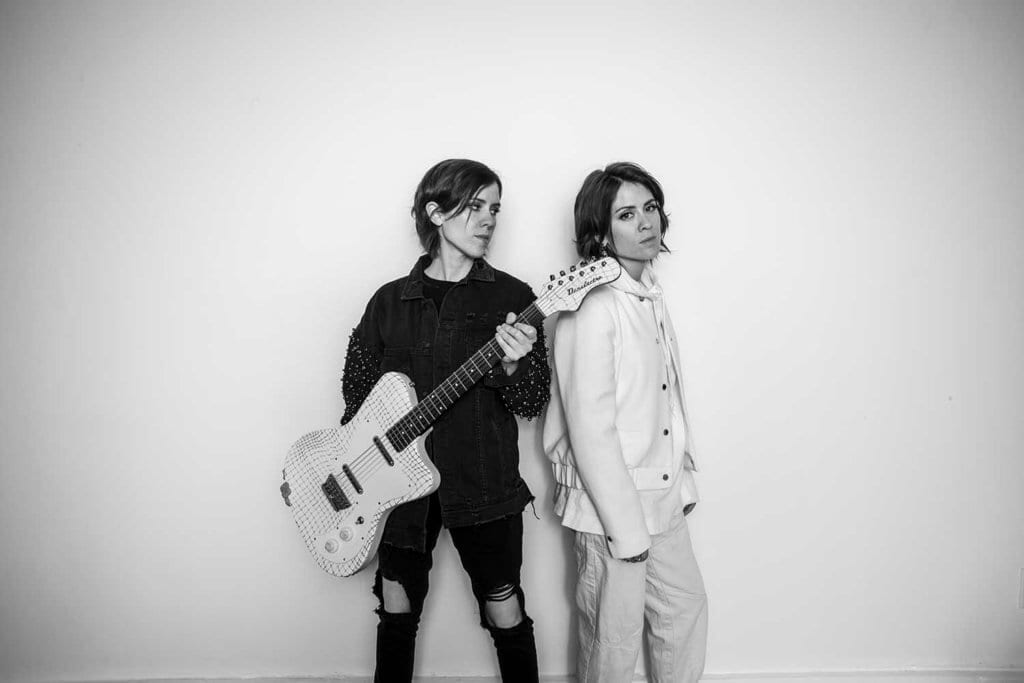
 For Tegan and Sara Quin—the twin siblings, visionary songwriters, and most recently, authors of their memoir, High School—the antidote for the irreparable fog of time happened to be each other. Well, each other and their natural compulsion to document everything, as well as extensive research and interviews. On their ninth and latest album, Hey, I’m Just Like You, Tegan and Sara revisit the first songs they ever wrote, sitting together on their respective bedroom floors in Calgary, taking turns playing their shared acoustic guitar.

Katie Crutchfield: I have so many things I want to ask about the new record. It’s this really great convergence of all your previous records. It’s still dance pop, but it really invited guitar back into the mix. What led you to that choice?

Tegan: When we were writing the memoir, right away we dove into the music. After months of searching, we found two tapes with 40 songs on them, and I thought, like most people who listen to music they made as teenagers, that we would be horrified. But instead, I was really moved and blown away by the rawness. Sara said this a few weeks ago, and it really struck me: the narrative about young people, especially young women, is that we’re silly and underdeveloped. But here was a spark. We knew something was special about [those songs]. And for two decades, it was talked about how the early part of our career was us finding ourselves, flopping around in obscurity, unrefined. But I realized that really wasn’t true. In writing the book, looking at the videos, listening to songs, and reading my journals, I was really struck with how much of ourselves was already there. And how confident and sure of myself I was. I couldn’t write these songs now because I would never be so raw or honest. The plain speech was so remarkable to me. We had to make a record of these songs.  

And so, to answer your question about production: we couldn’t make them sound like new pop Tegan and Sara. We needed to go back, play, and record these songs like we would have back then—but with the experience we have now. It’s not a nostalgia record. It’s an homage to that time, and it was important that Tegan and Sara from 1997 would not be horrified. 

Allison Crutchfield: I was reading about how this record came to be, and it really made me think about when Katie and I started playing music. Sonically, how did these songs evolve? 

Sara: The goal was to not overcomplicate things. We’d sit down with each song and ask ourselves, “This is what the song is about—how do we add more story to it?” In some cases, we would steal a great melody or lyrics from another song from the demos. We definitely did a lot of changing and restructuring, but we tried to use materials from the original source. We ended up sending everything in its most basic form to Alex Hope, our producer, because we wanted her fresh perspective. 

Allison: That whole process sounds like so much fun—to have songs from high school and have this whole new production toolbox.

Tegan: I want to add that I’m really proud of every record we’ve ever made. This journey we’ve been on for the last six years with these two bigger pop records has been eye-opening, and has challenged us, including the continued support from the original die-hard fans. But the darkside of that is it’s really fucking hard to be in a pop band. Singing to a track is hard. The challenge of making music the way we’ve been making it is that it’s incredibly difficult to just take it down to the bare bones. I started to feel really disconnected from our career at the end of the last record cycle. I’m sure there are many reasons for it, but I didn’t feel like a musician. 

Finding these demos, in a way, saved me. Sara and I started rehearsals and were sitting in a room, singing and playing together, for the first time since 2002. I feel like a musician again. I wanted to be in a big pop band and put on a big show, but it’s so important to my soul to remember that I am a musician, that I write songs, that I am a capable and talented singer and performer. 

TS Web 3
TS Web 9

Katie: I really relate to that feeling. And sometimes you get in the routine of playing the songs the same way every single night, and you just need to switch it up. 

Tegan: Yes! The freedom to do something different! People are always asking how Sara and I still manage to grow and stay relevant. I think it’s because we’re us. I hate the word banter, but I do think people come to see us play because they want that experience. But the more we locked into production, I stopped feeling like I had the freedom where we could just talk. Some of my favorite times on stage are when Sara goes into a 20 minute rant. [Laughs.] 

Katie: That reminds me of when we toured together in 2013. It was my first time touring Europe and also opening for a band that was so big. You both were so warm and cool to me. Every night you invited me to your dressing room with your mom, and we drank champagne and talked. It was so beautiful, and I thought, “This is the life! This is what it’s like to open for a band, and they all treat you this way.” But boy, was I wrong. [Laughs.

Sara: I love that you had a good experience with us, because we had such a great experience with you. One of the significant shifts in our lives and our career was when we were able to start creating community on the road. When we were a young band opening for people, in most cases we felt like ghosts, and that can be very lonely and isolating. We thought, “Are we just filling time and space, or do these bands care about us?” Over those years, both myself and Tegan decided we don’t want any band that chooses to come on tour with us to feel like they are just there to fill time and space. And while we don’t always have the time and space to be as cool as we were with you, I do feel it’s important that the bands we tour with understand how important we feel their role is. 

Katie: You guys gave me this really good advice: you told me that at some point in the band’s history, you were both concerned with the critics and how you were perceived, and you just realized that it’s so important to find your audience and not pander to the “of the moment” thing. At the time, that was so important for me to hear. Is that something you still live by?

Sara: In terms of critics and the next cool thing, I always struggle with that. Success, fame, and good reviews are a drug, and when you get it, it’s hard to deny that it feels good. And when you don’t get it, and other people are getting it, it’s impossible to not feel like you are inadequate. Instead of getting caught up in the web, and feeling like it’s holding me back, I try to channel that competitive energy towards good. If I’m so goddamn ambitious, does it always have to be directed at the same thing? Can I grow and develop other areas of my life that will make me feel valuable whether or not Pitchfork or The New York Times are paying attention to us? 

Tegan: I want to add to that and say that I think that the most re-warding thing as an artist is taking risks. If our book comes out and it’s clear no one is like, “They should write another book,” I’m not going to feel bad about myself. We took a risk, we shared our story, there’s a purpose behind it. We wanted to connect to our audience, but an audience outside of our fans: younger people, women, those who live on the fringe, people who want to hear women’s stories that rarely get told. And we did that. 

We have to find an important story to tell, and that’s why we decided to write a book rather than a record. I think that’s what has kept us relevant over the last 20 years. We’re not asking how to remain important, or keep our fanbase up, or get Instagram likes. I’ve always asked, “How can we make something we’ve never made before, tell a story that we’ve never told before, and challenge ourselves and our audience to cover new ground?”

Allison: I’m curious about your process moving the band forward as siblings. Katie and I work a little more independently, but Katie’s approval and words carry more weight with me than those of anyone else. As far as being challenged as artists, as well as being bandmates, what’s the communication like there?

Tegan: I’ve always thought that we’re so cool. I’ve always had this unbelievable confidence in us. Sara is such an incredible writer. For me, if she likes something of mine, I’m so thrilled. She’s my most important listener and my biggest critic. But that enthusiasm hasn’t stopped us from having conflicts. We’ve had to work for 20 years to find balance and allow each other to be unbearable and moody and not give the criticism the other is craving. 

Sara: One of the fundamental tensions in our band is that I require more than that. I need more people to listen, more feedback, and I long for a different kind of person than Tegan. It’s not because there’s anything wrong with her feedback. I just have this external desire to be seen by other kinds of artists and critics.

Everyone calls men visionaries and geniuses, and with women it’s like, let’s dissect the producer, the writer, the person that signs them, and the accidental talent they’ve stumbled on that should have been assigned to a man. We worked harder than everybody—that’s why we exist after 25 years. And we’re good. We’re consistently good. And we were visionaries! Look it up in the dictionary!
________
TS Web 4
TS Web 7

Tegan: What she’s saying is true. One time we were standing near Sleater Kinney, and Sara wouldn’t go and say hello. And I dragged her over. I just don’t care. Sara wants our peers to like us and care and give feedback, but she also won’t ask them. 

Sara: But it’s not just musicians. I’ve always had this suspicion that no one really likes us. That’s not Tegan’s fault. It’s a dysfunctional coping strategy that I’ve had because we came into this world famous. Being twins, we were kind of always famous. And that doesn’t always yield positive responses. Whatever I am, good or bad, I am it times two, and that has always stressed me out. When I figured out I was gay, when I had to cope with that, it was already a burden. And then when I found out Tegan was gay, there was no sense of relief. I was like, “Oh great, Tegan’s gay too. So now we’re two gay people.” I wasn’t soothed by it, and I don’t know why. I’ve always wanted external feedback, reassuring there’s something good about us. 

Katie: Hearing that, and applying that to a creative dynamic, it makes so much sense. There’s one skeptic, and one hype man. 

Sara: I always say, we would have been so insufferable if we were both the same in that way. The other day we were doing press, and Tegan kept calling us visionaries… [Laughs.]

Tegan: We are fucking visionaries! 

Sara: I kept saying, “Stop saying that! Let them come up with it!”

Tegan: But that’s the point. We’ve always been polite and nice. Everyone calls men visionaries and geniuses, and with women it’s like, let’s dissect the producer, the writer, the person that signs them, and the accidental talent they’ve stumbled on that should have been assigned to a man. We worked harder than everybody—that’s why we exist after 25 years. And we’re good. We’re consistently good. And we were visionaries! Look it up in the dictionary!

Katie: I think She Shreds should put that on the cover…

Tegan:  Fuck yeah! We’re Tegan and Sara… VISIONARIES. 

Katie: As a band that pushes the envelope, I wonder, was there ever a moment when one of you wanted to take a risk, and the other wasn’t into it?

Sara: Tegan definitely has pushed me to do things that I wouldn’t have done. I was more satisfied at drilling us down into a niche or cult status—that felt very comfortable to me. And then when we got offered to tour with The Killers or open for Paramore, I was just like, “Why? What are we trying to achieve?” And Tegan was like, “Success and getting more fans.” And I was like, “Do we want that?” And Tegan was like, “Fuck yeah we want that.”

Katie: You guys are on the pulse, and engaged with what’s happening with music right now. I’m curious what you’re listening to. 

Tegan: There’s so much cool stuff happening in the mainstream, a lot of challenges to the norm. In the past, I would have felt threatened by too many women, queer people, or alternative voices all putting records out at the same time, that there was no room for us. And now there’s so much room, and that feels thrilling. I’m thinking about Shura, Vagabon, MUNA, Hayley Kiyoko, Nimmo, IDER, Sleater Kinney—and the fact that everyone is putting records out this year. I feel rich to live in a time that has all of these diverse voices of different genres. I felt so lonely for so much of our career, and I felt the pressure—we were the ones that got to be popular, and so we had represent everyone. Or we were totally obscure and ignored because someone else had the baton. And now it feels like they’ve broken the baton into thousands of pieces, and we all get a piece. 

TS Web 9
TS Web 8
TS Web 6
This cover interview originally appeared in She Shreds Magazine Issue #19, released December 2019.

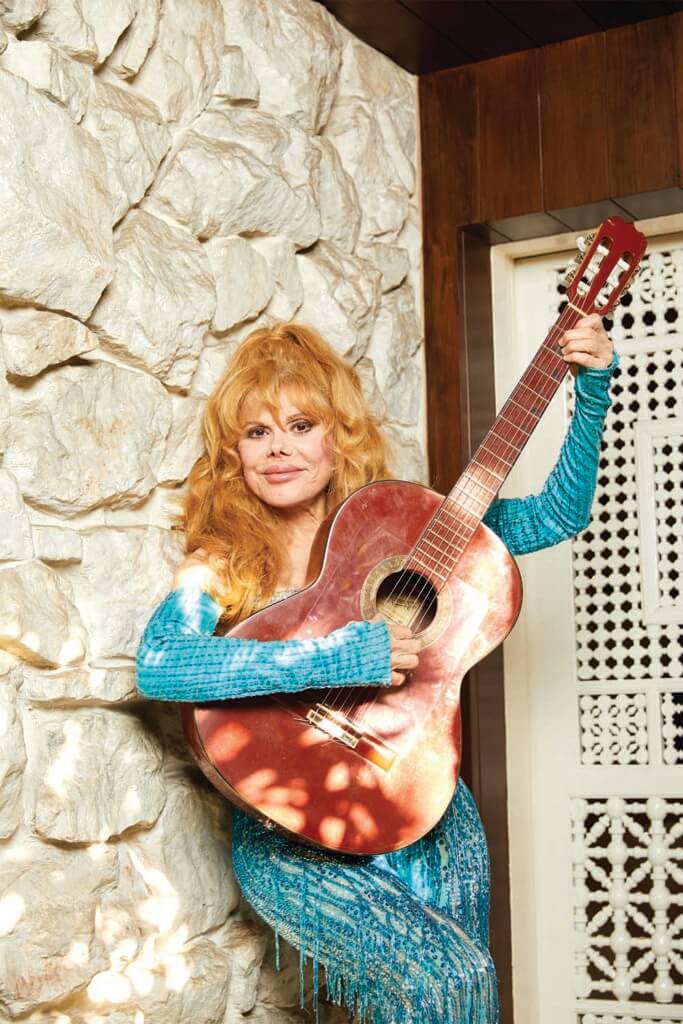
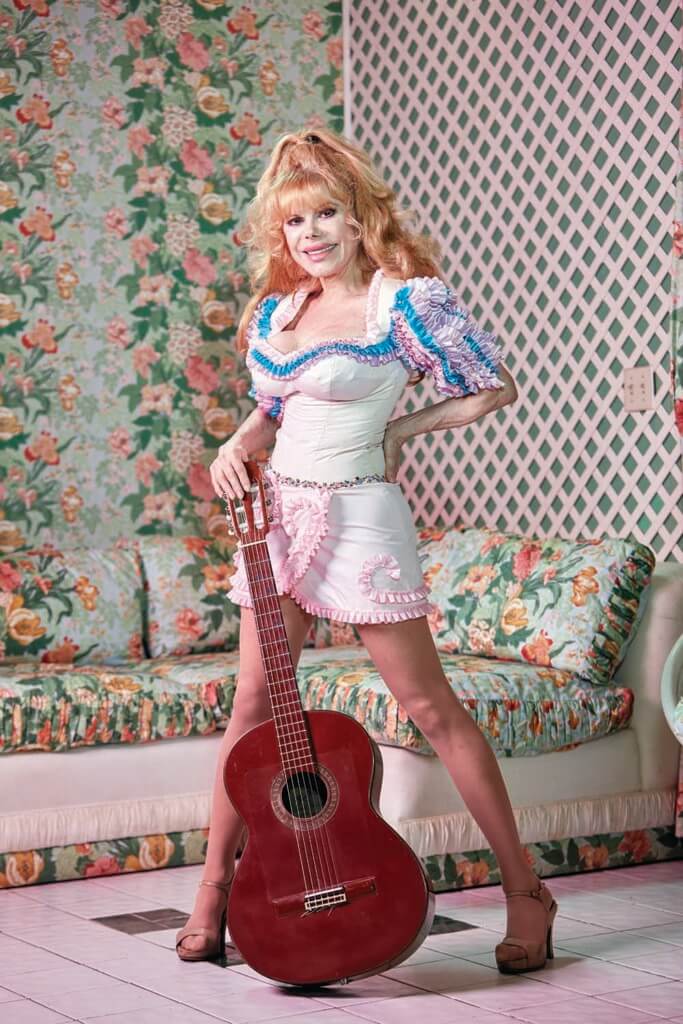
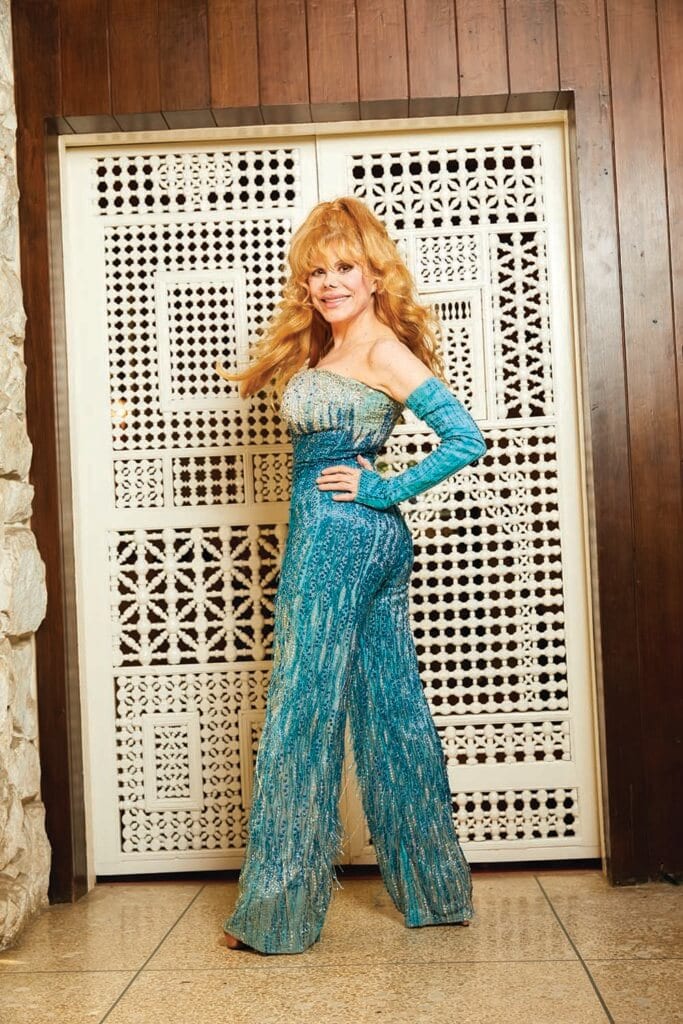
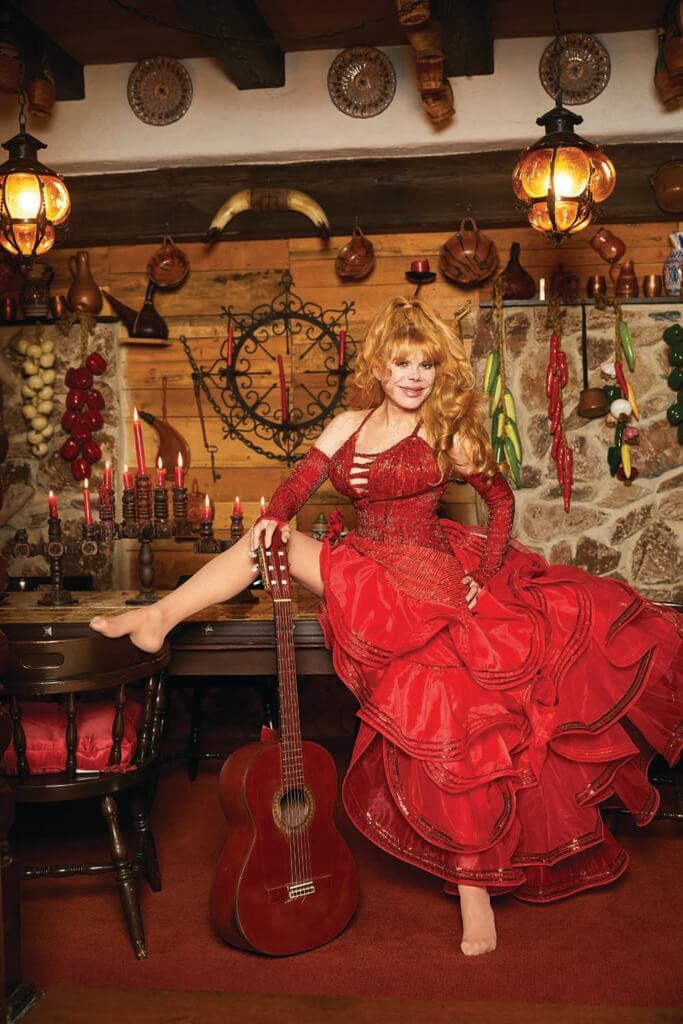
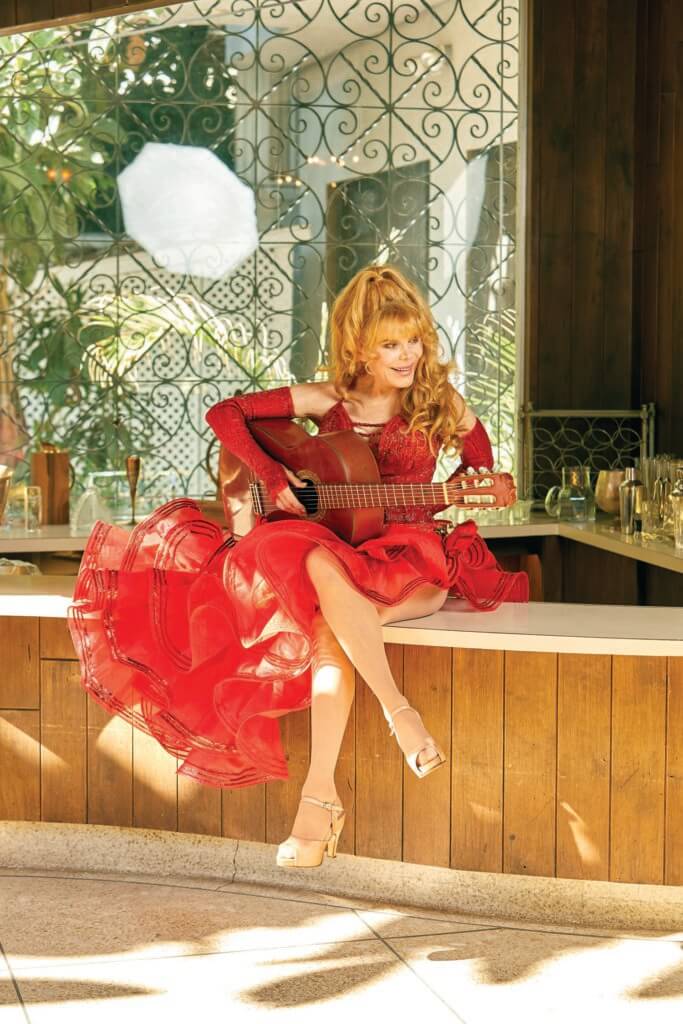
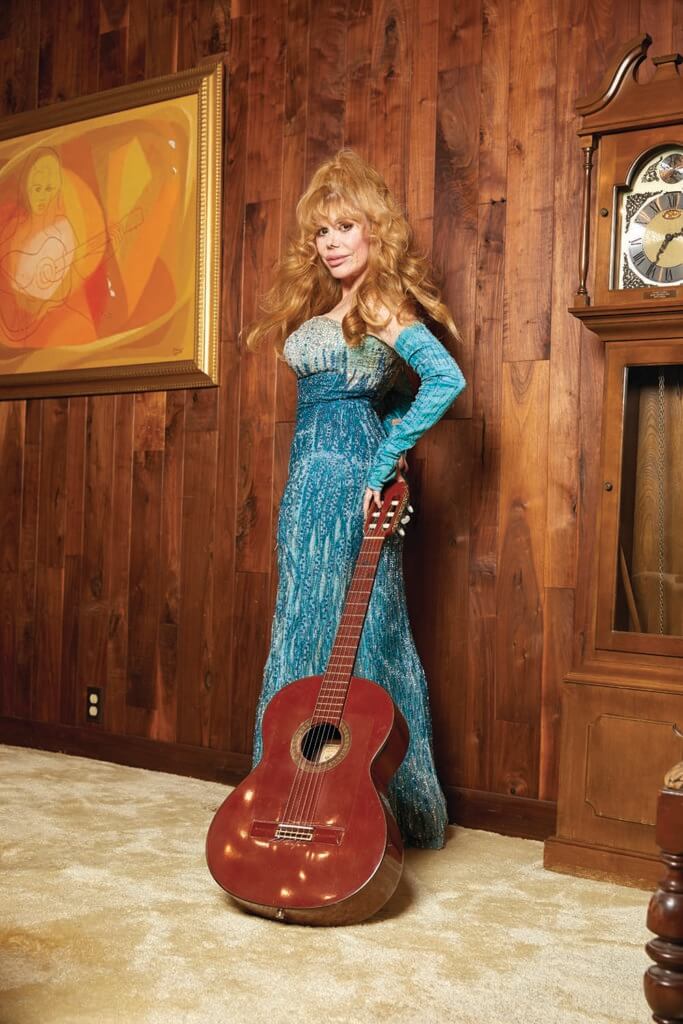
María del Rosario Pilar Martínez Molina Baeza, otherwise known as Charo, otherwise known as la Cuchi Cuchi, is many things. Many of us recognize her as a hilarious TV personality who has captured the hearts of millions around the world, performing on The Today Show, The Ed Sullivan Show, and countless others since the ‘60s. Charo is an award-winning flamenco guitarist who studied under one of the most prestigious classical guitarists of the century, Andrés Segovia, and has gone on to gain wide recognition for her platinum selling album, Guitar Passion

However, the entertaining, fun loving, and passionate musician is only half of who Charo is. As much as she may be a product of the entertainment business, she is also a lover of human, animal, and environmental rights. Among other incredible accomplishments, Charo is a member of PETA, and the recipient of the 2014 Ricardo Montalban Lifetime Achievement ALMA Award, awarded by The National Council of La Raza (NCLR), the largest national Latino civil rights and advocacy organization in the United States. Charo is also a mother, a wife, and simply put: music is her life. The truth is that you can’t describe Charo in a paragraph, a sentence, or even a word; she’s a multifaceted character that, much like her age or the details of her upbringing, no one will ever fully get to know. 

After discussing our current individual locations, debating whether we were going to speak in Spanish, English, or Spanglish, and reveling in her love of the ocean, we went straight into one of Charo’s many essential issues: our interaction with nature.

I can imagine you playing right in front of the ocean, or in the rain with a fire going inside, serenading us with your guitar. 

Exactly. Nature is beautiful. I mean, we don’t pay attention.

Let me put it this way: we take [nature] for granted. We are living in the right time, according to me. We are in advancements in technology, and we have not yet to match it in nature, in the air, in the rain. When I’m happy and want to write some music, I listen to the sound of the wind. When [I’m] living in Hawaii, [I] just have to sit down and—not meditating—just be quiet and listen to the sound of the rain or the wind blowing the trees, bringing beautiful melodies. Seriously, I highly recommend if you have the opportunity, visit the island of Kawaii. You’re there along with the nature, mano a mano. 

But I like also noise. So I’m very confused. I don’t mind if you write that down—I’m confused. After two weeks in nature, I say, “Where is the noise?” [Laughs.]

That’s something that I think people love about you. You’re multifaceted, and you’re not afraid to hide it—it all makes up who Charo is. And so, in terms of the guitar, which part of you comes out when you’re playing guitar?

I love music. It’s in my family. Although they’re all farmers, from both sides, my father and mother, music has been the medicine in my family for centuries. Music is like oxygen. I am lucky to come from family who understood that education is the best will that any parent could give to the children. Music is the dedication and oxygen in my family for generations. They were clever enough to support education for my sister and me just by raking tomatoes, potatoes, and spinach. I am a farmer. I know how to raise all kinds of vegetables and food. So I am two persons, but the main thing is always respecting nature. 

Music is saving my life. About seven months ago, my husband passed away in a very tragic way. I am surviving, [but] I will never be the same. I want to talk to children, because what happened to me I hope will never happen to anyone. The love of my life, the man that gave me unconditional love, respect, and support—my biggest fan. He enjoyed every show, applauding, and so proud of me. But unfortunately, [because of] a combination of a perfect storm of education, side effects, and depression, he took his life. 

So, why I am surviving: music. 

I locked myself in the bedroom for about six or seven weeks, feeling numb. But then, I decided that life is beautiful. I went public to teach other people to take depression very seriously, and the side effects of medication. And I’m using the tragedy in my life to save lives. Music and the performances are saving me. The social media… I never, ever, ever thought that social media was important because I was very cocky and thought if I sold out all of my performances, if I always have the biggest record of selling CDs—but now the amount of downloads [of my music] shows how people need music, and love good music. So, that saved me. It’s my vitamin. 

I feel honored to talk to you and tell you that not every day is sunshine, but if you have a good sense of humor you can survive that day. But again, music is the greatest thing that’s happened in my life. [When I was a little girl], all of a sudden a developer decided to take all of the land. Overnight, they took all the land of everybody in an area of Spain—Murica, near Valencia, where I was born—and everybody became homeless. So my life and my sister’s life has been tough, but again, education, the sacrifice of my family, and music saved us.

“I’m using the tragedy in my life to save lives. Music and the performances are saving me. The social media… I never, ever, ever thought that social media was important… but now the amount of downloads [of my music] shows how people need music, and love good music. So, that saved me. It’s my vitamin.”
________

Were you already playing guitar during that time? Or did you learn for the purpose of making money?

Oh no no no! I was the most happy little girl you ever met. I was about seven or eight and happy with no care in the world. I was introduced to the gypsies in Carabańa every July and August in the land of my grandparents. I was already fascinated by the sound of guitar and fascinated by the way [the gypsies] lived. They don’t care if the next day they’re going to have food, they just welcome the night and the sunset. They play guitar, make a fire, and dance. Even the children [playing] bulerías, authentic flamenco. That fascinated me, my sister, and my cousin. We went, “Oh, this is beautiful. This is different.” They do not believe in discipline and they do not care for nothing. 

That was the happiest time in my life. And then one of the gypsies was very grateful to my grandma who allowed them to be there for the whole summer and eat food from the trees, potatoes, whatever they needed, because my grandma—mi abuela—spoke to people and listened to them. She was a wise woman, very educated in her own mind. So, that’s about the time I fell in love with music. The [gypsy] men taught me so much until they left one September—because they always leave at the beginning of September—and by then I was good enough at age nine, when we became homeless. We had nothing and [my mother] did not allow that my sister and me look back. And I remember, even as a little girl, crying and my mother singing to us. We always use, in our family, the support of music. 

We survived. And at the age of nine, we ended up in Madrid. That is where I began studying—though I already knew a lot—with the famous Andrés Segovia. I had the luxury to be working in his institution, and once in a while, between engagements and tour, he’d show up. He had a bunch of students and we were all very nervous and scared when he’d show up, but every single word that he said I learned them, I listened. He said, “When you play guitar, hold it very tight to your body, to your chest, and listen to your heartbeat and play according to what your heartbeat is telling you.”

Can you talk a little bit about your new single?

I am very proud to let you know that in honor of love, a celebration of love, I will introduce at the end of this year the single, “Besame Mucho.” All guitar, all me. 

I [recorded with] two tracks. One, the melody with the technique of Segovia. And then another track, me playing again, quiet bossa nova. And believe me, it’s the best thing I’ve ever done in my musical career because it’s personal. It’s the most emotional masterpiece that I’ve done. Every time I play it I cry because of the emotional responsibility of my husband. To honor him and honor love, that is my best move. In my case, and in my family’s case, [music] is the medication. I am very happy to show, through your magazine, the real me. When you see me in a concert, in a beautiful theatre, you are to see a happy woman, keeping people very happy, introducing beautiful music. The only time that I find myself happy now is performing with a guitar in my hand. I don’t see any other happiness—parties or nothing. My way to survive right now is my guitar, my music, my family, and my son. Instagram is helping me so much because it’s like as if you have a friend telling you to stay strong, God bless you, in different languages. When I don’t have my husband around, Instagram is helping me.

Charo Web 5 3
Charo Web 6 1

When you were offered the opportunity to present yourself as a television character for millions of people, did you feel like you had to put down the guitar? 

I believe that [in the] world of entertainment, you are not only working because you like it, for yourself. The people who call themselves entertainers in show business—and I am one of them—we got the job. [We have] an obligation to entertain and make [people] happy. 

Everytime I say, “Cuchi Cuchi,” which is the name of my family’s dog, Cuchillo, [my family] would laugh and they were giving me cookies, or caramel, or whatever. I was able to understand this is a hell of a business, so every time that I was looking for attention or wanted my family to look at me, [I would say], “Look at me, look at me, Cuchi Cuchi!” and I got attention. So this is part of me seeing people having fun. 

And then, when I came to America, it was very make it or break it. The king of Latin music, Xavier Cugat, was the person behind the power of what we now call salsa. So, I came to America and Xavier Cugat met my sister and me. But I was on a trial. If I didn’t make it in America, we would get on a plane and go back to Spain. I didn’t speak English, [so] I picked up my guitar—but [America was] not ready. They would not let me play the guitar. But I remember, kind of scared, [thinking], “Did [Xavier Cugat] like me?” And whatever he was asking me, [I started saying], “Cuchi Cuchi!” and people started laughing, and he was laughing, [so] that became the persona.

Most of the people didn’t know the other persona: the guitar, the musician. The next day my name was no more Charo. Overnight, America found “Cuchi Cuchi” and that is the character that became so powerful. For me, Cuchi Cuchi means money. Not only that, it saved me. 

And then we had a problem. Cuchi Cuchi took over the real me: my preparation, my knowledge, my guitar, my education. I became an idiot. One day—I’m taking you back to 1997 or 1998—I was getting ready to do a show and I looked to the mirror and said, “Ok, Cuchi Cuchi showed you the way to the bank. Now it’s time to be who you are.” I recorded Guitar Passion and it became such a hit. The producer was telling me, “Why are you changing from the Cuchi Cuchi that everybody loves into that guitar?” And I told him that now I am doing what I am supposed to be doing with my life, I always can be a teacher. When I play guitar, I can feel it. A lot of people look in disbelief, thinking, “What? Is that the same person that three minutes ago was dancing merengue and having fun?” So that’s me. I can be two persons.

Do you like that kind of shock factor?

I like it because I know that they’re already having fun, they got what they paid for—”Oh! Cuchi Cuchi is changing costume, let’s see how she looks right now, hahaha,” into “Oh my god, I didn’t know that, I wasn’t expecting that.” At the end of the day they had a surprise, and they felt that it was worth it to see the show. It didn’t bother me. Now, it did bother me when I was about to go to television, and to see the resistance in the ‘90s and the beginning of the ‘00s, of producers telling me, “Yes, I know you play guitar, but however, can you do the Cuchi Cuchi?” At that time I was very young, and I was saying, “Ok fine, I have to work,” until I said enough is enough. But now I just enjoy it. It’s very important to see people laugh, now I know how important it is just to laugh… It’s a great therapy. I know that when I announce, “Ok, you’ve seen half of me, and now you’re going to see the other half, I’m going to play guitar,” I feel confident. Like the job is done. And I get the feeling that the audience feels the same way. 

How do you want people to remember your legacy? Is it through music, comedy, or something else?

[Pauses and takes a deep breath.] Such a good question. [Pauses again.]

Everything that happened until [the day my husband died] was good. I was happy, very much into life, really nothing to worry about. I had a great life, a good family, more than I dreamt I would have when I was a little girl. But, not now. If there’s ever anybody that wants to think about me or remember my legacy, it’s that life is beautiful and education is more important than money. I want [people] to know that [both characters are] really important to me… the respect for such a beautiful instrument, and also the person that loves everybody and understands that laughter and comedy are really important. 

So, if I had to tell you how to describe me, I’d say, “Ok this is a woman who loves life, loves entertaining, and give the most you can give at showtime.” I want to be the most honest possible; entertaining is very important work. But also, if you are lucky enough to not only entertain through comedy but as a good musician, then you have the perfect formula. A woman that respects both fans and music. Sometimes I make a joke when I’m on stage and if the joke is good I laugh more than the audience. [Laughs.] Because when the curtain opens I am so happy, but when the curtain closes, I am not happy. I’m not happy because I don’t have a beautiful man, laughing and hugging me. I don’t have that anymore. And that is the truth. 

This interview originally appeared in She Shreds Magazine Issue #19, released December 2019.

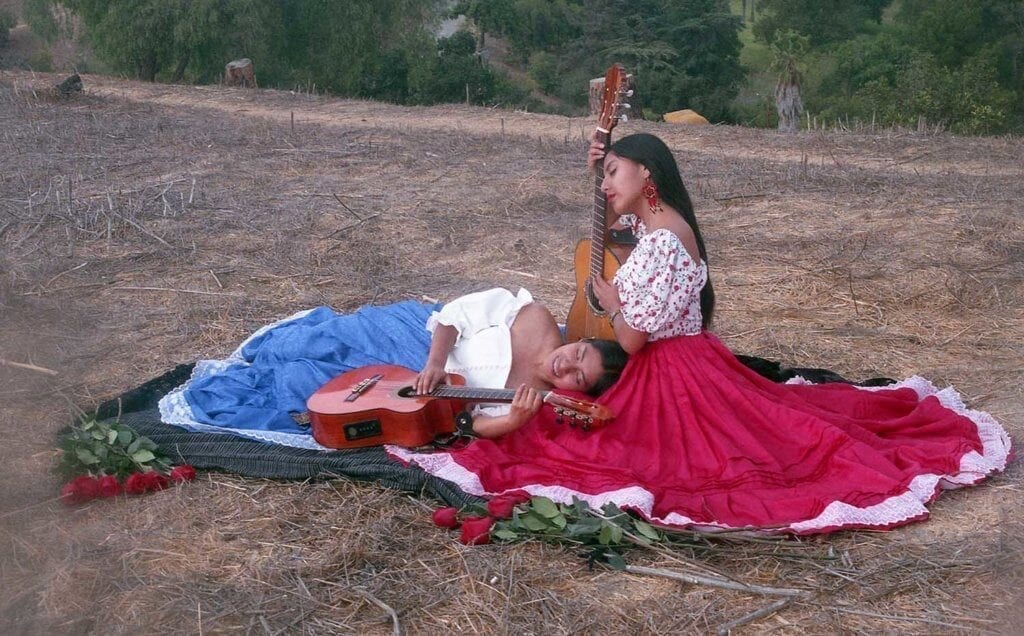
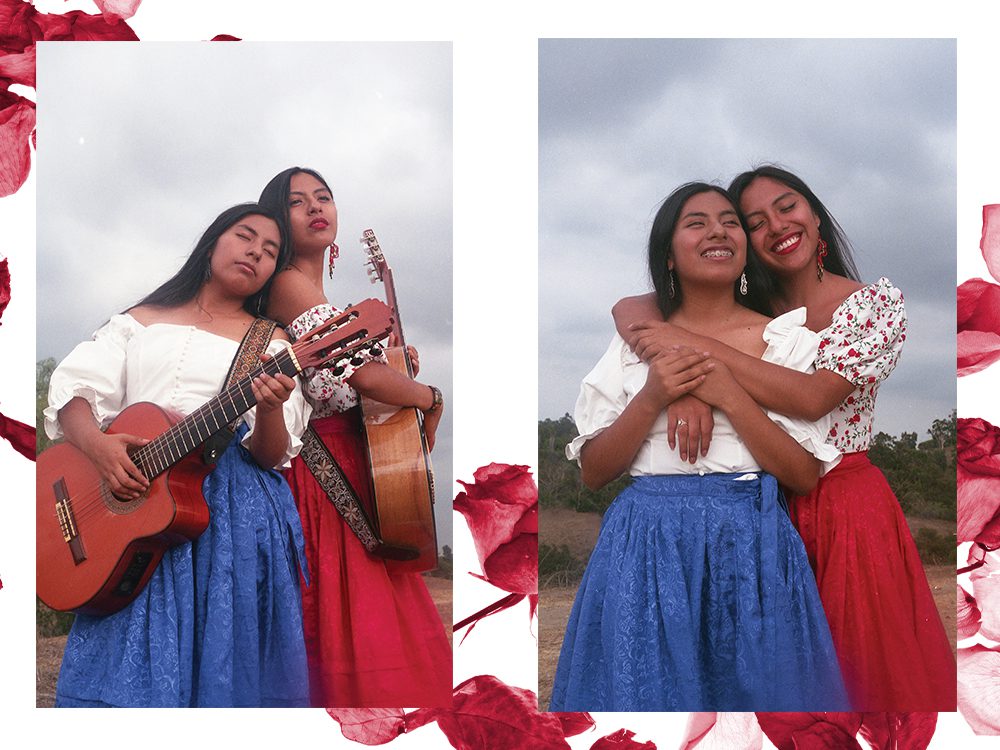
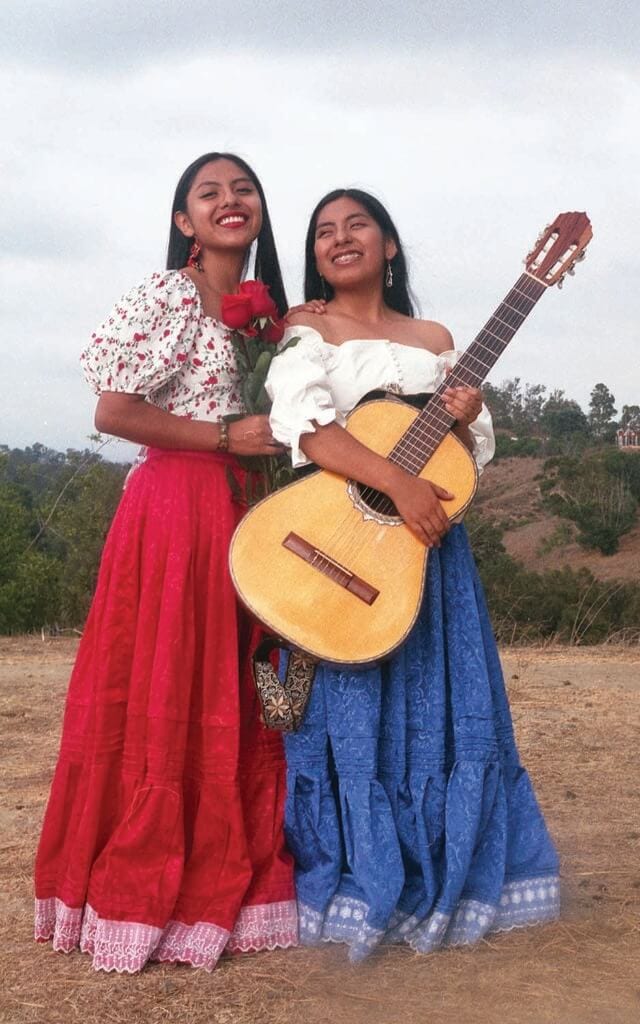
Sisters Emily and Sheyla Rosas of Dueto Dos Rosas pay tribute to their rich heritage through requinto guitar, traditional Mexican folk songs, and YouTube.

Emily and Sheyla Rosas were born in the United States, but are passionate about keeping Mexican traditions alive in their musical project, Dueto Dos Rosas. From San Marcos, CA, the sisters are proud of their indigenous Oaxacan roots and Mexican-American identity. They pay tribute to their rich heritage by performing as a duet, playing and singing campirana and old Mexican folk songs on the requinto guitar.

In 2014, Emily and Sheyla tapped into their musical connection and started making videos on YouTube, but they had no idea how far their music would take them. Their timeless campirana renditions, portraying the experiences and journeys of immigrants, quickly spread and gained the Gen Z sisters countless fans. I spoke to 17-year-old Sheyla and 22-year-old Emily to find out about their unconventional passion for covering music created decades before they were born.

Dueto Dos Rosas PC Margaret Leyvas Web 4

How did each of you first learn to play the guitar? 

Sheyla: I first learned to play the guitar about three years ago. I always had an interest for the guitar, and so my dad started teaching me a little bit. At first, I didn’t take it so seriously. Then a year later, I started watching tutorials on YouTube specializing in requinto.

Requinto?

Sheyla: It’s a classical type of guitar from Mexico, and it’s used a lot in boleros. It only has four chords, six strings, but four tones higher than the guitar.

Emily: A little bit after Sheyla started learning,  I caught the interest, too. Sheyla and my dad both taught me and that’s how I learned.

In Dueto Dos Rosas, you both sing and play the guitar. What is it about playing the guitar that makes it special enough to include? Why not just sing?

Emily: First of all, it’s very rare that I’ve seen it in Mexican music—especially rancheras—but not a lot of women also play instruments. They just sing, like Lola Beltran, Lucha Reyes, Lucha Villa. We just know one [other] duet that has played guitars, and they’re called Las Hermanas Nuñez. When we found out about them, we felt a little inspired because we had heard Las Jilguerillas and Las Palomas, but they didn’t play guitar. It was so captivating, and that’s why we felt so interested in learning.

Sheyla: Like my sister said, there’s not a lot of women who sing and play guitar.

Emily: We also tried to hire musicians to play along with us before we knew guitar, but we felt like their style didn’t really fit into our voices and it didn’t sound exactly like we wanted it to. [When] we started playing was when we felt like it sounded good.

Dueto web roes

A lot of individuals your age are typically doing YouTube covers for artists like Miley Cyrus, Dua Lipa, or other mainstream acts. What is it about rancheras and old Mexican folk songs that draws your attention? 

Emily: One day when I went over to my grandparents’ house. My grandpa was hearing Las Jilguerillas and I instantly felt like, “Wow, those are two voices doing primera y segunda.*” I asked my grandpa, “Quiénes son, yo no las había escuchado,*” and he told us, “Se llaman Las Jilguerillas, hay otros duetos también que cantaban así, como Las Palomas.*” Well, that instantly caught my attention, and when I got home I started researching, and that’s when we found out about all the duets. For me it was a new kind of genre because I hadn’t heard it before. I had heard rancheras, but only solo artists like Lola Beltran, José Alfredo Jiménez, Pedro Infante. So it was new to me hearing two voices, and I just fell in love with it. When I tried singing along, my sister came and she did the second voice, and I was like, “Wow, we can actually do primera y segunda.” It was just instantly a connection for us with that music.

Sheyla: The music in general—it’s something you wouldn’t hear a lot. I had never heard that type of music, so it was really exciting for me.

Has your abuelito heard you guys play? Or has he seen you perform?

Sheyla: He has—the first concert in NY. He saw the video when we came back and was just so emotional and happy that he got to see us singing these songs.

Emily: [Songs] that he used to hear when he was young. It was something really special for him.

What feedback do you get from viewers and fans?

Emily: The most comments that we get are from people the age of our parents, that we remind them of their childhood, when their parents or grandparents used to listen to this music. It’s really nice to hear that we bring back good memories and so much emotion to them, and it’s something really beautiful to hear. They also get surprised, and say, “Oh, you guys are so young and you guys sing this music?”

Sheyla: Yeah, and they also send a lot of poems and a lot of compositions that they’ve made. It’s so wonderful.

When did you decide to use YouTube for your music, and what kept your interest in this platform? Why not use something like TikTok?

Sheyla: We started our YouTube channel back in 2014. We’d seen a lot of YouTubers in that time, and it caught our interest.

Emily: I think YouTube is the biggest platform that I know of, because TikTok—well, not a lot of grandparents and not a lot of adults know about it—so I feel like YouTube is the biggest platform where we could spread our music to more generations.

 
You guys have since gained a lot of popularity and visibility. People really love you! What has that been like, and are you surprised by it?

Sheyla: I actually never knew that this music would [reach] a lot of ears and that a lot of people would open their minds.

Emily: When we first started uploading videos to our Facebook and YouTube, it was just for family members to enjoy our songs more than anything, but when we started getting likes and comments from other people that we didn’t know, it was something that we never expected and are really thankful for.

You two are obviously very talented. Have either of you faced any challenges or obstacles being two very young Latinas making music in this male-dominated industry?

Emily: We have, especially because we’re girls—young girls—and I feel like some musicians don’t take us seriously. One time we went to a wedding and there was a group there, and I told a musician the tone we sing in, and he started playing in a totally different tone. We have dealt with some difficult people.

Did you tell him anything? How did it get resolved?

Emily: We’re really shy so we didn’t say anything, we just winged it. After we were done singing, my mom said, “You guys should have told him, you should have stood up for yourselves.” But in that moment—especially since we don’t know how to read music, we don’t know much about tones—I thought, “Maybe I didn’t explain it right, maybe he didn’t understand me.” I don’t know, but I started taking music classes, so that way I know what I’m doing, so that no musician can tell me, “Oh, you’re wrong.”
He obviously didn’t know what he was doing. When did you start the classes and what did you take?

Emily: Just this summer. I took fundamentals of theory and a keyboard class. It was awesome. It was something new to me, but it was exciting. I’m already in music even though I don’t know how to read it [so] it’s a whole new world for me and I’m so excited to keep on learning.

Sheyla, what about you?

Sheyla: I definitely do want to take classes for the requinto, and vocals also, because I feel like there’s a lot of work to do. We still need to keep on improving in everything we do.

Dueto Dos Rosas PC Margaret Leyvas Web 5

Do you have any big events coming up?

Emily: We’re going to be singing in our hometown, our pueblo in Oaxaca, San Martin Sabinillo, and we’re going to be playing en la fiesta patronal.* It’s to celebrate our saint’s birthday. It’s our first big presentation in Oaxaca, so we’re really excited about that. We were born here in California, but our parents are from there, and we visit almost every year. I feel like it’s our home.

Sheyla: Our grandparents from my dad’s side, they’re still there. Also, my mom’s mom—my grandma—she’s also there taking care of my bisabuelita,* my eldest abuelita. We feel very rooted to where we come from because it’s basically our origin, and we love so much our Oaxaca.

Have your grandparents from Oaxaca heard your music?

Sheyla: A lot of people from our town have. They’re also selling discs—they downloaded our songs from YouTube and they’re selling them in Oaxaca. It’s amazing knowing that our people are listening to us, and it’s very emotional for me.

Emily: Yes, our grandpa from our dad’s side—his [grandpa’s] parents—they’re both alive still, and they live in the pueblo and they’re so surprised, especially since we’re women, that we sing and play guitar. Our great-grandpa’s so proud of us, and he’s a little old so he doesn’t know how to speak Spanish very well—he speaks Mixteco—but we know that he’s really proud of us. 

What is something you want people to know about you?

Emily: One of my biggest dreams is for the younger generation—especially my generation—to feel love for this music and feel passion and start listening to it, or maybe start playing it, because I feel like it’s a genre that by the years is becoming lost. Fewer and fewer people are singing it. It’s music that’s so beautiful, and it can’t be left to be forgotten.

Sheyla: And for me as well, because as my sister said, it is becoming lost and we want to revivir this música.*

What advice do you have for girls that want to do what you’re doing?

Sheyla: Just giving it your all and putting all your passion into it, because these songs are what represent you as Mexicanas.*

Emily: That they can do it. They can do anything they put their mind to. And that this music is nothing to be ashamed of. It’s nothing to be embarrassed of. It’s something to appreciate, to love, and to cherish, because it’s something that our grandparents left for us and I feel like that is something that we should appreciate.


Translations

Primera y segunda: The literal translation is “first and second.” They actually refer to first and second voice in a duet, or the differing vocal tonal harmonies sung by two people

Quiénes son, yo no las había escuchado: Who are they? I never heard of them.

Se llaman Las Jilguerillas, hay otros duetos también que cantaban así, como Las Palomas: They’re called Las Jilguerillas, there’s other duets that sang like that too, like Las Palomas

Abuelito: Grandpa

Piden otras canciones: They ask for other songs

En la fiesta patronal: At the patron saint’s festival

Bisabuelita: Great-grandma

Revivir this música: Revive this music

Mexicanas: Mexican women, feminine form of “Mexicans

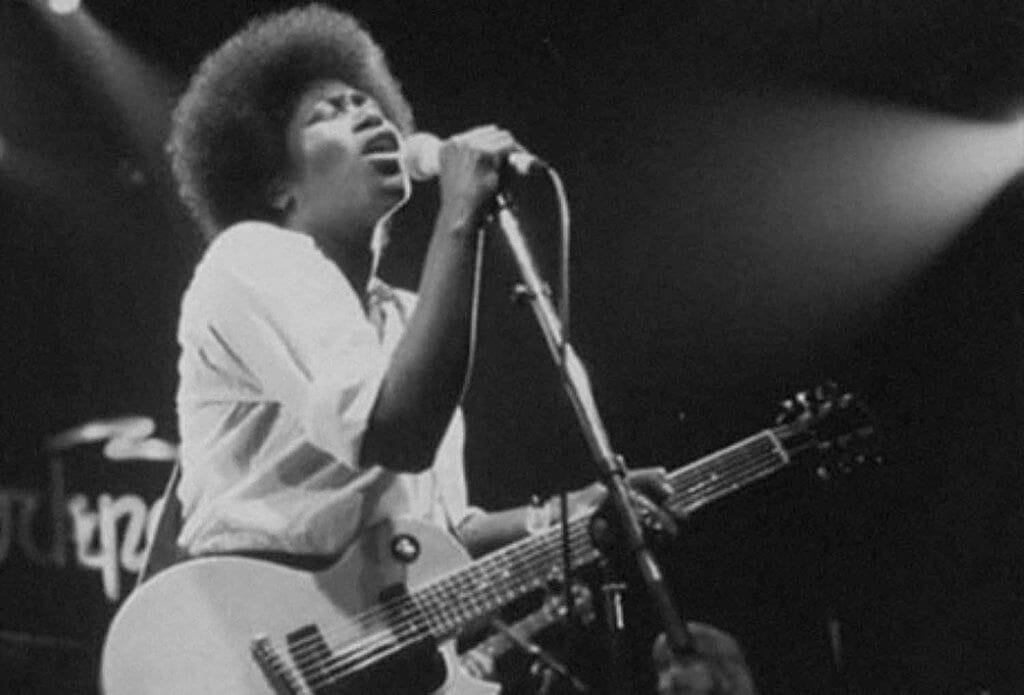
Throughout her career, the legendary Joan Armatrading has embraced a confidence that we should all be so inspired to welcome in to our own music.

This interview originally appeared in She Shreds Magazine Issue #19, released December 2019.

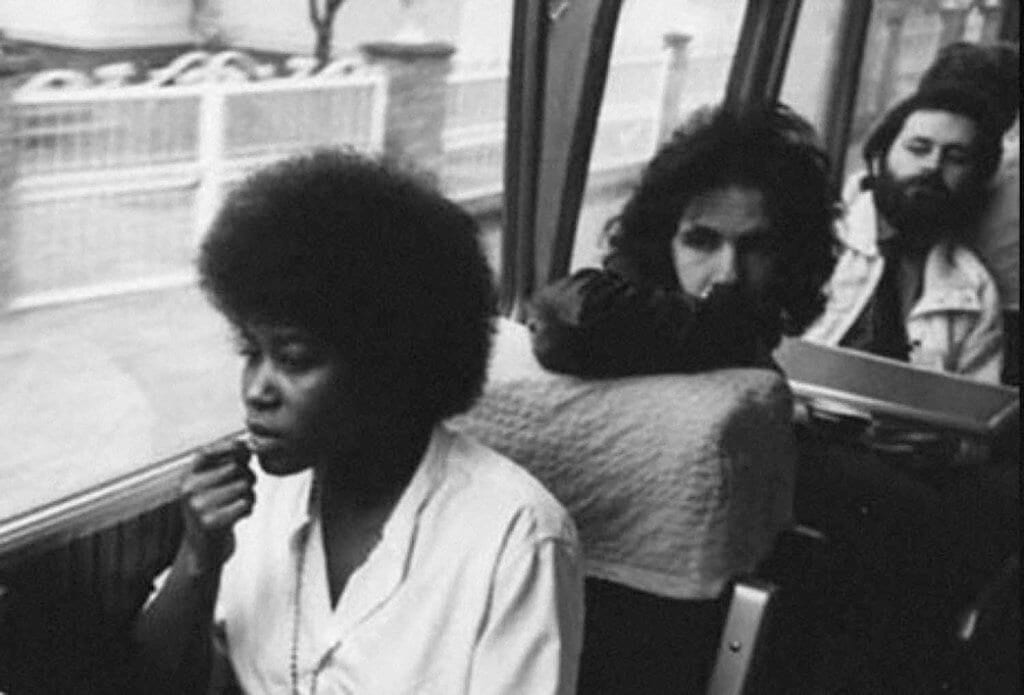
Joan Armatrading always knew she was right. The legendary British singer-songwriter knew when she first felt the unshakeable urge to wrap her fingers around the neck of a guitar as a teenager. She knew when she first stepped on stage, pushing through the debilitating nerves that plagued her. She knew at the peak of her career in the ‘70s and ‘80s when she spent her days in studios, telling her all-male band how to play her compositions. 

She knew she was meant to be. 

“If I wasn’t right, the keyboard player would be right… well, how does he know?” laughs Armatrading, speaking to She Shreds over the phone. “Somebody’s got to know they’re right, and I’m the person who’s written the song—I should know.” 

When it comes to a belief in her songwriting, Armatrading has a brazen confidence, but take her outside of the dazzling world of lyrics and guitars and she transforms into an introvert. (So true to type she once quipped in a 2005 Guardian interview that she preferred “birdsong to chatter.”) It’s an unusual trait for a pop star to embody, but every aspect of Armatrading refuses to fit into any predetermined narrative around what or who a pop star should be. 

Beginning her career in the early ‘70s with a repertoire that blended jazz, folk, blues, pop and soft rock, Armatrading became one of the first black British female singer-songwriters to enjoy international success. She released numerous hits throughout her 40-plus year career, earned several nominations for the Grammys and Brit Awards, and in 1996 she won an Ivor Novello Award for Outstanding Contemporary Song Collection. 

Even though Armatrading has eschewed the spotlight and refrained from speaking about her sexuality (she celebrated a civil partnership with her long-term girlfriend, Maggie Butler, in 2011), her presence as well as her confessional songs about desire and passion opened the doors for many queer artists to follow. She managed to achieve all of this without losing herself, forcing white suburban England and middle class America to be confronted with her trademark androgynous outfits, makeup-free face, and mini afro.

Born on the Caribbean island of St. Kitts in 1950, Armatrading was a child of the Windrush generation. Her parents migrated to Birmingham, an industrial city in the middle of England, when she was three, leaving her behind in St. Kitts. Armatrading  eventually joined them in the UK when she was seven—a normal practice at the time. Like many recent immigrants who were concerned about fitting in, Armatrading’s father saw music as a luxury, and despite playing several instruments and keeping a guitar at home, he forbade his children from playing. Nevertheless, music was destined to be in her life, and when her mother bought a piano to decorate the living room, she taught herself how to play. “The piano is a wonderful instrument,” she says. “I always say you could just dust the piano, because all you have to do is hit something—it doesn’t matter what you hit. You could sit your bottom on it and make music.” 

The sparks of her developing love for music were fully ignited when she came across a guitar in a shop window. Unable to afford it, her mother gave her two strollers to swap for the guitar and she was soon writing songs that she would perform at local open mics. Her fascination with music was deep, but her early songwriting didn’t seemed to come from a set source. She wasn’t a diehard Beatles fan or a Monkees aficionado like many girls her age. Even now, she cites no influences (that she’s willing to share) that have shaped her songs, insisting she writes simply because she was “born to do it.” When asked about what she’s interested in achieving through her songs, she says, “When you hear it, you think, ‘I’ve experienced that, I’ve gone through that, I’ve known what they’ve been through. And I can sympathize because now I’ve heard this song, and it explains those emotions.’”

Armatrading joined a production of the musical Hair in 1970, where she met songwriter Pam Nestor. The pair formed a partnership, writing dozens of songs, and released their album, Whatever’s For Us, on Cube Records in 1972. But Nestor was not featured on the album, as the label wanted to promote Armatrading as a solo artist. The duo quickly disbanded and Armatrading took a hiatus from the industry while breaking her Cube Records contract and signing with A&M to release her second album, Back to the Night, in 1975. Both albums were critically—though not commercially—well received, and can be seen as an early reflection of the artist who would go on to captivate so many. On her debut, Armatrading’s vocals occasionally adopted an American twang, perhaps a result of the Southern blues and American folk that was informing her work. By her follow up, she had already honed the earthy burr in her voice, one she uses to conjure the searing pain of heartbreak in one moment, and gasps of full-throated desire in the next. 

Her breakthrough album, Joan Armatrading (1976), produced by Glyn Johns (known for his work with Led Zeppelin and the Beatles), was released to critical and commercial acclaim, spawning the hits “Love and Affection,” an evocative vignette of emotional intensity, and “Down to Zero,” a rousing piano ballad. Her new found success opened numerous doors, but it was evident that Armatrading cared for neither the money nor fame. She sees herself as a conduit, here to translate the words and music for others to enjoy—but little else. “I just like writing songs,” says Armatrading. “It’s as simple as that. The record company never had to come to me to say, ‘It’s time to make a record.’ It would always be me saying, ‘I’m ready to make a record.’ I’m 68 now, and I love it just as much—probably more—than when I was starting out.”

“Love and Affection” by Joan Armatrading, 1976.

Replicating the success she achieved with Johns, Armatrading continued to work with him on her next two albums, Show Some Emotion (1977) and To The Limit (1978). She began touring, recording, and writing constantly over the next few years, and as a result began to veer away from the blues-drenched folk that had previously driven her career. After hearing Blondie’s self-titled debut, released in 1976 and produced by Richard Gottehrer, she knew exactly who to call on for her next release.

At the time, Gottehrer was already an established producer and songwriter. After making a name for himself writing the ‘60s classics “I Want Candy” and “My Boyfriend’s Back,” he went on to work in the punk scene, producing records for Richard Hell and the Voidoids. Gottehrer’s contemporary style was the perfect match for Armatrading’s new collection of pop-centric songs. He brought together an extraordinary group of musicians that included jazz funk guitarist Hiram Bullock, English session guitarist Chris Spedding, and saxophonist Clarence Clemons (who was also a key member of Bruce Springsteen’s E Street Band). Despite the talented company, Gottehrer maintains that one key element lifted the album: Armatrading herself. “She captures a soulfulness,” he says. “She can express the feeling of the lyrics, the tone of her voice. She was different.”

The resulting album, Me Myself I (1980), became her highest charting release, incorporating slick-crooning gospel on “Friends,” jolting reggae-lite rhythms on “Simon,” and  stadium rock punch on “All The Way From America.” The album propelled Armatrading into the pop arena and established her legacy as an artist who could draw in the suburban mother just as easily as a gruff, hard-rock loving biker. Despite wanting to work with Gottehrer again, Armatrading envisioned being the sole player on the album (a dream she would later fulfil on 2003’s Lovers Speak). Her label scrapped the demos they worked on together and instead paired her with English producer Steve Lillywhite for the new wave-influenced Walk Under Ladders (1981), followed by The Key (1983), which spawned her biggest hit single, the power-pop inspired “Drop The Pilot.”

Armatrading’s career had given her everything she wanted from music, but her shy nature constantly clashed with the reality of her job, leading to rumors about her apparently difficult nature. Gottehrer was warned as much by Armatrading’s manager, but when he met with her in his New York apartment, he saw a woman who did not resemble the fearsome description. “I’m anticipating the worst,” laughs Gottehrer. “I walk in and I see my four-year-old daughter sitting on her knee and they’re singing Muppet songs.” It’s hard to imagine so many being spooked by a soft-spoken woman who didn’t consume alcohol, smoke, or even drink caffeine, but in an industry so used to dominating over female singer-songwriters, dealing with a forthright black woman who had no intention to follow the rules probably sent a few industry bigwigs over the edge.

Today, Armatrading continues to write and release, including her latest album, Not Too Far Away (2018), a return to the dark intensity of her late ‘70s work. With such a prolific back catalog and diverse audience, Armatrading knows her songs have a profound impact on her fans. “I love when people say to me, ‘That song means this to me, we got married to that, I named my child after that song, or we communicate with each other through this song.’ I did an interview with somebody, [and] he said when he finished the interview he was going to propose to his girlfriend with my music.”

Over the years, Armatrading has inspired generations of artists, including country rock singer-songwriter Melissa Etheridge and musician/songwriter/DJ/producer JD Samson (from feminist pop acts Le Tigre and MEN). For British folk singer-songwriter Minnie Birch, Armatrading has become an almost omnipotent force in her life: “She’s one of those people you just know, like a fairy tale, because she’s so ever-present in music.” For Birch, who supported Armatrading in 2012 and 2014 after winning a competition that gave a local artist from each of her tour stops the chance to perform, her impact was apparent in the devotion she showed towards her opening acts. Birch was enthralled by Armatrading introducing her on stage, including her and the other artists in a compilation CD on sale at the gig, and even offering up songwriting advice. “She’s still the first black British woman to have been an international success,” says Birch. “When you’re feeling a bit low on your music, that inspires you to think, ‘Well, she saw something good in me.’”

There is often the long standing—and ageist—opinion in the music industry that once you reach a certain age you should move aside and let the youth take over. Armatrading has never considered veering from the path she’s chosen, with her defiant eschewing of popular trends and her monastic-like dedication to her musical mission. In fact, she feels that there’s still more for her to bring to the world: “There are lots of songs that I’m really happy I wrote, but I don’t feel as if I’ve written the best song I’ll ever write. I think once I do that, I’ll be finished. There will be no more for me to write.”
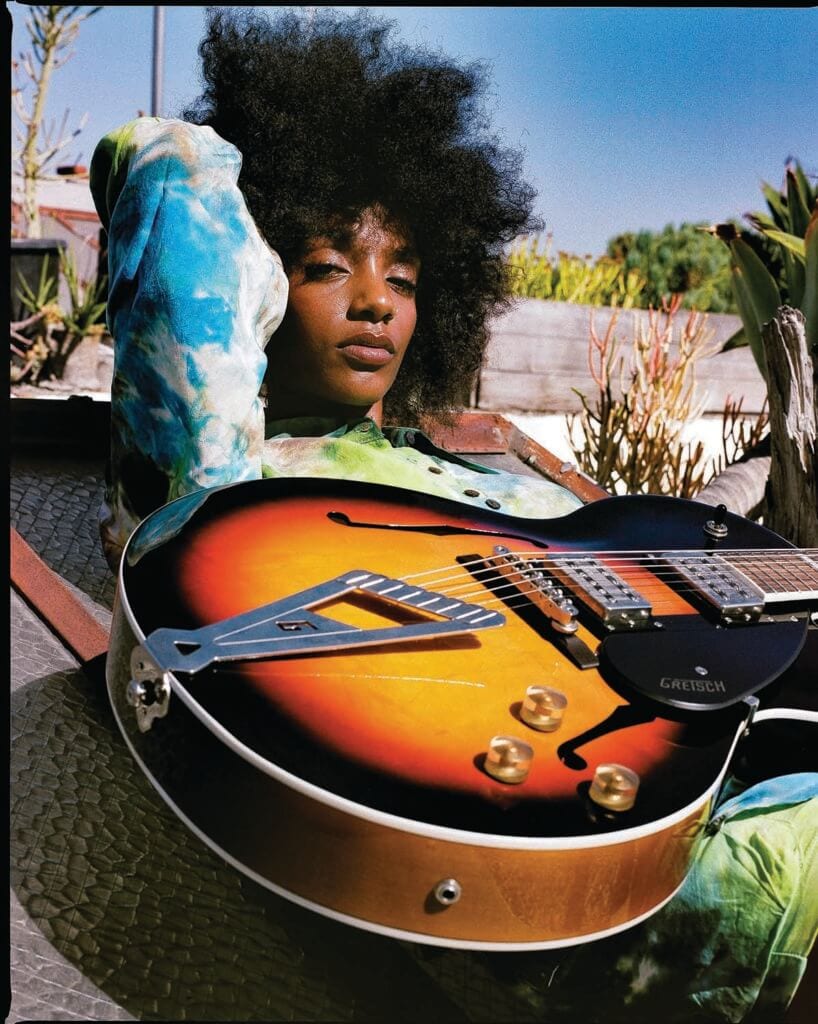
On her latest album, The Jungle Is The Only Way Out, Mereba identifies a new chapter in a story that’s still being told.

This interview originally appeared in She Shreds Magazine Issue #19, released December 2019.

Growing up between North Carolina and Philadelphia, with an African American mother and an Ethiopian father, Mereba credits her friendliness and warmth to her childhood in the South. Her Southern upbringing also inspired her to learn guitar from folk, country, and blues records. “It’s that soulfulness,” Mereba says, musing on the connection between her background and her new album, The Jungle is the Only Way Out. 

Blending folk with hip hop and R&B, Mereba’s new album pairs expressive vocals with impressive rap skills, and beautiful love songs with tracks about police brutality and the legacy of blackness in America. Often, the album catches you with a line or harmony that bops, sticking in your head long after the song has ended. It’s all part of the never-ending story Mereba is ready to tell on what the jungle is—and could be.

The album begins with “More,” an opener that touches on needing to do or feel more, of wanting more but not being able to get it. Why was it important for you to start the album this way?

I’m basically saying that I want more out of myself. The rest of the album is pretty external, reflecting on my relationships with other people. But I wanted to start the album with a reminder to myself. Whatever journey I’m about to embark on, I never want to forget these basic things that make up who I am as a person. It’s like when you’re going through rough times—you forget the best parts of you. “More” is a mantra that reminds me there’s still more for me to do, and to keep trying.

Your song “Black Truck” brings to mind Tracy Chapman’s “Fast Car.” There are also nods to the legacy of hip hop in the South and the folk music tradition. Can you talk about the ancestry of influences in your music?

In terms of my musical ancestors, Tracy Chapman is a major one for me. I was always in love with her voice as a kid. I remember it being so striking. Tracy showed me an example of a black female folk singer who made it into the mainstream and didn’t lose the integrity of the stories she was telling. I still look to her as an inspiration. Stevie Wonder was also a big influence. He was my mother’s favorite artist, so I grew up listening to him a lot. There’s Lauryn Hill, Erykah Badu, Bob Dylan, Joni Mitchell, the Roots. 

Outside of music, I was so inspired by Nelson Mandela and wanted to be like him as a kid, but through music. I also have a link to [civil rights activist] Miriam Makeba. I was given a name that sounds similar to hers. What inspires me is an artist with a unique perspective. I’m drawn to people who have a purpose in what they do.

Thinking about the idea of art having purpose, you have songs on the album that focus on specific issues. “Heatwave” and “Kinfolk” look at how communities come together, and can also be torn apart. “Get Free” examines the challenges of making enough money to survive. Did you know you were going to be examining these issues before you started recording?

Nothing about this album was intentional. Each song was born out of what was happening in my life at the time. “Heatwave” was written after Ferguson and the death of Mike Brown by the police. “Get Free” came out of struggling for money—I was dead broke, working all these jobs, and I couldn’t catch a break. I was thinking about our relationship to capitalism and how living check to check makes it impossible to find what’s making you feel free. It all comes from natural questions I’m asking at the time.

The title of the album, The Jungle is the Only Way Out—do you mean going back to the roots or towards the chaos of the future?

Yes, all of that! The jungle is so many different things. I came up with the album title while walking to the train one day, on the way to my old day job. I felt like my life as I knew it was in the midst of falling apart. A lot of what I held on to for stability was changing around me. But I also felt strangely empowered by the chaos, almost like it was daring me to make it out alive and prosper. It just clicked—the only way out of this chapter of my life is through it. The jungle represents that chaos, confusion, and mystery.

What’s your approach to instrumentation? Did you invite musicians in or do most of the arrangements yourself?

The music and the words were born at the same time. I wrote “Highway 10” first. It was the first beat I made on my laptop. I added guitar to it and realized it was a cool song. So when I came to LA, it was the only song I had ready, and a year later I met Sam Hoffman. He’s an incredible guitar player. He went to school for jazz guitar. We were both looking to become stronger producers and we came from the live music world. We started exchanging sounds and making beats. I played him the demos I was working on and he was like, “These are dope. I’d like to work with you on them.” So he did a lot of the instrumentation with me on the album. He was the guitarist, keyboardist, and even bassist on certain songs. We brought in other live players, but for the most part, it was Sam and I producing.

Do you have gear of choice when you are recording?

My primary guitar is my Gretsch Streamliner G2420, which I used on the album. It has a beautifully warm sound naturally. I produce in Ableton, so for my part of the production, I used my computer’s keyboard as a MIDI controller for a while, and then a small AKAI MIDI controller. Sam used his semi-hollow Carvin SH550 with humbucker pickups, and his Mexican Fender Stratocaster, and recorded the electric guitars direct in using the UAF and Wave amp modelers. We also both used Sam’s Taylor Grand Concert acoustic guitar, the Prophet Rev 08 analog synth for layers, and heavily used the Massive and Arturia synth plugins.

Thinking of the album as a whole, did you know you wanted to tell a complete story or was it more about putting it together track by track?

When it came to putting the album together, most of the songs I selected stayed. It wasn’t intentional when I was writing, but when I looked at them all together, there was a story. I knew I wanted “Kinfolk” to be the first song, but also I knew that the album had no end. Because I’m still here and the album is just a glimpse into a particular time of my life.

You’ve recently released some stunning visuals to go with several tracks on the album. What inspires you when creating a video or visual?

When I first moved to LA, I met artists who opened my mind to how visuals can be tied to music. I aligned with visual artists who taught me a lot about photography and imagery. So when it came time to create visuals for “Black Truck,” I knew I wanted it to be more abstract. I got together with the twin brothers Jalan and Jibiril Durimel, photographers who also direct, and [collaborate under the name Durimel]. We came up with this idea of an ode to my black ancestors and taking the idea of a black truck and making it more metaphorical. 

I enjoy when there’s mystery visually and it’s not an obvious treatment of the song. Between Durimel and [director/photographer] Dawit N.M., who did the visual EP, I feel like we’re all from the tribe. The song is kind of dark and we all wanted to capture blackness in a beautiful way, but also never let go of the darkness.

You’re recording new music in Jamaica and you have a Tiny Desk concert coming out soon—what’s next? 

I love NPR and did back up for a Tiny Desk concert before I did my own, so I know what the set up is like. It was a great experience. Everyone was so kind. 

I’m working on new music, and I’m learning at the same time that I’m releasing new music into the world. As I change as a person, so does my music. I feel like I’m in a happier place and I’m lighter now. It feels like a new chapter in the same story that didn’t end.

Our Official Newsletter

She Shreds Media: Our mission is to educate, empower, and inspire people through unexplored musical and cultural landscapes. Our vision is to continuously refine, redefine, and reimagine the possibilities of how music connects us, ensuring an inclusive and accessible music community 100% of the time.
She Shreds Media
She Shreds Media